By The Measure of Howard Hawks (’21 Edition)

Every year Hollywood Elsewhere subjects the leading Best Picture contenders to the Howard Hawks measuring stick. The legendary director is famed for having said that a good movie (or a formidable Oscar seeker) always has “three great scenes and no bad ones.”

Hawks also defined a good director as “someone who doesn’t annoy you.” I wouldn’t want to sound unduly harsh or dismissive but I’m afraid that Kenneth Branagh‘s direction of certain portions of Belfast and particularly his decision to open with that vibrantly colorful prologue…’nuff said.

How do the leading 2021 Best Picture contender films (numbering nine) rate on the Hawks chart? Here we go…

Jane Campion‘s The Power of the Dog: I’m sorry but despite the fine performances, the feeling of 1920s open-range authenticity, handsome visual compositions and carefully-honed pacing, this 126-minute film has no great scenes. There are a few intriguing moments, but none I would even begin to call highly impactful, much less “great.” You keep waiting for a killer scene (or two or three) to arrive, but it never does. Dog is more about the overall than this or that peak moment.

Reinaldo Marcus Green, Will Smith and Zach Baylin‘s King Richard: I could go on and on, but this 2021 Warner Bros. sports drama has more than a trio of stick-to-your-ribs scenes. One, the persistent Richard (Smith) persuades elite tennis coach Paul Cohen (Tony Gpldwyn) to check out Venus and Serena’s exceptional skills, and within a couple of minutes Cohen gets it. (“You taught ’em this?”) Two, Richard takes offense when Andy Bean‘s Laird Stabler, a colleague of the cigar-smoking Will Hodges (Dylan McDermott), tells him he’s done “an amazing job” in training his daughters. Three, the kitchen argument scene between Richard and wife Orascene (Aunjanue Ellis). There are at least two or three others (the Oakland tennis match finale, Richard comes perilously close to shooting a Compton gangsta, refusing the initial endorsement deal, etc.).

Kenneth Branagh‘s Belfast. Again, a few diverting scenes but none that could be called outstanding or great. Branagh’s real-life dad may have been an appealing crooner who could dance fairly well, but Jamie Dornan‘s singing and dancing scene struck me as cloying and insincere and untrustworthy. It therefore qualifies, no offense, as a “bad” scene.

Steven Spielberg‘s West Side Story. One, the opening shot of tear-down rubble and ruination on San Juan Hill, and how that feeds into the brilliant “Jets Song” sequence. Two, Corey Stall‘s dismissive rant about how the Jets represent the “can’t make it and haven’t moved to Long Island” crowd, and that in a very short while high-rise luxury apartment buildings will be hiring Puerto Rican door men, etc. Three, the neighborhood Scherzo sequence as Maria tries to make it seem as if she’s slept all night in her bedroom. If these aren’t great scenes they’re certainly damn good ones.

Paul Thomas Anderson‘s Licorice Pizza has one great scene — the finale in which Alana Haim and Cooper Hoffman finally embrace like they mean it. Otherwise the film is a bit spotty and meandering, but I respect the courage that Anderson showed when he included those two scenes involving John Michael Higgins‘ Jerry Frick and his two (i.e., successive) Japanese wives. Anderson knows the climqte out there, and had to realize that wokesters would come after the film for engaging in what some regard as crude racial stereotyping. But Anderson kept it in, partly because he was drawing on his own SFV experience and partly because he doesn’t believe in presentism, or so it seems.

Denis Villenueve‘s Dune. A captivating visual scheme and impressive production design elements do not, in and of themselves, constitute what anyone would call great cinema. Okay, perhaps on an overall aesthetic sweep basis but certainly not in terms of this or that scene.

Sian Heder‘s CODA has two appealing supporting performances (Troy Kotsur‘s randy dad, Eugenio Derbez‘s singing tutor), but no exceptional scenes per se, and certainly no great ones.

Joel Coen‘s The Tragedy gf Macbeth boasts excellent performances (Denzel Washington, Frances McDormand, Alex Hassell, Kathryn Hunter) and of course an impressionistic sound-stage environment blended with the classic Shakespeare text. At the same time I can’t honestly think of any particularly great scenes in the Hawks sense of the term. It’s an honorable film at the end of the day, certainly, but there’s no ducking the fact that it’s far less of an undertaking than Roman Polanski‘s 1971 version.

Maggie Gyllenhaal‘s The Lost Daughter falls more under the heading of “highly respectable, especially coming from a first-time director” than “a film which contains three great scenes and no bad ones.” Honestly? The scene in which Ed Harris visits Olivia Colman in her condo but doesn’t say boo about the doll lying on the patio table, except to note that it has water inside it. The missing doll is a huge thing on the island (reward money, posters stapled to trees) so Harris’s curious indifference to Colman being a doll thief is an odd call — I think it’s fair to argue that its a “bad” scene.

In sum, the only Hawks finalists are King Richard and West Side Story.
Artful Dodger

Posted on 6.7.12: Whether in Prague. Cannes. Hanoi** or Rome, I have my New York attitude about crossing streets. If traffic is heavy and somewhat aggressive then don’t be an idiot. But if you can make it across a street without getting clipped or causing anyone to slam on their brakes, fine. If a car stops to let you cross, fine. If nobody stops and you have to duck and weave and dodge like a rabbit, fine.

I don’t expect traffic laws to protect me because some people are nuts when they drive. I’ll take what comes, play what’s dealt. For I am lithe like a cat plus I tread the line between truth and insult like a mountain goat. And when you know that, nothing else matters.

** Crossing busy streets in Hanoi is actually a whole different deal. You just have to trust drivers not to hit you. Ignore the traffic…just inch your way across. Go slowly, keep a close watch, but keep moving and don’t worry about being hit.

Posted by HE comment-threader “Kit Latura”: “I wish more pedestrians had Jeff’s attitude about this. More specifically, I wish ANY PEDESTRIAN in Los Angeles would have a shred of awareness that “pedestrians have the right of way” doesn’t mean “slow down to a turtle’s pace and make a line of seven cars miss their fucking light so your otherwise active Angeleno ass can walk like a slow-ass JUST to piss off the cars.” Because LA pedestrians ABSOLUTELY do this. They’re just DARING someone to get out of their car and shoot them.”

Slammer For Life, Fellas!

Two out of the three redneck bumblefucks convicted in the Ahmaud Arbery murder trial — Travis McMichael, 35, and his father Gregory McMichael, 66 — will live out the rest of their lives behind bars without a possibility of parole. 52 year-old William Bryan, the third guilty guy who took the video of the shooting, will be eligible for parole after 30 years, or when he’s 82.

Variety Hires Clickbait Wokester

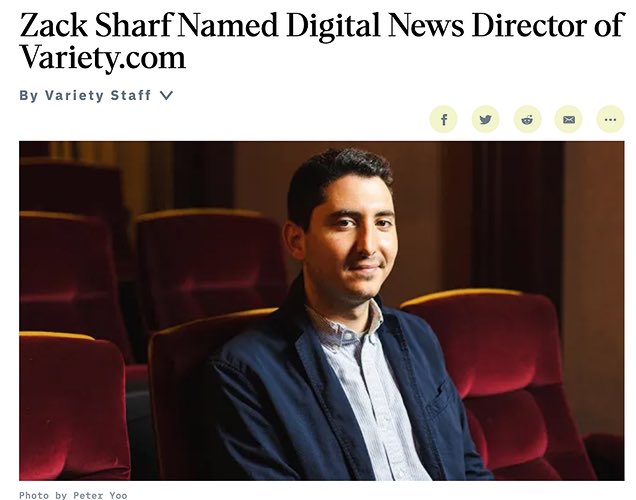
Congratulations to IndieWire‘s Zack Sharf, an obedient soldier for the woke brigade, getting hired as Variety‘s digital news director.

At IndieWire Sharf posted anything and everything that might hurt the Oscar chances of Green Book…didn’t work out!

In August 2018 Sharf jumped into that totally moronic, p.c.-inflamed Good Boys controversy after TMZ posted photos of a stand-in for 11-year-old Keith Williams wearing makeup to darken his skin color. Sharf did his best to further inflame things by getting a cinematographer to say that the practice of applying blackface for lighting purposes was “unorthodox.”

In a 5.4.21 interview with Barry Jenkins, Sharf wrote that “Jenkins’ biggest issue with the gaffe all these years later is that it perpetuated a false narrative that Moonlight only won Best Picture because the Academy wanted to honor a Black film.” Spike Lee to Variety, 6.21.17, starting at :37: “The reason why what happened at the Oscars this year [i.e., during the 2.26.17 Oscar telecast, when Moonlight was belatedly announced as the Best Picture Oscar] was because of the year before [with] #OscarsSoWhite. I mean, that was a bad look for the Academy, and they had to switch up with more inclusion, more diversity.”

In a 6.28.21 piece about The Harder They Fall Sharf was so terrified of using the term “Black western” that he wouldn’t touch it with a ten-foot pole. In his riff about a new trailer for The Harder They Fall, he went with Netflix’s term — a “new school Western.”

By the way: Sharf wrote in July 2019 that The Lighthouse will be presented “in Academy ratio,” which would mean 1.37:1. In fact the film was presented in 1.19:1 — an aspect ratio introduced in 1926.

Best Olbermann Rant in Years

“Where is the special prosecutor making life a living hell for Bannon, Miller, Gosart, Boebert, Jordan, McCarthy and Trump? Where is the President who is protecting and defending the Constitution of the United States…where is the President who knows they are not about to change their minds because you govern well? Where is the president who will fire his wooden statue we call Merrick Garland? Where is the attorney general giving not a boilerplate speech but indictments? Where is the President who is not sleepwalking and hiding behind naive cliches about bipartisanship when the other side is trying to kill all of us?”

Steady Stamp of Sidney Poitier

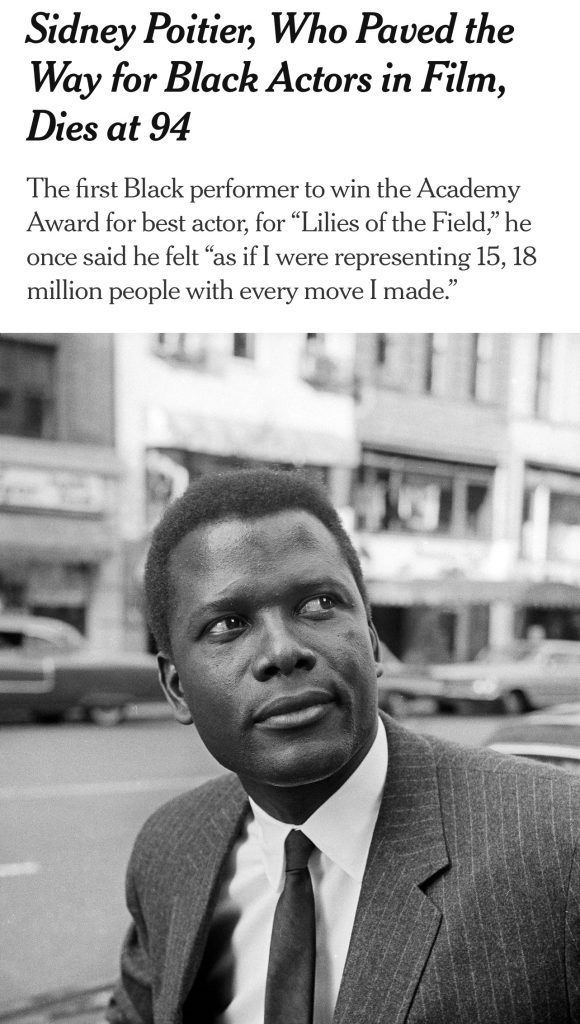
For a solid 11 years or so Sidney Poitier was hugely iconic, and from his own standpoint as a man of color in a socially burdensome way. But he carried that weight and then some…carried it like a man of supreme confidence…a man of spirit and solemnity and immaculate serenity, or at least so it seemed to millions who watched and absorbed and reflected upon the meaning and metaphor of it all.

Vibe- and substance-wise, Poitier projected something extra-special and in some ways radiant — the aura of a fine, noble superstar of the late ‘50s and especially the ‘60s (primarily between The Defiant Ones and Guess Who’s Coming to Dinner)…possessed by refinement, dignity and a certain immaculate centered-ness, fortified by good looks and a beautiful Bahamian speaking voice, supplanted with occasional flashes of humor and always with a constant hum of self-ownership, steady and resolute.

With the advent of political militancy and Black power in the late ‘60s Poitier came to be regarded in some quarters as a bit too sedate and stolid, too much of an “approved by the white establishment” Black man. All peak phases and periods of vitality come to an end, of course — a natural and inevitable thing — but Poitier’s cultural imprint and representational metaphor was massive and even Collossus-like during the late Eisenhower, Kennedy and LBJ eras.

He couldn’t have figured in the realm of Spike Lee and Do The Right Thing, his time of peak potency having passed two decades earlier, but in his own time and era he was Sidney effing Poitier, and that importance and resonance can never be diminished or forgotten.

Farewell to a Chicagoan

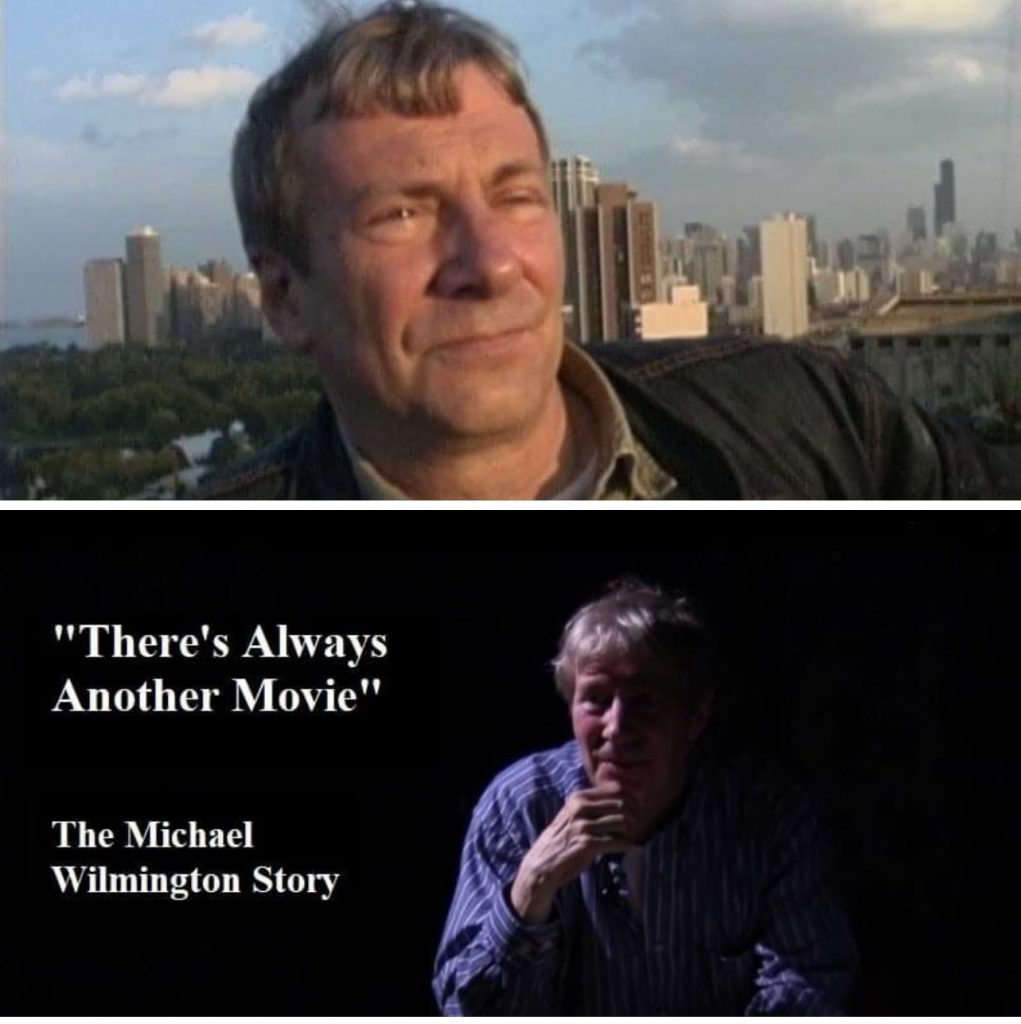
In the same way that Aldous Huxley’s death on 11.22.63 was all but ignored, the timing of the passing of respected film critic Mike Wilmington, concurrent with the death of Peter Bogdanovich and immediately followed by the loss of the great Sidney Poitier, is somewhat similar. But not if I can help it.

I’m very sorry about the loss of one of the bright and burning fellows of my profession…a wordsmith who really cared.

I regarded Mike as a favored acquaintance and a good egg, although our rapport had diminished during the 20teens due to his Parkinson’s illness and increasingly raspy voice. A major critic for the Chicago Tribune and, prior to that, the L.A. Times, Mike’s film passion was ardent and well-fueled. We hung out during my one and only visit to Chicago in 2011 or thereabouts, and I remember Mike’s vivid praise for an immortal Bob Dylan line — “the ghost of electricity howls in the bones of her face.“