Whedon Vulture Exposure

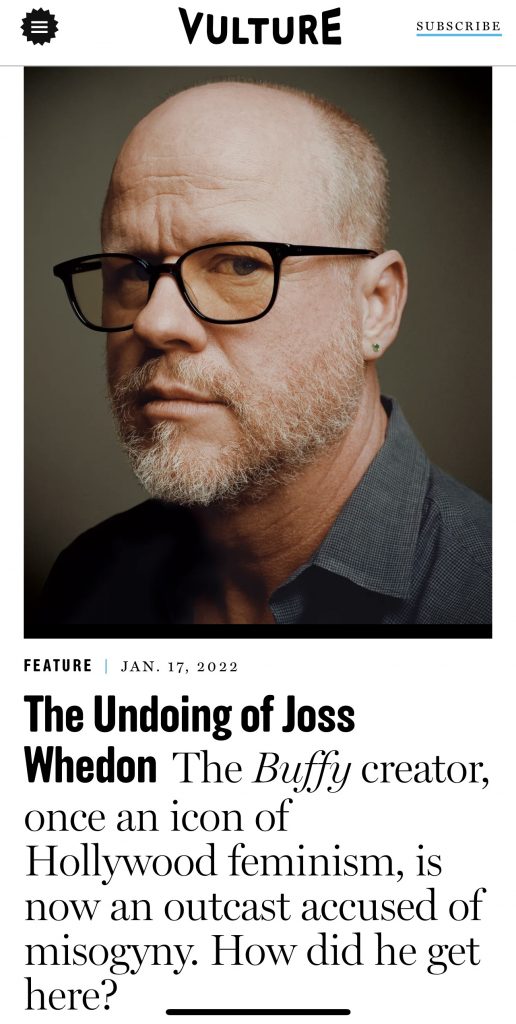
Last night I read Lila Shapiro’s “Joss Whedon Exposed.” It had been described as an urgent must-read. It’s certainly long and well-written in a semi-dramatic sort of way, and seemingly thorough as far as these types of articles (i.e., saga of a reputed shitheel) tend to go.

Over the last two or three years (longer?) there’s been an emerging consensus among co-workers that Whedon, once regarded as a feminist-minded creative producer & show-runner who understood and celebrated women, has behaved in a cruel, callous, dishonorable way (including sexually), and that he’s now, to quote the “Vulture” subhead, “an outcast accused of misogyny.”

Shapiro’s piece, based in large part on an interview with Whedon that happened last spring, reiterates and expands upon these claims. The basic thrust is “Whedon, a bad man, has become a toxic figure whom many if not most producers and distributors and streamers don’t want to work with any more, but his full, harmful toxicity hasn’t been fully understood, not really, and so Whedon must continue to be lashed & shamed for these failings.”

It led me to conclude that as powerful Hollywood types go, Whedon may have behaved as badly as Kirk Douglas’s Jonathan Shields character did in The Bad and the Beautiful. (Or worse.) He may have been as cruel and exploitive as Harry Cohn, Louis B. Mayer, Daryl F. Zanuck, Jack L. Warner, David O. Selznick and other producer kingpins may have been in their day. (Or something like that.) Hollywood has long rewarded or at least not interfered with powerful abusive types for many decades, and sometimes the karma snaps back and the chickens come home to roost . And…?
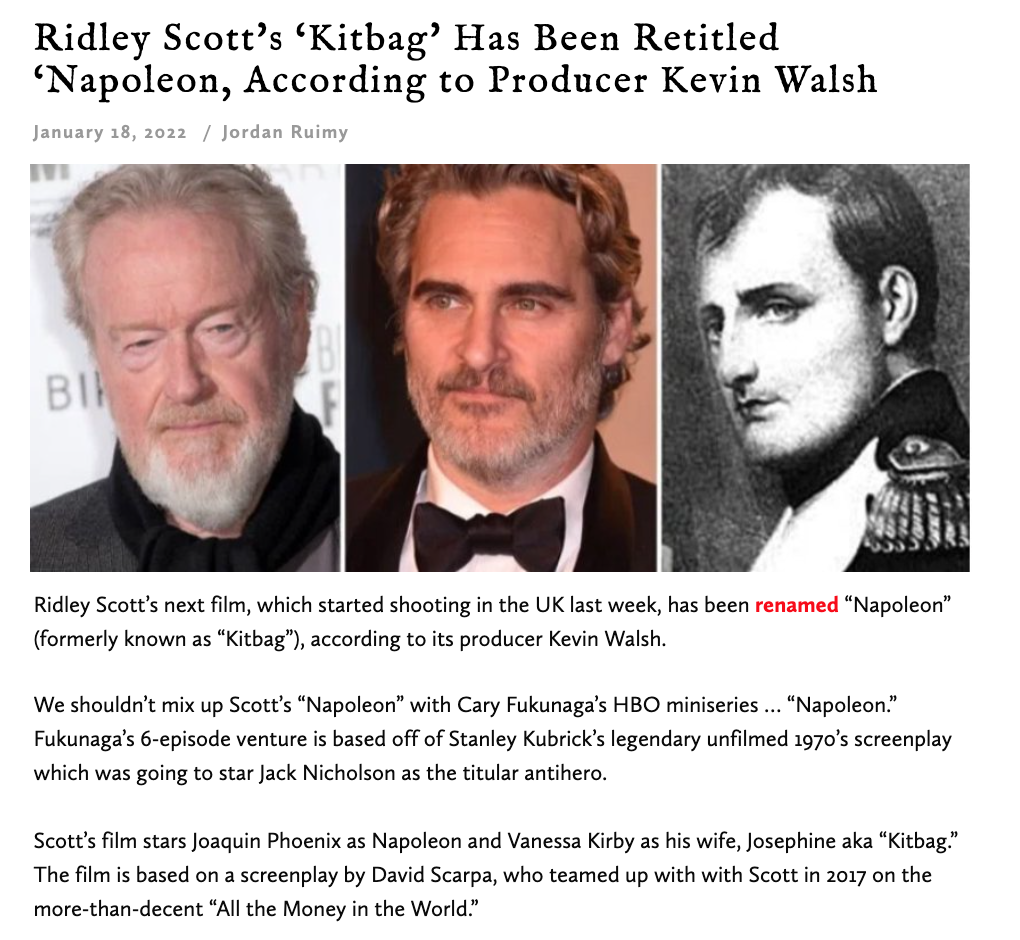
“Kitbag” Is No More — Now Called “Napoleon”

The Apple TV+ marketing guys have apparently pressured Ridley Scott into changing the title of his Napoleon Bonaparte biopic. Formerly called Kitbag — one of the coolest-sounding titles ever for a sweeping canvas historical biopic — it’s now called Just Plain Old Fucking Napoleon. I’m kidding — it’s called Napoleon. This is according to producer Kevin Walsh, who told Deadline all about it. (Hat tip to World of Reel‘s Jordan Ruimy, who posted his own report several minutes ago.)

Yvette Mimieux, Adieu

Yvette Mimieux has left the earth. Due respect for an actress who broke through in the early ’60s (The Time Machine, The Light in the Piazza, Toys in the Attic) and who went for broke and gave it hell when she starred in Jackson County Jail (’76), a somewhat schlocky but tough Roger Corman film that mostly holds up by present standards. (I happened to re-watch it only two weeks ago.) Hugs and condolences for friends, fans, colleagues, family.

Read more

Hauser vs. Dargis-Scott Eccentricity

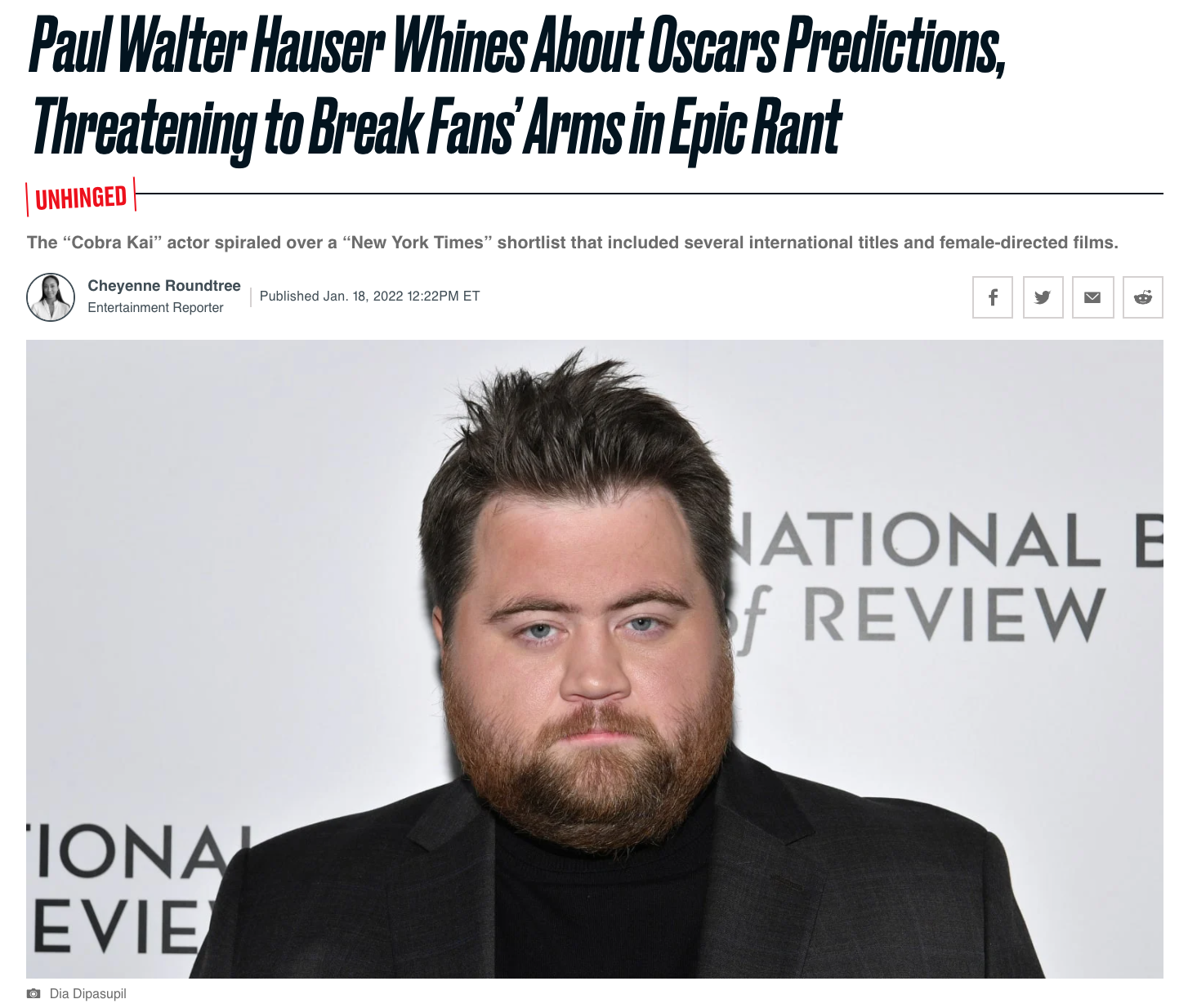
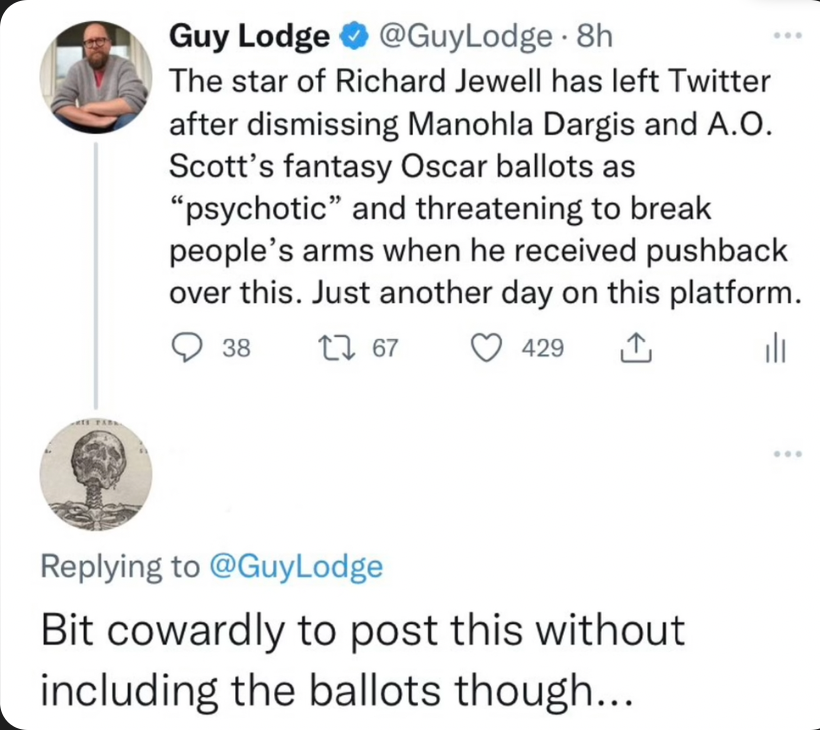
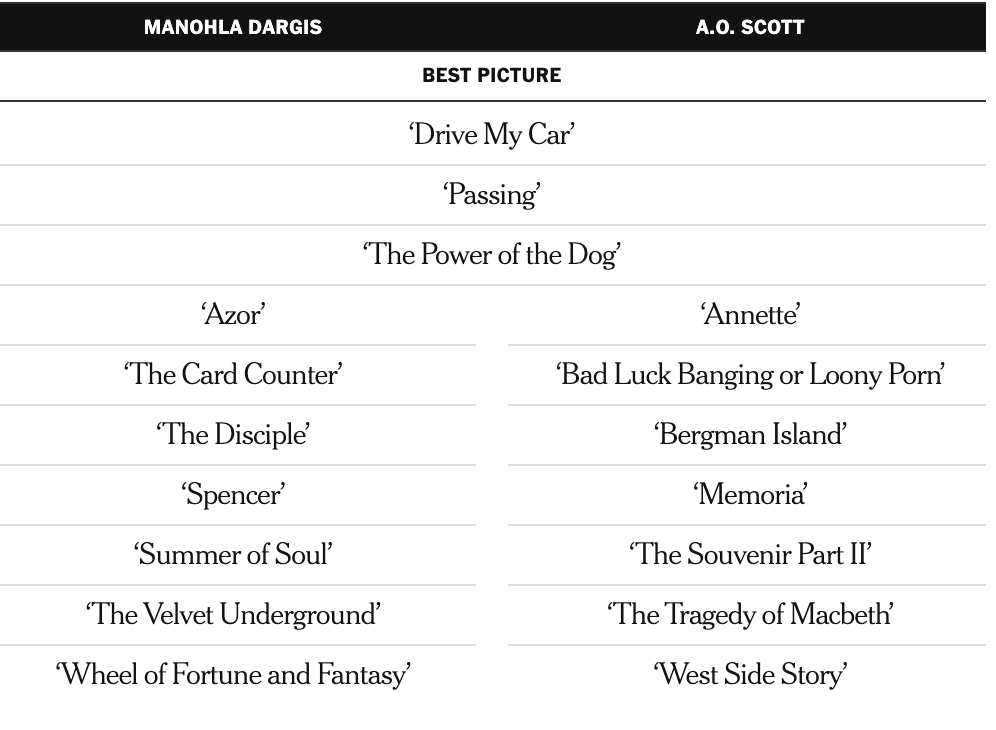
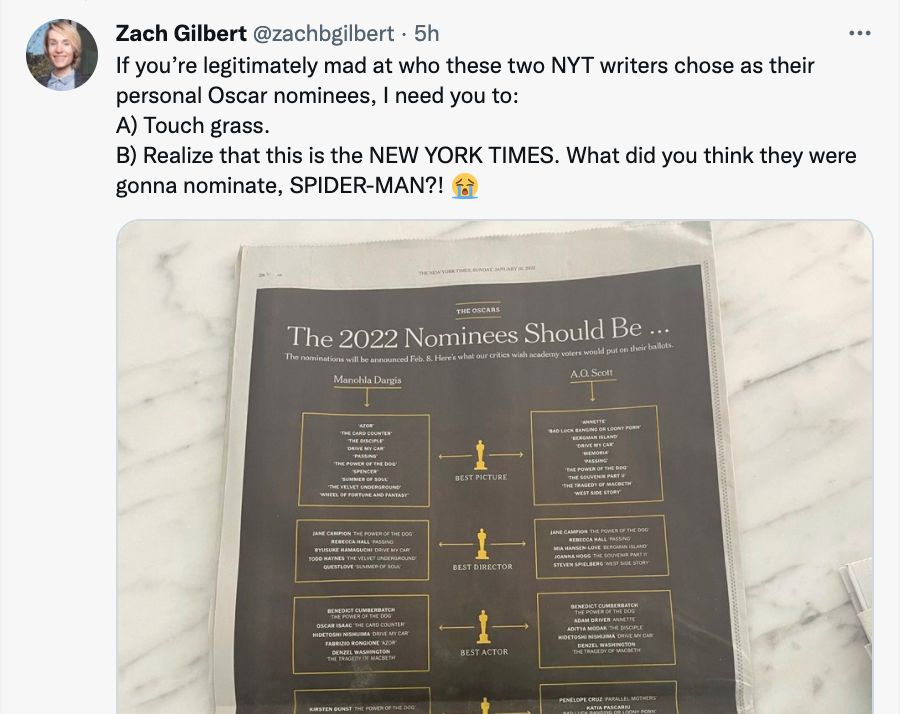
Last night Paul Walter Hauser (Richard Jewell, Cobra Kai) posted an angry Twitter rant about Manohla Dargis and A.O. Scott‘s 2021 award picks, which were posted last weekend (“And the 2022 Oscar Nominees Should Be…“).

At one juncture Hauser called Scott and Dargis’s preferences “psychotic”, but what he really meant was that he found their selections overly precious and wokesterish, or too far off the planet earth for his tastes.

Scott-Dargis are renowned for their politically attuned taste buds and cock-eyed eccentricity. They reside on a distant planet, and it’s fair to say that in a certain light they’re hated. Remember “DSU,” the derogatary term (Dargis-Scott Universe) that someone invented for them a few years back? Remember their “25 Greatest Actors of the 21st Century” piece (posted on 11.25.20)? 85% informed by virtue-signalling, wokeitude, etc.

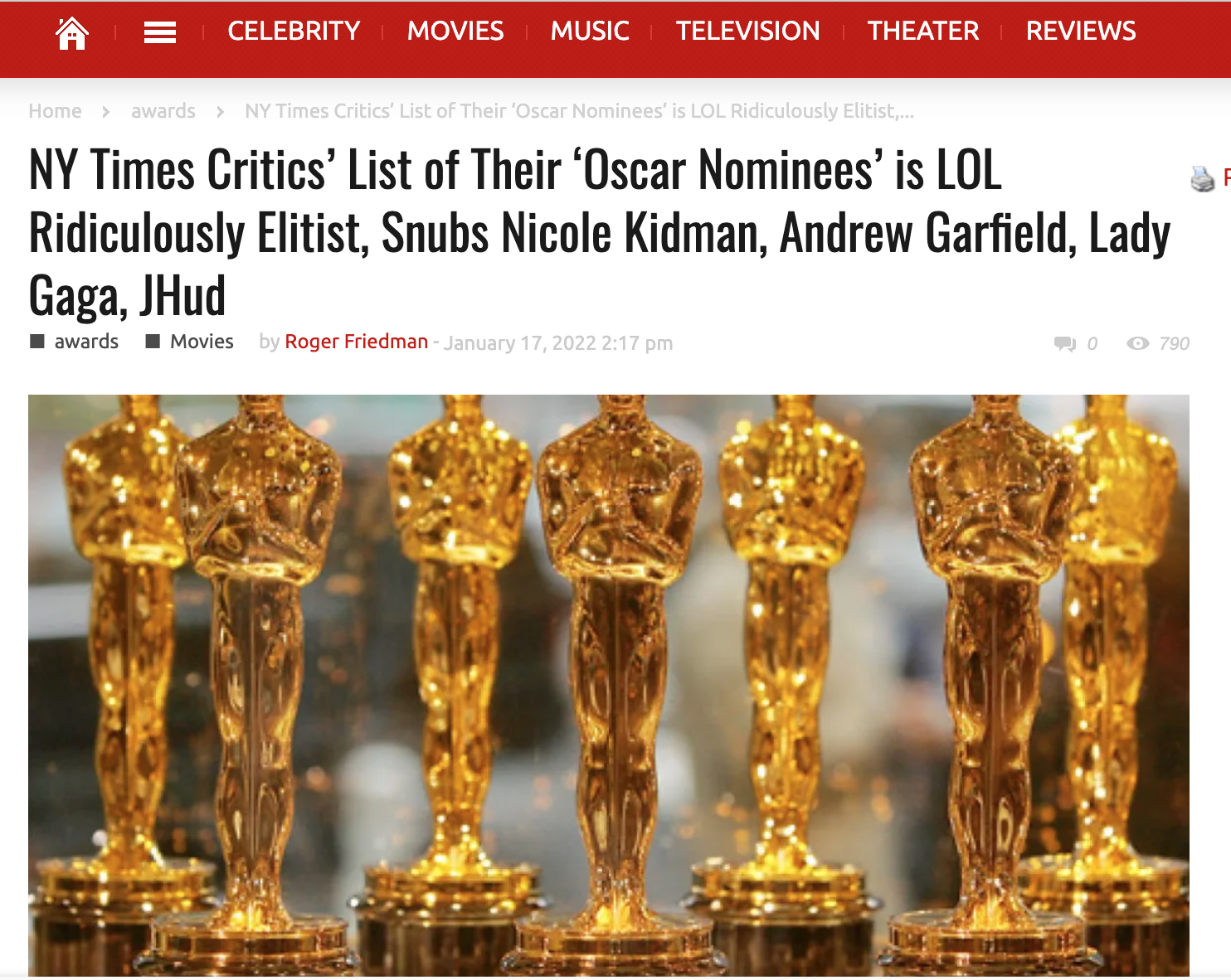
I mentioned the Dargis-Scott picks yesterday and had a Hauser-like reaction (“Differing Degrees of Apartness“). I said that “even within their bizarre arena of N.Y. Times woke-itude, Scott and Dargis may be even more eccentric than Armond White, and that’s saying something.” On 1.17 Showbiz 411‘s Roger Friedman posted a similar response, noting that their picks were “ridiculously elitist.”

What is clearly needed in the N.Y. Times‘ film coverage is a third critic, a counterweight type who isn’t so fickle and high falutin’, and isn’t always box-checking for the participation of women and BIPOCs. A critic who just likes a movie or doesn’t like a movie for reasons of cinematic merit alone, and who isn’t so fucking fancy-pants about it. A film-world equivalent of a Bret Stephens or a Ross Douhat. Someone who could pen an occasional movie column called “Down to Earth.” Perhaps an anonymous critic who could file under the name “Clem Kadiddlehopper.” You know what I mean. An anti-wokester, cut-the-bullshit type like myself.

Not that the Times-sters would even glance in my direction, were such an idea to be given the slightest consideration. I am my own man, but I am also, in a manner of speaking, a dead man. Which is the source of my freedom. Because I don’t give a damn about anything. Well, I do when it comes to my granddaughter, Sutton, but what has she got to to do right now with truth and clarity in the realm of motion pictures? Basically I regard the woke Stalinists as nothing short of deranged, and I know that we’re all living through dark times.

Worst Bluray I’ve Ever Bought

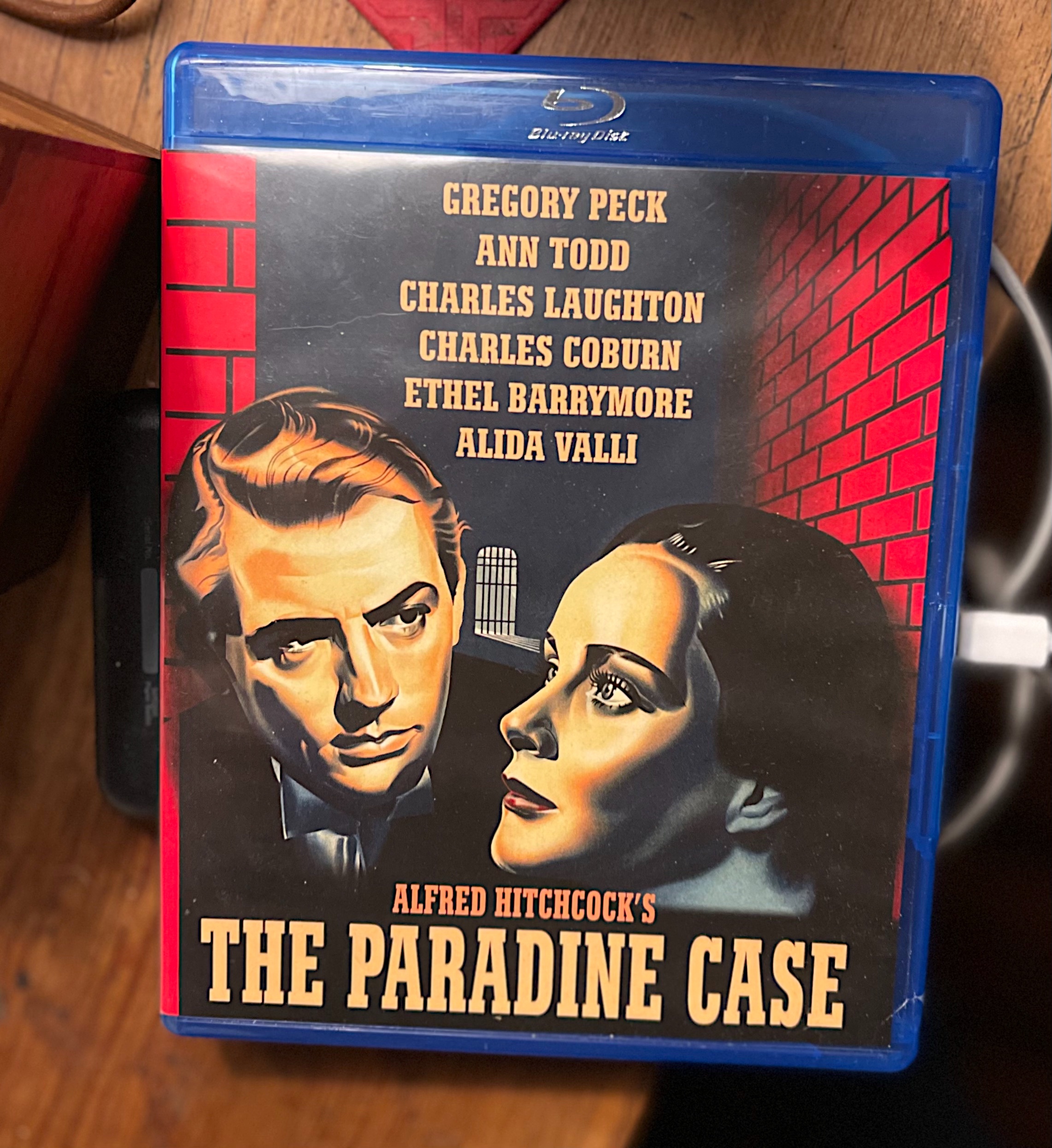
I’ve never felt so completely burned by a Bluray as I was last week when Kino Lorber’s The Paradine Case arrived. Large sections of it are speckled to death. I’m not talking about a Criterion-style swampy mosquito grainstorm, but a baffling suggestion of micro-sized digital sleet — a literal attack upon the film by billions of icy snowstorm specks.

I couldn’t believe what I was seeing. Kino Lorber is a highly respected outfit, and I’ve been delighted with scores of their Bluray releases over the years. It just doesn’t figure that they would release a classic 1940s film looking as badly as this. (And a Hitchcock yet!) I toughed it out until the end, but what a ripoff.

Differing Degrees of Apartness

In terms of choosing the best or most award-worthy films and performances of 2021, most film aficionados (including professional film critics) are fairly conventional thinkers — easily seduced and led along, committed to familiar and unexceptional viewpoints, etc. Then there are the free thinkers who occasionally (but not always) assess films from a perspective of an earth-orbiting spacecraft or one circling around the moon. And that’s fine. The third category could be described as beyond earth’s gravitational pull but still tethered to the critic’s understanding of cinematic value, based on a lifetime of neurotic filmgoing.

And then there is the fourth category — film lovers who have lifted off the planet so often and gone so far around the bend and outside of our solar system, caused for the most part by extra-passionate wokeness (which includes a rapt belief in the wondrous and transcendent benefit of watching any and all films about POC characters, POC history and starring POCs) or anti-woke views, and who seem oddly committed to contrarianism for contrarianism’s sake (i.e., the Armond White syndrome).

Due respect but after pondering A.O. Scott‘s recently posted list of the most award-deserving films of ’21, I have to acknowledge the possibility that even within his bizarre arena of N.Y. Times woke-itude, Scott may be even more of an eccentric than White, and that’s saying something.

Harder Than It Looks

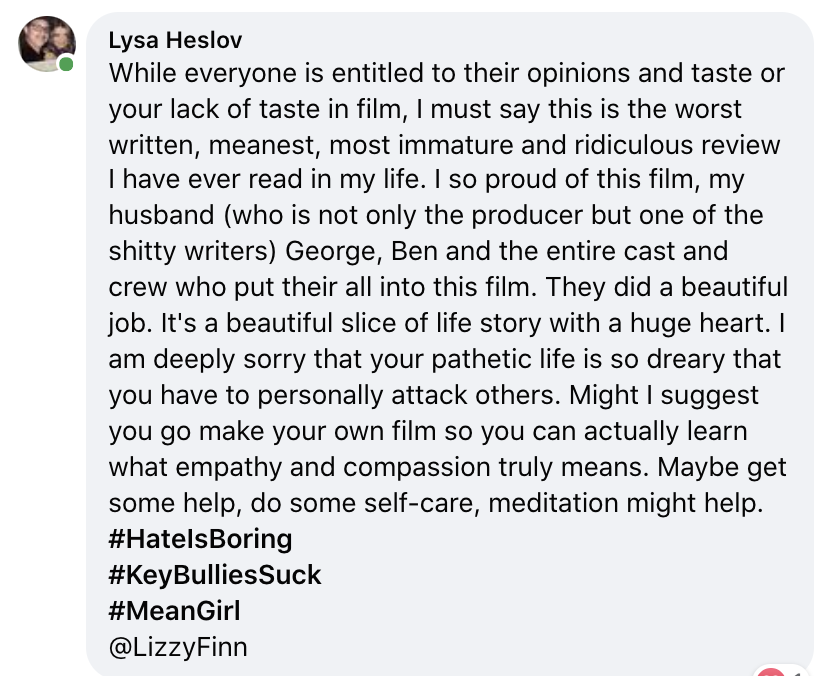
Yesterday Lysa Heslov, wife of The Tender Bar producer and co-writer (and longtime George Clooney pally) Grant Heslov, broke industry protocol by rebuking a couple of Facebook contributors who had posted negative assessments about the film.

Heslov’s main point was that the naysayers were mean and unconstructive, especially about an unpretentious small-town film that had been made from the heart. Last night I summarized what had happened. This morning I posted a thought about the difficulty of making even a mediocre film.

“It’s very hard just to make a decent or passable film that isn’t too bad,” I wrote. “Art isn’t easy, and it’s very difficult to cobble together even a moderately decent dramatic screenplay.

I know this from having struggled to write scripts in the ‘80s and early ‘90s. I also know this from having been a mediocre drummer in a no-great-shakes blues band. It’s very hard and uphill in a grueling sort of way to make a film that most would call moderately appealing.”

Seriously — the next time you catch a so-so or mildly disappointing film, you need to say to yourself “man, it took a lot of blood, sweat and tears just to make that thing watchable…the filmmakers deserve at least a modicum of respect for that effort.”

Affleck’s Peak Moment

Imagine that I’m Ben Affleck, and that I’m doing an interview with some obsequious junket journalist, and that the journalist has just asked which performance I’m most proud of…which single performance has, by my standards, hit the mark in a more incisive and commanding way than any other before or since?

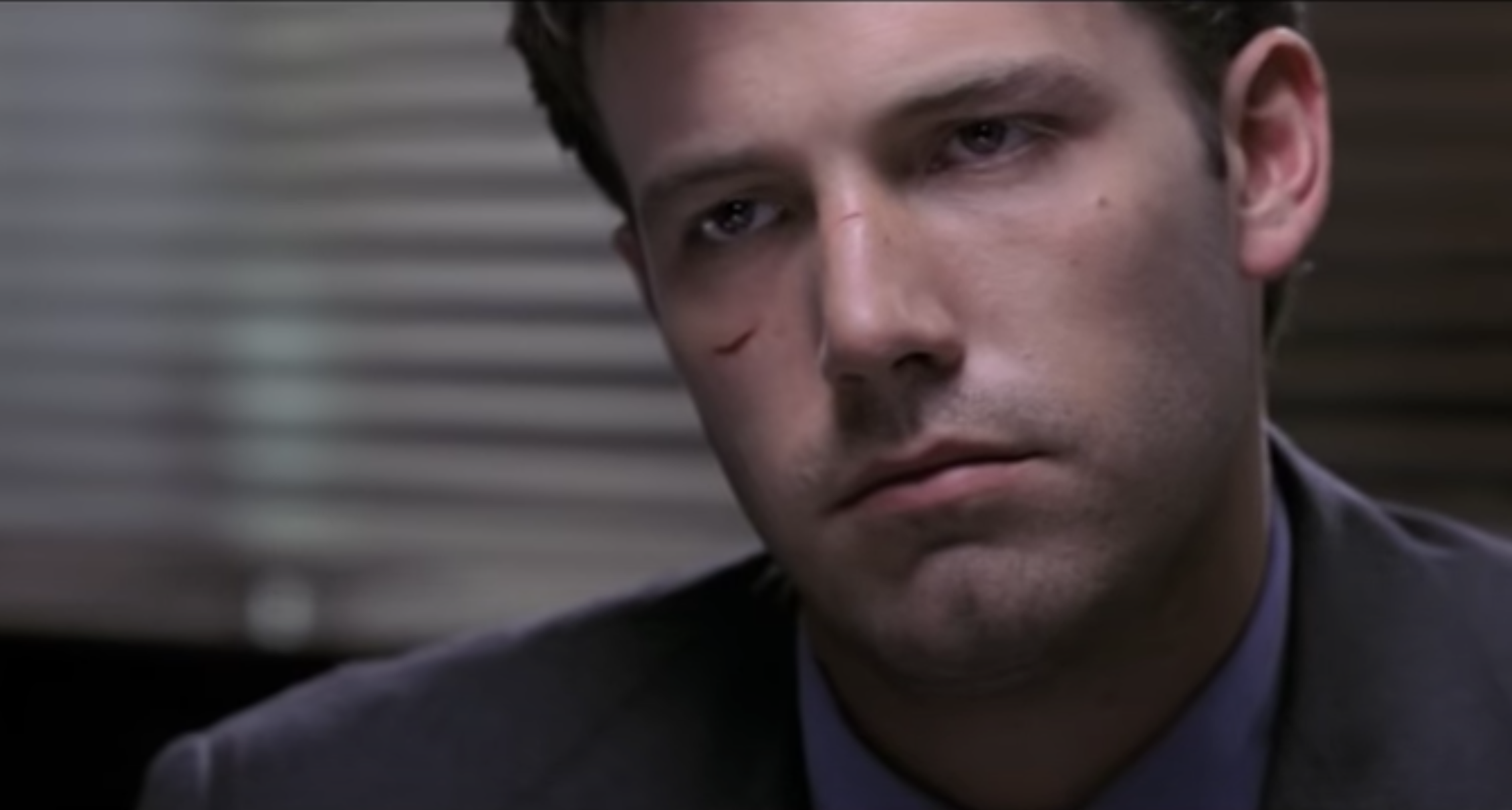
I would say without hesitation that my finest performance is the young, go-getter, fortunate-son, guilt-stricken attorney in Roger Michel‘s Changing Lanes (’02).

The Paramount release was filmed 20 years ago, when I was roughly 29.

My “alcoholic basketball coach in San Pedro” performance in The Way Back is my second favorite in terms of all-around pride, subtle technique and emotional revelation, followed by my “husband under suspicion of murder” performance in Gone Girl. My fourth-place would be my action-commando turn in J.C. Chandor‘s Triple Frontier.

I would refuse to answer a follow-up question about which performances I’m most ashamed of, if any. I have a few failures under my belt, sure, but I wouldn’t discuss them with some mealy-mouthed junket whore.

My favorite non-performative performance was on Real Time with Bill Maher, way back in 2014.

Read more

For What It’s Worth

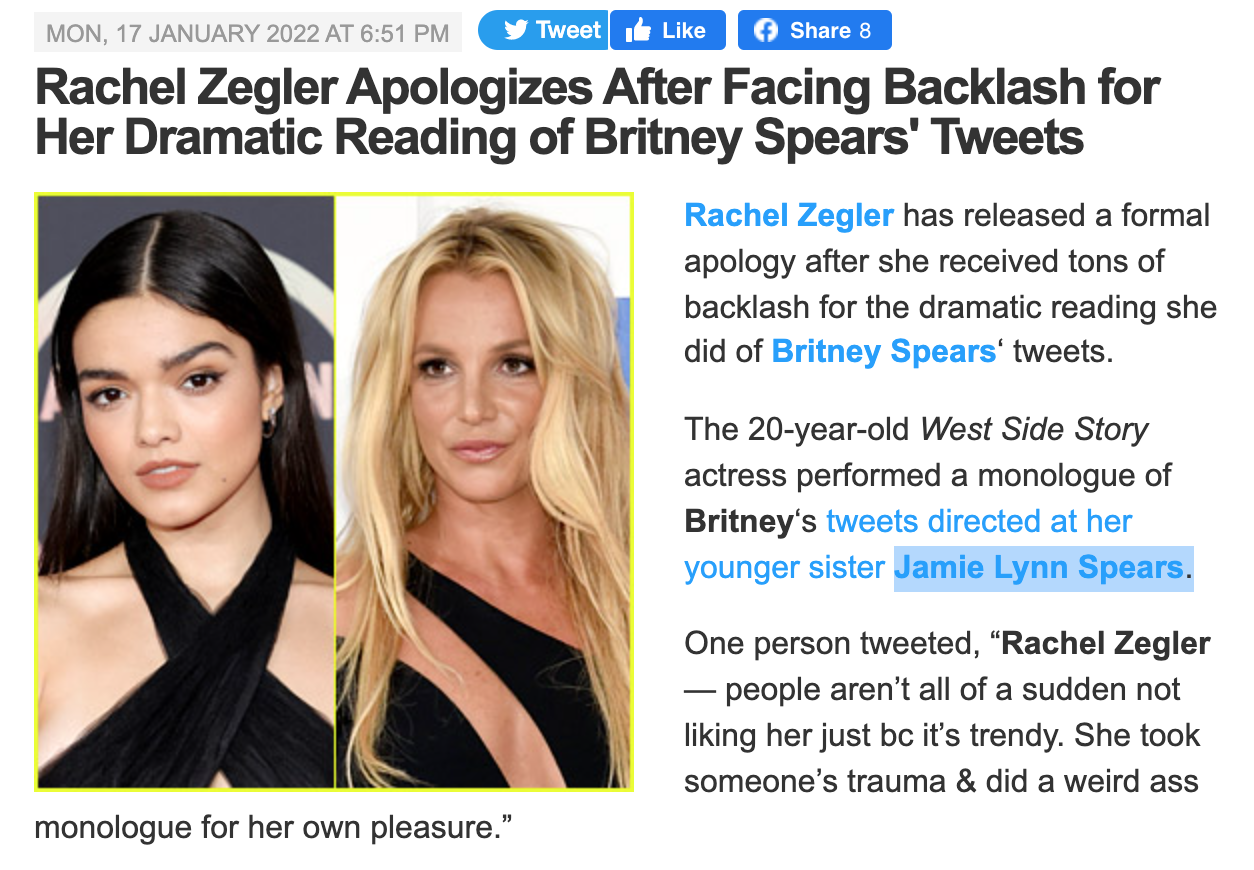
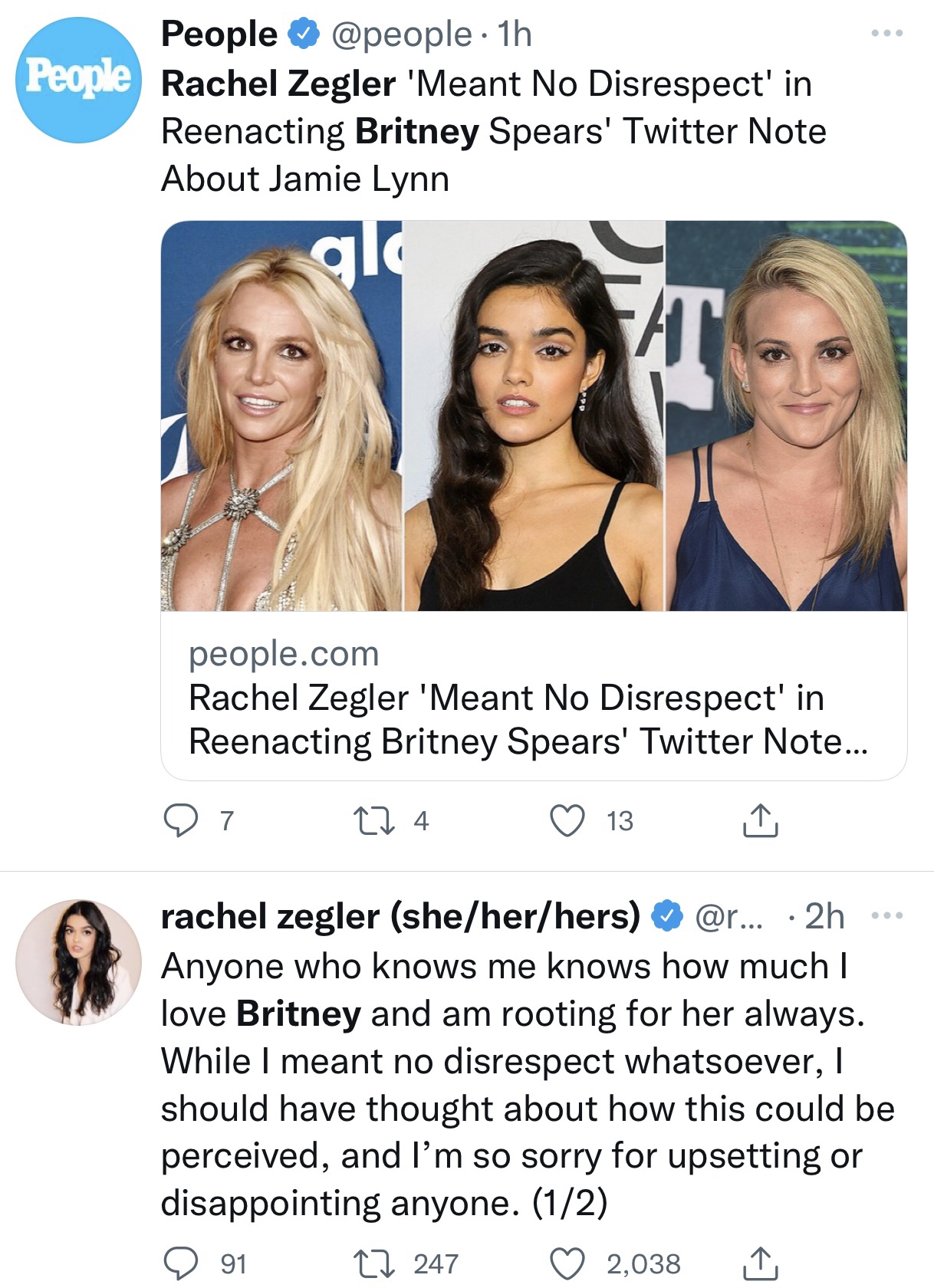
Earlier today Rachel Zegler performed a passionate reading of a portion of Britney Spearsrecent angry letter to her younger sister, Jamie Lynn Spears. (Nobody cares about the particulars.) Almost immediately Zegler was kicked, gouged and lashed by woke Twitter for showing a lack of sensitivity. And of course she apologized for this.

What Zegler was doing, of course, was seizing upon an acting opportunity, which is what actors often like to do. I happen to feel that she showed more range and angularity and emotional intrigue in this reading than she showed in all of West Side Story, which limited her to playing a willful Puerto Rican innocent. Seriously — Zegler reminded me of Faye Dunaway in Network or Mommie Dearest. I am now more impressed by Zegler’s acting chops than I was before today.

Hurt Feelings Inside Team Clooney

Film critics rarely hear back from filmmakers after the posting of a negative review. However disapproving your assessment might be, filmmakers (especially big names) never dispute or push back. Certainly not in these crazy times.

Way back in ’93 an irate Bruce Willis called me at home after I’d reported that he’d irritated colleagues during the making of Striking Distance, but that was a different universe.

Anyway, yesterday afternoon Facebook contributor and college instructor Lizzie Finn bitchslapped George Clooney‘s The Tender Bar something awful. Synthetic and unengaging, she said. Cliched. Not much dramatic tension. Too much of a casual white-male perspective.

Very soon after, however, Lizzie heard back from Lysa Heslov, wife of Clooney’s producing & writing partner Grant Heslov. And Lysa pretty much tore Lizzie a new asshole.

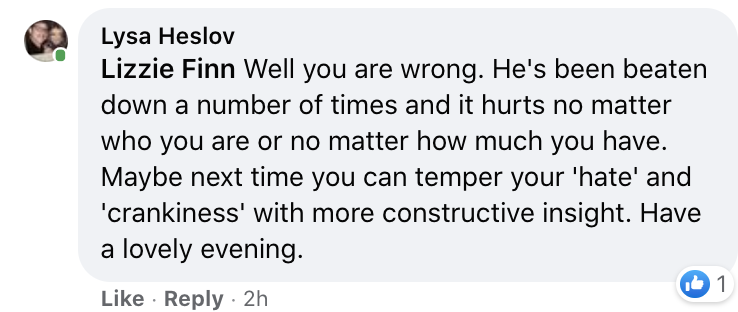
Lizzie replied to Lysa with a kind of “whadaya whadaya?” riff. I just wrote what I felt and thought, she said. I didn’t expect to hear back from anyone inside Team Clooney. I figured George and Grant wouldn’t give a shit one way or the other. Plus they’re rich and famous so who cares?, etc. To which Lysa replied as follows:

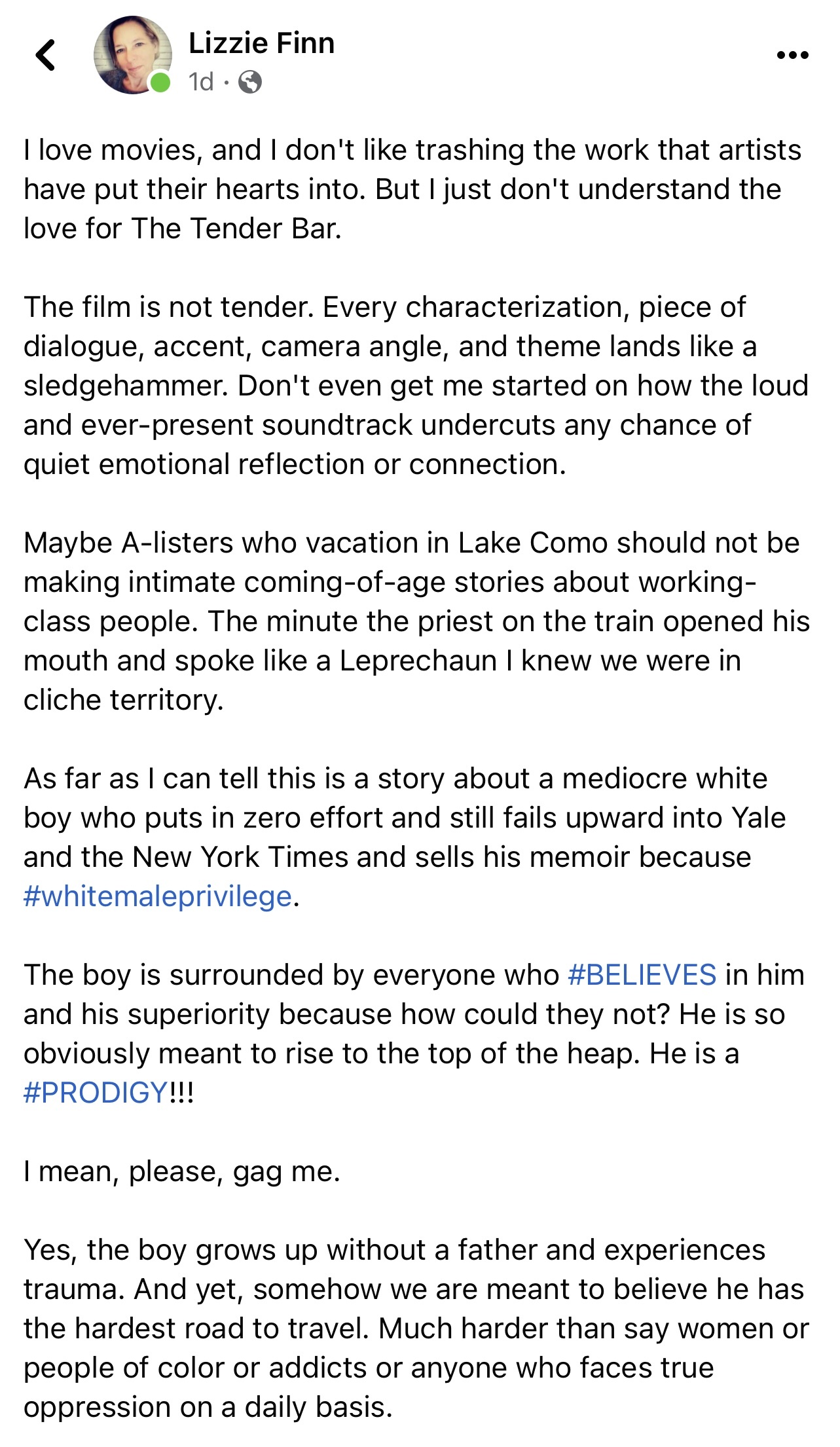
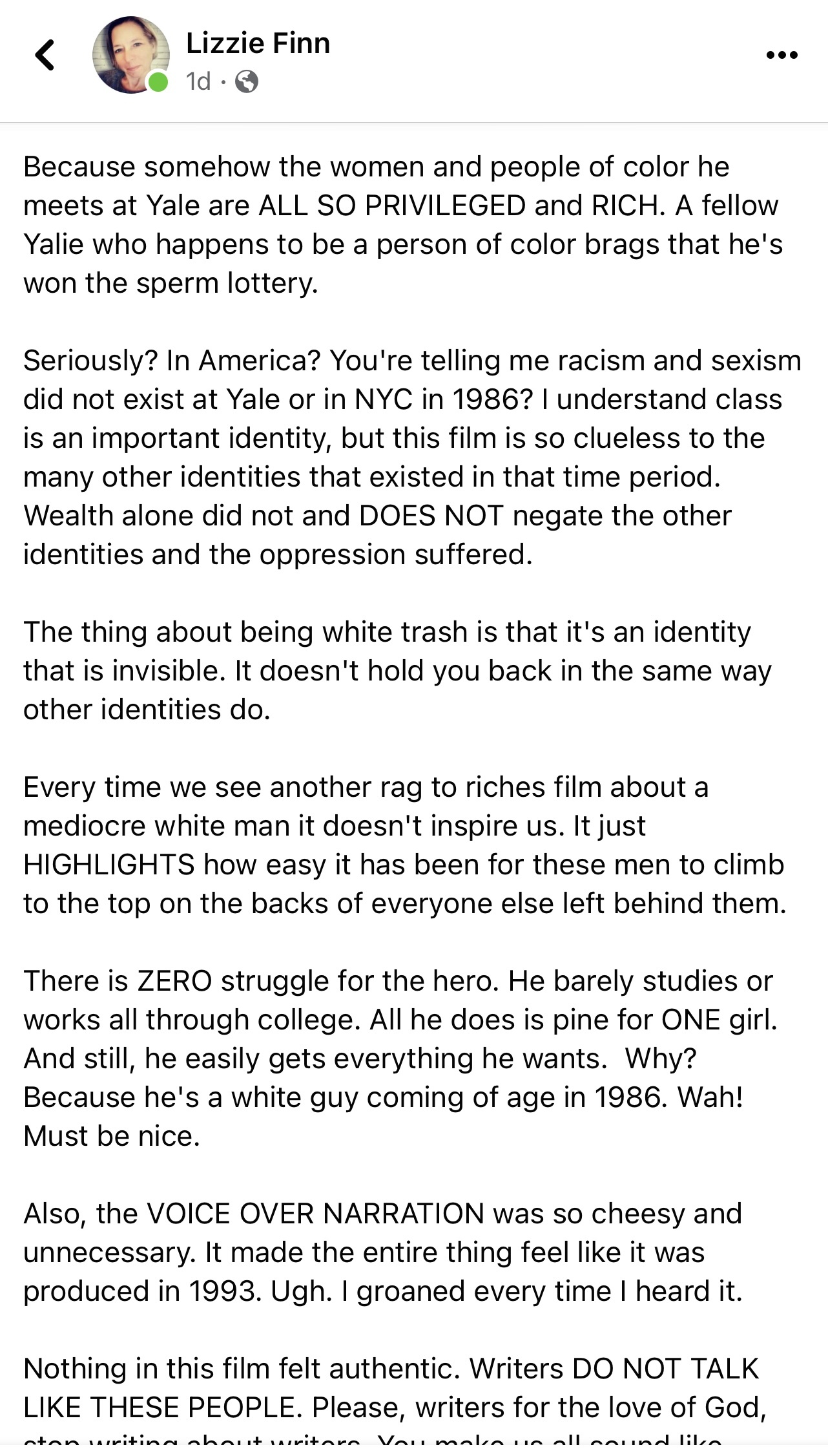
Here’s Lizzie’s poison-pen review:

Read more

1.85 Fascism Challenged by “Diva” Blurays

If you listen to a typical 1.85 aspect-ratio fascist (i.e., a film enthusiast who has unfortunately subscribed to the movie-projection and video-mastering theology of Bob Furmanek), they’ll tell you that outside of the various widescreen processes that were birthed in the ’50s and early ’60s, 1.85 aspect ratios became the law of the land starting in April 1953.

For many years I have pointed out dozens of exceptions to that idiotic fascist rule. I’ve also explained that theatrical projection mandates of the ’50s and ’60s have no bearing on how films of the era should be mastered today for Bluray or streaming. The rule book has been more or less thrown out, and the only people who don’t seem to understand this (or are are stubbornly refusing to accept reality) are the Furmanek fascists.

The best explanation for aspect-ratio sanity (and against the Furmanek lunacy) was contained in a seminal Criterion Collection essay that was included on their On The Waterfront Bluray.

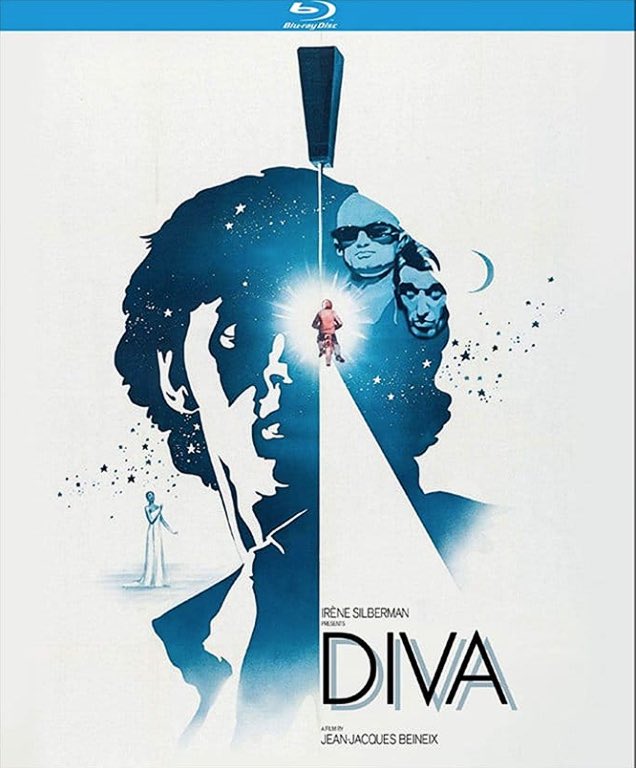
It can’t hurt to repeat that 1.66 aspect ratios were highly favored in England and Europe throughout the ’50s, ’60s and ’70s, and in some instances even beyond. One example is Diva, the landmark 1981 film directed by the the recently deceased Jean Jacques Beineix. Without exception every DVD and Bluray of Diva (including the recent Kino Lorber version) has been mastered at 1.66.

Read more