Last Despised White-Dude Flick to Win Best Picture Oscar

After the surprise Best Picture victory by 2016’s Moonlight (an identity-politics win that suffered from an inconclusive and strangely cast third act), progressive Academy members told themselves “no more Best Picture wins by white-guy directors!….the worm has turned!”

The following year Guillermo del Toro‘s The Shape of Water took the prize…a sexy monster flick about a homely and isolated woman’s sexuality, and created by the Mexican Orson Welles, an enormously well-liked fellow.

Eureka! We’re on a whole new path! The world transformed!

And then Green Book won the following year, and your extreme wokesters and BIPOCs totally freaked out…”Eeeeee!” A period flick (1962) about racial rapprochment between a thuggish Italian racist and an elegant gay pianist (essentially a parent-child road movie) was adored by Hollywood Elsewhere and tens of thousands of average sane people throughout the industry and the country but widely condemned by Film Twitter. To Spike Lee and many others on his side of the divide, the Green Book white-guy factor was intolerable…and yet it won! Wheeeeee! Wokesters can go fuck themselves!

But that was it. Older white guy movies were henceforth unofficially banned from serious consideration. Hence the dismissal of Martin Scorsese‘s brilliant The Irishman and the triumph of Parasite, despite the drunken scammers nonsensically letting the fired maid into the house during a rainstorm.

This was followed by last year’s triumph of Chloe Zhao‘s Nomadland — proper gender focus, ethnically correct, white guy characters strictly marginalized.

It follows that Jane Campion‘s The Power of the Dog, a movie that average viewers are mostly (almost entirely?) dismissive of, will win for Best Picture and Best Director. Not because anyone “out there” cares about this grim, tortured, glacially-paced melodrama about closeted gayness on the open range, but because of the “Campion rules!” factor.

From Sasha Stone‘s recent Awards Daily assessment

Out of Time

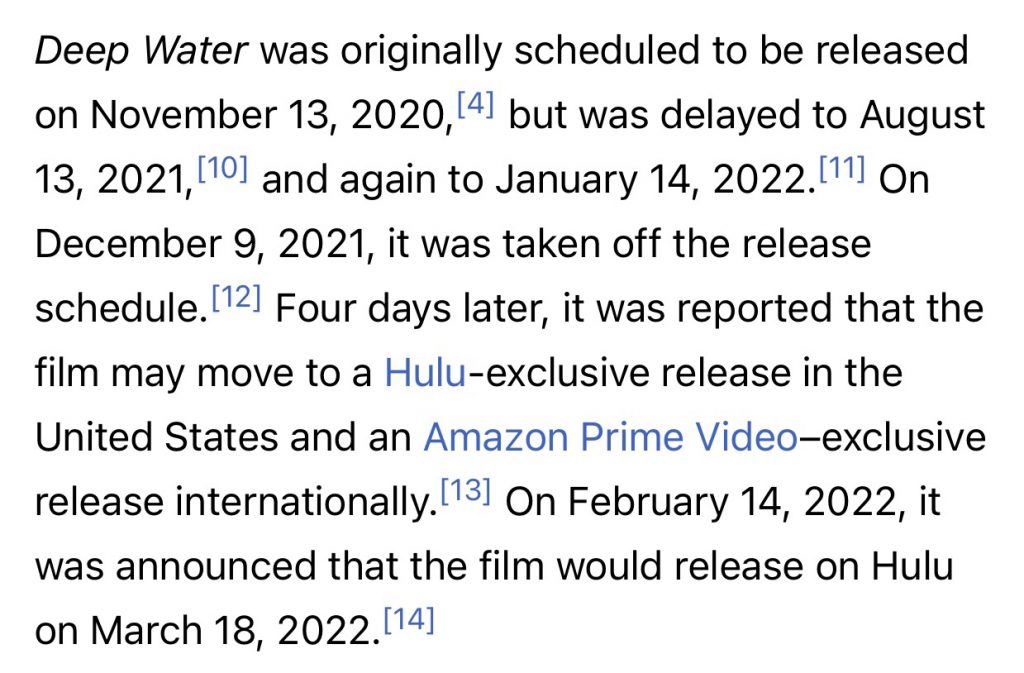
Adrien Lyne’s Deep Water (Hulu, 3.18) may be an intriguing sexual thriller, but it seems like an odd yesteryear thing — filmed before almost anyone on the planet had even heard of Covid ‘19, and a full year before Donald Trump decisively lost to Joe Biden in the election of early November 2020. And of course, the Ben Affleck-Ana de Armas affair was just kicking into gear, and Bennifer II was far beyond the horizon.

Reitman Sadly Ascends

Due respect and sincere condolences upon the passing of producer-director Ivan Reitman, who was 75. This is a huge boomer death — one that will make a lot of people feel anxious and shaken, and prompt them to take a deep breath and wonder what might be around the corner.

Reitman’s hottest period was between the late ’70s and the late ’90s, and his biggest film, of course, was the original Ghostbusters (’84), which most of the world adored and which I hated from the get-go. And I really, really hated Ghostbusters II.

Reitman made his first big mark as the producer of National Lampoon’s Animal House (’78), which exploded all over — it was the first time the SNL brand (and particularly John Belushi) connected massively in movie theatres.

Reitman was first, last and always a director and producer of mainstream popular entertainments. He always sought to please, his stuff was always audience-friendly, and his instincts were not absurdly anti-highbrow but they were certainly tidy and middle-class. He was a smooth operator (especially from the mid ’80s on) and he knew how to coax and encourage good comic performances, but he never, ever went over any audience member’s head.

Which Reitman-directed films do I think were exceptionally fine or which I at least really liked (i.e., laughed with) and went “wow, that was really pleasurable and a profound home run”? Answer: None.

But early on Reitman made two dopey, infectious comedies of immaturity, Meatballs (’79) and Stripes (’81)…films that had a cool Bill Murray spirit…a stoner feeling, a fuck-it vibe. I was also satisfied by the three Arnold Schwarzenegger films — Twins, Kindergarten Cop and Junior. And I was half-okay with Dave, Father’s Day and Draft Day.

Can anyone name a line of dialogue from a Reitman film that has lived on for decades? I’ve just thought of one from StripesWarren Oates saying “lighten up, Francis.”

Reitman knew exactly how to make successful “Ivan Reitman films” but he never directed or produced a truly brilliant or profound knockout, or an emotional powerhouse in the vein of, say, Heaven Can Wait or Groundhog Day or Planes, Trains & Automobiles or As Good as It Gets or Broadcast News.

Okay, I take that back — Up In The Air (’09), which his director-writer son Jason did an excellent job with and which Reitman Sr. produced, was in that elite fraternity.

Reitman’s instincts were kind of Ron Howard-ish, only a bit more anarchic or semi-experimental or stir-fried. He wasn’t really a “heart” guy (not like Howard or Jim Brooks or even John Hughes) except in the case of Junior, a comedy about a guy who gets pregnant.

I’ll say more tomorrow and I’m sure I’ll modify what I’ve just written later this evening. I’m very sorry about Reitman’s passing; 75 isn’t that old.

Diseased Fan Poster

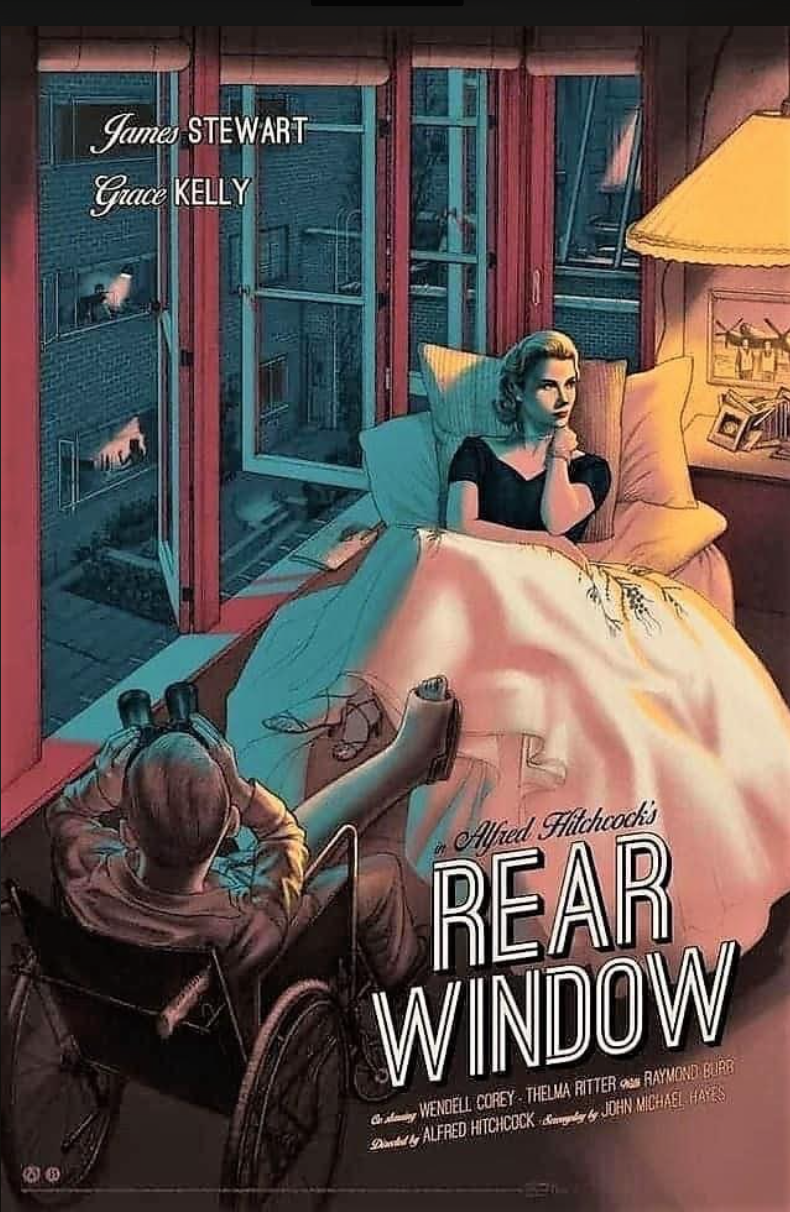
This Rear Window fan poster was composed by Jonathan Burton. The immediate question, of course, is why does James Stewart‘s L.B. Jeffries, a Greenwich Village-residing photographer with a broken leg and a wealthy, high-society girlfriend (Grace Kelly)…why does Jeffries have a massive bald spot, partially covered by greasy hair strands? Stewart wore his usual toupee in this 1954 classic. Is he half-bald because Burton himself is half-bald? What kind of illustrator does this? And what’s with the jug ears?

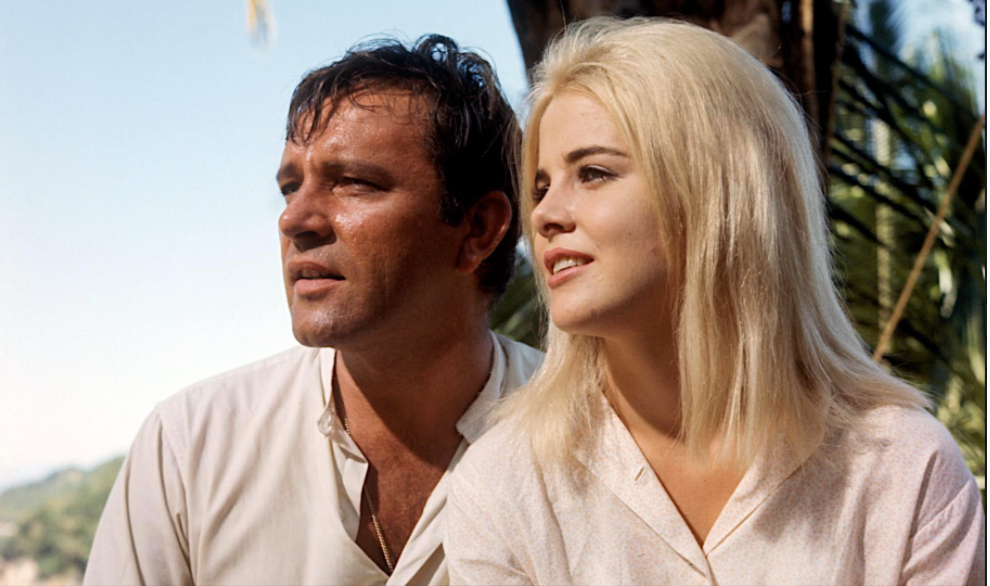
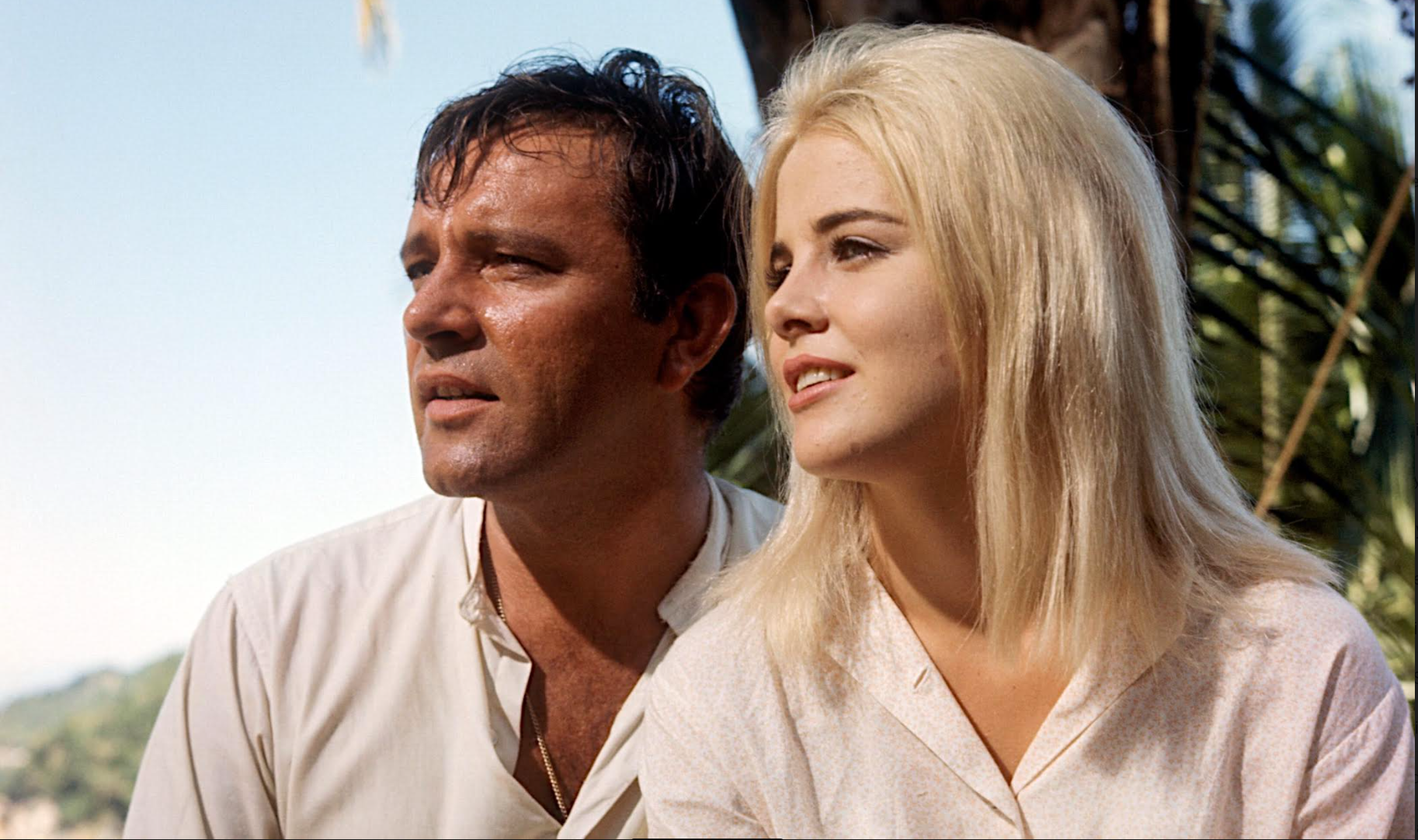
Based on a 1959 Tennessee Williams play, the film version of The Night of the Iguana (’64), directed by John Huston, is rather awful, which is to say dreary and stifled. But I’ve always wanted to visit Mismaloya, the small Mexican beach village (just south of Puerto Vallarta) where it was shot. The main stars were Richard Burton, Ava Gardner, Deborah Kerr and Sue Lyon. Elizabeth Taylor hung around during most of the filming. Huston wound up buying a home nearby.

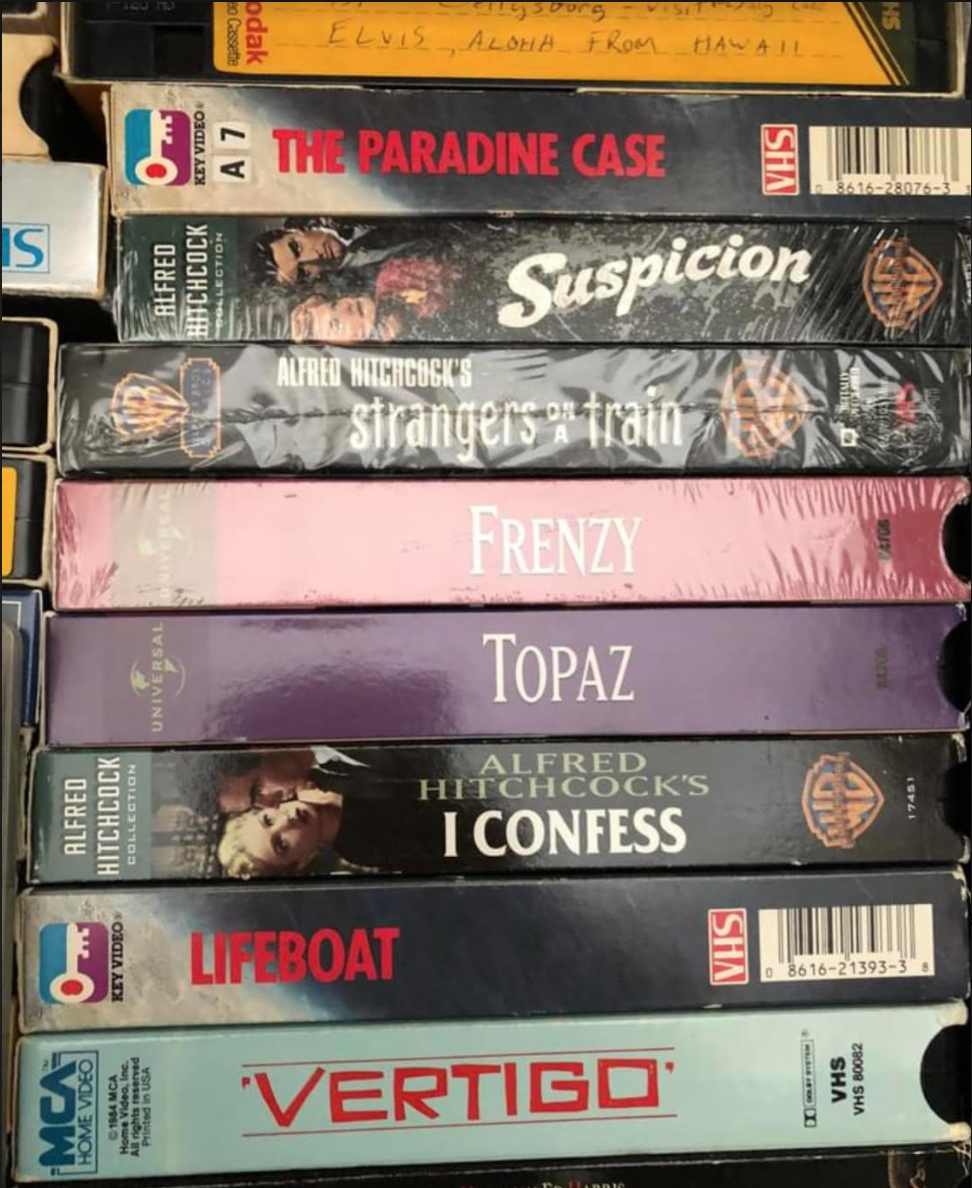
People stopped watching films on VHS when DVDs emerged, or sometime in mid ’97. Pretty much everyone had adopted DVDs by the turn of the century, or roughly 21 years ago. (The first DVD players were priced at $799 and up.) And yet a couple of days ago some ornery old codger posted a photo of his Alfred Hitchcock VHS library.

https://apple.news/IKh3Y9WHmQB6oaC-vJDMyjg

First Major Land Battle in Europe Since ’45

What would be the practical point of Ukraine military guys defending their country, if and when Russian forces invade? They’re not going to repel an obviously stronger and superior force. They’ll only succeed in getting wounded and killed + bringing about God knows how many civilian deaths. If the Russkis roll in, surrender.

Tim Roth Drive-By

A few hours ago David “take no prisoners” Poland posted a video interview with Sundown star and renowned character actor Tim Roth.

Roth’s first big score came from playing “Myron”, an emotionally volatile thug, in Stephen FrearsThe Hit (’84). His latest role is the indifferent, nihilist-minded “Neil” in Michel Franco‘s Sundown, which instantly registers as one of the greatest-ever character studies of an older guy who just says “fuck it”.

Until, that is, Franco starts explaining why Neil has unplugged, which makes the film far less interesting. But let’s not dwell on the negative.

Roth thought #1: One of the highlights of Sundown is when Neil’s sister (Charlotte Gainsbourg), having returned to Acapulco following funeral services for their mother, finds him at a low-rent hotel where he’s doing nothing except sipping beer, hanging on the beach and fucking a pretty local woman he’s just met. “What the fuck are you doing?” she screams. “You lied about losing your passport…what is wrong with you?” And Roth just sits there and stares at her, not saying a word. Franco only shows us the back of Roth’s head during this tirade. Because Neil doesn’t give a shit, and has nothing to say.

Roth thought #2: If Sundown taught me anything, it’s never to visit Acapulco for any reason. Zero charm, overcrowded, shitty hotels, too much like Cancun.

Roth thought #3: A lady friend and I were walking along Blvd. St. Germain in ’02 or thereabouts, sometime in the early evening. Lo and behold we came upon Roth and a significant other, sitting at a cafe table and people-watching, etc. I smiled and introduced myself, explained that I’d just been in Cannes, complemented Roth on his most recent work, etc. The not-bright-enough woman I was with didn’t know Roth and asked what he did. Roth gave her a death-ray look; The mood went south immediately.

Roth thought #4: Roth, 60, is starting to develop a little bit of a bulldog jowl in his cheeks, right around the corners of his mouth. If I were him I would pop over to Prague and get this taken care of. A very slight “touch-up.” Just so he keep playing guys in their mid ’50s. More range and opportunity that way.

Javier Bardem Can Play Any LatinX Character From Anywhere

22 years ago Javier Bardem played Reinaldo Arenas, a gay Cuban poet, in Julian Schnabel‘s Before Night Falls — a performance that launched his career. This year he portrayed another Cuban in Being The Ricardos — the band leader, conga-player and and TV comedian-producer Desi Arnaz, and the wokesters (including Variety’s Clayton Davis) gave him shit for it.

In response to this bullshit, HE hereby approves of Bardem playing any character from any culture in any part of the world who seems to speak with a Spanish or Mexican or any south-of-the-Border accent. He can play Spanish, Cuban, Argentinian, Chilean…he can play a Columbian immigrant living in the Bronx…he can play cops, drug dealers, heads of state, henpecked husbands from Rio de Jainero, a quadraplegic looking to humanely commit suicide…he can play an auto mechanic from Tijuana, a Venezuelan diplomat based in Washington, D.C., a smooth womanizer from Barcelona, drug dealers, arms dealers, a confused poor guy…he’s free to play anyone and everyone, including the voice of God.

Davidson’s Street Garb Is Horrific

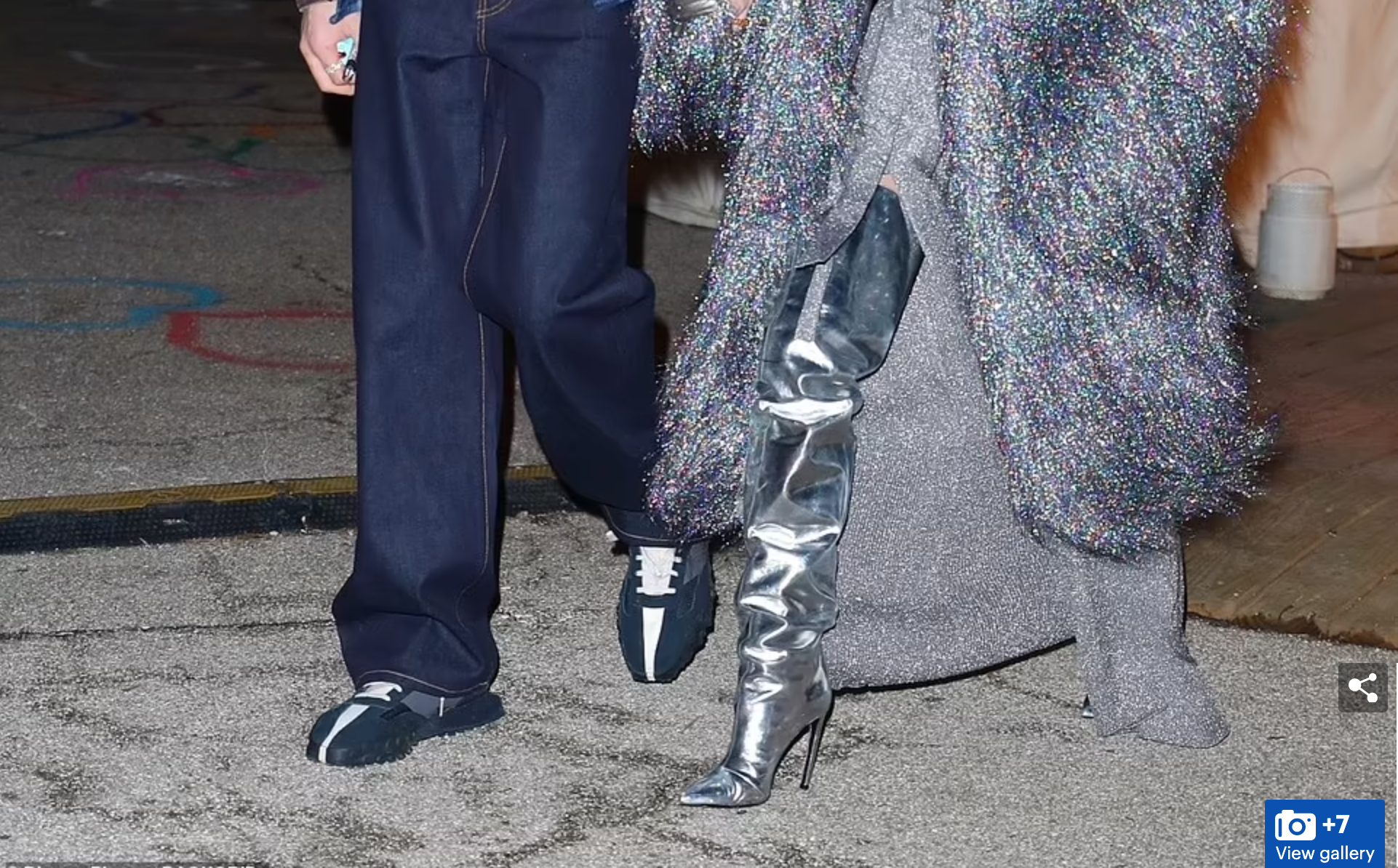
I’ve eaten at Lilia, the Williamsburg Italian joint on Union Avenue. Classy but low-key…a loose-hang type of place, and a long ways from “puttin on the Ritz.” So you’re sipping wine and twirling your linguini when in strides the over-dressed Kim Kardashian in an ostrich outfit you need dark sunglasses to even glance at…words fail. And those girlfriend-of-Leslie Neilsen-in-Forbidden Planet space boots!

Accompanied by “normcore” Pete Davidson in a butch haircut (i.e., not even an Aaron Paul-styled “tennisball” coif), baggy-ass hiphop jeans from the ’90s, flannel shirt, wrap-around shades, black sneakers…give me a break.

What is wrong with Davidson? He looks like Matthew Modine‘s “Joker” after emerging from the Parris Island barber in Full Metal Jacket. Who tries to look like a member of an Aryan gang in Attica state prison?

Newsflash: Davidson is 6’3″, or basically a basketball player. I somehow never realized this until recently. The widespread rumor is that he’s hung like Milton Berle.

At Very End, “Heaven Can Wait” Transcends Itself

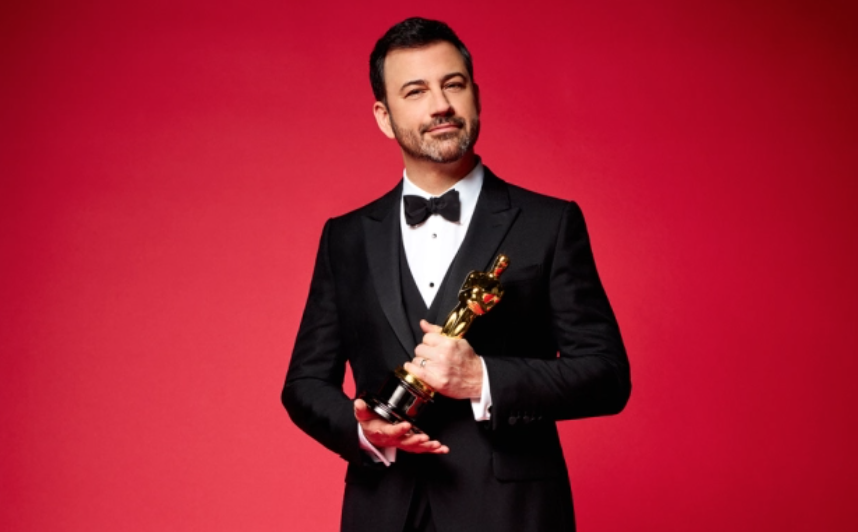
In his “Jimmy Kimmel Is Right About The Oscars” piece, Variety‘s Owen Gleiberman considers 25 Best Picture nominees from the past that were anything but artful and highbrow. These films were certainly audience-friendly. As Gleiberman remarks, “I was surprised to be reminded at times of what a low-to-middlebrow affair [the Oscars] used to be.”

His capsule descriptions of these 25 are spot-on in terms of what they really were or amounted to, except in the case of Warren Beatty and Buck Henry‘s Heaven Can Wait (’78).

Gleiberman describes it as “a popular comedy — but really, it’s just a fluffy afterlife fantasy with Beatty at his most meticulously abashed.” And he’s mostly right. 93% of Heaven Can Wait is a fluffy escapist comedy. But the last 12 minutes are killer. It becomes this WHOLE OTHER THING.

The last scene in that LA Colisseum passageway, the one between Beatty and Julie Christie, is one of the most emotionally affecting, spiritually transporting romantic scenes in movie history.

The film fiddles with the idea that our essence as a person — our settled soul, our eternal centerweight — not only persists through the millenia but would somehow be recognizable to a girlfriend or lover if she happened to run into us in another body. Christie fell in love with Beatty’s Leo Farnsworth and wept when he died, and yet somehow she sensed at the very end that there was something curiously familiar about Beatty’s Tom Jarrett, the Rams quarterback.

This scene (the eye contact between Beatty and Christie is magnificent) is the reason Heaven Can Wait made as much money as it did. Produced for $6 million, it wound up earning $98 million — the equivalent of $419 million in 2022 dollars.

The reason it did so well is that final fantasy scene, and the fact that the movie sold audiences on the notion that we’re all just passing through life and passing through this or that body, but that our spiritual core lives on — that we, in a sense, will never really die. And that even after our time on earth is finished, we’ll move up to heaven and hang out with James Mason and Buck Henry and other angels in business suits.

That’s not “fluffy” — that’s about as primal as it gets. We’re all going to die some day, and it’s enormously comforting to not only imagine but temporarily believe that death is not the end, but just a way station into the next realm. Heaven Can Wait sold a gentle little fantasy that made everyone feel awfully damn good.

What The Academy Has Recently Liked

There are now five opinion-spreaders who’ve argued that Spider-Man: No Way Home should have been nominated for the Best Picture Oscar — myself (two months ago), Variety‘s Owen Gleiberman, Awards Daily‘s Sasha Stone, Jimmy Kimmel and Kevin Smith.

In a 2.12 Variety essay Gleiberman has dug into an issue related to the Spider-Man thing. It’s titled “Why Jimmy Kimmel Is Right About the Oscars.”

Key passage: “The Academy Awards, even as they seem to be discovering a new kind of ‘integrity,’ could end up withering on the cross of that integrity.

“Today, the Oscars reflect an increasingly dichotomized thinking: small movies (good) vs. popular movies (not so good), movies that wear their art on their sleeve (good) vs. movies that just want to have fun (not so good).

HE interjection: Since the woke thing took hold in ’17, Academy members have favored smallish films, true, but especially those that seem culturally meaningful (signifying some form of social awareness or advancement) or emotionally touching in a socially-healing way.

The last five winners: Nomadland (dispossessed nomads, living hand to mouth, shitting in buckets), Parasite (rich vs. poor, social hostility, a director of color, wasn’t another Scorsese goombah film), Green Book (a parent-child road movie, racial rapprochement in 1962), The Shape of Water (great fish sex for homely woman vs. Michael Shannon rage and perversity), Moonlight (three stages in the life of a gay black dude + “ohh, that handjob on the beach!”).

Back to Gleiberman: “That thinking is there on the part of both the media and the Academy voters. Even King Richard, one of the 10 best picture nominees (and one that’s likely to bring Will Smith his first Oscar for best actor), may, at this point, be too conventional and wholehearted for the Academy. I was happy to see it nominated (I think, after Drive My Car, that it’s the best film on the slate), but a decade ago I believe it would have won. Why isn’t it being talked about as a contender?

“It’s hard to generalize about the Oscars — whenever you point to a trend, there’s probably some example from the past that can be used to contradict it. But what my gut says, along with Jimmy Kimmel’s, is that what most of the world thinks of as the quintessence of entertainment is starting to be something the Academy no longer trusts.

“If so, that’s a serious problem. As a night of showbiz, the Oscars should be a lot of things: traditional and audacious, intimate and spectacular, frivolous and sincere.

“The one thing they shouldn’t be is alienating.”