Cannes Political Shocker — Ostlund’s “Triangle of Sadness” Wins Palme d’Or

Disgruntled friendo: “From the Palme d’Or and on down, the Cannes Film Festival awards often don’t make any sense, and this year are only compounding what is now the twee irrelevance of Cannes itself.”

Ruben Ostlund‘s Triangle of Sadness takes the Palme d’Or! And a lot of people are scratching their heads. Sadness is a very funny, impudent and whipsmart satire during the first half, but it loses something when the vomiting scene kicks in aboard the Christina O. The second half isn’t as good as the first, and no one has disputed this. So why did it win the top prize?

I’m a serious fan of the film and Ostlund in general, but this seems like a political call. The film bluntly satirizes the super-wealthy and the general spread of self-obsession, selfishness and social media. Congrats to Ostlund and his cast, but this is kinda nuts, man.

Friendo: “I didn’t love Triangle of Sadness — like you I found the second half slow and dawdling and didactic, and obviously woker-than-woke in the desert-island section — and it’s just so disappointing that they would give the Palme to Ostland AGAIN, for a film that’s not really good enough. But all you have to do is scroll through the entire history of Cannes winners to remind yourself that one-half to three-fifths of them are utterly nuts. Totally undeserving.”

Grand Prize: A tie between Lukas Dhont‘s Close (fully deserved) and Claire DenisThe Stars at Noon….another crazy call. The Denis isn’t even close to Dhont’s realm of accomplishment, and so this feels like feminist positivism — Denis’ film has seemingly won for the same reason that Power of the Dog‘s Jane Campion won the Best Director Oscar — an aging, distinguished feminist helmer is paid tribute for her long brave career.

Trust me, The Stars at Noon is okay but delivers nowhere near the emotional combustion of Close.

Best Director: Park Chan-wook for Decision to Leave. I give up. We all understood that Decision wasn’t any kind of masterful effort except technically, but the Park Chan-wook cabal is curiously adamant about his being honored because…well, mainly because Decision has excellent chops. It’s certainly not good enough to win a big award, but here we are regardless.

Special 75th Anniversary Prize: Jean-Pierre et Luc Dardenne‘s Tori et Lokita…at least it didn’t win the Palme.

Jury Prize: The Eight Mountains and Jerzy Skolimowsky’s EO…a tie.

Best Actor: Song Kang Ho (the Parasite guy with the slightly oafish expression) for Broker.

Best Screenplay: Tarik Saleh, Boy From Heaven.

Best Actress: Zar Amir Embrahimi, Holy Spider.

Camera d’Or: Riley Keough‘s War Pony, a film that I liked and respected for the most part.

Random sloppy thoughts: Embrahimi’s crusading female journalist in Holy Spider wins for Best Actress? Why? Her peformance is apparently being celebrated because of the feminist symbolism aspect — because her fictitious journalist character was persistent and committed and basically busted an infamous woman-loathing serial killer singlehandedly. Again — Embrahimi is okay but why all the excitement?

I wasn’t dead bored by Broker, but it was certainly an in-and-outer. If you ask me it’s bullshit to give the Best Actor trophy to the Parasite chauffeur guy — Song Kang Ho. Really mystifying. Song just repeated his awkward middle-aged-guy performance from Parasite, the same character wearing the same timid, not-fully-comprehending expression…this time he’s playing another kind of hustler or scammer…more or less the same deal.

I didn’t see Le Otto Montagne but Jerzy Skolimowski’s EO (basically an Au Hazard Balthazar remake) felt sloppy and catch-as-catch-can — meandering, spotty, didn’t kick into gear, overly impressionistic and kind of a mess. No buzz, no excitement and no applause after the press screening ended and yet they’ve split the Jury Prize and given both of these films an award for same? This is CRAZY!
Angeli Rose Gomez — Balls, Backbone, Mother Courage

The Angeli Rose Gomez story is a couple of days old but I was buried in Cannes screenings, etc. Someone needs to make a documentary about this woman and what she did last Tuesday in Uvalde, or maybe even a feature.

If you can’t get past the Wall Street Journal paywall here’s a N.Y.Post version of same.

Compare what Angeli did to the chickenshit Uvalde cops who waited and stood around and did nothing while kids were getting plugged.

The Wall Street Journal‘s Douglas Belkin, Rob Copeland and Elizabeth Findell broke Angeli’s story.

Read more

Seriously, Please, C’mon…No Palme d’Or for Dardennes

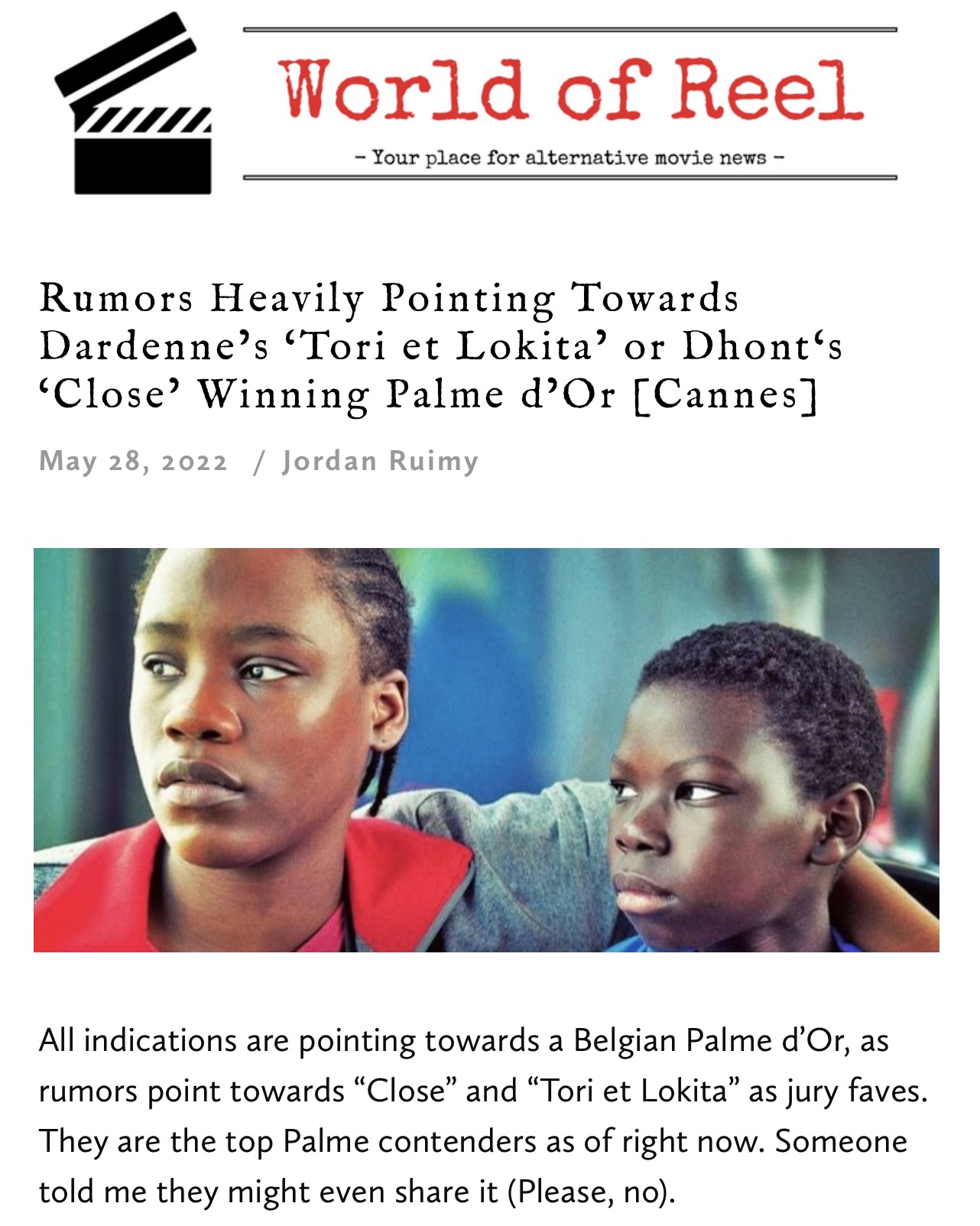
World of Reel‘s Jordan Ruimy has been told that the Palme d’Or will either go to Lukas Dhont‘s Close (the right choice) or to the sad (i.e., tragic) but unexceptional Tori et Lokita, the latest moderately decent film from Jean Paul and Luc Dardennes, the Belgian brothers who make the same kind of matter-of-fact, low-key, point-and-watch film year after year after year.

Tori and Lokita is fine but very familiar if you know the Dardenne and how their films tend to play. It’s about a pair of African immigrants (not related but pretending to be) suffering cruel or indifferent treatment, mostly at the hands of Belgian drug dealers. You can’t help feeling sorry for these kids, but desperate immigrants have been getting kicked around and exploited for centuries, haven’t they? Life can be heartless for have-nots.

Audience compassion for victims is one thing; recognition of filmmaking excellence is another. The twains don’t necessarily overlap.

Fast and Smooth

The last time I was on the Cannes-to-Paris train was four or five years ago. No SNCF wifi then — you were on your own with your phone signal. Now there’s on-board wifi and with a semi-decent strength. Left Cannes this morning at 11:24 am — arriving at Gare de Lyon around 5 pm (or 8 am Los Angeles time). The high-speed rail vibe is a nice gentle groove. It settles you. We’re just north of Lyon now. The HE pad is at 74 rue Duhesme, in the 18th. I should be opening the door by 6 pm or thereabouts. I’m looking forward to a nice, long, relaxing walk around town.

Would That “Maverick” Producers…

…had the cast-iron balls to go with a Bridges at Toko-Ri ending, rather than the triumphant one they chose. I’m talking about Tom Cruise‘s titular character and Miles Teller‘s “Rooster” Bradshaw suffering the same fate that William Holden and Mickey Rooney did 68 years ago. I’m talking about Cruise and Teller being surrounded by enemy troops after crash landing and putting up a good Wild Bunch-level fight before being outflanked and shot to death.

Dying together would have added poignance to the brotherly bond that Maverick had with Rooster’s dad, “Goose”, back in the ’80s, not to mention ending the contentious vibe that exists between Rooster and Maverick from the beginning.

A death ending would also have said “oh and by the way? War isn’t a fucking video game….it’s real, and sometimes the mission doesn’t go perfectly and sometimes good pilots buy the farm.”

A Cruise-and-Teller Toko Ri ending would probably translate into a slightly diminished box-office, agreed, but maybe not. A major character dying at the end of Titanic didn’t hurt the returns any. Not to mention Daniel Craig getting killed at the close of the highly successful No Time To Die.

Read more

Indelible Scorsese History

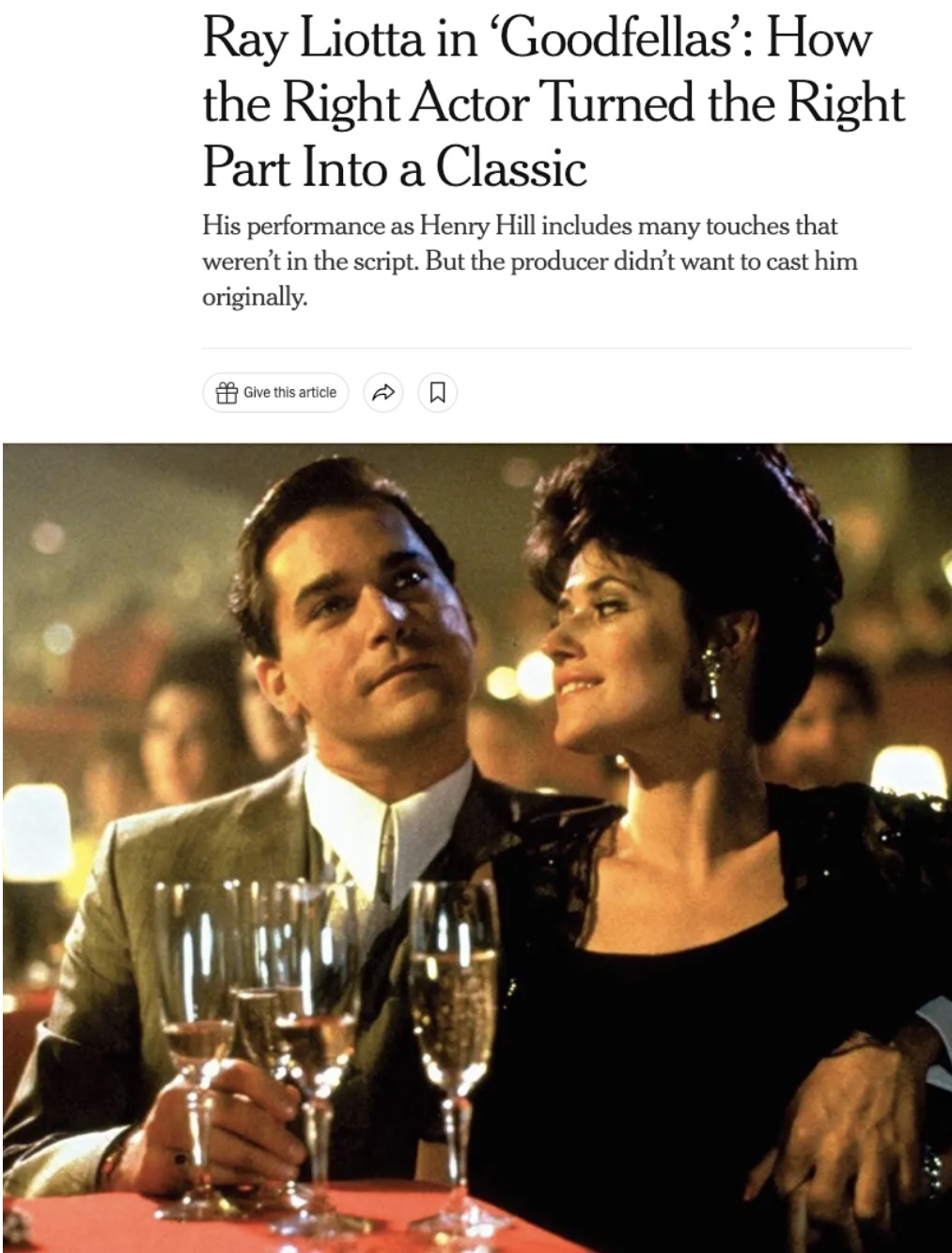
From Glen Kenny’s 5.26.22 N.Y Times piece about Ray Liotta:

“The Henry Hill part came at a point when Ray Liotta might have been headed for a career as a character actor.

“He was unforgettable in Jonathan Demme’s Something Wild, as an ex-boyfriend of Melanie Griffith’s whose possessiveness explodes in still-shocking violence. And in Field of Dreams he played a reincarnation of the disgraced ballplayer Shoeless Joe Jackson. Sometimes the crinkle in his eye reminded the viewer of the man’s corruption, but his portrayal was mostly of an awe-struck love of the game he could now play forever in a Midwestern cornfield-turned-ballpark.

“When Goodfellas was announced, more than one of its eventual cast members told me that it was the movie every New York and Los Angeles actor wanted in on. And Liotta was no exception.

“Everyone liked him for the part save the producer Irwin Winkler. He did not see the actor’s charm. In his book ‘A Life in Movies’, Winkler recalls Liotta coming to his table at a Santa Monica restaurant and asking for a word. ‘In a 10-minute conversation he (with charm and confidence) sold me on why he should play Henry Hill,’ the producer wrote. When I interviewed Winkler, he said, rather sheepishly, ‘You heard the story of me not wanting Ray?’ I told Winkler I had and said, ‘I can’t see anyone else doing it.’ Winkler responded ‘Nor can I.’

“As it happened, I was not able to interview Liotta himself for my book, ‘Made Men: The Story of Goodfellas‘.

“Early talks with his publicist were promising. It was possible that I could get some time with him when he was in New York promoting Marriage Story at the New York Film Festival; then it wasn’t. We were both represented by the same agency; no dice. He was in a film on which a few close friends of mine were crew members. Can’t go there. And as I worked on the book, I heard several accounts of an intense, serious actor who, upon deciding he wasn’t going to do something, kept to that.

“He had spoken about Goodfellas in other interviews, including an oral history that ran in GQ in 2010. The shoot had its challenges: He suffered the death of his mother halfway through and felt at least slightly shut out by male castmates like Robert De Niro and Joe Pesci.

“Going through De Niro’s papers at the Harry Ransom Center at the University of Texas at Austin, ‘I came across a thank-you card from Liotta, and inside was a handwritten note: ‘Bob, Now I can tell you how much of a trip it was to work with you. You’re the best. Hope we can do it again. But I really mean Do It!'”

HE “Maverick” Report Card

With Top Gun: Maverick having played nationwide for the last three days, candid reactions would be greatly appreciated. Here, un-paywalled, is my two-week-old review that appeared on 5.12. If I over-stated something or was unfair in some way, please explain how, who, where, why and what-the-fuck.

Say it again: Top Gun: Maverick is a totally square, totally flash-bang, sirloin steak, right down the middle, Tom Cruise-worshipping, un-woke, stiff-saluting, high-velocity, bull’s-eye popcorn pleasure machine.

If you submit to it, that is. For this is a formula thing, this movie…one super-mechanized, high-style, bucks-up thrill ride with a few heart moments sprinkled in. Au Hasard Balthazar, it’s not, so if you see it with, say, a Mark Harris attitude (and he wasn’t wrong when he put down the original Top Gun nine years ago), you won’t have as good of a time.

If you can just park your quibbles and show obeisance before power…if you can surrender to this military glamour fantasy, this glossy Joseph Kosinski breath-taker, this thundering Cruise + Chris McQuarrie + Jerry Bruckheimer G-force engine, this audience-friendly, holy-shit delivery device…if you submit you’ll enjoy it and then some.

What else are you going to do? Fight it? Stage a protest with speeches and placards?

Everything in Top Gun: Maverick is hardcore, highly strategized, mechanized, high-octaned, and totally fucking shameless. It’s like a two-hour trailer for itself. High style, brash energy, fleet editing, classic rock (even the 65-year-old “Great Balls of Fire” is celebrated), movie-star smiles, Top Gun nostalgia and a totally driller-killer finale.

Pete “Maverick” Mitchell (Cruise) is a somewhat rakish, middle-aged loner who lives only to fly solo while pushing the limits. After losing his test pilot gig, Mav is assigned to be an instructor at the Top Gun Academy in San Diego. His students include Rooster (Miles Teller), the son of Anthony Edwards‘ “Goose” who despises Maverick for taking his name off the Naval Academy list. (There was a reason.) There’s also the brash Hangman (Glen Powell) and a cool woman pilot, Phoenix (Monica Barbaro).

Maverick’s former rival Iceman (Val Kilmer), a retired admiral, has convinced the commanders that Maverick is the best guy to prepare pilots for a top-secret mission — the destruction of a uranium enrichment plant in some snow-covered mountainous region. Fighter jocks need to swoop in, detonate and get the fuck out before enemy missiles and dogfights ensue. You know what’s around the corner.

Remember Luke Skywalker‘s big Death Star challenge at the climax of Star Wars: A New Hope? Portions of that classic action sequence are recalled here. Oh, and also like Star Wars, the enemy has no face, only a dark gray helmet…no nationality or ethnicity.

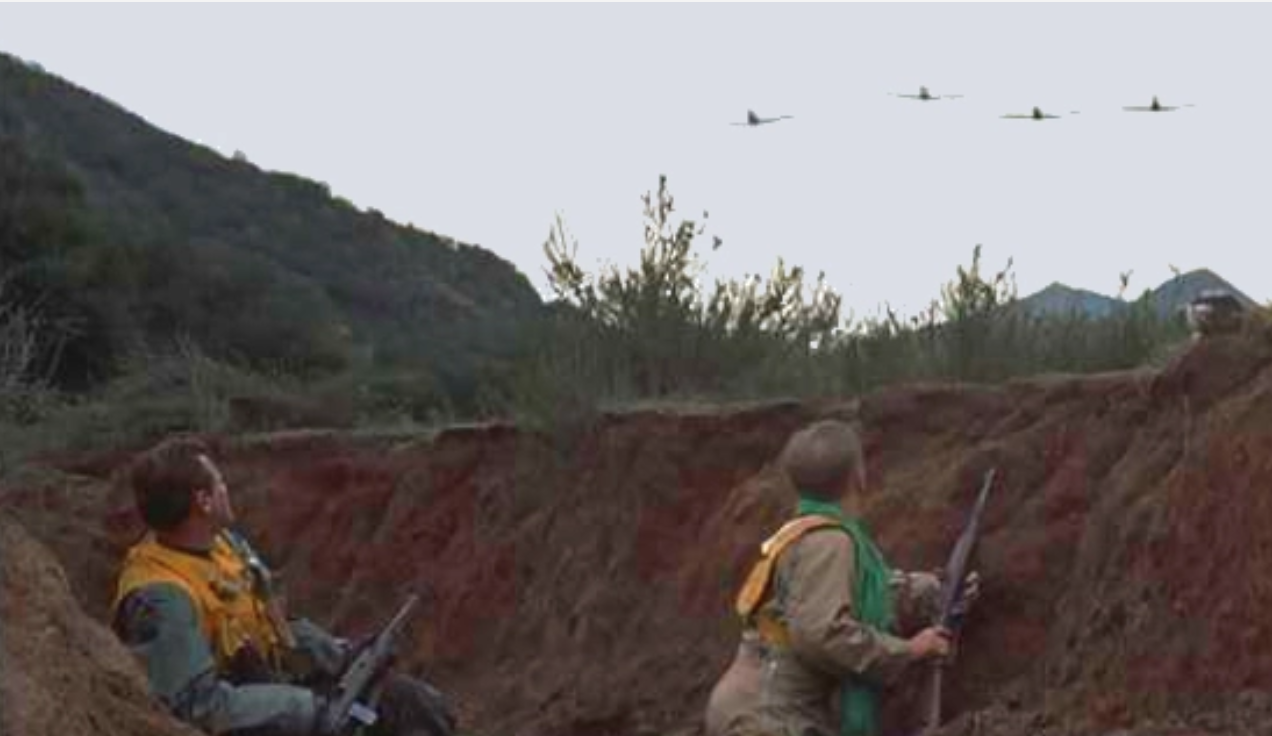
There’s a moment near the end of Top Gun: Maverick when it seems as if the finale of another film about fighter jocks — Mark Robson‘s The Bridges at Toko-Ri (’54) — is being replayed. You’ll recall that it ends with William Holden and Mickey Rooney huddling in a muddy ditch and being killed by North Korean troops. If only the Kosinski-Cruise-Bruckheimer film had gone the distance in this respect.

But the absence of even a shred of wokeness is wonderful. Remember that it’s locked into a mid ‘80s mindset to start with, and that it was written and filmed before the woke thing kicked in bigtime.

Read more

The Pigeon of Crocville

An awful lot of people (i.e., at least two and possibly three) wear Crocs in Kelly Reichart‘s Showing Up, and I don’t mean the Balenciaga kind. And their presence in this quiet, sluggish but not-overly-problematic film represented…well, a slight problem.

To me Crocs are just bad — bad omens, everything I hate, unsightly, bad all over. And every time I saw one of Reichart’s characters walking around in these rubber swiss-cheese loafers it gave me a bad feeling. I didn’t cringe every time, but a voice inside went “aw, shit.”

Michelle Williams wears Crocs in this thing, and yet (significantly) this didn’t interfere with my liking, relating to and even enjoying her character — “Lizzie Carr”, a 40ish figurine sculptor who lives in a rented home in the Portland area, and who is preparing for a showing of her art in a nearby storefront-slash-salon.

Lizzie regards almost everyone and everything with an air of subdued consternation or vague resentment or sardonic resignation…my general spiritual territory.

I can’t say that Lizzie (or any other character in Showing Up) is involved in an actual story. For Reichart is naturally adhering to her familiar scheme of avoiding narrative propulsion like the plague. She’s into women and laid-back men and mulchy atmospheres and odd, low-energy behavior and whatnot. There are no second-act pivots in a Reichart film because there are no first, second or third acts, or at least not the kind that I recognize.

The only thing resembling a story in Showing Up is the plight of a wounded pigeon. The poor bird is mauled by Lizzie’s Calico cat, and left with a broken wing. Lizzie and her landlord, Jo Tran (Hong Chau), put the pigeon in a shoe box and take turns looking after it. During Lizzie’s art show at the close of the film, the pigeon is unwrapped and set free and off it goes into the wild blue yonder.

Unfolding in suburban Portland, Showing Up is, of course, concurrently set in deep Wokeville. To an anti-wokester like myself, it’s like watching a film set in Communist East Germany in the ’60s, ’70s or ’80s. The very notion of a film about Wokeville women and the inconsequential, low-energy men in their lives (ex-husbands, beardos, dads, brothers, laid-back co-workers)…a social satire set in this organic, unhurried, arts-and-craftsy environment could be an opportunity for something alive and biting. But not with Reichart at the helm.

Showing Up has been described as a comedy, although it didn’t strike me as such. It has a vagueiy slouchy observational attitude. Every 10 or 15 minutes it elicits a subdued titter.

This is because the focus is entirely on vaguely morose Lizzie, whose general outlook is not, shall we say, bursting with optimistic expectation. She’s in a kind of a downish place start to finish. This is partly due to Tran’s lazy reluctance to fix the hot-water heater.

One of the best moments happens when Lizzie, fuming over her inability to take a hot shower, beats up a couple of plants in Tran’s small front-yard garden. Please…more or this! But that’s the end of it.

That’s all I have to say about Showing Up. It’s not bad by Reichart standards…oh, wait, I’ve already said that.

Cannes Winner Predictions

The big Cannes Film Festival award ceremony happens tonight — Saturday, 5.28 at 8:30 pm.

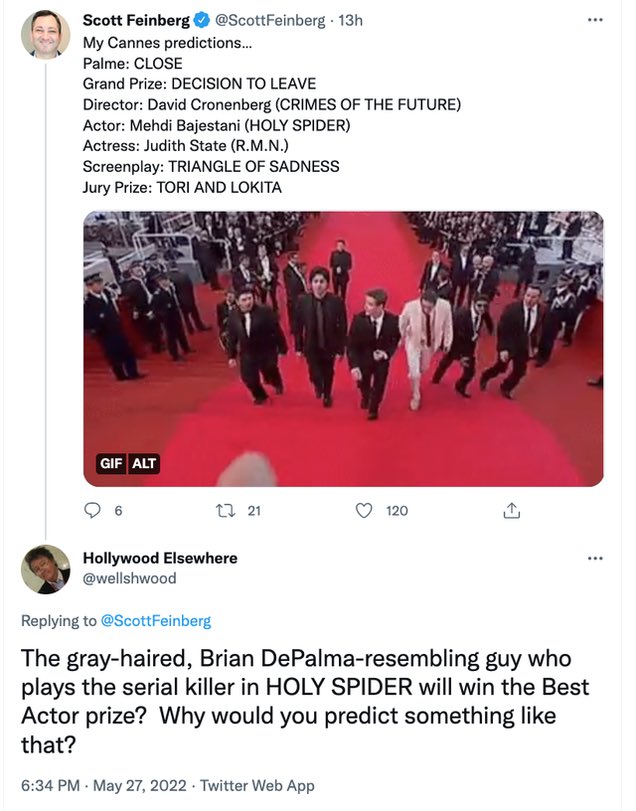
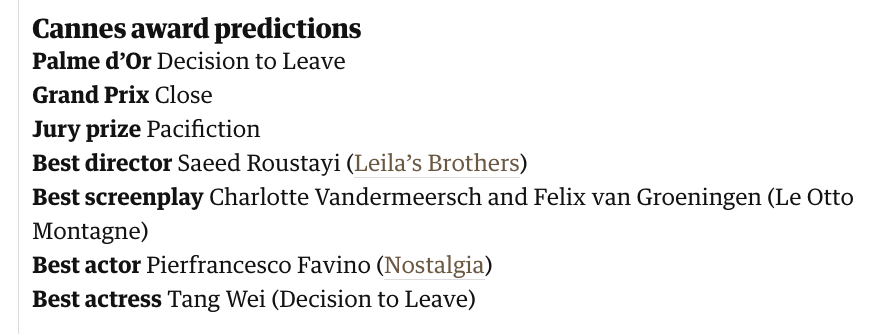
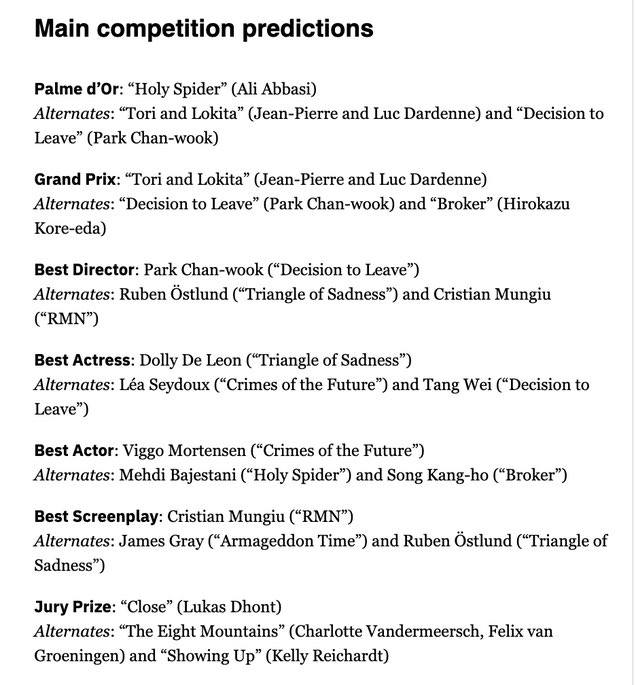
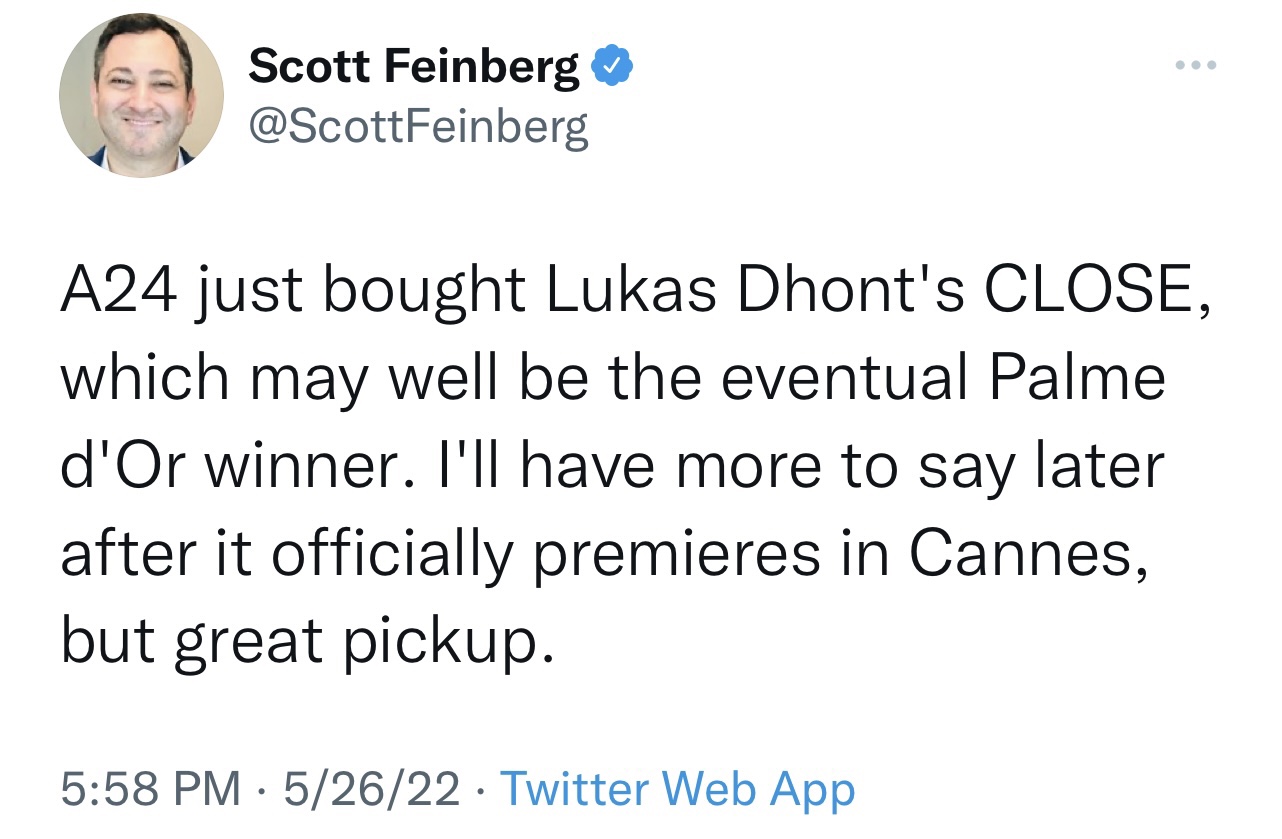
Lukas Dhont‘s Close (which I capsule-reviewed this morning) will most likely win the Palme d’Or. Yes, I understand that Cannes juries have a strange history of not choosing (i.e., defying) journalist favorites, or films, even, that Average Joes might want to celebrate.

In a fair and just world Cristian Mungiu‘s R.M.N. would win either Best Director or Best Screenplay. It would personally please me if James Gray‘s Armageddon Time wins something or other, as I’m certain that it’s his best film in many years, and because Variety’s Clayton Davis tried to dismiss it because Gray had the temerity to include racist characters in his depiction of  Yeah I’m sure of it1980 Queens.

I am not in favor of Park Chan-wook‘s Decision to Leave and the DardennesTori et Lokita winning anything (neither are exceptional enough), although I realize that both, for political reasons, will probably walk away with a significant prize.

Keep in mind that in his Cannes predictions, Davis has Close rated fairly low, allowing only for the possibility of it taking the Jury Prize. This is almost certainly because (a) Variety critic Peter Debruge frowned upon Close‘s second act, and (b) Clayton tends to defer to progressive team-consensus viewpoints. Just hang onto this.

em

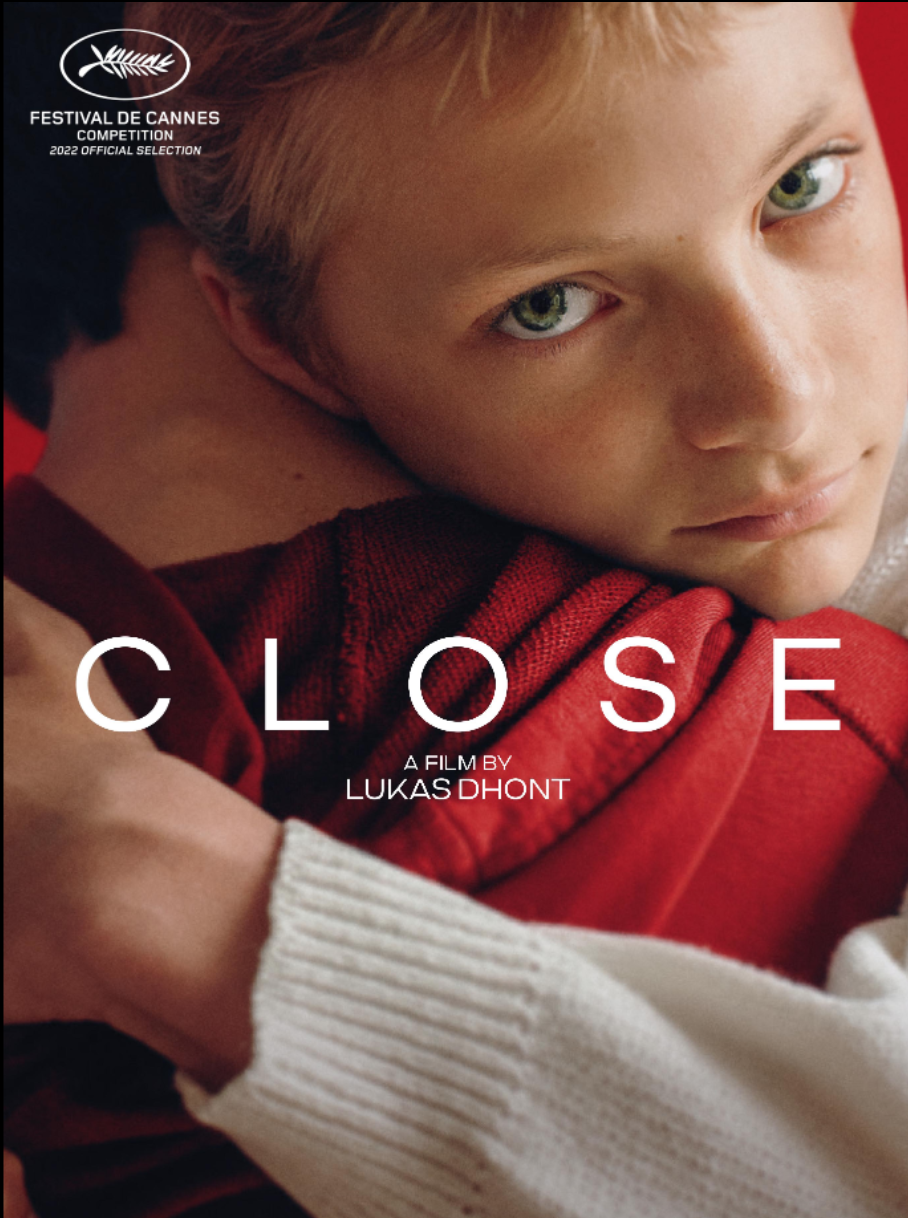
Dhont’s “Close” Is A Devastating Grand Slam

I’ll be a monkey’s uncle if Lukas Dhont‘s Close, which I saw last night, doesn’t win the Palme d’Or.

Okay, it might not win because Cannes juries have been known to blow off great or near-great films, but if it doesn’t there’s no way on God’s green earth that the film’s teenage star, Eden Dambrine (who’s now 15 and taller than he was during shooting last summer), doesn’t win the festival’s Best Actor trophy. And if both the film and Dambrine are denied, the jury will deserve exile on the island of Elba.

(This may sound like a harsh penalty, but I visited Elba 22 years ago and as places of exile go it’s pretty great. Just ask Napoleon Bonaparte.)

I’d heard a couple of days ago that this subdued, emotionally poignant small-town drama was a Palme d’Or favorite, but I also heard that one or two critics who’d attended an advance screening found it brutally manipulative, at least as far as the second half is concerned.

A similar kind of complaint was triggered by a third-act mutilation scene in Dhont’s Girl (’18), which I totally flipped for. The argument was that showing the film’s transgender protagonist (Victor Polster), a teenaged ballet dancer who’s simultaneously preparing for a performance and transgender surgery, commit a terrible act of self-harm sent the wrong message for trans kids — obviously a political criticism.

In Close a young male character is driven or goaded into an act that represents emotional finality in its most tragic form. Given my own history with intense teenaged feelings of romantic confusion and despair, I was shocked by this occurence but it didn’t register as beyond the pale.

Teenagers routinely commune with the blackest of moods these days, especially when confronted with social disapproval and whatnot due to being gay or trans or questioning in this regard. So what happens didn’t knock me out of the film.

The critics who are calling Close manipulative seem to be repeating the same charge that was levelled against Girl — that the film is sending a harmful message to struggling LGBTQ youths.

But the ultimate measure of a film’s value is not how well it articulates the most politically correct viewpoint on a given social issue, but how artfully and exquisitely it portrays what its characters are going through in elemental human terms, and the degree of subtlety that it uses to achieve this effect.

It’s 2 pm (I got up late because Close didn’t break until midnight, and I felt compelled to hit a cafe and talk it out with a friend until 1:30 am) and now I have to attend a 3:15 pm screening of Kelly Reichardt‘s Showing Up — the last “big”film of the festival. So I’ll continue the Close review later today. But make no mistake — in Steve Pond terms Lukas Dhont’s film is “the one.”

Repeating: If the Cannes jury blows it off, they’ll probably have to be smuggled out of Cannes in windowless vans and protected by private security.

Liotta’s Crazy Laughter

Poor Ray Liotta passed in his sleep while shooting a film in the Dominican Republic. Just like that, out of the blue. I’m very sorry. Condolences to friends, family, colleagues.

Right now everyone is talking about Liotta’s landmark (or certainly commendable) performances in Goodfellas, Something Wild, Field of Dreams, Dominick and Eugene, Cop Land, Killing Them Softly, Marriage Story and The Many Saints of Newark.

I feel the same way, but I’ll bet nobody right now is mentioning one of my all-time favorite Liottas — Captain T.C. Doyle in Simon Wincer‘s Operation Dumbo Drop (’95). It might be the only family-friendly Disney film I’ve ever half-liked. Not a great film, but a likeable, well-made effort that holds back on the cutes.

And for my money Liotta really scores because he plays Doyle completely straight, and then occasionally angry to great comic effect. Dumbo Drop certainly didn’t deserve a 31% Rotten Tomatoes rating. Danny Glover, Denis Leary, etc. Did I take part in the press junket? Yes. Have I seen it a second time over the last 25 years? No, but I could. I think I will.

What I don’t understand about Liotta’s dying at a youngish age is this: insurance companies on films require physicals for all principal talent above the line (including directors).  It remains to be seen what he died from, but if it’s heart-related, shouldn’t that have been caught in time at a regular physical?

What’s “Keening”?

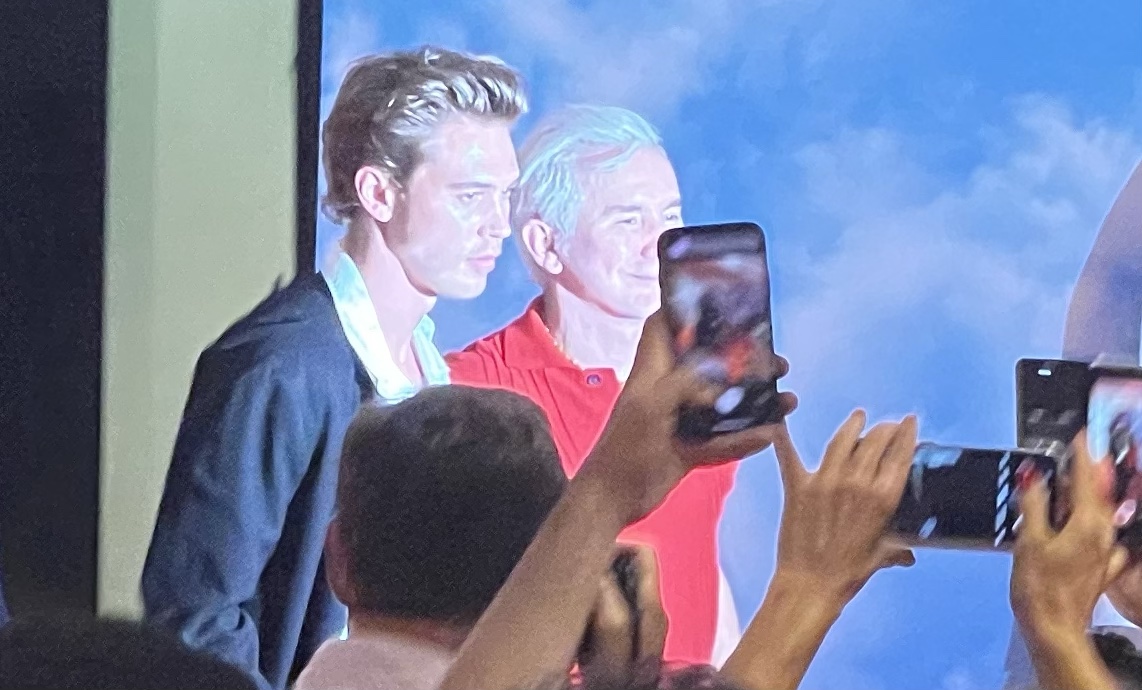
“That ready-to-fly moment is happening for Austin, and I know because we went to the Met Gala together,” Baz Luhrmann said. “As soon as we got on the red carpet, there was keening from fans. Not just screaming — keening. I’ve only heard that sound once before. I was with a young actor whose name was Leo.” He was referring to a pre-Titanic DiCaprio, then quivering hearts in Luhrmann’s Romeo + Juliet.” — from Brooks Barnes‘ 5.25 N.Y. Times profile of Elvis star Austin Butler.