Candle Goes Out

Singer-actress Irene Cara, the New York City wunderkind who popped through as a Fame costar in 1980 and later sang the Flashdance anthem (“Flashdance…What a Feeling”), has passed at age 63. I’m very, very sorry. Her magical five-year breakout period (’79 to ”83) happened between ages 19 and 23.

Is there anyone who doesn’t regard 63 as an unnaturally young age from which to bid farewell? The reason for Cara’s untimely passing is being kept under wraps, of course. Whenever someone passes too soon the first question that always comes to mind is “what happened?”; the cause eventually leaks out but is never announced in the immediate aftermath. It’s the new obit etiquette.

Temperamentally Unbound

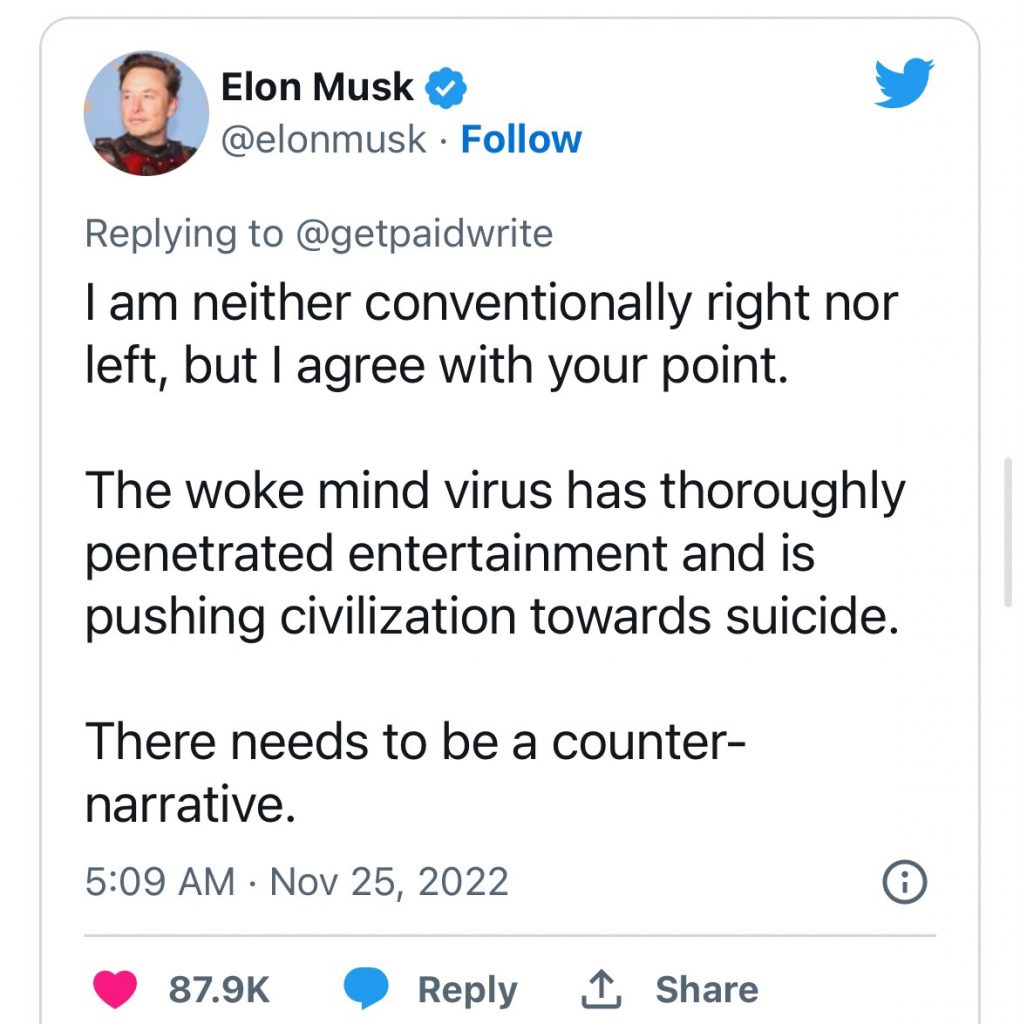
And yet Elon Musk’s assessment of the current state of things (“woke mind virus”) is essentially correct. I wouldn’t say that civilization is edging towards “suicide”, but I know for a fact that the occasional surges of joy and even transcendence that I got from movies for so many decades have become fewer and farther between over the last six or seven years, and that this is largely due to (I need to occasionally refresh my doomsday terminology) the influence of the Maple Street seed pod monsters, and the chickenshit corporates who are afraid to show a little backbone.

I Confess

Although I’ve sampled color clips, I’v never actually sat down and watched William Wellman‘s Nothing Sacred (’37). There — I’ve admitted it! I don’t own the 2018 Kino Bluray, I’ve been too damn lazy to stream the HD version on Amazon, and I never saw the “experimental” restoration** that screened at MOMA for two weeks in August ’21.

** A version that allegedly replicates the look of the film as it appeared in first-run theatres in late November of ’37 — allegedly a creamy, faintly brownish, half-sepia color scheme.

Read more

I Felt His Pain

Noah Baumbach‘s White Noise (Netflix) opens theatrically today, and will hang in there until the streaming begins on 12.30.22.

Hollywood Elsewhere recommends that you wait for the couch experience. A theatrical viewing will most likely piss you off, given the expense and the vague feeling of obligation (i.e., imprisonment) that comes with sitting in a theatre.

I was more or less in agony during an opening-night screening at the New York Film Festival (9.30), or eight weeks ago. The following day I wrote that the only part I really liked was the closing musical dance sequence, set inside an early ’80s A & P supermarket.

That aside I was in hell. If I had more courage and conviction (which I unfortunately don’t) I would’ve bailed at the half-hour mark. I can smell a stinker less than five minutes in, and White Noise definitely had the fumes.

The guy sitting next to me felt the same way. Somewhere around the 50-minute mark he turned and crouched to his left and laid his head upon (what I assumed was) his boyfriend’s right shoulder. I chuckled under my breath — my first thought was “Jesus, this guy has no fear — he’s not worried if people sitting nearby will think him louche and undisciplined — he’s just going for it.”

I Know What “Wakanda” Amounts To

It’s an occasion for a kind of mourning (i.e., my own) when a film that sent me fleeing after 90 minutes has bagged $321,770,596 domestic and $279,200,000 overseas for a total of $600 million and change.

I know exactly how it feels when a film is doing everything just right and thereby building trust and affection with an audience. Or at least is up to something exceptional. I’ve experienced it hundreds of times over decades, and the first 90 minutes of Wakanda Forever (I couldn’t tolerate any more than that) definitely wasn’t doing this. A director friend told me “you missed the best part”, ands I’ve no reason to think otherwise. But dear God in heaven…who are we? What is our life when an obviously mediocre film like this is celebrated as a great “success”?

Unstoppable Spielberg Impulse

The over-praising of The Fabelmans among mainstream media types…what is there to say except “what else is new”? We’re all familiar with the industry-wide instinct to kowtow to the lore of Steven Spielberg-directed films…a syndrome that’s been locked into the psychological Hollywood bloodstream for several decades, as natural and inevitable as a mountain stream or even the weather.

It’s not that The Fabelmans is a bad film — of course not! It’s a fairly good one in several respects, but you also have to qualify this with a sensible “yes, okay but calm down.” I’ve said this two or three times, but a truly fair-minded, non-obsequious opinion would have to acknowledge that the saga of Spielberg’s teenage years (mostly Phoenix, some Saratoga) is neither boring nor hugely interesting. It’s diverting in an on-the-nose, broadly performed way, but it mainly boils down to “decent with three pop-throughs — the Judd Hirsch rant, filming the Nazi war flick in the Arizona desert, and John Ford lecturing 17-year-old Steven about horizon lines.”

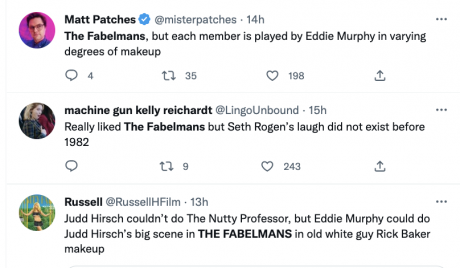
Face it — that’s what The Fabelmans is. It’s not a put-down to call it “good enough” or “reasonably decent.” And Matt Patches is correct — the major roles (including Ford at the end) could have been eccentrically performed by Eddie Murphy in white-person makeup.

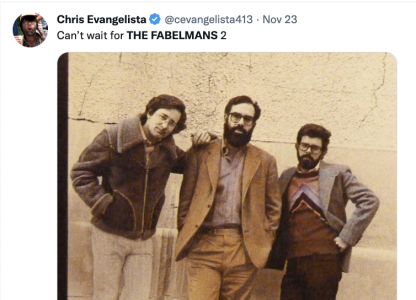
Chris Evangelista is also spot-on about The Fabelmans 2. I would truly love to see Spielberg’s struggling years at Universal dramatized — Amblin, directing that Night Gallery episode with Joan Crawford, SS bonding with his “Easy Riders, Raging Bulls” colleagues, filming Duel and then The Sugarland Express.

This would have to be followed, of course, by The Fabelmans 3, which would cover the glory years of ’74 through ’82 — the making of Jaws, Close Encounters, 1941, Raiders of the Lost Ark and E.T..
Cameron Recalls Leo Moments

You don’t have to watch the whole thing — just 2:15 to 5:48. Three and a half minutes.

As a People reporter I heard a few stories about the Titanic shoot at Fox Baja Studios in ’96 and early ’97. One was James Cameron allegedly having referred to Kate Winslet as Kate Weighs-a-Lot. Another alluded to Leonardo DiCaprio‘s off-set, party-animal lifestyle, which allegedly led to an instance of Leo complaining of nausea. In no mood for this, Cameron allegedly picked up a metal bucket, threw it in Leo’s direction and told him to get sick in it, and once finished to get back on the effing set and do his job. Who knows if it’s true?

If I were Cameron I would think seriously about doing a George Lucas and re-doing the Titanic digital stuff. Make it look more realistic. Because by today’s standards some of it looks way too primitive.

“You’re Welcome!”

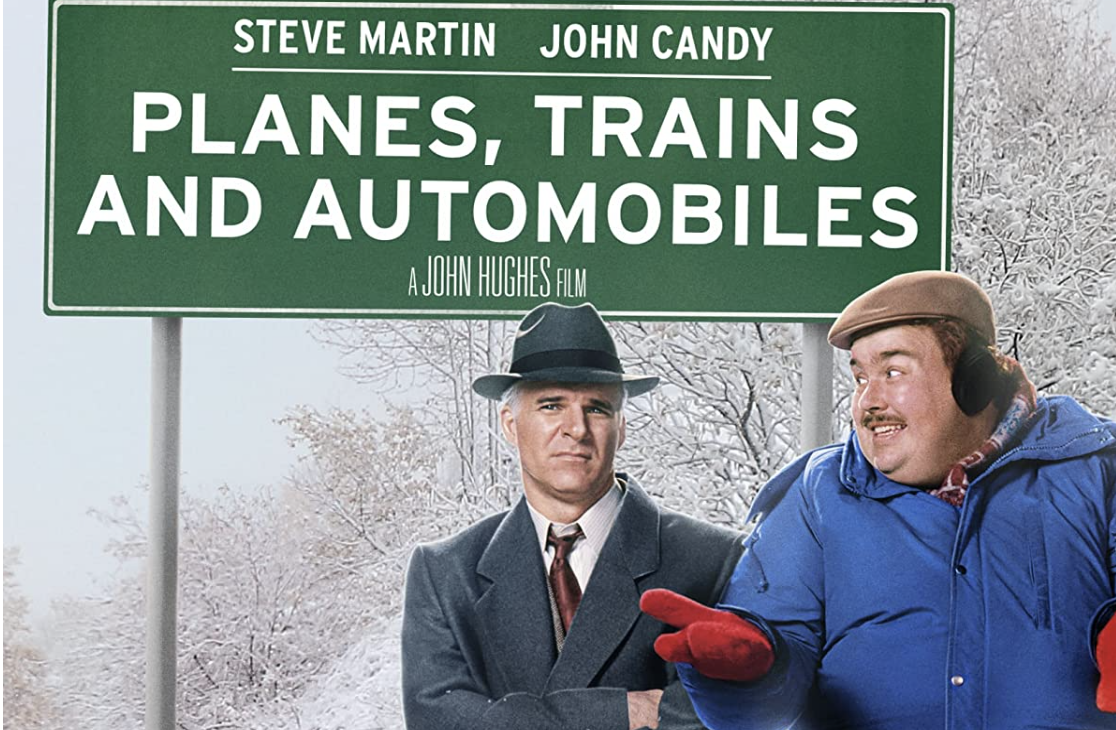
I’m sorry but this is my idea of a Thanksgiving movie. I haven’t re-watched it in 32 years. Gotta do that today or at least over the weekend.

Wiki excerpt: “Abel Ferrara’s King of New York was shot entirely in and around New York City. According to Ferrara, then-owner Donald Trump gave him permission to film at the Plaza Hotel at no charge, on the condition that Walken would pose for a photograph with Ivana Trump, who was a fan of the actor.”

Read more

Regression

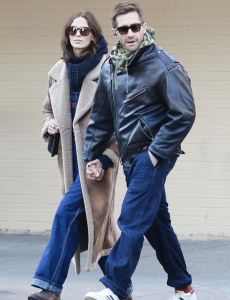
In a world in which the 76 year-old Cher is banging a dude 40 years younger (i.e., 36 year-old Alexander Edwards), no one, least of all myself, could possibly have a problem with Jake Gyllenhaal, 41, being entwined with 26-year-old model Jeanne Cadieu…a 15-year age difference is nothing.

I do, however, have a problem with Gyllenhaal’s baggy jeans. The last time I checked (and please correct if I’m wrong) they were called “dad” jeans. I’ve been dodging the thought of dad jeans for a good 40-plus years….hell, all my life. The slouchy “normcore” aesthetic is everywhere…baggy, baggy, baggy.

Read more

Peter Weir’s Blessed Decade

For 10 or 11 years Peter Weir lived a charmed creative life. One brilliant film after another — Picnic at Hanging Rock (’75), The Last Wave (’77), Gallipoli (’81), The Year of Living Dangerously (’82) and Witness (’85).

Then God’s light stopped shining and Weir’s perfect string ran out. Weir remained an excellent filmmaker (which he still is today) but like so many gifted directors, he became an in-and-outer.

The Mosquito Coast (’86) was his first dud, but he rebounded with Dead Poets Society (’89). Then came the appealing but insubstantial Green Card (’90) and the relentlessly downish and altogether impenetrable Fearless (’93), which only people like David Poland really loved. This was followed by The Truman Show (’98), which self-destructed with one of the worst bullshit “happy” endings ever devised.** Master and Commander (’03) was an awesome rebound but then the candle went out.

Weir’s most recent film, the underwhelming The Way Back, opened 12 years ago. What happened?

I never saw The Cars That Ate Paris (’74).

Read more