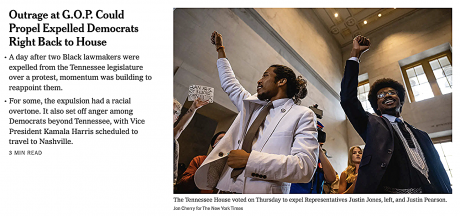
Letter to N.Y. Times from Barbara Barran of Brooklyn: “During President Biden’s State of the Union speech, Marjorie Taylor Greene and Lauren Boebert repeatedly interrupted him, with Ms. Greene screaming, ‘Liar!’ Both women are still members of Congress.
“But let two Black representatives in Tennessee — Justin Jones of Nashville and Justin J. Pearson of Memphis — protest the lack of gun control legislation after children were massacred, and they are thrown out of office by the Republicans.
“What a travesty! What a terrible place this country has come to!”
It’s really Scorsese talking, of course. You’re left with a presumption, in fact, that Scorsese probably attempted any number of seductions along these lines.
Over the decades many people have proclaimed their knowledge of and passion for The Searchers. The first significant “we need to take a fresh look” piece was written in ’79 by New York contributor Stuart Byron. His money phrase was calling it the “Super-Cult Movie of the New Hollywood,” and that certainly stirred the pot for a lot of folks.
On 8.9.11 the late Peter Bogdanovich sought to re-start the engine with an IndieWire piece in which he The Searchers “not only among the very best, but also among the final Western masterworks of the movies’ golden age.”
Largely for the sake of obstinacy I posted a counterpunch piece a couple of days later (“Hard-To-Love Searchers“) and I was mostly hated on for doing so. You’re worthless, stupid…kill yourself! Sure thing.
That was ten years ago, and I think that as time moves on it’s going to be less and less dangerous or dicey to assess The Searchers in less-than-glowing or semi-religious terms. Scorsese’s wisest observation in the THR piece was that director John Ford personally related to John Wayne‘s Ethan Edwards, the gruff, scowling, racist-minded loner at the heart of this 1956 film. This is precisely why the present-tense viewers are considerably less enamored (if in fact they ever were enamored) of this rather thorny and at times cruel-hearted film.
Scorsese’s basic thought is that while The Searchers has some unfortunate or irritating aspects, it’s nonetheless a great film and has seemed deeper, more troubling and more layered the older he’s become. Which is well and good but you always have to take Scorsese’s praise with a grain of salt, I think. A lifelong Film Catholic, Scorsese has always been a gentle, generous, big-hearted critic. Show him almost any mediocre film by a semi-respected director and nine times out of ten he’ll look on the bright side and turn the other cheek. Has he ever written anything even the least bit mean or cutting or dismissive?
My basic view of The Searchers, as I wrote in ’07 or thereabouts, is that “for a great film it takes an awful lot of work to get through it. I don’t know how to enjoy The Searchers any more except by wearing aesthetic blinders — by ignoring all the stuff that drives me up the wall in order to savor the beautiful heartbreaking stuff (the opening and closing shot, Wayne’s look of fear when he senses danger for his brother’s family, his picking up Natalie Wood at the finale).
That said I can’t help but worship Winston C. Hoch‘s VistaVision photography for its own virtues. And speaking of the lush lensing, the last and only Searchers Bluray popped 16 and 1/3 years ago (12.8.06). It’s well past time to issue a remastered 4K version.
“A sloshed Chet Huntley speaking to an equally hammered David Brinkley during New Year’s Eve coverage in 1966: “You know, David…sometimes I wish I was single. I’m fairly wealthy, I’m famous and there are all these women around. I’m telling you it’s a tragedy. And my wife and I…all right, I won’t go there. But God, would I love to sow a few wild oats before it’s too late! I mean, let’s face it, David…we’re both gonna be dead some day.” — from HE’s 1.1.17 coverage of Don Lemon’s inebriated New Year’s Eve coverage in New Orleans.
Variety‘s Brent Lang is reporting that Air has a two-day tally of “just under” $6 million, having earned $2.4 million yesterday (Thursday, 4.6) and $3.2 million on Wednesday, 4.4. To me that sounds more like “just over $5.5 million” than “just under $6 million.” but whatever.
Pic is expected to finish with $16 million as of Sunday night. It opened in 3500 theatres and has, so far, a per-screen average of $939 or something close to that.
Air cost $90 million to produce, but it sure doesn’t look it. It looks like a $45 million movie, if that. It’s 85% to 90% interiors (Nike Beaverton offices, Chris Messina‘s agent office, bar/restaurants, a 7/11 store, Matt Damon‘s home) plus some Beaverton exteriors, some roadways and a simulation of a Wilmington, North Carolina neighborhood plus the Jordan backyard.
Deadline‘s Anthony D’Alessandro: “For the type of feel-good, inspirational, star-driven dramedy this is, many in town are rooting for this movie to do well. For if Air can leg out, it provides hope to motion picture studios for the types of movies that can work post-pandemic.”
The likely truth is that the Super Mario Bros. morons are sensing or smelling a “dad movie,” and they’re obviously not breaking the doors down to see Air. Plus three out of five Air viewers so far have been male (“59%” male, according to D’Alessandro) which means a fair percentage of women are either being dragged to it or quietly deciding to wait for streaming.
Friendo: “I don’t think anyone will dare report that this is any kind of bomb. There’s too much at stake.” HE to friendo: “It’s not a bomb — it’s just performing modestly. It was never going to be a runaway hit. What matters — this is a huge factor — is that it delivers spiritual uplift.”
As one who’s occasionally accepted and enjoyed freebies from movie studios, it’s hard for me to feel outraged about the recent report that Supreme Court Judge Clarence Thomas and his rightwing nutbag wife Ginni acccepted lavish favors from GOP megadonor Harlan Crow over a couple of decades.
Is Thomas guilty of a punishable ethics violation? Almost certainly, but everyone “takes” to varying degrees. It’s the way of the world among the ambitious, the well-positioned and the hungry-for-more set.
If I could force Thonas to resign by clapping three times, I would clap three times. But they all do it.
I tend to avoid or at least suffer through prison movies as a rule. To varying degrees they’re all about yearning for freedom, of course, but they always feel more confining than liberating (i.e., why does the caged bird sing?) and because life itself, for me, has always been about thedefianceofsuppression, confinementandregimentation so I already knew that tune backward and forward.
I don’t need and in fact have been forbidding the idea of a movie reminding me about these basic terms, and I’ve felt this way since my early teens, which is when I started to understand thedegreeofdullunderlyinghorror that permeatednormalmiddle–classlife. This is how it seemed, at least, in suburban New Jersey (Westfield) and exurban Connecticut (Wilton).
As much as I admire Morgan Freeman’s performance in TheShawshank Redemption, I’ve never been able to derive any real pleasure or payoff from that film. Ditto Papillon, BirdmanofAlcatraz, Bronson, Hunger, TheGreenMile, StarredUp, EachDawnIDie, 20,000YearsatSingSing, et. al.
Don’t even mention Oz or OrangeIsTheNewBlack.
The only prison flicks I’ve enjoyed, unsurprisingly, are about breakouts. Don Siegel’s EscapeFromAlcatraz (‘79) is the champ. Stuart Rosenberg’s CoolHandLuke (‘67) is more about the spirit of freedom than escape, but it still qualifies. Ben Stiller’s EscapeatDannemora** (‘18) is an excellent bust-out film. I love the comical breakout sequence in Peter Yates’ TheHotRock (‘71).
There’s one exception to my rule — a prison flick that isn’t about escape and just says “fuck it — life on the block is what it is” while staking claim to being a serious meditation on morality and jailhouse ethics: Robert M. Young and Miguel Pinero’s Short Eyes (77).
A couple of months ago I visited a friend who lives near the village of Ossining, which is about 40 miles north of Manhattan and is the home of Sing Sing prison. Peter Falk grew up there, and during an interview he recalled that all the lights in the town would flicker and grow dim whenever a guy was getting fried in the chair.
** Escape at Dannemore is actually a limited series so that makes it a whole different bowl of rice!
Stanley Kramer and William Rose‘s Guess Who’s Coming to Dinner was arguably already dated when it opened on 12.12.67. It wouldn’t have been dated if it had opened, say, in ’62, ’63 or even ’64. But ’67 was too activist, too strident, too Stokely Carmichael‘ed, too rioted, too Black Power-ed, too Vietnam War-ed, too Sgt. Pepper-ed and too psychedelicized. It just didn’t fit.
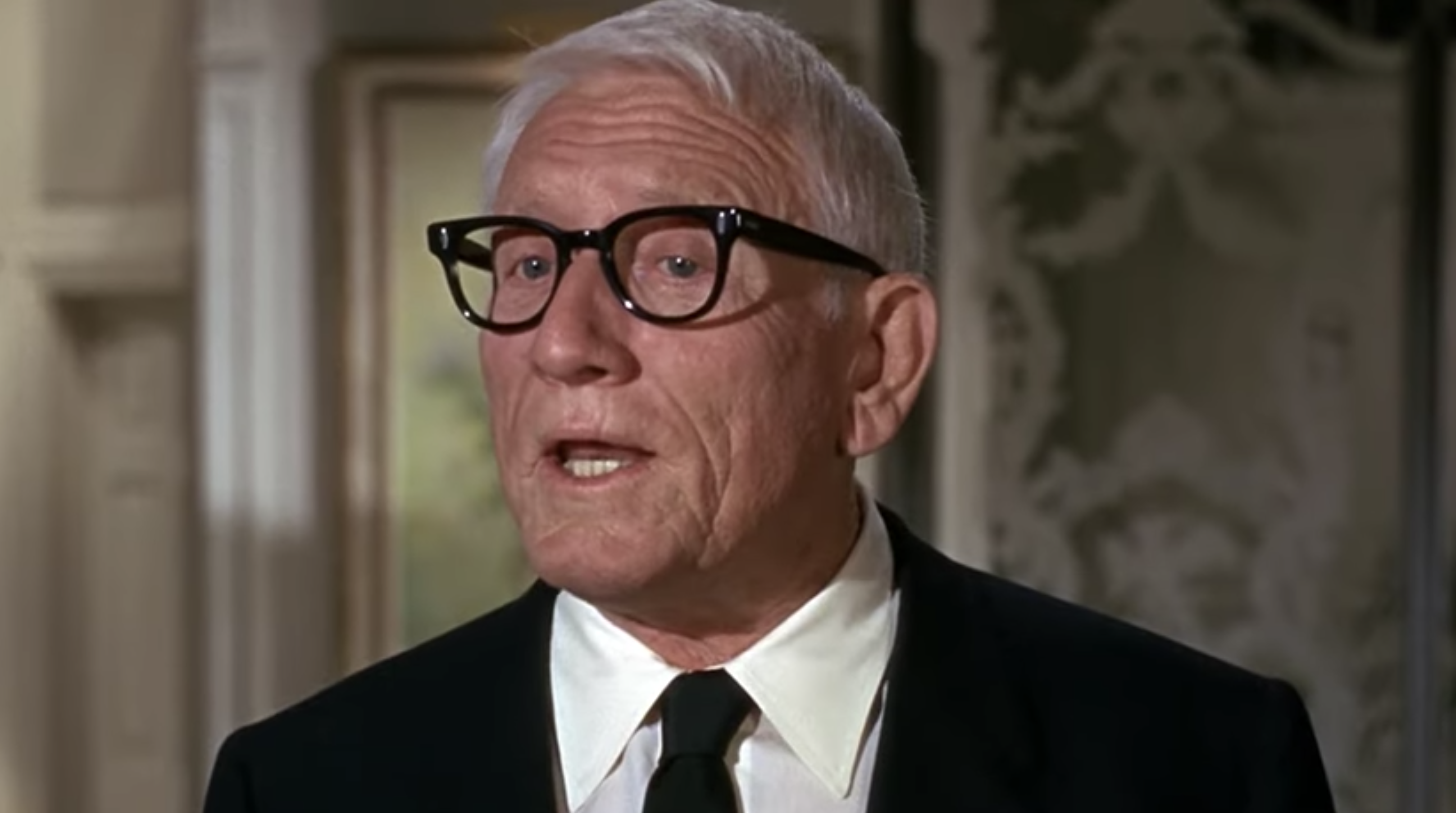
I’ve never seen Kramer’s film, by the way. I avoided it like the plague when it came out, and I’ve never felt sufficiently motivated to watch it at home. But Spencer Tracy‘s soliloquy in this climactic scene, which I only just watched a few minutes ago, is fairly terrific.
Tracy dropped dead in his kitchen on 6.10.67, 17 days after Kramer’s film was completed. He was only 67, but he looked at least 80 by today’s standards.
As noted, GWCTD opened six months later (12.12.67). Four months later Martin Luther King was murdered.
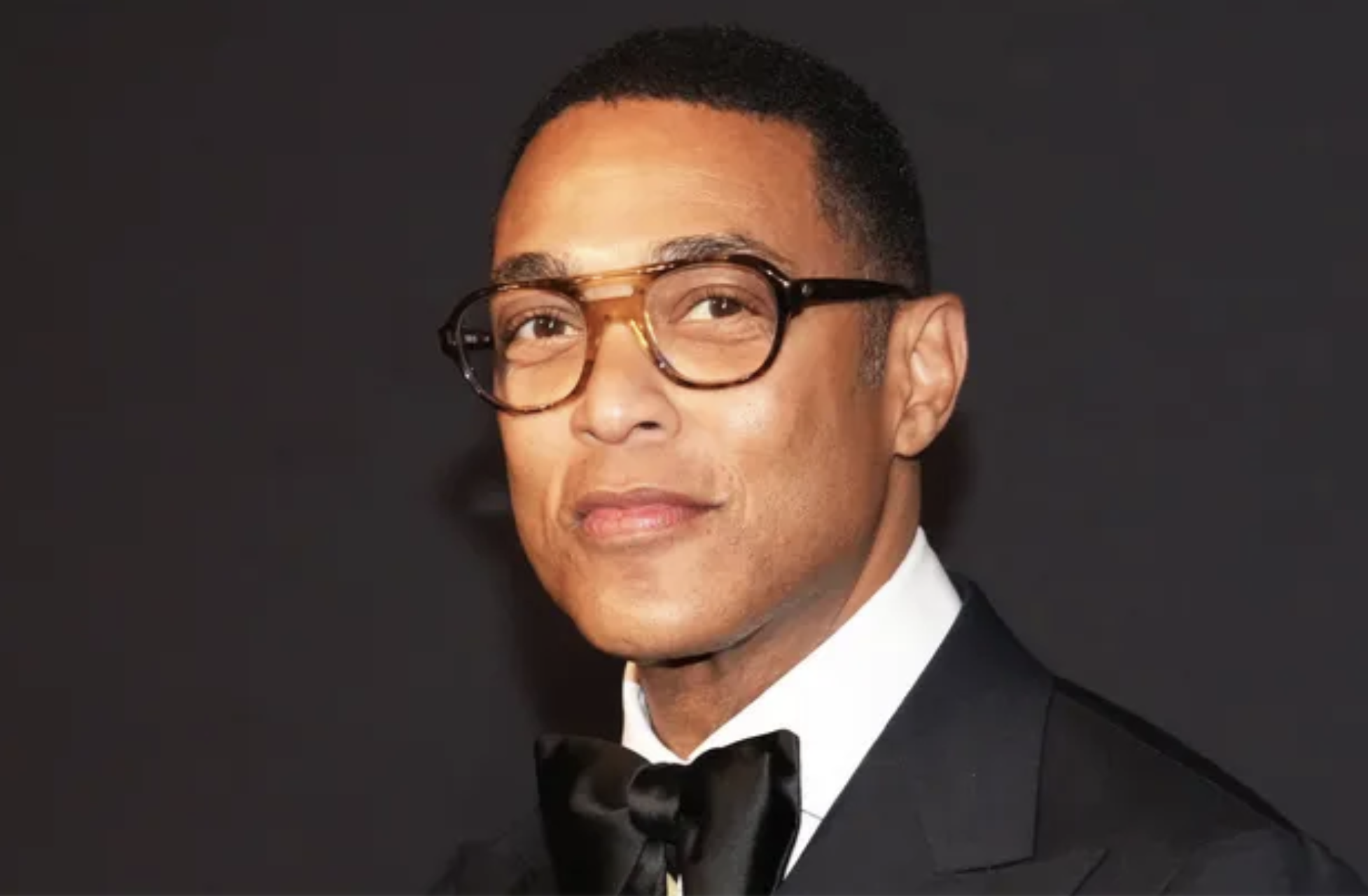
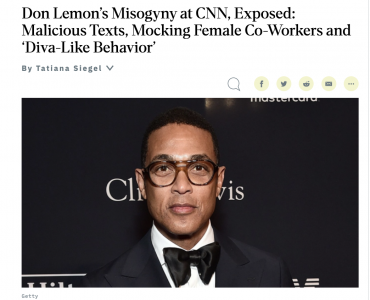
CNN This Morning‘s Don Lemon has never played the role of a straight-arrow, buttoned-down news anchor type. As an out gay man, he’s occasionally flirted with a somewhat nervy and even flamboyant demeanor at times, closer in spirit to Andy Cohen than Anderson Cooper.
But then he stepped into real shit on 2.16.23 when he declared that 51 year-old Nikki Haley isn’t in her prime. Women, he meant, are in their prime in their 20s, 30s and early 40s —- an obvious reference to their sexual peak, which is demeaning as hell when you’re talking about a Presidential candidate or any woman serving in any professional capacity.
Business Insider is reporting that Lemon is considering a possible lawsuit over Siegel’s takedown piece, which alleges that he has a history of demeaning and occasionally threatening and female colleagues including Soledad O’Brien, Kyra Phillips and Nancy Grace.
“[CNN has] known for years,” a media source has told the New York Post. “But Lemon is not going to sue because then they’d have to depose people and more stuff could come out.”
One thing in Siegel’s story is worded evasively. She reports that in 2014, Lemon “drew widespread condemnation when he told a Bill Cosby rape accuser that she could have stopped an attack by biting the comedian’s penis.” That implies that Cosby may have been trying to physically overpower or manhandle the victim. In fact the victim had told Lemon that Cosby was somehow forcing her to give him a blowjob. Lemon suggested that the victim could have stopped that activity right quick with her teeth.
It was a very Don Lemon-y comment, for sure. I can’t imagine any TV news anchor coming within 100 feet of this line of questioning. But Lemon has always been Lemon.
Last night I caught my second viewing of Air, and it seemed to gain somewhat. It certainly didn’t diminish. My third viewing will be with subtitles, and then it’ll really gain.
I especially loved how Matt Damon‘s eloquent emotional pitch to the Jordan family near the end is off-the-cuff, and in so doing echoes the second half of Martin Luther King‘s “I have a dream” speech, which was also largely improvised, and is discussed early in the film. This is called “refrain” — one of the most solid and dependable tricks in the book.
But one minor thing has stuck in my craw.
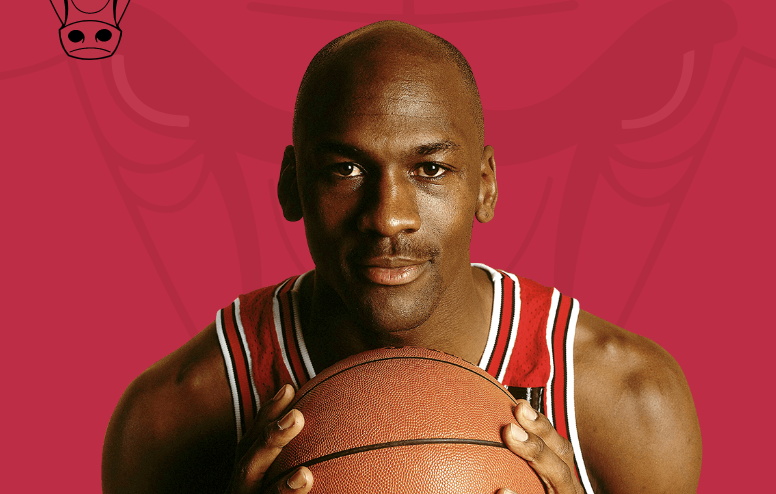
Director Ben Affleck‘s decision not to show Michael Jordan is an understandable one. “”He exists above and around the story, but if you ever concretize him, if you ever say, ‘Yes, that’s Michael Jordan,’ they’ll know it’s not, really..it’s fake,” Affleck explained in a People interview. I thought if they bring everything they thought and remembered about [Michael] and what he meant to them to the movie and projected it onto the movie, it [would work] better.”
And so Jordan stand-in Damian Delano in only seen from the rear, and Jordan’s voice is only heard once on a phone line (“hello”). The physical Jordan/Delano presence only happens toward the conclusion (i.e., during the afore-mentioned Nike pitch meeting plus one or two others). But here’s the thing — the camera’s avoidance of Jordan’s face and Affleck not even allowing us to hear a few words from the guy also feels “fake.” The dodge feels too conspicuous. It intrudes upon the reality of that climactic moment and the overall third-act flow.
I don’t know what the solution could have been or if one was possible, but if I’d been directing I would have persuaded the present-tense Jordan, 60, to record a few lines of dialogue. Maybe a few quips, maybe a pungent observation of some kind,. Hearing the Real McCoy certainly would’ve helped.
On the other hand would it have been that hard to find a young Michael Jordan look-alike? We all know that movies are fake from start to finish — what matters is conviction and bringing your best game to the table.
It could have been argued by the producers of The Longest Day (’62) that Dwight D. Eisenhower was too big of a historical figure and that people would instantly know that Henry Grace, the set decorator who played the nation’s 34th president in an early scene, was just some joker pretending to be Ike.
Of course audiences knew that, but the second that Grace’s face appeared on the big screen, it worked. Audiences appreciated the effort and approved for the most part. Grace’s voice was dubbed by voice actor Allen Swift.
…okay with me. If it sells beer to more people, what’s the problem? Macho dudes have long felt attached to the Bud brand, but times change. I’ve never harbored a great deal of affection or identification for Bud Light or any Anheuser-Busch beverage, for that matter. I’ve been sober for 11 years now — what do I care?
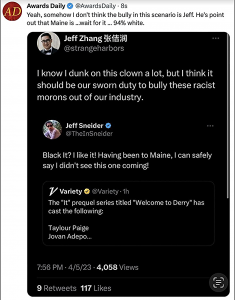
I’m sorry, but I think it should be our sworn duty to identify and shame wokester fanatics. I’m thinking particularly of Jeff Zhang of Strange Harbors, who yesterday accused Jeff Sneider of racism because a gentle mocking of “a Black It,” given that Maine (the setting of all the It adaptations) is one of the whitest states in the country.
Nobody raised their eyebrows at Ryan Coogler‘s plan for a diverse X-Files. Pretty much any classic franchise or well-known TV series can be rebooted with a Black cast, I would suppose, but for social realism’s sake it’s probably not the most persuasive idea to set the rebooted project in New Hampshire or Switzerland or the Czech Republic.
Noteworthy Zhang line: “[We should] bully these racist morons out of our industry.”