
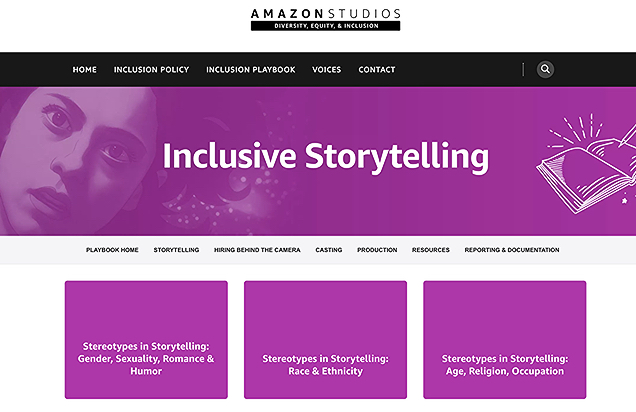
Speaking as a daily columnist who’s tried the patience of HE readers like Zoey Rose (“I’m just tired of the constant pieces about woke culture and [how] the Khmer Rouge is out to get him and all his white friendos,” etc.), I’m genuinely worried about mentioning Amazon’s Inclusive Storytelling guidelines, a just-revealed blueprint or master plan for suffocating verve, creativity and crackling energy in the name of inclusion and sensitivity and smoothing everything out as much as possible.
HE to Zoey Rose: Is there any way I can report and comment about this horrifying state of affairs without pissing you off? Or will any mention of regimented corporate wokeness alienate your affections? I’d really like to touch on this, but the thought of trying your patience fills me with hesitation.
I’ll just cut to the chase and say that I’m completely in synch with Sasha Stone’s take, to wit: “It’s one thing to encourage inclusive hirings behind the camera, but once they start getting into storytelling and the formation of characters, content, and theme to promote a specific ideology then we are no longer looking at art. We are looking at full-blown wokester propaganda.” Put another way, it’s well-intended Big Brother-ism. Or, if you will, progressive virtue-signalling.
You think the Academy’s Representation and Inclusion Standards for Oscar Eligibility (announced on 9.8.20) were strict and suffocating and antiseptic? Amazon’s are much worse.
Stone: “Most audiences today, old and young, can spot a ‘woke’ message coming from a mile away. The more a film lectures them the less likely they are to want to watch it. Here are a few quotes from Amazon’s Inclusion Playbook and Inclusion Policy — now imagine being the people hired to monitor the films to make sure they meet all of these criteria. Better yet, imagine movies like The Exorcist, Blue Velvet, Chinatown, Do the Right Thing, Bull Durham, Casablanca or The Player being made under these rules:
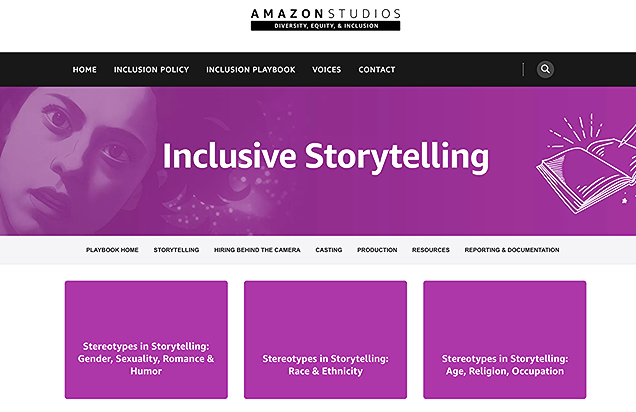
Sample #1: Developing Stories and Characters.
We encourage pitches, scripts, and stories from storytellers of all backgrounds, including those from underrepresented communities. Consistent with our Content Guidelines, Amazon Originals should reflect the wide diversity of our customers and recognize the dignity of all people by avoiding demeaning stereotypes and harmful tropes. For this reason, characterizations based on race, ethnicity, nationality, sexual orientation, religion, disability (including mental health), body size or image, age, gender, gender identity, and gender expression should be made with care, and in each case will be subject to an enhanced review.
Sample #2: Stereotyping.
We discourage stories that solely depict harmful or negative stereotypes, slurs, and dehumanizing language related to identity as well as narratives that link identity factors to jobs, religious beliefs, social class, or behavior.
Sample #3: Historical Depictions.
Content that features out-of-date historical stereotypes, language and iconography must avoid gratuitous use of such portrayals.
Sample #4: Cultural Authenticity.
When series regulars or lead characters portray people from underrepresented communities (women; underrepresented racial/ethnic groups; sexual orientation; gender identity; people with disabilities), we expect creative teams to make a concerted effort to hire above-the-line staff (directors, writers, producers and/or creators) who represent the identity groups depicted on screen. We will aim for 30% of the above-the-line staff to meet this goal in 2021. This aspirational goal will increase to 50% by 2024.
On the occasion when this is not possible, producers must indicate how they will identify and hire outside consultants/vendors, approved by Amazon, to provide culturally relevant expertise.
Sample #5: Report on Expectation Achievement.
Amazon Studios will provide a report template for each company to indicate whether the expectations were met. This report must be submitted within one month of completion of principal photography and will include:
i. Gender, race, ethnicity, sexual orientation, and disability data on production-specific, above-the-line talent (Directors, Writers, Producers, Creators, credited actors) as well as below-the-line positions (department heads and seconds.)
ii. A full description of the film and episodic content that’s been created (i.e., storyline), and percentage or number of characters identified as lesbian, gay, bisexual, and/or transgender, including non-binary, and those with a disability.
iii. The number and list of diverse suppliers hired for the production (including women-owned and minority-owned businesses).
Sample #5: Script-Based Descriptions & Stereotypes.
The way that characters are described in a script can evoke stereotypes for casting directors, breakdown services, and even those reading for the part. Consider the following when describing characters in your script:
● Is there a reason to specify a character’s gender, race/ethnicity, LGBTQ+ identity, or disability in the script? Does source material specify a character’s identity in any way? Are you deviating from that depiction? Why or why not?
● Are there places where you should specify information about the characters’ background or identity (gender identity, race/ethnicity, sexual orientation, gender expression, or disability) to help with casting? Consider sharing this information only if it is needed for the story.
● We recommend that writers be specific and authentic in their descriptions, to help casting directors and those reading for the part avoid harmful stereotypes.
Sample #5: Gendered or Sexualized Depictions.
Sexualization can have negative effects on viewers. Sexualization of characters of all genders occurs on screen, but research indicates that women and LGBTQ characters are more likely than straight men to be sexualized. This begins when the script is written, with how your characters are described.
● Are your descriptions of characters grounded in their appearance, versus their personality? Are there descriptions of girls or women that lean toward their relationships or appearance, rather than who they are as characters? Are you writing about characters who are men in the same way? Are LGBTQ characters solely defined by their sexual identities? Are people with disabilities infantilized and/or desexualized?
● Are LGBTQ+ characters in overly feminized or masculine occupations? For example, are gay characters shown in appearance-related professions (fashion, entertainment, etc.)? Are they excluded from occupations in education, healthcare, or civil service (including police or fire department)?
● Although you may not realize it at the time you’re writing the story, adults are often cast to play teen roles. Consider carefully how these characters might be sexualized on screen. How might the descriptions you write about the characters be impacted if adults are cast in these roles?
Sample #6: Personality Traits.
The description of a character’s personality or distinctive traits may lead to appearance-related stereotypes. Sometimes character descriptions are written in a way that draws upon stereotypes or tropes. This is particularly likely when writing women characters, or individuals from underrepresented racial and ethnic groups.
● Are you describing women’s personalities in ways that lead to assumptions about their sexuality? For example, are descriptions such as the “girl next door” used for characters?
● Be sure that your character descriptions do not evoke stereotypes related to women of color. Avoid use of the terms “exotic,” “feisty,” “sassy,” and other words stereotypically used to refer to underrepresented women. It is better to be specific — e.g. the lead is from Puerto Rico, loves to sing, and has a big group of friends.
● For LGBTQ+ women, ensure that personality traits do not play to stereotypes, either about femininity/masculinity or over-sexualization.
● Descriptions of people with disabilities may focus on aspects related to disability rather than a range of characteristics. Make sure your characters with disabilities are well-rounded and defined by more than their disability.
Consider asking the following questions when writing about romantic partners:
● Are women from all backgrounds and experiences defined solely by their relationship or relationship desires?
● Are men shown as dominating relationships or shown in romantic partnerships that revolve around their jobs and/or the demands of their work?
● Are there opportunities to include LGBTQ+ romantic partners in the story? Even if you are not able to depict the romantic partner, could your characters refer to their relational partners in the script?
● Are there opportunities to show underrepresented groups (including non-binary people, people of different religions, and people with disabilities) in romantic relationships that counter typical narratives?
And so on and so forth. It’s horrifying.