
If you listen to a typical 1.85 aspect-ratio fascist (i.e., a film enthusiast who has unfortunately subscribed to the movie-projection and video-mastering theology of Bob Furmanek), they’ll tell you that outside of the various widescreen processes that were birthed in the ’50s and early ’60s, 1.85 aspect ratios became the law of the land starting in April 1953.
For many years I have pointed out dozens of exceptions to that idiotic fascist rule. I’ve also explained that theatrical projection mandates of the ’50s and ’60s have no bearing on how films of the era should be mastered today for Bluray or streaming. The rule book has been more or less thrown out, and the only people who don’t seem to understand this (or are are stubbornly refusing to accept reality) are the Furmanek fascists.
The best explanation for aspect-ratio sanity (and against the Furmanek lunacy) was contained in a seminal Criterion Collection essay that was included on their On The Waterfront Bluray.
It can’t hurt to repeat that 1.66 aspect ratios were highly favored in England and Europe throughout the ’50s, ’60s and ’70s, and in some instances even beyond. One example is Diva, the landmark 1981 film directed by the the recently deceased Jean Jacques Beineix. Without exception every DVD and Bluray of Diva (including the recent Kino Lorber version) has been mastered at 1.66.
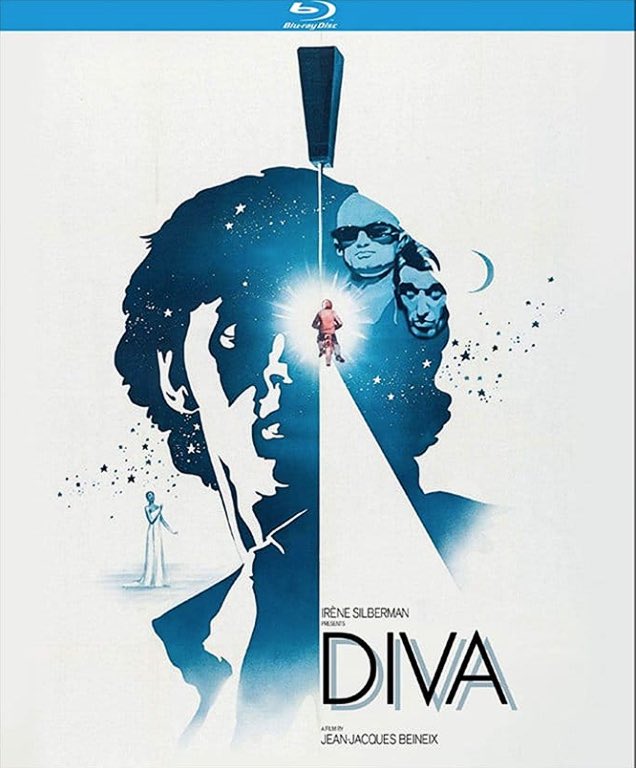
I’m seriously thinking about submitting a proposal for a book titled “Aspect Ratio Wars: The Epic Home-Video Battle Between Hollywood Elsewhere and 1.85 Fascism, and How The Good Guys Lost Despite The Support of the Movie Godz.”
The hero (fighting for the concept of boxiness, oxygen and visual breathing room vs. dogmatic 1.85 claustrophobia) would be yours truly, fighting alone and standing alone against the Bob Furmanek-led mob. It’s a crazy, nonsensical story but it happened, and God knows how many classic films were cleavered and partly ruined as as result.
I could write this book in a month because it’s already been written in Hollywood Elsewhere portions. I would just have to refine and rephrase. The problem is that it would only sell about 1500 copies, as the number of people in the world who give a shit about aspect ratios probably doesn’t amount to more than four or five thousand, if that. I’m not even sure it would sell that much.
But someone has to stand up and tell the truth about how Furmanek and his acolytes managed to convince home-video distributors to lop off God knows how many thousands of acres of visual material from God knows how many ’50s and ’60s films on Bluray.
Comment from “Heinz, the Baron Krauss von Espy“, originally posted on 7.17.12:
Jeffrey Wells grabs Roman Polanski by the shoulders and draws him close.
WELLS: I’m gonna ask you one more time, kitty cat — what’s the aspect ratio of Rosemary’s Baby?
POLANSKI (flatly): 1.85.
Wells strikes Polanski across the face, hard. He’s got his attention now.
WELLS: Stop lying to me, ya little fucker! What’s the aspect ratio?
POLANSKI: 1.66.
Crack! Polanski stumbles backward, eyes wide with apprehension.
POLANSKI: 1.85.
Another blow to the face. The words start to tumble out of Polanski’s mouth in an effort to placate the deranged blogger.
POLANSKI: 1.66! (smack) 1.85!! (smack) One…(smack, smack, smack)
WELLS: I said I want the truth!
Wells shakes Polanski furiously, shoves the 80something director across the room. Sprawled on the couch, Polanski weeps and finally blurts out the truth.
POLANSKI: It was composed for 1.85 and protected for 1.66!!
** Having been shot in an open matte in-camera 1.37 aspect ratio, Rosemary’s Baby was presented in a 4 x 3 a.r. for TV airings in the ’70s, ’80s and ’90s, of course, as well as on VHS tape.