Josephson

In tribute to the late Erland Josephson, the great Swedish actor who worked with Ingmar Bergman (Hour of the Wolf. The Passion of Anna, Cries and Whispers, Scenes from a Marriage, Fanny and Alexander) and Andrei Tarkovsky (Nostalghia) before passing yesterday at age 88, I’m re-running a 2007 article about a Manhattan encounter I had with Josephson and some other Swedish actors (Harriet Andersson in particular) about 30 years ago:
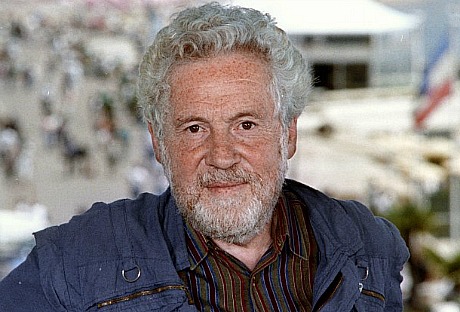

Erland Josephson — 6.15.23 to to 2.25.12

“The closest contact I ever had with Ingmar Bergman, so to speak, was a night in 1981 or ’82 when I talked for a long while with Harriet Andersson, who had a relationship with Bergman in the ’50s and starred in various Bergman films of that general period (including Summer With Monika, Sawdust and Tinsel, Through a Glass Darkly) and later costarred in Fanny and Alexander.

“There was actually a little more than talking going on. There was enough of an attraction that after 90 minutes or so Andersson suggested that we could perhaps leave the party (some invitational soiree on behalf of Swedish filmmakers that was happening in some cavernous space in Soho or Tribeca) and head uptown and…who knew?

“I knew one thing: an attractive middle-aged woman (she was nudging 50 but looked a good ten or twelve years younger) who had once been entwined with the great Ingmar Bergman was now somewhat interested in me. I was certainly flattered. If you believe that lovers pass along certain particles and auras to each other and that these are somehow absorbed and become part of who and what they are for the rest of their lives, I was thinking that on some ethereal level I might absorb a little residual Ingmar.

“But instead of grabbing a cab, Andersson arranged for us to ride uptown in a limo with a group of her Swedish film industry friends, including actor Erland Josephson, who had starred in several Bergman films himself including Hour of the Wolf, The Touch, Cries and Whispers and Scenes from a Marriage. There were five or six of us crammed into the back seat, and it was only a matter of ten or twelve seconds before they all realized what was going on and starting making joke after joke. In Swedish, of course, but translations were unnecessary.

“The mockery and the giggling and the howling went for two or three minutes, but to me it felt like a non-stop barrage. I tried to smile and be a good sport at first, but after a minute or so my eyes froze over. I distinctly remember Josephson being the worst of them. He was slightly in his cups and looking at me with a certain fiendish glee as he let go with one derisive snort after another. The import, more or less, was ‘Hah!…you worthless nobody!…you think you are good enough to lie down with Harriet?…think again!’

“By the time we were let off at Andersson’s hotel at 59th Street and 7th Avenue, I was on the verge of vomiting. It was all I could do to say ‘very nice meeting you’ to Andersson before turning and walking off. She’d been howling along with the rest of them, after all. Nice.”

In short, Josephson was a major talent and legendary actor who, like many people who live on the creative edge, was capable of brutal judgment and, if he’d had a few, casual cruelty. I’ve never forgotten that night so off you go, Erland…off you go, escorted by an army of dark horned angels, ya prick ya. The next time an older woman friend hooks up with an attractive young guy and wants to take him home, I’ll remember to be nice and friendly if we share a cab uptown.

Josephson was director of the Royal Dramatic Theatre in Stockholm from 1966 to 1975. He also directed a 1980 film called Marmalade Revolution.
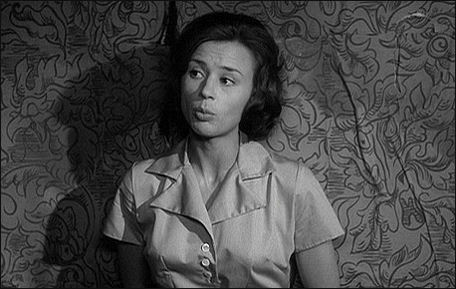

Harriet Andersson

Forget Paris

The refusal of Jean Dujardin‘s Valentin to venture into sound is due to his French accent, which he fears will be a career killer. Why not then return to France, “the home of cinema”, and join Marcel Pagnol, Jean Renoir, Jean Vigo and Marcel Carne “who were making, or about to make, films that entrance audiences to this day?,” asks The Economist‘s “Prospero.”

This is not an option, he explains, because Valentin “is so in love with Hollywood that he would rather fail there, even to the brink of suicide, than return to ply his trade in France. If the actor’s vocal ‘flaw’ had been an accent that revealed unacceptably working-class origins, sympathy would be genuinely merited. Still, this is a major star and, we are assured by the very title, a true artist. But he’d rather die! He’d rather be a second-rate hoofer in Hollywood than anything else anywhere.”

Wilder and Grander

I’ve been saying all along that I’d be a much more passionate Artist fan if it looked, moved and emoted like a real silent film, instead of offering a pastiche of one.

The Artist, a likable spoof, [is] bland, sexless, and too simple,” New Yorker critic David Denby wrote a few days ago. “For all its genuine charm, it left me restless and dissatisfied, dreaming of those wilder and grander movies [of the silent era].

Jean Dujardin, with a pencil mustache, looks a little like John Gilbert, but his cavorting star is meant to be a [Douglas] Fairbanks equivalent. A chesty, full-bodied man who moves quickly, Dujardin is good at buoyant peacocking, as when he shows off to an appreciative audience at the premiere of one of Valentin’s films. But most of what Dujardin does is obvious and broad. He smiles fatuously; he grimaces when things go wrong.

The Artist is an amiably accomplished stunt that pats silent film on the head and then escorts it back into the archive. The silent movies we see in The Artist all look like trivial, japish romps. Certainly, there’s no art form on display whose disappearance anyone would mourn. Hazanavicius’s jokes are playful but minor, even a little fussy, and after a while I began to think that the knowing style congratulates the audience on getting the gags rather than giving it any kind of powerful experience. ”

The Artist lacks the extraordinary atmosphere of the silent cinema, the long, sinuous tracking shots, the intimacy with shadow and darkness. Well, you say, so what? The movie is just a high-spirited spoof. Yes, but why set one’s ambitions so low? The movie’s winningness feels paper-thin, and, as Peter Rainer pointed out in the Christian Science Monitor, The Artist, with its bright, glossy appearance, looks more like a nineteen-forties Hollywood production than like a silent movie.”

Tsunami Approaching

It’s entirely possible that Hollywood Elsewhere will be overwhelmed later today by traffic, as it was during last year’s Oscar telecast. People not only had difficulty refreshing the site but I myself had difficulty posting. I’m just saying. I’ve just had a long, infuriating conversation with a senior-tech person at Softlayer, during which he assured me there’s little I can do at this juncture.

Two Months Before Nixon Resignation

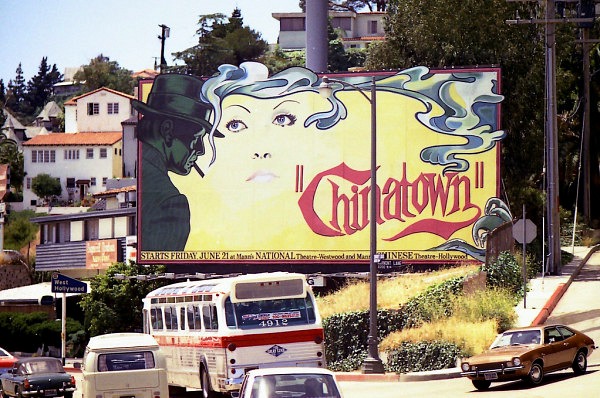
The “Easy Rider, Raging Bull” days were in full bloom. Shampoo had just wrapped, and film rights to the unpublished All The President’s Men had just been bought by Robert Redford. The air was awful. (Catalytic converters had only just been invented a year earlier.) El Cholo and Lost on Larrabee were hip restaurants. The Microsoft Corp. was eight or nine months away from being hatched by Bill Gates and Paul Allen. And LexG was…what, four years old? (Photo tweeted by Shawn Levy.)

Spirit Award Depletion, Capitulation

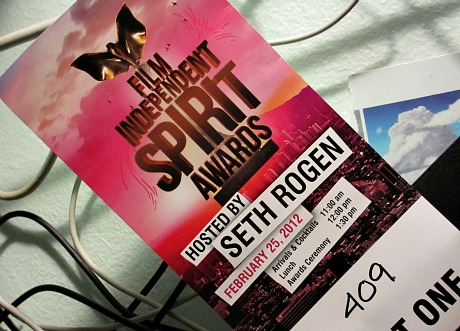
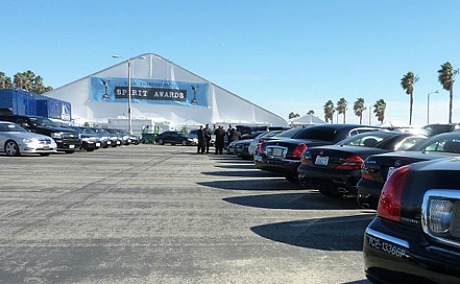
The 2012 Spirit Awards did the wrong thing today by giving four awards to the Big Oscar Inevitable known as The Artist — Best Feature, Best Director, Best Actor and Best Cinematography. The worst kowtow was giving Jean Dujardin its Best Actor prize instead of, say, A Better Life‘s Damien Bichir or Take Shelter‘s Michael Shannon. It wasn’t an indie thing to do — it was a “we want to be the Oscars too!” thing. Extremely bad form, dark day, etc.

Random Tweet #1: “Spirit Award for Best Actor goes to…Jean Dujardin? At the Spirits? People in the press tent going ‘eewww!” What a drag. Not Bichir?” Random Tweet #2: “Is it because I’m not drinking that the 2012 Spirit Awards are feeling so…I don’t know, rote and meh and under-energized & not-enoughy?” Random Tweet #3: “Not even light munchie food in Spirit Awards press cantina. No celery sticks, no carrots, no nothin’ — just empty, scarfed-up food boxes.” Random Tweet #4: “AT&T 3G is ridiculously slow in press tent. Too many people tweeting in too dense a space. No wifi for MacBook Pro and no celery sticks.”


Best Female Lead Spirit Award winner Michelle Williams — Saturday, 2.25, 2:55 pm.

Read more

Judgment

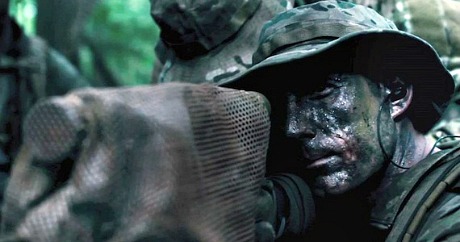
Now that Mike McCoy and Scott Waugh‘s critically-dismissed Act of Valor has emerged as the weekend’s #1 film with an expected $27 million, and now that at least some HE readers have seen it, did the “real Navy SEALS shooting real ammo” aspect do anything for anyone? From the get-go haven’t people been bracing for the expected shortcomings in the acting end of things? And how could live rounds mean anything to anyone? What detectable versimilitude could possibly occur from this?

And I’m a little surprised that eighth-place Wanderlust is an instant DOA. People just didn’t want to see it. Which is about the concept, I suppose, as well as a referendrum on the drawing power of Paul Rudd and Jennifer Aniston. People saw the poster, reminded themselves that Aniston almost never makes A-level movies, read the story about her pixellated breasts (and how she insisted on the boob coverup as a gesture of deference to boyfriend/costar Justin Theroux) and figured it’s a Netflix download, plain and simple. Plus people…what, aren’t into comedies about hippie communes?

What a disconnect between the 2.16 Wanderlust premiere screening and what I was feeling (i.e., moderate amusement) as I watched and the brutal reality of the box-office. I thought it might have a moderately okay weekend and then descend the following weekend and disappear.

Horror Makeup Guys (and Their Mortgages)

Visual effects (including special makeup) can be “imaginative, even astonishing, but [they] are ultimately there to sell a world, a character or a moment,” writes Press Play‘s Aaron Aradillas for a two-parter about horror and makeup. “One of makeup’s greatest triumphs is 1981’s An American Werewolf in London, which became the first film to win an Oscar for makeup in regular competition. Overseen by Rick Baker, who supervised all of the film’s makeup effects, it shows a man changing into a werewolf in real time…right in front of your eyes.”

And the first time I saw this I felt mildly deflated. For me it was a time-out, a prosthetic musical number, a demo reel showing everyone how necessary it would be to hire Baker when and if they made a horror film. For me werewolves were always half-wolves and half-men, so why did we have to do the big trans-species transformation? I didn’t care if David Naughton could grow a real wolf snout and wolf ears, and in fact would have much preferred him becoming a two-legged, Lon Chaney-style werewolf running around in a snarly, feral mode and half-resembling himself. It’s all a metaphor anyway so who needs prosthetics that turn him into a generic four-legged hairball with fangs?

Landis and Baker and all those dug-in, highly-paid special-effects industry guys had to do better. They had to do more. They had to show off, and most horror fans, being the low-lifes that they are, loved this. Gradually horror films, especially with the advent of the digital era, became defined by narrative and thematic coherence getting nudged aside by the effects themselves. It was during the ’80s that effects became the films.

The best parts of American Werewolf were (a) the backpacking section with Naughton and Griffin Dunne, (b) “dead”, torn-apart and progressively rotting Dunne coming back to chat with Naughton, and (c) Jenny Agutter‘s scenes.

Ultimate Catch

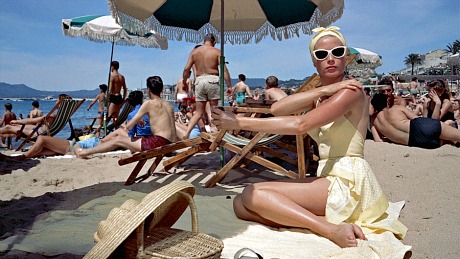
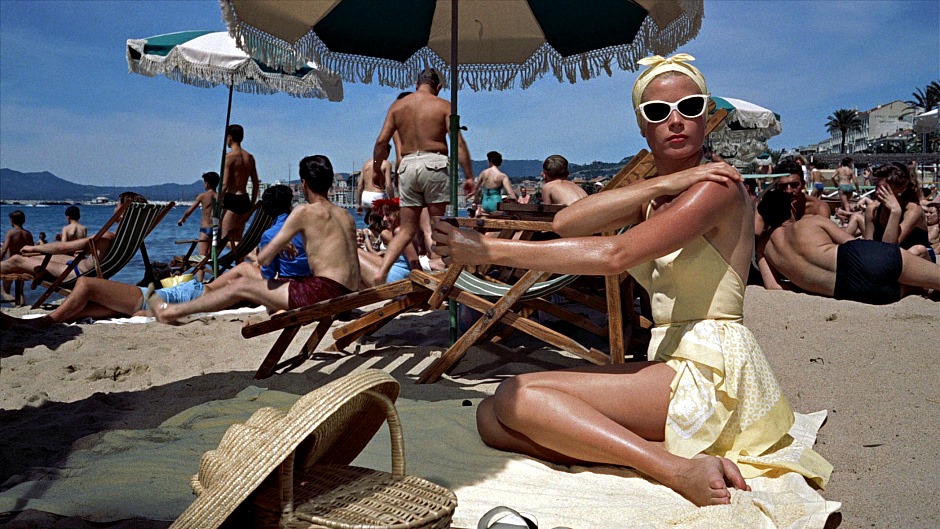
To Catch a Thief (Paramount Home Video, 3.6) “looks marvelous on dual-layered Blu-ray. Everything tightens-up impressively and the contrast takes notable strides in the 1080p resolution. Colors also appear to improve with better balance in the presentation that has more than 4X the bitrate of the last SD transfer. A fair dusting of grain, no disturbing noise, no signs of digital manipulation. By far the best viewing I’ve ever had of this film. Beautiful.” — DVD Beaver‘s Gary Tooze.

Read more