Backstage Bickering

According to Patrick Goldstein‘s inside-the-LAFCA-awards-debate reporting, Slumdog Millionaire “sparked the most divisions of any film. Its partisans praised its filmmaking energy and social consciousness . But its scrum of detractors said they wouldn’t vote for it under any circumstances, with some critics claiming it was too derivative, coming off like an amped-up Satyajit Ray film.

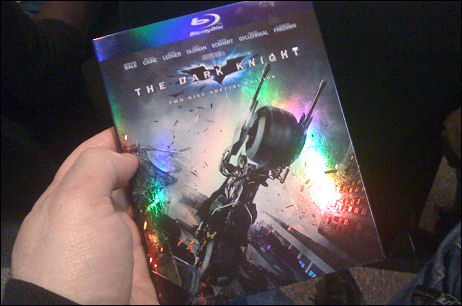
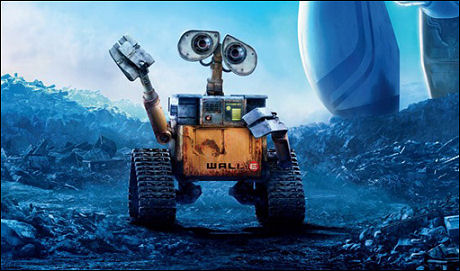
“The only slam dunks in the voting were Penelope Cruz, who won best supporting actress for Vicki Cristina Barcelona and Heath Ledger for The Dark Knight. The voting for best picture was extremely close, with the joke being that whether the vote went for WALL*E or The Dark Knight , that it was still a thumbs-up for an animated film, since Dark Knight is loaded with computer animation effects.”

Between LAFCA’s snub of Revolutionary Road Best Actress contender Kate Winslet (they went for Sally Hawkins first and Melissa Leo second) and Winslet being blown off yesterday morning by the Broadcast Film Critics’ Association, there appears to be a block of serious (and perplexing) resistance to Sam Mendes‘ angst-ridden period drama. What is wrong with everyone? Why can’t they see how sublimely made and full of feeling this film is?

Friends of Torino #3

On 12.3 Some Came Running‘s Glenn Kenny asked, “Does it give too much away to say that Gran Torino, which Clint Eastwood stars in and directed, represents, for this critic at least, the final film in a trilogy that began with Unforgiven and continued with A Perfect World? No? Good. Let me then add that I found the film a very fine conclusion indeed to the trilogy I just made up.

“As you may have heard, Eastwood here plays a guy named Walt Kowalski, a Korean war vet and retired Ford assembly line worker living in an unspecified Michigan quasi-suburb. He’s tough as nails, still (or so he’d like everyone to believe), cranky as fuck, recently widowed and thoroughly alienated from his kids and grandkids. In other news, his neighborhood seems to be getting overrun by Hmong immigrants.

“Did I mention Walt’s a bigot, too? Indeed he is, and he doesn’t care much for his new ‘gook’ neighbors. When Thao, the young, introverted son of the Hmong family next door reluctantly participate in gang initiation by trying to jack Kowalski’s mint condition ’72 Gran Torino, Kowalski gets out his old army rifle and goes — well, there’s no other way of putting it — all Dirty Harry on the kid, albeit without, you know, killing him.

“He hones that act on varied other miscreants in the area, and along the way winds up forging a tentative friendship with Sue, Thao’s older sister. Which leads to a more intense involvement with her family, with Sue acting as tour guide to Hmong traditions and beliefs.

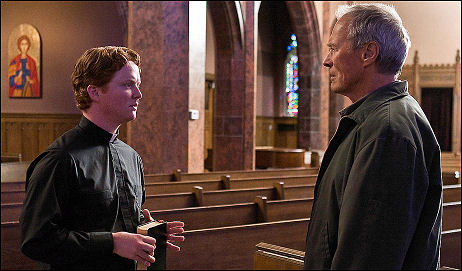
“But the aforementioned gang is insistent. As is the young priest who promised Walt’s late wife he’s look out for the widower, specifically with regard to getting him to go to confession. These varied forces converge to force Walt, who’s still haunted by memories of war, to ponder going to war again.

“I may have given away too much already. So I’ll stop with the plot specifics and say that I was mightily impressed by Gran Torino, and that I also understand the rather contradictory opinions that are already flooding the intertubes. After the screening, a critic friend who also dug the picture mentioned that it reminded him a bit of a Sam Fuller film. Yes. Eastwood is a more nuanced filmmaker than the late, great, Sam, but Gran Torino does have an old-fashioned bluntness and sincerity that runs counter to quite a few contemporary modes.

“In the early portion of the film, Eastwood’s performance skirts caricature, and not narrowly, either–he literally growls to show displeasure. But from there, Eastwood the performer, Eastwood the director, and screenwriter Nick Schenk build. The overblown archetype is revealed as a singularly tortured individual.

“But Eastwood’s plain approach — and it should be noted here that, trailer to the contrary, this is not an action film; it’s largely made up of dialogue scenes, and what violence occurs is ugly and brutal and hardly…oops, I’m saying too much again — is so thoroughly out of fashion that it practically invites cynicism from certain parties.”

Celestial Calculations

Benjamin Button screenwriter Eric Roth told Collider ‘s Steve Weintraub last Sunday that he’s working on an “original idea” for a “space movie” that would be “somewhere between the intelligence of 2001 and the mythology of Star Wars, so I don’t know where that leads you.

“But I don’t want to make it so intellectual that it’s confounding, but on the other hand I’m not so sure I can write the kind of wonderful fantasy that Lucas does, so maybe it would have…I don’t know…I don’t know. I can’t answer that because they’re going let me just sort of say fade in and see where I go. I think it will be great. I have an idea. It’s a terrific idea, I know that. Whether I’m able to be able to do it, I don’t know.” But Warner Bros., he said, is “down with it.”

WB is down with it, of course, because they’re attracted to the elegant prestige factor that comes with Roth’s name. They know full well that if his final draft doesn’t turn out to be Lucas-y enough — ooh-aah, CG-heavy, fanboy-friendly — they can always finagle things.

Tisch, Weintraub, Seven Pounds

If I’d been in Steve Weintraub‘s shoes I would have done the slightly gauche thing and asked Steve Tisch, chairman and CEO of the New York Giants as well as producer of Seven Pounds and the forthcoming Taking of Pelham 123, for help with tickets to the 12.21 Giants vs. the Carolina Panthers game. Because Jett told me last week he wants to go.

Not freebies — just good seats. Not that Tisch doesn’t get tapped for Giants tickets each and every day, or is in any way inclined, much less obliged, to do anyone on the movie-promo circuit this kind of favor. But I’d ask anyway. Sometimes that works and sometimes it doesn’t. If rejection results, fine. But you can’t pussy out about stuff like this.

Friends of Torino #2

“Imagine every butt-kicking, unflinching character Clint Eastwood has ever played. Now imagine seeing them in their twilight years, wrinkled, haggard, on death’s door, and spitting in the face of death one last time to help a friend. His performance as Walt Kowalski in Gran Torino is his best work as an actor in years , a return to all of the things that made him great as a younger man.

“He’s brilliant and imposing, shocking and so over-the-top he’s often funny. And Torino is a movie you must see — smarter than it seems and broader, funnier, and more straightforward than you’d expect. This is the Eastwood we all remember in a perfect final performance. He’s riding off into the sunset scowling, snarling, and spitting blood.” — Cinema Blend‘s Josh Tyler in a 12.8 review.

Hits Keep Coming

“Film critics have been getting whacked lately like they’re in the third-act montage of The Godfather,” writes Nothing But The Truth director-writer Rod Lurie, a former journalist himself, in a HuffPost-ing. “They’re going down with an unforgiving ferocity that spells danger not just to the craft of film criticism but to print journalism as a whole. Why? Because the local film critic has always been symbolic of the individuality of the American newspaper and magazine.

“The latest victim is the stylish and tough Glenn Whipp of the Los Angeles Daily News. He was preceded in the gangland slayings by some other superb writers: Glenn Kenny at Premiere (who, by the way, gave me my share of metaphorical prison rapings when he wrote about my films), Carina Chocano, Kevin Thomas at the Los Angeles Times, Jonathan Rosenbaum at the Chicago Reader and…well, the list does sort of go on and on.

“Newspapers have been in a downward spiral for close to a decade now (I blame Craigslist most of all since classified ads have always been a major source of income for newspapers — but no more). In order to cut costs, management goes first to critics — a bit like how schools slash arts programs. There is something they do not take seriously about them. They find them easily replaceable or, maybe, not needed to be replaced.

“When these newspapers and magazines fire the Whipps and the Kennys and the Wilmingtons, they are hurrying their own demise by cutting out one of the very things that makes them unique: the voice that often prompts people buy the newspaper in the first place. (The same thing applies to another budget-slashing victim: the political cartoonist.)

“You know, it used to be that somebody would say, ‘I heard that such and such a newspaper loved or hated a movie.’ That’s silly, of course. The newspaper’s critic — not the paper itself — loved or hated a film. But because that critic was so identified with the publication, it served the same purpose.

“There is hope I suppose. There are several critics I still love to read. I’ll admit that some of the internet guys are pretty good. But, it’s not like it used to be, which breaks my heart.”

Summit Boys Club

If Nikki Finke‘s tip about Summit offering the New Moon directing gig to Chris Weitz comes true (i.e., if he’s actually offered the job and takes it), it’ll prove that Summit truly hasn’t a clue.

The Twilight films have to be directed by a woman, period, and certainly not by some sensitive, well-intentioned but fatally middlebrow journeyman like Weitz (The Golden Compass, About A Boy). The obvious candidate is The Hurt Locker‘s Kathryn Bigelow…is it not?

Finke’s tipster says “another reason [for the Weitz offer] is because Weitz and Summit’s president of production Eric Feig are longtime pals.” Jesus…do they play poker together? Forget Weitz, grab Feig by the lapels and slap him around and tell him that flaunting the old-boy network is bad p.r., and then hire Bigelow. Simple.

If Weitz winds up directing New Moon everything that Summit honcho Rob Friedman told Patrick Goldstein yesterday will be immediately tossed out the window. Weitz? Why not dangle the job in front of Stephen Sommers while they’re at it?

Without Drums or Trumpets


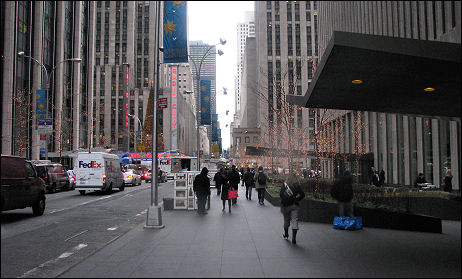
Approaching Newscorp. building for a 3 pm press screening of The Day The Earth Stood Still, which followed (naturally, inevitably) the noontime screening of Seven Pounds over at the Sony building on Madison and 55th.

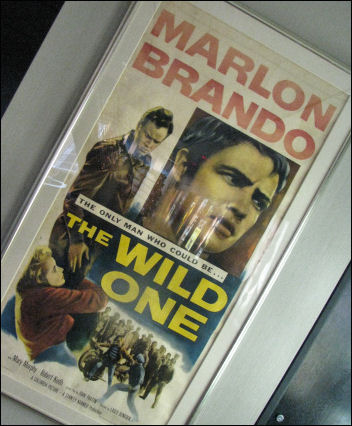
Wild One one-sheet in the big lobby outside the Sony screening-room on…what is it, the seventh or eighth floor? I forget. But sitting on that rear couch in the dark with your feet up on one of those green leather ottomans is fantastic.

Yours truly is filing from this very spot as we speak, inside a Starbucks on Eighth and 48th.

WALL*E’s Big Day

I got out of a 3 pm showing of The Day The Earth Stood Still only about 30 minutes ago so forgive my being slow to respond to the news about Andrew Stanton‘s WALL*E winning the Best Picture prize from the L.A.Film Critics earlier today. Waahhhlleeeee! Big development, you bet.

It’s a good decision born of bold and original thinking. Hooray for LAFCA not putting its paws up and yelping for Slumdog Millionaire. They stood up and shot their own wad.

Right now, today, as of this precise minute, the Slumdog juggernaut is idling in traffic, stopped at a red light, and just a tiny bit worried. I wouldn’t be. Things will pick right up again tomorrow for Slumdog once the unusual WALL*E win — the first-ever animated pic to win LAFCA’s Best Picture award — is processed and kicked around. But at least today’s surprise win has given the Best Picture race a little contour, a little shading, a little “oh, yeah?” attitude.

The Dark Knight was the Best Picture runner-up. Honestly? It would been a little bit cooler if Chris Nolan‘s film had won instead of Stanton’s. WALL*E, trust me, isn’t going to bust into the Academy’s Best Picture race, but The Dark Knight might, and it could’ve used LAFCA’s support to pursue this. But what does LAFCA care about the stupid Academy? Nothing. They’re playing their own game.

LAFCA’s Best Director trophy went to Slumdog‘s Danny Boyle . It’s a sop, of course — a make-up for the disappointed Slumdog contingent. But as long as LAFCA was going off the script they should have at least given the Best Director prize to Nolan, who was first runner-up after Boyle.

Milk‘s Sean Penn won the Best Actor award (fine), and The Wrestler‘s Mickey Rourke came in second (tough break).

This columnist recognizes that Sally Hawkins‘ performance in Happy-Go-Lucky was crackling and throbbing and gifted-crazy, but the kind of person she played — a happy fascist who insists on happy-vibing everyone she runs into until they’re down on their knees and begging for mercy– is the sort of positive soul I find personally detestable, so I say “no” to this in order to discourage all of the other happy fascists, both in other forthcoming movies and in real life.

But yay for Best Actress runner-up Melissa Leo, the desperate people smuggler of Frozen River .

The Best Supporting Actor prize went to The Dark Knight‘s Heath Ledger, and Happy Go Lucky‘s Eddie Marsan, whose performance I enjoyed much more than the one given by Hawkins, was named runner-up.

Vicky Cristina Barcelona and Elegy‘s Penelope Cruz was named Best Supporting Actress, and Doubt‘s electrifying power-hitter Viola Davis came in second.

Here are the rest of the awards.

Time Has Come

“I respectfully request a moratorium on Holocaust films,” writes Stewart Klawans on the Jewish culture site, Nextbook. “By continually replaying and reframing and reinventing the past, these movies are starting to cloud the very history they claim to commemorate. Call it the law of diminishing returns — or call it a paradox that mirrors the Torah’s famously self-contradictory commandment at the end of Parshat Ki Tetze, concerning the people who were the prototype of Nazi Germany: ‘Thou shalt blot out the remembrance of Amalek from under heaven; thou shalt not forget.’ Very soon, with Holocaust movies, we’ll need to forget if we want to remember.”

Scoot

Running into town for afternoon screenings of Seven Pounds and The Day The Earth Stood Still. Back around 5 pm eastern. Probably.