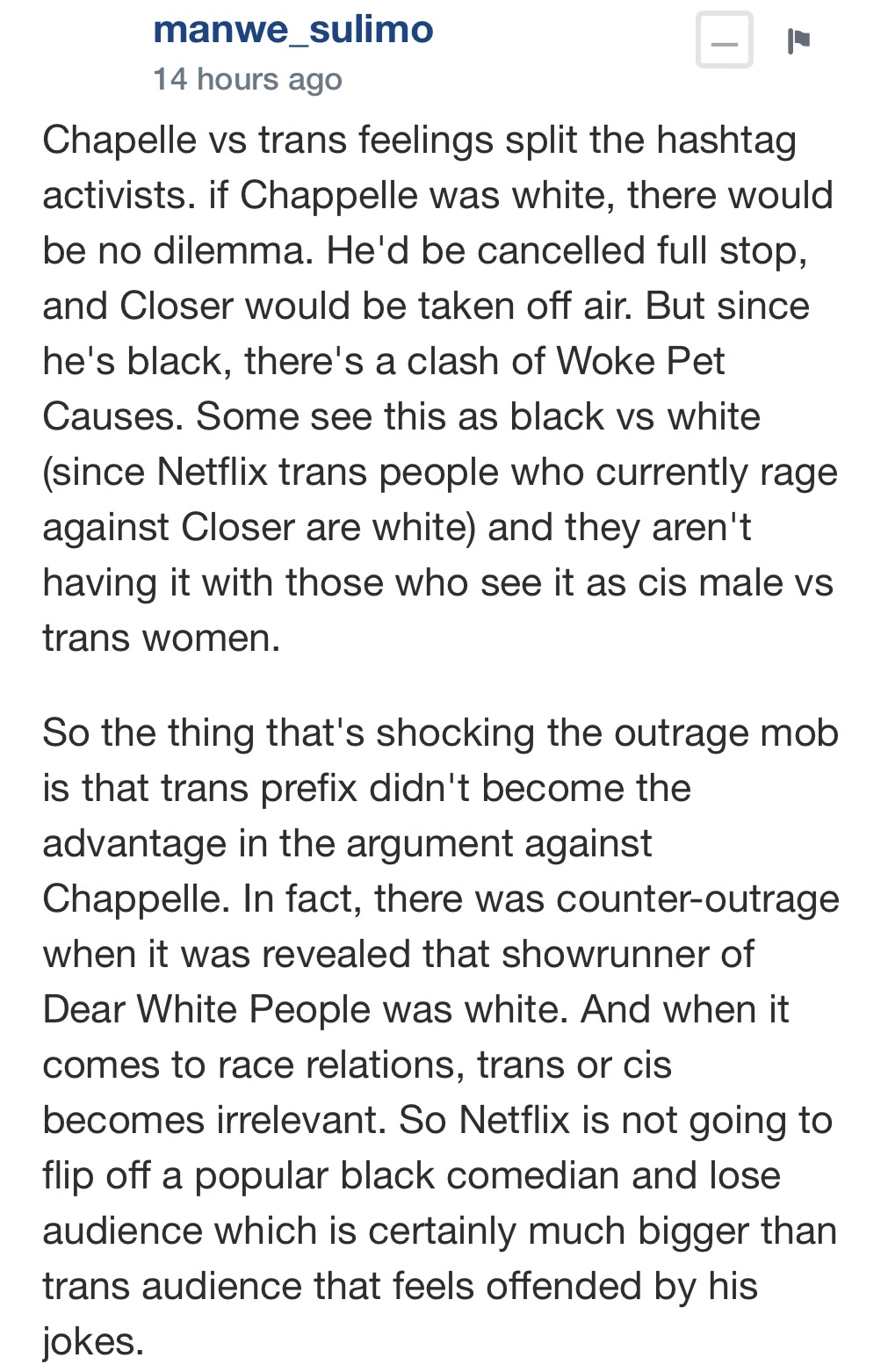
“If Chappelle was white, there would be no dilemma…he’d be cancelled full stop, and The Closer would be taken off the air”…well?
Jump to https://hollywood-elsewhere.com/2021/10/sage-words/2/

 Jeffrey Wells
 “If Chappelle was white, there would be no dilemma…he’d be cancelled full stop, and The Closer would be taken off the air”…well?
Jump to https://hollywood-elsewhere.com/2021/10/sage-words/2/
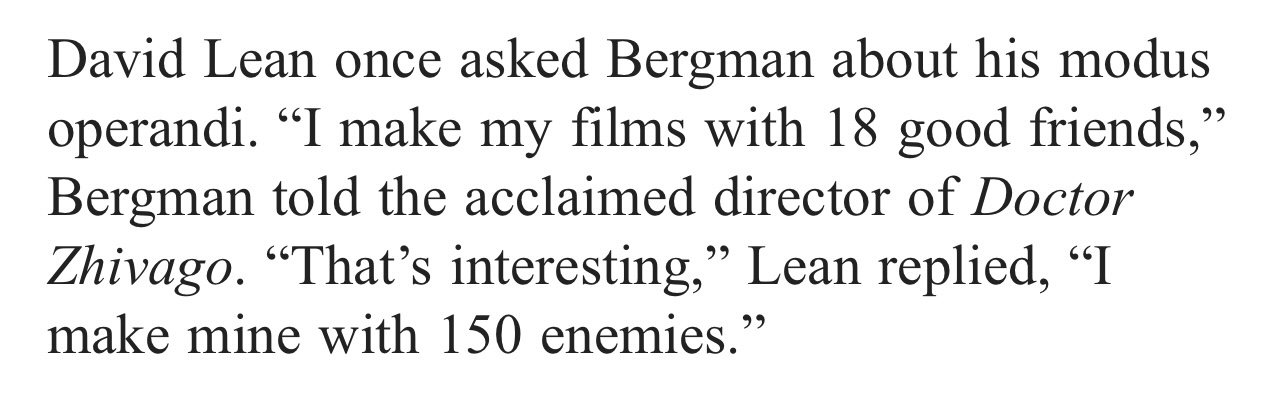
Smiling faces and two-faced enemies. Or, in Marlon Brando terminology, one-eyed jacks. Some actual friends or “friendos,” of course (and thank God for those few) but mostly fair-weather types, transactional allies, etc. Like any other big-city racket. Grow up.
Ridley Scott‘s The Last Duel (20th Century, 10.15) is a good, sturdy feminist film, and there’s one person who carries it — not Matt “mullet” Damon, not Adam “horseface” Driver and not Ben “Blondie” Affleck. The carrier is Jodie Comer, and I’m telling you that she’s Grace Kelly in her prime…skill, class, poise, passion, refinement.
The guys are fine but Comer (26 or 27 when the film was shot) is the keeper. Best Actress or Best Supporting Actress…whatever works. She’s got it within, and she looks great besides.
Repeating: We all understand that Duel is a medieval #MeToo yarn about conflicting recollections of a brutal rape.
Two depictions are shown, one from the perspective of the victim, Comer’s Marguerite de Carrouges, and a second from the perspective of the rogue perpetrator, Driver’s Jacques Le Gris. A third account from Marguerite’s husband, Damon’s Jean de Carrouges, is passed along but not visualized as he wasn’t there.
But there’s another sexual assualt scene that really throttles you, and it’s between a mare and a stallion. A white mare “in season” is in a corral, bnd suddenly a black stallion races into the paddock and mounts her like that, and Scott offers a fast glimpse of his 20-inch black baseball bat…God! Now that‘s a savage rape scene, I told myself. The neighing steeds have it all over the heavy breathing humans in this respect.
I was disturbed by Damon’s mullet hair all through the film — in every Damon scene it was a problem. Why did Scott insist on his lead actor wearing a rural Pennsylvania, Trump-supporting mullet in this thing?
And I didn’t care for the muted blue-gray color scheme — it bothered me start to finish.
It’s 2:45 pm and I have to leave for two or three hours. I’ll pick up later on…
There’s a Latino apartment renovation crew working in the building next door, three or four guys, and they’re being (what else?) obnoxious — shouting to the extent that their voices sound like sonic booms, playing loud sombrero ballads and singing along and occasionally going “whooo-whooo!” And it’s awful to listen to. It’s hell.
I asked myself if I should walk over to the worksite and ask these guys to consider the fact that this is West Hollywood and not East L.A. and would they mind giving the neighborhood a break with their awful Tijuana border crossing music, etc. But that wouldn’t accomplish much.
I’ve been all around the block with coarse Latinos so don’t tell me. My battles with the Hispanic Party Elephant in North Bergen. The “Loud Latinos” piece that I posted from Brooklyn in June 2010, and got in trouble over.
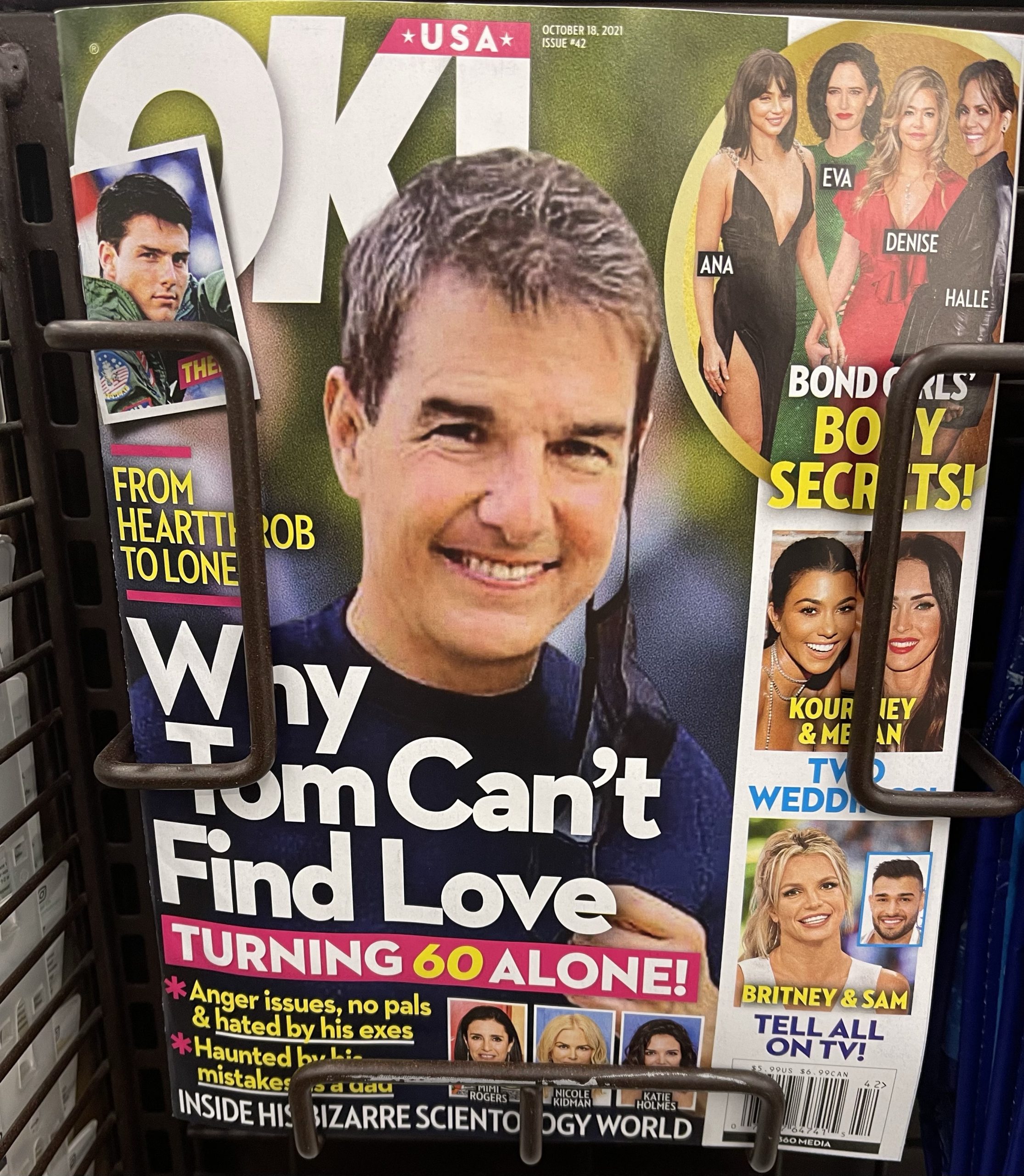
Getting older is not a felony but this OK! cover shot of Tom Cruise threw me. An occasional bad photo is par for the course, but I froze in my tracks when I saw this last night in a WeHo Pavillions checkout line. What am I seeing? Facial filler? Cruise has sturdy features — he’s a handsome dude and the “worn and weathered” thing (the Jerry Maguire look + 25) is the way to go. And he should grow his hair out a bit. “Barry Nerd” short hair can work against you, depending on the particulars.
The intentionally primitive, slapdash, in-and-out, less-than-inspired Let It Be sessions and the album that resulted in May ‘70 weren’t the Beatles’ “swan song,” as the Variety headline for Jem Aswad’s 10.15 story contends.
Aswad knows that Let It Be was the group’s second–to–last album, and was recorded a few months before the actual swan song of Abbey Road, as the article clearly informs. But Variety’s headline writer wanted “swan song” and here we are.
The Let It Be sessions were a drag all around…an unfortunate McCartney-driven experiment in search of a raw garage-band sound, and now the whole mess is receiving a way-out-of-proportion six-hour tribute from Peter Jackson and Apple+.
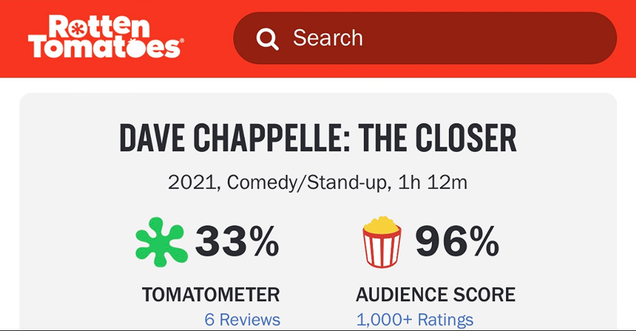
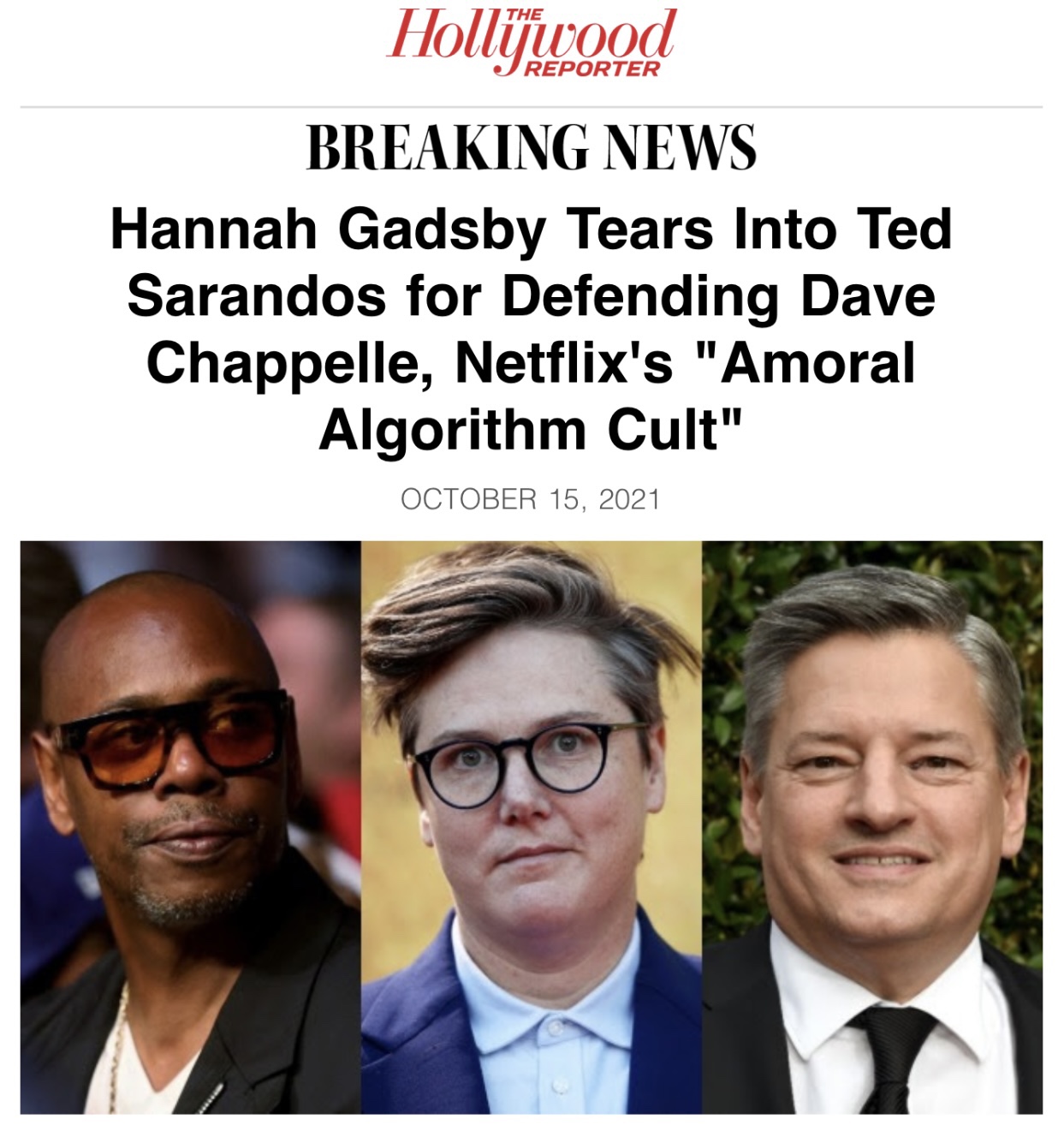
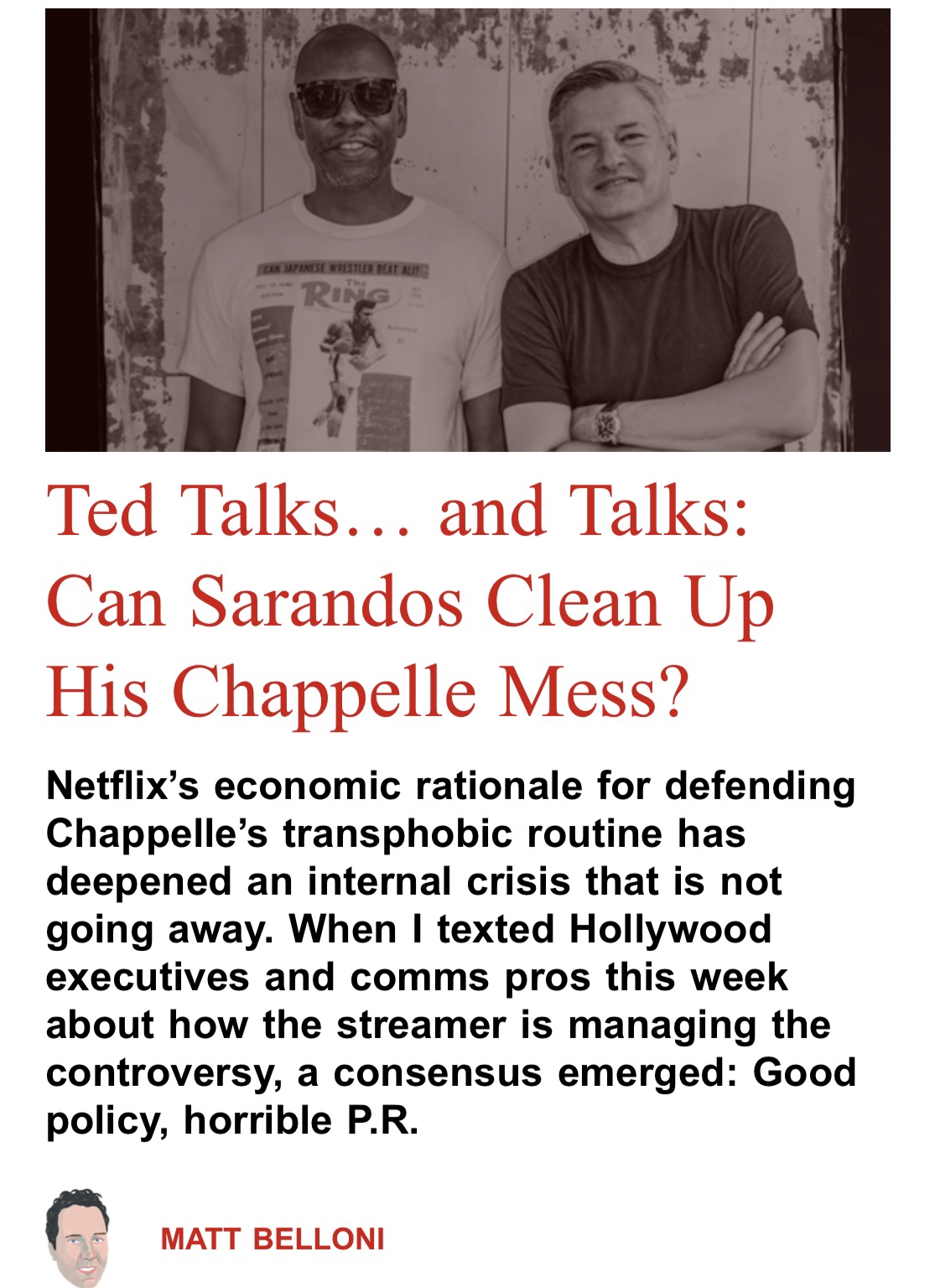
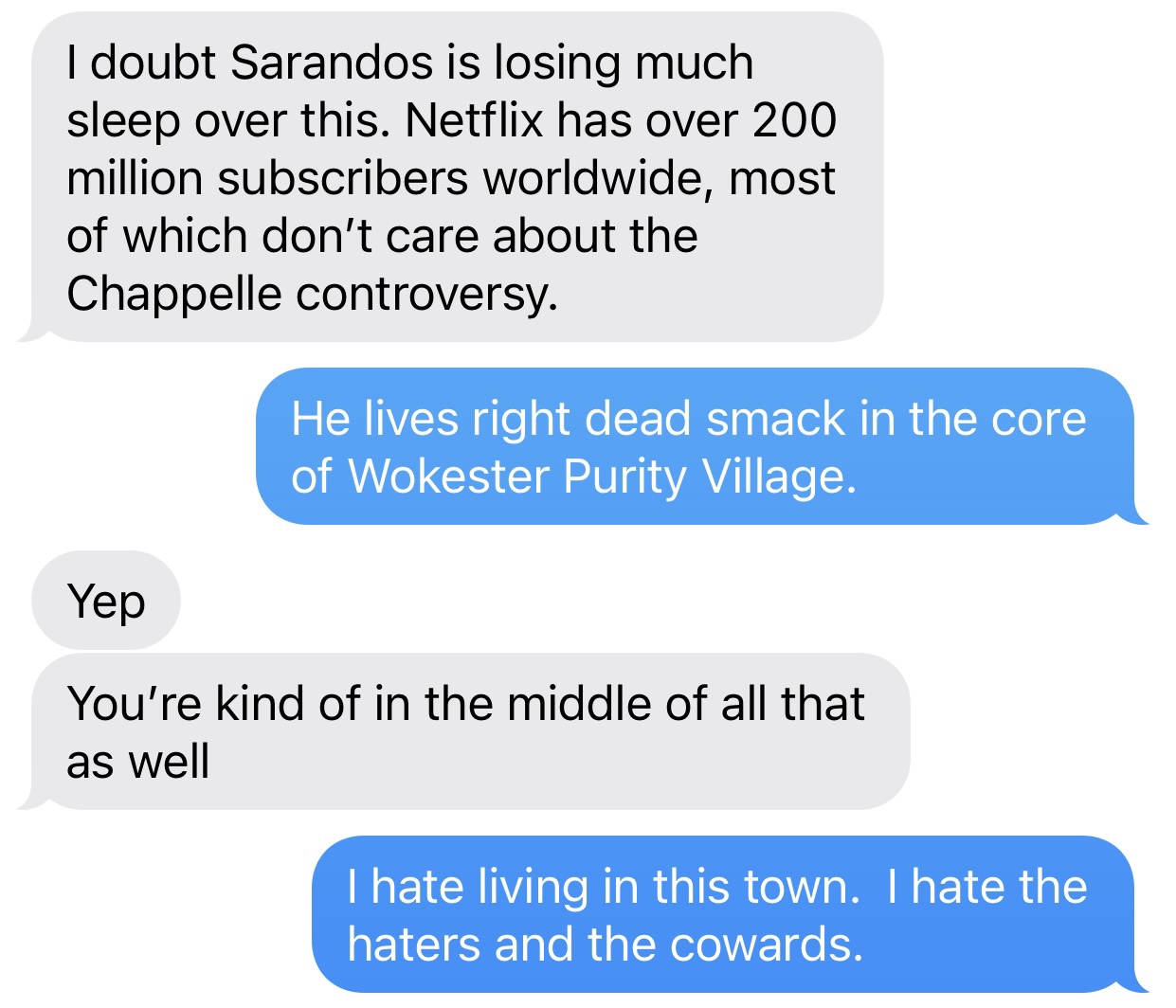
Wokesters are not letting the Dave Chappelle-Ted Sarandos–Closer thing go. They’re all piling on, the whole Film Twitter mob. All trying to get Netflix to pull The Closer and censor Chappelle, etc. Truly odious bastards. It’s so disgusting that this is the modern-day left. This is why I self-identify as a sensible left-center contrarian.
Then again a whole lot of people are watching the show, I’m presuming.
HE to Sarandos: You are the good guy, the freedom guy, the truth guy, the integrity guy…you are doing the right thing, and God adores you for it. Can anyone imagine Dave Chappelle calling for Hannah Gadsby to be flogged or excommunicated? The Closer cuts right through the woke smoke. It doesn’t deliver final, ultimate truth, but it’s honest, perceptive, fair and straight-up. And it’s certainly Chappelle’s truth. And you’re right to defend it, Ted. In the twinkling of an eye, you’ve become a man among men.
The House select committee investigating the Jan. 6 attack on the Capitol announced today that it will move to hold Steve Bannon in criminal contempt for not complying with its subpoena. And yet the committee “has opted to give other former Trump officials more time to comply with its subpoenas”, according to the Washington Post‘s Jacqueline Alemany and Tom Hamburger.
Why exactly is the committee going easy on the others? What’s the strategy?
Excerpt: “Lawmakers who sit on the panel — seven Democrats, two Republicans, all appointed by House Speaker Nancy Pelosi (D-Calif.) — said they are prepared to move quickly to pursue criminal contempt charges against witnesses like Bannon.”
And yet after a committee approves a contempt charge (presumably sometime next week), “the House must then vote on the matter. Once passed, the contempt referral would then be sent to the Justice Department. Then Attorney General Merrick Garland will have to decide whether to criminally prosecute an individual for failing to comply with the congressional subpoena,” etc.
Committee approval, House vote, Garland acts. Sounds to me like a measured, drawn-out, less-than-iron-willed process.
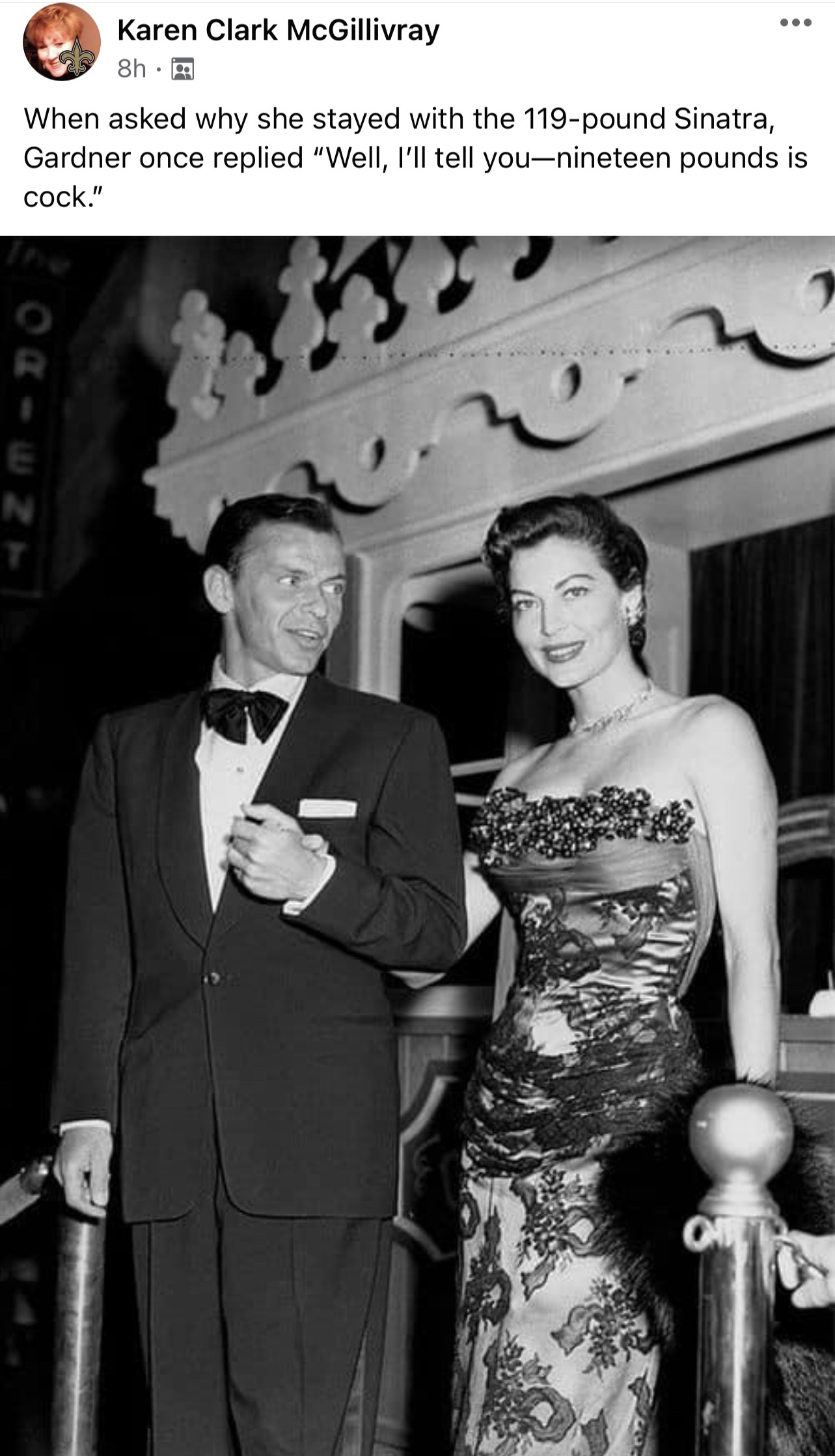
It’s a touchy topic but let’s get caught up on this, according to present-day legend. Name the classic-era movie stars who were believed to have a stall in the stable (Sinatra, Bogart, Berle, Brynner…that line of country) along with a list of today’s fellows who are believed to be in the same league. Nobody knows anything, of course, except in the matter of Fassbender.
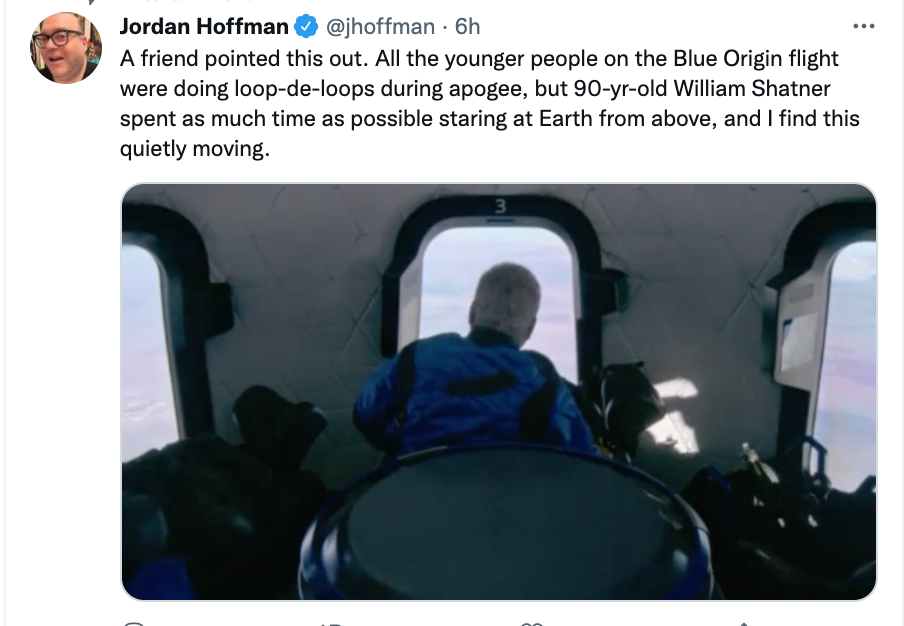
Hollywood Elsewhere hates people who whoop…seriously. One “whoo-hoo yeahhh!” and you’re dismissed for life. William Shatner‘s asshat co-travellers were given a unique opportunity to reflect and meditate and merge with a Godhead consciousness afforded only to space travellers, and they reacted like idiots riding Superman: Escape from Krypton at Six Flags Magic Mountain.
Yesterday Mark Harris tweeted a few statements about the Dave Chappelle trans thing, and his belief that this dust-up is “an important pivot point — not a pivot point about, as his defenders would have it, censorship or cancel culture or whatever false threat they’re imagining is central.”
Here’s the passage that got my attention: “But it doesn’t stop until a lot of people say ‘We’re sick of this, and that is what’s happening now. And all the angry response that we’re hearing is the whine of bullies having a weapon taken away from them. And all you can do is let them cry until they’re all cried out.”
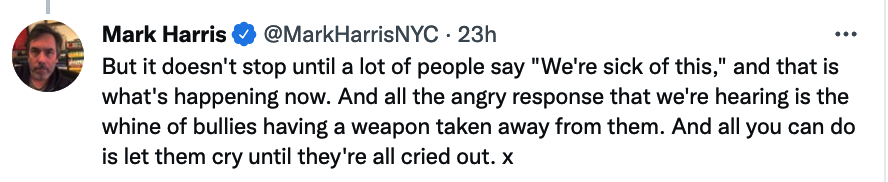
Precisely! Except Harris has it ass-backwards. The people saying “we’re sick of this” are the normal, free-thinking, laid-back folks like Chappelle and Ted Sarandos and myself and Sasha Stone and the vast majority of Average Joes who loved watching The Closer, and the “bullies” are the Twitter shriekers…they’re crying and freaking out because they can sense their zeitgeist moment slipping away from them.
In other words: They’ve overplayed their hand and driven everyone crazy, and the normals are starting to wake up and say “nobody wants anything but love and agency and options for trans people but at the same time fuck the shriekers…they’re driving everyone nuts and we’re tired of attempts to destroy people over having the wrong opinions or standing with J.K. Rowling or whatever….we’re really fucking sick of mob Twitter justice.”
From Andrew Sullivan‘s 10.8 “Weekly Dish” column, “Dave Chappelle Is Right, Isn’t He?“: “Chappelle’s final Netflix special, The Closer, is a classic. Far from being outdated, it’s slightly ahead of its time, as the pushback against wokeness gains traction. It is extremely funny, a bit meta, monumentally mischievous, and I sat with another homo through the whole thing, stoned, laughing our asses off — especially when he made fun of us.
“The way the elite media portrays us, you’d think every member of the BLT community is so fragile we cannot laugh at ourselves. It doesn’t occur to them that, for many of us, Chappelle is a breath of honest air, doing what every comic should do: take aim at every suffocating piety of the powers that be — including the increasingly weird 2SLGBTQQIA+ mafia — and detonating them all.”