Dramatize Burns-Zacky Doc

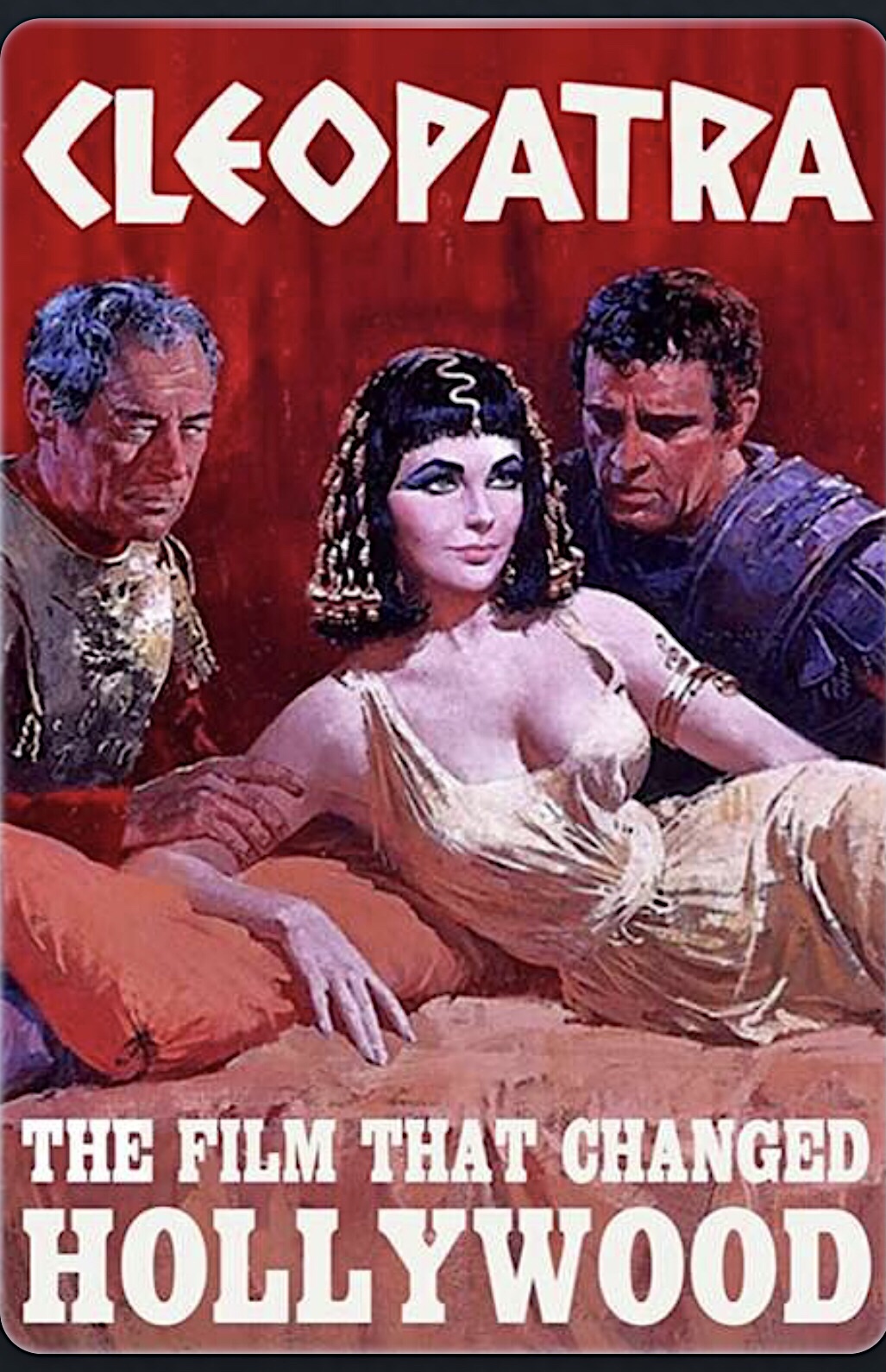
It was reported this morning that Patty Jenkins and Gal Gadot have signed with Paramount Pictures to more or less remake Cleopatra, the 1963 Joseph L. Mankiewicz catastrophe that came close to sinking 20th Century Fox.

Gadot and Jenkins will of course be making their own specific film about the legendary Egyptian queen, but the legacy of the 57 year-old Fox production looms large.

On a scale of 1 to 10, how interested is the HE community in seeing this new version? My honest level of interest is somewhere around five or six. But if there was a plan to make a narrative feature about the making of the Mankiewicz version, or more precisely a drama based on Kevin Burns and Brent Zacky‘s Cleopatra: The Film That Changed Hollywood, a 2001 doc that’s included in the Cleopatra Bluray package, my interest would instantly shoot up to 10.

This has been said over and over, but the Burns-Zacky doc is far more absorbing, entertaining and even more dramatic than the Mankiewicz film. If you’ve never seen it, here it is in two parts. Well worth the two hours.

Jimi Hendrix’s “Salmon House”

Buying a house is necessarily a slowish, meticulous, step-by-step process. Endless protocols and procedures, and it’s never a done deal until you’ve signed every last form and inspected the place with a fine-tooth comb. But congrats are nonetheless in order for HE’s Jett Wells and wife Caitlin Bennett on purchasing their first home.

It’s located on a leafy cul-de-sac in West Orange, New Jersey, which is 20 or 25 minutes from Manhattan. Built in the 1930s, nice-looking floors, three bedrooms (or three and a half…I forget), an attic, a basement, 1 1/2 bathrooms, excellent front porch, huge back yard for the dogs, hilly. Expected occupancy by 12.1.20, or possibly a bit earlier. Their neighborhood is due south of Montclair; it’s also near Caldwell, where my maternal grandparents lived for decades.

Son of Oval Office Recall

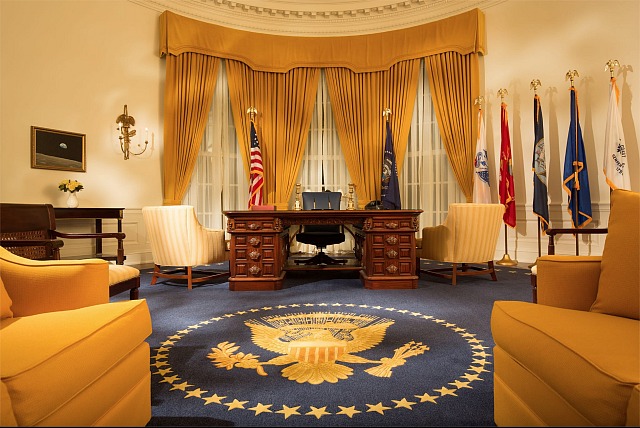
Originally posted on 4.2.08: 25 years ago Oliver Stone did me a great favor, and I’ve thanked him at least two if not three times since. In ’95 he and publicist Stephen Rivers arranged for me to pay a brief visit to the Nixon West Wing — Oval Office, cabinet room, hallways, various offices, etc.

Production designer Victor Kempster had built the amazingly detailed set (including an outdoor portion with grass and bushes) on a massive Sony sound stage.

I was allowed in just after Stone and his cast (including Anthony Hopkins) and crew had finished filming. It was sometime around February or March of ’95. I wrote up my impressions for an L.A. Times Syndicate piece. Nixon opened on 12.20.95.

The Nixon unit publicist (or somebody who worked for Rivers) escorted me onto the stage and left. Nobody was around; I had the place all to myself. I had a video camera with me and shot all the rooms, and took my time about it. I was seriously excited and grateful as hell for the opportunity because it was, in a sense, better than visiting the real Oval Office in the real White House, which I would have never been allowed to do even if I’d been best friends with someone in the Clinton administration.


Nixon’s oval office.

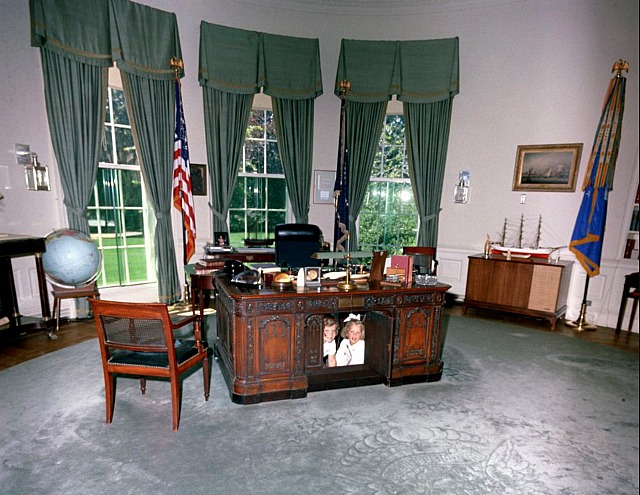
JFK’s subdued variation.

Every detail was Eric von Stroheim genuine. Wooden floors, real plaster, ceilings, rugs, moldings, early 1970s phones, bright gold French aristocracy drapes, china on the shelves and mantlepiece, etc.

Five years later I was granted a visit to a replica of Jack Kennedy‘s West Wing that had been used for the shooting of Roger Donaldson‘s Thirteen Days. It was around the same time of year — February or March of 2000, roughly nine or ten months before the movie’s release in December. The set had been built by production designer Dennis Washington inside a warehouse-type sound stage somewhere in southern Glendale or Eagle Rock.

The difference between the Nixon Oval Office decor — creamy beiges and bright golds, a bright blue rug, gilded bric a bracs on the shelves (which contributed to a kind of effete, faux-aristocratic atmosphere) — and the subdued greens, browns and navy blues of JFK’s office (which even had a replica of the coconut shell that Lt. Kennedy used to carve out a message during his PT 109 adventure) will always stay in my mind.

You can tell a lot about people from the decor in their homes and workplaces. Only an arrogant know-nothing would have chosen the nouveau-riche wooden floor that Bush had installed in ’05. The White House is a place of great history, echoes and ghosts, and it should look and feel like it’s been hanging in there for at least a century or so — stressed floors, old timber and dark varnish, like the early 20th Century and 19th Century homes that are found in the northeast.

These visits were as close as I’m ever going to get to the real Oval Office — they gave me a real organic window into recent history. Even if I’d been invited to the real White House I wouldn’t have had the chance to poke around and study everything at my leisure.

Read more

Absence of Schmock

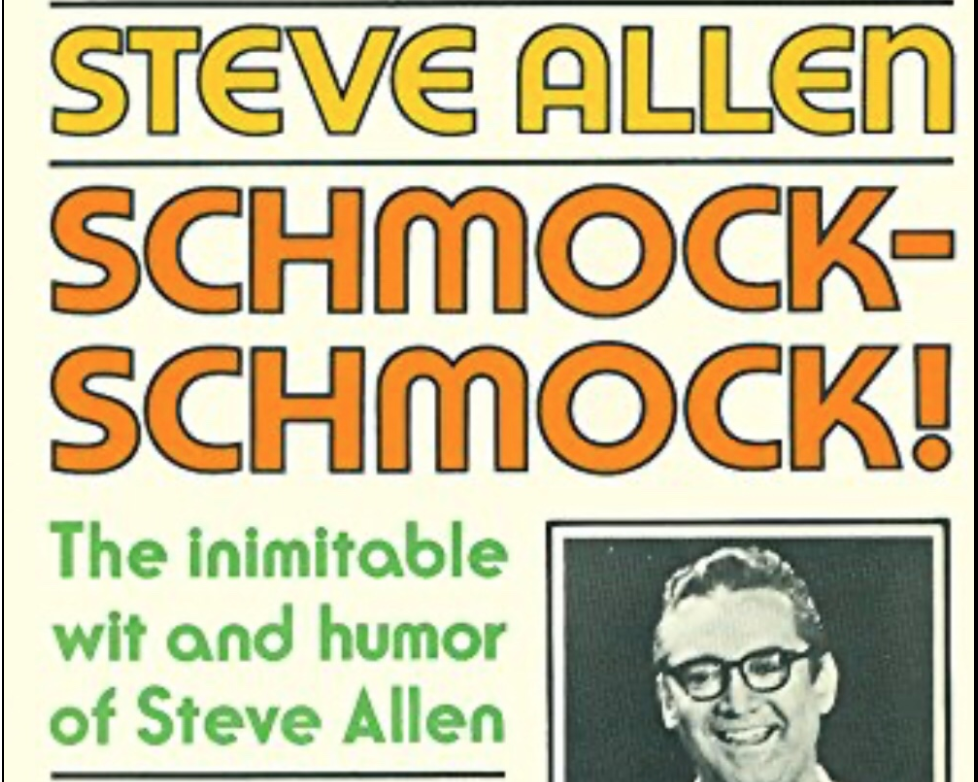
You can find all kinds of clips and audio recordings from ’50s and ’60s TV shows on YouTube. Damn near anything and everything. But I can’t find a single clip of a falsetto-voiced Steve Allen saying “schmock, schmock!” And that’s a huge deal. “Schmock, schmock!” was arguably Allen’s signature line, certainly when he was hosting his Hollywood-based talk show in the early to mid ’60s.

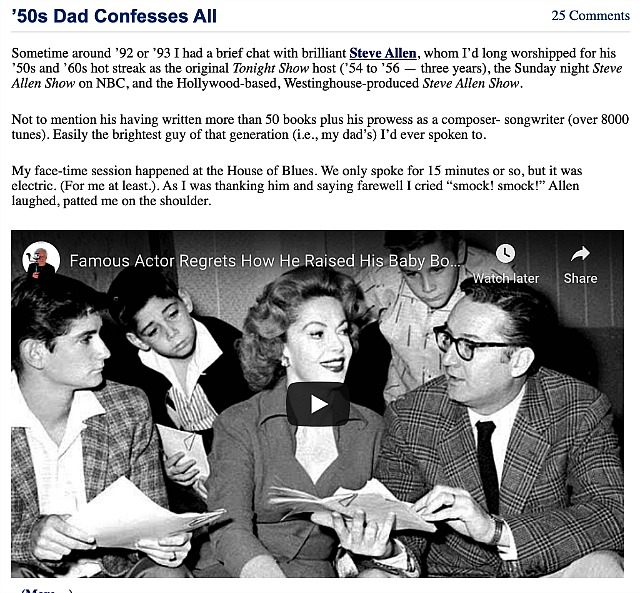
After chatting with Allen at the House of Blues some 27 or 28 years ago, I bade farewell with my own falsetto-voiced “smock!” There was no one else in the entire world I would have dared speak to like a three-year-old, but I did so with Allen without blinking. He chuckled right away and gestured approval.

Read more

Definitely Better Than Original “Sicario”

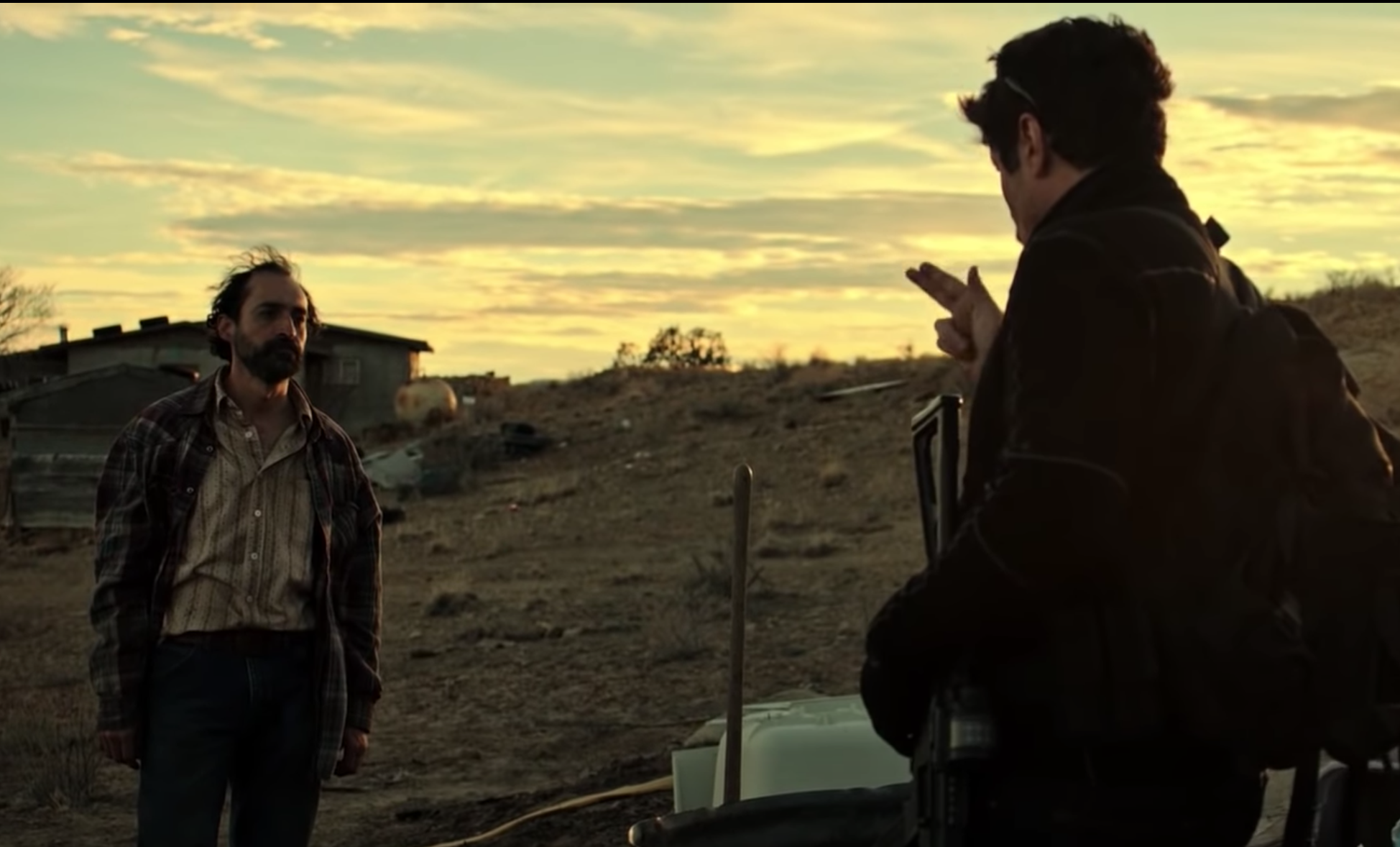
Partly because of the “signing” scene, partly because Day of the Soldado didn’t have the irritating Emily Blunt to contend with, partly because the shoot-out sequences are cooler, and partly because it’s satisfying to watch an entitled brat rich girl (a drug lord’s daughter, played by Isabela Moner) get an education in the realities of the drug trade.

Read more

What’s Your “1619” Beef?

Sometime this morning Glenn Kenny challenged HE to get specific about arguments with “The 1619 Project.” I tapped out a response on the iPhone while lying on my foam-fortified IKEA couch and attending to the emotional needs of Anya, our two-year-old Siamese cat:

“Slavery has always been an ignominious chapter in the first 245 years of US history (1619 to 1865) and racism has stained aspects of the culture ever since, but to assert that slavery and racism (which other cultures have shamefully allowed over the centuries) are THE central and fundamental definers of the immense American experience strikes me as a bridge too far.

“One stone in the shoe is the 1619 Project’s contention that the American revolution against England was significantly driven by colonist commitment to maintaining slavery.

“Many factors drove the expansion and gradual strengthening & shaping of this country, and particularly the spirit and character of it — immigration, the industrial revolution and the cruel exploitations and excesses of the wealthy elites, the delusion of religion, anti-Native American racism and genocide, breadbasket farming, Abraham Lincoln, Frederick C. Douglas, the vast networks of railroads, selfishness & self-interest, factories, construction, the two world wars of the 20th Century, scientific innovation, native musical forms including jazz, blues (obviously African-American art forms) and rock, American literature, theatre and Hollywood movies, sweat shops, 20th Century urban architecture, Frank Lloyd Wright, major-league baseball, Babe Ruth & Lou Gehrig, family-based communities and the Protestant work ethic, fashion, gardening, native cuisine and the influences of European, Mexican, Asian and African cultures, hot dogs, the shipping industry, hard work and innovation, the garment industry, John Steinbeck, George Gershwin, Paul Robeson, Louis Armstrong, JFK, MLK, Stanley Kubrick, Chet Baker, John Coltrane, Marilyn Monroe, Amelia Earhart, Malcom X, Taylor Swift, Charlie Parker, Elizabeth Warren, Katharine Hepburn, Aretha Franklin, Jean Arthur, Eleanor Roosevelt, Carol Lombard, Shirley Chisholm, Marlon Brando, Woody Allen, barber shops & manual lawnmowers, the auto industry, prohibition & gangsters, the Great Depression and the anti-Communism and anti-Socialism that eventually sprang from that, status-quo-challenging comedians like Richard Pryor, Lenny Bruce and Steve Allen (“schmock schmock!”), popular music (Chuck Berry, Little Richard, Elvis Presley, Frank Sinatra and the Beatles), TV, great American universities, great historians, great journalism (including the National Lampoon and Spy magazine), beat poetry, hippies, the anti-Vietnam War movement, pot and psychedelia, cocaine, quaaludes and Studio 54, 20th & 21st Century tech innovations, gay culture, comic books, stage musicals, Steve Jobs, etc.

“Don’t tell me that slavery & racism is and always has been this country’s central definer. The 1619 Project’s revisionist zealotry rubs me the wrong way in more ways than I’d care to elaborate upon.”


Mel Gibson’s “Chickenheart”

Like many other critics and journos, I live each day in mortal fear of the New Stalinists. Which is why I asked some pallies what they thought about my posting a fairly inconsequential piece about James Toback‘s Love and Money (’82), which I watched the night before last.

Message: “I wrote a mild little piece about Love and Money, but I’m not sure I have the backbone to post it, mainly because agents of the wokester Khmer Rouge may conclude that I’m a Toback apologist, which I’m certainly not as far as reports of his personal behavior are concerned. The piece is hardly incendiary, but do you agree that ‘they’ might come after me if I posted it?”

Here it is: The career of director-writer James Toback was terminated roughly two and one third years ago. Stories about Toback having allegedly sexually harassed over 300 women saw to that. This behavioral pattern went on for decades, to go by an L.A. Times article (1.7.18) by Glenn Whipp.

It follows that no Toback-directed films (including the brilliant Fingers and the provocative Two Girls and a Guy and Black and White) are allowed to be even mentioned, much less discussed; ditto Toback’s screenplays for Karel Reisz‘s The Gambler and Barry Levinson and Warren Beatty‘s Oscar-nominated Bugsy, which were once highly regarded.

I’m nonetheless scratching my head about Love and Money, an oddly disjointed film that’s viewable on Amazon. Directed and written by Toback and a complete financial bust when it opened in early ’82, it was generally regarded as a sloppy, spazzy thing.

But you have to wonder what Love and Money was in script form for Warren Beatty and Pauline Kael, no slouches in their respective fields, to have invested their attention during the late ’70s development process. It must have amounted to something unusual or interesting — there had to have been something there.

Wiki summary: “Beatty was interested in producing and starring at one point in the late ’70s, for Paramount. Beatty persuaded Kael to work on the project. Kael was an admirer of Toback’s and Beatty’s and had recently left film criticism to work in Hollywood. However, Kael dropped out of the project after a number of weeks, instead becoming a consultant for Paramount. (She would eventually return to film criticism.)

“Beatty dropped out of the film to concentrate on Reds. Toback and Paramount could not agree on casting without Beatty’s involvement. The project was put into turnaround. Toback set up the film at Lorimar. Filming started in November 1979. It finally opened on 2.12.82. It made a grand total of $14K.”

From Vincent Canby’s N.Y. Times review: “Love & Money is a very strange film. Although it is packed with plot, it seems sort of skimpy, so skimpy that one suspects that somebody — either Mr. Toback or someone not so fond of Mr. Toback’s overheated mannerisms — had ruthlessly chopped the print that’s now going into release.

“I wasn’t much fond of Fingers, Mr. Toback’s first film as a writer-director, but that film at least had its own roaring, cockeyed intensity, whether you liked it or not. Love and Money, as it stands here, looks as if the director had filmed a treatment rather than a screenplay. Instead of being intense, it just seems to have periodic fits.

Love & Money [is punctuated with banalities] intercut with wildly unpredictable moments that too often are unintentionally funny because there are no buildups and nothing to connect them. The film eventually does get to Costa Salva, a [fictional] Central America country which looks a lot like a Los Angeles suburb, where the plot becomes even dimmer and where the production money seems to have run out. When we attend a rally addressed by Costa Salva’s dictator (Armand Assante), it looks like Arbor Day in Peoria.”

Read more

Handsy

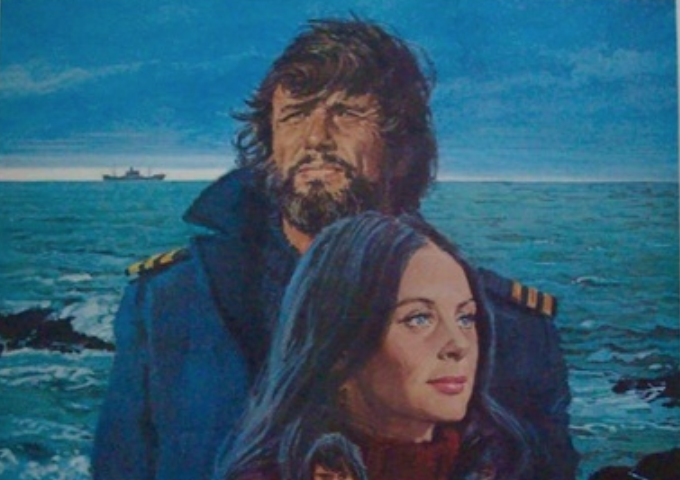
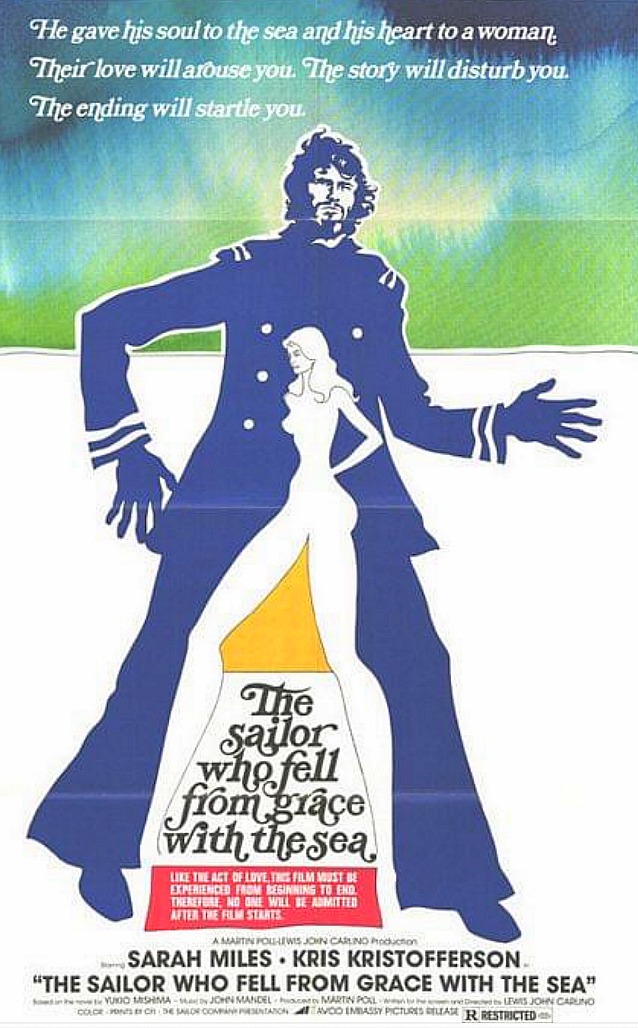
Lewis John Carlino and Yukio Mishima‘s The Sailor Who Fell From Grace With The Sea (’76) was crap from the get-go. Kids killing a sea captain because he gives up sailing in order to become a landlubber husband…bullshit. Mishima’s fixation upon disembowelment and ritual sacrifice…gimme a break. In the view of John Simon the film was “very pretty to look at, but made absolutely no sense.” But what could the idea have been behind this poster? The film is a dour machismo metaphor of some kind, and yet Kris Kristofferson looks like he’s dancing.

In Politics, Purity Is A Leg Iron

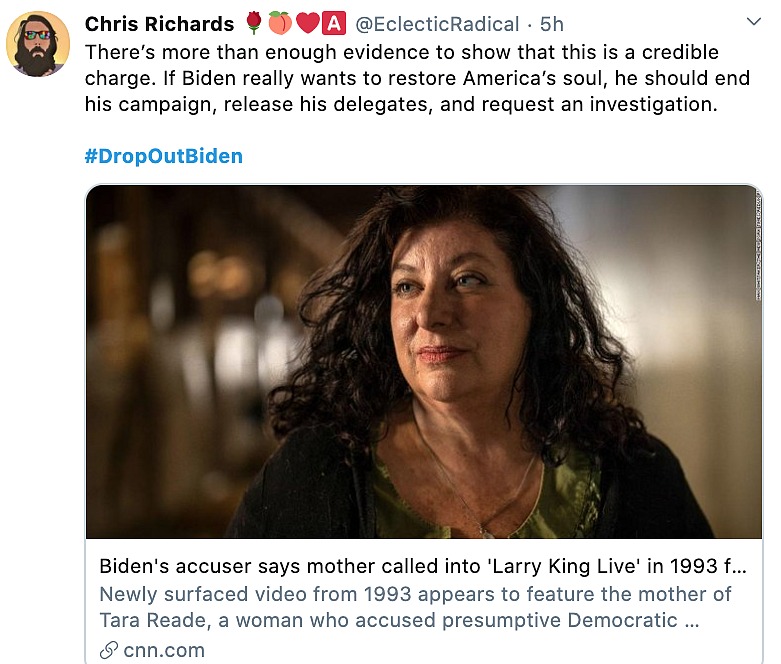
As I understand the situation, the #DropOutBiden community wants Democratic presidential front-runner Joe Biden to suspend his candidacy so the Tara Reade thing — a single alleged incident of sexual assault that may have happened 27 years ago — can be fully investigated.

I’m not saying the accusation isn’t credible, but is it really worth putting the 2020 election, which Biden appears likely to win, in jeopardy? Is it really worth that much?

It would be one thing if there was reason to believe that Biden was a serial assaulter, but the Reade thing appears to be a one-off. Do Biden’s accusers really want to give Donald Trump a club to come after Biden with, absurd as that may sound given Trump’s own history, because Biden may have once acted like an insensitive brute in 1993?

If the allegation is true, it’s highly regrettable and nothing to brush under the carpet. But at the cost of wounding Biden’s decent-guy persona and possibly losing the election…seriously? #IBelieveTaraReade is really that important? The Trump criminality and derangement syndrome isn’t a thousand times more important?

Left Twitter purists, a portion of whom are probably part of #DropOutBiden, did everything they could to destroy the candidacy of Pete Buttigieg, and between their rantings and general hostility from voters of color (including the older homophobes) they gradually took him down. But you know what? If Pete was the presumed Democratic candidate right now, I doubt there’d be any sexual allegations of any kind.

If the Biden-Reade thing goes badly (and let’s hope it doesn’t become a tumor), all I have to say to the anti-Buttigieg contingent is “thanks, assholes!”

Not Fat Enough

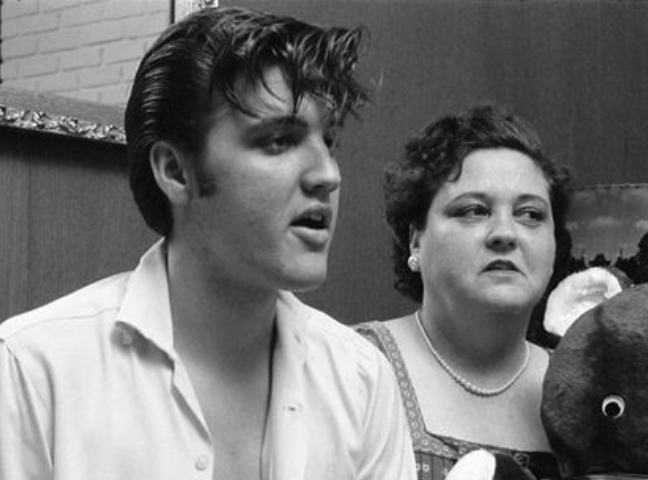
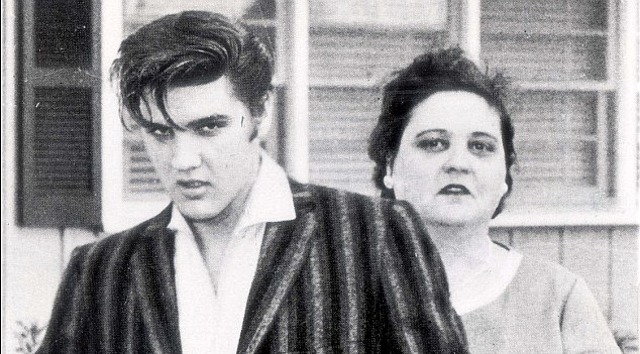
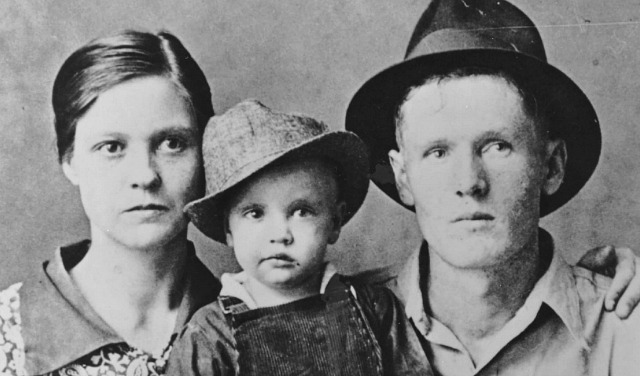
23 year-old Gladys Presley was a slender young thang when Elvis Presley was born in 1935. She’d put on a few pounds (but not too many) by the time he was 10, but had become quite chubby by the mid ’50s, when she was in her early 40s. (Elvis followed suit, calorically speaking, when he hit the same age.) In 1958 the poor woman died of heart failure (i.e., clogged arteries) at age 46, lasting four years longer than her illustrious son.

I’m mentioning this because Baz Luhrman has cast the svelte Maggie Gyllenhaal to play Gladys in his ’50s rock biopic, Elvis. Which means Gyllenhaal will have to (a) wear a fat suit with fat prosthetics or (b) pull a Christian Bale and pack on the pounds with bowls of pasta and ice cream every night.

That or the movie could just pretend that Gladys wasn’t overweight. Baz can obviously do whatever he wants.

The forthcoming Warner Bros. biopic will star Austin Butler (i.e., Tex Watson in Once Upon A Time in Hollywood) and Tom Hanks as Presley’s demonic manager, Colonel Tom Parker. Principal photography will begin this spring.


Elvis Presley, 21, and his 44 year-old mother Gladys in 1956.

Gladys, Elvis and Vernon in 1937 or thereabouts.

Son of Taxi Driver

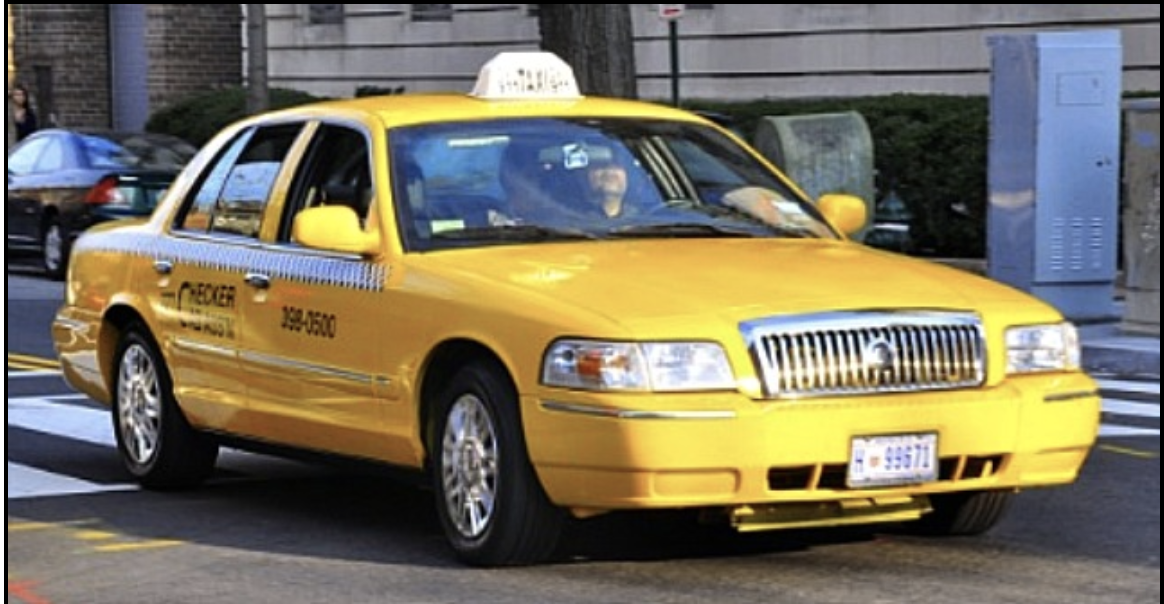
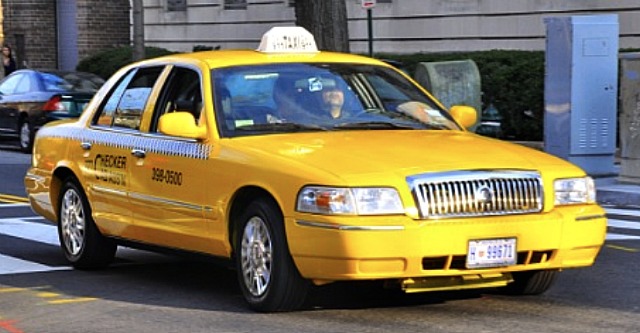
The best gig of my life has been writing Hollywood Elsewhere for the last 15 and 1/2 years. The second best was tapping out two columns per week for Mr. Showbiz, Reel.com and Kevin Smith‘s Movie Poop Shoot (’98 to ’04). General entertainment journalism for major publications (Entertainment Weekly, People, Los Angeles Times, N.Y. Times), which I did from ’78 to ’98 with a five year-break between ’85 and ’90, ranks third. But my fourth all-time favorite job was driving for Checker Cab in Boston. Seriously. The only non-writing gig I ever really liked.

Posted just under three years ago: The gig only lasted eight or nine months. I was canned for driving a regular customer off the meter up in Revere. But God, I felt so connected and throbbing and all the other cliches. Buzzing around one of the greatest cities in the world each night, learning something new every day, meals on the fly, incidents and accidents, hints and allegations.

At the end of every shift I was so revved that it always took a good hour to crash when I got home, which was usually around 1:30 or 2 am. And every night I had a new story to tell my girlfriend, Sherry McCoy, with whom I was sharing a nice little pad at 81 Park Drive.

Back then the Checker garage was on Lansdowne Street, or right next to Fenway Park. I remember to this day my Motorola two-way radio with the cord-attached mike. One of the dispatchers was called Tiny (a tall, white-haired fat guy); there was another older gent with a kindly face and gentle voice. After I had gained a little seniority I was given a slick new Checker cab (#50), which I always kept whistle-clean. At the end of every shift I had a new story to tell.

Story #1: A youngish woman who got into the back seat near Boston Garden found a full wallet with no ID or anything — $400 and change, which was a fortune back then. We split the dough 50-50 — luckiest score of my young life.

Story #2: An attractive, slender, frosty-haired woman in her mid to late 40s started chatting about this and that, and before you knew it were were flirting and talking about erotic chemistry and whatnot. As I was dropping her off she opened the cash slot and we gently kissed goodbye. We never got out of the cab, never shook hands — all in the eyes. I saw her on Newbury Street three or four months later…”Yo!”

Read more

I Spit On Sundance Puffer

A 1.29 N.Y. Times report by Alison Krueger ranks high among the most synthetic capturings of the gutted spirit of the Sundance Film Festival. Over the last 30 years, I mean. Read it and gasp.

Krueger’s verse is about the profound emotional satisfaction that comes from wearing an exclusive Sundance ’20 limited edition “puffer” jacket. Manufactured by Canada Goose and worth roughly…oh, $850 or thereabouts, the gray-colored, Sundance-logo’ed jackets have been handed out to 400 directors and judges.

Krueger: “These filmmaker jackets are Sundance’s version of the Allen & Co. Sun Valley fleece, or the high school varsity jacket: a special badge of in-dom and status that advertises the wearer as part of a privileged group.


photo from Emily Pfeffer via Canada Goose and N.Y. Times.

“[It] turns out successful adults are as susceptible to the allure of free merchandise and what it signifies as any of us.

“’I am starting to see people who have one, and I know they are in the gang,’ said Erica Tremblay, a filmmaker who focuses on indigenous films. “I love being part of the group. We all understand what it took to get here and get the jacket.'”

All right, that’s it — Erica Tremblay‘s cred as a respected nativist filmmaker and documentarian lies in tatters. From here on when I hear her name I’m going to say “the salivating, in-crowd Sundance puffer woman?”

If I were in Park City right now I would be swollen with pride over the fact that I’m not wearing anything that even resembles a Sundance puffer. I would stride around town and ride the shuttle buses in my bulky leather motorcycle jacket atop an under-jacket with a big-ass scarf, black leather gloves and my black cowboy hat, and this outfit would essentially say…well, I’ve said it.

“Perhaps a poor, ill-favored thing, but mine own.” — William Shakespeare, “As You Like It.”


photo from Emily Pfeffer via Canada Goose and N.Y. Times.