“American Beauty” Uncertainty

I know that American Beauty was a whole ‘nother thing before it was pruned and whittled down to just the right elements. I’ve always wanted to see the courtroom scene and all the other stuff that was cut, just for curiosity’s sake.

Some parts of the final released version don’t work so well by today’s standards, but you know what still works perfectly? Kevin Spacey‘s performance. A current of trepidation just went through me after writing that, but you know what? One should really be allowed to say this, despite what’s happened since. Spacey was also great in Swimming With Sharks, The Usual Suspects and Glengarry Glen Ross. He was great all through the ’90s.

Another thing that made American Beauty really come together, I felt from the get-go, is Thomas Newman’s score.

American Beauty isn’t as good as Michael Mann‘s The Insider, which was also nominated for 1999’s Best Picture Oscar, but American Beauty‘s values were deemed richer and more resonant than The Insider‘s, which not only wasn’t emotional enough for most voters — it wasn’t emotional at all.

I remember when DreamWorks publicity was just beginning to allow journalists to see American Beauty, which later won the Best Picture Oscar. It was in the late summer of ’99, and I was detecting feelings of caution if not concern, or at least a form of uncertainty. I had to beg and beg to persuade the Dreamworks guys to let me see it. Their reluctance was such that it was hard not to suspect that something about Sam Mendes‘ film might be problematic.

After I finally saw American Beauty at Skywalker Sound on Olympic Blvd., After it ended I immediately phoned Mitch Kreindel, who worked right under Dreamworks marketing/publicity honcho Terry Press, and said, “Are you kidding me? This film is extra. It got right inside me. The plastic paper bag and the ending melted me down. It could go all the way.”

But until that consensus began to build up and sink in, some people in upper DreamWorks management (and I’m not saying Press was necessarily one of them) didn’t know what they had. Or at least they weren’t sure. If they did know what they had, they sure gave a good impression to the contrary.
Read more

Lodge Gives “American Beauty” A Break

From Guy Lodge‘s “American Beauty at 20: Is The Oscar-winning Hit Worth A Closer Look?,” posted in The Guardian on Friday, 9.13:

“I popped in American Beauty recently to find it oddly, sinuously bewitching. Dated, yes, but that’s a double-edged sword: it turns out to be an exquisitely presented time capsule, a snapshot of middle-class, notionally liberal white society entering a spasm of panic at the turn of both the century and the Clinton era. Its satire isn’t sophisticated, but it’s pointed, identifiable, and still often cuttingly funny, emblematic of a tone of withering pre-millennial snark that has since been earnestly outmoded, and not for the wittier.

“It was never intended as straightforward drama, but as garish suburban burlesque: a distorted funhouse mirror reflection of America already at its ugliest, with its performances and petal-strewn visuals expertly heightened to match.

“There are, of course, false notes aplenty, ones more critics ought to have spotted even then: Annette Bening’s unhinged virtuosity only goes so far towards concealing what an ungenerous, ill-thought con the character of Carolyn Burnham is, not so much an empty woman as an empty construct. The teenage characters are all emo and no real emotion, vessels for the film’s sweetest but thinnest stabs at profundity. And that script I loved so much, for all its smart, savory dialogue, is built on diagrammatic ironies — the homophobic military man’s a closet case, the self-styled slutty girl’s a virgin — that all ring a bit screenwriting 101, whatever truths are embedded within.

“And yet, and yet. I remain deeply, melancholically affected by American Beauty — partly, of course, because it reflects gently back to me the unformed, uncertain child I was when I first saw it. But it also moves me on its own terms and merits, its own sly critique of a fragile milieu, its own pristinely art-directed yin-yang of sadness and sarcasm, its own vulnerable but defensively lacquered performances. Hell, I still think all the rose petal business is woozily beautiful.

“Twenty years on, American Beauty isn’t as clever as we thought it was, though it’s inadvertently aged into a kind of wounded, embattled wisdom. Perhaps it’s worth looking closer.”

Son of Vast Wasteland

Originally posted on 3.7.17: The TV was on while I was writing the column in our miserable Palm Springs hotel room last weekend. I wasn’t paying much attention to the shows but they weren’t from my usual white-noise feed (i.e., MSNBC, CNN, BBC, CSPAN, National Geographic or TCM). They were the usual lower-depths pollution feed of ugly reality series (Kardashian lap-of-luxury lifestyle stuff), Access Hollywood-type crap, glamour kiss-ass shows, sports crap, home-shopping crap, beauty consultation, weight-loss crap, fashion discussion, kiddie fantasy, more ugly reality, etc.

At some point something snapped in my mind. I literally flinched and shook my head when I suddenly realized a kind of poison had been streaming into my system for hours and that I had to turn it off if I didn’t want to get sick or go crazy.

General-access cable and broadcast is aimed at the American mouth-breathing mongrel class, and you can see how it inspires people to lead lives that are devoid of spiritual content…lives that are almost certainly dulled-down, compromised and shortened as a result. The only civilized way to watch anything these days is via apps (Amazon, Netflix, Vudu) and elite cable. What a cultural cesspool regular-ass TV has become. It attains such levels of toxicity that it seems natural and inevitable that regular watchers would turn into slow boats and cretins. The influence of mongrel TV is almost certainly one reason why Trump caught on.

Another Reminder

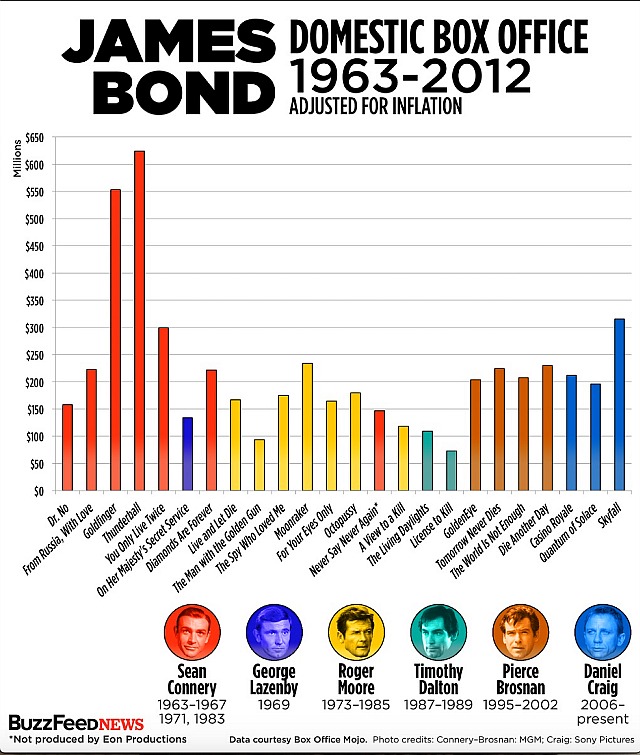
Seven years ago Buzzfeed posted an inflation-adjusted chart that compared the earnings of James Bond films. Thunderball (’65) was the easy winner with a grand tally of $620 million.

But according to my current calculations with 2019 inflation factored in, Thunderball is the second highest grossing Bond after Skyfall (’12), the all-time king, with Goldfinger (’64) and Spectre (’15) coming in third and fourth.

I realize that math has never been HE’s strong suit, but Thunderball‘s original 1965 gross of $141.2 million translates into $1.13 billion in 2019 dollars. The inflation multiplication factor between ’65 and ’19 is 8.052.

In 2012 Skyfall earned $1.109 billion worldwide. Apply an inflation rate of 1.113 (the difference between 2012 and 2019), and Skyfall‘s 2019 tally is $1,234,317,000.

Spectre earned $880 million in 2015, but in 2019 dollars that translates into $941,468,300.

Goldfinger earned $125 million worldwide in 1964, but in 2019 dollars that comes out to $1.034 billion.

Once again, in this order….

Skyfall / $1.109 billion in 2012, $1,234,317,000 in 2019,
Thunderball / $141.2 million in ’65, $1.13 billion in 2019.
Goldfinger / $125 million in ’64, $1.034 billion in 2019.
Spectre / $880 million in ’15, $941,468,300 in 2019.

Will No Time To Die beat Skyfall? Can it it beat Thunderball or Goldfinger? Or Spectre?

By the way: the 2019 earnings of Dr. No, which made $59.5 million in 1962, comes to $505,155,000 if you apply an inflation factor of 8.49.

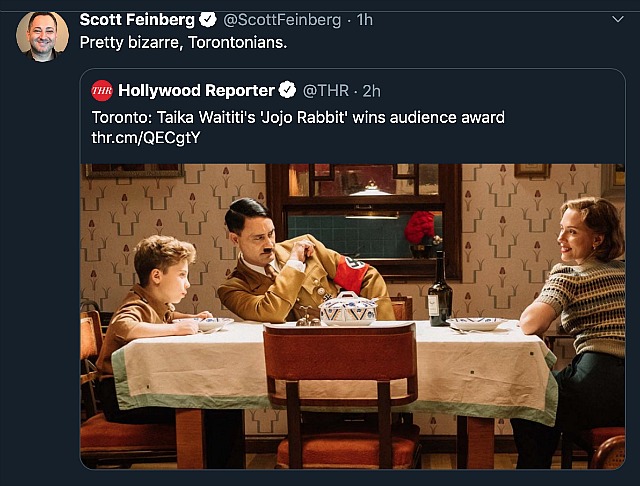
“Jojo” Wins Toronto People’s Choice Award…WHAT?

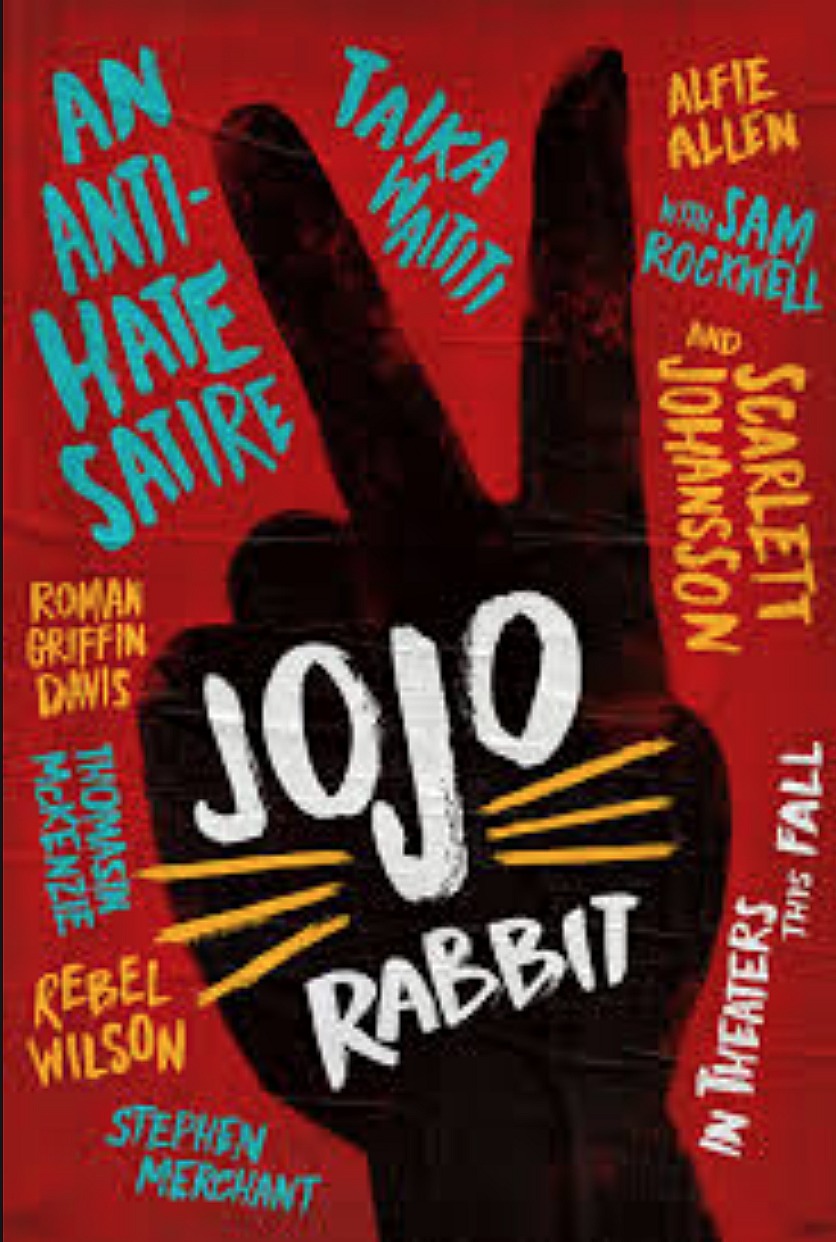
Taika Waititi’s Jojo Rabbit, an “anti-hate satire”, has won the Toronto Film Festival’s People’s Choice Award, with Noah Baumbach‘s Marriage Story and Bong Joon-ho‘s Parasite coming in second and third.

I don’t get it — I thought Jojo had bombed with non-wokester critics (i.e., seasoned and burdened with a sense of taste) and therefore would be facing an uncertain reception with 40-plus Academy voters. Except for the New Academy Kidz, of course, who will presumably embrace it.

I can only presume that a whole lot of wokesters voted in the poll, presumably telling themselves that voting for Jojo meant voting to stop hate. Wokester voter #1: “If we stand by Jojo we’re standing against racism…I don’t think we have a choice.” Wokester voter #2: “But Marriage Story is a better film…richer performances, more recognizably real, better writing.” Wokester voter #1: “But does Baumbach take a stand against hate?” Wokester voter #2: “Well, no, but…” Wokester voter #1: “Then why are we even discussing it?”

Wokesters and people with problematic taste buds, I should probably add. I haven’t seen Jojo, but there has to be some reason why so many disparate Toronto critics (from Owen Gleiberman to Todd McCarthy to Justin Chang) had dismissive things to say about it, and why Slant‘s Keith Ulrich called it “a spectacularly wrongheaded ‘anti-hate satire‘” and “the feature-length equivalent of the ‘Springtime for Hitler’ number from Mel BrooksThe Producers, sans context and self-awareness.”

I don’t think this will mean much in terms of the Oscar race. The New Academy Kidz might push Jojo through for a Best Picture nomination, but that’s as far as it will go.

When Green Book won the People’s Choice award last year, it meant something. And the failure of A Star Is Born to place among the top three vote-getters also meant something — it meant that Variety‘s Kris Tapley had egg on his face.

When Silver Linings Playbook won in 2012, it meant that the HE comment-thread haters would attack it for months on end, and at the end of the day only Jennifer Lawrence would still be standing.

When 12 Years A Slave won in 2013, it meant something. When Room won in 2015, it meant…I don’t know what it meant but I wasn’t much of a fan. When Three Billboards won in 2017, it meant something. When LaLa Land won in ’16, it meant that Peoples Choice voters were too stupid to understand that a white guy can’t be a jazz buff.

Serious Film Buff Hotel

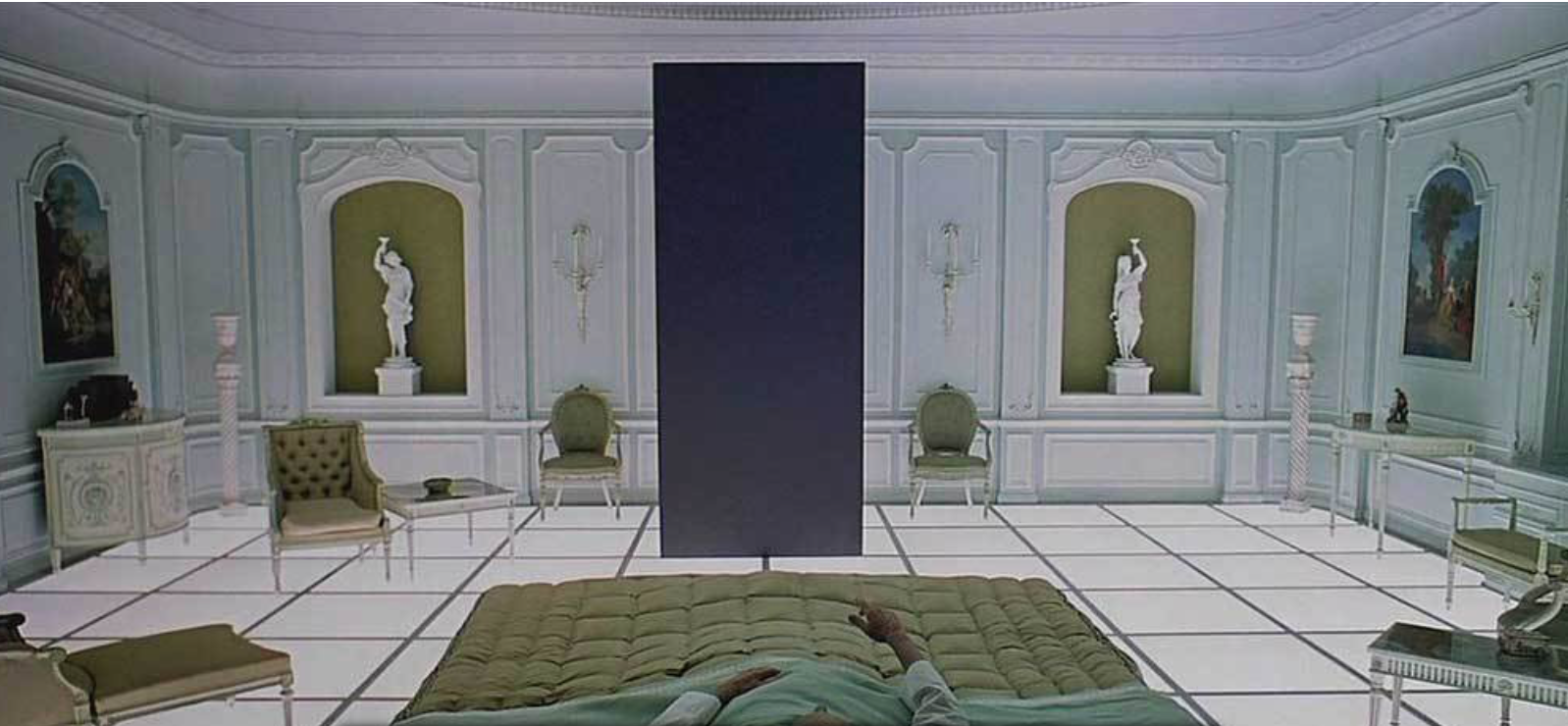
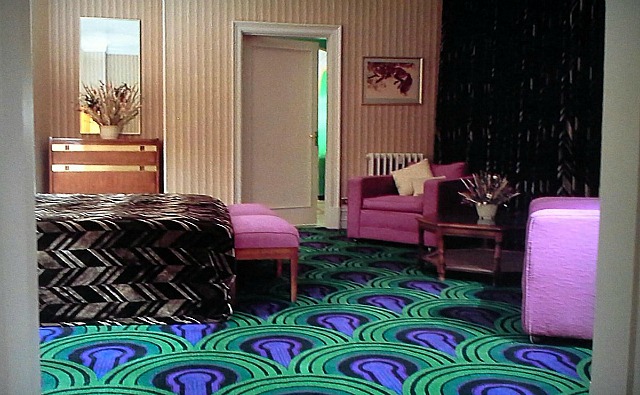
A couple of days ago Paul Schrader suggested the idea of a movie-themed hotel. Some kind of flush establishment, he meant, that would offer exact duplicates of famous hotel rooms from classic films — the climatic 2001 hotel suite, The Shining‘s room 237, the bare-bones Phoenix hotel room where Marion Crane and Sam Loomis met for a lunch-hour quickie, “cabin” 1 at the Bates Motel, Eve Kendall‘s room at Chicago’s Ambassador East, etc.

A cool notion, Schrader concluded. Then he mentioned that he googled it and found that “someone else already had the same idea.”


Overlook Hotel’s room 237.

Actually, not quite. The movie-themed hotel suites profiled in Claire Trageser‘s 2.14.18 Travel & Leisure article (“These Movie-themed Hotel Rooms Will Bring Your Favorite Fantasy to Life“) were actually created for the rube tourist crowd. She describes rooms inspired by Talledega Nights, Star Trek and Spongebob Squarepants. She also describes some Harry Potter wizard chambers and Lord Vader‘s quarters (with a kid’s bunk bed?). You wouldn’t have to be an Okie from Muskogee to enjoy one of these abodes, but it would probably help.

In short, a serious film-theme hotel doesn’t exist.

If and when it ever happens, it should be located in the Hollywood Boulevard and Highland Ave. area. Hollywood Elsewhere would gladly consult on the particulars for a reasonable month-to-month fee. But it probably won’t happen because while the boobs may like movie-themed rooms, their prime concern is staying somewhere slick and swanky, and sometimes the concept would argue with that.

Which would mean no Touch of Evil motel room (i.e., the one in which poor Janet Leigh is taunted and almost raped by gang members) and no Psycho rooms (either the Bates motel or the Phoenix flophouse). And no replica of the cheap Times Square hotel where Jon Voight stayed until his money ran out. And no Judy Barton hotel room from Vertigo with green neon glaring through the window. Only deluxe accommodations!

Read more

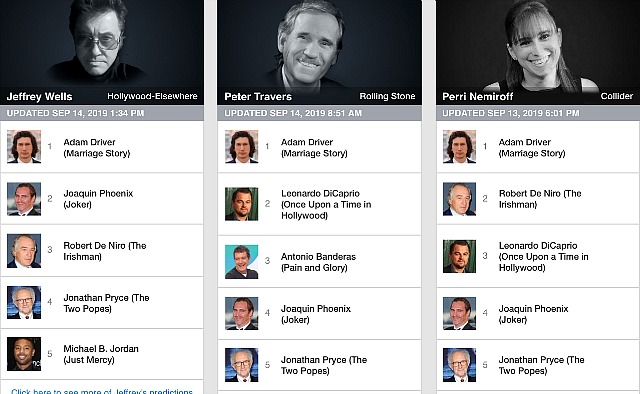
Latest Actor, Supporting Actor Rankings

Nobody knows what will happen with DeNiro and The Irishman, but right now it seems likely that Adam Driver and Joaquin Phoenix will snag a good portion of the prestigious critics awards for Best Actor, including the NYFCC and the LAFCA foodie awards.

People generally vote for Oscar nominees they feel close to, whose journey they understand, or whom they simply like the most. Under these terms Driver would be the favorite, but you never know.

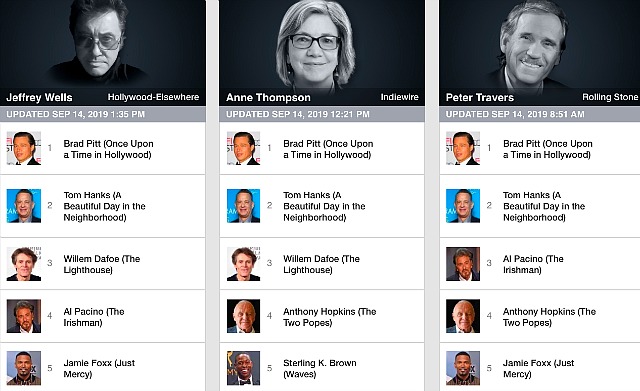
Right now the supporting lineup is composed of Brad Pitt, Willem Dafoe, Jamie Foxx, Al Pacino and possibly Anthony Hopkins. The entire civilized world wants Cliff Booth to win. The second strongest contender is probably Dafoe, who was nominated last year for his Vincent Van Gogh and the year before that for the motel manager guy in The Florida Project. And Foxx sounds like a definite keeper.

Escape Clause

If I found myself in the position of Daniel Kaluuya‘s Slim and Jodie Turner-Smith‘s Queen, I would immediately duck into a friend’s attic or basement and stay there for three or four days until things cool down. I would then somehow persuade the same friend to drive us out of town and across the border into Canada. We would take a series of bus trips across Canada and into Alaska, and hide out in Nome or Fairbanks.

And then, weeks later, we’d get on a plane to Seoul. Or maybe Hanoi. Or Bangkok. Then we’d try to figure things out. We could become characters in a Nicholas Winding Refn movie.

We would basically make every possible effort to disappear. No Bonnie and Clyde shit, no speeding down rural roads, no attracting attention, no tragic finale, no nothin’.

“Hustlers” Mystery

The Goldfinch, which completely blows and has totally died at the box-office, got a B CinemaScore — a moderately weak (if not quite fatal) grade. And yet Hustlers, which the Toronto wokesters and JLo worshippers adored, and which made $13M yesterday and is projected to finish the weekend with $32M, got a B minus?

Is there something screwy with CinemaScore’s methodology? Or on some level are Joe and Jane Popcorn not as enthusiastic about the film as the Toronto crowd was? Obviously the Hustlers grade represents a problem of some kind.

Read more

Strange Creature

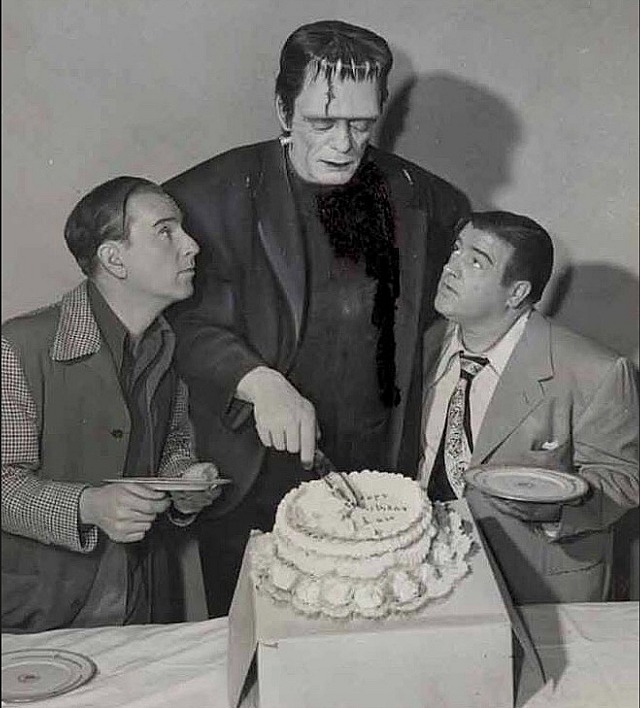
Glenn Strange had the wrong kind of face to play the Frankenstein monster. Whatever it was that Boris Karloff had, Strange did without. Look at his expression in this cake-cutting photo with Bud Abbott and Lou Costello. There’s something forlorn and downcast in his features — he almost looks like Peter Fonda — he could be a Boy Scout master or a gas-station mechanic in upper New York State. Bela Lugosi was a lousy-ass Frankenstein monster also. Ditto Christopher Lee and Robert De Niro. There was only one who mattered.

via GIPHY

Saturday Backwash

Four of those shots weren’t taken by me; all the others were.

Jett Wells on Positano beach — June ’07.


Key West — November ’17.
East Berlin, January 1987.

Read more

Best Thing About Eddie Money…

…was his name. He was born Edward Joseph Mahoney. I don’t know who thought up his marquee name, but it was pure genius. Upon entering public consciousness in ’77, “Eddie Money” perfectly expressed the transition from the last remnants of hippie-ish, pot-and-hashish spiritualism (which had ignited in the mid ’60s and was choking and sputtering by ’76) to the cocaine-fortified, disco-frequenting, coming-of-Reagan narcissism that began to take over. To me Eddie Money was Studio 54, glitter, sexual indulgence, nose candy, etc. Except I couldn’t afford nose candy back then. I couldn’t afford a lot of things. But Eddie could.