Crisis Publicist Paul Bloch Ascends

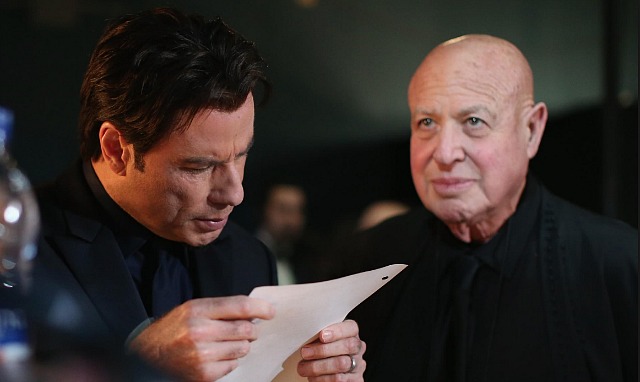
Paul Bloch, the well-liked Rogers & Cowan publicist with a easygoing manner and an endless repertoire of sweaters and watches, passed this morning at age 78. He was the lanky bald finesse guy whom big-name stars always hired when they got into trouble or needed something smoothed over or the press kept at arm’s length — Tom Cruise, Eddie Murphy, John Travolta, Michael Keaton, Sylvester Stallone, Bruce Willis, Lisa Marie Presley, Nick Nolte, et. al. Back in the day Bloch also repped Sharon Stone, Kevin Costner, Anthony Hopkins, Farrah Fawcett, Barry Gibb and Diana Ross. Big brand name, nice guy, mellow presence. Born in 1940, Bloch started in the Rogers & Cowan mailroom in 1962. Hugs and condolences to friends, clients and family.


Paul Bloch (r.) with client John Travolta, sometime in the mid to late ’90s.

Meh Shelley Drama Highlights New Brad Pitt

A friend who saw Haifaa al-Mansour‘s Mary Shelley (IFC Films, opening today in one theatre in Santa Monica) says the standout is 25 year-old Douglas Booth, who plays Percy Bysshe Shelley. I don’t even remember him from Darren Aronofsky‘s Noah (’14) or Lone Scherfig‘s The Riot Club (’14), and sitting through the Wachowski brothers Jupiter Ascending, in which Booth also costarred, made me too miserable to notice anyone or anything. I just wanted to die.

IFC’s West Coast p.r. rep didn’t even invite me to see Mary Shelley. He/she probably calculated that I’d trash it but it got trashed anyway by everyone else. It only has a lousy 33% RT rating.

At age 16, the actual Mary Shelley (Elle Fanning) began a physical relationship with the already married Percy Bysshe Shelley. Together with Mary’s stepsister Claire Clairmont (Bel Powley, whom Booth is seeing in real life), Mary and Shelley left for France and travelled through Europe. Claire began sleeping with Shelley, and then started sleeping with Lord Byron, who dumped her. Mary became pregnant thrice by Shelley, but two of the babies died. Shelley’s wife committed suicide, after which he and Mary got married.

At age 18 Mary wrote “Frankenstein”, which was allegedly some kind of metaphorical saga about her life. Shelley was Dr. Henry Frankenstein — she was the unloved, spat-upon, misunderstood monster.

Avoidance Syndrome

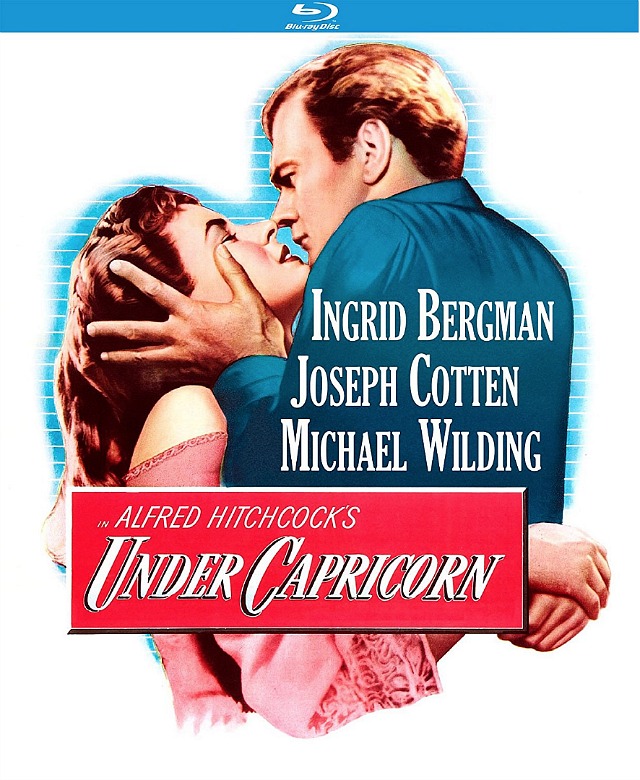
Although I’ve been an Alfred Hitchcock fan since childhood, I’ve avoided seeing Under Capricorn (’50), an early 19th Century drama set in Australia, all my life. Despite knowing there are always elements in a Hitchcock film that are worth seeing. Despite the legendary Jack Cardiff (Black Narcissus, The African Queen) having shot it in Technicolor, and despite Hitchcock having reportedly used ten-minute-long takes. Despite the stellar cast — Ingrid Bergman, Joseph Cotten, Michael Wilding, et. al. The forthcoming Kino Lorber Bluray (out on 6.19) is a 4K restoration, and I still won’t touch it. Because Hitch himself never hesitated to call it one of his worst films. Plus it was a box-office stinker — cost $3 million, made $1.5 million.

Too Fuddy-Duddy For Proverbial Sack

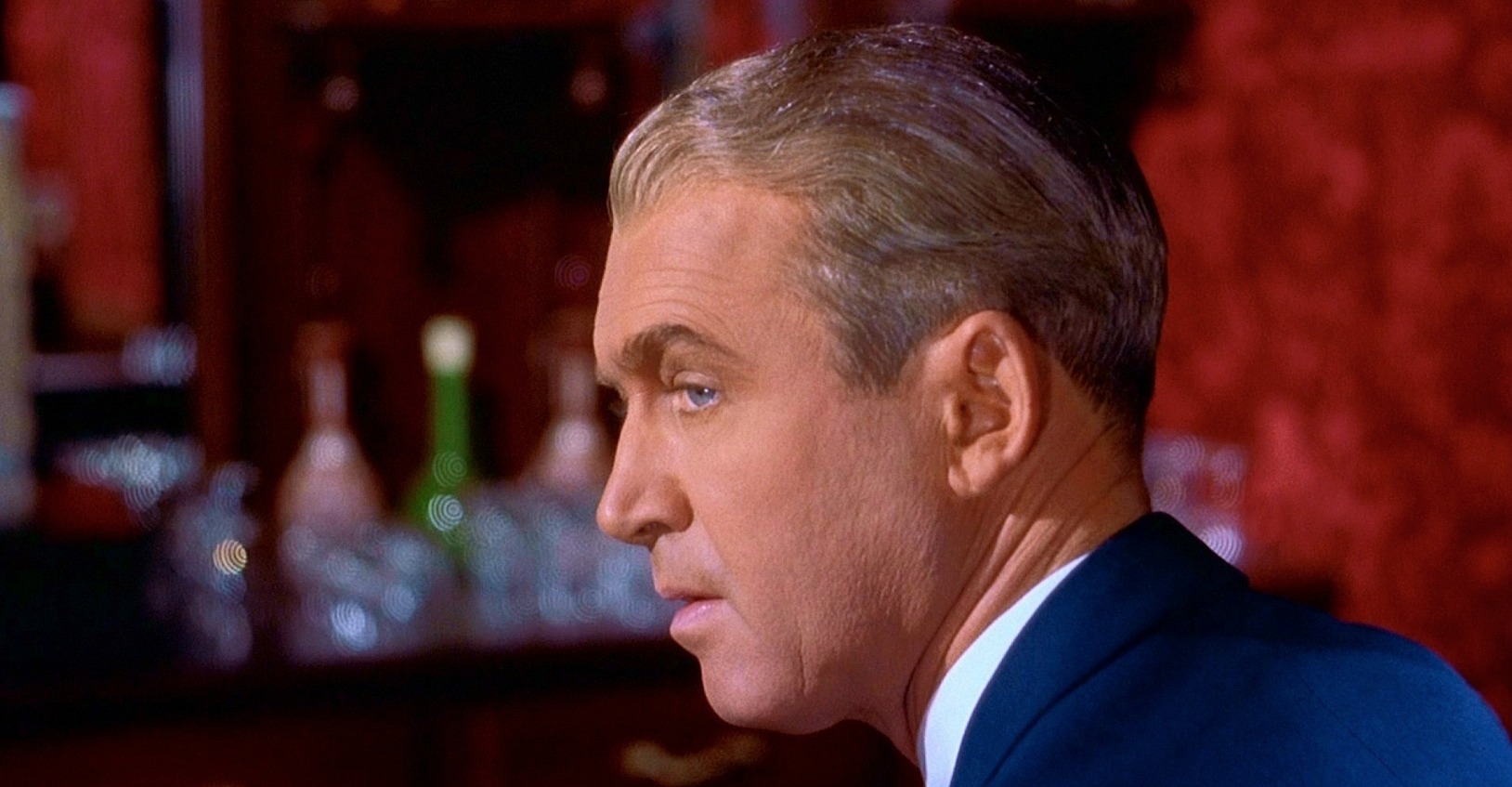
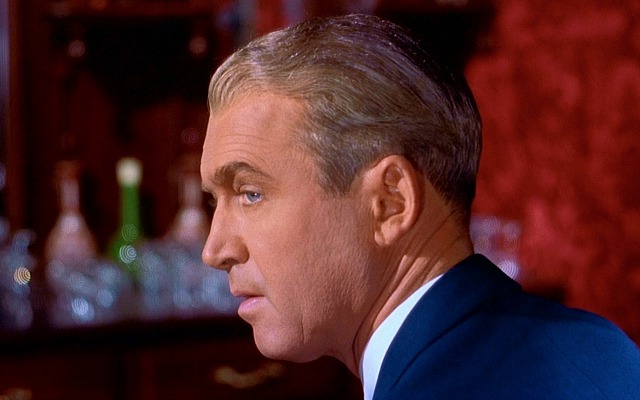
Several online forums have repeated an Alfred Hitchcock assertion, possibly sourced from his 1962 interview with Francois Truffaut, that one reason Vertigo was a financial failure was because the 49-year-old Jimmy Stewart looked “too old” to be the lover of Kim Novak, who was 25 during filming. (Vertigo was shot between September and December 1957.)

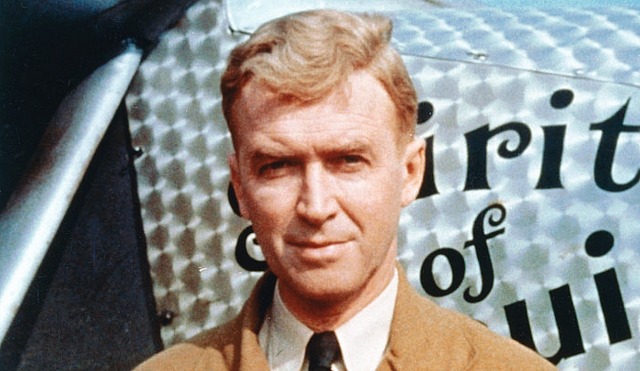
Stewart’s John Ferguson does in fact seem too rigid and stodgy for Novak, not just because of his mostly gray hair but a generally stuffy conservative bearing. (That awful brown suit, for example.) But Hitch could have easily made Stewart appear younger by giving him fair, blonde-tinted hair with a slightly longer, less conservative cut. Only a year earlier Stewart had worn a blonde, almost bushy wig in The Spirit of St. Louis when he played the 25 year-old Charles Lindbergh.

There was nothing loose or sensual or sexually upfront about Stewart in Vertigo. Nothing. He looked and behaved like a Republican governor of a midwestern state, or an Air Force colonel or a corporate real-estate broker. One glance at Novak and you could imagine her nude under satin sheets, but it’s impossible, really, to think of Stewart’s character in even a partial state of undress, much less buck naked and doing the deed. It feels creepy to even describe this, and I’m fully aware that in his youth Stewart was quite the randy fellow.


James Stewart in Alfred Hitchcock’s Vertigo (released in May 1958).

Stewart as Charles Lindbergh in Billy Wilder’s The Spirit of St. Louis (released in April 1957).

Read more

Cuffed, Pled, Bailed

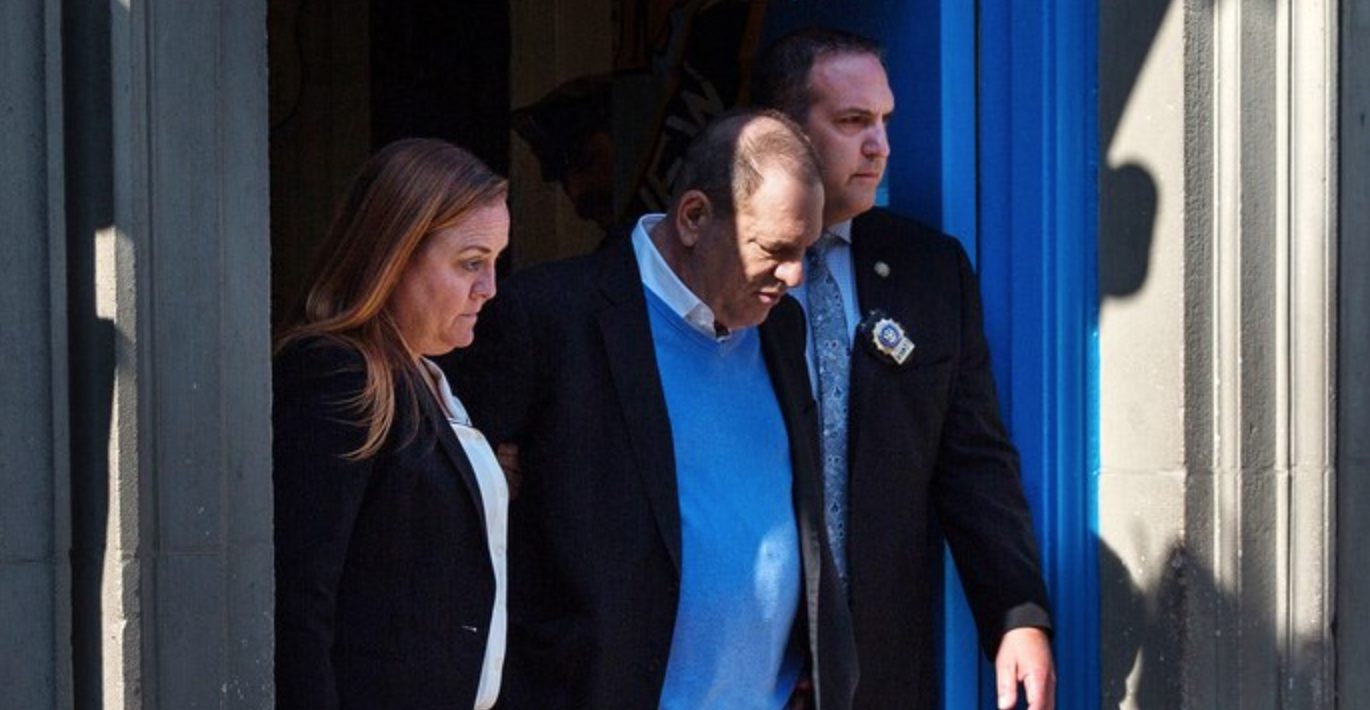
Harvey Weinstein surrendered to the cops this morning, and was subsequently arrested “on rape, criminal sex act and other charges from encounters with two women.” Seven months have passed since the Weinstein allegations broke in the N.Y. Times and The New Yorker. The reports immediately transformed Harvey into toast and launched the #MeToo and #TimesUp movements. His attorney’s claim that Weinstein “didn’t invent the casting couch in Hollywood” is true, but hardly a defense. He’ll almost certainly do time.

Read more

“Solo”: The Floor Is Open

For the third time: Solo is basically a numbing formula exercise that never really sings or revs or lifts off the pad with a levitational force of its own. Everyone (Ron Howard, Alden Ehrenreich, the audience) is going through the motions because Disney is determined to monetize the Star Wars franchise as much as possible, including (God help us) hiring James Mangold to make a Boba Fett movie. Yeah, okay — Ehrenreich does a relatively decent job of pretending to be a youngish, much shorter Han, and if you want to go along with this second-tier charade, be my guest. I felt hugely bored and irritated during the first hour, which is all about adrenalizing the ADD crowd with the usual distractions. Nor was I taken with throwing in the crucial card game (the one in which Han won the Millennium Falcon from Lando) at the very end, almost as an afterthought. But don’t let me stop you. If you’re determined to be an easy lay, you’ll find a way to convey enthusiasm.

And your opinion is…?

Ron Howard’s Proudest Five

Solo: A Star Wars Story, which begins screening tonight, is not among Ron Howard‘s finest efforts. It’s rotely, routinely proficient — that’s the best you can say. But I will alway respect Howard, if nothing else a reliable craftsman, for having made what I regard as his five finest films, and in this order:

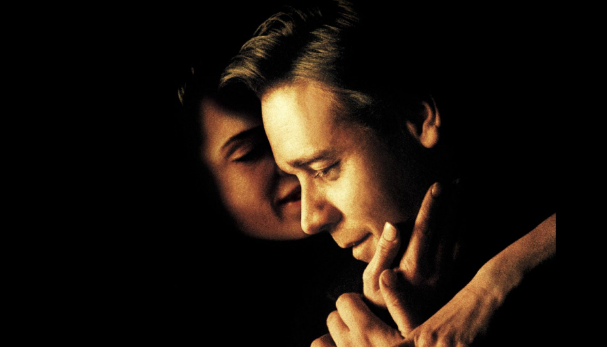
1. A Beautiful Mind (’01), which is well-acted (loved Russell Crowe‘s oddball John Nash) and emotionally satisfying (the pens scene) with a magnificent James Horner score; 2. Apollo 13 (’95) — a decently written, completely satisfying situational thriller within a bureaucratic framework; 3. The Paper (’94) — a big-time journalism movie that finessed several plot threads and delivered first-rate performances, and was reasonably engaging for the most part — a not-great but entirely decent effort; 4. Cinderella Man (’05) — a totally solid ’30s boxing drama (David Poland called it “Fistbiscuit“) with excellent performances from Russell Crowe and Paul Giamatti; and 5. Parenthood (’89) — a well finessed, nicely-written, emotionally centered yuppie family drama with an excellent Steve Martin performance.

How many of the above would I be interested in re-watching? All except Cinderella Man.

Pretty good, not bad, mezzo-mezzo or somewhat minor Howard: Frost/Nixon (’03), Splash (’84), Cocoon (’85), Night Shift (’82), Gung Ho (’86), The Dilemma (’11), Rush (’13).

Meh, not-so-good, irritating Howard: Far and Away, Willow, The Missing, The Da Vinci Code, In the Heart of the Sea, How the Grinch Stole Christmas, Ransom, Backdraft.

Didn’t see ’em, probably never will: Angels & Demons, Inferno, EDtv.

Never Judge Bluray By Its Cover

Last night I watched the new Warner Archive Bluray of Joseph L. Lewis‘s Gun Crazy (’50), and within five minutes I knew I’d been burned. The opening-credits sequence looks like shit; ditto the courtroom scene with RussTamblyn, the compassionate judge, his mother and some friends. Then it starts to improve; then it slides back again. Going by the immaculate standard of Warner Archives Out Of The Past Bluray, the Gun Crazy Bluray is an in-and-outer that lacks consistency. Some portions look exquisite; others look grayish and dupey. And then the sharpness returns.


Pre-Jabba Orson Welles, director Carol Reed during the filming of The Third Man.

I’ve always thought it ironic that director Ernst Lubitsch, world-renowned for the touch of subtlety and sophistication in his films, never looked like a man of elegance and refinement. Instead, Lubitsch looked like a butcher or a sandwich-maker in a Brooklyn delicatessen, like a cab driver or construction foreman. Something tells me that author Joseph McBride won’t address this observation in his forthcoming “How Did Lubitsch Do it?“. (Pic was shot during the making of Heaven Can Wait.)

Read more

Clapper: Russia “Turned” ’16 Election

Speaking last night to PBS Newshour’s Judy Woodruff, former director of national intelligence James Clapper claimed that “Russians not only affected the outcome of the 2016 presidential election — they decided it.” Given that Trump’s defeat of Hillary Clinton turned on less than 80,000 votes, he means. “To me, it just exceeds logic and credulity that they didn’t affect the election, and it’s my belief they actually turned it.”

Regarding President Trump‘s claim about “Spygate,” Clapper explained that “the important thing was not to spy on the campaign but rather to determine what the Russians were up to. Were they trying to penetrate to campaign, gain access, gain leverage, gain influence? That was the concern that the FBI had. I think they were just doing their job and trying to protect our political system.”

A Silence That Speaks Volumes

12:20 pm update: The New York Times has finally posted a story about Moses Farrow’s essay. Written by Laura M. Holson, the Times piece is titled “Moses Farrow Defends Woody Allen Against Sexual Abuse Claim.”

Earlier: Not to beat a dead horse, but a full day has transpired since the posting of Moses Farrow’s self-published refutation of his sister Dylan’s account of the Woody Allen mishegoss, but the N.Y. Times hasn’t said boo. And they aren’t the only one. As of this morning the Washington Post hadn’t touched the Moses essay, and neither had the Huffington Post. Movie City News had to be dragged and goaded into posting a link. Two or three hours ago Newsweek posted a link-and-comment piece titled “Who is Moses Farrow?” as in “Who Is This Angry, Faintly Suspicious Farrow Sibling Who Would Impudently Question Dylan Farrow, The Victim Whom We Believe is Telling The Truth?”

The Times has covered the “Dylan vs. Woody on the winds of #MeToo” story six ways from Sunday. Four years ago they got the ball rolling with Nicolas Kristof’s post of “An Open Letter From Dylan Farrow.” They ran Tony Scott‘s damning piece, titled “My Woody Allen Problem” (1.31.18). They’ve covered it every which way and ardently, but when Moses came along and cast serious doubt upon Mia Farrow‘s mentality and Dylan’s curious allegation, they suddenly turned hesitant and hold-offish.

True, the Times summarized Moses’ views on the matter in a 9.29.17 Times piece by Sopan Deb about Eric Lax’s “Start to Finish: Woody Allen and the Art of Moviemaking but they’re still ducking Moses in the present context. 2nd Update: They’ve finally posted a story [see above].

We’re basically talking about a loose journalistic cabal that appears to be terrified of being perceived as less than 100% supportive of #MeToo and #TimesUp. They’ll cover the “Woody is guilty because Dylan said so” story every which way, but they don’t want to touch the Moses essay, it seems, because it argues with a narrative that they’ve all invested in, which is that Woody is an ogre whose career needs to come to an end.

Earlier today a Facebook member named Kevin Bahr posted the following: “I know that there’s a lot of other stuff going on in the news right now, but it’s always funny how little traction these stories seem to get compared to whenever Dylan Farrow writes about the story. It reminds me of the old adage of the story being written on Page 1 and the retraction being published on Page 26.”

One of Gentlest Men Who Ever Lived

Last night I saw Morgan Neville‘s Won’t You Be My Neighbor? (Focus Features, 6.8) — a quiet little caress of a film that leaves you with all kinds of alpha vibes. It was warmly and lovingly reviewed during the 2018 Sundance Film Festival, by no less than 27 critics. And for good cause. A 94-minute doc about Fred Rogers and Mr. Rogers Neighborhood, it currently has a Rotten Tomatoes rating of 96%. But people who didn’t attend that Park City festival or who did but missed it anyway (like me) are being asked to hold their reviews until the week after next.

Here, at least, are two clips that stood out for me. The first shows Rogers’ May 1969 appearance before a Senate committee headed by Sen. John Pastore, in an attempt to secure public-television funding. The second is Eddie Murphy‘s SNL parody skit, “Mr. Robinson’s Neighborhood.”

Read more

Jaunty, Darkly Comic, 21st Century ‘Tude

French helmer Jacques Audiard (The Beat That My Heart Skipped, A Prophet, Rust and Bone, Dheepan) has never embraced a jaded, fuck-around attitude — he’s always been a fairly solemn, straightforward filmmaker. But he’s adopted a jaunty, mock-ironic, Coen-esque approach for The Sisters Brothers (Annapurna), a western set during the California Gold Rush. John C. Reilly and Joaquin Phoenix as Eli and Charlie Sisters; costarring Jake Gyllenhaal, Riz Ahmed, Rutger Hauer and Carol Kane. Pic will open sometime in October or November.

“If Cormac McCarthy had a sense of humor, he might have concocted a story like Patrick DeWitt’s bloody, darkly funny western The Sisters Brothers…[DeWitt has] a skillfully polished voice and a penchant for gleefully looking under bloody bandages.” — Los Angeles Times blurb about the 2011 source novel.