French Initiative

My French Film Festival (January 14th through 29th) is a low-cost online film festival of ten French-produced films that haven’t a prayer of getting theatrical play in the States. Such a festival could play at MOMA or the Film Society of Lincoln Center, of course, but filmgoers aren’t nearly as queer for French films as they were in the ’60s and ’70s so online makes sense, and it’s brassy to offer these films not just to New Yorkers but the world.

The festival is the brainchild of uniFrance, and is being called a co-venture between uniFrance and Allocine with the support of the Centre National de la Cinematographie, the Ministry of Foreign Affairs and Alliance Francaise.

I’ve looked at all ten trailers , and it’s obvious that at least four have something extra: (a) Christopher Thompson‘s Bus Palladium, an ’80s rock-tour romantic drama that may have been influenced by Cameron Crowe‘s Almost Famous ; (b) Frederic Mermoud‘s Partners (Complices), winner of a best fiction film at the Chicago International Film Festival; (c) Leah Fehner‘s Silent Voices (Qu’un Seul Tienne Et Les Autres Suivront), which had a Venice Days slot in 2009; and (d) Patrick Mario Bernard & Pierre Tridivic‘s The Other One (L’Autre), a 2008 Venice Film Festival entry that won Dominique Blanc a Volpi Cup for Best Actress.

Manhattan’s Alliance Francaise will launch the festival with a screening of Bus Palladium on Thursday, 1.13, followed by a q & a with Christopher Thompson.

The trailers for the other films suggest either comme ci comme ca material or formulaic commercial lungings. The Eloi virus has spread throughout Europe, Asia…it rules so much of world cinema.

The how of My French Film Festival is fairly simple. Viewers will stream directly from www.myfrenchfilmfestival.com with no link to You Tube or Netflix or any other platform. It will all come directly from that site. You can choose individual films or the whole program. The site will be live in the next day or so, I’m told, with tons of extras; interviews, clips, trailers, etc. The trailers are on YouTube for promotional purposes and that’s all.

There’s some kind of fee structure for individual films but the festival as a whole is only 20 dollars for more than…what, 20 films? I thought it had ten. Whatever. Nice deal.
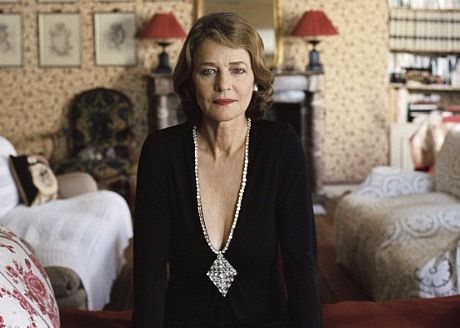
Charlotte Rampling in a still from All About Actresses.

Oscar Poker #14

Our little weekly podcast is now three and a half months old! New Year’s reflections (including the fact that I hate New Year’s Eve), True Grit inspections, Black Swan ‘s wack factor (and the $47 million gross so far), and a pop-quiz review of some of the films expected to be the hottest Oscar contenders of 2011. Here’s a non-iTunes link.

Amputate My Head

Several Wrap staffers have compiled a list of of 11 hot attractions/events in 2011. With the exception of Terrence Malick‘s The Tree of LIfe , the films they’ve chosen to highlight are enough to make anyone jump out of a 17th-floor window — Zack Snyder‘s Sucker Punch, fucking Thor, Pirates of the Caribbean: On Stranger Tides, Hangover 2, Green Lantern, Captain America: The First Avenger, Transformers 3, Cowboys & Aliens, the latest X-Men and the last Harry Potter flick. Oh, and they’re really excited about Snyder’s Superman movie, and the coming double dose of Steven SpielbergTintin and War Horse.

"Anne? Punch Me In The Face"

On 12.27 the Online Film Critics Society announced that Darren Aronofsky‘s Black Swan had gathered seven nominations, or more than any other contender. This hinted at the possibility of Swan also winning OFCS awards above and beyond the expected Natalie Portman win for Best Actress. Perhaps a Best Director win for Darren Aronofsky? Or a Best Picture trophy? I for one was ready and eager for something different to happen…please.

But today’s announcement of the winners delivered the same old usual-usual — The Social Network as Best Film, TSN‘s David Fincher for Best Director, The King’s Speech Colin Firth for Best Actor, Portman fpor Best Actress, The Fighter‘s Christian Bale for Best Supporting Actor and — okay, one surprise — True Grit‘s Hailee Steinfeld for Best Supporting Actress.

Plus Inception‘s Chris Nolan winning for Best Original Screenplay and TSN’s Aaron Sorkin winning for Best Adapted Screenplay.

No Surprise

It ain’t the revenues as much as the number of bodies passing through the turnstiles. And the reality, as reported by USA Today‘s Scott Bowles, is that 2010 wasn’t a very good year in this respect. 1.35 billion tickets were sold — the smallest tally in 14 years, or since 1.33 billion were sold in 1996. The headline over Bowles’ story calls 2010 “dismal,” in fact.

The average 1996 ticket price in the U.S. was $4.42. The average 2010 ticket price was $7.85. 2010 attendance fell 5.4% below 2009 levels, which was the largest drop since attendance fell 8.1% in 2005, Bowles reports.

Of course, the option of watching films on demand or via online streaming, or resorting to illegal downloads, or people deciding to wait for the Bluray/DVD is where some of the lost theatrical take has gone. There’s also the fact that the big chains play lowest-common-denomiunator Eloi crap 85% to 90% of the time, and that the picture-and-sound quality of the theatrical experience at many if not most megaplexes doesn’t measure up to a good home-theatre system with Bluray and amplified sound.

Bowles’ statistics came from a just-released study by Hollywood.com.

Pete Postlethwaite

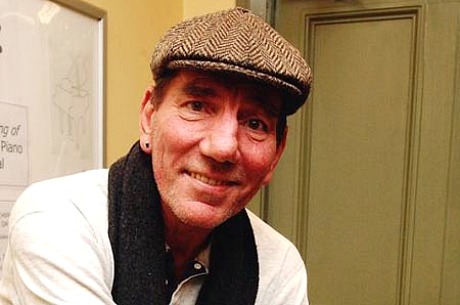
Pugnacious Pete Postlethwaite, 64, died yesterday. He was a bright and thoughtful fellow, and a first-rate character actor. Peppy, those penetrating eyes, a deep snappy voice, working-class manner, wiry frame. Postlethwiate was a smoker and had been dealing with testicular cancer since the ’90s. A too-early departure despite that. Hugs and condolences to his family and friends.

I could never quite lick the pronunciation of his last name, but I think you were supposed to ignore the t’s and the h and say “possulwaite,” or something like that. And I always had trouble remembering if the second syllable was spelled “le” or “el.”

Postlethwaite’s most recent role was as a small-time Boston criminal in Ben Affleck‘s The Town. He always gave good snarl.

For me Postlethwaite peaked in the late ’80s and ’90s. His first big standout performance was in Terence DaviesDistant Voices, Still Lives (’88), a scrappy Liverpool family drama. He landed a Best Supporting Actor Oscar nomination for his performance as Daniel Day Lewis‘s father in Jim Sheridan‘s In the Name of the Father (’93). Two years later he played “Kobayashi” in Bryan Singer‘s The Usual Suspects.

And yet my most vivid recollection of Postelthwaite comes from Steven Spielberg‘s The Lost World (’97), in which he gave a hammy, straight-paycheck performance that didn’t approach the quality of his work for Davies, Sheridan or Singer. (Why is that, I wonder?) He was also memorable in The Constant Gardener, Baz Luhrman’s Rome+ Juliet, Inception and Clash of the Titans. Okay, forget Clash — nobody really scored in that.

Postlethwaite’s final role, apparently, was in Killing Bono, a working-class comedy about wannabe rock stars. It’s set to open in England in April but no U.S. release date is currently slated.

It's Over

It feels so great that the holiday is only a few hours from being over and that regular life will begin again tomorrow morning. Well, within a couple of days. It’ll take that long for people to get their engines going again (it always does), but the great shutdown of 2010 is no more.

Period Piece

In an interview with Collider‘s Steve Weintraub, The Social Network/The Girl With The Dragon Tattoo director David Fincher has said that the latter film, due in December 2011, will be strictly set in the year and the technological realm of 2003, or “pre-iPhone.” That’s because author Stieg Larsson was “probably thinking” of a 2003 world when he wrote the “Girl” books, Fincher says.


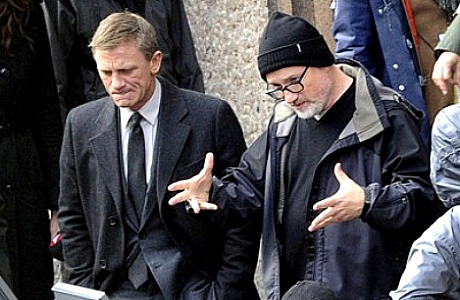
The Girl With The Dragon Tattoo star Daniel Craig, director David Fincher during filming in Sweden.

“What year does [the story] take place in?,” Fincher says. “Well, Larson’s books are delivered in 2004, so he’s probably thinking in terms of 2003, it’s not published until 2005, 2007 is the iPhone, so all those apps that would be available to the iPhone are probably something that Lisbeth Salander would have access to ’cause she’s a bit of a Mac junkie. So you kind of go, ‘Well where do we draw the line?’ So we just said, look everything has to be pre-iPhone technology, because otherwise they would be sitting there going ‘Well, we just go over here.’ They would have a compass; they would be able to tell what the weather was like.

“So there’s all that stuff, you just have to make a decision [that’s] fairly arbitrary, basically everything in the movie is pre-iPhone.”

Once again, Fincher is sharing his basic Holy Grail faith in the Larsson books. They’re sacrosanct and part of history and can’t be changed in the slightest detail — they have to happen in Sweden despite the rank absurdity of all the characters speaking in English, and the story has to happen within the exact same culture that was influencing Larsson when he was writing the books. I respect Fincher’s aesthetic integrity, but going strictly period just feels weird to me. Think of all the changes that have to be enforced in terms of cars and flatscreens and God-knows-whatever-else. How could the story be affected that heavily by the use of Google Maps and having a good idea what the weather will be like a couple of days hence?


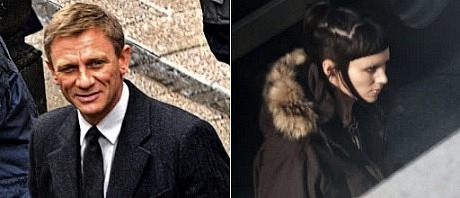
The Girl With The Dragon Tattoo costars Daniel Craig, Rooney Mara. Wait –have Mara’s eyebrows been shaved?

Suggestion/Offer

Wells to Manhattan-based, Sundance-bound publicists: I don’t have to tell you that the next two weeks offer excellent opportunities to pre-screen whatever films you have playing at Sundance 2011. Producers usually don’t want their films seen on this basis, I realize, but the facts are that (a) Sundance journalists are always trying to get into the same 25 or 30 buzz films and (b) most of the others always seem to be scrambling for attention, some more than others. For 65% of the allegedly hot films up there it’s “move it or lose it.”

I for one would love to be able to see as many Sundance ’11 films in advance as possible, and I’m sure other columnists feel the same way.

Those producers of Sundance or Slamdance films unwilling to screen in advance could at least consider sending along embed codes of trailers or short-peek reels. I’d be happy to run whatever I’m sent between now and the start of the festival, or over the next two and a half weeks.

Araki World

Gregg Araki‘s films (including his latest) are never about finding employment or learning a craft or driving a cab or creating art or taking care of a child or nursing a sick dog. They’re always about attractive young urbans with cool haircuts and slim, well-toned bodies doing lots and lots of boning — straight, gay, polymorphously whathaveyou.

In other words, things haven’t changed that much since The Doom Generation (’95). Indeed, Kaboom (which will play at Sundance later this month) “picks up where Araki’s ‘Teenage Apocalypse Trilogy’ of the 1990s left off,” says the Sundance summary.

For what it’s worth, Kaboom is about “an ambisexual 18-year-old college freshman” — an Araki constant — “who stumbles upon a monstrous conspiracy in a seemingly idyllic Southern California seaside town.” The Sundance notes call it “unrestrained and completely over the top [with] scatological and absurd Valley-inflected dialogue, elements of campy gore and Araki’s troupe of arrestingly sexy guys and girls.”

Blue Turns to Gray

I’m trying to cobble together an “abandonment theory” about movie-watching. It’s basically about a syndrome in which you enjoy and admire the hell out of a film when it first comes out but then you start to go cold on it once the “wrong” people (i.e., unwashed megaplex hordes) start embracing it big-time. This hasn’t happened with any regularity, and in fact has occured hardly at all. But it has happened once in a blue moon.

The most recent incident didn’t concern a film but a piece of music — Peter Tchaikovsky‘s “Piano Concerto No. 1.” Black Swan inspired me to buy a few Tchaikovsky tracks on iTunes a couple of months ago, and that was fine. But on 12.26 I read Frank Rich‘s N.Y. Times piece about “Disneyland Dream,” a short film about a 1956 trip to Disneyland made by middle-class family man Robbin Barstow. This led me to watch “Disneyland Dream,” which to my shock and regret begins with “Piano Concerto No. 1.”

I know this makes me sound like an aesthetic reactionary, but the Barstow association killed my Tchaikovsky feelings. Suddenly the revered Russian wasn’t a Darren Aronofsky-endorsed composer but a favorite of some middle-class Connecticut dad who could have been the father of Dennis the Menace, and the instant I heard Tchaikovsky’s French horns at the beginning of Barstow’s film, I bailed. I said to myself, “Okay, that’s it…I can’t be on the same boat as Barstow…Tchaikovsky may drift back into my head down the road but right now he’s over….sorry.”

A kind of reverse abandonment situation has happened with True Grit. I didn’t emotionally care for the Coen Brothers film when I first saw it in a screening room, but I might have eased up if it had failed commercially. I might have watched it again and decided (who knows?) that it’s slightly more affecting or whatever. But now that it’s become a huge hit I can’t possibly watch it again with a more open attitude. Now I’m really against it. I can’t open myself up to a chilly western that the wrong people (i.e., ticket buyers) have made into a success and a possible awards contender. Game over. I was right the first time and that’s that.

I loved E.T., the Extra-Terrestrial when I saw it at an early screenings in ’82, and came to despise it once it become a megahit. But I didn’t abandon Titanic when it became the biggest hits of all time. The last 20 to 25 minutes of that film are so affecting that I’m still on-board with it. What others? Not many, I’m sure. My usual tendency is to hang tough when I like something, come hell or high water.