Oh-Six Starters

Oh-Six Starters

There are four January releases that definitely cut the mustard in my pantry, and two or three with one or two problems but are recommended regardless. So things are starting off reasonably well. For a month known for so-so product, I mean.
The absolute must-see’s are Lajos Koltai’s Fateless (Thinkfilm, 1.6), Eugene Jarecki’s Why We Fight (Sony Pictures Classics, 1.20), Steven Soderbergh’s Bubble (Magnolia, 1.27) and Michael Winterbottom’s Tristram Shandy: A Cock and Bull Story (Picturehouse, 1.27).
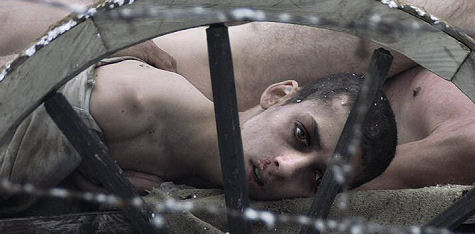

From Lajos Koltai’s Fateless (and not what it seems to be)

The not-bad-with-reservations in order of preference are Ol Parker’s Imagine Me and You (Fox Searchlight, 1.27), Albert Brooks’ Looking for Comedy in the Muslim World (Warner Bros., 1.20) and Lars von Trier’s Manderlay (IFC Films, 1.27).
I’ve seen some others and can riff a bit about them, but aside from these six or seven we all know what January is about. That is, if you aren’t priveleged or con- nected enough to go to Sundance and you pay to see new movies in your local plex. It’s about feeling vaguely burned.
< ?php include ('/home/hollyw9/public_html/wired'); ?>
Or it’s about catching up with Xmas films and watching more DVDs than usual or maybe picking up a book…but the mood that settles over a multiplex in January is rarely expectant, much less electric.
Here’s what I know, have heard or am deducing thus far…
January 6: Fateless is the first near-great film of 2006. The exquisite widescreen framing, desaturated color and exquisite editing make it, to my eyes, the most visually immaculate Holocaust death-camp drama ever made (does that sound right?) as well as one of the most realistic seeming and subtly-rendered in terms of story.
Based on Imre Kertesz’s mostly true-life account, it’s about a young Jewish boy from Budapest who ends up in a concentration camp during World War II and just barely survives. It lacks the story tension and rooting factor of Polanski’s The Pianist, but situations of hunger, despair and the ashy aura of near-death have never been rendered with such remarkable pictorial finesse.
Otherwise, I’ve been told by a young guy I completely trust that Grandma’s Boy is absolutely atrocious. I don’t know about BloodRayne except for the hot babe in the poster. I’ve seen the Hostel trailer and that’s as far as I go. Not a very brave or engaging attitude, I’ll admit. (I generally loathe horror films even though I rather liked Wolf Creek, which so many other critics were deeply offended by.)
January 13: The only one I’ve seen is Laurence Dunmore’s The Libertine (Weinstein Co.) and the less said about it, the better. Johnny Depp is utterly dislikable as a smart but self-destructive Old World asshole named John Wilmot, the second Earl of Rochester. Muddy, desaturated color…gobs of period detail without no discernible spark of life…an almost completely detestable film.
The trailer for Kevin Reynolds’ Tristan & Isolde (20th Century Fox)…oh, no….oh, no….Rufus Sewell is in it. I’m sorry but that tears it. And please…not another swords-and-horses romantic triangle King Arthur– slash-First Knight-type thing. How can studio executives greenlight this stuff and still look at themselves in the mirror?
James Franco (Tristan) is a very fine and charismatic actor who can’t seem to catch a wave, much less a break. (He’s also in Justin Lin’s Annapolis, opening on 1.27.) Sophia Myles, whom I liked in Art School Confidential, is a very intelligent, seemingly passionate actress with a very chubby moon face. Curvy, not-slim actresses are becoming more and more common these days, but there haven’t been any high-wattage moon-faced actresses since the days of Theda Bara.
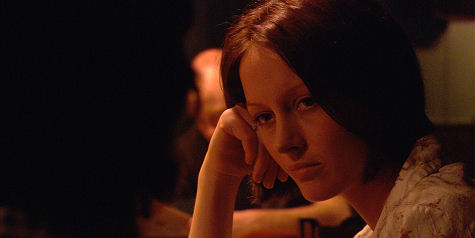

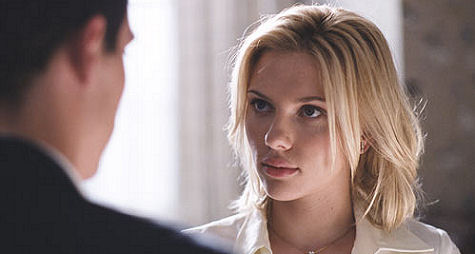
Misty Wilkins, hot-stuff star of Steven Soderbergh’s Bubble

And zipposky on April’s Shower, Glory Road, Hoodwinked, Last Holiday, On The Outs.
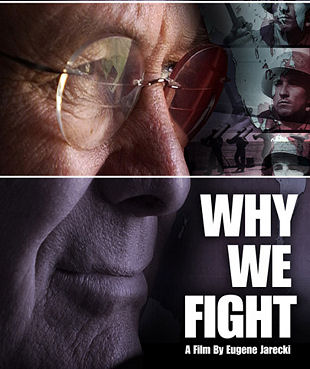
January 20: Eugene Jarecki’s Why We Fight is not just the best film being released on this date but sure to be listed among the year’s (and probably the decade’s) finest also. A brilliantly told history of America’s military industrial complex and war machine. And very well made…well paced…totally blue-chip all the way. John McCain, Gore Vidal, William Kristol, Chalmers Johnson and Richard Perle are among the talking heads.
There are good things — more than a few good things — in Albert Brooks’ Looking for Comedy in the Muslim World (Warner Bros.). It’s dry and disciplined and somewhat amusing here and there, but it has an older guy’s energy levels and — frankly? — not that great a story.
You’d think a movie about what makes Muslims laugh would at least take a stab at answering this question. And it would have worked better if Brooks (playing himself) had somehow managed to visit the real Muslim world (Iraq, Saudi Arabia, Jordan, et. al.) instead of India, where most of this film takes place.
India is not where the terrorists are. Call for tech support and a very polite idiot who knows absolutely nothing about how to help you with your problem…that‘s India.
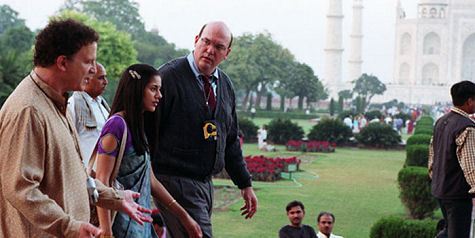

Albert Brooks (l.) in Looking for Comedy in the Muslim World

You know that Underworld: Evolution (Screen Gems), the Underword sequel, is solely about trying to grab a portion of the $100 million earned by the original. With Kate Beckinsdale and Scott Speedman reprising their roles, what are the odds of this being any more that the usual breathy-moldy-sexy CGI vampire-werewolf crap?
The trailer certainly gives every indication it’s a straight programmer and strictly a paycheck movie for the talent. If it rises even a tiny bit above the level of pure bilge I will buy a red rubber enema bag and do the appropriate thing.
Nothing about End of the Spear, Pizza, The Real Dirt on Farmer John.
January 27: Bubble is a minimalist murder tale from Steven Soderbergh, shot on video with non-pro actors. It’s a very clean, creepy and absorbing piece. It’s modest but damn fine within its perimeter. I consider Bubble Soderbergh’s return to form — the first high-grade wow thing he’s done since Traffic.
I wrote during the Toronto Film Festival that “as far as I’m concerned Bubble, a heart-of-proletariat-darkness drama, is reason to pop open the champagne and breathe easy. Soderbergh was falling off the horse repeatedly with Full Frontal, Solaris and the two Ocean‘s movies…but he hunkered down and stayed with the process and that constant-state-of-becoming trip that all artists need to be into, and now he’s back.”
Oh Parker’s Imagine Me and You, which I saw at Toronto, is one of those rotely British romantic confections, although nowhere near as sickening as Love Actually and for the most part a reasonably decent and even (at times) touching thing.
It’s about a woman (Piper Parabo) who falls in love with another woman (Lena Headley) on her wedding day…which leaves her husband Heck (Matthew Goode) confused and out in the cold. It’s formulaic and tidy, although at times I could feel the capability on Parker’s part (if not the willingness) to make a complex adult relationship drama along the lines of John Schlesinger’s Sunday Bloody Sunday.
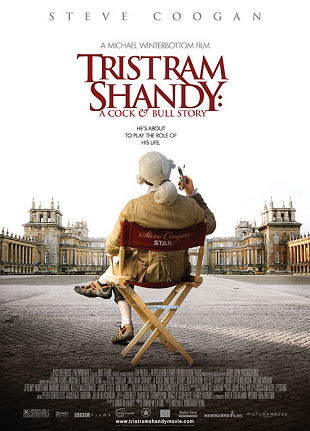
I didn’t hear a single unkind word about Tristram Shandy: A Cock and Bull Story during the Toronto Film Festival, so even though I didn’t see it myself it seems like a reasonably safe call to put it on the recommend list.
It’s basically the bone-dry British funnyman Steve Coogan starring in some kind of smart-ass variation of Karel Reisz’s The French Lieutenant’s Woman (1982). It’s a film about the making of an historical film — an adaptation of Laurence Stern’s “The Life and Opinions of Tristram Sahndy, Gentlemen” — while at the same time a look at the historical characters as well as the actors portraying them.
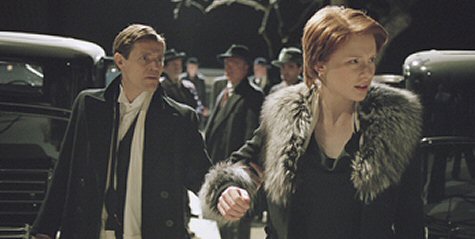

Willem Dafoe, Bryce Dallas Howard in Lars von Trier’s Manderlay

After seeing Lars von Trier’s Manderlay in Cannes last May I wrote that “it didn’t do it for me, and I’m speaking as a totally ardent fan of von Trier’s Dogville, Dancer in the Dark and Breaking the Waves, as well as being a general fool for his bad-boy provocations.
“It’s a relentlessly talky, intelligent and provocative film that addresses…well, American racism, certainly, but more generally a do-gooder tendency by American governments to try and shape other societies so they more resemble our own (Iraq, Vietnam, etc.). And it indulges in the usual proddings and agitations that are par for this Danish filmmaker.
“The second installment in von Trier’s America trilogy, Manderlay is a continuation of the adventures of Grace, the gangster’s daughter played by Nicole Kidman in Dogville, the trilogy’s 2003 kickoff, and by Bryce Dallas Howard in the new film.
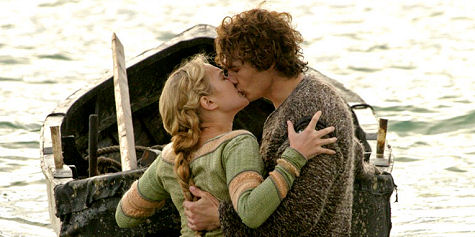

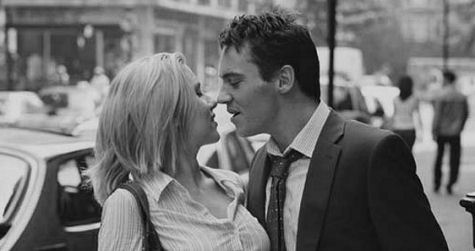
Sophia Miles, James Franco in Kevin Reynolds’ Tristan and Isolde

“Both films are stagey and pedantically inclined, and shot on what is probably the same massive sound stage with imaginary props and sets. (The third installment will presumably follow suit.)
Manderlay is too similar to Dogville and not similar enough. Despite its slow pace and too-gradual plot development, Dogville had a surprise revelation (Kidman is the daughter of gangster James Caan, and not his girlfriend, as the film allows us to assume at first) and a shockingly violent finale that expressed von Trier’s negative feelings about what he sees as American tendencies to exploit the less fortunate.
“Like Dogville it’s broken up by titled chapters, John Hurt again provides the dry and pungent narration, and the closing credit sequence is nearly identical with the same David Bowie song (‘Young Americans’) played over a series of stills that illuminate the uglier aspects of America’s history — in this instance the treatment of African-Americans over the last century or so.
“But there’s no big jolt or surprise at the finale — you can pretty much tell what’s coming from the get-go — and it so closely recalls Dogville‘s aching-butt aspects that watching it feels like a chore.
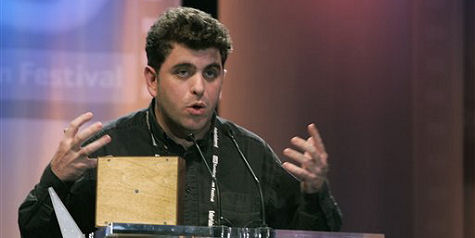

Eugene Jarecki discussing Why We Fight at the 2005 Sundance Film Festival

Otherwise…
Annapolis isn’t a precise revisiting of An Officer and a Gentleman but it’s obviously on similar turf with the element of boxing thrown in. Annapolis, boxing…Annapolis, boxing. Better Luck Tomorrow helmer Justin Lin is the director, and I should just keep my mouth shut until I see it.
Big Momma’s House 2 can have coitus with itself. Breaking News looks to me like a standard-issue Hong Kong cop thriller, and I’m not vigorous enough to try and figure the real truth of it. Mirage, Nanny McPhee and the IMAX film Roving Mars haven’t yet come into focus.
You don’t have confuse Tristram Shandy with Tristan and Isolde — “Tristram” has two r’s and the movie is fairly jaunty and flip, and the other one is bold-faced sincere.

Grabs
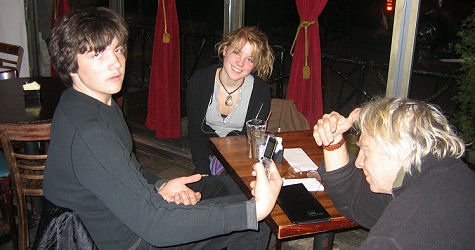

(l. to r.) Occasional Hollywood Elsewhere columnist Dylan Wells, Becca Payne and producer-screenwriter L.M. Kit Carson at Columbia student bar at Broadway and 113th Street — Tuesday, 12.27, 10:15 pm

On IRT Lexington uptown — Saturday, 12.24, 3:10 pm.

Troubador in waiting area for Union Square L line to Brooklyn — Monday, 12.26, 11:25 pm.

$30 jar of ginger orange foam scrub, purchased at Sabon on Spring Street on Sunday, 12.25, 8:40 pm.
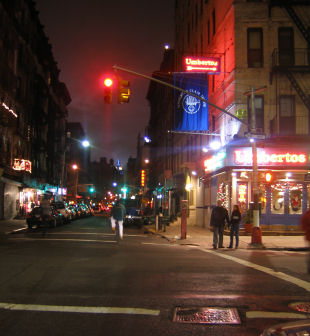
Mott Street in Little Italy — Thursday, 12.29, 8:20 pm.
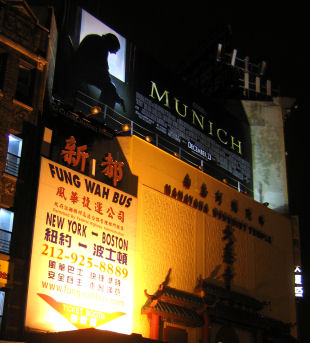
Canal Street near Manhattan Bridge — Thursday, 12.29, 7:15 pm.

Grand Central Station — Tuesday, 12.27, 4:25 pm.

On L train heading to Brooklyn — Tuesday, 1.27, 11:45 pm
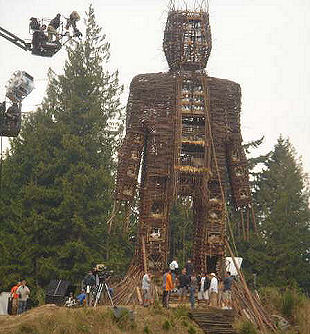
What would Nic Cage (or a character played by him), Joan of Arc and Oliver Reed’s “Father Grandier” character in The Devils have in common? Something, I think…unless Neil Labute has decided to re-shuffle the story of The Wicker Man.

Thurday, 12.29, 8:15 pm.

Herzog vs. Huffman

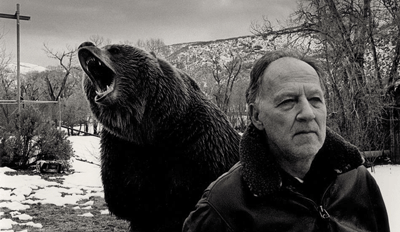
“Thanks for celebrating Werner Herzog, the most amazing director working today. However…
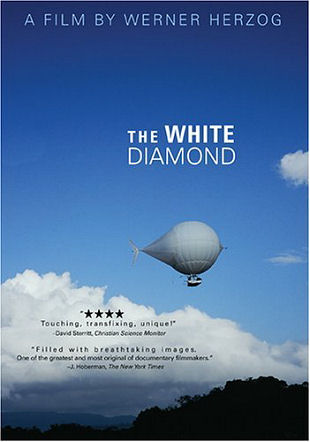
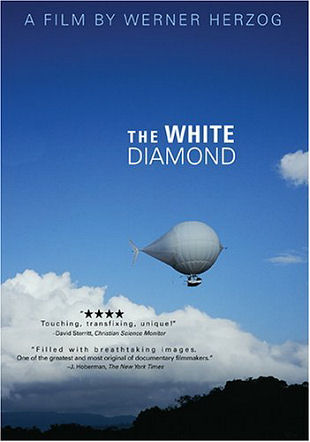
“While I don’t disagree with you and Time‘s Richard Corliss for celebrating his little seen recent, wonderful documentary The White Diamond, I wonder if you were aware just how contrived the film is.
“Recently Herzog was in Seattle for a short festival of some of his recent films and in the q & a session afterwards he explained that pretty much everything said in the interview sessions in the film (particularly from the talkative local man who owned the rooster) was completely scripted.
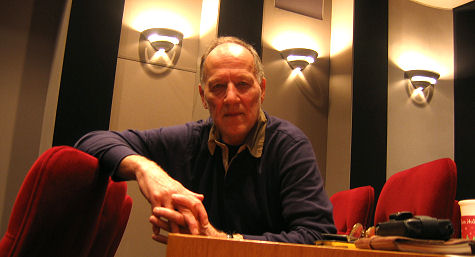
“Herzog said it in way that made it seem like he would be stunned if anyone could possibly think it was done any other way. He described in detail how he wrote complete speeches for the folks and how they would struggle to deliver them (the speeches are basically based on his conversations with the interviewees and Herzog’s own thoughts).
“If anything, knowing that this is how Herzog constructs his documentaries makes me like them even more. All documentaries are a succession of lies that form a particular person’s greater truth. I am just surprised that Herzog seemed to assume that everyone else was in on the secret.” — Richard Huffman, Seattle, WA.
Werner Herzog replies: “Jeffrey — [Huffman’s] questions about The White Diamond are too simplified. Why would I who postulates a cinema where you can trust your eyes again (Fitzcarraldo) ‘concoct’ elements of his ‘documentaries’?

“My inventions and stylizations aim to penetrate into a deeper truth, whereas Reality TV only pretends to depict the ‘real’ but captures just facts, and not truth.

“I have to be more precise to distinguish between two major issues:

“1. Whenever it comes to visual material, I want audiences to trust their eyes again, like the ship over a mountain (Fitzcarraldo). When I use a digital effect, like at the end of Invincible where the strongman’s kid brother flies away across the ocean: it is so obvious, and so stylized, and embedded in the dialogue that it is no contradiction to what I like to achieve.
“I welcome the recreation of dinosaurs on the screen.

“Equally: everything which constitutes the hardcore identity of a protagonist in my “documentaries” I would not touch (Littlre Dieter Needs to Fly, Grizzlly Man, Wings of Hope, etc.). However, I do invent Dieter’s dreams, and I do stage elements of his character (otherwise not visible), like Dieter opening and closing the door of his home. This is the ecstatic truth of his existence.

“2. Whatever I can do to get beyond the mere facts…to get deeper into a story of a ‘documentary’…to grasp a truth in its ecstatic state, I will do. The story of Graham Dorrington remains untouched, the catastrophy which befell Dieter Plage, the cinematographer, during his maiden flight on board Dorrington’s airship, happened as narrated, yet: I liked a seemingly unimportant side figure, Mark Anthony Jhap so much that I manoeuvred him more and more into the center – or rather epicenter – of the film. The leading character shifts from Dorrington to Mark Anthony, and at the end to Mark Anthony’s splendid rooster.

“The scene where Mark Anthony leads the camera during his foraging trip to the waterfall, watching it through one single drop of water, is completely scripted, and staged, and rehearsed. From off camera I am asking the most insipid New Age question: ‘Mark Anthony, do you see a whole universe in one single drop of water’, and Mark Anthony turns around with a slight smirk on his face, and responds: ‘I cannot hear what you say for the thunder that you are.’ I believe I shot the scene 5 or 6 times until I got the right, almost imperceptible smirk.
“Mark Anthony’s sentence appears verbatim in a previous film, Cobra Verde, delivered by Kinski, and you will hear the same phrase in Rescue Dawn, spoken by Christian Bale.

“What you and your audience also should be aware of is the fact that the drop of water was not water, but glycerin which has better properties for filming. Klaus Scheurich, a very accomplished wildlife cinematographer, shot this drop of ‘water’ with the inverted waterfall caught in it, and this — at first sight — looked like kitsch, but I got hooked to the image, and I was convinced that this waterdrop embedded in an environment of sheer fantasy would assume a different, a higher, an ecstatic quality.

“I think that this delicate line between reality, and fact, and truth needs to be more clearly defined. My Minnesota Declaration (you’ll find it on my website) does this. But what has to be made more clear is: with the onslaught of virtual realities WE HAVE TO RE-DEFINE REALITY: beyond Cinema Verite, beyond the documen- taries we usually see on TV, beyond the terrain which is not solid any longer, as if we were treading on thin ice.” – Werner Herzog
Oh-Six Starters

Oh-Six Starters

There are four January releases that definitely cut the mustard in my pantry, and two or three with one or two problems but are recommended regardless. So things are starting off reasonably well. For a month known for so-so product, I mean.
The absolute must-see’s are Lajos Koltai’s Fateless (Thinkfilm, 1.6), Eugene Jarecki’s Why We Fight (Sony Pictures Classics, 1.20), Steven Soderbergh’s Bubble (Magnolia, 1.27) and Michael Winterbottom’s Tristram Shandy: A Cock and Bull Story (Picturehouse, 1.27).


From Lajos Koltai’s Fateless (and not what it seems to be)

The not-bad-with-reservations in order of preference are Ol Parker’s Imagine Me and You (Fox Searchlight, 1.27), Albert Brooks’ Looking for Comedy in the Muslim World (Warner Bros., 1.20) and Lars von Trier’s Manderlay (IFC Films, 1.27).
I’ve seen some others and can riff a bit about them, but aside from these six or seven we all know what January is about. That is, if you aren’t priveleged or con- nected enough to go to Sundance and you pay to see new movies in your local plex. It’s about feeling vaguely burned.
< ?php include ('/home/hollyw9/public_html/wired'); ?>
Or it’s about catching up with Xmas films and watching more DVDs than usual or maybe picking up a book…but the mood that settles over a multiplex in January is rarely expectant, much less electric.
Here’s what I know, have heard or am deducing thus far…
January 6: Fateless is the first near-great film of 2006. The exquisite wide-screen framing, destaurated color and exquisite editing make it, to my eyes, the most visually immaculate Holocaust death-camp drama ever made as well as one of the most realistic seeming and subtly-rendered in terms of story.
Based on Imre Kertesz’s mostly true-life account, it’s about a young Jewish boy from Budapest who ends up in a concentration camp during World War II and just barely survives. It lacks the story tension and rooting factor of Polanski’s The Pianist, but situations of hunger, despair and the ashy aura of near-death have never been rendered with such remarkable pictorial finesse.

Otherwise, I’ve been told by a young guy I completely trust that Grandma’s Boy is absolutely atrocious. I don’t know about BloodRayne except for the hot babe in the poster. I’ve seen the Hostel trailer and that’s as far as I go. Not a very brave or engaging attitude, I’ll admit. (I generally loathe horror films even though I rather liked Wolf Creek, which so many other critics were deeply offended by.)
January 13: The only one I’ve seen is Laurence Dunmore’s The Libertine (Weinstein Co.) and the less said about it, the better. Johnny Depp is utterly dislikable as a smart but self-destructive Old World asshole named John Wilmot, the second Earl of Rochester. Muddy, desaturated color…gobs of period detail without no discernible spark of life…an almost completely detestable film.
The trailer for Kevin Reynolds’ Tristan & Isolde (20th Century Fox)…oh, no….oh, no….Rufus Sewell is in it. I’m sorry but that tears it. And please…not another swords-and-horses romantic triangle King Arthur– slash-First Knight-type deal. How can studio executives greenlight these things and still look themselves in the mirror?
James Franco (Tristan) is a very fine and charismatic actor who can’t seem to catch a wave, much less a break. (He’s also in Justin Lin’s Annapolis, opening on 1.27.) Sophia Myles, whom I liked in Art School Confidential, is a very intelligent, seemingly passionate actress with a very chubby moon face. Curvy, not-slim actresses are becoming more and more common these days, but there haven’t been any high-wattage moon-faced actresses since the days of Theda Bara.


Misty Wilkins, hot-stuff star of Steven Soderbergh’s Bubble

And zipposky on April’s Shower, Glory Road, Hoodwinked, Last Holiday, On The Outs.
January 20: Eugene Jarecki’s Why We Fight is not just the best film being released on this date but sure to be listed among the year’s (and probably the decade’s) finest also. A brilliantly told history of America’s military industrial complex and war machine. And very well made…well paced…totally blue-chip all the way. John McCain, Gore Vidal, William Kristol, Chalmers Johnson and Richard Perle are among the talking heads.
There are good things — more than a few good things — in Albert Brooks’ Looking for Comedy in the Muslim World (Warner Bros.). It’s dry and disciplined and somewhat amusing here and there, but it has an older guy’s energy levels and — frankly? — not that great a story.
You’d think a movie about what makes Muslims laugh would at least take a stab at answering this question. And it would have worked better if Brooks (playing himself) had somehow managed to visit the real Muslim world (Iraq, Saudi Arabia, Jordan, et. al.) instead of India, where most of this film takes place. India is not where the terrorists are. Call for tech support and a very polite idiot who knows absolutely nothing about how to help you with your problem…that‘s India.


Albert Brooks (l.) in Looking for Comedy in the Muslim World

You know what Underworld: Evolution (Screen Gems), the Underword sequel, is just a cynical money grab because Underworld made $100 million or so. It looks to me like more breathy-moldy-sexy CGI vampire-werewolf crap with Kate Beckinsdale and Scott Speedman.
The trailer certainly gives every indication it’s a programmer and strictly a paycheck movie for the talent. If it rises even a tiny bit above the level of pure bilge I will buy a red rubber enema bag and do the appropriate thing.
Nothing about End of the Spear, Pizza, The Real Dirt on Farmer John.
January 27: Bubble is a minimalist murder tale from Steven Soderbergh, shot on video with non-pro actors. It’s a very clean, creepy and absorbing piece. It’s modest but damn fine within its perimeter. I consider Bubble Soderbergh’s return to form — the first high-grade wow thing he’s done since Traffic.
I wrote during the Toronto Film Festival that “as far as I’m concerned Bubble, a heart-of-proletariat-darkness drama, is reason to pop open the champagne and breathe easy. Soderbergh was falling off the horse repeatedly with Full Frontal, Solaris and the two Ocean‘s movies…but he hunkered down and stayed with the process and that constant-state-of-becoming trip that all artists need to be into, and now he’s back.”

Oh Parker’s Imagine Me and You, which I saw at Toronto, is one of those rotely British romantic confections, although nowhere near as sickening as Love Actually and for the most part a reasonably decent and even (at times) touching thing.
It’s about a woman (Piper Parabo) who falls in love with another woman (Lena Headley) on her wedding day…which leaves her husband Heck (Matthew Goode) confused and out in the cold. It’s formulaic and tidy, although at times I could feel the capability on Parker’s part (if not the willingness) to make a complex adult relationship drama along the lines of John Schlesinger’s Sunday Bloody Sunday.
I didn’t hear a single unkind word about Tristram Shandy: A Cock and Bull Story during the Toronto Film Festival, so even though I didn’t see it myself it seems like a reasonably safe call to put it on the recommend list.
It’s basically the bone-dry British funnyman Steve Coogan starring in some kind of smart-ass variation of Karel Reisz’s The French Lieutenant’s Woman (1982). It’s a film about the making of an historical film — an adaptation of Laurence Stern’s “The Life and Opinions of Tristram Sahndy, Gentlemen” — while at the same time a look at the historical characters as well as the actors portraying them.


Willem Dafoe, Bryce Dallas Howard in Lars von Trier’s Manderlay

After seeing Lars von Trier’s Manderlay in Cannes last May I wrote that “it didn’t do it for me, and I’m speaking as a totally ardent fan of von Trier’s Dogville, Dancer in the Dark and Breaking the Waves, as well as being a general fool for his bad-boy provocations.
“It’s a relentlessly talky, intelligent and provocative film that addresses…well, American racism, certainly, but more generally a do-gooder tendency by American governments to try and shape other societies so they more resemble our own (Iraq, Vietnam, etc.). And it indulges in the usual proddings and agitations that are par for this Danish filmmaker.
“The second installment in von Trier’s America trilogy, Manderlay is a continuation of the adventures of Grace, the gangster’s daughter played by Nicole Kidman in Dogville, the trilogy’s 2003 kickoff, and by Bryce Dallas Howard in the new film.


Sophia Miles, James Franco in Kevin Reynolds’ Tristan and Isolde

“Both films are stagey and pedantically inclined, and shot on what is probably the same massive sound stage with imaginary props and sets. (The third installment will presumably follow suit.)
Manderlay is too similar to Dogville and not similar enough. Despite its slow pace and too-gradual plot development, Dogville had a surprise revelation (Kidman is the daughter of gangster James Caan, and not his girlfriend, as the film allows us to assume at first) and a shockingly violent finale that expressed von Trier’s negative feelings about what he sees as American tendencies to exploit the less fortunate.
Manderlay is obviously man to play as a Dogville companion. It is broken up by titled chapters, John Hurt again provides the dry and pungent narration, and the closing credit sequence is nearly identical with the same David Bowie song (‘Young Americans’) played over a series of stills that illuminate the uglier aspects of America’s history — in this instance the treatment of African-Americans over the last century or so.
“But there’s no big jolt or surprise at the finale — you can pretty much tell what’s coming from the get-go — and it so closely recalls Dogville‘s aching-butt aspects that watching it feels like a chore.


Eugene Jarecki discussing Why We Fight at the 2005 Sundance Film Festival

Otherwise…
Annapolis isn’t a precise revisiting of An Officer and a Gentleman but it’s obviously on similar turf with the element of boxing thrown in. Annapolis, boxing…Anapolis, boxing. Better Luck Tomorrow helmer Justin Lin is the director, and I should keep my mouth shut until I see it.
Big Momma’s House 2 can have coitus with itself. Breaking News looks to me like a standard-issue Hong Kong cop thriller, and I’m not vigorous enough to try and figure the real truth of it. Mirage, Nanny McPhee and the IMAX film Roving Mars haven’t yet come into focus.
You don’t have confuse Tristram Shandy with Tristan and Isolde — “Tristram” has two r’s and the movie is fairly jaunty and flip, and the other one is bold-faced sincere.

Grabs


(l. to r.) Occasional Hollywood Elsewhere columnist Dylan Wells, Becca Payne and producer-screenwriter L.M. Kit Carson at Columbia student bar at Broadway and 113th Street — Tuesday, 12.27, 10:15 pm

On IRT Lexington uptown — Saturday, 12.24, 3:10 pm.

Troubador in waiting area for Union Square L line to Brooklyn — Monday, 12.26, 11:25 pm.

$30 jar of ginger orange foam scrub, purchased at Sabon on Spring Street on Sunday, 12.25, 8:40 pm.

Mott Street in Little Italy — Thursday, 12.29, 8:20 pm.

Canal Street near Manhattan Bridge — Thursday, 12.29, 7:15 pm.

Grand Central Station — Tuesday, 12.27, 4:25 pm.

On L train heading to Brooklyn — Tuesday, 1.27, 11:45 pm

What would Nic Cage (or a character played by him), Joan of Arc and Oliver Reed’s “Father Grandier” character in The Devils have in common? Something, I think…unless Neil Labute has decided to re-shuffle the story of The Wicker Man.

Thurday, 12.29, 8:15 pm.

Herzog vs. Huffman

“Thanks for celebrating Werner Herzog, the most amazing director working today. However…
“While I don’t disagree with you and Time‘s Richard Corliss for celebrating his little seen recent, wonderful documentary The White Diamond, I wonder if you were aware just how contrived the film is.
“Recently Herzog was in Seattle for a short festival of some of his recent films and in the q & a session afterwards he explained that pretty much everything said in the interview sessions in the film (particularly from the talkative local man who owned the rooster) was completely scripted.

“Herzog said it in way that made it seem like he would be stunned if anyone could possibly think it was done any other way. He described in detail how he wrote complete speeches for the folks and how they would struggle to deliver them (the speeches are basically based on his conversations with the interviewees and Herzog’s own thoughts).
“If anything, knowing that this is how Herzog constructs his documentaries makes me like them even more. All documentaries are a succession of lies that form a particular person’s greater truth. I am just surprised that Herzog seemed to assume that everyone else was in on the secret.” — Richard Huffman, Seattle, WA.
Werner Herzog replies: “Jeffrey — [Huffman’s] questions about The White Diamond are too simplified. Why would I who postulates a cinema where you can trust your eyes again (Fitzcarraldo) ‘concoct’ elements of his ‘documentaries’?

“My inventions and stylizations aim to penetrate into a deeper truth, whereas Reality TV only pretends to depict the ‘real’ but captures just facts, and not truth.

“I have to be more precise to distinguish between two major issues:

“1. Whenever it comes to visual material, I want audiences to trust their eyes again, like the ship over a mountain (Fitzcarraldo). When I use a digital effect, like at the end of Invincible where the strongman’s kid brother flies away across the ocean: it is so obvious, and so stylized, and embedded in the dialogue that it is no contradiction to what I like to achieve.

“I welcome the recreation of dinosaurs on the screen.

“Equally: everything which constitutes the hardcore identity of a protagonist in my “documentaries” I would not touch (Littlre Dieter Needs to Fly, Grizzlly Man, Wings of Hope, etc.). However, I do invent Dieter’s dreams, and I do stage elements of his character (otherwise not visible), like Dieter opening and closing the door of his home. This is the ecstatic truth of his existence.

“2. Whatever I can do to get beyond the mere facts…to get deeper into a story of a ‘documentary’…to grasp a truth in its ecstatic state, I will do. The story of Graham Dorrington remains untouched, the catastrophy which befell Dieter Plage, the cinematographer, during his maiden flight on board Dorrington’s airship, happened as narrated, yet: I liked a seemingly unimportant side figure, Mark Anthony Jhap so much that I manoeuvred him more and more into the center – or rather epicenter – of the film. The leading character shifts from Dorrington to Mark Anthony, and at the end to Mark Anthony’s splendid rooster.

“The scene where Mark Anthony leads the camera during his foraging trip to the waterfall, watching it through one single drop of water, is completely scripted, and staged, and rehearsed. From off camera I am asking the most insipid New Age question: ‘Mark Anthony, do you see a whole universe in one single drop of water’, and Mark Anthony turns around with a slight smirk on his face, and responds: ‘I cannot hear what you say for the thunder that you are.’ I believe I shot the scene 5 or 6 times until I got the right, almost imperceptible smirk.

“Mark Anthony’s sentence appears verbatim in a previous film, Cobra Verde, delivered by Kinski, and you will hear the same phrase in Rescue Dawn, spoken by Christian Bale.

“What you and your audience also should be aware of is the fact that the drop of water was not water, but glycerin which has better properties for filming. Klaus Scheurich, a very accomplished wildlife cinematographer, shot this drop of ‘water’ with the inverted waterfall caught in it, and this — at first sight — looked like kitsch, but I got hooked to the image, and I was convinced that this waterdrop embedded in an environment of sheer fantasy would assume a different, a higher, an ecstatic quality.

“I think that this delicate line between reality, and fact, and truth needs to be more clearly defined. My Minnesota Declaration (you’ll find it on my website) does this. But what has to be made more clear is: with the onslaught of virtual realities WE HAVE TO RE-DEFINE REALITY: beyond Cinema Verite, beyond the documen- taries we usually see on TV, beyond the terrain which is not solid any longer, as if we were treading on thin ice.” – Werner Herzog
Toasting Herzog

Toasting Herzog

Time‘s Richard Corliss and Richard Schickel are both smart and crafty film critics, but I’ve never regarded them as providers of radiant cinematic wisdom…until today.
They’ve both chosen a Werner Herzog documentary as their favorite film of ’05 — Corliss going for The White Diamond and Schickel for Grizzly Man — and the passion behind these choices seems especially right and gives me a sublime pre-holiday feeling.

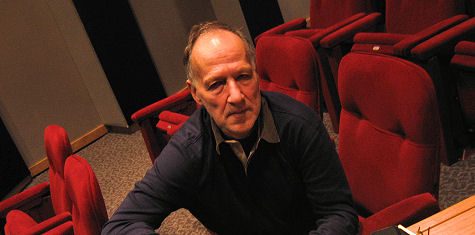
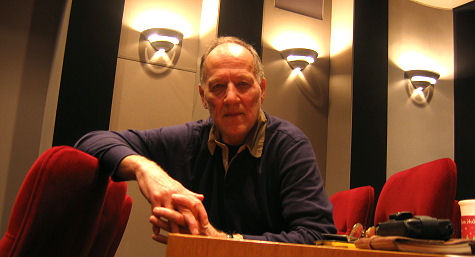
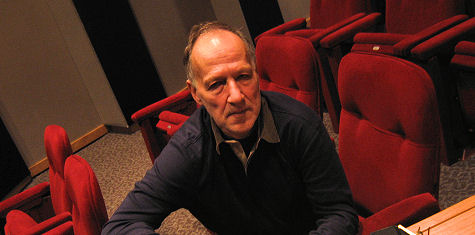
Werner Herzog during chat at L.A.’s Director’s Guild theatre — Friday, 12.16.05, 12:25 pm

In part because I had an especially good conversation with Herzog eight days ago in Los Angeles (on Friday, 12.16), a recording of which can be sampled here, and because I’ve been reflecting on it since.
And in part because a Herzog film is always good for the soul, and because we all need to remind ourselves on a periodic basis what a particular treasure and benefit his films are in so many transcendent ways…and what an exceptional, world-class visionary this Los Angeles-based filmmaker truly is.
< ?php include ('/home/hollyw9/public_html/wired'); ?>
Grizzly Man will be out on DVD on 12.26 via Lion’s Gate, and The White Diamond is now out on DVD via Wellspring.
If anyone is just starting to get into Herzog, a good place to begin is the aston- ishing Burden of Dreams, the 1982 Les Blank documentary about the making of Herzog’s Fitzcarraldo, which came out on a Criterion DVD earlier this year.
There is no filmmaker I know of who cares more about getting viewers to trust their eyes (which almost no one does anymore, he says, quite accurately, since special effects began to dictate visual terms to action-adventure film starting about 25 years ago) or, much more importantly, their dreams.
There may be filmmakers out there who are more earnestly committed to a particular vision of things or more determined to express cinematic worship about all things natural, eternal and transcendent than Herzog, but I would like to know who they are.

I wrote last summer that Herzog’s films “should not be rented — they should be owned and pulled out every few months and not just watched in a social way with friends but seriously absorbed in a state of aloneness…like meditation, with incense burning.”
Keep in mind that Herzog has a live-action feature called Rescue Dawn, a non-Vietnam War jungle survivalist drama set in Laos in 1965, coming out in March ’06 (according to the IMDB).
The indie-financed film is partly inspired, suggested or at the very least echoed or hinted at by Herzog’s 1997 doc Little Dieter Needs to Fly, the film costars Christian Bale, Steve Zahn and Jeremy Davies.
The White Diamond is about Herzog going back to the South American jungle, like he did in Aguirre, the Wrath of God some 33 years ago with his “best fiend” Klaus Kinski, and again for Fitzcarraldo.
The place this time is the rain forest in Guyana, in northeastern South America, and the risky activity (which there usually is in a Herzog doc) is flying in a helium airship above the treetops with a British engineer named Graham Dorrington.
The movie is about Herzog wanting to capture whatever he can in this hallowed environment, especially as it relates to the purity of the non-technological, anti- intellectual lives and customs of the natives as well as the wonder of the rain forest itself.
It’s also about Dorrington wanting to somehow to work through and maybe exor- cise the guilt he feels about the death of a friend named Dieter Plage, a German cameraman who met his demise after falling out of a similar Dorrington-made helium airship in Sumatra in 1993.


Friday, 12.16.05, 12:27 pm

Neither vein proves entirely cathartic, but I didn’t care because the movie still puts me into a mystically spooky, deeply beautiful jungle environment with Herzog trying to touch and uncover wondrous things, and sometimes deliberately not uncovering them.
The spiritual epicenter of The White Diamond is the glorious footage of Kaieteur Falls with its urine-colored water plunging over the crest and creating magnificent mist clouds below…all mighty and roaring and wonderful for simply staring at for hours.
Below and behind the falls is a vast cave where thousands of swifts — white-breas- ted birds with broad wing-spans — mate and nest and hang. There’s a stunning sequence when one of Herzog’s guys is lowered down to a position where he can shoot into the swift cave.
Herzog is later told by the locals that including this footage in the film will some- how intrude upon the spirit of the falls and violate its other-ness on some level, and so he doesn’t show us the swift-cave footage, and this somehow becomes more fascinating than if he had.

Miller’s Crossing

On Thursday afternoon I hitched across the Williamsburg Bridge (the trains didn’t start running again until Friday morning) and then walked up to East Soho to pay a visit to Capote director Bennett Miller.
The idea was mainly to say hello (we’ve been talking since last summer on the phone) and to take stock of the year-end situation, I suppose. Only we didn’t get down to the latter, in part because I got sidetracked by some very cool Dick-and- Perry photos.


Capote director Bennett Miller — 12.22.05, 5:20 pm

And so I didn’t get into Capote‘s primary year-end issues, which, if you ask me, are (a) a strange deficiency of Best Picture heat and (b) a profoundly agonizing Best Actor stand-off happening right now between Capote‘s Phillip Seymour Hoffman and Brokeback Mountain‘s Heath Ledger.
Why would a guest want to bring up a couple of vaguely bothersome issues to his nice-guy host?
It’s not like the movie is anything but a solid success. But more moviegoers should see it, and Oscar approvals are one way of bringing this about. For this to happen the hard fact is that Capote needs to re-ignite a bit. Okay, so it’s bothersome to say this and I’m sorry…but the game is the game is the game.
Miller, 38, is a relaxed, friendly, quietly reflective sort who’s into listening as much as making himself heard, which right away sets him apart from a lot of filmmakers I’ve run into. And he lives in a spacious, sparsely furnished sixth-floor loft on Lafay- ette Street that feels instantly soothing to walk into.
The moment I did this I succumbed. I said to myself, “Drop it…it’s the late after- noon and it’s cold outside and it’s almost Christmas…forget the hardball and go with the layback.”


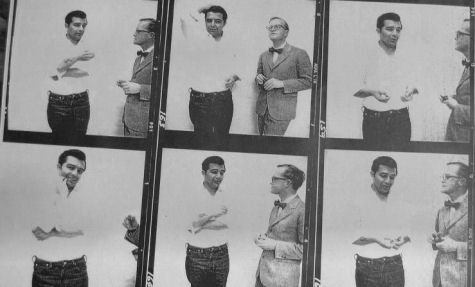
Clutter-family killer Perry Smith (l., white shirt) and Truman Capote (r., glasses and jacket) during Richard Avedon photo session sometime in early 1960

And then about halfway into our talk Miller brought out some copies of Richard Avedon’s contact sheets from that 1960 photo session he did with Truman Capote and Clutter-family slayers Perry Smith and Dick Hickock. Amazing images, all.
The photo session is recreated in Capote, of course, and my first reaction to the Real McCoys was frankly one of surprise. The actual Smith seems much more relaxed and even jovial than the way Clifton Collins, Jr. played him in the film. Much less pensive and guarded.
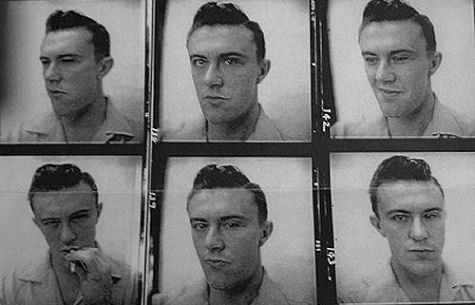
Mark Pellegrino was a fairly good physical choice to play Hickock in Miller’s film, I suppose, but In Cold Blood director Richard Brooks was, I now realize, being kind to Hickock’s legacy by hiring Scott Wilson to play him in that 1967 film. Look at those strangely slanted eyes. That scowl. That crammed-together, misshapen face (a result of a car accident).
Miller showed me these photos when I mentioned I’d never seen them published anywhere except for a couple of straight-on portrait shots of the killers in an old Life magazine.


The real Richard Hickock, also by Avedon

We talked mostly about the things I’ve always loved about Capote apart from Hoffman’s transcendent performance and the general “all” of it.
Particularly Adam Kimmel’s extraordinary widescreen cinematography, and the suggestions of Andrew Wyeth’s landscapes in the Holcomb, Kansas, portions early on.
And Mychael Danna’s music, which I didn’t really get into until I clicked on the Capote website and started listening to a certain loop from the soundtrack over and over again.
Plus we talked a little bit about technical issues and what the real Holcomb, Kansas, has turned into, and when Miller knew he had gotten it right, and what he and Hoffman might be doing in the future, etc.
A good portion of our chat is here in these installments — part #1 and part #2
If I’d been into stirring the pot, I would have wondered aloud why Capote hasn’t caught any serious Best Picture action thus far. This really should have happened, and I’ve been scratching my head about it for the last couple of months.
It wasn’t that long ago that this exquisitely composed Louis Malle film with a fascinating under-vibe (partly about dread and horror, and partly about deep-down fragile emotion) was all but smothered in praise, starting with its early September debut at the Telluride Film Festival.


12.22.05, 5:23 pm

And there’s no missing the fact that it’s currently the third highest-rated film on the thrown-together Movie City News critics’ ten-best list (behind Good Night, and Good Luck and Brokeback Mountain).
I also would have brought up what I wrote a day or two ago in WIRED, which is that Hoffman was the presumptive Best Actor winner from late August to roughly mid-to-late November until Ledger began surging two or three weeks ago, and how I’m torn by these two performances…torn and divided…and so is everyone else.
It’s going to hurt a little bit no matter which one wins, so let’s hope for a replay of the 1968 Best Actress contest that resulted in a tie when The Lion in Winter‘s Katharine Hepburn and Funny Girl‘s Barbra Streisand both took home trophies.
That would be perfect…that would be really nice. And by suggesting this I feel like I’ve gotten myself off the hook a bit.
I haven’t explained what I meant by calling this article “Miller’s Crossing,” and I guess it’s because last year he was mainly the guy who directed that very cool doc called The Cruise five or six years ago, and post-Capote he’s earned passage into a very high-end realm that few directors have known or enjoyed…and the sky’s the limit from here on.

Grabs


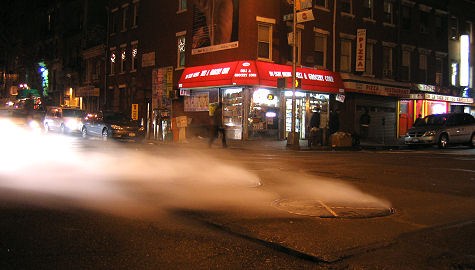
Sooner or later, all New York-based still photographers wind up taking a Martin Scorsese/Taxi Driver steam-seeping-out-of-the-pavement shot

One of New York’s finest relaxing in a blacktop parking lot area off Eighth Avenue — Friday, 12.23, 8:40 pm

Broadway and 54th Street

Ditto

Naturalism

“While reading your impressions of The New World I kept feeling a vague sensation of deja-vu….as if thinking of a forgotten Mallick- like film. Well, it was no Malick film at all. It was Tarkovsky’s Solaris.
“The earthbound parts of Tarkovsky’s film have a deep preoccupation with the natural world, in the same apparent vein of how you described Malick’s World view. Criterion has a beautiful DVD of Solaris, with an engrossing commentary track. If you have the time, be sure to check it out. It moves slowly…but it’s really beautiful and poignant.
“I never saw the Soderbergh re-make, by the way, and it breaks my heart to say I haven’t seen the The New World either, especially since chances of it playing in Nicaragua are slim-to-none!” — Juan Carlos Ampie, resident of an unnamed city in Nicaragua.

Playing in Worcester

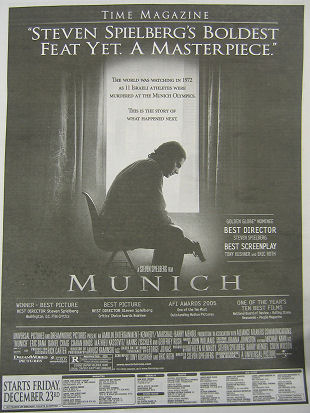
“I’ve been doing my damndest to catch up with all the so-called Oscar contenders, Brokeback Mountain last Tuesday and Munich and Memoirs of a Geisha yesterday…and there’s no question as to which one stood tallest.
Brokeback‘s emotional residue stuck to me like super glue for the better part of two days. I haven’t felt a movie invade me like that since…I don’t know if you saw The Best of Youth, but it had that kind of emotional pull too, at least for me.
“I remember a column you wrote about “sad-in-a-great-way movies vs. just-plain-downer movies,” and Brokeback fits that former category in ways I’m still evaluating. I love that Anthony Lane comapred its elegiac tone to that of The Last Picture Show, both movies being about dying that slow death of the soul.
“I love Brokeback Mountain so much I don’t even want to dwell on potential nitpicking about how Ang Lee’s makeup crew wasn’t exacting about the passage of 20 years. When a movie spears your heart like this one does, who gives a crap?

“And I have lost all respect for Time‘s Richard Corliss and Richard Schickel — the former listing a coffee table movie like Geisha among his top ten, the other going for Munich, and yet neither getting the granite timelessness of Brokeback Mountain. Those two boys need to be put out to pasture like the sheep.
“And I know exactly what you’re going through in your sentiments about Hoffman vs. Ledger. I’d also love to see a replay of the 1968 Oscars, when Katherine Hepburn and Barabra Streisand tied for Best Actress.
“As for Munich…oy! There are marvelous things in it, and considering what I’ve read it’s not nearly as overtly polemic as I feared it might be. Some of the set pieces are amazingly tense and beautifully rendered, and the acting is first rate, but you can see where Spielberg is straining not to strain, if that makes sense.
“He’s trying mightily hard to avoid his usual cinematic ticks and deliver a message-laden French Connection meets The Day of the Jackal. And John Williams can’t avoid inserting the lugubrious female wailing voice during the opening credits to remind us this is a somber film with somber issues, in an otherwise fairly restrained musical score.
Munich, in short, is nowhere near as resonant as Brokeback or Capote, which is mainly riding on the strength of Hoffman’s amazing performance even though it has a wonderfully somber gravity that doesn’t have to depend on manipulation to pull us in. I wish more people would realize just how great the FILM is on its own.
“I won’t waste more than a sentence or two on Geisha, which is a meretricious, vacuous waste of Arthur Golden’s finely detailed novel. Even the cat fight between Gong Li and Ziyi Zhang didn’t do it for me.” — Paul Kolas , Worcester, Mass.

And Atlanta…

“I saw Brokeback Mountain at the 4:40 pm showing Thursday in Atlanta…you know, the “south”? GW country? My ass.
Three-quarters full, Jeff. And mostly heterosexual couples. And when it was over, we all spilled out, dazed, into the lobby where the sold-out line for the 7:30 showing awaited…looking at our faces for a clue.
“The film is revolutionary because it really is a basic, haunting and captivating love story…with the protagonists just happening to be men. They go through the same joy, passion, heartache, frustrations and excitements as all lovers do. They end up with others they try to love since they can’t be together and love each other the way they actually need to…as all overs do.
“When films are this good — not one wasted shot in this movie — then they all need to be this good.

“Why hasn’t Linda Cardinelli been given more praise? Though a third-act character, she was totally memorable, and as good to me as Michelle Williams, who has some startling, riveting moments. Anne Hathaway, also…the last conversation she has with Ennis on the phone? She lets us see that she knows, and that she loves her husband anyway.
“Gyllenhal deserves to be nominated for Best Supporting Actor(make a case for it, Jeffrey) for his scene in the car driving home after being rebuffed by Ledger’s Ennis. His eyes are soulful in this, and I was thrilled with the gravity of this performance — real weight there. He was the heart of the picture for me, and made me feel the love between the men.
“Philip Seymour Hoffman has been my guy all year…until now. Sorry, Jeff. Hoffman is brilliant, but I never felt for his Capote what I felt for Heath Ledger’s Ennis del Mar.
“You could point out dozens of special Brokeback moments, big and small, but I have two that still I can’t shake. The first time the guys see each other after four years…that’s all Heath Ledger. It is in his performance that I felt the HEAT of these men — the strong sexual connection, like they fill each other’s souls UP, you know?
“And of course, the extended last scene with his daughter, then the final money shot…still in the pit of my gut…but I loved the scene where he discovers the shirts. I FELT his longing, his missing his soul mate. An stonishing, astounding performance. Who saw it coming?
“I hope to love Munich, but I doubt I’ll love anything as much as I loved this. I think I’ll see it again this weekend in Tallahassee.” — Roderick Durham

Miller’s Crossing

Miller’s Crossing

On Thursday afternoon I hitched across the Williamsburg Bridge (the trains didn’t start running again until Friday morning) and then walked up to East Soho to pay a visit to Capote director Bennett Miller.
The idea was mainly to say hello (we’ve been talking since last summer on the phone) and to take stock of the year-end situation, I suppose. Only we didn’t get down to the latter, in part because I got sidetracked by some very cool Dick-and- Perry photos.


Capote director Bennett Miller — 12.22.05, 5:20 pm

And so I didn’t get into Capote‘s primary year-end issues, which, if you ask me, are (a) a strange deficiency of Best Picture heat and (b) a profoundly agonizing Best Actor stand-off happening right now between Capote‘s Phillip Seymour Hoffman and Brokeback Mountain‘s Heath Ledger.
Why would a guest want to bring up a couple of vaguely bothersome issues to his nice-guy host?
It’s not like the movie is anything but a solid success. But more moviegoers should see it, and Oscar approvals are one way of bringing this about. For this to happen the hard fact is that Capote needs to re-ignite a bit. Okay, so it’s bothersome to say this and I’m sorry…but the game is the game is the game.
< ?php include ('/home/hollyw9/public_html/wired'); ?>
Miller, 38, is a relaxed, friendly, quietly reflective sort who’s into listening as much as making himself heard, which right away sets him apart from a lot of filmmakers I’ve run into. And he lives in a spacious, sparsely furnished sixth-floor loft on Lafay- ette Street that feels instantly soothing to walk into.
The moment I did this I succumbed. I said to myself, “Drop it…it’s the late after- noon and it’s cold outside and it’s almost Christmas…forget the hardball and go with the layback.”
And then about halfway into our talk Miller brought out some copies of Richard Avedon’s contact sheets from that 1960 photo session he did with Truman Capote and Clutter-family slayers Perry Smith and Dick Hickock. Amazing images, all.


Clutter-family killer Perry Smith (l., white shirt) and Truman Capote (r., glasses and jacket) during Richard Avedon photo session sometime in early 1960

The photo session is recreated in Capote, of course, and my first reaction to the Real McCoys was frankly one of surprise. The actual Smith seems much more relaxed and even jovial than the way Clifton Collins, Jr. played him in the film. Much less pensive and guarded.
Mark Pellegrino was a fairly good physical choice to play Hickock in Miller’s film, I suppose, but In Cold Blood director Richard Brooks was, I now realize, being kind to Hickock’s legacy by hiring Scott Wilson to play him in that 1967 film. Look at those strangely slanted eyes. That scowl. That crammed-together, misshapen face (a result of a car accident).
Miller showed me these photos when I mentioned I’d never seen them published anywhere except for a couple of straight-on portrait shots of the killers in an old Life magazine.


The real Richard Hickock, also by Avedon

We talked mostly about the things I’ve always loved about Capote apart from Hoffman’s transcendent performance and the general “all” of it.
Particularly Adam Kimmel’s extraordinary widescreen cinematography, and the suggestions of Andrew Wyeth’s landscapes in the Holcomb, Kansas, portions early on.
And Mychael Danna’s music, which I didn’t really get into until I clicked on the Capote website and started listening to a certain loop from the soundtrack over and over again.
Plus we talked a little bit about technical issues and what the real Holcomb, Kansas, has turned into, and when Miller knew he had gotten it right, and what he and Hoffman might be doing in the future, etc.
A good portion of our chat is here in these installments — part #1 and part #2
If I’d been into stirring the pot, I would have wondered aloud why Capote hasn’t caught any serious Best Picture action thus far. This really should have happened, and I’ve been scratching my head about it for the last couple of months.
It wasn’t that long ago that this exquisitely composed Louis Malle film with a fascinating under-vibe (partly about dread and horror, and partly about deep-down fragile emotion) was all but smothered in praise, starting with its early September debut at the Telluride Film Festival.


12.22.05, 5:23 pm

And there’s no missing the fact that it’s currently the third highest-rated film on the thrown-together Movie City News critics’ ten-best list (behind Good Night, and Good Luck and Brokeback Mountain).
I also would have brought up what I wrote a day or two ago in WIRED, which is that Hoffman was the presumptive Best Actor winner from late August to roughly mid-to-late November until Ledger began surging two or three weeks ago, and how I’m torn by these two performances…torn and divided…and so is everyone else.
It’s going to hurt a little bit no matter which one wins, so let’s hope for a replay of the 1968 Best Actress contest that resulted in a tie when The Lion in Winter‘s Katharine Hepburn and Funny Girl‘s Barbra Streisand both took home trophies.
That would be perfect…that would be really nice. And by suggesting this I feel like I’ve gotten myself off the hook a bit.
I haven’t explained what I meant by calling this article “Miller’s Crossing,” and I guess it’s because last year he was mainly the guy who directed that very cool doc called The Cruise five or six years ago, and post-Capote he’s earned passage into a very high-end realm that few directors have known or enjoyed…and the sky’s the limit from here on.

Kong Badness

I don’t want to start off on the wrong foot here. I’m a fan of Peter Jackson’s King Kong…after the 70-minute mark. A modified fan, I should say, because I’m not over-the-moon about it. I liked the rousing CG stuff and the emotional stirrings during the scenes between Kong (i.e., Andy Serkis) and Naomi Watts…but let’s not get carried away.
The point is that this 187-minute movie is full of bits that drive me up the wall, and now that Kong has run into a slowdown at the box-office and I’ve gotten my Jack- son mea culpa out of the way, it’s okay to be cut him down again. I felt a certain muted admiration for Jackson in early December after I’d first seen Kong, and I have to admit it feels more comfortable and natural being in a bash mode.


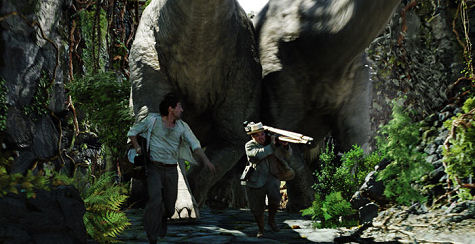
The once-celebrated, now-being-scrutinized Bronto run sequence in Peter Jackson’s King Kong

How do I vaguely detest thee, Kong? Going from the top…
* Jackson should have included an overture of Max Steiner’s music as a soundtrack-only supplement on the front of the film, to be heard in semi-darkness before the Universal logo and the credits come on, etc. This happened when I first saw Kong at the Academy theatre on the evening of Sunday, 12.4, and Steiner played like gangbusters.
* Captain Englehorn is an Idiot, Part 1: The German-born skipper (Thomas Kretschmann) presumably knows Jack Black’s Carl Denham desperately needs a fetching actress to come along on the voyage and presumably wants Denham to succeed so he’ll get fully paid, and yet the first thing he says when he meets Naomi Watt’s Ann Darrow is to express surprise that she “would take such a risk.”
* The ship is pulling out of the harbor and Adrien Brody’s Jack Driscoll is so keen on getting paid that he doesn’t feel the engines rumbling and the ship moving? He doesn’t say anything to the check-writing Denham as the ship is obviously leaving the wharf?
* Captain Englehorn is an Idiot, Part 2: Since he tells Denham that the first check bounced, it can be assumed that he hasn’t been paid a dime. And yet he’s taking his ship and crew on a long and very expensive sea voyage, trusting that a guy he obviously doesn’t trust will cough up later on.
* That ominous music on the soundtrack and that dumb-ass look of alarm on that actor’s face (is it Evan Parke’s or some other guy’s?) when those bottles of chloroform roll out from the animal cage in the ship’s storage area.


The completely idiotic Capt. Englehorn (Thomas Kretschmann, second from left with hat) contemplating the Big Wall

* All of that prolonged bonding crap between Evan Parke and Jamie Bell, and those mentions of Joseph Conrad’s “Heart of Darkness”…a complete bore and a waste of time.
* Captain Englehorn is an Idiot, Part 3: As they sail the Indian Ocean he tells Denham he’s going to drop him off at the nearest Asian port since he’s just gotten a radio message that there’s a warrant out for Denham’s arrest…which will make certain that Englehorn will never get paid and will be stuck for the cost of the voyage out of his own pocket.
* Captain Englehorn is an Idiot, Part 4: As they approach Skull Island Engle- horn is told that the depth is getting shallower and shallower, and yet he proceeds right ahead and smashes the ship into the rocks.
* The area of Skull Island protected by the big wall is all rock even though the rest of the island is all prehistoric flora…green, fertile, covered in overgrowth. How does that work exactly? I’ll tell you how it works. Jackson and co-screen- writers Fran Walsh and Philippa Boyens decided that the villagers live on a barren rocky peninsula.

* The Skull Island natives are ridiculous gargoyles trying to act as deran- ged and bizarre as possible because Jackson told them to do this. (Being unencumbered by matters of taste and restraint allows for all kinds of creative decisions.) I mean, some of the islanders are obviously white New Zealanders with blue or gray eyes and brown-skin makeup, and some look African-American…and it’s all bullshit.
* A Skull Island native is going to pole-vault from the island to Englehorn’s ship in order to abduct Darrow?
* The Skull Islanders are going to use a sophisticated cranking-crane system made of wood and vines and crude rope in order to lower human sacrificial offerings to Kong over the gorge behind the big wall?. Jackson came up with this idiotic contraption because he didn’t want to copy the sacrifice sequence in Merian C. Cooper’s original film too closely…period.
* The more I think about the Bronto run sequence, the more absurd it seems. This bit was cool the first time and I went with it, yes, but there’s no way those guys running under the bellies and legs of the dinosaurs wouldn’t be ketchup.
* Jackson portrays Kyle Chandler’s Bruce Baxter character as a narcissist and a coward in the early stages of the hunt on Skull Island. His defining act is to return to the ship early after chickenheartedly rationalizing that Darrow is almost certainly dead. And yet he switches gears a half-hour later by convincing Englehorn and a few others to return to the treacherous jungle terrain to help Driscoll and the survivors of Kong’s attack, and they arrive just in time to start shooting at the bugs in the pit.

* Jackson’s two snotty references to the 1933 Merian C. Cooper film. He has Darrow and Baxter say the dialogue from a romantic scene in the ’33 film as a way of saying to the audience, “Listen to that hokey dialogue.” And in Denham’s New York stage show in Act Three he recreates the look of Cooper’s Skull Island char- acters and has them do that bent-over Kong sacrifice dance.
There is no inspiration in the context of the film for this — it’s just another indulgent Peter Jackson wank. And he’s clearly making a point that Cooper’s film is hokey and antiquated, and that his is far more on top of it.

And Yet…

A guy named Steve Clark wrote last week insisting that Kong “is not a master- piece but jeez, I guess that very lack of discipline helps push it to greatness. It is a great film partly because it is so out of control, imperfect and undisciplined.
“My friends think I’m retarded. They said it was all ‘too much’ and ‘too long.’ But if this Kong weren’t too much, something would have been seriously amiss. Or at least routine. Though when I say this all I feel are people wincing at me. I feel like Armond White!

“This film is an orgy of excess and if it weren’t three hours long with too much action, it would be a lesser film. It needs to be too much but only in the right way. I think the movie is a bloated, brilliant fucking mess, but it’s a great film.
“Why? Partly because it goes semi-meta toward the end, critiquing itself, replay- ing itself as a horrible Broadway production; it lashes out at the audience for swallowing it whole.
“But most importantly, its corny old controlling idea works wonderfully. The rela- tionship between Naomi Watts and Kong is a heartbreaker. This is Peter Jack- son’s Apocalypse Now…and it’ll be all downhill from here on. (I’m speaking as a fan who thinks the LOTR films are his Godfather trilogy…sorry.)
Jack Black = psychotically super-indulgent, obsessive filmmaker = Peter Jackson!”

Decision

Tuesday Trek

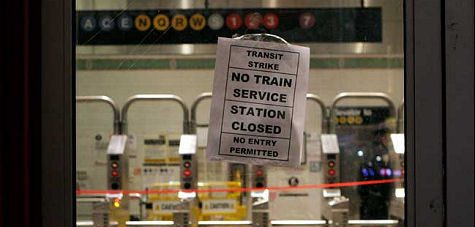
The only thing stopping me from seeing Terry Zwigoff’s Art School Confidential at an uptown screening room in Manhattan on Tuesday (12.20) was the transit strike…but of course, it didn’t.
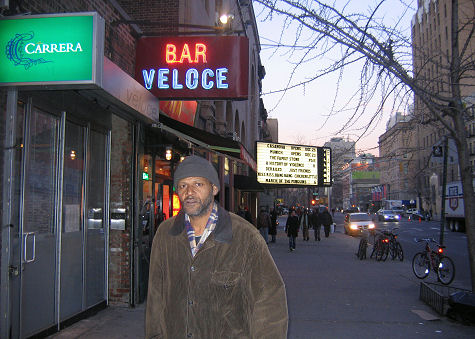
I decided to leg it or hitch it, so I started walking from Montrose and Bushwick around 3:45 pm, and I made it to Sony headquarters at Madison Avenue and 55th Street by 5:15 pm…piece of cake.
And then I walked back with two stops and made it home by 9:30 pm. About 140 blocks, give or take. I wouldn’t like it, but I could do this every day.
It was a little over a mile from my place to the Williamsburg bridge. It was brutally cold, in the mid 20s, and at first I was thinking that I might wimp out. But speed- walking kept me warm and I soon got used to it.


A lot of places claim to sell the world’s greatest burgers but Paul’s Burgers, on the east side of 2nd Avenue just south of St. Mark’s Place, is no pretender.

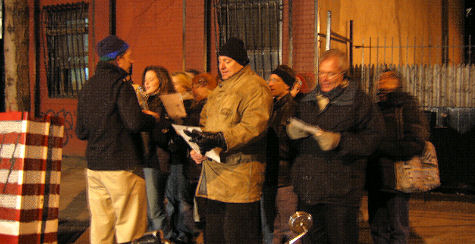
A dozen or so carolers on East 3rd Street near 1st Avenue, around 9 pm. People watching from their open apartment windows cheered when they finished. The group has no name — they’re just neighborhood locals, and they do this every year.

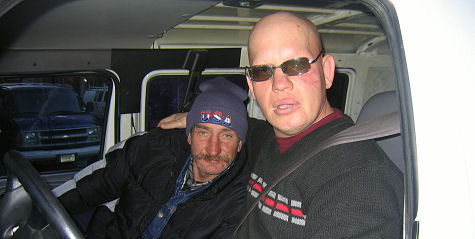
There were no empty cabs so I thumbed a ride because it can be murder walking over a big river with the icy wind and everything. A couple of guys driving a van for a Lower East Side bakery picked me up and dropped me at 1st Avenue and 3rd street. I also caught a ride over the bridge back to Brooklyn around 9 pm.
Crisis brings out the charity in people, and you can’t do better in a crisis than be in the company of New Yorkers.
The first ride put me ahead of schedule so I stopped for a quick one at Paul’s Bur- gers on 2nd Avenue just south of St. Marks Place.
On the way back on East 3rd Street I came upon a group of Christmas carolers singing “Hark, the Herald Angels Sing.” I took some shots and fell instantly in love with these guys. Others were stopping and, I gathered, having the same reaction. It sounds like a holiday cliche to say this, but it was a truly beautiful moment.


The two guys who picked me up on the Brooklyn side of the Williamsburg Bridge on Tuesday, 12.20.05, around 4:10 pm.

Looking up from northwest corner of Park Avenue and 38th Street — Tuesday, 12.20.05, 4:50 pm.

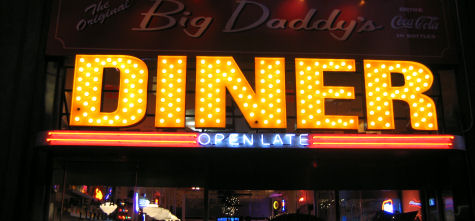
Big Daddy’s Diner, 239 Park Ave., New York, NY 10017

South-facing facade of Grand Central Station — Tuesday, 12.20.05, 4:45 pm.

Called on the Carpet

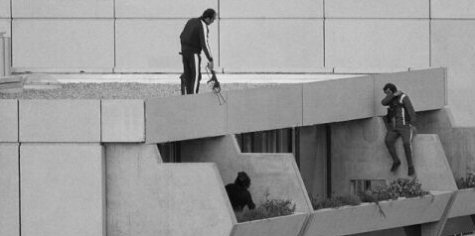
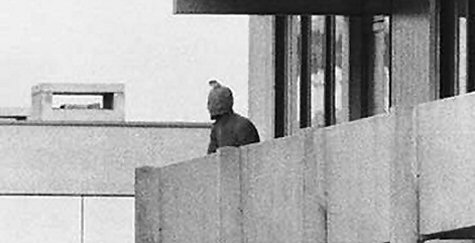
The New York Times‘ “Carpetbagger” blogger David Carr ran an item at 8:45 this morning (12.21) titled “Have the Terrorists Won?”
It read, “Munich, which got pounded coming out of the gate, seems to be enjoying a bit of a bounce. The L.A. Times columnist Patrick Goldstein still favors Broke- back, but says that Munich has a shot, in part because people are starting to see the movie instead of just the controversy.”
To which I have two things to say: (1) Munich is a pretty good film that hasn’t a chance because of all the people slamming it for being repetitious and tedious and all the politicos trying to kill it for its views about dealing with terrorism, and (2) Is the Carpetbagger me a “terrorist” and if he is, what the fuck?

I’m guessing that Carr is probably referring to the people who’ve written political attacks on Munich. But on the chance he might have been referring to me, I wrote Carr and said…
“So people taking the pulse of this town and setting their insect antennae to high-sensitivity mode and determining that the general response to Munich will not result in a Best Picture Oscar (and perhaps not even a Best Picture nomination) are ‘terrorists’?
“I get the inference (or I think I do) because you started out with a mention of the Goldstein column, which seemed to mainly address the Hollywood side of the rumpus.
“All I know is that I’m trying to read the situation as clearly as possible. I found Munich to be a pretty good film with a cruddy third act, but more importantly I’ve heard from the get-go that (a) others are less taken with it, (b) some Jewish Academy members are TRULY DOWN ON IT and loathe the political message it’s sending, (c) that the words ‘repetitive’ and ‘self-important’ apply.
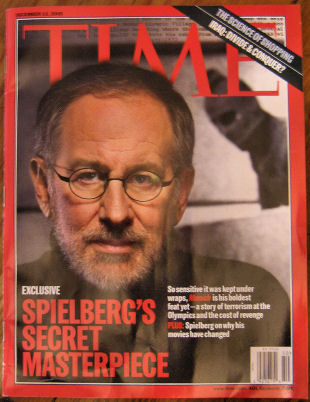
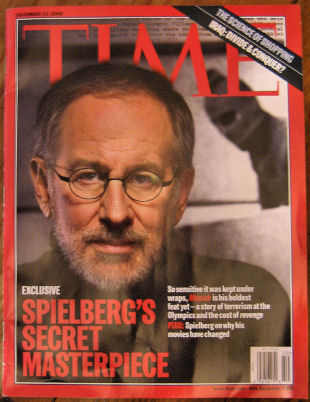
“I am also one of many who recoiled in distaste (and continue to recoil in distate) from that obnoxious Time magazine proclamation that Munich, lo and behold, is ‘Spielberg’s Secret Masterpiece.’
“Am I a terrorist-minded observer for — okay, I admit it — chuckling with satisfaction over the news media spectacle of a pseudo-legendary director with a massive ego…a legendary industry figure famous for commanding obeisance gestures from other primates with a mere arching of his eyebrows…being hit and possibly (who knows?) brought down?


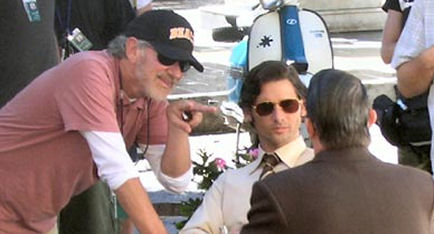
Mathieu Kassovitz, Eric Bana in Steven Spielberg’s Munich

“Am I a terrorist at heart because it frankly feels good inside to see Spielberg, a gifted director but also, his few excellent films aside, the most successful hack in Hollywood history…a man of obviously limited intellectual vigor with more money than God being tackled and taken down by guys in the trench? That’s a bad thing?
“We’re living in a very skewed, cynical and twisted world.
“All I am, really, is a man of constant sorrow whose days are sometimes briefly brightened when Munich implodings happen…and they don’t happen enough.
“This reasonably good movie has never been Oscar calibre, not really…and I hate it when people reflexively bend over to smooch Spielberg’s ass.
Munich is a fairly thoughtful, passably good film that says the right thing, agreed, but in a lot of journalist minds it has been a big presumptive Oscar pick from the get-go because it’s a Steven Spielberg film, because the subject is ‘important’ (i.e., about the fate of Israel), and above all because it’s being released in late December.
“And now there’s a backswing in its favor because people are taking a second look and…what?…feeling sorry for it because ‘terrorists’ have been over-zealous in their attacks?


Geoffrey Rush, Bana

“I guess I can confess the truth now. I’m actually a triple agent working for Univer- sal. The plan all along was to try and create a sympathy backlash for Munich by people like calling a spade a spade and predicting its downfall.
“Like the plan hatched by Marlene Dietrich to save Tyrone Power in Witness for the Prosecution, I told my Universal brown-bag employer (a guy I met after-hours in an underground garage in Century City) just after that disastrous Time cover that the ony way out would be for bloggers like myself to over-play the ‘Munich is toast’ card…only then would industry and media opinion eventually swing back in its favor.”

New Logo


It used to be Lions Gate — now it’s LIONSGATE. The change was announced last week at a pleasant press breakfast held at Lion’s Gate…I mean, LIONSGATE headquarters in Santa Monica.

Kong Shortfall

“I am from Mexico and the King Kong opened here last Friday. I went to see it on Saturday and expected a big line in a theater were you usually have to wait about an hour in line if you want to get a good seat for a tentpole flick. Anyway, I arrived an hour early and only half the seats had been sold, with the theater opening its doors with no line at all about half hour before the movie started.
“Eventually, I have to say, the theater did fill up, but it was kind of weird to see such a big movie performing like this in that theater during opening weekend.
“I’ve been kind of testing friends of mine about their eagerness to see this movie and the consensus is pretty discouraging. Most of my female friends just don’t care about it. And while some guys are certainly excited, most of them said that they would see it because it was the movie for the holidays, meaning that I got a vibe leaning more towards the likes of having to watch the movie instead of just wanting to.” — Pepe Ruiloba

Del Mar Nation

“I agree with your thoughts on Ennis Del Mar-ism. I’ve been and still am to a certain degree guilty of it, staying in a job that I like but not risking failure with something that I love. But I disagree that straight couples or straight people in general won’t be able to relate to this movie.
“The same thing that Ennis Del Mar wasn’t able to overcome in the movie is the same reason I think the general population might not want to see this movie or relate to it. Fear. Fear of the unknown. Fear of caring about or relating to people who engage in acts seen as a sin in the eyes of God.
“But the theme of love is universal. Our search for meaningful relationships is universal. We all do it. Sometimes searching our whole lives. And I’d venture to say that most of us have been in the position of one or both of these characters; loving someone so wholly who couldn’t love you back or being in a relationship with someone who you couldn’t give what they wanted. Everyone has loved. And anyone who denies it is a liar.

“The thing that hit me hardest and what grieved me the most, though, is how legitimate I felt Ennis Del Mar’s fear actually was. The flashback sequence of him as a child seeing what he saw. Living in a time when being gay was kept totally in the closet. Not to mention being in Bumblefuck, Wyoming, where I’m sure there isn’t much if any of a gay community. And being in a place where people STILL aren’t too accepting of that lifestyle.
“My sadness came not because I can personally relate (I’m a straight white male), but because I feel empathy for people who have to live with this kind of conflict. Growing up to believe it’s wrong and yet still feeling it. Feeling such a strong connection for someone but being afraid you’ll be outcast or worse beaten or killed. This shit happens for real. Can we say Matthew Shepard just to name one?
“And it’s not fair. What do I have to deal with being a white, heterosexual, middle-class male? Practically nothing. I can love who I want to. I won’t be judged by the color of my skin or who I choose to have sex with. I won’t be compromised because I’m female. I’m priveleged. But that doesn’t mean I think it’s right and don’t feel or think about the people who aren’t.
“If people can get over their own fears relating to homosexuality and put those aside, and to see the movie for what it really is — a tragic love story — then they can easily relate to the themes in this movie and be moved by it.” — Josh Bihary

p.s.: I think the Brokeback Mountain numbers speak for themselves and I hope this movie does well and gets the support it deserves come Oscar time. Super high per screen averages over two weekends. $2 million from 69 screens! That’s pretty impressive if you ask me.
“I personally went to see it Sunday evening in Seattle and at the Egyptian theater for the 7pm show the line was literally down the block and around the corner. We went to the other theater it was playing at, the Harvard Exit, and immediately got in line. Within 15 minutes, the line was nearly as long.
“I even saw older folks in line as well. If it can keep this kind of interest up, it will easily make its money back and then some.”

Grabs


Former Hollywood Elsewhere columnist Jett Wells, a senior at Brookline High Schhol, during track meet in indoor Roxbury track stadium — Sunday, 12.18.05, 1:15 pm.

Poinsettias on front porch area of Le Pain Quotidien at Melrose and Westbourne

The great Werner Herzog (Grizzly Man, The White Diamond) during chat at Director’s Guild last Friday, 12.16.05, 12:45 pm.

Kong Badness

I don’t want to start off on the wrong foot here. I’m a fan of Peter Jackson’s King Kong…after the 70-minute mark. A modified fan, I should say, because I’m not over-the-moon about it. I liked the rousing CG stuff and the emotional stirrings during the scenes between Kong (i.e., Andy Serkis) and Naomi Watts…but let’s not get carried away.

The point is that this 187-minute movie is full of bits that drive me up the wall, and now that Kong has run into a slowdown at the box-office and I’ve gotten my Jack- son mea culpa out of the way, it’s okay to be cut him down again. I felt a certain muted admiration for Jackson in early December after I’d first seen Kong, and I have to admit it feels more comfortable and natural being in a bash mode.


The once-celebrated, now-being-scrutinized Bronto run sequence in Peter Jackson’s King Kong

How do I vaguely detest thee, Kong? Going from the top…

* Jackson should have included an overture of Max Steiner’s music as a soundtrack-only supplement on the front of the film, to be heard in semi-darkness before the Universal logo and the credits come on, etc. This happened when I first saw Kong at the Academy theatre on the evening of Sunday, 12.4, and Steiner played like gangbusters.

* Captain Englehorn is an Idiot, Part 1: The German-born skipper (Thomas Kretschmann) presumably knows Jack Black’s Carl Denham desperately needs a fetching actress to come along on the voyage and presumably wants Denham to succeed so he’ll get fully paid, and yet the first thing he says when he meets Naomi Watt’s Ann Darrow is to express surprise that she “would take such a risk.”

* The ship is pulling out of the harbor and Adrien Brody’s Jack Driscoll is so keen on getting paid that he doesn’t feel the engines rumbling and the ship moving? He doesn’t say anything to the check-writing Denham as the ship is obviously leaving the wharf?

* Captain Englehorn is an Idiot, Part 2: Since he tells Denham that the first check bounced, it can be assumed that he hasn’t been paid a dime. And yet he’s taking his ship and crew on a long and very expensive sea voyage, trusting that a guy he obviously doesn’t trust will cough up later on.

* That ominous music on the soundtrack and that dumb-ass look of alarm on that actor’s face (is it Evan Parke’s or some other guy’s?) when those bottles of chloroform roll out from the animal cage in the ship’s storage area.


The completely idiotic Capt. Englehorn (Thomas Kretschmann, second from left with hat) contemplating the Big Wall

* All of that prolonged bonding crap between Evan Parke and Jamie Bell, and those mentions of Joseph Conrad’s “Heart of Darkness”…a complete bore and a waste of time.

* Captain Englehorn is an Idiot, Part 3: As they sail the Indian Ocean he tells Denham he’s going to drop him off at the nearest Asian port since he’s just gotten a radio message that there’s a warrant out for Denham’s arrest…which will make certain that Englehorn will never get paid and will be stuck for the cost of the voyage out of his own pocket.

* Captain Englehorn is an Idiot, Part 4: As they approach Skull Island Engle- horn is told that the depth is getting shallower and shallower, and yet he proceeds right ahead and smashes the ship into the rocks.

* The area of Skull Island protected by the big wall is all rock even though the rest of the island is all prehistoric flora…green, fertile, covered in overgrowth. How does that work exactly? I’ll tell you how it works. Jackson and co-screen- writers Fran Walsh and Philippa Boyens decided that the villagers live on a barren rocky peninsula.

* The Skull Island natives are ridiculous gargoyles trying to act as deran- ged and bizarre as possible because Jackson told them to do this. (Being unencumbered by matters of taste and restraint allows for all kinds of creative decisions.) I mean, some of the islanders are obviously white New Zealanders with blue or gray eyes and brown-skin makeup, and some look African-American…and it’s all bullshit.

* A Skull Island native is going to pole-vault from the island to Englehorn’s ship in order to abduct Darrow?

* The Skull Islanders are going to use a sophisticated cranking-crane system made of wood and vines and crude rope in order to lower human sacrificial offerings to Kong over the gorge behind the big wall?. Jackson came up with this idiotic contraption because he didn’t want to copy the sacrifice sequence in Merian C. Cooper’s original film too closely…period.

* The more I think about the Bronto run sequence, the more absurd it seems. This bit was cool the first time and I went with it, yes, but there’s no way those guys running under the bellies and legs of the dinosaurs wouldn’t be ketchup.

* Jackson portrays Kyle Chandler’s Bruce Baxter character as a narcissist and a coward in the early stages of the hunt on Skull Island. His defining act is to return to the ship early after chickenheartedly rationalizing that Darrow is almost certainly dead. And yet he switches gears a half-hour later by convincing Englehorn and a few others to return to the treacherous jungle terrain to help Driscoll and the survivors of Kong’s attack, and they arrive just in time to start shooting at the bugs in the pit.

* Jackson’s two snotty references to the 1933 Merian C. Cooper film. He has Darrow and Baxter say the dialogue from a romantic scene in the ’33 film as a way of saying to the audience, “Listen to that hokey dialogue.” And in Denham’s New York stage show in Act Three he recreates the look of Cooper’s Skull Island char- acters and has them do that bent-over Kong sacrifice dance.
There is no inspiration in the context of the film for this — it’s just another indulgent Peter Jackson wank. And he’s clearly making a point that Cooper’s film is hokey and antiquated, and that his is far more on top of it.

And Yet…

A guy named Steve Clark wrote last week insisting that Kong “is not a master- piece but jeez, I guess that very lack of discipline helps push it to greatness. It is a great film partly because it is so out of control, imperfect and undisciplined.
“My friends think I’m retarded. They said it was all ‘too much’ and ‘too long.’ But if this Kong weren’t too much, something would have been seriously amiss. Or at least routine. Though when I say this all I feel are people wincing at me. I feel like Armond White!

“This film is an orgy of excess and if it weren’t three hours long with too much action, it would be a lesser film. It needs to be too much but only in the right way. I think the movie is a bloated, brilliant fucking mess, but it’s a great film.
“Why? Partly because it goes semi-meta toward the end, critiquing itself, replay- ing itself as a horrible Broadway production; it lashes out at the audience for swallowing it whole.
“But most importantly, its corny old controlling idea works wonderfully. The rela- tionship between Naomi Watts and Kong is a heartbreaker. This is Peter Jack- son’s Apocalypse Now…and it’ll be all downhill from here on. (I’m speaking as a fan who thinks the LOTR films are his Godfather trilogy…sorry.)
Jack Black = psychotically super-indulgent, obsessive filmmaker = Peter Jackson!”

Decision

Tuesday Trek

The only thing stopping me from seeing Terry Zwigoff’s Art School Confidential at an uptown screening room in Manhattan on Tuesday (12.20) was the transit strike…but of course, it didn’t.
I decided to leg it or hitch it, so I started walking from Montrose and Bushwick around 3:45 pm, and I made it to Sony headquarters at Madison Avenue and 55th Street by 5:15 pm…piece of cake.
And then I walked back with two stops and made it home by 9:30 pm. About 140 blocks, give or take. I wouldn’t like it, but I could do this every day.
It was a little over a mile from my place to the Williamsburg bridge. It was brutally cold, in the mid 20s, and at first I was thinking that I might wimp out. But speed- walking kept me warm and I soon got used to it.


A lot of places claim to sell the world’s greatest burgers but Paul’s Burgers, on the east side of 2nd Avenue just south of St. Mark’s Place, is no pretender.

A dozen or so carolers on East 3rd Street near 1st Avenue, around 9 pm. People watching from their open apartment windows cheered when they finished. The group has no name — they’re just neighborhood locals, and they do this every year.

There were no empty cabs so I thumbed a ride because it can be murder walking over a big river with the icy wind and everything. A couple of guys driving a van for a Lower East Side bakery picked me up and dropped me at 1st Avenue and 3rd street. I also caught a ride over the bridge back to Brooklyn around 9 pm.
Crisis brings out the charity in people, and you can’t do better in a crisis than be in the company of New Yorkers.
The first ride put me ahead of schedule so I stopped for a quick one at Paul’s Bur- gers on 2nd Avenue just south of St. Marks Place.
On the way back on East 3rd Street I came upon a group of Christmas carolers singing “Hark, the Herald Angels Sing.” I took some shots and fell instantly in love with these guys. Others were stopping and, I gathered, having the same reaction. It sounds like a holiday cliche to say this, but it was a truly beautiful moment.


The two guys who picked me up on the Brooklyn side of the Williamsburg Bridge on Tuesday, 12.20.05, around 4:10 pm.

Looking up from northwest corner of Park Avenue and 38th Street — Tuesday, 12.20.05, 4:50 pm.

Big Daddy’s Diner, 239 Park Ave., New York, NY 10017

South-facing facade of Grand Central Station — Tuesday, 12.20.05, 4:45 pm.

Called on the Carpet

The New York Times‘ “Carpetbagger” blogger David Carr ran an item at 8:45 this morning (12.21) titled “Have the Terrorists Won?”
It read, “Munich, which got pounded coming out of the gate, seems to be enjoying a bit of a bounce. The L.A. Times columnist Patrick Goldstein still favors Broke- back, but says that Munich has a shot, in part because people are starting to see the movie instead of just the controversy.”
To which I have two things to say: (1) Munich is a pretty good film that hasn’t a chance because of all the people slamming it for being repetitious and tedious and all the politicos trying to kill it for its views about dealing with terrorism, and (2) Is the Carpetbagger me a “terrorist” and if he is, what the fuck?

I’m guessing that Carr is probably referring to the people who’ve written political attacks on Munich. But on the chance he might have been referring to me, I wrote Carr and said…
“So people taking the pulse of this town and setting their insect antennae to high-sensitivity mode and determining that the general response to Munich will not result in a Best Picture Oscar (and perhaps not even a Best Picture nomination) are ‘terrorists’?
“I get the inference (or I think I do) because you started out with a mention of the Goldstein column, which seemed to mainly address the Hollywood side of the rumpus.
“All I know is that I’m trying to read the situation as clearly as possible. I found Munich to be a pretty good film with a cruddy third act, but more importantly I’ve heard from the get-go that (a) others are less taken with it, (b) some Jewish Academy members are TRULY DOWN ON IT and loathe the political message it’s sending, (c) that the words ‘repetitive’ and ‘self-important’ apply.
“I am also one of many who recoiled in distaste (and continue to recoil in distate) from that obnoxious Time magazine proclamation that Munich, lo and behold, is ‘Spielberg’s Secret Masterpiece.’
“Am I a terrorist-minded observer for — okay, I admit it — chuckling with satisfaction over the news media spectacle of a pseudo-legendary director with a massive ego…a legendary industry figure famous for commanding obeisance gestures from other primates with a mere arching of his eyebrows…being hit and possibly (who knows?) brought down?


Mathieu Kassovitz, Eric Bana in Steven Spielberg’s Munich

“Am I a terrorist at heart because it frankly feels good inside to see Spielberg, a gifted director but also, his few excellent films aside, the most successful hack in Hollywood history…a man of obviously limited intellectual vigor with more money than God being tackled and taken down by guys in the trench? That’s a bad thing?
“We’re living in a very skewed, cynical and twisted world.
“All I am, really, is a man of constant sorrow whose days are sometimes briefly brightened when Munich implodings happen…and they don’t happen enough.
“This reasonably good movie has never been Oscar calibre, not really…and I hate it when people reflexively bend over to smooch Spielberg’s ass.
Munich is a fairly thoughtful, passably good film that says the right thing, agreed, but in a lot of journalist minds it has been a big presumptive Oscar pick from the get-go because it’s a Steven Spielberg film, because the subject is ‘important’ (i.e., about the fate of Israel), and above all because it’s being released in late December.
“And now there’s a backswing in its favor because people are taking a second look and…what?…feeling sorry for it because ‘terrorists’ have been over-zealous in their attacks?


Geoffrey Rush, Bana

“I guess I can confess the truth now. I’m actually a triple agent working for Univer- sal. The plan all along was to try and create a sympathy backlash for Munich by people like calling a spade a spade and predicting its downfall.
“Like the plan hatched by Marlene Dietrich to save Tyrone Power in Witness for the Prosecution, I told my Universal brown-bag employer (a guy I met after-hours in an underground garage in Century City) just after that disastrous Time cover that the ony way out would be for bloggers like myself to over-play the ‘Munich is toast’ card…only then would industry and media opinion eventually swing back in its favor.”

New Logo


It used to be Lions Gate — now it’s LIONSGATE. The change was announced last week at a pleasant press breakfast held at Lion’s Gate…I mean, LIONSGATE headquarters in Santa Monica.

Kong Shortfall

“I am from Mexico and the King Kong opened here last Friday. I went to see it on Saturday and expected a big line in a theater were you usually have to wait about an hour in line if you want to get a good seat for a tentpole flick. Anyway, I arrived an hour early and only half the seats had been sold, with the theater opening its doors with no line at all about half hour before the movie started.
“Eventually, I have to say, the theater did fill up, but it was kind of weird to see such a big movie performing like this in that theater during opening weekend.
“I’ve been kind of testing friends of mine about their eagerness to see this movie and the consensus is pretty discouraging. Most of my female friends just don’t care about it. And while some guys are certainly excited, most of them said that they would see it because it was the movie for the holidays, meaning that I got a vibe leaning more towards the likes of having to watch the movie instead of just wanting to.” — Pepe Ruiloba

Del Mar Nation

“I agree with your thoughts on Ennis Del Mar-ism. I’ve been and still am to a certain degree guilty of it, staying in a job that I like but not risking failure with something that I love. But I disagree that straight couples or straight people in general won’t be able to relate to this movie.
“The same thing that Ennis Del Mar wasn’t able to overcome in the movie is the same reason I think the general population might not want to see this movie or relate to it. Fear. Fear of the unknown. Fear of caring about or relating to people who engage in acts seen as a sin in the eyes of God.
“But the theme of love is universal. Our search for meaningful relationships is universal. We all do it. Sometimes searching our whole lives. And I’d venture to say that most of us have been in the position of one or both of these characters; loving someone so wholly who couldn’t love you back or being in a relationship with someone who you couldn’t give what they wanted. Everyone has loved. And anyone who denies it is a liar.

“The thing that hit me hardest and what grieved me the most, though, is how legitimate I felt Ennis Del Mar’s fear actually was. The flashback sequence of him as a child seeing what he saw. Living in a time when being gay was kept totally in the closet. Not to mention being in Bumblefuck, Wyoming, where I’m sure there isn’t much if any of a gay community. And being in a place where people STILL aren’t too accepting of that lifestyle.
“My sadness came not because I can personally relate (I’m a straight white male), but because I feel empathy for people who have to live with this kind of conflict. Growing up to believe it’s wrong and yet still feeling it. Feeling such a strong connection for someone but being afraid you’ll be outcast or worse beaten or killed. This shit happens for real. Can we say Matthew Shepard just to name one?
“And it’s not fair. What do I have to deal with being a white, heterosexual, middle-class male? Practically nothing. I can love who I want to. I won’t be judged by the color of my skin or who I choose to have sex with. I won’t be compromised because I’m female. I’m priveleged. But that doesn’t mean I think it’s right and don’t feel or think about the people who aren’t.
“If people can get over their own fears relating to homosexuality and put those aside, and to see the movie for what it really is — a tragic love story — then they can easily relate to the themes in this movie and be moved by it.” — Josh Bihary

p.s.: I think the Brokeback Mountain numbers speak for themselves and I hope this movie does well and gets the support it deserves come Oscar time. Super high per screen averages over two weekends. $2 million from 69 screens! That’s pretty impressive if you ask me.
“I personally went to see it Sunday evening in Seattle and at the Egyptian theater for the 7pm show the line was literally down the block and around the corner. We went to the other theater it was playing at, the Harvard Exit, and immediately got in line. Within 15 minutes, the line was nearly as long.
“I even saw older folks in line as well. If it can keep this kind of interest up, it will easily make its money back and then some.”

Grabs


Former Hollywood Elsewhere columnist Jett Wells, a senior at Brookline High Schhol, during track meet in indoor Roxbury track stadium — Sunday, 12.18.05, 1:15 pm.

Poinsettias on front porch area of Le Pain Quotidien at Melrose and Westbourne

The great Werner Herzog (Grizzly Man, The White Diamond) during chat at Director’s Guild last Friday, 12.16.05, 12:45 pm.
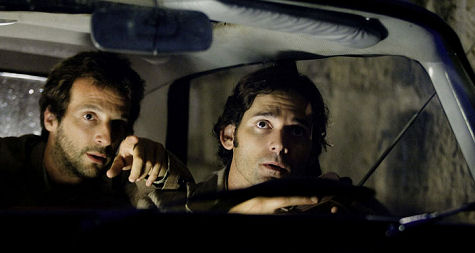
Audio chat will run on Elsewhere Live Thursday evening at 5 pm Pacific, and reside thereafter in the archives.

Del Mar Nation

Del Mar Nation

Brokeback Mountain is starting to spread out (it went into 69 theatres on Friday), and that means that sooner or later those gay cowboy jokes on “Late Night with David Letterman” and in Aaron McGruder’s “Boondocks” comic strip will be coming to an end.
The more people see Brokeback, the greater the likelihood that a certain percen- tage will start to understand that gay cowboys and high-altitude pokin’ in the pup tent ain’t the point. It’s a way into the film’s real subject, which is the terrible price of letting a good thing go.


Jake Gyllenhaal, Heath Ledger in Ang Lee’s Brokeback Mountain

I mean the tragedy of a person feeling love or passion for something (a relationship, a career ambition, a creative dream) and not doing anything about it. If this movie sinks in like it’s meant to, it’ll hit you on the way home that turning away from a good and spiritually nourishing pursuit in whatever form is the saddest ride in the world.
The most tragic of Brokeback‘s frustrated cowboy lovers is Heath Ledger’s Ennis del Mar because he’s the most heavily invested in denial and pushin’ it all down. I’ve known a lot of people in a lot of cities and towns, and there are tens of thousands of Ennis del Mars out there…guys holdin’ down jobs, mindin’ the kids, pluggin’ along and not diggin’ into that special place.
< ?php include ('/home/hollyw9/public_html/wired'); ?>
And doin’ some heavy deep-down witherin’. Everyone has a secret unfulfilled dream but how many step up and try to really grab it? Damn few.
I would submit, in fact, that Ennis del Mar-ism is the hurtin’-est American tragedy of all. As spiritual killers go, it’s worse than poverty or bad luck or divorce or depression or whatever substance addiction you can name.
Getting stuck in one of these issues needn’t be more than a temporary sidetrack thing…waist-deep quicksand…but failing to embrace that One Big Thing in your life is terrible permanent rain.
I’ve been there myself. I was almost Ennis del Mar before I got going in journalism in the late ’70s. Every now and then I feel like him in an emotional sense… shut down, doin’ the work, keepin’ it together so I can wake up the next day and do the same thing.

I’ve known lots of late-30ish and 40ish guys in smallish towns in Connecticut, Massachucetts, New Jersey and northern California who fit the Ennis mode more fully than myself….way.
A guy I know says he doesn’t relate to del Mar-ism because he doesn’t feel put-upon by life. He futher believes that most of the Academy members are the same.
To get into the Motion Picture Academy you have to be a go-getter, and these people won’t relate to the sadness of a uneducated loser who lacks the gumption to stand up and try to cure what’s ailing him. I don’t think Academy people are anywhere near that shallow, but he could be right.
It might also be that straight American males everywhere along with their wives will blow off Brokeback Mountain and never even consider that it’s much more about them more than a couple of cowpoke queers. It would be a shame if that happened, but it might.
I’d like to hear some thoughts about this, and if any good ones come in I promise to actually run them.

Slash Girls

“Just a comment about straight men and their wives not going to Brokeback Mountain. Jeffrey, their wives will be going with the other wives. The straight husbands can stay home, hon.
“I’m constantly amazed by the perception of many men, straight and gay, that women ‘won’t be attracted to guy/guy action.’ Do these guys ever get out and ask women about this? Roger Ebert said it the other night on some show, and Roeper agreed. Women just ‘don’t get off on guys kissing.’
“Well, hello…wrong. So so wrong. We just love it. Can’t get enough. Not all of us to be sure, but sufficient numbers for there to be thousands of websites dedicated to the phenomen called ‘slash.’ Mostly derived from television shows and films, but many other fan fics and genuine gay romances.


Heath Ledger, director Ang Lee during Brokeback Mountain shoot

“This is our movie…the slash movie we women have been waiting for forever. We own this film just as much as the gay guys, which makes for some fascinating territorial stakeouts and debates at times on the boards. But we generally enjoy the debates cuz we’re all really on the same side here.
“And we’re gonna be there in droves. Some of us will see it 10 or 20 times. It’s hot. That idiot publicist who said Jake Gyllenhaal’s career would be down the tubes because his teen fanbase would disown him should get a new job. His fanbase will multiply tenfold among women with this film.
“Women write about guy/guy action, guy/guy romance, and they buy gay porn and go to gay movies. And most of the women are straight, married (happily) and thirty to seventy.
“Do you know? Have you heard about this? If so, perhaps you might include it in a later column to just enlighten those poor guys who don’t know what their women are secretly fantasizing about.
“I’m from Australia by the way and will see Brokeback Mountain in a month with some girlfriends. My husband won’t go near it.” — Mandy Bartels, Melbourne.

“Later” Factor

“I still think the main reason behind Kong‘s good-but-not- great opening is the running time. And it’s not just because it has fewer shows per day.
“Of all the big critics, I think Richard Roeper is the first one I’ve heard to finally get it. Going to the movies is becoming an ordeal. Rude crowds, too many ads, ticket and concession prices through the roof, etc. Now tack on the fact that Kong is over three hours.
“What normal person (i.e. non-movie critic) can take that much time off on a weeknight, or during a busy holiday weekend? Throw in the walk from the parking lot (which in the big entertainment complexes like Universal can take 15 minutes) and the ads/trailers and you’re literally killing half a day.
“I know the Harry Potter and Rings flicks ran long, but they had a built-in audience that came aboard before the ‘big chill.’ Any new movie running more than 2 1/2 hours had better be pretty damn special. And the must-see factor for Kong, at least around here, just isn’t there.
“It’s basically seen as a bunch of critical darlings and B-list stars in a remake of a movie everyone has seen featuring a lot of been-there-done-that Lost World special effects. Of course, we know it rises above that level, but it’s going to be a chore to get people out to realize it.
Kong will make back its money, but only after everyone buys it on DVD to play on the home theater system they got for Christmas. Then folks can play it at their leisure, maybe an hour at a time, where they can fast-forward through the ads and not have to listen to someone chatting on her cell phone.” — Rich Swank

Kong vs. Females

“A reader suggested that King Kong‘s less-than-stellar business so far is due in part to ‘average female moviegoers being too shallow to be brought into the theater without a pretty face.’
“I think that statement is a little shallow. I probably won’t see Kong this weekend for a bunch of reasons, none of which has to do with pretty or unpretty faces.
“One, I’ve already seen this movie. I know, I know…it’s been reconfigured masterfully for a new age and audience. But what made that first movie so cool was that first shock when the soon-to-be-sacrificed Faye realizes exactly what she is being sacrificed to. When Kong turns the corner and comes into view…wow! And Kong climbing up the tallest building in the world to make his last stand? Also very cool. But alas, in 2005…been there, done that.

“Two, I’ve seen enough in the way of dinosaur chases and predatory behavior in Jurassic Park and its lame sequels to last a lifetime. And throwing Kong in as an adversary will not, I think, make them more interesting (a view that seems to be shared by a good number of critics who point out that the CG fights in this new film go on way too long).
“Three, and the biggest reason: I just don’t like non-verbal romances regardless of what the faces of the leads look like. Give me that artful banter back and forth between the leads in a romantic comecy or the heartfelt linguistic nuances of separation and loss in a weeper. Soulful glances can only go so far and this ape has never been much for conversation.
“Intelligent, heartfelt conversation between two people gets me every time. (You know, like that terrific conversation on wine and grape- growing in Sideways between Madsen and Giamatti, that guy who pulled in the female contingent with his pretty face.)” — Zoey

…And This Brooks Guy

“I went to see King Kong this afternoon and I have to say that for me this movie just did not work. I enjoyed the Lord of the Rings films, although I’m not a huge fan, and was looking forward to Kong but this thing is at least 45 minutes too long. The beginning dragged on forever. I think that is what is going to hurt the film the most.
“By the time you get to the island you just don’t care that much. The effects for the most part are great, Kong was especially well done, but a little restraint would have made this a much better film.
“Why do directors, once they have some success, think that every scene and every shot is pure gold? I have the same complaint about Spielberg. He needs someone to trim his movies down a bit. They’re always about 20 minutes longer than necessary.

“I actually watched the original Kong a few weeks ago on Turner Classic Movies, and in some ways I prefer the original. They knew what type of movie they were making. They didn’t inflate it to something it’s not.
“The thing I resented most about Jackson’s remake what that he tried so hard to make you cry. I took my wife, who cries at the drop of hat for any movie, and she didn’t shed a tear.
“I could feel the audience growing restless as the picture went on. If you go to enough movies you can tell when people are not getting into a film. I don’t think it’s going to get the repeat business Universal hopes that it will. By the end I was sitting waiting for Kong to die just so I could out of the theater.” — Steven Brooks

World Class

Much of Terrence Malick’s The New World (New Line, 12.25) is masterful, and I’m not just blah-blahing. It’s sensually mesmerizing and caressed with my idea of real genius. It is also, commercially speaking, a kind of kamikaze film, in part because of a certain call made by Malick regarding the love-story plotline.
Ten days away from its Christmas Day opening and if I know anything, The New World is fixin’ to die. Plus there’s no critics-group awards to sustain interest among the cinefiles or any hope of above-the-line Oscar nominations in January. But forget all of this because The New World should absolutely be seen.


Colin Farrell in Terence Malick’s in The New World

It’s the kind of half-great movie that is more than worth the ride because of it has so many wondrous elements. The photography and textures and aromas are nearly all, and for a while they’re nearly enough. The New World may leave you feeling betrayed, but you won’t feel undernourished.
Endings are everything, and the final third of this film (lasting roughly 40 minutes) doesn’t make it at all. Because Malick, gifted but mule stubborn, is off in his own realm, and the task of supplying a story that you and your friends might want to see isn’t worth his heavy-cat consideration.
The New World‘s drawn-out, epilogue-like final act is, in fact, an example of abrupt story betrayal and audience abandonment. It should be picked over in filmmaking classes at USC and NYU in years to come as a lesson in what a director looking to survive in the world of commercial filmmaking should never ever do.
A few weeks ago The New World producer Sarah Green told the New York Times that “first and foremost we’ve created a love story.” This is unmistakably true for the first 100 or so minutes, and in a near-revolutionary sense.
The legendary, historically fanciful saga of British explorer John Smith (Colin Farrell) and the teenaged Pocahantas (Q’orianka Kilcher) in early 1660s Virginia feels vitally alive and re-imagined as a kind of naturalist culture-clash love story… largely non-verbal, visually haunting…primal atmosphere seeping out of every frame.


Colin Farrell, Q’oiriana Kilcher

Green also told the Times, “We’re definitely not doing a historical piece. We try to set it properly…we try to give that background and that feeling, but we focus on the love story.” As far as the last act is concerned, that’s a distortion.
The Farrell-Kilcher love story is totally abandoned (and in a very brusque and alienating way at that) and the film pretty much sticks to the historically accepted story of Pocahantas’ life for the last third — marriage to a wealthy English tobacco grower named John Rolfe (Christian Bale), bearing a child, travelling to England to meet the King and Queen, and an early death.
The failure of The New World ending is entirely due to the fact that this final section plays like a postscript. But for those first two thirds, The New World is a truly rare animal and movie like no other…a feast of intuitive wow-level naturalism that feels as fresh and vitally alive as newly-sprouted flora.
This is the forest primeval, all right…the native Americans (“naturals”) and English settlers eyeballing each other amid the mumuring pines and hemlocks, and then prodding, spearing, shooting and finally accepting each other in a step-by-step evolving cultural passion play.
I’ve respected Terrence Malick as a genius all of my filmgoing life. I knew that before but I was reminded once again when I sat down with this film in late November. And I’m truly glad to live in a world that gives up a Malick film every five or six years.

But he’s so imbedded in his own head that he can’t deliver a halfway satisfying commercial movie. I don’t mean formulaic. I mean a film that simply satisfies like his two best films, Badlands and Days of Heaven, did 32 and 27 years ago, respectively.
I was going to say Malick is a “compositional” genius rather than an overall genius, but I have to repeat that the first 100 minutes of The New World were, for me, truly exquisite. Exquisite in the way that profound visual art always is.
The film is heart-stoppingly beautiful at times. The acting is all about eyes and faces and initmations…hardly anyone says anything, and most of the dialogue arrives in the form of internal narration.
The only person who speaks from the diaphragm in complete sentences with any clarity is costar Christopher Plummer. Everyone else and every plot turn is conveyed in mutters, whispers and meditative voice-overs. You get what’s happening bit by bit but Malick refuses to spell anything out in Hollywood connect-the-dots terms.
The feeling of primal aliveness in this film is a real pore-opener. Call it an aura of naturalism — a feeling that you’re really and truly there with the moisture and the mud on your feet…the grime and hard work and smell of the leaves and the soil….the worshipping of nature’s magnificence and terror. It really and truly is Virginia in the 1600s coming off the screen and sinking into your eco-system.


Q’orianka Kilcher

There’s a truly wondrous sequence about Farrell having been accepted into Pocahantas’s tribe and taking part in their rituals. And there’s a truly amazing battle scene in which you don’t see the big picture, but how it is to be right in the middle of it. Extraordinary isn’t the word.
There’s no Hollywood crap in any of it. This is a kind of filmmaking you’re just not going to get from anyone in the mainstream realm. I wasn’t just impressed with the first 100 minutes or so. I was close to levitating at times.
James Horner’s fugue-like music is startling — a kind of a droning thing with one or two notes played continuously, like some kind of foghorn symphony.
Emmanuel Lubezki’s cinematography, Jack Fisk’s art direction, the set decoration by Jim Erickson (those ships!) and costumes by Jacqueline West, and the sometimes mind-spinning editing by Richard Chew, Hank Corwin, Sara Klein and Mark Yoshikawa…what a magnificent thing to sink into.
And then about 100 minutes in, Malick drops the bomb, pulls the rug out and leaves you emotionally stranded without a love story to hang onto. But before I explain…

Spoiler Alert!
Farrell’s Smith decides that he and Kilcher are doomed because their cultures are so at odds and her association with him will only cause her harm. So he does the hard thing and blows her off.
Love stories, of course, are about overcoming odds,but there’s no such effort here, much less an effort on Malick’s part to clearly explain Smith’s thinking. The way it plays is that Farrell does a cold and shitty thing by abandoning Kilcher for the sake of career opportunism, since he’s been offered an assignment to explore the northeast territories.
And Farrell doesn’t even break the news to her straight, like a man of some marginal tenderness or compassion (which is how he’s been portrayed up to this point) might do. He doesn’t even say, “Sorry, gotta move on”…which would have been bad enough. Farrell just bails, but before doing so gets Noah Taylor (the Shine and Almost Famous guy) to tell her after a couple of months that he’s drowned.
I liked Farrell up to that point and really invested in the thing he and Kilcher had together, but blowing her off like that and skipping out the back door is unconscionable. I turned on him and the movie at that point. I said to myself, “Did that just happen?”
So Malick carefully builds the love story, weaving it into the whole, and then he pulls the rug out and shifts gears in order to tell the historically true tale about Pocahantas marrying and having the kid and going to England and all.

This is a shitty development to throw into a movie that gives every indication (on top of Sarah Green’s earnest statements to the New York Times) it’s primarily about the Colin-and-Q’orianka love story…which the poster in the lobby obviously declares.
Am I saying I want to see the animated Disney Pocahantas all over again but with Malick-y textures and mood and photography and real actors? No. I want a third option of some kind.
I wanted a little Days of Heaven thrown in, perhaps. When Christian Bale came along, I said to myself (and another person who was at the screening told me they had the same reaction), “Oh, I get it…Bale is Sam Shepard in Days of Heaven. And Farrell is going to come back and somehow redeem himself in her eyes and Bale or Farrell will have a showdown and maybe one of them will die.”
But that’s not it. And how could Farrell redeem himself anyway? A tough thing, given what he’s done to Kilcher, particularly the way he’s done it.
I felt profoundly invested in Farrell and Kilcher, dammit, and since part of me is a 17 year-old girl munching popcorn, it felt seriously, criminally wrong to throw their love story out like the garbage.

Malick does a wonderful job of making me care about these two because he does it so unusually and with such feeling, not just in the two of them but their merging within his nature suite….and then he simply stops caring about them.
Blanche Dubois said it: deliberate cruelty is not forgivable. And Farrell breaking that poor teenage girl’s heart is that.
If you were sitting around a campfire and somebody told you the story of The New World, you’d probably say, “That’s a love story? It’s not even a good story. It starts one way and then goes another way and doesn’t pay off.”
Which is kind of what someone in the lobby after the screening that I attended: “Yeah….what was that?”
An industry friend says it’s the kind of film in which “you come out humming the sets.” His first reaction last night was, “Malick doesn’t know how to tell a story. He’s totally stuck on himself and he’s living in his own realm.”
I said to a friend right after seeing it, “This is the kind of movie made by a guy who’s spent way too much time in his his oak-panelled library, reading books and smoking a pipe and looking out upon the grounds at sunset.”

That friend told me I’m missing the point and the film is actually about assimilation. Okay, I can see that. And I can just imagine the over-25s, couples and upscales coming out of the theatre and saying, “That was one great movie about cultural assimilation!”
So Terrence Malick is a genius, but a genius who needs a like-minded but tough and practical producer who can stand up to him and talk back when it’s appropriate and call his creative bluff when push comes to shove…and he didn’t have that here.
Read again the story about how Bert and Harold Schneider made him trim Days of Heaven from a three-hour or two-and-a-half-hour cut to 97 minutes, which is how long that beautiful film lasts.
Even Mike Medavoy, who’s known Malick for decades, couldn’t wrestle Terry to the ground and make him trim The Thin Red Line into a tighter, less meditative thing. (The script was much leaner thanj the film…the emphasis that the film had on alligators, leaves and trees and all that meditative “who are we and why do we create such havoc in our lives?” narration crap wasn’t there…I read it and I know.)
And if Medavoy couldn’t get to Malick, you know Sarah Green couldn’t. It’s pretty clear that The New World wasn’t made with any ideas of regular-Joe audiences finding their way into it. It’s about Malick’s vision and nothing much beyond that. That’s the wonder and frustration of it.

Best and Worst of `05

I can’t do a Ten Best of ’05 of list — the number has to be fourteen. And I had to include 28 films on the “Pretty Damn Good” roster, and I had to make a special mention of Terrence Malick’s stunningly see-worthy shortfaller, The New World.
That’s a total of 43 very good-to-sublime films released this year, or a little less than one every nine days. Not a bad tally, and arguably one of the more distin- guished in recent years, and with the makings of a rip-snortin’ Oscar fight in January and February.


Heath Ledger, Jake Gyllenhaal in Ang Lee’s Brokeback Mountain

Just do the fast-rewind for a second…the finely-tuned austerity of A History of Violence and Match Point, the note-perfect Capote, the spookiness of Cache, the sad and tremulous Brokeback Mountain, the familial warmth of films like Hustle & Flow, In Her Shoes and The Family Stone, the Van Santian purity of Last Days, the bleached-bleary paranoia of Syriana, the Lawrence of Arabia-like sweep of Bob Dylan: No Direction Home…and that’s just scratching it.
I’ve kept the docs separate except for Werner Herzog’s Grizzly Man, which gets spookier and spookier the more I watch it and fully deserves its own space, and Martin Scorsese’s masterful Bob Dylan: No Direction Home. Some films (like Cameron Crowe’s Elizabethtown ) were special cases and required a stand-alone mention. And of course, nearly all the super-stinkos were expensive big- studio releases.
I’ve only listed 102 films so I’ve obviously left a lot out. There are plenty I still haven’t seen. And some just don’t matter. I couldn’t think of a single thing to say, good or bad, about Thomas Vinterberg’s Dear Wendy or John Stockwell’s Into the Blue, for example.
The listings in each category are in order of personal preference. Suggestions about films I’ve omitted and should have added to this or that category are welcome. I’m sure there are several.
Creme de la Creme: Brokeback Mountain, Capote, The Constant Gardener, A History of Violence, Hustle & Flow, In Her Shoes, Match Point, The Family Stone, Crash, Cinderella Man, The Beautiful Country, Last Days, Grizzly Man, The Three Burials of Melquiades Estrada (14).


Early scene in Thomas Bezucha’s The Family Stone

70% Masterful…Merging of Lovers From Different Cultures in the Midst of a Splendorous Natural Symphony…But Goes off The Rails, Drop-Kicks the Mood and Leaves You Stranded at the 110-Minute Mark : The New World (1)
Pretty Damn Good: Good Night and Good Luck, The Wedding Crashers, Syriana, The Aristocrats, Batman Begins, Broken Flowers, Bob Dylan: No Direction Home, Cache (Hidden), The Interpreter (for the bomb-on-the-bus scene alone), King Kong (if you can excuse the first 70 minutes), Nine Lives (for Robin Wright Penn alone), Cronicas, The Beat That My Heart Skipped, The Squid and the Whale (Noah Baumbach has an assured place at the table), The Upside of Anger (for Kevin Costner’s performance) , The Thing About My Folks (for Peter Falk’s performance), Mrs. Henderson Presents, Kung Fu Hustle, Kingdom of Heaven, Rent, Broken Flowers, Brothers (for Connie Nielsen’s performance and the austere and upfront tone of Suzanne Bier’s direction), The Chronicles of Narnia: The Lion, The Witch and The Wardrobe, War of the Worlds, Casanova, My Date With Drew (a good-humored rendering of a metaphor about youthful pluck and persistence and team spirit), My Summer of Love, Paradise Now. (26)
Not Half Bad: The Producers, The Dying Gaul, The World’s Fastest Indian, Four Brothers, Layer Cake, The Great Raid, Reel Paradise, Green Street Hooligans, Everything is Illuminated, Proof, Dreamer: Inspired by a True Story, Tim Burton’s Corpse Bride, Dominion: Prequel to The Exorcist (13)


Hayden Christensen’s tormented Annakin Skywalker

Unquestionable Failure That Nonetheless Half-Saves Itself as It Comes to a Close: Elizabethtown (1)
Biggest Bummer (and splattered milkshakes don’t matter): The Weather Man (1)
Solid First Stab by Talented Director: Scott Caan’s Dallas 362 . (1)
Grudging Approval (i.e., respect for an obviously first-rate film that I didn’t partic- ularly enjoy watching all that much): Wong Kar Wai’s 2046 (1)
Blaaah: Kiss Kiss Bang Bang, North Country, Shopgirl, Jarhead, The Libertine (5)
Tediously Acceptable: The 40 Year-Old Virgin (Catherine Keener’s fine perform- ance helped); March of the Penguins. (2)
Crap Marginally Redeemed By…: Sin City (heavenly Nevada silver-mine black- and-white photography); House of Wax (Paris Hilton’s death and some fairly inventive pizazz shown by director Jaume Collet-Serra. (2)
Cavalcade of Crap…Moneyed, Honeyed, Sullied…an Affront to The Once Semi-Respectable Tradition of Mainstream Hollywood Filmmaking: The Dukes of Hazzard, The Island, Bewitched, Rumor Has it, Deuce Bigalow: Euro- pean Gigolo, Must Love Dogs, Memoirs of a Geisha, Domino, The Legend of Zorro, Mr. and Mrs. Smith, Constantine, Aeon Flux, Fantastic Four, Charlie and the Chocolate Factory, Miss Congeniality 2: Armed and Fabulous . (15)


Owen Wilson, Vince Vaughn in The Wedding Crashers

Final Enduring Proof of George Lucas’s Mediocre Soul : Star Wars: Episode III — Revenge of the Sith (1)
Best Docs (after Grizzly Man and Bob Dylan: No Directon Home): Why We Fight, Gunner Palace, Mondovino, Favela Rising, Enron: The Smartest Guys in the Room, Mad Hot Ballroom, Tell Them Who You Are, One Bright Shining Moment: The Forgotten Summer of George McGovern (for the tribute factor alone…McGovern is such a respectable man), Rize, The Last Mogul, Murderball, Occupation: Dreamland (12)
Never Saw’ Em: Ballet Russes (apologies to the hard-working Mickey Cottrell and the all-around good guy producer Jonathan Dana, who repped it), The Ice Harvest, Oliver Twist, Little Manhattan, Transamerica, The Prizewinner of Defiance, Ohio, Forty Shades of Blue, Get Rich or Die Tryin’, You and Me and Everyone We Know (9)
Favorite DVDs of the Year: Two Criterion special editions — Michelangelo Antonioni’s L’eclisse and Robert Bresson’s Au Hasard Balthazar.
Worst DVD of the Year: Fox Home Video’s two-disc Oklahoma! because of the appallingly bad mastering of the Todd AO verison of the film, which looks worse than any version of this film ever put out, including the VHS versions in the ’80s. I said before that the executive who approved this should be fired. I was wrong to say this. He should be hung by his thumbs.


Jon Cusack, Diane Lane in Must Love Dogs

Thick as Thieves

Once again reactions to Werner Herzog’s Grizzly Man have people shaking their heads and asking “what the hell?” And once again there’s reason to ask why the members of the Motion Picture Academy’s Documentary Executive Committee continue to hold to a tendency to make total boob-level decisions.
Knowledgable people everywhere were appalled when Herzog’s brilliant examina- tion of the life of Timothy Treadwell, a self-promoting grizzly bear obsessive who wound up getting eaten by one, didn’t make the committee’s short list of doc fin- alists, which was announced on 11.15.05.


The late Timothy Treadwell as presented in Werner Herzog’s Grizzly Man

And now the committee’s oversight is being examined once again in the wake of Grizzly Man having been named the year’s best feature-length documentary by four respected critics groups — the New York Film Critics Circle, the Los Angel- es Film Critics, the New York Online Film Critics and the San Francisco Film Critics — over the last four days.
The doc committee, chaired this year by Freda Mock, of course isn’t obliged to agree with film critics groups in its choice of the year’s finest. But with four different groups of obviously passionate film lovers picking Grizzly Man, wouldn’t you think the AMPAS committee would have at least included it on the preliminary list of finalists?
Obviously there’s a major disconnect going on here.
I called around about this and all I hear are the usual throwaway comments. A publicist who asked for anonymity said the documentary committee is “a curious bunch.” A nameless documentary filmmaker I spoke to said, “You never know about these people.”
It’s been suggested here and there that Grizzly Man didn’t rate in the committee’s eyes because it’s composed of mostly found video footage — i.e., Treadwell’s — or because Herzog edited the film for a relatively short period of time. Whatever.
I called an Academy spokesperson this afternoon for some sort of explanation or comment about this disparity of opinion. She declined.
Lion’s Gate Home Entertainment will be releasing a DVD of Grizzly Man on DVD on Tuesday, 12.26.

Words for Kevin

I’m not sure if people are getting how reborn Kevin Costner is these days. I don’t know him and I’m not claiming any special insight, but over the last two or three years Costner seems to have remade himself into this quietly self-amused older guy who just ambles along and instinctually gets everything and could almost be Bruno Ganz in Wings of Desire.
People who try really hard to please are exhausting. (Case in point: Sarah Jessica Parker’s bitch from Bedford in The Family Stone.) Costner is pleasing these days because he doesn’t seem to trying at all, and because not trying is a very clever play.


Kevin Costner in The Upside of Anger

I’m not talking about Open Range (2003), which was his first big career-turnaround film. I’m talking about how Costner seemed to become this other guy when he put on the jacket of a supporting actor in Mike Binder’s The Upside of Anger, and the way he’s done it again in Rob Reiner’s Rumor Has It (Warner Bros., 12.25).
Rumor is what it is, but at least Costner makes his scenes play pretty well on their own. The ability to make tepid dialogue sound fairly good is something to respect, I think. This is partly due to the fact that there’s no middle-aged actor around these days who seems quite as settled into himself.
I remember reading in some weekly mag puff piece about 15 years ago that Cost- ner doesn’t work out, and thinking this was kind of a funny attitude. Now I get it. Costner is Mr. Anglo-Dangle Bojangles…the laid-back guy in loose shoes who can charm without trying but just as easily let the whole thing go if the vibe’s not right.
There’s just something zen about him now, and he couldn’t have gotten to this place if he hadn’t been Mr. Big Swinging Dick with his Oscar and the failures of Waterworld, Wyatt Earp and The Postman. He had to go down and come back from that.
In a semi-fair world, Costner would be getting talked up as a Best Supporting Actor for his Anger schmanger…like he is right here and now.

Best and Worst of ’05

Best and Worst of `05

I can’t do a Ten Best of ’05 of list — the number has to be fourteen. And I had to include 28 films on the “Pretty Damn Good” roster, and I had to make a special mention of Terrence Malick’s stunningly see-worthy shortfaller, The New World.
That’s a total of 43 very good-to-sublime films released this year, or a little less than one every nine days. Not a bad tally, and arguably one of the more distin- guished in recent years, and with the makings of a rip-snortin’ Oscar fight in January and February.


Heath Ledger, Jake Gyllenhaal in Ang Lee’s Brokeback Mountain

Just do the fast-rewind for a second…the finely-tuned austerity of A History of Violence and Match Point, the note-perfect Capote, the spookiness of Cache, the sad and tremulous Brokeback Mountain, the familial warmth of films like Hustle & Flow, In Her Shoes and The Family Stone, the Van Santian purity of Last Days, the bleached-bleary paranoia of Syriana, the Lawrence of Arabia-like sweep of Bob Dylan: No Direction Home…and that’s just scratching it.
I’ve kept the docs separate except for Werner Herzog’s Grizzly Man, which gets spookier and spookier the more I watch it and fully deserves its own space, and Martin Scorsese’s masterful Bob Dylan: No Direction Home. Some films (like Cameron Crowe’s Elizabethtown ) were special cases and required a stand-alone mention. And of course, nearly all the super-stinkos were expensive big- studio releases.
< ?php include ('/home/hollyw9/public_html/wired'); ?>
I’ve only listed 102 films so I’ve obviously left a lot out. There are plenty I still haven’t seen. And some just don’t matter. I couldn’t think of a single thing to say, good or bad, about Thomas Vinterberg’s Dear Wendy or John Stockwell’s Into the Blue, for example.
The listings in each category are in order of personal preference. Suggestions about films I’ve omitted and should have added to this or that category are welcome. I’m sure there are several.
Creme de la Creme: Brokeback Mountain, Capote, The Constant Gardener, A History of Violence, Hustle & Flow, In Her Shoes, Match Point, The Family Stone, Crash, Cinderella Man, The Beautiful Country, Last Days, Grizzly Man, The Three Burials of Melquiades Estrada (14).


Early scene in Thomas Bezucha’s The Family Stone

70% Masterful…Merging of Lovers From Different Cultures in the Midst of a Splendorous Natural Symphony…But Goes off The Rails, Drop-Kicks the Mood and Leaves You Stranded at the 110-Minute Mark : The New World (1)
Pretty Damn Good: Good Night and Good Luck, The Wedding Crashers, Syriana, The Aristocrats, Batman Begins, Broken Flowers, Bob Dylan: No Direction Home, Cache (Hidden), The Interpreter (for the bomb-on-the-bus scene alone), King Kong (if you can excuse the first 70 minutes), Nine Lives (for Robin Wright Penn alone), Cronicas, The Beat That My Heart Skipped, The Squid and the Whale (Noah Baumbach has an assured place at the table), The Upside of Anger (for Kevin Costner’s performance) , The Thing About My Folks (for Peter Falk’s performance), Mrs. Henderson Presents, Kung Fu Hustle, Kingdom of Heaven, Rent, Broken Flowers, Brothers (for Connie Nielsen’s performance and the austere and upfront tone of Suzanne Bier’s direction), The Chronicles of Narnia: The Lion, The Witch and The Wardrobe, War of the Worlds, Casanova, My Date With Drew (a good-humored rendering of a metaphor about youthful pluck and persistence and team spirit), My Summer of Love, Paradise Now. (26)
Not Half Bad: The Producers, The Dying Gaul, The World’s Fastest Indian, Four Brothers, Layer Cake, The Great Raid, Reel Paradise, Green Street Hooligans, Everything is Illuminated, Proof, Dreamer: Inspired by a True Story, Tim Burton’s Corpse Bride, Dominion: Prequel to The Exorcist (13)


Hayden Christensen’s tormented Annakin Skywalker

Unquestionable Failure That Nonetheless Half-Saves Itself as It Comes to a Close: Elizabethtown (1)
Biggest Bummer (and splattered milkshakes don’t matter): The Weather Man (1)
Solid First Stab by Talented Director: Scott Caan’s Dallas 362 . (1)
Grudging Approval (i.e., respect for an obviously first-rate film that I didn’t partic- ularly enjoy watching all that much): Wong Kar Wai’s 2046 (1)
Blaaah: Kiss Kiss Bang Bang, North Country, Shopgirl, Jarhead, The Libertine (5)
Tediously Acceptable: The 40 Year-Old Virgin (Catherine Keener’s fine perform- ance helped); March of the Penguins. (2)
Crap Marginally Redeemed By…: Sin City (heavenly Nevada silver-mine black- and-white photography); House of Wax (Paris Hilton’s death and some fairly inventive pizazz shown by director Jaume Collet-Serra. (2)
Cavalcade of Crap…Moneyed, Honeyed, Sullied…an Affront to The Once Semi-Respectable Tradition of Mainstream Hollywood Filmmaking: The Dukes of Hazzard, The Island, Bewitched, Rumor Has it, Deuce Bigalow: Euro- pean Gigolo, Must Love Dogs, Memoirs of a Geisha, Domino, The Legend of Zorro, Mr. and Mrs. Smith, Constantine, Aeon Flux, Fantastic Four, Charlie and the Chocolate Factory, Miss Congeniality 2: Armed and Fabulous . (15)


Owen Wilson, Vince Vaughn in The Wedding Crashers

Final Enduring Proof of George Lucas’s Mediocre Soul : Star Wars: Episode III — Revenge of the Sith (1)
Best Docs (after Grizzly Man and Bob Dylan: No Directon Home): Why We Fight, Gunner Palace, Mondovino, Favela Rising, Enron: The Smartest Guys in the Room, Mad Hot Ballroom, Tell Them Who You Are, One Bright Shining Moment: The Forgotten Summer of George McGovern (for the tribute factor alone…McGovern is such a respectable man), Rize, The Last Mogul, Murderball, Occupation: Dreamland (12)
Never Saw’ Em: Ballet Russes (apologies to the hard-working Mickey Cottrell and the all-around good guy producer Jonathan Dana, who repped it), The Ice Harvest, Oliver Twist, Little Manhattan, Transamerica, The Prizewinner of Defiance, Ohio, Forty Shades of Blue, Get Rich or Die Tryin’, You and Me and Everyone We Know (9)
Favorite DVDs of the Year: Two Criterion special editions — Michelangelo Antonioni’s L’eclisse and Robert Bresson’s Au Hasard Balthazar.
Worst DVD of the Year: Fox Home Video’s two-disc Oklahoma! because of the appallingly bad mastering of the Todd AO verison of the film, which looks worse than any version of this film ever put out, including the VHS versions in the ’80s. I said before that the executive who approved this should be fired. I was wrong to say this. He should be hung by his thumbs.


Jon Cusack, Diane Lane in Must Love Dogs

Thick as Thieves

Once again reactions to Werner Herzog’s Grizzly Man have people shaking their heads and asking “what the hell?” And once again there’s reason to ask why the members of the Motion Picture Academy’s Documentary Executive Committee continue to hold to a tendency to make total boob-level decisions.
Knowledgable people everywhere were appalled when Herzog’s brilliant examina- tion of the life of Timothy Treadwell, a self-promoting grizzly bear obsessive who wound up getting eaten by one, didn’t make the committee’s short list of doc fin- alists, which was announced on 11.15.05.


The late Timothy Treadwell as presented in Werner Herzog’s Grizzly Man

And now the committee’s oversight is being examined once again in the wake of Grizzly Man having been named the year’s best feature-length documentary by four respected critics groups — the New York Film Critics Circle, the Los Angel- es Film Critics, the New York Online Film Critics and the San Francisco Film Critics — over the last four days.
The doc committee, chaired this year by Freda Mock, of course isn’t obliged to agree with film critics groups in its choice of the year’s finest. But with four different groups of obviously passionate film lovers picking Grizzly Man, wouldn’t you think the AMPAS committee would have at least included it on the preliminary list of finalists?
Obviously there’s a major disconnect going on here.
I called around about this and all I hear are the usual throwaway comments. A publicist who asked for anonymity said the documentary committee is “a curious bunch.” A nameless documentary filmmaker I spoke to said, “You never know about these people.”
It’s been suggested here and there that Grizzly Man didn’t rate in the committee’s eyes because it’s composed of mostly found video footage — i.e., Treadwell’s — or because Herzog edited the film for a relatively short period of time. Whatever.
I called an Academy spokesperson this afternoon for some sort of explanation or comment about this disparity of opinion. She declined.
Lion’s Gate Home Entertainment will be releasing a DVD of Grizzly Man on DVD on Tuesday, 12.26.

Words for Kevin

I’m not sure if people are getting how reborn Kevin Costner is these days. I don’t know him and I’m not claiming any special insight, but over the last two or three years Costner seems to have remade himself into this quietly self-amused older guy who just ambles along and instinctually gets everything and could almost be Bruno Ganz in Wings of Desire.
People who try really hard to please are exhausting. (Case in point: Sarah Jessica Parker’s bitch from Bedford in The Family Stone.) Costner is pleasing these days because he doesn’t seem to trying at all, and because not trying is a very clever play.


Kevin Costner in The Upside of Anger

I’m not talking about Open Range (2003), which was his first big career-turnaround film. I’m talking about how Costner seemed to become this other guy when he put on the jacket of a supporting actor in Mike Binder’s The Upside of Anger, and the way he’s done it again in Rob Reiner’s Rumor Has It (Warner Bros., 12.25).
Rumor is what it is, but at least Costner makes his scenes play pretty well on their own. The ability to make tepid dialogue sound fairly good is something to respect, I think. This is partly due to the fact that there’s no middle-aged actor around these days who seems quite as settled into himself.
I remember reading in some weekly mag puff piece about 15 years ago that Cost- ner doesn’t work out, and thinking this was kind of a funny attitude. Now I get it. Costner is Mr. Anglo-Dangle Bojangles…the laid-back guy in loose shoes who can charm without trying but just as easily let the whole thing go if the vibe’s not right.
There’s just something zen about him now, and he couldn’t have gotten to this place if he hadn’t been Mr. Big Swinging Dick with his Oscar and the failures of Waterworld, Wyatt Earp and The Postman. He had to go down and come back from that.
In a semi-fair world, Costner would be getting talked up as a Best Supporting Actor for his Anger schmanger…like he is right here and now.

Words for Kevin

Thick as Thieves

Once again reactions to Werner Herzog’s Grizzly Man have people shaking their heads and asking “what the hell?” And once again there’s reason to ask why the members of the Motion Picture Academy’s Documentary Executive Committee continue to hold to a tendency to make total boob-level decisions.
Knowledgable people everywhere were appalled when Herzog’s brilliant examina- tion of the life of Timothy Treadwell, a self-promoting grizzly bear obsessive who wound up getting eaten by one, didn’t make the committee’s short list of doc fin- alists, which was announced on 11.15.05.


The late Timothy Treadwell as presented in Werner Herzog’s Grizzly Man

And now the committee’s oversight is being examined once again in the wake of Grizzly Man having been named the year’s best feature-length documentary by four respected critics groups — the New York Film Critics Circle, the Los Angel- es Film Critics, the New York Online Film Critics and the San Francisco Film Critics — over the last four days.
The doc committee, chaired this year by Freda Mock, of course isn’t obliged to agree with film critics groups in its choice of the year’s finest. But with four different groups of obviously passionate film lovers picking Grizzly Man, wouldn’t you think the AMPAS committee would have at least included it on the preliminary list of finalists?
< ?php include ('/home/hollyw9/public_html/wired'); ?>
Obviously there’s a major disconnect going on here.
I called around about this and all I hear are the usual throwaway comments. A publicist who asked for anonymity said the documentary committee is “a curious bunch.” A nameless documentary filmmaker I spoke to said, “You never know about these people.”
It’s been suggested here and there that Grizzly Man didn’t rate in the committee’s eyes because it’s composed of mostly found video footage — i.e., Treadwell’s — or because Herzog edited the film for a relatively short period of time. Whatever.
I called an Academy spokesperson this afternoon for some sort of explanation or comment about this disparity of opinion. She declined.
Lion’s Gate Home Entertainment will be releasing a DVD of Grizzly Man on DVD on Tuesday, 12.26.

Words for Kevin

I’m not sure if people are getting how reborn Kevin Costner is these days. I don’t know him and I’m not claiming any special insight, but over the last two or three years Costner seems to have remade himself into this quietly self-amused older guy who just ambles along and instinctually gets everything and could almost be Bruno Ganz in Wings of Desire.
People who try really hard to please are exhausting. (Case in point: Sarah Jessica Parker’s bitch from Bedford in The Family Stone.) Costner is pleasing these days because he doesn’t seem to trying at all, and because not trying is a very clever play.


Kevin Costner in The Upside of Anger

I’m not talking about Open Range (2003), which was his first big career-turnaround film. I’m talking about how Costner seemed to become this other guy when he put on the jacket of a supporting actor in Mike Binder’s The Upside of Anger, and the way he’s done it again in Rob Reiner’s Rumor Has It (Warner Bros., 12.25).
Rumor is what it is, but at least Costner makes his scenes play pretty well on their own. The ability to make tepid dialogue sound fairly good is something to respect, I think. This is partly due to the fact that there’s no middle-aged actor around these days who seems quite as settled into himself.
I remember reading in some weekly mag puff piece about 15 years ago that Cost- ner doesn’t work out, and thinking this was kind of a funny attitude. Now I get it. Costner is Mr. Anglo-Dangle Bojangles…the laid-back guy in loose shoes who can charm without trying but just as easily let the whole thing go if the vibe’s not right.
There’s just something zen about him now, and he couldn’t have gotten to this place if he hadn’t been Mr. Big Swinging Dick with his Oscar and the failures of Waterworld, Wyatt Earp and The Postman. He had to go down and come back from that.
In a semi-fair world, Costner would be getting talked up as a Best Supporting Actor for his Anger schmanger…like he is right here and now.

Is Munich Over?

Wells note: Those damn Washington D.C.-area critics have diluted the purity of this piece by declaring that Munich is the Best Picture of 2005, but I’m running it anyway because of other supportable factors:
Eight days ago, a brand-new Time magazine cover bannered a red-letter proclama- tion that caught the eye of every film critic: Steven Spielberg’s Munich is a “secret masterpiece.”
Critic Richard Schickel’s piece about the film inside didn’t use this term (he called Munich a “very good film”), but a headline is a headline is a headline. And this one probably did more to dampen the Munich buzz than anything else.

Not because Spielberg’s longish heavygoing drama about an Israeli revenge cam- paign against the plotters of the ’72 Munich massacre is a deeply flawed film (although some early-bird critics feel that way, including Variety‘s Todd McCarthy), but because most of the reactions so far have been mixed positive or mixed nega- tive…and no one I’ve read so far is using the “m” word.
Munich has its admirers. I think it’s a fairly decent procedural. Newsweek‘s David Ansen, the New York Press‘s Armond White and the Toronto Star‘s Peter Howell are fans. And like I said earlier, Washington, D.C.-area critics have named it the year’s best.
But diversity doesn’t mean plurality. Munich won’t even be seen by the Academy membership until this weekend, but there’s a growing impression in Los Angeles (from my perspective, at least) that it’s not catching on.
I don’t know if it’s imploding or just sitting there or what, but if Munich was a small private plane at Santa Monica airport the engine would be barely idling and the pilot would be off getting a coffee somewhere.

Munich may punch through as a Golden Globe nominee tomorrow morning (the HFPA Spielberg suckup factor), but it’s probably over and out as an Academy Best Picture contender.
I’m trying to recall another deeply serious, end-of-the-year, Oscar bait movie from a major-league director that has opened and, in a manner of speaking, “closed” quite so quickly.
Part of the counter-energy is that Munich may be facing an under-enthusiastic response from Jewish Academy members over concerns that its view of the Israel-Palestinian quagmire is too equivocating and fable-like.
I haven’t done any in-depth polling about this, but there was that New York Times David Halbfinger piece about the potential for Jewish/Israeli blowback. Plus that 12.11 New York Times piece by David Brooks arguing that Spielberg “has to distort reality” in his film “to fit his preconceptions.” And an older Jewish colleague who’s seen and not liked Munich at all is half-joking that local Rabbis may be advising their congregations not to see it.
There’s also the apparent fact that Munich has failed to provoke serious discussion about its being a Best Picture finalist among the New York, Los Angeles and Boston film critic groups who’ve recently mulled things over before deciding their year-end awards.

(NYFCC president Gene Seymour said there were some Munich supporters who spoke up, etc., but obviously nothing came of it.)
Munich hasn’t exactly gained upon reflection but I still feel moderately positive about portions of it. If you take away those odd third-act shortcomings — that husband-and-wife sex scene, for instance — it’s a pretty good stab at reviving the spirit (if not the political leanings) of a ’70s Costa-Gavras film.
The box-office will be the final factor, and this also looks like a stumbler. I’m getting the feeling that people are disinterested in Munich because they don’t care about the Israeli-Palestinian struggle (or are bored with it), in the same way they decided they didn’t want to see a movie about tobacco companies and the risks of smoking when they decided to blow off The Insider.
I know, I know…The Insider was about the killing of a major news story due to corporate influence upon a news-gathering organization. And Munich isn’t about an Israel payback mission in ’72 and ’73 as much as the vicious cycle of tit-for-tat revenge.
It could be argued that the most damning sign of a film’s apartness and collapsing prestige within mainstream consensus circles is its support by the notoriously independent Armond White.

At a film critics discussion at Manhattan’s Makor yesterday, the New York Press critic said that as we’re “living in a cynical age we need movies that teach us how to remember that we’re human. To remember that we’re like others.”
Panel moderator Michael Zam quickly asked, “So what are some movies that make you feel that this year?”
Munich,” White replied. “The great, great Munich.”
“Oh my God,” exclaimed Us critic Thelma Adams.

Grizzly Day

“Hasn’t Grizzly Man been picked as the Best Documentary by all the groups except the Boston Film Critics (Murderball) and the National Board of Review (Penguins)?
“I noticed this morning that Roger Ebert, in his pan of 39 Pounds of Love (which he gave 1.5 stars to), pointed out the fact that it’s a travesty that a film like that was put on the AMPAS list above Grizzly Man.


Werner Herzog
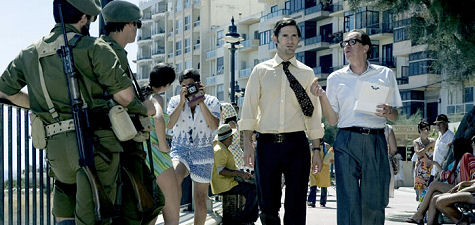
“In fact when you look at the films that didn’t make the Academy list, there are quite a few that have wider/greater critical acclaim than those on the list. I forget who told me this, but AMPAS claims that both Grizzly Man and Gunner Palace didn’t score high enough.
“I am really surprised that the hasn’t taken issue with the AMPAS voting like they did last year. If you ask me, AMPAS is the guardian of the politically correct, and that usualy means little hope for films like Grizzly Man or Tarnation (which was passed over last year).
“Film is art. Art is not a popularity contest. Popularity is often about being mundane. Political correctness is the mundane in action.” — Michael Tucker, director of Gunner Palace.

Reasons to Deny

“I’m beginning to think that the Munich backlash is about two things. The fact that nobody cares that muich and the fact that Israel is obnoxious.
“One, a great majority of Americans (besides the religious right and the Jewish lobby) just look at the 1972 Munich massacre as just another episode in a non-ending war of two peoples that most Americans don√ɬ¢√¢‚Äö¬¨√¢‚Äû¬¢t have anything against either (i.e., neither is fully right or wrong).
“I mean, come on…Israel only a few years earlier did a preemptive strike on Nasser and took East Jerusalem and the remainder of the territories, and then wondering why Arab folks and Palestinians in particular have launched a guerilla war. After that Sadat’s war in 1973 on Yom Kippur shouldn’t have surprised anyone.
“And two, the real conservatives — i.e., the ones that are not neo-conservatives or the lackeys of the Isreal lobby on the left (Lieberman, Hillary Clinton, etc.) — also look at the Munich episode as just another example of an ongoing cycle. Why should we support one over the other (in the general sense of terms) when the Cold War is over and Israeli√ɬ¢√¢‚Äö¬¨√¢‚Äû¬¢s significance to the Cold War has ended?

“Some could say the nation itself is similar to South Africa, where one group of people have stripped the rights of an entire other people (the only difference is cultural rather than race; one white group against another white group, etc.).
“Critics and film makers themselves use their own political believes in some cases to judge or make films. Maybe this is the case with this film. I really don√ɬ¢√¢‚Äö¬¨√¢‚Äû¬¢t know. If Spielberg is making it more neutral, those that are outraged at the murders by the Palestinians will hate the film even if Spielberg doesn√ɬ¢√¢‚Äö¬¨√¢‚Äû¬¢t go off on his sappy way of doing things.
“And those that support the Palestinians (and the UN’s 40-year-old demand that Israel get out of the territories and East Jerusalem and remove all illegal immigration of Israelis to the occupied territories) will in all ways be biased against any portrayal of Israeli agents and military and what they do.
“I’m referring to the supposedly present day targeted assassinations of terrorist leaders by U.S. made Apache helicopters and missiles with Israeli emblems on them that take out dozens of houses and therefore civilians won√ɬ¢√¢‚Äö¬¨√¢‚Äû¬¢t help any film about Munich for those that simply can√ɬ¢√¢‚Äö¬¨√¢‚Äû¬¢t separate film from politics.” — Philip C. Perron

Knightley

“Get over Keira! She will be Oscar nominated — deal with it. The way you trash her, you’d think she rejected you about something.
“We also get you think Rachel McAdams is the next Julia Roberts. Problem is, America disagrees. Red Eye took a nose dive, and she wasn’t exactly the reasons people saw Wedding Crashers.” — Doveplan@aol.com
Wells to Doveplan: “America” is always slow to come around. Either you get Rachel McAdams or you don’t. And Knightley won’t be nominated for anything — deal with it.

Munich Shortfall

Munich Shortfall

I’m not trying to be a hard-ass for the sake of being a hard-ass, but I can’t get on the Oscar boat for Steven Spielberg’s Munich (Universal, 12.23).
It’s a pretty good movie, but the Best Picture hoo-hah seems a tiny bit forced given what this film truly is in the light of day. If you ask me those prognosticators who’ve already said “this is it!” are conning themselves.


One of the Black September hostage-takers during the actual 1972 Munich Olympic Games standoff

Directed by Spielberg and written (for the most part) by Tony Kushner and Eric Roth, Munich is a longish (160 minutes), thoughtful drama about Israel’s revenge campaign against the perpetrators of the 1972 Munich Olympic Games killings of Israeli atheletes. It’s strong, meaningful and well-intended…but I don’t get all the jumping up and down.
I’m talking about the proclamations about it being the new Best Picture front-run- ner. It’s in the running, I guess, but it sure as shit is no shoo-in.
< ?php include ('/home/hollyw9/public_html/wired'); ?>
I spoke last night to a guy who’ll be voting this Saturday with the L.A. Film Critics, and we had both just seen Munich and were talking about the Best Picture Oscar contest, and he said, “I don’t know if [Munich] will even get nominated.”
He may have been overly dismissive, okay, but any seasoned film guy making such a statement should give you a hint about what’s going on here.
I felt the euphoric current at the DGA theatre last year after seeing Million Dollar Baby — I was levitating — but nothing like this kicked in last night inside theatre #5 at the AMC Century City.

Munich wants first and foremost to say something earnest about the legacy of political killing. It’s a movie that doesn’t quite cry out for peace, but is clearly asking for it. It connects here and there in short bursts, but it mainly achieves a general mezzo-mezzo effect of “okay, good point, we get it.”
Which is why I don’t get the effusive praise from Time‘s Richard Schickel and Fox 411’s Roger Friedman and what I presume will be an oncoming tide of kiss-assers …the Spielberg kowtow brigade looking to show obeisance before power.
David Poland was more measured in his “Hot Button” reaction on Monday night, but he still believes from a hard-nosed realpolitik standpoint that Munich is the presumptive Best Picture winner, and that’s just wrong. Perhaps not inaccurate, but dead fucking “wrong” because Best Picture Oscars shouldn’t go to good movies that say the right thing, etc. but don’t inspire major passion.
Really exceptional movies always get people deep down in one way or another. They provoke, excite…make you choke up. They almost always deliver some kind of intrigue that usually builds and gains upon reflection. But I was not so moved last night.
I didn’t conduct a poll in theatre #5 but I could “feel the room” as the film unspooled and I’d be surprised if Munich aroused any go-for-broke fervor. But I’ll bet every last critic who saw it last night, if you were to pop the question, would say it’s a “good film” or “very strong” or “important.”


Steven Spielberg conferring with Eric Bana (shades) during last summer’s shooting of Munich

And it is that. Munich is a smart and stirring ride. It’s still with me this morning, still pinging around in my rib cage…and yes, I respect where it’s coming from and how Spielberg has organized the journey, for the most part.
And yes, of course, I agree with and support what Munich is saying about the rotten karma that comes out of any act of murder.
Munich is saying that however well justified or rationalized those revenge killings may have been, the air was still befouled and the spiritual effects upon three of the Mossad team — sensitive Israeli assassins played by Eric Bana, Mathieu Kosso- vitz and Ciaran Hinds — were disturbing and unsettling.
(Honestly? I felt almost relieved that two other guys on the team — Daniel Craig’s character and some older guy — don’t seem to pay the price as much. I don’t know why exactly, but I was vaguely comforted by these two being hardcore enough to just do the friggin’ job sans guilt trips.)
As a man with two sons, as a film critic, as a movie fiend…I side with any movie that says “killing is bad” or “killing others…even those who may deserve to die …will let loose a virus in your soul.”
But Munich rarely rises above the level of being dutiful, thoughtful and morally correct. All it is, really, is a sprawling here-and-there procedural with a gathering sense of moral disquiet. That’s a fine and respectable thing, but it doesn’t exactly set off tremors or firecrackers.


Eric Bana, Geoffrey Rush

Michael Lonsdale (whose performance as the investigator in Fred Zinneman’s The Day of the Jackal is one of my all-time favorites) is the best element in Munich. I also quite enjoyed the performance by Mathieu Almaric (last seen in Kings and Queen) as Lonsdale’s churlish son.
There is hoopla over Munich because it’s on the cover of this week’s Time and because the Best Picture situation is very much in flux and everyone’s looking for another Million Dollar Baby to sweep them off their feet.
I can sense a psychological eagerness to consider an end-of-the-year Spielberg movie about the ethical costs and karma of revenge…about the quandaries facing Jews and anti-Zionists in the Middle East as their conflict persists. Journos are primed because it’s that time of year and this is Spielberg-getting-all-morally- earnest-in-December and because everyone’s been saying “Munich is coming, Munich is coming” since last spring.
And everyone wants to savor Spielberg’s second big-statement movie about what good people have done when Jews have been killed because they’re Jews…killed by haters, racists, Nazis, anti-Zionists.
Oskar Schindler did what he did in Schindler’s List and became known to the audi- ence (as he had to his biographers) as a good, compassionate, peculiar, complex man. And the Mossad team led by Eric Bana are reasonably decent guys who go out and do what they do, and the virus of murder and retribution gets into their hearts and systems and they begin to pay the price.

And poor Eric Bana’s character gets the worst of it because he finds it hard to concentrate on making love to his lusciously sexy wife in their Brooklyn apartment because he can’t get those images and sounds of the massacre at the Munich airport in ’72 out of his head…images and sounds he absorbed from TV coverage because he wasn’t there.
I’m not trying to be a smart-ass, but this bizarre sex scene reminded me a tiny bit of Woody Allen’s Alvy Singer not making love to Carol Kane in Annie Hall because he can’t stop talking about the Kennedy assassination and the Warren Report.
Is Munich profound? Is there anything earth-shaking here? In what way does this film step out and grab you by the shirt collar and say, “Wake up!” In what way does it rock anyone’s world in terms of technique, even?
Okay, it feels in some ways like a ’70s film…but that’s not making me shudder or leap out of my seat as I acknowledge this.
The most riveting portions, as you might expect, are about how the killings of the members and supporters of the Munich operation (the core group was known as “Black September”) are carried out, and what goes wrong. The strongest happen early on — a killing in Rome and then another in Paris, which involves a family man and his daughter.
There’s a particularly effective portion involving a pretty woman at a London hotel who gets briefly involved with Bana and Hinds, and a killing results, and then another killing. I don’t want to spoil but the whole cause-and-effect sequence is both sad and shocking.

Tony Kushner’s script gives each Doubting Thomas character a speech just as he starts crumbling, or just before fate is about to take a hand. There’s a certain wordy literalness going on here that isn’t quite as effective as Spielberg and Kushner would like it to be.
Munich ends in New York City with a long shot of a certain downtown landmark. A friend feels this shot was overdoing things a bit, but at least Spielberg doesn’t go in for a closeup, and the CG image is quite realisitic and haunting.
I have gotten to the point where Janusz Kaminski’s cinematography is starting to blatantly turn me off. He has become the one dp whose work really and truly irri- tates me.
Every film Kaminski has shot for Spielberg — War of the Worlds, The Terminal, Catch Me If You Can, Minority Report, A.I., Saving Private Ryan, Amistad and now Munich — has looked more or less the same to me, regardless of the theme or mood. I’m referring to the Kaminski palette of slightly desaturated color, a slightly misty soft-focus look, starchy white light flooding through windows during daytime scenes, a lack of sharpness, and a bizarre fondness for grain.
I think that calling this film Munich was a little bit of a chickenshit move. It should have simply been called Vengeance . I realize that the “Vengeance” book it’s partly based upon has blemishes against it, but vengeance is what this movie is primarily about, and Spielberg should have just copped to that.

Next Year’s Balloon

Here are some initial calls about next year’s Ocar contenders. I’d like to hear from anyone who’s read the scripts or can pass along versions of the scripts to yours truly…whatever. I just think it’s time to start looking ahead and planning ahead, etc.
Thanks to Canadian correspondent and rabid script-hound Jean-Francois Allaire for starting me on this jag…
Best Picture: The Departed (Warner Brothers); Babel (Paramount); The Good Shepherd (Universal Pictures); Southland Tales (Universal); Marie Antoinette (Columbia Pictures); The Pursuit of Happyness (Columbia Pictures); Breaking and Entering (The Weinstein Co.); All The King’s Men (Columbia Pictures); A Good Year (20th Century Fox); Stranger Than Fiction (Columbia).


Martin Scorsese, Matt Damon on the set of The Departed

Best Director: Steve Zaillan (All The King’s Men); Anthony Minghella (Breaking and Entering); Martin Scorsese (The Departed); Steven Soderbergh (The Good German); Ridley Scott (A Good Year); Alejandro Gonzalez Inarritu (Babel); Marc Forster (Stranger Than Fiction); Richard Kelly (Southland Tales).
Best Actor: Will Smith (The Pursuit of Happyness); Matt Damon (The Good Shepherd); Jude Law (Breaking and Entering); Sean Penn (All The King’s Men); Brad Pitt (Babel).
Best Actress: Cate Blanchett (The Good German or Babel ); Maggie Gyllenhaal (Stranger Than Fiction)….need more!
Best Supporrting Actor: Jack Nicholson (The Departed); Hugh Grant (American Dreamz); Gael Garcia Bernal (Babel); Albert Finney (A Good Year); Jamie Foxx (Dreamgirls)
Best Supporting Actress: Zip…anyone?
Best Original Screenplay: Richard Kelly (Southland Tales); Paul Weitz (American Dreamz); Eric Roth (The Good Shepherd); Anthony Minghella (Breaking and Entering).
Best Adapted Screenplay : Sofia Coppola (Marie Antoinette).

Rundown

The first high-profile award announcements will come this Saturday afternoon from the Los Angeles Film Critics, with the final calls starting to leak out sometime around 1 pm or 2 pm.
The National Board of Review — that odd-smelling, Manhattan-based, awards- dispensing group made up of mostly weirdos and wackos (with the noteworthy exception of respected Columbia film professor and scholar Annette Insdorf) would have been first — i.e., today — but the group has delayed their announcements until next Monday, 12.12, due to some omissions on their initially mailed-out ballot.

On the same day the New York Film Critics Circle will announce their picks (expected a final decision around 1 pm Eastern), and since the NYFCC is roughly eight or nine times more respected than the National Board of Review (or is that eighty or ninety times?), the likelihood is that reporters and Oscar assesors will pay even less attention to the NBR winners than usual.
The very next day (Tuesday, 12.13) the Golden Globe nominations will be announced. These noms will be a very big moment for Diane Keaton and The Family Stone…I hope, I hope. And let’s hope that Terrence Howard (Hustle & Flow), bless him, hangs in there as a Best Actor in a Drama nominee.
I don’t have the dates for all the other critics groups but many of them will start to weigh in next week also, or very soon after. Critics groups from Boston, San Francisco, Chicago, Miami, San Diego, Seattle, etc.
Then it’s Christmas and New Year’s and the annual depression and suicide surge that happens ever year, and then…well, here’s the schedule:

* Writers Guild of America and Producers Guild nominations: Wednesday, 1.4.06
* Screen Actors Guild and Directors Guild nominations: Thursday, 1.5.06.
* BFCA Awards: Monday, 1.9.06
* Golden Globe Awards: Monday, 1.16.06
* Directors Guild Awards: Saturday, 1.28.06
* Screen Actors Guild awards: Sunday, 1.29.06
* Academy Award nominations: Tuesday, 1.31.06
* Writers Guild Awards: Saturday, 2.4.06
* BAFTA Awards: Sunday, 2.19.06
* Independent Spirit Awards: Saturday, 3.4.06
* Academy Awards telecast: Sunday, 3.5.06
* Rest Period: March through late June-slash-early July ’06
* Campaigning Strategizing for 2006 Awards (i.e., 2007 Academy Awards) commences and long-term expectations begin to come into focus: Early to Mid-July 2006.

Rumble in the Jungle

I saw King Kong for the second time Monday morning (12.5), and I feel the same way I did after my first viewing Sunday night. About 110 minutes of this three-hour film (i.e., the last two-thirds) are rock ‘n’ roll and worth double the ticket price. And the finale is genuinely touching.
After Sunday night’s screening at the Academy theatre I called the better parts of this monkey movie “damned exciting in an emotional, giddily absurd, logic-free adrenalized way.”

And then I offered a limited apology to its creator, Peter Jackson. “You aren’t that bad, bro,” I said. “You got a few things right this time. The movie is going to lift audiences out of their seats. And I need to say ‘I’m sorry’ for bashing you so much because you’ve almost whacked the ball out of the park this time.”
Almost, I say.
King Kong is too lumpy and draggy during the first hour or so to be called exquisite or masterful, but there’s no denying that it wails from the 70-minute mark until the big weepy finale at the three-hour mark. Monkey die, everybody cry.
The emotional support comes from the current between Kong and Naomi Watts, who is pretty much the soul of the film. I was concerned that the tender eye-rap- port between them would be too much, but it isn’t. It’s relatively restrained and subtle and full of feeling.
And Andy Serkis’ Kong performance doesn’t play like any kind of “Gollum Kong” (which I fretted about a year and a half ago in this space), and in fact he creates something surprisingly life-like, or do I mean ape-like?
The good ship Kong starts out with a spirited montage (scored with a classic Al Jolson tune called “I’m Sittin’ On Top of the World”) that shows what Depression- era 1933 New York City probably looked and felt like on the streets. The recrea- tions of this bygone Manhattan are awesome, immaculate…CGI illusion at its most profound.

So the first ten or so minutes are fine, but then things start to get lunky and pokey and meandering, and the dialogue becomes increasingly stiff and speechy, and before you know it Kong is close to crashing on the rocks and suffering a gash in the hull.
It’s very touch-and-go from roughly the 10 to the 65- or 70-minute mark. I was shifting in my seat and going “uh-oh.” But things take off once Kong snatches Watts, and the energy stays high and mighty from there to the finale.
You can break Kong down into three sections…
(a) The draggy 70-minute first act, which is all New York set-up, character exposi- tion, the long sea voyage to Skull Island, tedious philosophizing and no action to speak of;
(b) the breathtaking, nearly 70-minute Skull Island rumble-in-the-jungle section, including the breathtaking dino-run sequence (an absolute instant classic that’s likely to drive most of the repeat business in and of itself), Kong vs. the T-Rex trio, and the icky spider-and-insect pit sequence;
(c) the 42 or 43-minute New York finale with Kong on-stage, breaking the chrome- steel chains and escaping, trashing Manhattan, finding Watts, and facing planes and fate atop the Empire State building.

If I were a 14 year-old kid talking to friends about all of us seeing Kong a second or third time, I would suggest that everyone try to slip into the theatre after the first hour because who wants to sit through all that talky crap again?
Kong isn’t better than Jackson’s Heavenly Creatures because it’s almost entirely about enthusiasm and has almost nothing to do with restraint (bad word!), but it’s still the most thoroughly pulse-pumping, rousingly kick-ass film Jackson’s ever delivered, and respect needs to be paid.
And I mean especially by someone who’s been bashing the pud out of Jackson for the last four years or so, calling him an indulgent (and overly indulged), excessive, paint-splattering “wheeeeee!” director all this time.
Make no mistake — Kong shows Jackson is still all of these things. But Kong is a movie with a big heart and a stupidly exuberant joie de cinema coarsing through its veins…during the second and third acts, I mean.
And even though Jackson has gone way beyond the point where he’s able to show minimal respect for physics and could-this-happen? issues of logic and probability …a point from which he’ll never return…he manages such amazing visual feats and surges once the film takes off that all objections are moot. Even if some of the action scenes are cartoonishly wham-bam and ridiculous.


Life-size Kong model currently sitting in Manthatan’s Times Square

I’ll get into this a bit more later in the week, but I felt I had to cop to the fact that Jackson has hit one deep into center-left field.
Jack Black’s Carl Denham isn’t at all bad (he’s mouthy and slimy, but he doesn’t reach for outright comedy), Adrien Brody inhabits the playwright-hero to sensitive perfection, and Kong’s snaggle tooth is glimpsed only a few times and a non-issue.
Sometime next week I’m going to run a list of things in King Kong that make little or no sense (and it’s a long list), but right now it’s simply time to acknowledge that the parts of the film that get your blood racing and your emotions worked up work really well.
[Incidentally: I wrote last night that King Kong starts with an overture taken from Max Steiner’s original score for the 1933 film. However, I learned today [Monday] that Steiner’s overture was played before the presentation of Jackson’s film as a mood-setter by the people in the projection department at the Academy of Motion Picture Arts and Sciences theatre, so it isn’t attached to the film and won’t be heard by regular audiences. That’s a shame.]

Remember This

Munich Jitters

Munich Jitters

It’s Wednesday afternoon and everyone’s calling around and asking about Munich …how good, how invincible or vulnerable, and is anyone having shit-fits and if so, who?…whaddaya hear, whaddaya think?
There’s already a half-formed perception that Steven Spielberg’s film isn’t Million Dollar Baby, but some journos are taking their shirts off and waving them over their heads anyway and calling it the new front-runner.


Steven Spielberg conferring with Eric Bana (shades) during last summer’s shooting of Munich

Maybe it is that. I’ll be seeing Munich in about two hours (Wednesday at 7 pm) so I’ll know fairly soon, but in these anxious pre-dawn hours before hitting the beach …er, the AMC Century City complex, it’s probably best to process the Spielberg kowtow with a grain of salt.
Richard Schickel, David Poland, Roger Friedman…can’t quite trust ’em.
You can’t trust Schickel and that Time cover story because as brilliant and insight- ful as he usually is, Schickel is a political operator of sorts, and it seems fair to presume he’s always thinking about his next documentary or subject for his next biography, which may one day (who knows?) be about Spielberg.
< ?php include ('/home/hollyw9/public_html/wired'); ?>
Schickel may be dead-on about Munich, but I can’t buy the shpiel…yet.
You can’t trust Poland’s somewhat measured rave that he posted in his “Hot But- ton” column Monday night, because…smell the coffee…we all have our prejudices and he’s been calling Munich the presumptive front-runner for a long time now, and because he’s been lightly dissing Brokeback Mountain since he first saw it at last September’s Telluride Film Festival.
My antennae reading is that Poland’s been emotionally invested in wanting to steer support away from Ang Lee’s obviously brave and devastating film ever since, and now he’s got a thoughtful and gripping film to fight for, so it’s time to mount that steed and get out that bugle.

And you have to look askance at Roger Friedman’s proclamation in his Fox 411 column (posted late Tuesday night) that “Spielberg’s ‘Munich’ Is the Best Movie of 2005.”
Not because Roger is wrong (I don’t know a damn thing) but because he dismissed Brokeback Mountain as “silly” in a version of the column that ran last night (it’s been deleted, but I saw it last night with my own eyes) and he’s also called it a “strange western.”
To bluntly backhand Munich‘s strongest competitor with a jab like that is thought- less and kinda strange in itself. A movie that has made people weep and now sits at the top of MCN’s Gurus of Gold lists as the most likely Best Picture nominee is “silly”?


Cuddling babies, killing terrorists…two sides of the same sensitive-guy coin

There’s no reason to think Munich isn’t going to be a riveting and stirring film, but will it knock Brokeback‘s stetson off and send it splashing into a mud puddle?
I’ll keep refreshing and adding to this piece over the next 24 to 36 hours as things happen and other voices chime in, but for now…

Next Year’s Balloon

Here are some initial calls about next year’s Ocar contenders. I’d like to hear from anyone who’s read the scripts or can pass along versions of the scripts to yours truly…whatever. I just think it’s time to start looking ahead and planning ahead, etc.
Thanks to Canadian correspondent and rabid script-hound Jean-Francois Allaire for starting me on this jag…
Best Picture: The Departed (Warner Brothers); Babel (Paramount); The Good Shepherd (Universal Pictures); Southland Tales (Universal); Marie Antoinette (Columbia Pictures); The Pursuit of Happyness (Columbia Pictures); Breaking and Entering (The Weinstein Co.); All The King’s Men (Columbia Pictures); A Good Year (20th Century Fox); Stranger Than Fiction (Columbia).


Martin Scorsese, Matt Damon on the set of The Departed

Best Director: Steve Zaillan (All The King’s Men); Anthony Minghella (Breaking and Entering); Martin Scorsese (The Departed); Steven Soderbergh (The Good German); Ridley Scott (A Good Year); Alejandro Gonzalez Inarritu (Babel); Marc Forster (Stranger Than Fiction); Richard Kelly (Southland Tales).
Best Actor: Will Smith (The Pursuit of Happyness); Matt Damon (The Good Shepherd); Jude Law (Breaking and Entering); Sean Penn (All The King’s Men); Brad Pitt (Babel).
Best Actress: Cate Blanchett (The Good German or Babel ); Maggie Gyllenhaal (Stranger Than Fiction)….need more!
Best Supporrting Actor: Jack Nicholson (The Departed); Hugh Grant (American Dreamz); Gael Garcia Bernal (Babel); Albert Finney (A Good Year); Jamie Foxx (Dreamgirls)
Best Supporting Actress: Zip…anyone?
Best Original Screenplay: Richard Kelly (Southland Tales); Paul Weitz (American Dreamz); Eric Roth (The Good Shepherd); Anthony Minghella (Breaking and Entering).
Best Adapted Screenplay : Sofia Coppola (Marie Antoinette).

Rundown

The first high-profile award announcements will come this Saturday afternoon from the Los Angeles Film Critics, with the final calls starting to leak out sometime around 1 pm or 2 pm.
The National Board of Review — that odd-smelling, Manhattan-based, awards- dispensing group made up of mostly weirdos and wackos (with the noteworthy exception of respected Columbia film professor and scholar Annette Insdorf) would have been first — i.e., today — but the group has delayed their announcements until next Monday, 12.12, due to some omissions on their initially mailed-out ballot.

On the same day the New York Film Critics Circle will announce their picks (expected a final decision around 1 pm Eastern), and since the NYFCC is roughly eight or nine times more respected than the National Board of Review (or is that eighty or ninety times?), the likelihood is that reporters and Oscar assesors will pay even less attention to the NBR winners than usual.
The very next day (Tuesday, 12.13) the Golden Globe nominations will be announced. These noms will be a very big moment for Diane Keaton and The Family Stone…I hope, I hope. And let’s hope that Terrence Howard (Hustle & Flow), bless him, hangs in there as a Best Actor in a Drama nominee.
I don’t have the dates for all the other critics groups but many of them will start to weigh in next week also, or very soon after. Critics groups from Boston, San Francisco, Chicago, Miami, San Diego, Seattle, etc.
Then it’s Christmas and New Year’s and the annual depression and suicide surge that happens ever year, and then…well, here’s the schedule:

* Writers Guild of America and Producers Guild nominations: Wednesday, 1.4.06
* Screen Actors Guild and Directors Guild nominations: Thursday, 1.5.06.
* BFCA Awards: Monday, 1.9.06
* Golden Globe Awards: Monday, 1.16.06
* Directors Guild Awards: Saturday, 1.28.06
* Screen Actors Guild awards: Sunday, 1.29.06
* Academy Award nominations: Tuesday, 1.31.06
* Writers Guild Awards: Saturday, 2.4.06
* BAFTA Awards: Sunday, 2.19.06
* Independent Spirit Awards: Saturday, 3.4.06
* Academy Awards telecast: Sunday, 3.5.06
* Rest Period: March through late June-slash-early July ’06
* Campaigning Strategizing for 2006 Awards (i.e., 2007 Academy Awards) commences and long-term expectations begin to come into focus: Early to Mid-July 2006.

Rumble in the Jungle

I saw King Kong for the second time Monday morning (12.5), and I feel the same way I did after my first viewing Sunday night. About 110 minutes of this three-hour film (i.e., the last two-thirds) are rock ‘n’ roll and worth double the ticket price. And the finale is genuinely touching.
After Sunday night’s screening at the Academy theatre I called the better parts of this monkey movie “damned exciting in an emotional, giddily absurd, logic-free adrenalized way.”

And then I offered a limited apology to its creator, Peter Jackson. “You aren’t that bad, bro,” I said. “You got a few things right this time. The movie is going to lift audiences out of their seats. And I need to say ‘I’m sorry’ for bashing you so much because you’ve almost whacked the ball out of the park this time.”
Almost, I say.
King Kong is too lumpy and draggy during the first hour or so to be called exquisite or masterful, but there’s no denying that it wails from the 70-minute mark until the big weepy finale at the three-hour mark. Monkey die, everybody cry.
The emotional support comes from the current between Kong and Naomi Watts, who is pretty much the soul of the film. I was concerned that the tender eye-rap- port between them would be too much, but it isn’t. It’s relatively restrained and subtle and full of feeling.
And Andy Serkis’ Kong performance doesn’t play like any kind of “Gollum Kong” (which I fretted about a year and a half ago in this space), and in fact he creates something surprisingly life-like, or do I mean ape-like?
The good ship Kong starts out with a spirited montage (scored with a classic Al Jolson tune called “I’m Sittin’ On Top of the World”) that shows what Depression- era 1933 New York City probably looked and felt like on the streets. The recrea- tions of this bygone Manhattan are awesome, immaculate…CGI illusion at its most profound.

So the first ten or so minutes are fine, but then things start to get lunky and pokey and meandering, and the dialogue becomes increasingly stiff and speechy, and before you know it Kong is close to crashing on the rocks and suffering a gash in the hull.
It’s very touch-and-go from roughly the 10 to the 65- or 70-minute mark. I was shifting in my seat and going “uh-oh.” But things take off once Kong snatches Watts, and the energy stays high and mighty from there to the finale.
You can break Kong down into three sections…
(a) The draggy 70-minute first act, which is all New York set-up, character exposi- tion, the long sea voyage to Skull Island, tedious philosophizing and no action to speak of;
(b) the breathtaking, nearly 70-minute Skull Island rumble-in-the-jungle section, including the breathtaking dino-run sequence (an absolute instant classic that’s likely to drive most of the repeat business in and of itself), Kong vs. the T-Rex trio, and the icky spider-and-insect pit sequence;
(c) the 42 or 43-minute New York finale with Kong on-stage, breaking the chrome- steel chains and escaping, trashing Manhattan, finding Watts, and facing planes and fate atop the Empire State building.

If I were a 14 year-old kid talking to friends about all of us seeing Kong a second or third time, I would suggest that everyone try to slip into the theatre after the first hour because who wants to sit through all that talky crap again?
Kong isn’t better than Jackson’s Heavenly Creatures because it’s almost entirely about enthusiasm and has almost nothing to do with restraint (bad word!), but it’s still the most thoroughly pulse-pumping, rousingly kick-ass film Jackson’s ever delivered, and respect needs to be paid.
And I mean especially by someone who’s been bashing the pud out of Jackson for the last four years or so, calling him an indulgent (and overly indulged), excessive, paint-splattering “wheeeeee!” director all this time.
Make no mistake — Kong shows Jackson is still all of these things. But Kong is a movie with a big heart and a stupidly exuberant joie de cinema coarsing through its veins…during the second and third acts, I mean.
And even though Jackson has gone way beyond the point where he’s able to show minimal respect for physics and could-this-happen? issues of logic and probability …a point from which he’ll never return…he manages such amazing visual feats and surges once the film takes off that all objections are moot. Even if some of the action scenes are cartoonishly wham-bam and ridiculous.


Life-size Kong model currently sitting in Manthatan’s Times Square

I’ll get into this a bit more later in the week, but I felt I had to cop to the fact that Jackson has hit one deep into center-left field.
Jack Black’s Carl Denham isn’t at all bad (he’s mouthy and slimy, but he doesn’t reach for outright comedy), Adrien Brody inhabits the playwright-hero to sensitive perfection, and Kong’s snaggle tooth is glimpsed only a few times and a non-issue.
Sometime next week I’m going to run a list of things in King Kong that make little or no sense (and it’s a long list), but right now it’s simply time to acknowledge that the parts of the film that get your blood racing and your emotions worked up work really well.
[Incidentally: I wrote last night that King Kong starts with an overture taken from Max Steiner’s original score for the 1933 film. However, I learned today [Monday] that Steiner’s overture was played before the presentation of Jackson’s film as a mood-setter by the people in the projection department at the Academy of Motion Picture Arts and Sciences theatre, so it isn’t attached to the film and won’t be heard by regular audiences. That’s a shame.]

Remember This

Sloppy Seconds

Rumble in the Jungle

I saw King Kong for the second time Monday morning (12.5), and I feel the same way I did after my first viewing Sunday night. About 110 minutes of this three-hour film (i.e., the last two-thirds) are rock ‘n’ roll and worth double the ticket price. And the finale is genuinely touching.
After Sunday night’s screening at the Academy theatre I called the better parts of this monkey movie “damned exciting in an emotional, giddily absurd, logic-free adrenalized way.”

And then I offered a limited apology to its creator, Peter Jackson. “You aren’t that bad, bro,” I said. “You got a few things right this time. The movie is going to lift audiences out of their seats. And I need to say ‘I’m sorry’ for bashing you so much because you’ve almost whacked the ball out of the park this time.”
Almost, I say.
King Kong is too lumpy and draggy during the first hour or so to be called exquisite or masterful, but there’s no denying that it wails from the 70-minute mark until the big weepy finale at the three-hour mark. Monkey die, everybody cry.
< ?php include ('/home/hollyw9/public_html/wired'); ?>
The emotional support comes from the current between Kong and Naomi Watts, who is pretty much the soul of the film. I was concerned that the tender eye-rap- port between them would be too much, but it isn’t. It’s relatively restrained and subtle and full of feeling.
And Andy Serkis’ Kong performance doesn’t play like any kind of “Gollum Kong” (which I fretted about a year and a half ago in this space), and in fact he creates something surprisingly life-like, or do I mean ape-like?
The good ship Kong starts out with a spirited montage (scored with a classic Al Jolson tune called “I’m Sittin’ On Top of the World”) that shows what Depression- era 1933 New York City probably looked and felt like on the streets. The recrea- tions of this bygone Manhattan are awesome, immaculate…CGI illusion at its most profound.

So the first ten or so minutes are fine, but then things start to get lunky and pokey and meandering, and the dialogue becomes increasingly stiff and speechy, and before you know it Kong is close to crashing on the rocks and suffering a gash in the hull.
It’s very touch-and-go from roughly the 10 to the 65- or 70-minute mark. I was shifting in my seat and going “uh-oh.” But things take off once Kong snatches Watts, and the energy stays high and mighty from there to the finale.
You can break Kong down into three sections…
(a) The draggy 70-minute first act, which is all New York set-up, character exposi- tion, the long sea voyage to Skull Island, tedious philosophizing and no action to speak of;
(b) the breathtaking, nearly 70-minute Skull Island rumble-in-the-jungle section, including the breathtaking dino-run sequence (an absolute instant classic that’s likely to drive most of the repeat business in and of itself), Kong vs. the T-Rex trio, and the icky spider-and-insect pit sequence;
(c) the 42 or 43-minute New York finale with Kong on-stage, breaking the chrome- steel chains and escaping, trashing Manhattan, finding Watts, and facing planes and fate atop the Empire State building.

If I were a 14 year-old kid talking to friends about all of us seeing Kong a second or third time, I would suggest that everyone try to slip into the theatre after the first hour because who wants to sit through all that talky crap again?
Kong isn’t better than Jackson’s Heavenly Creatures because it’s almost entirely about enthusiasm and has almost nothing to do with restraint (bad word!), but it’s still the most thoroughly pulse-pumping, rousingly kick-ass film Jackson’s ever delivered, and respect needs to be paid.
And I mean especially by someone who’s been bashing the pud out of Jackson for the last four years or so, calling him an indulgent (and overly indulged), excessive, paint-splattering “wheeeeee!” director all this time.
Make no mistake — Kong shows Jackson is still all of these things. But Kong is a movie with a big heart and a stupidly exuberant joie de cinema coarsing through its veins…during the second and third acts, I mean.
And even though Jackson has gone way beyond the point where he’s able to show minimal respect for physics and could-this-happen? issues of logic and probability …a point from which he’ll never return…he manages such amazing visual feats and surges once the film takes off that all objections are moot. Even if some of the action scenes are cartoonishly wham-bam and ridiculous.


Life-size Kong model currently sitting in Manthatan’s Times Square

I’ll get into this a bit more later in the week, but I felt I had to cop to the fact that Jackson has hit one deep into center-left field.
Jack Black’s Carl Denham isn’t at all bad (he’s mouthy and slimy, but he doesn’t reach for outright comedy), Adrien Brody inhabits the playwright-hero to sensitive perfection, and Kong’s snaggle tooth is glimpsed only a few times and a non-issue.
Sometime next week I’m going to run a list of things in King Kong that make little or no sense (and it’s a long list), but right now it’s simply time to acknowledge that the parts of the film that get your blood racing and your emotions worked up work really well.
[Incidentally: I wrote last night that King Kong starts with an overture taken from Max Steiner’s original score for the 1933 film. However, I learned today [Monday] that Steiner’s overture was played before the presentation of Jackson’s film as a mood-setter by the people in the projection department at the Academy of Motion Picture Arts and Sciences theatre, so it isn’t attached to the film and won’t be heard by regular audiences. That’s a shame.]

Narnia Good

I am not, never have been and never will be a big fan of eye-candy fantasy flicks about adventure, young heroes, holy grails, scary monsters, nice-guy monsters and waves of pseudo-profound emotion, but…
I was quite impressed and moved, even, by Mark Johnson and Andrew Adam- son’s The Chronicles of Narnia: The Lion, the Witch and the Wardrobe (Disney, 12.9)…and go figure. This surprised me, given my general loathing of poster-paint family-friendly films. But it’s a very satisfying movie of this type, and my personal favorite since…I don’t recall but it’s been a while.


Anna Popplewell, William Moseley and Georgie Henley in Mark johnson and Andrew Adamson’s The Chronicles of Narna: The Lion, The Witch and The Wardrobe (Disney, 12.9)

I’ll make it clear again: I respected Peter Jackson’s Lord of the Rings trilogy for the craft, feeling and exactitude he invested, but sitting through those three films was, on a deep-down personal level, agony. And I’m so sick of the Harry Potter series I can’t make myself see the latest installment. I’d rather have my appendix removed.
I was grimming up for more of the same as I drove to the Narnia screening yester- day afternoon. A Wizard of Oz-like magical-mythical kingdom, child actors, talking animals, CG digiscapes…I’m a man, I can take it, lay it on me.
Then the lights went down and everything changed. In a way it’s the same old magical fantasy action formula, but in several other ways it isn’t for the simple reason that it’s very well composed. In the ways that really count, Narnia is fairly exceptional.
It’s a tighter, far better thing than any one of the Rings films, in part because it’s thoroughly British (it’s based a series of novels by C.S. Lewis) with the bookend sections set in the early 1940s, which saves it from the odor and attitudes of 21st Century trash culture.
The talking-animal CG is about as good as current technology allows, which isn’t perfect but acceptable. The New Testament allegory stuff is plain as day, and it’s easy to see why multitudes of families and Christian right groups are going to support this sucker big-time.

And three of the four child actors (Skandar Keynes, William Moseley, Anna Popplewell) are good enough to make you weep with relief…no Hayden Christen- sen-level performances! And the lead, 10 year-old Georgie Henley, is so skilled and centered and wonderfully sublime she should move right into the Best Sup- porting Actress lineup.
And the script (written by Ann Peacock, Christopher Markus, Stephen McFeely and Adamson) moves right along with plot turns and character motives that hold water and fit right into the whole.
And Adamson, bless him, doesn’t wallow in overbaked emotion the way Jackson always has. Adamson hits the mark, conveys a story point, exudes the feeling and moves on. I don’t mean to upset the Jackson fans but the stuff Adamson is show- ing is called (watch out for the bad word!) discipline.
And it has a perfect ending, by which I mean a perfect final line.
Disney and Walden Media have spent $150 million on this debut in what will probably be a new franchise series, and the money is very much on the screen. The battle scenes are exciting, the various CG-scapes are first rate, and all the talking beavers, wolves, bisons, foxes, lions and tigers are…well, good enough.
The tale begins when the German bombing of London early in World War II results in the four children characters — Peter (Moseley), Susan (Popplewell), Edmund (Keynes) and Lucy (Henley) — to move to a big country estate owned by a kindly white-haired professor type (Jim Broadbent).


A painting and not a representation of any The Chronicles of Narnia scene in the film.

Then a game of hide-and-seek reveals an enchanted armoire full of fur coats, which turns out to be a passageway into the snow-covered world of Narnia. This ice-and- snow kingdom is populated, we soon learn, by talking animals and opposing armies — the baddies led by the White Witch (Tilda Swinton) and the goodies led by the wise and kindly lion called Aslan (voiced by Liam Neeson).
The arrival of the four kids shakes everything up. Edmund, lured by dreams of being crowned king, is captured by the White Witch and soon betrays his siblings as well as a half-human, half-goat character (played by James McAvoy and called a “faun”) along with the good-guy forces.
But Edmund eventually saved from the White Witch’s grasp by Aslan’s decision to not only forgive Edmund but sacrifice himself.
There is much more to Aslan’s story, but it’s clear early on that this lion is a stand-in for Yeshua of Nazareth, which should indicate that his submission to the White Witch and her schemes in the third act is not necessarily final or binding.
Neeson (who replaced Brian Cox when the producers felt his reading wasn’t sufficiently spiritual or soothing) conveys just the right tone of lordly wisdom and authority. Ray Winstone and Dawn French voice a pair of married beavers, Rupert Everett plays a fox, and Broadbent’s professor — a live-body performance — is just right.
There’s a big battle scene that’s said to be based in large part on a similar show- down in Mel Gibson’s Braveheart, but it reminded me more of the one staged in Spain by Stanley Kubrick for Spartacus.


Aslan, the wise and compassionate Christ figure voiced by Liam Neeson, and Skandar Keynes’ Edmond character having a heart-to-heart

Donald McAlpine’s lensing looks beautiful, and the music by Harry Gregson-Will- iams…well, I can’t remember it to be honest, but if you can’t hear a score that’s supposed to mean it’s pretty good. The special effects chores were shared by three companies — Rhythm & Hues, Industrail Light and Magic and Sony Pictures Imageworks.
(One CG complaint: there are too many German planes in the air in a too-tight formation during the London bombing sequence at the very beginning. Too much like a video game.)
Most of the indoor footage was shot in New Zealand, and the outdoor stuff was captured in that country also on top of locales in England, Poland, and the Czech Republic.
I asked an east-coast critic friend who was at the Arclight screening what he thought, and he said, “I was bored out of my skull.” And he said he really liked the Rings trilogy. I said I felt just the opposite. Maybe I’ll be in the minority among the smarty-pants set, but this thing works, delivers, satisfies.
Maybe a crankhead like myself liking this film means something…the film might be fantasy movie for people who don’t like fantasy movies …or maybe it doesn’t mean a damn thing.
Here’s an interesting Guardian piece , by the way, that goes through the whole Narnia world, A to Z.

Ghost in the Machine

I obviously realize that Spike Jonze’s “Pardon Our Dust” Gap TV ad is, speaking superficially, nothing more than a clever marketing ploy by Gap marketers to try and make their chain stores look newly cool to the under-30s who used to shop at Gap stores but have lately been floating away and shopping elsewhere.
The company has simply paid Jonze, a very hip TV commercial director as well as a respected feature film director (Adaptation, Being John Malkovich), to portray the Gap as a hip outfit by showing a bunch of people (mostly 20-something Gap employees) giving the “old” store the finger, in a manner of speaking.
Jonze does this by showing several young Gap workers spontaneously destroying the Gap store they’re working in, which very quickly inspires passers-by to start doing the same.

The basic theme of “Pardon Our Dust” is, of course, to let everyone know that Gap stores are adopting a brand new look. But there is much more going on here. (Or in the “good version” that uses Edvard Grieg’s “Peer Gynt Suite” on the sound- track.)
It’s an ad with two equally valid messages — one serving the Gap and the other expressing (and I’m perfectly serious) feelings of genuine anger and resentment that I believe are out there and sitting inside anyone and everyone with a pulse.
Just because Gap marketing executives are winking at Jonze and going, “Yeah, we get it, Spike…cool” doesn’t mean the angry meaning of the ad — the social current that gives the ad that special kick — isn’t there.


Bit from Spike Jonze’s “Pardon Our Dust” Gap TV spot.

When Network‘s Howard Beale let go with his “I’m mad as hell and not going to take this anymore” war cry, everyone at UBS saw this as sad evidence of a middle-aged man having a nervous breakdown. Only Faye Dunaway’s Diana Christensen character realized he was expressing “a popular rage.”
The profound and the banal coexist in any realm of art and commerce. With any strong statement or declaration there is always the blah interpretation (“big deal …it’s just another TV ad”) and the “oh, shit, this is amazing!” one.
Gap marketers paid for the “Pardon Our Dust” ad and the company is obviously (or at least presumably) benefitting from the buzz. But there’s also a ghost in the machine element going on here — a projection-slash-detection of what’s really being said.
For me, “Pardon Our Dust” is not just one of the funniest and most outrageously brilliant TV ads I’ve seen in a very long time — it’s also a mini-Fight Club piece. It’s cute and funny, okay, but it’s also saying “screw the monotony…screw the corporations… screw Starbucks, Kinkos, Mrs. Field’s Cookies, Foot Locker, etc.”


Same spot

It’s about rebellion and revolution against the spreading influence of corporate-run chain stores and a vague sense of attitude control that’s part of this phenomenon of resignation, which “Fight Club” author Chuck Palahniuk was onto years ago.
The Fight Club malaise is about the presence of fewer and fewer big companies …more and more design uniformity in shopping areas …everyone shopping like zombies in exactly the same stores in Terre Haute, Portland, Savannah and Galveston… everyone drinking the same Starbucks mocha latte frappes…everyone going home and watching the same flat-screen TV while sitting on the same IKEA couches.
David Fincher’s Fight Club was partly a rallying cry against a feeling people are sharing about living, working and trying to break through corporate 21st Century culture, and it doesn’t fucking matter if the Gap bosses have enhanced their image with the Jonze ad or are increasing their market share because of it.
“Pardon Our Dust” is still an object d’art of sorts.

It shows young people exploding with fury and not just tearing down sheetrock and support beams and shelves and wall panels, but slashing away at blown-up black-and-white ads of Gap models and throwing stuff out on the street and smashing windows. It’s obviously not about making way for a new design, but about rage against the machine.
And by the way: if you want to see the horribly scored deballed version of this same ad…deballed and trivialized because the “Peer Gynt Suite” has been replaced by a goofy-sounding VH1 pop anthem….an anthem that basically says “something really wacky is going on…woo-hoo!”…if you want to suffer through this de-Spiked corporate compromise version, here it is.

Gotta Have It

I’ve thought and thought about it, and there’s no way Rachel Weisz’s performance in The Constant Gardener isn’t at the very top of the Best Supporting Actress con- tender list.
Why? Because her portrayal of Tessa Quayle, the soul of this highly charged poli- tical thriller, burns the brightest from within.


Rachel Weisz, star of Fernando Meirelles’ The Constant Gardener, at the Peninsula Hotel — Thursday, 12.1.05, 1:25 pm.

When we first meet her, Tessa is a deeply impassioned London leftie with her heart sewn into her shirt-sleeve. Too plainly. When she gets to Kenya with her diplomat husband Justin (Ralph Fiennes), her compassion for Africa’s poor and disdain for corporate malfeasance are so pronounced that she gets herself killed.
But in death, she awakens Justin’s heart. And in so doing we’re left with the notion that a person isn’t just about who and what they are as their life happens, and that we all linger in different ways by the measure of our family and friends.
Who’s been better this year? I’ve gone down the list and nobody’s really stood up to Weisz’s brush-fire of a performance.
The one who comes closet is Scarlett Johansson’s neurotic actress- without-a- rudder in Woody Allen’s Match Point. She has a tragic dimension, but one that stems from bad luck rather than a humanistic choice, which is what fells poor Tessa.
Shirley MacLaine’s In Her Shoes grandmother is perfect but restrained — a perfor- mance composed of precise little flicks of the wrist.
Diane Keaton in The Family Stone is sharp and lively with a hurting maternal thing going on, but it’s not what anyone would call a reach-for-the-stars, pull-out-the- stops performance.


As Tessa Quayle in The Constant Gardener

Uma Thurman is ripe and vivacious in The Producers, but this sort of thing isn’t award-level…forget it.
Gong Li is obviously a feisty Bette Davis bitch in Memoirs of a Geisha…doing it as best she can. But she’s speaking English all through it, and she’s part of an astonishingly stupefying film.
Michelle Williams doesn’t have enough screen time or peak moments in Broke- back Mountain.
I met with Weisz yesterday (Thursday) for an intriguing 24 minutes in the Garden Room of the Peninsula Hotel, during which we talked about …well, four or five things. Briefly. Between digressions and jokes and ordering of salads and refusings of bread.
Topic A was the new wave of political movies that have been landing in theatres, about which Ben Svetkey wrote a very smart, on-top-of-it piece in last week’s Entertainment Weekly.
The notion is that 9/11, terrorism and the war in Iraq are triggering the same kind of uncertainties that led to the noirish paranoid wave of films in the ’70s like The Parallax View, All The President’s Men and Three Days of the Condor.
Signifying the current of today’s disquiet and anxiety are Syriana, Good Night and Good Luck, Lord of War and The Constant Gardener.
There’s also The Good Shepherd, a CIA historical drama due to open sometime in ’06 (I think), plus at least three 9.11 movies (Oliver Stone’s buried-under-the-rubble drama, Paul Greengrass’s Flight 93 real-time drama, and Mike Binder’s Reign Over Me, which will star Adam Sandler as a guy who can’t get over his wife and kids having been in one of the planes that slammed into the twin towers).


Same hotel, same day, 1:27 pm.

The big ogre in all these films, Weisz believes, are corporations — always behind the dirty work, always pushing for suppression of the truth, always with the sociopathic rationales.
We also spoke about her next film, The Fountain (Warner Bros.), in which she stars with Hugh Jackman. Directed and written by her husband…I’m sorry, her boyfriend Darren Aronofsky. It may make its first appearance at the Cannes Film Festival in May ’06, she said. Aronofsky has only recently finished cutting it.
Here’s a link to a recently-up Fountain teaser.
The IMDB log line says The Fountain is about three parallel stories spanning over a thousand years, all concerning love, death, spirituality and the fragility of our existence in this world.”
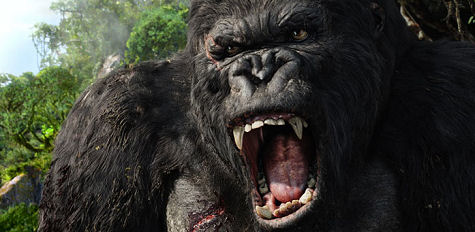
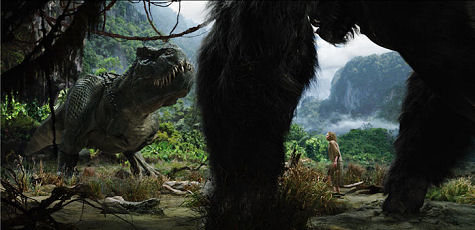
Fragility of existence? What isn’t fragile? What isn’t transitional and ethereal or on the brink of dying or extinction, or about to be shuttered or down-sized? I feel fra- gile as shit when I’m riding my bike down Wilshire Blvd. and some hyper twenty- something in a black Beemer is making an impulse turn and almost knocks me over.
I’ve had an up-and-down time with Weisz over the last five or six years. Mostly pleasurable, but with two or three detours.
I loved that sex scene she shared with Jude Law in Enemy at the Gates. It took me a while to forgive Weisz for starring in those two Mummy movies. But I eventually got past that and then fell for her in Neil LaBute’s The Shape of Things (the film, not the play). Then Weisz made Constantine and I got depressed and pissed all over again. Then she redeemed herself with The Constant Gardener .
If you’re an actor in the big-time, there’s no getting around having to make shitty expensive movies to pay the bills. I’m sorry for this but that’s life.


Constant Gardener director Fernando Meirelles (l.), Weisz at party at Il Cielo on Burton Way in Beverly Hills — Friday, 12.2.05, 6:50 pm.

Weisz hit Los Angeles two days ago (Wednesday) and is now making the press rounds with her Constant Gardener director Fernando Meirelles. It’s 4:10 pm and I’m due to be at a party they’re going to attend at Il Cielo in less than an hour and I’m not even dressed.
There’s a lot more to say about Weisz, but just click on this sound file and you can hear 80% of the interview. I lost the last 20% due to shortage of memory… brilliant. Life isn’t just a daily spiritual and physical challenge, but a technological one.
I lightly danced around a question that you’re not supposed to bring up with actresses. Weisz is currently rail-thin and extremely model-pretty, which raises the fact that she looks somewhat different in Gardener due to a scrubbed-face look (i.e., no makeup) and the slight presence of chipmunk cheeks.
I knew it was a bad question to ask so I didn’t ask it — I wimped out and twinkle- toed my way through a non-question while managing to underline how good she looks now — and that was that and we said our goodbyes and yaddah-yaddah.
Weisz is one of the best we have right now, and she’s got a while to go before she hits 40 and starts having to scramble for the few good parts that are written each year for women of years, character and seasoning.
She told me that Aronofsky, like myself, hates the mentality behind the Jane Aus- ten books and has said to Rachel that “you couldn’t pay me” to see Pride and Prejudice. Well spoken, good man.

Grabs


Envelope reporter Elizabeth Snead, Constant Gardener director Fernando Meirelles, Hollywood Reporter columnist Anne Thompson at Il Cielo — Friday, 12.2.05, 6:25 pm.

Front yard of pre-war home on Orlando Street in West Hollywood — Wednesday, 11.30.05, 8:40 pm.

Exterior of Egyptian theatre, home of the American Cinematheque on Hollywood Blvd. near Las Palmas — Wednesday, 11.30.05, 9:35 pm.

Satisfying a health-food urge at Johnny Rockets — Tuesday, 11.29.05, 10:05 pm.

Gotta Have It

Gotta Have It

I’ve thought and thought about it, and there’s no way Rachel Weisz’s performance in The Constant Gardener isn’t at the very top of the Best Supporting Actress con- tender list.
Why? Because her portrayal of Tessa Quayle, the soul of this highly charged poli- tical thriller, burns the brightest from within.


Rachel Weisz, star of Fernando Meirelles’ The Constant Gardener, at the Peninsula Hotel — Thursday, 12.1.05, 1:25 pm.

When we first meet her, Tessa is a deeply impassioned London leftie with her heart sewn into her shirt-sleeve. Too plainly. When she gets to Kenya with her diplomat husband Justin (Ralph Fiennes), her compassion for Africa’s poor and disdain for corporate malfeasance are so pronounced that she gets herself killed.
But in death, she awakens Justin’s heart. And in so doing we’re left with the notion that a person isn’t just about who and what they are as their life happens, and that we all linger in different ways by the measure of our family and friends.
< ?php include ('/home/hollyw9/public_html/wired'); ?>
Who’s been better this year? I’ve gone down the list and nobody’s really stood up to Weisz’s brush-fire of a performance.
The one who comes closet is Scarlett Johansson’s neurotic actress- without-a- rudder in Woody Allen’s Match Point. She has a tragic dimension, but one that stems from bad luck rather than a humanistic choice, which is what fells poor Tessa.
Shirley MacLaine’s In Her Shoes grandmother is perfect but restrained — a perfor- mance composed of precise little flicks of the wrist.
Diane Keaton in The Family Stone is sharp and lively with a hurting maternal thing going on, but it’s not what anyone would call a reach-for-the-stars, pull-out-the- stops performance.


As Tessa Quayle in The Constant Gardener

Uma Thurman is ripe and vivacious in The Producers, but this sort of thing isn’t award-level…forget it.
Gong Li is obviously a feisty Bette Davis bitch in Memoirs of a Geisha…doing it as best she can. But she’s speaking English all through it, and she’s part of an astonishingly stupefying film.
Michelle Williams doesn’t have enough screen time or peak moments in Broke- back Mountain.
I met with Weisz yesterday (Thursday) for an intriguing 24 minutes in the Garden Room of the Peninsula Hotel, during which we talked about …well, four or five things. Briefly. Between digressions and jokes and ordering of salads and refusings of bread.
Topic A was the new wave of political movies that have been landing in theatres, about which Ben Svetkey wrote a very smart, on-top-of-it piece in last week’s Entertainment Weekly.
The notion is that 9/11, terrorism and the war in Iraq are triggering the same kind of uncertainties that led to the noirish paranoid wave of films in the ’70s like The Parallax View, All The President’s Men and Three Days of the Condor.
Signifying the current of today’s disquiet and anxiety are Syriana, Good Night and Good Luck, Lord of War and The Constant Gardener.
There’s also The Good Shepherd, a CIA historical drama due to open sometime in ’06 (I think), plus at least three 9.11 movies (Oliver Stone’s buried-under-the-rubble drama, Paul Greengrass’s Flight 93 real-time drama, and Mike Binder’s Reign Over Me, which will star Adam Sandler as a guy who can’t get over his wife and kids having been in one of the planes that slammed into the twin towers).


Same hotel, same day, 1:27 pm.

The big ogre in all these films, Weisz believes, are corporations — always behind the dirty work, always pushing for suppression of the truth, always with the sociopathic rationales.
We also spoke about her next film, The Fountain (Warner Bros.), in which she stars with Hugh Jackman. Directed and written by her husband…I’m sorry, her boyfriend Darren Aronofsky. It may make its first appearance at the Cannes Film Festival in May ’06, she said. Aronofsky has only recently finished cutting it.
Here’s a link to a recently-up Fountain teaser.
The IMDB log line says The Fountain is about three parallel stories spanning over a thousand years, all concerning love, death, spirituality and the fragility of our existence in this world.”
Fragility of existence? What isn’t fragile? What isn’t transitional and ethereal or on the brink of dying or extinction, or about to be shuttered or down-sized? I feel fra- gile as shit when I’m riding my bike down Wilshire Blvd. and some hyper twenty- something in a black Beemer is making an impulse turn and almost knocks me over.
I’ve had an up-and-down time with Weisz over the last five or six years. Mostly pleasurable, but with two or three detours.
I loved that sex scene she shared with Jude Law in Enemy at the Gates. It took me a while to forgive Weisz for starring in those two Mummy movies. But I eventually got past that and then fell for her in Neil LaBute’s The Shape of Things (the film, not the play). Then Weisz made Constantine and I got depressed and pissed all over again. Then she redeemed herself with The Constant Gardener .
If you’re an actor in the big-time, there’s no getting around having to make shitty expensive movies to pay the bills. I’m sorry for this but that’s life.


Constant Gardener director Fernando Meirelles (l.), Weisz at party at Il Cielo on Burton Way in Beverly Hills — Friday, 12.2.05, 6:50 pm.

Weisz hit Los Angeles two days ago (Wednesday) and is now making the press rounds with her Constant Gardener director Fernando Meirelles. It’s 4:10 pm and I’m due to be at a party they’re going to attend at Il Cielo in less than an hour and I’m not even dressed.
There’s a lot more to say about Weisz, but just click on this sound file and you can hear 80% of the interview. I lost the last 20% due to shortage of memory… brilliant. Life isn’t just a daily spiritual and physical challenge, but a technological one.
I lightly danced around a question that you’re not supposed to bring up with actresses. Weisz is currently rail-thin and extremely model-pretty, which raises the fact that she looks somewhat different in Gardener due to a scrubbed-face look (i.e., no makeup) and the slight presence of chipmunk cheeks.
I knew it was a bad question to ask so I didn’t ask it — I wimped out and twinkle- toed my way through a non-question while managing to underline how good she looks now — and that was that and we said our goodbyes and yaddah-yaddah.
Weisz is one of the best we have right now, and she’s got a while to go before she hits 40 and starts having to scramble for the few good parts that are written each year for women of years, character and seasoning.
She told me that Aronofsky, like myself, hates the mentality behind the Jane Aus- ten books and has said to Rachel that “you couldn’t pay me” to see Pride and Prejudice. Well spoken, good man.

Grabs


Envelope reporter Elizabeth Snead, Constant Gardener director Fernando Meirelles, Hollywood Reporter columnist Anne Thompson at Il Cielo — Friday, 12.2.05, 6:25 pm.

Front yard of pre-war home on Orlando Street in West Hollywood — Wednesday, 11.30.05, 8:40 pm.

Exterior of Egyptian theatre, home of the American Cinematheque on Hollywood Blvd. near Las Palmas — Wednesday, 11.30.05, 9:35 pm.

Satisfying a health-food urge at Johnny Rockets — Tuesday, 11.29.05, 10:05 pm.

Match Guilt

I’m feel I should be beating the drum more loudly for Woody Allen’s Match Point (DreamWorks, 12.28) because it’s not just his best in a long time, but one of the best of the year. And I need to stop being wimpy about this.
It really is Allen’s darkest and most precisely calibrated film since Crime and Misdemeanors…clean, cruel and ironic as hell.


Scarlett Johansson, Jonathan Rhys-Meyers in Woody Allen’s Match Point

Any film worth its salt has to have thematic clarity. Match Point‘s theme is clear as a friggin’ bell, and with echoes of George Stevens’ A Place in the Sun and Fyodor Dostoevsky’s “Crime and Punishment,” and it boils down to this:
Be smart and vigilant in life, and maybe you’ll get what you want, or what you think you need. But if you want things to really turn out, be lucky.
People hate this notion because it means our lives are little silver balls whirling around a roulette wheel. Maybe we’ll plop into a red or black slot at the right time, or into an odd or even number at the wrong time…and maybe something amazing or comical or devastating will come of it. Life is cold, man.
If there wasn’t such a herd mentality in this town, if people weren’t so political and equivocal, Match Point could actually be in the mix for Best Picture.
It’s a slightly better film than Good Night, and Good Luck. It’s not as much of a sad and broken-hearted thing as Brokeback Mountain, but it has as much confidence and self-awareness as Walk the Line. And it’s a good five or ten times better than Memoirs of a Geisha.


The Spanish one-sheet, which, if you ask me, has it all over the U.S. version

Let’s be really honest. I’m not ballsy enough to stand up for the Woody all alone, partly because deep down I’m only 90% supportive of Match Point (I have some problems with this and that aspect, but nothing humungous), but I feel bolder with Oscar prognosticators Pete Hammond, Sasha Stone and Eugene Hernandez listing it among their top five.
So I guess I’m like Bobby Kennedy after Eugene McCarthy got 42% of the vote in the 1968 New Hampshire primary against Lyndon Johnson. I’m going, “Uhh, okay …there’s something happening here and I’m joining the insurrectionists.”
Screw the herd mentality and the hell with political and equivocal. The more I think about Match Point, the better it seems. Woody’s easily a Best Original Screenplay contender, and…well, at least that.
I said last May at the Cannes Film Festival that Match Point isn’t quite as good as Woody’s Crimes and Misdemeanors, but it deals the same kind of cards and has its footing in more or less the same philosophical realm.
And I’ve said this three or four times, but the finale kills.
Set in present-day England (mostly London, Match Point is about a tennis instruc- tor namd Chris Wilton (Jonathan Rhys- Meyers) who relationships his way into an upper-crust English family by way of one of his male students, a cheerful smoothie named Tom Hewett (Matthew Goode).

Chris is soon romancing and then marrying Tom’s sister Chloe (Emily Mortimer), but almost-as-quickly getting involved with Tom’s fiance, a struggling American actress named Nola Rice (Scarlett Johansson).
The story essentially turns on the matter of Nola becoming pregnant and insisting that Chris leave his wife for her, and how Chris deals with the pressure of this.
Rhys-Meyers handles his part skillfully and with exactly the right balance between terrible, gut-wrenching guilt and the suggestion of a sociopathic undercurrent. But it’s Johansson, far and away, who gives the finest performance. She seems in possession of a fierce, almost Brando-esque naturalism here. She grabs Allen’s dialogue by the shirt collar and slaps it around.
Match Point feels a bit pat from time to time. The talk feels a little too polite here and there, and certain aspects of the plot feel a bit forced. But that’s Woody these days, and in this instance, in this realm, that’s pretty damn good.