
slider

Renewed Depression

So COVID-wise we’re nearly back to April…right? The big cities flatlining or declining, but with serious infection spikes in the hinterland, particularly in the southeast, Sun Belt and portions of the west.
I’m so sick of this. We all are. I’m still living like a cloistered monk for the most part, not counting trips to the market and weekend hikes (plus two recent dental trips to Mexico). I feel so deflated, so gloomy.
Three or four weeks ago I was nursing this fantasy that things would gradually level off for the most part, followed by a modest fall surge sometime in late September or October. I’m telling myself that the spikes have mainly been caused by careless red-state bumblefucks, and that’s probably true for the most part. If they’d only been stricter with themselves for a bit longer! The European union nations lived and behaved in a fairly hardcore fashion, and now they’re experiencing a serious decline across the board.
But not your rough-and-ready, whiteside-wearing Americans! We reserve the right to be assholes, to fart upwind, to go mask-free, to throw fat grandma off the train if need be, etc.
From “Coronavirus Cases Spike Across Sun Belt as Economy Lurches into Motion,” a 6.14 N.Y. Time story by Julie Bosman and Mitch Smith: “The spikes in cases bring leaders in these states to a new crossroads: (a) Accept the continued rise in infections as an expected cost of reopening economies or (b) consider slowing the lifting of restrictions aimed at stopping the spread or even imposing a new set of limits.”
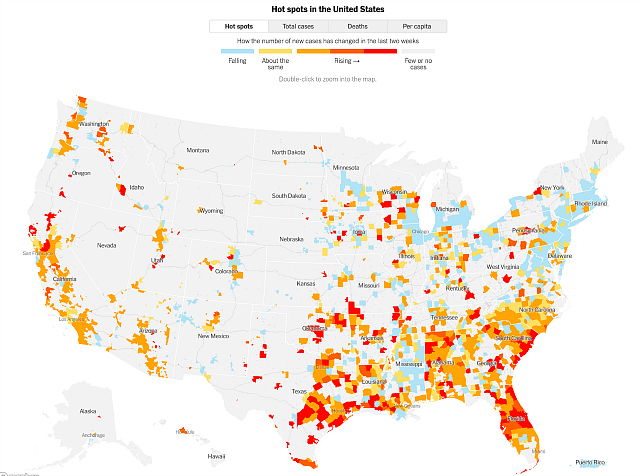
COVID spike map stolen from N.Y Times.
To Hell With Bilbo Baggins
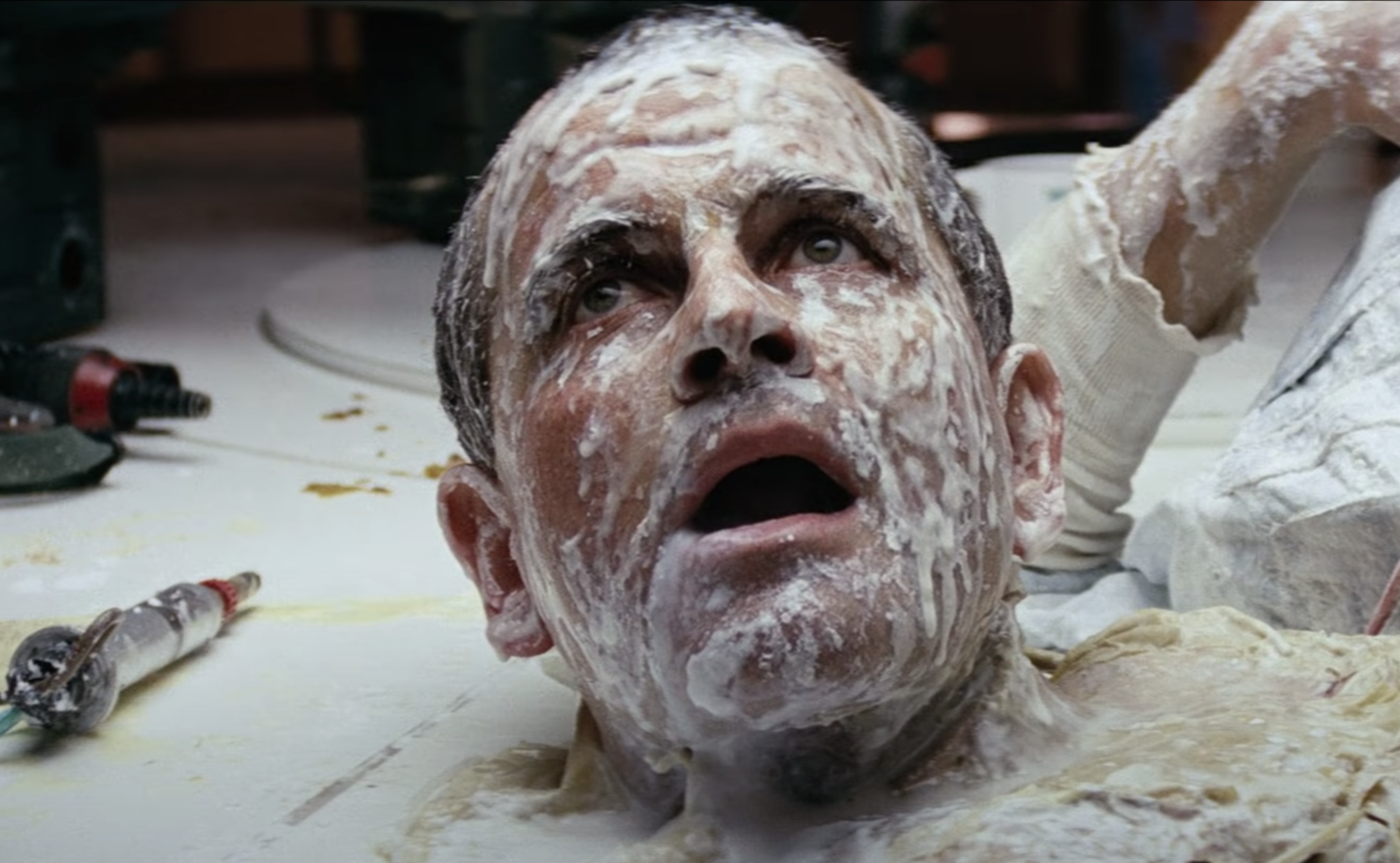
Ian Holm‘s death wasn’t a terrible thing — he lived a rich and radiant existence for 88 years — but news editors and commentators calling him “the man who played Bilbo Baggins” in the Lord of the Rings and The Hobbit film series is a gruesome send-off.
‘
I first took notice 46 years ago when Holm played Nicholas Porter, the cruise-ship executive in Richard Lester‘s Juggernaut (’74), and especially five years later when he played Ash-the-robot in Ridley Scott‘s Alien (’79). His Sam Mussabini role in Hugh Hudson‘s Chariots of Fire (’81) was also noteworthy.
Agree or not, but these are the three Holm performances that immediately came to mind when I heard the news.
Very Effective But Calm Down
I don’t want to get too cranked about Patrick Vollrath’s 7500, a terrorist-plane-hijack thriller that’s currently streaming on Amazon Prime. Because as good as it is, it’s nowhere near the level of Paul Greengrass‘s United 93 — by any measure the gold-standard in this realm.
A poor man’s version of that brilliant 2006 film, 7500 is claustrophically designed (the whole thing takes place in a pilot compartment of a commercial jet during a Berlin-to-Paris flight) and technically effective as far as it goes. It held me in its grip, and I understand why Indiewre‘s Eric Kohn has called it “the most exciting cinematic ride of the year so far.”
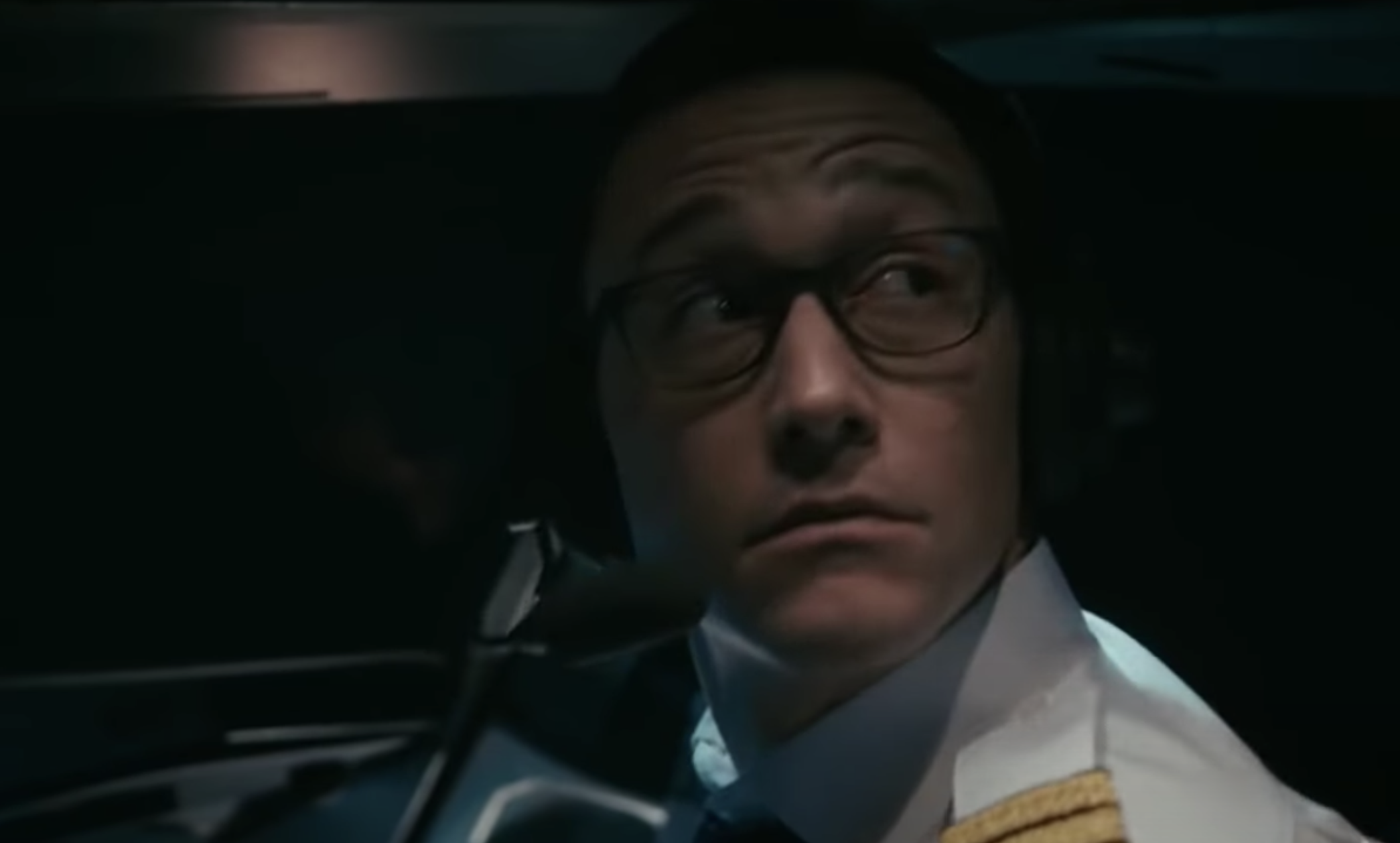
But at the same time I was feeling a wee bit irritated by Joseph Gordon Levitt‘s performance as Tobias Ellis, an overly emotional, bordering-on-girlyman co-pilot coping with a team of 9/11-styled fanatics. (By the way, did you know that “Muslim hijackers” is a “racist trope” and that a film that serves up same is dealing in “antiquated stereotypes“?)
The initial storming of the cabin results in the death of the pilot (Carlo Kitzlinger‘s “Michael”) but also with JGL managing to bludgeon a would-be hijacker into unconsciousness as well as keep the other two baddies out by locking the cabin door.
It then becomes a question of whether or not the most belligerent of the two lock-outs can goad JGL into opening the door in order to save the lives of two hostages with knives at their throats — a passenger and a flight attendant named Gokce (Aylin Tezel) who happens to be JGL’s wife.
We know as well as JGL that if the hijackers get into the cabin they’ll crash the jet into the middle of a major city and kill God knows how many people. Letting them in is therefore not an option. And yet director-writer Vollrath tries to wring emotional tension out of the fact that Gokce’s throat will be slit if JGL doesn’t open up…”oh, no…oh, please!”
Do you not understand the basics, Vollrath (and for that matter JGL)? The terrorists don’t get into the cockpit, and so as much as it makes us sad and anguished I’m afraid it’s “hasta la vista, baby” as far as Gokce is concerned.
A cowardly man might say “oh, no, my poor wife is going to be killed, but maybe I can save her life by allowing the terrorists into the cockpit and letting them fly the plane into the Eiffel Tower.” Only a whining, squeeky little mouse would think that way, but that’s what JGL does. He frets and grimaces and goes “oooh no, don’t kill her!” as his panicked eyes fill with tears.
Fucking little candy-ass…grow a pair! Have you ever seen a Clint Eastwood film? Learn to snarl.
And then an even bigger candy-ass comes along — Omid Memar‘s “Vedat”, a junior terrorist (18 years old) who’s a bit conflicted about mass murder. JGL senses early on that Vedat isn’t all that hardcore and might even be a soft touch. This leads to a big tussle-in-the-cockpit scene in which Vedat is openly moaning and whimpering about whether or not to thwart his radical colleagues and save the lives of JGL and the passengers. Except the whimpering goes on too long, and I realized about about 30 seconds in that Memar sounds like the crying and moaning Joan Cusack in that control booth panic scene in Broadcast News.
Here’s the Cusack mp3 — the scene itself is after the jump.
Kubrick Scratching Head in Heaven

For God knows how many tens of millions, Vera Lynn‘s “We’ll Meet Again” is known for one thing and one thing only — as a tuneful accompaniment to a montage of nuclear explosions at at the very end of Stanley Kubrick‘s Dr. Strangelove (’64).
So in the wake of Lynn’s passing it’s fairly mind-blowing that a 6.18.20 obit by Variety‘s Manori Ravindran fails to mention the Strangelove linkage.
Here are three guesses as to why Ravindran, Variety‘s London-based international editor, dropped the ball.
One, because the 30something staffer wanted to write a positive-minded, hooray-for-a-legendary-singer tribute to Lynn, and felt that the satirical Strangelove association would somehow diminish that. Or two, because Claudia Eller, who’s been furloughed from her Variety editor-in-chief post over safety/sensitivity issues, wasn’t there to catch the omission. Neither did Eller’s successor, Cynthia Littleton.
Bring Us The Head of Ansel Elgort
“Well, she was just 17, you know what I mean…”
57 and 1/2 years ago Paul McCartney authored a song about love/sex with a 17-year-old lassie. At the time (late October ’62) McCartney was on intimate terms with Celia Mortimer, who herself was 17. “I Saw Her Standing There” was released on 3.22.63 and nobody batted an eye. “Whatever, mate…the bird was 17,” etc.
But if, God forbid, 2020 cancel culture had somehow descended upon early ’60s England like a flash flood, McCartney might have sustained serious career damage if Mortimer had decided to accuse him after-the-fact of “sexual assault”, which can sometimes be translated as “it was my first time and a bit painful, and the sex wasn’t followed by tender emotional caresses and perhaps the beginning of a serious relationship, and so I felt used.” England’s age of consent was 16 at the time so at least the 20-year-old McCartney would have been legally in the clear.
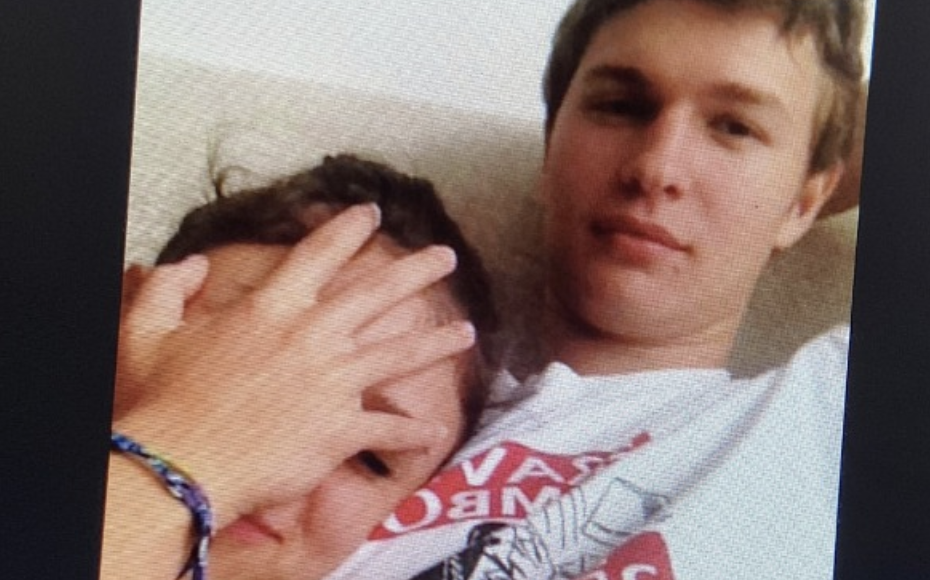
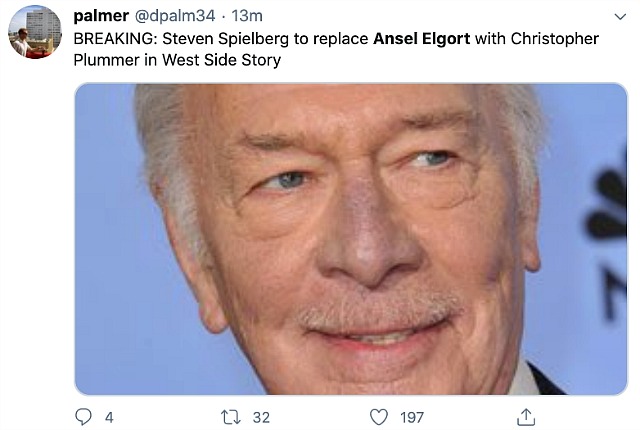
Some of this reflects upon West Side Story star Ansel Elgort, 26, who is being accused of sexual assault for having had it off with a 17 year-old named “Gabby” in the vicinity of December 2014. (AE turned 20 on 3.20.14.) Right now #MeToo and safe-space Twitter wants him dead and dismembered. Even though the liason apparently happened in New York State, where the age of consent is 17.
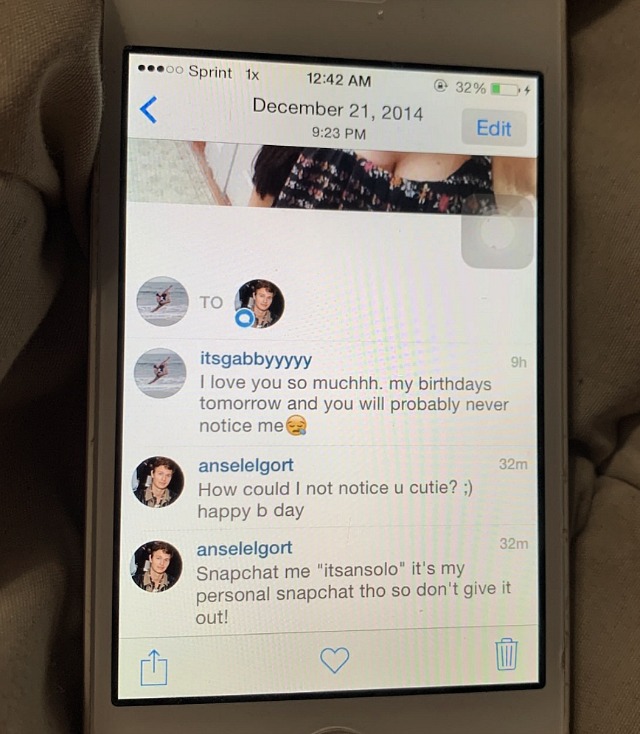
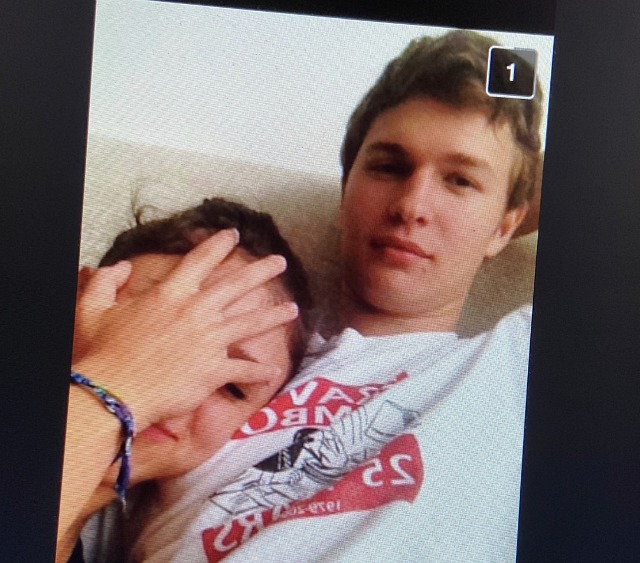
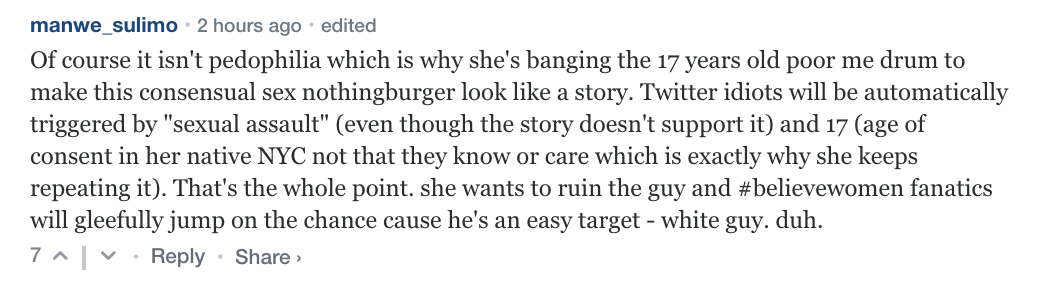
Except Gabby’s description doesn’t sound like sexual assault — the sex began as consensual if not eager-beaver on her part, but she felt badly afterwards. It almost sounds like an Aziz Ansari-type situation.
In the real world, of course, a 20 year-old guy having it off with a 17 year-old is far from Polanski-ville. Some Twitter fanatics have even claimed AE is guilty of pedophilia, which is ridiculous.
In any event Steven Spielberg and the the Disney-owned 20th Century Studios, the director and distributor of the forthcoming West Side Story (12.18.20), are…how to put this?…accepting of the Gabby situation (how could they not be?) but are probably not, shall we say, entirely at peace with it. The idea, I would imagine, would be to gently put a damper on the episode (and particularly the Twitter brush fire) in whatever way that might be deemed appropriate, sensitive and non-suppressive.
Oh, and the thing about Elgort having allegedly blurted out the n-word in high school? High-school kids say and do stupid, hurtful things all the time. Leave it there.
Spending Big Dough = Badge of Prestige
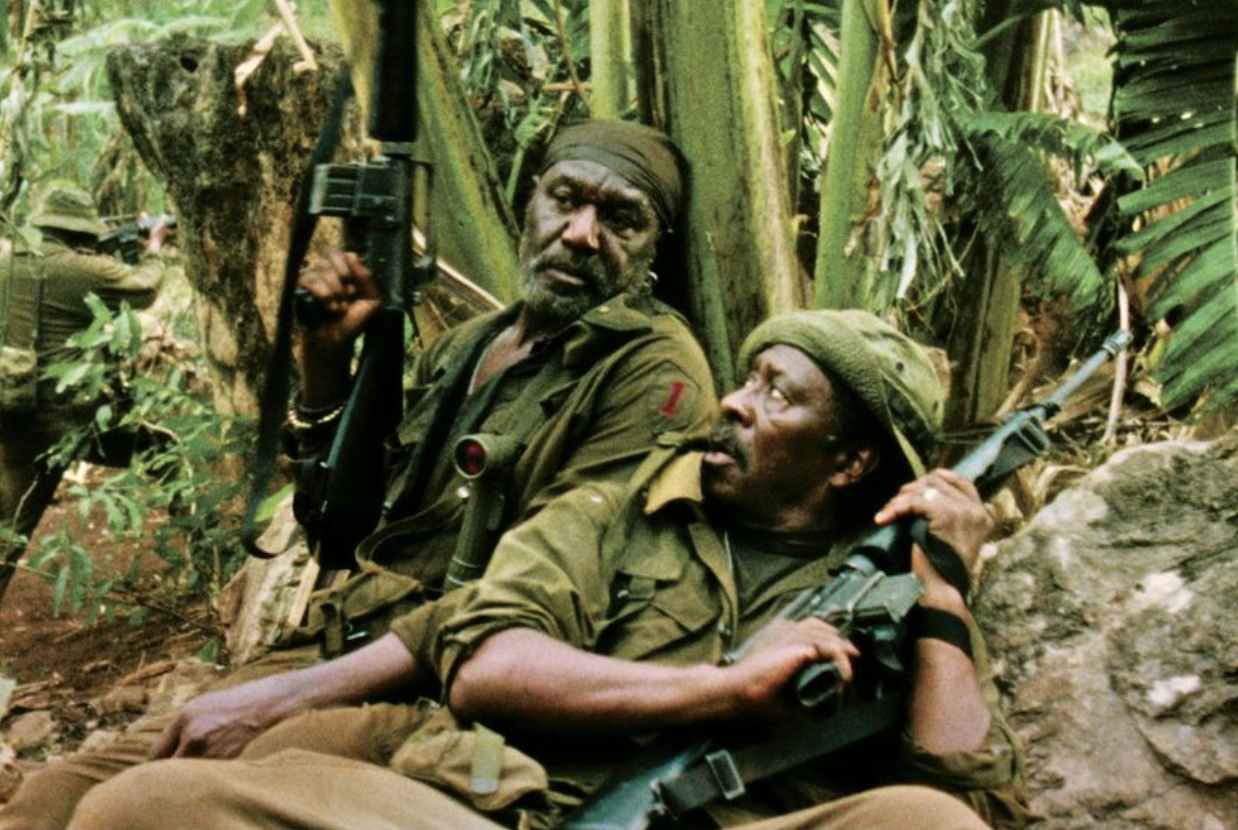
In a 1.16 interview piece, Da 5 Bloods cinematographer Newton Thomas Sigel told The Insider‘s Jason Guerrasio that Netflix honchos were apprehensive when it came to allowing Spike Lee to shoot flashback scenes on grainy 16mm film.
Netflix was allegedly concerned about the cost of using an expensive 16mm film stock that gave the picture a “chrome look,” which Lee was insisting upon. That plus having to send the 16mm footage from Vietnam/Thailand to the U.S. for “processing at a specific lab” added to an allegedly burdensome price tag.
I have a semi-sophisticated eye when it comes to exotic or old-time film stocks, and all I thought when I saw the 16mm footage in Da 5 Bloods was “okay, Spike shot in 16mm to make it look 50 years old.” I didn’t say to myself “holy shit, what a super-authentic 16mm chrome look!” I’ll bet there are no more than 75 people on the planet earth who can tell the difference between regular, old-style 16mm footage and 16mm “chrome” footage, whatever the hell that looks like.
In other words, 99.9% of the viewing audience wouldn’t recognize 16mm chrome footage if it shook them by the lapels.
I don’t know what the 16mm costs of Lee’s film came to. Maybe they were considerable and maybe not. But if I was a Netflix exec riding herd on Da 5 Bloods, I would have said to Spike, “Okay, but why do we have to spend hundreds of thousands on exotic 16mm film plus expensive processing when you could shoot your ’60s sequences on a regular 4K digital camera and then use 8mm, an app that I have on my iPhone, to make it look like 16mm? Very few would know the difference.”
I’ve used 8mm two or three times to make my iPhone videos look like crappy ’60s or ’70s-style home movies, and it always looks pretty good.
As for Netflix telling Lee that it wouldn’t pay to de-age the four long-of-toothers (Delroy Lindo, Jonathan Majors, Clarke Peters, Isiah Whitlock Jr.) for Vietnam flashback combat sequences, I for one thought it was cool and daring that Lee didn’t do the usual usual.
Greatest Home Video Experience Of My Life

Hollywood Elsewhere to Sony’s Grover Crisp, Roundabout Entertainment’s David Bernstein, restoration guru Robert Harris & everyone else who pitched in:
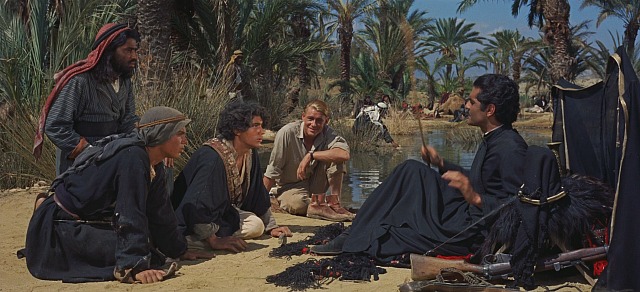
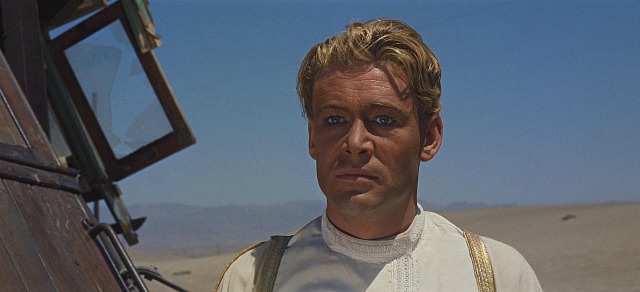
Last night I watched Part One of Sony’s all-new Lawrence of Arabia 4K UHD Bluray, and I’m trying to think of a more sophisticated way of saying “wow!” What if I use boldfacing and capitalizing and say “WOW!“?
When it comes to assessing 4K Blurays HE is all about “the bump,” and holy moley, does this puppy deliver in that respect! The bump effect is almost startling — a dramatic, unmissable upgrade from not just the 2012 1080p Bluray but even the 4K streaming version that I purchased in December 2016. Due to the sharpness, radiance, steadiness and consistency, and augmented by HDR-10 or Dolby Vision.
A thousand conveyances to you and yours for delivering the most exciting and orgasmic home video experience of my life — a mind-blowing eye bath.
This gives me hope that I might notice a similar bump effect from the forthcoming 4K Bluray of Spartacus, which of course is also drawn from (a 6K scan of) large format elements.
I was especially impressed with the rendering of LOA‘s nighttime scenes. David Lean and dp Freddie Young didn’t shoot them after dusk, of course, but they really look as if they might have been. I’ll be watching Part Two sometime later today or tonight, and I can’t wait for the Jose Ferrer “beating in Derra” sequence and the “no prisoners!” moment on the way to Damascus.
One small problem: I didn’t want to listen for the 179th time to Maurice Jarre’s overture so I flipped forward a chapter, naturally presuming it would take me to the Columbia logo and the main titles. No! It took me to Peter O’Toole painting a watercolor map in his “nasty dark little room” in Cairo. I adore the main title, fatal motorcycle ride and St. Paul’s funeral sequences. But the way to see them on the 4K is to either submit to the overture or fast-forwarding. (I don’t like fast forwarding as as rule — I only use chapter stops.)
By the way, even the 4K UHD Dr. Strangelove looks slightly different. The faces look less white or glare-y. They have a grayish graded quality. And, for some reason, the bars on the side that render the image in 1.66 are no longer black — they’re now very dark gray.
I don’t have a huge amount of interest in watching the other four in the package (Gandhi, A League of Their Owen, Jerry Maguire, Mr. Smith Goes to Washington) but I’ll get around to them.

HE to Streisand: Watch The Video
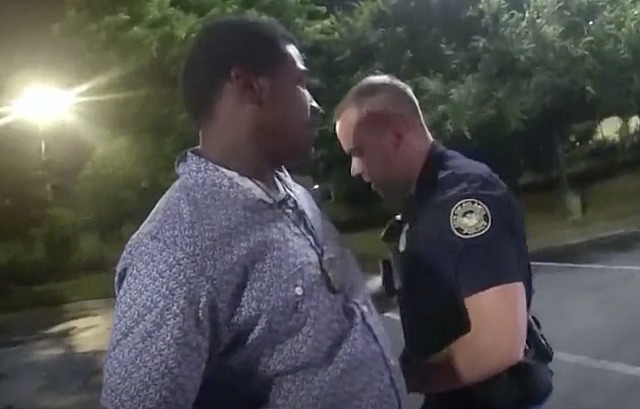
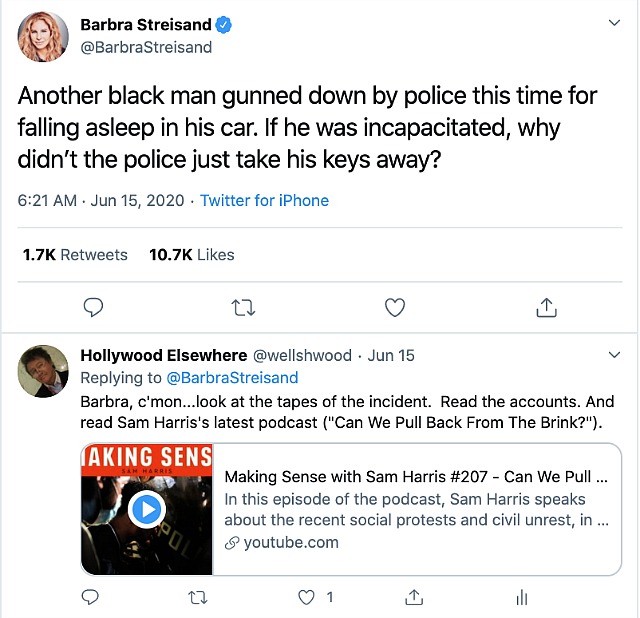
Video tells the tale: Rayshard Brooks was gently told to drive out of the Wendy’s take-out line and into a parking place. If he had done that it probably would’ve ended there. But Brooks was so bombed he couldn’t even manage that. And then he freaked when they decided to cuff him.
From “Look At The Facts in the Rayshard Brooks Case — The George Floyd Killing Was Different“, a 6.18.21 USA Today op-ed by Michael J. Stern, a member of USA Today‘s Board of Contributors and a federal prosecutor for 25 years in Detroit and Los Angeles.
Subhead: “There is no shortage of police misconduct due to racism. But claiming it where it may not exist weakens the righteous cause of stamping it out.
“That a man died [outside an Atlanta Wendy’s] is tragic. But the protests, celebrity outcry and general media capitulation that equates Brooks’ death with that of George Floyd, and countless other African Americans who were murdered at the hands of flagrant police misconduct, is wrong.
“In a headline reminiscent of the National Enquirer, the Los Angeles Times ran an editorial [on Tuesday, 6.16] that was titled ‘Atlanta police killed a Black man for being drunk at Wendy’s.’ No — Mr. Brooks was not killed for being drunk.
“Rayshard Brooks was killed after resisting arrest, attacking two police officers, taking an officer’s Taser and shooting it at a police officer. The decision by the Times’ editorial board to intentionally omit this last fact is damning proof of its effort to create a narrative that serves a social agenda, despite evidence that supports a contrary conclusion.
“Atlanta’s district attorney, Paul Howard, announced felony murder charges Wednesday against the officer who shot Brooks.
“American Bar Association rules prohibit prosecutors from making pretrial statements that could influence public perception and prejudice an accused’s ability to get a fair trial. Howard violated this rule by making a lengthy presentation of evidence that supported his position and ignored key facts that did not. Judges, prosecutors and defense attorneys typically refer to Howard’s impropriety as trying the case in the press.
“A new and disturbing allegation presented by the district attorney is that the officer kicked Brooks after he was shot. Though acts after an event can be considered reflective of an earlier intent, the pivotal actions in this case will focus on what happened in the seconds before the shooting.
“In Georgia, an officer is entitled to use deadly force when he reasonably believes his life is in danger or he’s at risk of receiving a serious physical injury. When this case goes to trial, the jurors will be instructed that they must consider the context of Brooks attacking the officer, grabbing the Taser and shooting the Taser at the officer. This analysis includes the possibility that if Brooks hit the officer with the stolen Taser, he could grab the officer’s gun and shoot him.
Uses The Term “Twitter Robespierres”
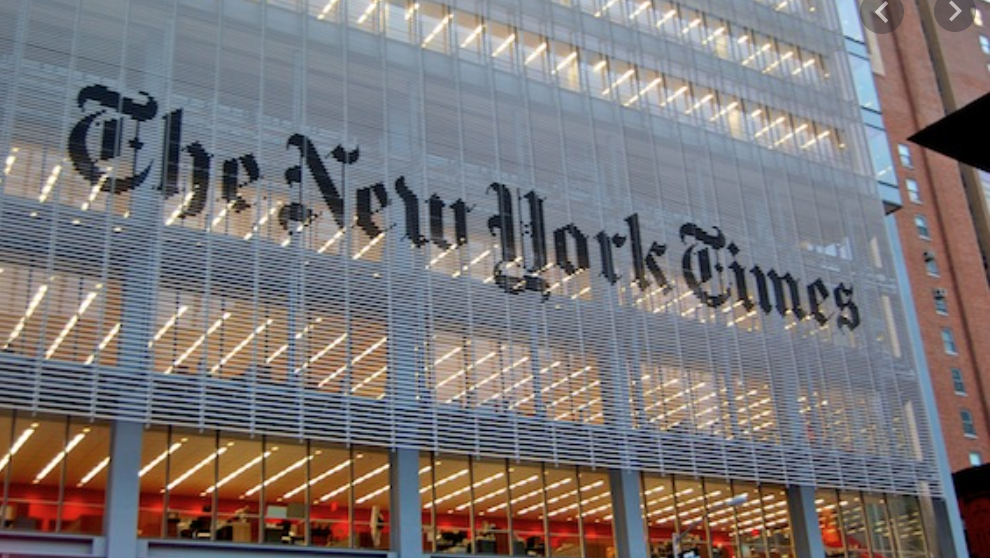
In a 6.12 piece called “The American Press Is Destroying Itself“, Matt Taibbi has nailed the current p.c. zeitgeist, and his observations are downright frightening.
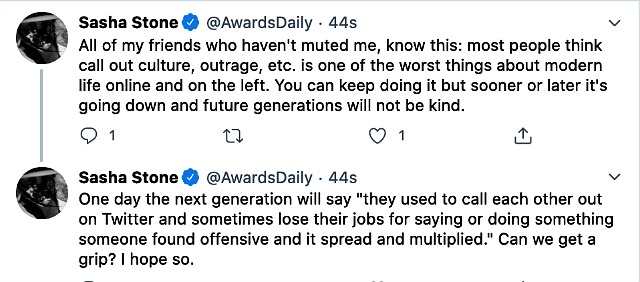
“The American left has lost its mind, [having] become a cowardly mob of upper-class social media addicts, Twitter Robespierres who move from discipline to discipline [while] torching reputations and jobs with breathtaking casualness.
“The leaders of this new movement” — the BLM absolutists, Millennial wokester “safeties” and their terrified chickenshit allies — “are replacing traditional liberal beliefs about tolerance, free inquiry, and even racial harmony with ideas so toxic and unattractive that they eschew debate, moving straight to shaming, threats, and intimidation. They are counting on the guilt-ridden, self-flagellating nature of traditional American progressives, who will not stand up for themselves, and will walk to the Razor voluntarily.
“They’ve conned organization after organization into empowering panels to search out thoughtcrime, and it’s established now that anything can be an offense, from a UCLA professor placed under investigation for reading Martin Luther King’s ‘Letter from a Birmingham Jail’ out loud to a data scientist fired from a research firm for — get this — retweeting an academic study suggesting nonviolent protests may be more politically effective than violent ones! And now this madness is coming for journalism.
“Beginning on Friday, June 5th, a series of controversies rocked the media. By my count, at least eight news organizations dealt with internal uprisings (it was likely more). Most involved groups of reporters and staffers demanding the firing or reprimand of colleagues who’d made politically ‘problematic’ editorial or social media decisions. The New York Times, the Intercept, Vox, the Philadelphia Inquirier, Variety, and others saw challenges to management.”
Please read the whole thing, but the bottom line (and just because Mark Harris might disagree with this notion doesn’t mean it’s not true) is that the progressive left HAS lost its mind, and you don’t have to be a conservative or (God forbid) a Republican to acknowledge this. I began as a good Democrat in my tweener and teen years, and I’ve regarded myself as left-leaning iconoclast since I was 20 or thereabouts. But over the last two or three years calling myself a staunch leftie has become untenable. Because the left has gone lunatic.
The wokester “safeties”, POC feminist blame-shriekers, cancel culture advocates, #MeToo tunnel-visionists (Taibbi doesn’t even mention the nonsensical conviction, in defiance of established facts, that Woody Allen is guilty of molesting Dylan Farrow in August 1992), progressive guilt-trippers and fanatical Khmer Rouge purists are running the journalist asylum.
These people are beyond scary, and yet the idea that come November voters will have to choose between allowing these progressive banshees free reign and giving another term to the salivating, sociopathic racism and curdled delusion of Donald Trump is a false scenario.
The thing to cling to in this surreal hurricane is sensible, skeptical, carefully measured liberalism — the kind that isn’t so terrified of being accused or white privilege and/or racism that a semblance of reality actually penetrates the cerebellum. I’m talking about the Bill Maher, Joe Rogan (except for his hateful dismissals of Doddering Joe), Matt Taibbi, Jordan Peterson, Sam Harris, Brett Stephens, Bari Weiss, Sasha Stone, Richard Rushfield, Jordan Ruimy and Katie Herzog cabal.
Boiling it down to eight words, I really can’t be a leftie any more. Because the 21st Century “woke” terror (named in honor of Maximilien Robespierre and the “French reign of terror” of the 1790s) has become too manic, too smothering, too horrifying.
I’ll never be a rightie (I took too many acid and mescaline trips in my 20s for that to ever happen) and the idea of being a comme ci comme ca centrist sounds boring as hell. I just know that the shrieking, accusatory, career-cancelling, sensitive-to-a-fault left has gone around the bend and over the waterfall. They’re just as unhinged and foam-at-the-mouth frightening as the bumblefuck Trump supporters who will attend the Tulsa rally on Juneteenth (i.e., Friday the 19th).
And while I still trust the N.Y. Times‘ reporting on foreign matters, COVID and climate as well as book, film and theatre criticism, I don’t trust them at all in terms of reporting about our domestic racial turbulence and certainly not on the opinion pages — they’ve totally gone over to the regimented BLM-filtered side and are now representing the activist journalism fraternity in this respect.
To bring it all back home, Taibbi has written that “people depend on [journalists] to tell them what we see, not what we think. What good are we if we’re afraid to do it?”
Celebration Time, C’mon!
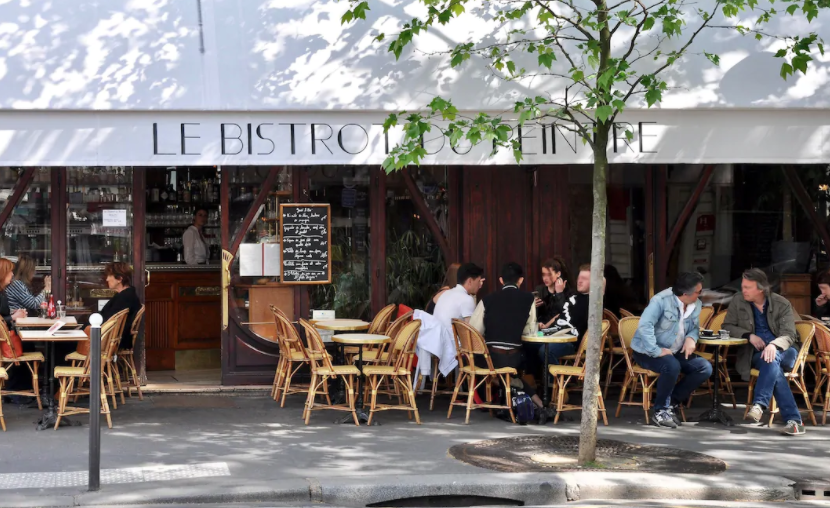
I’m still wearing my USA flag mask and washing my hands like Howard Hughes, but out in the big West Hollywood world people were congregating and celebrating and basically saying “fuck it…enough!” I was rumblehogging up and down the Sunset Strip around 5 pm yesterday afternoon, and you should have seen the outdoor crowds and the capacity-filled tables and sensed the general merriment…the relief! It was like being in Arkansas or Arizona or, better yet, Paris! Just about every significant cafe and eatery was open to capacity business. (Outdoors, at least.) Urth Caffe, Pink Taco, Mel’s Drive-In, Wahlburgers, Coffee Bean. And you know what percentage of the customers were wearing masks? Maybe 15%, if that. Okay, 20%.
Most Wowser Oscar Year Ever

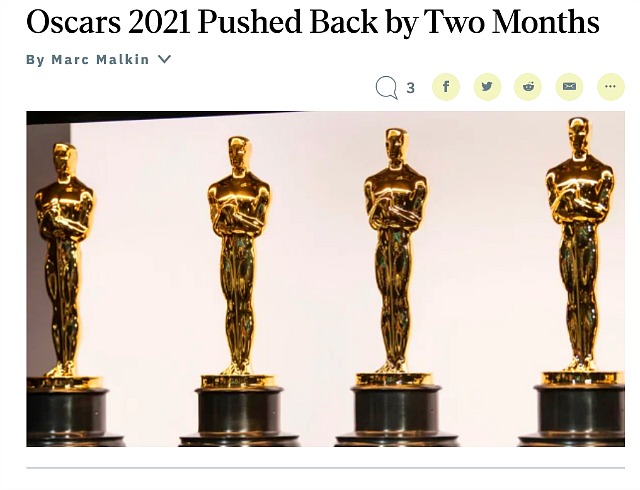
In yesterday’s “Oscars in April ’21…But Of Course!” piece, I speculated (and not all that brilliantly) that with the Sunday, 2.28 Oscar telecast expected to be postponed “by as many as eight weeks,” the new Oscar date will either be 4.18.21 or 4.25.21, which of course are both Sundays.
It was announced this morning that the Oscar telecast will indeed air on 4.25.21, and that the 2020 release year will be extended for a full two months, or until Sunday, 2.28.21. I’m assuming that the Academy voting deadline will come a week or so before 4.25. Let’s say Friday, 4.16 or Monday, 4.19. That will leave roughly seven weeks of campaigning between 2.28.21 and the voting cut-off.
What will this mean as far as the Phase One (pre-Oscar nomination) and Phase Two (post Oscar nomination) mindsets are concerned? I’ll tell you what it means. It means there will be two (click!), two (count em!), two Phase Ones and one Phase Two.
It also means that with the Telluride, Toronto, Venice and N.Y. film festivals sticking to their usual early fall dates, we’re looking at an extended award season that will last nearly eight months instead of the usual five-and-a-half or six (Labor Day to late February).
This is a one-off situation, remember. It’ll be back to business-as-usual for the ’21 and early ’22 Oscar year. We’re in uncharted territory, yes, but it’s not that hard to figure the angles and strategies.
To repeat, Phase One is not going to be shortened or pushed back — it’s going to expand. Remember that a good portion of the Oscar contenders are still going to “open” (even if that means a streaming debut) by 12.31.20. Today’s announcement is about accommodating the overflowers whose post-production skeds have been delayed by COVID.
But there won’t be any backing away from the traditional Phase One promotions of November and December. Parties and promotion-wise, people are 100% accustomed to Oscar season happening in November and December, partly if not largely because the holiday period is when the non-devotional dilletantes go to the movies (along with the summer).
So the traditional Phase One (call it Phase One A) will still happen in November-December, and then the brand-new Phase One B (which will naturally include some Phase One A repeats and redoublings) will kick off in late January and February.
And then, after the nominations are announced in early to mid-March, Phase Two will kick in, lasting from mid March to roughly April 16th or 19th, give or take.
So to summarize, we’ll be seeing two Phase Ones followed by a two-months-later-than-usual Phase Two. And then comes the most glorious Oscar telecast of all time on 4.25 — a Night of a Thousand Superstars with an up-with-Hollywood, “America needs movies and movies need America!”, rally-round-the-flag-boys esprit de corps that will be awesome to behold.