Last night I finally watched episode #2 of HBO’s Perry Mason series. It continued, of course, with that smokey, gunky, grimly desaturated, grimey thing. But I finally figured out what’s really bothering me about this show, and here it is:
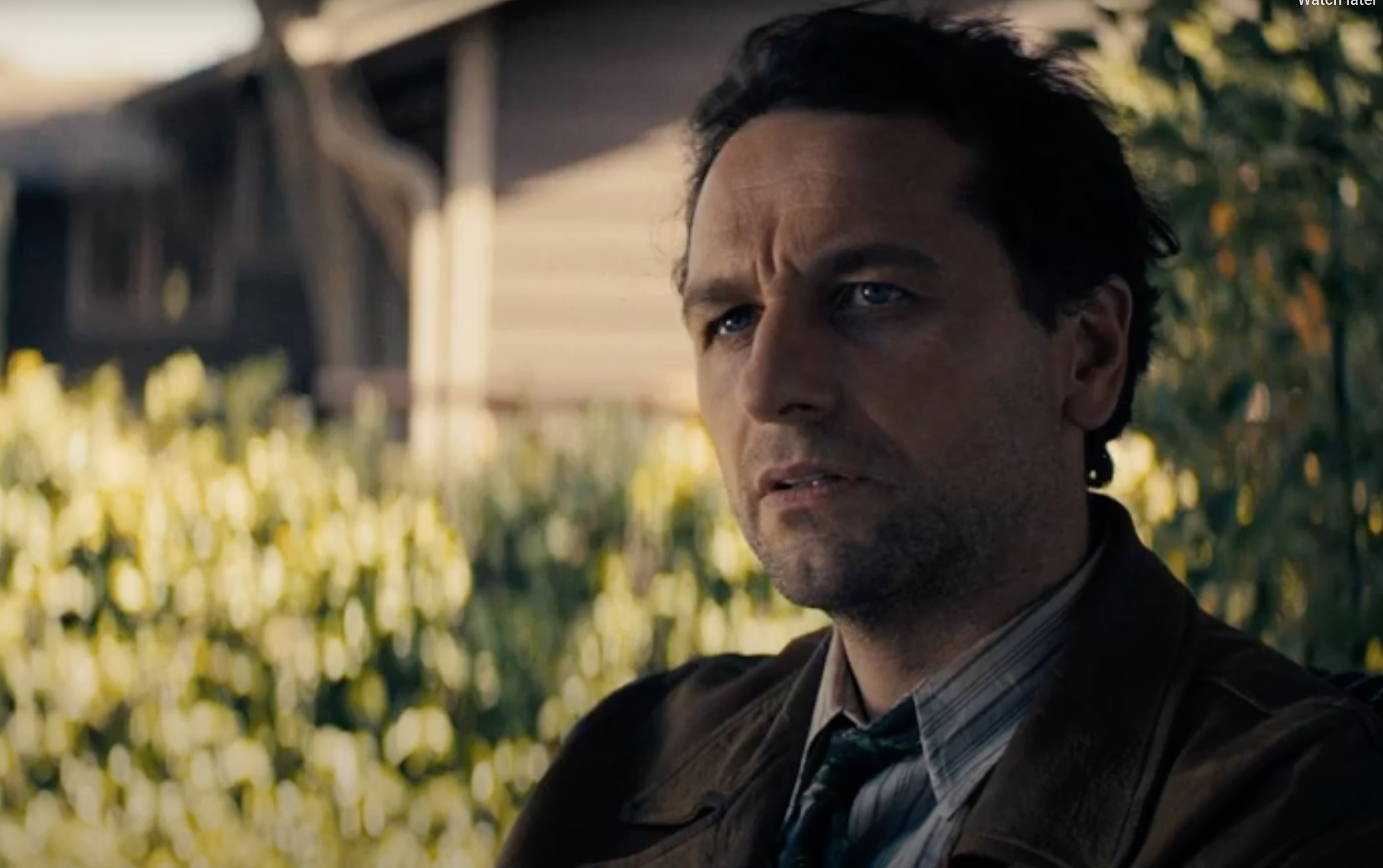
Matthew Rhys, who plays the titular lawyer-investigator, is too long of tooth to be playing a World War I veteran in 1931.
Combat soldiers are generally 18, 19 or 20, so let’s bend over backwards and say Mason was 20 when he fought against the Germans in 1918. That would make him 33 in 1931. Except by any biological yardstick Rhys looks at least 12 or 14 years older than that. He’s currently 45, but with his creased Elmer’s Glue-All complexion and facial features starting to sag he might as well be 47 or even 48. (Remember how Cary Grant looked in Mr. Blandings Builds His Dream House? He was 44 or thereabouts, but he looked 38 or 39 at the oldest.) And if Rhys looks 47 or 48 he might as well be 49 or 50.
It just doesn’t work to watch a guy who’s well into middle-age try to figure out if he wants to be a private-eye bottom-feeder or not. Professional identity crises are something you go through in your mid to late 20s or, at the very latest, your early 30s. I for one don’t want to watch a 45 year-old guy trying to figure out who and what he is. He should handled that shit 15 or 20 years ago. So there it is — my basic problem with Perry Mason.
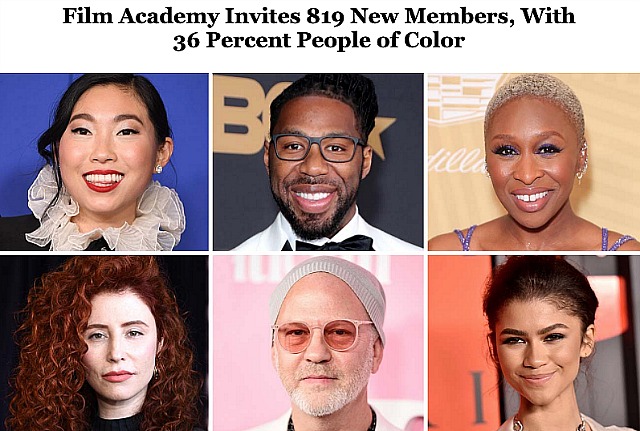
The Academy of Motion Picture Arts and Sciences has invited 819 actors and filmmakers to join up and pay their dues. The AMPAS membership tally now comes to now 9300. In keeping with recent patterns, the additions will further diversify the ranks. 45% of the fresh recruits are women and 36% are under-represented ethnic/racial minorities, for a total of 86%. The international (i.e., non-domestic) makeup of the new crew is 49% from 68 countries.
So are the remaining invitees who aren’t female or under-represented ethnic-racial minorities (what is that, 55% or less?) males or, God forbid, European-descended males with pale complexions?
As I understand the new-members situation, Scott Feinberg‘s Hollywood reporter headline — “Film Academy Invites 819 New Members, With 36 Percent People of Color” — isn’t quite right as the term “people of color” has been retired in favor of the above-mentioned URERM (i.e., under-represented ethnic/racial minorities).
For years the Academy has used the “person of color” term. Except that partly alluded, I’m told, to people of Spanish heritage and residence (i.e., citizens of Spain). In the eyes of the Academy, for example, Antonio Banderas was regarded (until today) as a person of color. Which is kind of odd as Spaniards are not “people of color” any more than Mick Jagger is. Anyone who’s seen a Pedro Almodovar film will tell you that while their hair is frequently dark (along with auburn, blonde and what-have-you), they all have fair, Wonder Bread-ish, Ozzie-and-Harriet complexions.
And so AMPAS is now going with the more egalitarian-sounding under-represented ethnic/racial minorities, which draws a sharper line. As long as they continue to keep white guy additions to a bare minimum, we’re good.
No sadness in the passing of the great Carl Reiner at age 98 — only cheers, gratitude and celebration. I worshipped the fact that he was on Twitter and a lucid Trump hater right to the end. Reiner once told Larry King that he didn’t post his tweets from a smart phone but from a desktop — whatever works.
A couple of days ago I happened to re-watch Reiner’s All Of Me (’84) and decided it was both his and Steve Martin‘s finest flick ever. Not to mention Lily Tomlin and Richard Libertini‘s.
My second favorite Reiner film is (and has been for a long time) Where’s Poppa? (’70), followed by the interesting if somewhat preachy Oh God! (’77) and finally The Jerk (’79), which also starred Martin.
On The Dick Van Dyke Show, which Reiner created, produced, cowrote and costarred in as the Sid Caesar-like Alan Brady, he was the original tempestuous, egotistical, insecure tyrant. (On a sitcom, I mean.) And he was a great straight man to Mel Brooks in their “2000 Year Old Man” routines, and I loved his angry impatient guy schtick in It’s a Mad, Mad, Mad, Mad World (’63) and The Russians Are Coming, the Russians Are Coming (’66).
Reiner Wiki: “Of all the films I’ve directed, only Where’s Poppa? is universally acknowledged as a cult classic. A cult classic, as you may know, is a film that was seen by a small minority of the world’s filmgoers, who insist it is one of the greatest, most daring, and innovative moving pictures ever made. Whenever two or more cult members meet, they will quote dialogue from the classic and agree that ‘the film was ahead of its time.’ To be designated a genuine cult classic, it is of primary importance that the film fail to earn back the cost of making, marketing, and distributing it. Where’s Poppa? was made in 1969 for a little over $1 million. According to the last distribution statements I saw, it will not break even until it earns another $650,000.”
Reiner was a Jewish atheist, which he came to largely from the influence of the Third Reich. Quote #1: “I became an atheist after Hitler. I said, what is this? If there was a God, would he not be hearing 18 million people, 16 million Jews, or 20 million other people, saying, ‘Please God, don’t do this, make him stop?’ God was so busy doing what? Striping zebras or fixing the long necks of giraffes?” Quote #2: “I have a very different take on who God is. Man invented God because he needed him. God is us.”
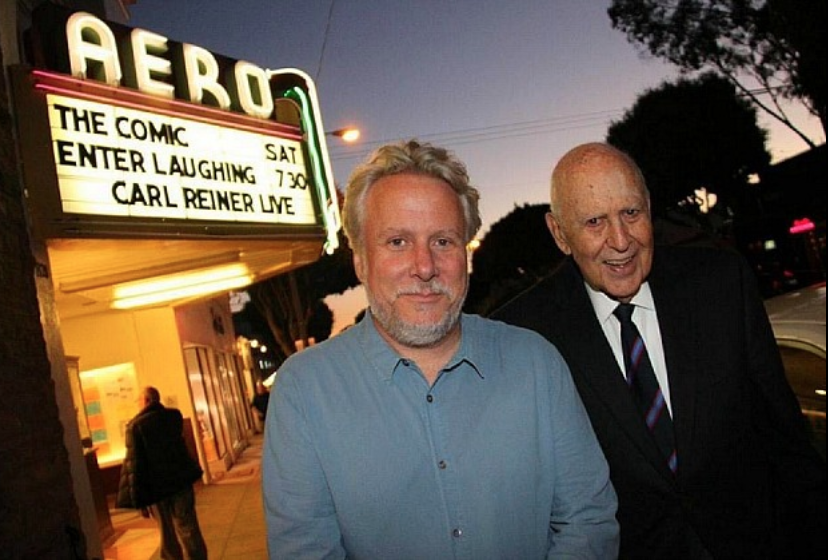
Director-screenwriter Larry Karaszewski, Carl Reiner in front of the Aero on 9.20.14.
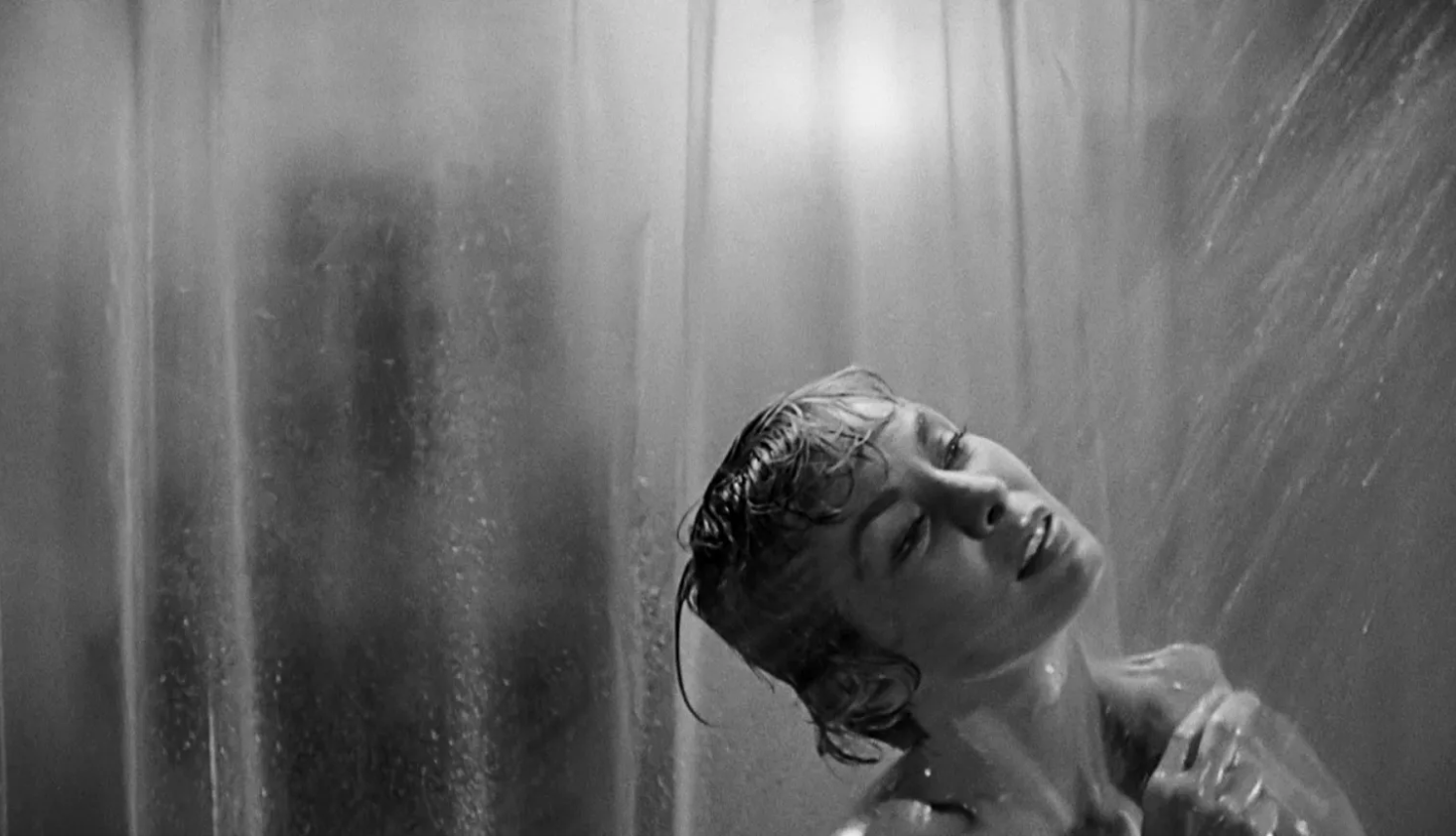
So it’s been semi-confirmed that the slightly more risque version of Psycho (half-glimpse of Janet Leigh side boob, extra stabbings of Martin Balsam) will be included in Universal Home Video’s forthcoming 4K UHD Alfred Hitchcock box set. Terrific, but it’s not enough. As I explained a couple of weeks ago, the only thing that will deliver serious tumescence will be the boxy (1.37:1) version of Psycho — a version that was shown on TV and pay cable tens of thousands of times during the ’70s, ’80s and ’90s. It was only in the mid aughts, or when the influence of Bob Furmanek and the 1.85 fascist cabal began to hold sway, that the idea of only showing a cleavered version of Hitchcock’s 1960 classic became the default go-to. HE believes that aspect ratio crimes should be prosecuted in the Hague, and that Furmanek, no offense, should be defendant #1 in the dock.
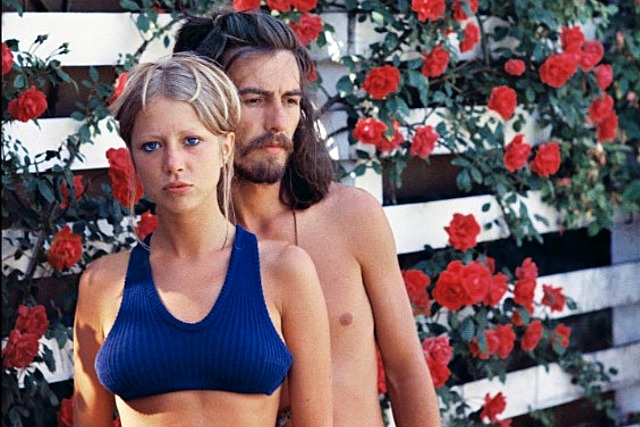
Initially posted on 10.5.11: I saw the first half of Martin Scorsese‘s 208-minute George Harrison doc during the [2011] Telluride Film Festival, and was only somewhat impressed. It covered the first 23 or 24 years of Harrison’s life, or ’43 to ’69…and I felt I knew all that going in. But the second half, which I finally saw at a New York Film Festival screening, is highly nourishing and affecting and well worth anyone’s time.
Yes, even for guys like LexG who are sick to death of boomer-age filmmakers and film executives endlessly making movies about their youth. It’s reasonable to feel this way because boomers have been commercially fetishizing their ’60s and ’70s glory days for a long time. But George Harrison: Living In The Material World is nonetheless a very good film. Particularly Part Two.
Because it’s about a journey that anyone who’s done any living at all can relate to, and about a guy who lived a genuinely vibrant spiritual life, and who never self-polluted or self-destructed in the usual rock-star ways.
Well, that’s not true, is it? At age 58 Harrison died of lung cancer, which he attributed to being a heavy smoker from the mid ’50s to late ’80s. And he wasn’t exactly the perfect boyfriend or husband. (There were a few infidelities during his marriage to Olivia Harrison.) And he wasn’t the perfect spiritual man either, despite all the songs and talk about chanting and clarity and oneness with Krishna. He had his bacchanalian periods. And he did so with the wonderful luxury of having many, many millions in the bank. It’s not like Harrison was struggling through awful moments of doubt and pain in the Garden of Gethsemane.
But this journey is something to take and share.
Part Two, as you might presume, is about Harrison’s solo career. It starts with the Beatles breakup, the making of All Things Must Pass, the 1971 Concert for Bangla Desh, etc. And then settles into the mid to late ’70s and ’80s, “So Sad”, “Crackerbox Palace,” Handmade Films, “Dark Horse,” the Travelling Willburys, the stabbing incident and so on.
The film is entirely worth seeing for a single sequence, in fact. One that’ll make you laugh out loud and break your heart a little. It’s a story that Ringo Starr tells about a chat he had with Harrison in Switzerland two or three months before his death in November ’01. I won’t explain any more than this.
Scorsese’s doc has no title cards, no narration, no through-line interview as Bob Dylan: No Direction Home had. As noted, I found Part One a little slipshod and patchworky at times. The editor is David Tedeschi, who also cut No Direction Home as well as Scorsese’s Public Speaking, the Fran Lebowitz doc, and Shine a Light, the 2008 Rolling Stones’ concert doc.
“Beatle lore-wise, Harrison was regarded early on as the solemn one, the deep spiritual cat (i.e., the last one to leave Maharishi Mahesh Yogi‘s ashram in Indian in late ’67) and to some extent the political commentator and satirist (the lyrics of “Piggies” and “Savoy Truffle“, ‘the Pope owns 51% of General Motors,’ etc.).
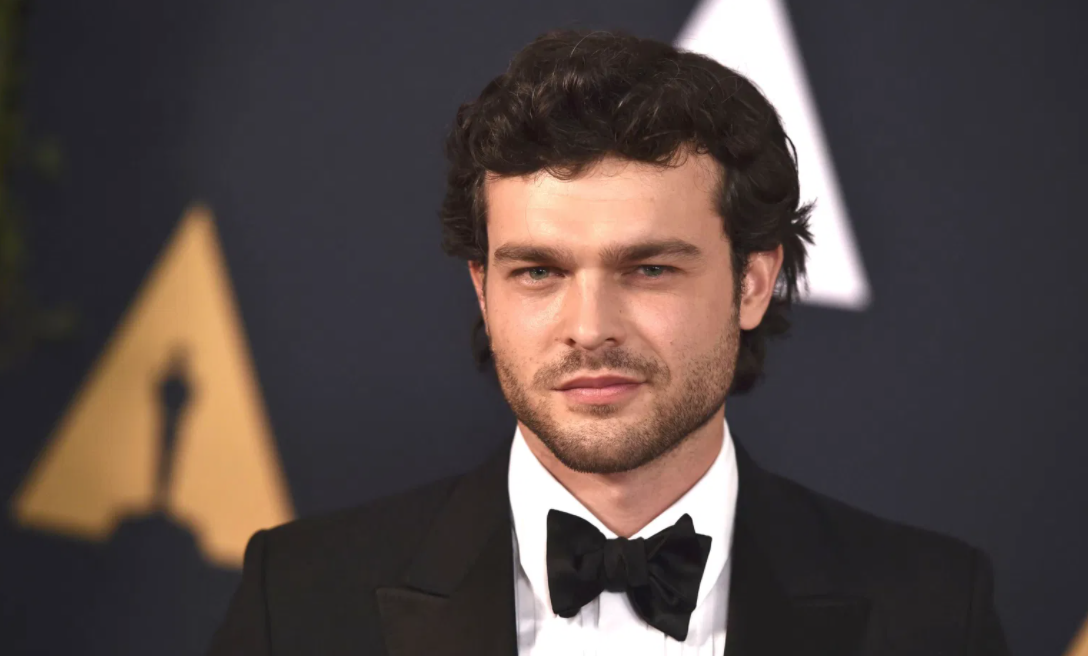
Alden Ehrenreich was riding high after his amusing performance as Hobie Doyle in Joel and Ethan Coen‘s Hail Caesar (’16). But his next three films delivered a triple-whammy effect, and the godz turned on him.
Ehrenreich’s amiable performance as Howard Hughes‘ chauffeur in Warren Beatty‘s Rules Don’t Apply (late ’16) did him no favors after the film bombed. He was wounded again when The Yellow Birds, in which Ehrenreich played the lead role, opened at Sundance ’17 and flatlined. Then came the final hammer blow with his underwhelming performance as young Han Solo in Solo: A Star Wars Story (’18), which opened roughly two years ago.
Ehrenreich dropped out of sight to lick his wounds and reassess the landscape. I was no fan of Solo or Yellow Birds, but I felt sorry for the guy.
Now AE is back as the lead in Brave New World (7.15, Peacock), a dystopian sci-fi drama (vague shades of THX-1138) based on the 1932 Aldous Huxley novel. Exec produced by David Wiener, co-written by Wiener, Grant Morrison and Brian Taylor. Gut reactions?
Aldous Huxley picked the wrong day to die from cancer — 11.22.63. He was tripping his brains out on LSD when he passed into eternity.
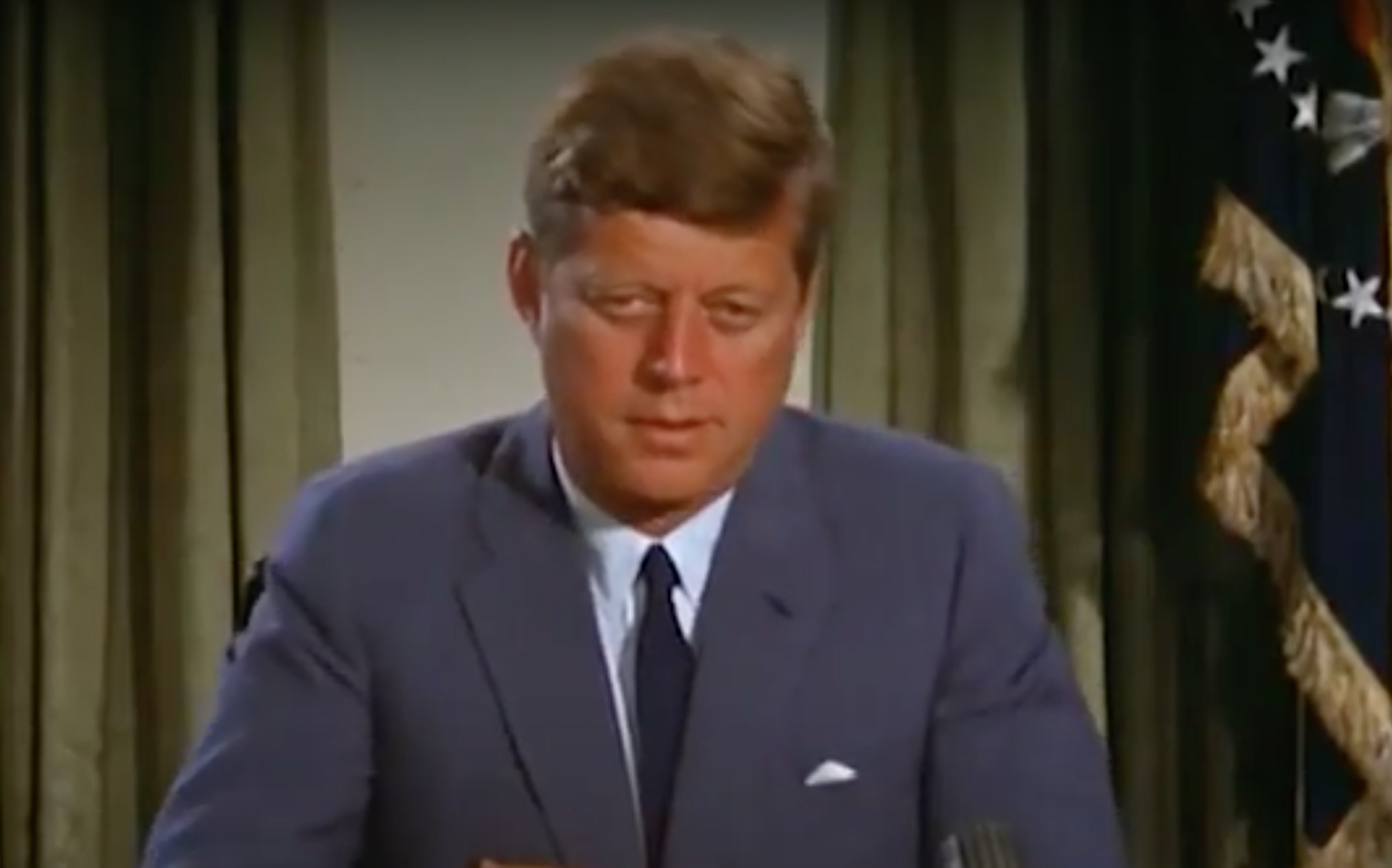
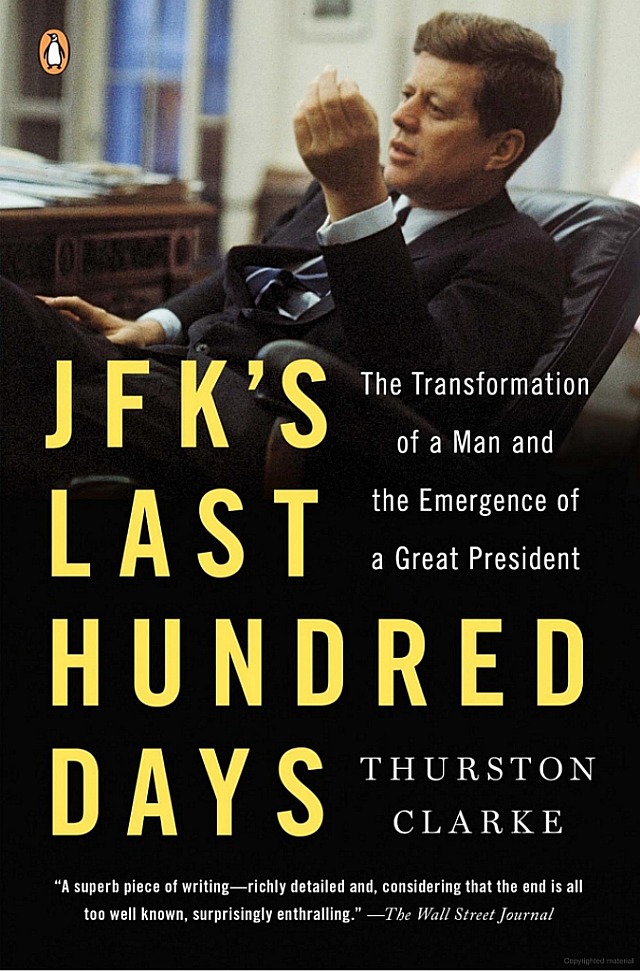
“After meeting in his office, Coit and Kennedy walked through the empty corridors of the Senate Office Building and got into Jack’s open convertible with its faded blue paint and fair share of dents. They drove wildly through the Washington streets until they reached the rooming house where Coit was staying. She invited him in, thinking he might want to rest for a moment.
“Inside, Jack collapsed on the living room sofa, and then tried to drag Coit down beside him. ‘Don’t be so grabby,’ she said, moving away. ‘This is only our first date. We have plenty of time.’
“Kennedy lifted his head and, for a moment, stared at her with his penetrating gray eyes. ‘But I can’t wait,’ Kennedy insisted. “You see, I haven’t any time.’”
A note that Coit later wrote to Kennedy said the following: “I believe you do have the drive to be President — and the dignity, on occasion — and the brains, and these will provide the mømentum. But who knows where the wild horse will run? There is more in luck and fate than we think, and we can do no more than turn it loose.”
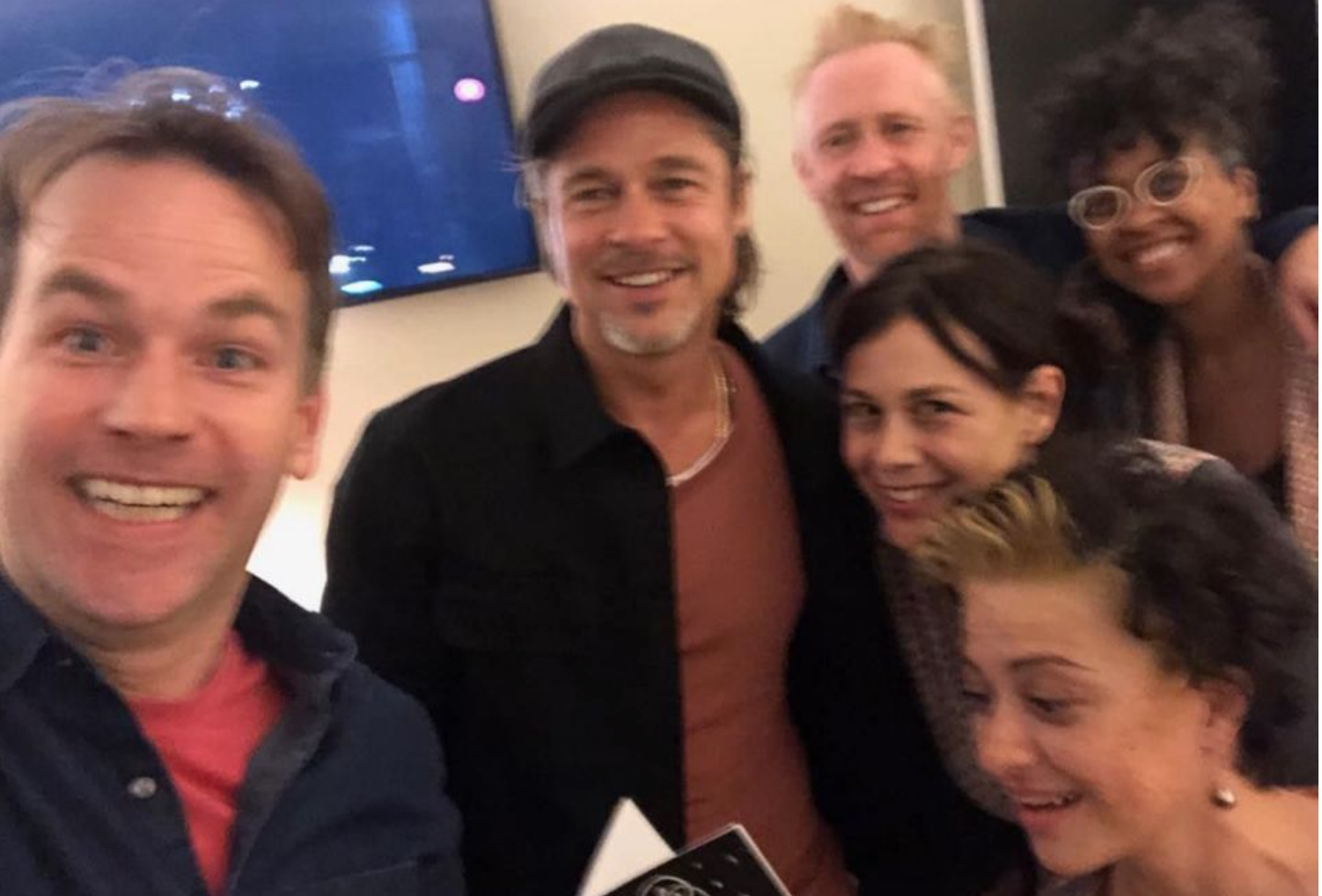
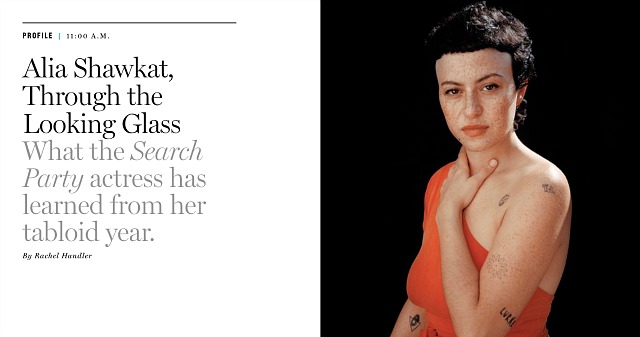
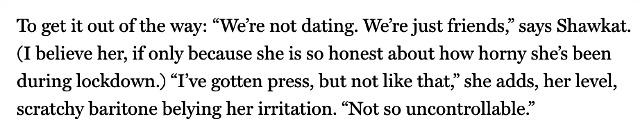
In a Vulture interview with Rachel Handler, actress Alia Skawkat, known for her heavily freckled face, bee-stung nose and short curly hair, has welcomely dismissed speculation that she and Brad Pitt, whom she’s been randomly photographed with for several months, are doing the hunka-chunka. They are, she says, nothing more than pally-wallies.
Handler #1: “The publicity resulting from the Pitt photos was annoying for Shawkat, [although] the whole thing was ultimately positive from an image perspective, the sort of publicity many a celebrity has quite literally paid for. But the second round of public attention — a video of her with heavy stakes — was painful, especially for a queer woman of color (Shawkat is half-Iraqi).”
Handler #2: “The stories that [pushed] the dating narrative seemed perplexed by the whole thing — the word quirky was used more than once to describe Shawkat. ‘To them it’s like, ‘We don’t get it! This girl is weird! She’s so different! Why are they hanging out?’, [Shawkat] says about the tabloids, laughing. ‘You get too close to the prom king, and all of a sudden, everyone’s like, ‘Well, who is this bitch?’”
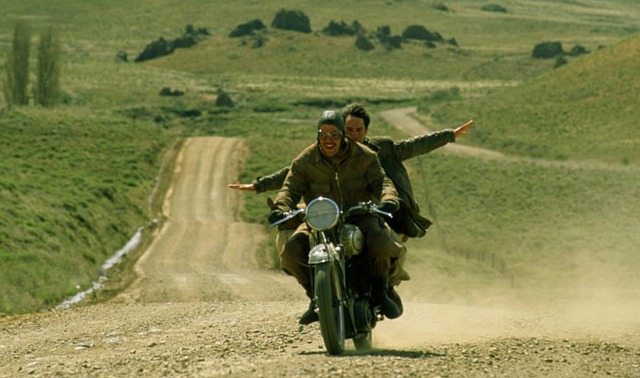
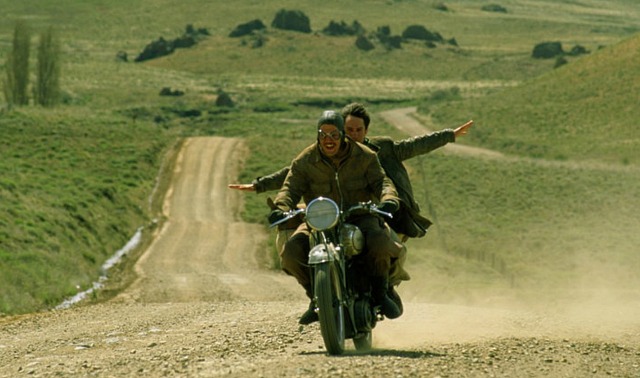
Howell: 1. It Happened One Night (Wells reaction: Moderately appealing but Frank Capra is thoroughly over by any reasonable 21st Century standard); 2. One Week (Wells reaction: What?); 3. Two-Lane Blacktop (Wells reaction: I bought the Criterion DVD only to realize what a meandering and enervated thing it is, and seriously lacking in visual intrigue); 4. Y tu mama tambien (Wells reaction: perhaps not a top-tenner but a very fine film); 5. Thelma & Louise (Wells reaction: Driving your car over a cliff is a romantic-nihilist-crap finale, but if you’re going to use this don’t gussy it up with slow-mo photography and a personality clip reel); 6. Easy Rider (Wells reaction: definitely a top-tenner); 7. The Sure Thing (Wells reaction: A likable tits-and-zits ’80s movie, nothing more); 8. The Motorcycle Diaries (Wells reaction: 100% agreement); 9. Duel (Wells reaction: Not sprawling or meditative enough to qualify as real road movie); 10. The Cannonball Run (Wells reaction: pure garbage — a choice that insults and degrades the genre).
From Walter Salles’ The Motorcycle Diaries.
Wells: 1. The Grapes of Wrath (first because of the compassion and humanity and assertive political current); 2. The Wizard of Oz (the great grandfather of all road movies); 3. Sideways (“I’m not drinkin’ fuckin’ Merlot!” — the kind of line that the Cannonball Run creators didn’t have the creative edge to even consider using); 4. Badlands (“This is the last time I get together with the hell-bent type”); 5. The Last Detail (again — compassion for sympathetic trapped characters + humor + melancholy resolution); 6. Apocalypse Now (a river is a road and vice versa). 7. Little Miss Sunshine (greatest 21st Century road movie thus far); 8. Easy Rider; 9. The Motorcycle Diaires. 10. Rain Man. Honorable Mentions: Planes Trains and Automobiles, Midnight Run, Five Easy Pieces, Bring Me the Head of Alfredo Garcia, Y tu mama tambien, Road Trip, The Straight Story, Fandango.
The generic road-movie definition calls them stories that happen over the course of a journey. As Howell writes, “The characters in transit have to experience some change to their attitudes and outlook, or else the trip is wasted. They have to not just go somewhere, but more importantly, they have to arrive.” Agreed.
Howell’s kicker — “And if they can do it with a smile, all the better” — is where he and I differ. To hell with smiles as ends in themselves. Remember those smiley buttons from the ’80s? The face of emotional fascism. Smirks and frowns are far more trustworthy.
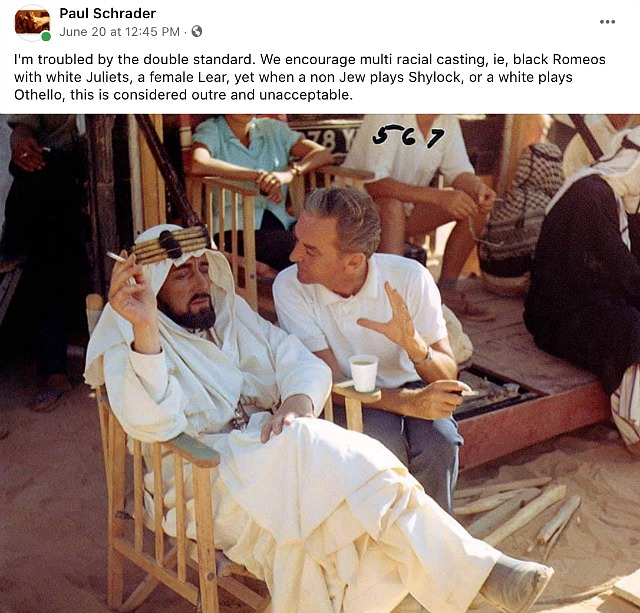
On 6.20 (only five days ago!) Paul Schraderwrote on Facebook that he’s “troubled by the double standard. We encourage multiracial casting — black Romeos with white Juliets, a female Lear, etc. Yet when a non-Jew plays Shylock or a white plays Othello, this is considered outre and unacceptable.”
HE reply: “Whites may no longer portray non-whites” is fuck-you payback for all the decades (early to mid 20th Century) when whites portrayed other tribes and races with impugnity in films. No one mentions Marlon Brando as Sakini, a native Okinawan, in Teahouse of the August Moon, or Katharine Hepburn as Jade in Dragon Seed, but whitewashing was once par for the course.
Not out of inherently venal reasons, but banal ones. Because Hollywood producers believed that non-white actors would, in many circumstances, diminish box-office returns and that white actors would enhance them.
Don’t forget, however, that as recently as ’07 Angelina Jolie played Mariane Pearl, a French-born woman of Afro-Cuban descent, in A Mighty Heart, and nobody said boo.
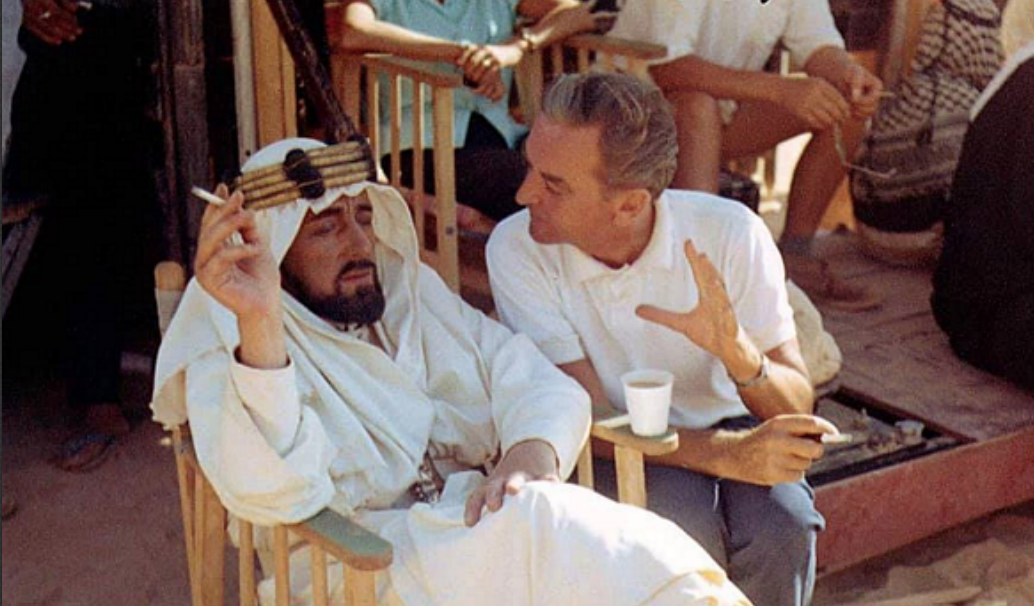
How was this different than Mickey Rooney‘s Japanese landlord in Breakfast at Tiffany’s, Alec Guinness‘ Prince Feisal in Lawrence of Arabia, Ricardo Montalban‘s Japanese Kabuki actor in Sayonara, Natalie Wood‘s Maria in West Side Story, Kurt Jurgens‘ “Captain Lin Nan” in Inn of the Sixth Happiness and Jennifer Jones‘ half-Native American in Duel in the Sun? Should wokesters retroactively cancel Jolie? Should they at least take her to task on Twitter?
In a tribal sense, whites are regarded as deeply flawed and generally problematic. Certainly by the standards of cancel-culture and BLM wokesters. Perhaps not the root of all evil, but the N.Y. Times‘ “1619 Project” made a case that European-descended white-person culture represents a profoundly diseased and guilty heritage, certainly as far as African Americans and Native Americans are concerned.
White actors can therefore not play persons of color for this reason. They must sit on the sidelines and meditate on their basic nature, and perhaps eventually evolve into something better down the road.
Given the alleged racism on the part of John Wayne, the ultimate conservative swaggering white man, I wouldn’t be surprised if Wayne’s horse-riding statue (at the corner of Wilshire and La Cienega) is someday pulled down or defaced by demonstrators. I’m serious — in a world in which a statue of George Washington was defaced and statues of Ulysses S. Grant and Francis Scott Key have been toppled, Wayne should be easy pickings.