Six and a half years ago I was strolling along the rue de Rivoli, and just as I approached the main entrance of a large, swanky, gold-trimmed hotel (probably Le Meurice) Catherine Deneuve, flanked by a couple of security guards, walked out and got into a waiting limo.
The legendary actress was 69 at the time, and smoking a cigarette as she walked under the rue de Rivoli colonnade and onto the boulevard. I distinctly recall muttering to myself, “Wow…a woman of her age shouldn’t be smoking….she should’ve quit a long time ago.”
Because sooner or later cigarettes will catch up and take you down, if not with lung cancer then with a stroke. Lifelong smoker Joni Mitchell (who was born only a couple of weeks after Deneuve in the fall of ’43) was felled by a fairly serious stroke in ’15, and has yet to fully recover.
Earlier today it was reported that Deneuve is in a Paris hospital after suffering a “very limited” ischemic stroke. Such strokes are caused by reduced blood flow to the brain.
Variety‘s Nick Vivarelli and Elsa Keslassy report that Deneuve succumbed to the stroke “while filming a scene in a hospital in Gonesse, near Paris, for the movie De Son Vivant, which is being directed by Emmanuelle Bercot. Deneuve is now at the Salpetriere hospital, which specializes in treating strokes.”
For one thing, the novel — about a Vietnam vet determined to reconnect with a combat-assistance dog named Jack in the aftermath of the Vietnam War — is said to be mediocre. A Publisher’s Weeklyreview called it “sappy and unbelievable.” So right off the bat there’s concern.
Two, people have been talking about reanimating dead actors in newly-made films for many years, but it hasn’t really happened outside of Oliver Reed‘s post-mortem performance in Gladiator, Peter Cushing in Rogue One and in a couple of TV commercials. You’d think that the first semi-noteworthy appearance of a mythical dead actor playing a supporting role would be in a classier, more formidable-sounding vehicle than Finding Jack. Man-dog love stories are about as cloying as it gets in the game of second-tier, sentimental-appeal programmers.
Three, Finding Jack is being co-directed by two guys, Magic City Films’ Anton Ernst and Tati Golykh, and that in itself is sometimes a red flag, especially when one of the guys is named Tati Golykh.
Four, Ernst has been quoted by The Hollywood Reporter as saying the following: “We searched high and low for the perfect character to portray the role of Rogan, which has some extreme complex character arcs, and after months of research, we decided on James Dean.”
Excuse me…what? They didn’t search for “the perfect character” but the perfect actor. The character of Rogan is a human being and therefore a “who” and not a “which.” And the way to describe Rogan’s arc is “extremely complex,” not “extreme complex.” And to claim that “after months of research” he and Golykh decided that only a CG imitation of James Dean could play a supporting character in their film? What kind of bullshit is that? They’re using the dead Dean because it will stir marginal commercial interest in their film, period. And so they’ve paid money to Dean’s family for the rights.
And five, I could see re-animating Frank Sinatra for a biopic — that would be exciting! — or bringing back the young Marlon Brando for a modern-day love story, but the Dean legend is not eternal. He died 64 years ago. New generations grow up, things change. Who other than boomers and older GenXers will care all that much about seeing the star of Rebel Without A Cause come back to life?
Colorized photos usually look like what they are. But every so often one will look exactly (and I mean exactly) right, natural and un-pushed with precisely the right shade of skin. This one actually looks too good — if a Wild One unit still photographer had snapped this Brando portrait in color during filming (i.e., early ’53), it would’ve looked a tiny bit splotchy, slightly coarser.
To be fair, one example of the non-Michael Douglas-y approach to making movies has to be Ryan Reynolds. And certainly Robert De Niro during his paycheck phase of the early-to-late aughts. Post-SleuthMichael Caine, or for most of his life. Cuba Gooding during his post-Jerry Maguire cash-in period. Everybody makes a crap movie now and then. Goes with the profession.
I’ve tried re-watching Cool Hand Luke a couple of times, but when that ABC 7 EyewitnessNews music plays on the soundtrack, I just can’t do it — my suspension of disbelief goes right out the window. Obviously Lalo Schifrin’s original score was Luke’s alone for a certain period of time. But once Eyewitness News adopted it and played it for New York viewers every damn weeknight for years on end (when did that start, sometime in the late ‘70s or early ‘80s?) the spell was broken forever.
A day or two ago Variety‘s Chris Willmanattended a Sharon Tate triple feature at the New Beverly — Valley of the Dolls (awful), Fearless Vampire Killers (lesser Polanski but tolerable) and The Wrecking Crew (flat-out stinkeroonie).
Willman: “I enjoyed The Wrecking Crew maybe a little less than the audience at the Bruin in Once Upon a Time in Hollywood but what a doll.” What did Willman actually mean when he said he “enjoyed it a little less,” etc.? We can only guess, of course, but my presumption is that Willman hated it so much that at the halfway point he suddenly bolted into the New Beverly bathroom and threw up.
The fact that poor Sharon Tate died in a ghastly and horrific way doesn’t automatically mean that the films she made in the late ’60s were any good.
The spirit of the great Robert Evans has left the earth and risen into the clouds. A fascinating character, a kind of rap artist, a kind of gangsta poet bullshit artist, a magnificent politician, a libertine in his heyday and a solemn mensch (i.e., a guy you could really trust).
For a period in the mid ’90s (mid ’94 to mid ’96), when I was an occasional visitor at his French chateau home on Woodland Drive, I regarded Evans as an actual near-friend. I was his temporary journalist pally, you see, and there’s nothing like that first blush of a relationship defined and propelled by mutual self-interest, especially when combined with currents of real affection.
There are relatively few human beings in this business, but Evans was one of them.
You’re supposed to know that Evans was a legendary studio exec and producer in the ’60s and ’70s (The Godfather, Chinatown, Marathon Man) who suffered a personal and career crisis in the ’80s only to resurge in the early ’90s as a Paramount-based producer and author (“The Kid Stays in the Picture”) while reinventing himself as a kind of iconic-ironic pop figure as the quintessential old-school Hollywood smoothie.
From my perspective (and, I’m sure, from the perspective of hundreds of others), Evans was a touchingly vulnerable human being. He was very canny and clever and sometimes could be fleetingly moody and mercurial, but he had a soul. He wanted, he needed, he craved, he climbed, he attained…he carved his own name in stone.
The Evans legend is forever. It sprawls across the Los Angeles skies and sprinkles down like rain. Late 20th Century Hollywood lore is inseparable from the Evans saga — the glorious ups of the late ’60s and ’70s and downs of the mid ’80s, the hits and flops and the constant dreaming, striving, scheming, reminiscing and sharing of that gentle, wistful Evans philosophy.
He was an authentic Republican, which is to say a believer in the endeavors of small businessmen and the government not making it too tough on them.
Rundown of Paramount studio chief and hotshot producer output during the Hollywood glory days of the late ’60s, ’70s and early ’80s — (at Paramount) Rosemary’s Baby, Love Story, Harold and Maude, The Godfather, Serpico, Save The Tiger, The Conversation; (as stand-alone producer) Chinatown, Marathon Man, Black Sunday, Urban Cowboy, Popeye, The Cotton Club, Sliver, Jade, The Phantom, etc.
Not to mention “The Kid Stays in the Picture” (best-selling book and documentary) and, of course, Kid Notorious. Not to mention Dustin Hoffman‘s Evans-based producer character in Wag the Dog.
And you absolutely must read Michael Daly‘s “The Making of The Cotton Club,” a New York magazine article that ran 22 pages including art (pgs. 41 thru 63) and hit the stands on 5.7.84.
Instant victory, hands down, don’t even debate it.
Bruce provides the humanity, name value and a general proletariat compassion and liberal inclination approach. Pete delivers the smart, sleeves-rolled-up implementation of non-woke, non-crazy, forward-looking Millennial practicality.
And if homophobic African-American voters (of which there are quite a few) want to stay home and not vote, fuck ‘em. Bruce and Pete will win in a walk either way.
Everyone I know is slightly concerned about Warren’s chances against Trump, and a lot of people feel a little funny about the schoolmarm thing. (Don’t even mention the prevailing bumblefuck attitudes about Medicare for all.). And Droolin’ Joe is finished, of course. Pete should top the ticket, of course, but the homophobes are ass-draggers.
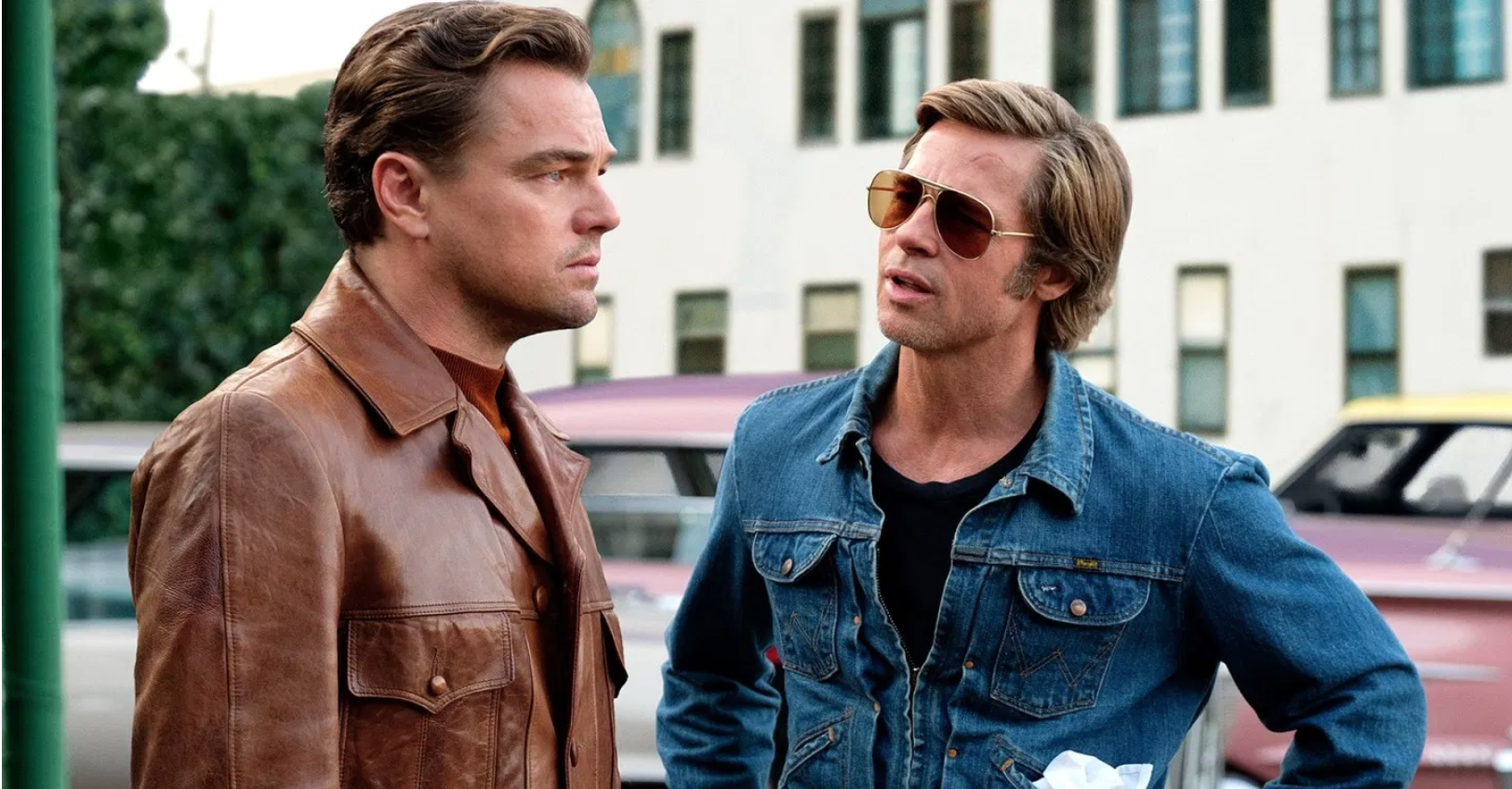
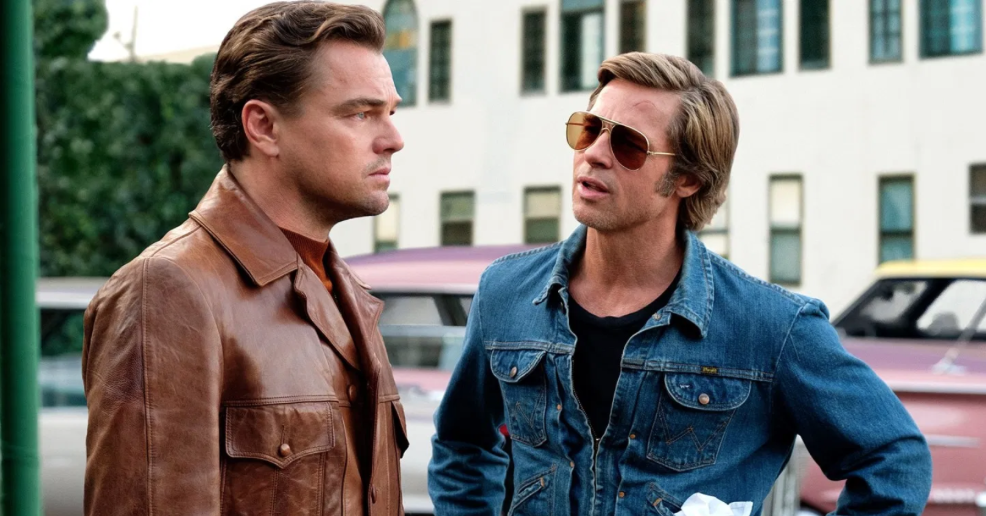
During last night’s Irishman premiere after-party the subject turned to the Best Supporting Actor race. It’ll obviously be between Al Pacino‘s Jimmy Hoffa in The Irishman and Brad Pitt‘s Cliff Booth in Once Upon A Time in Hollywood. “They’re both so great and it hurts too much to choose,” I replied. “So the Best Supporting Actor Oscar race should end in a tie. Like it did in 1969 when both Barbra Streisand and Katharine Hepburn won for Best Actress. It’ll feel really bad and wrong if either Pacino or Pitt lose. I’m serious — they both have to take it.”
New York journo hotshots will get the very first peek at Sam Mendes‘ 1917 on Saturday, 11.23. Their Los Angeles brethren will see it the next day (Sunday, 11.24) via “multiple” screenings in the afternoon and evening.
Thanksgiving, by the way, will happen on Thursday, 11.28. Why so late? Because Thanksgiving had been celebrated on the last (or fourth) Thursday of the month since the time of Abraham Lincoln. I say that 11.28 is too late — it should happen on Thursday, 11.21.