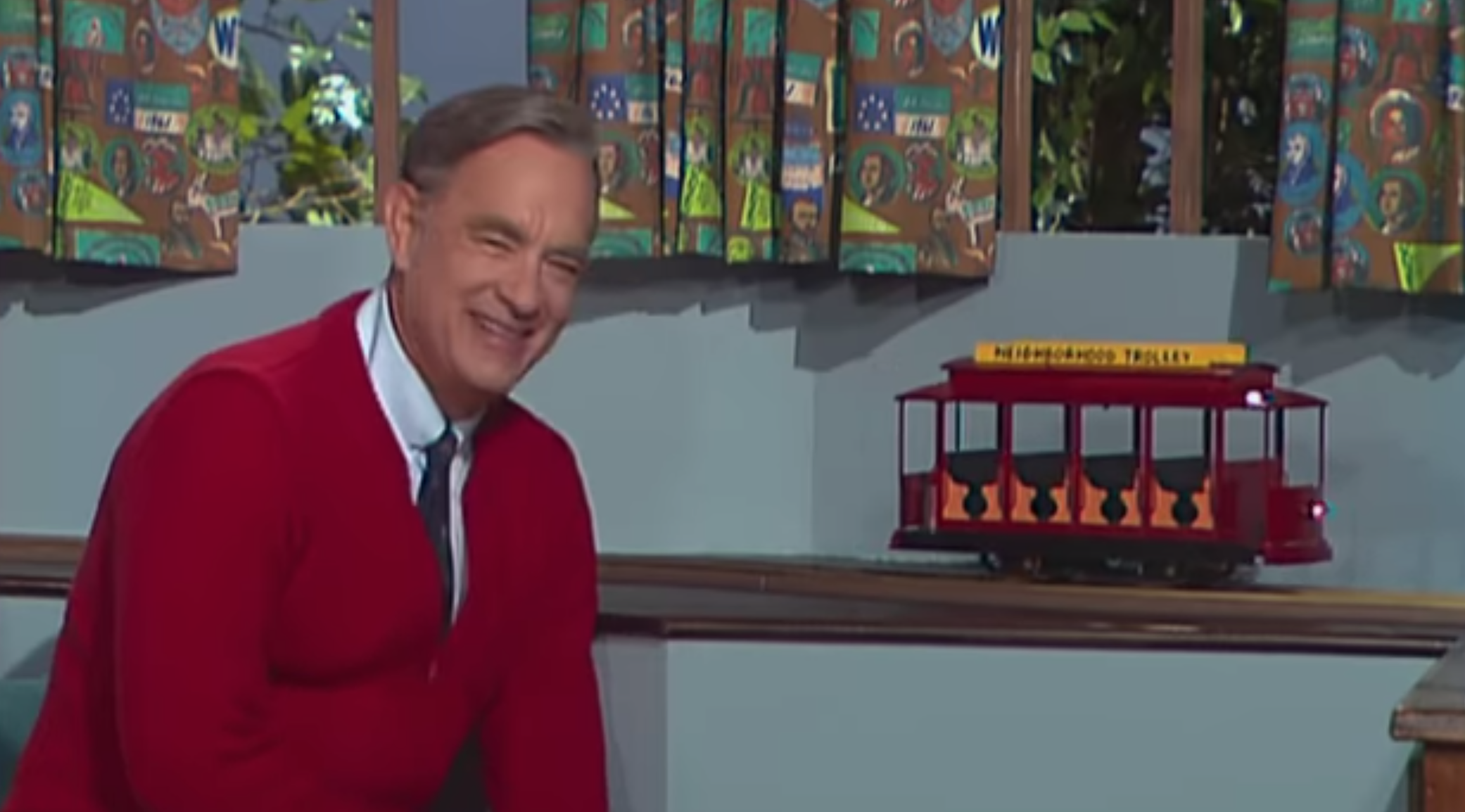
Hanks Owns “Beautiful Day”

2:15 pm Update: Did I imagine that Indiewire‘s Anne Thompson is reported that as far as an awards campaign for A Beautiful Day in the Neighborhood is concerned, Sony intends to push Matthew Rhys in lead and Tom Hanks in supporting? Nope, I didn’t.

Thompson has written that campaigning Rhys as a lead is “fair,” considering that he plays an Esquire writer who profiles Hanks’ Fred Rogers. “The movie is really about him,” Thompson asserts.

Urging Academy and SAG voters to consider Rhys as a leading contender for the Best Actor Oscar might be “fair”, but this doesn’t sound like an especially savvy decision on Sony’s part. Running Hanks in supporting argues with the award-season strategizing that led to Anthony Hopkins‘ Hannibal Lecter performance in The Silence of the Lambs being nominated for and winning the Best Actor Oscar.

Hollywood Reporter critic Todd McCarthy is claiming that A Beautiful Day in the Neighborhood is “ultimately Hanks’ show, and Hanks’ show alone.”

Some weeks ago there was some discussion about whether or not Hanks’ Beautiful Day performance would qualify as a lead, as he has less screen time than Rhys’ “Lloyd Vogel” character, an Esquire journalist (based on Tom Junod) who interviews Hanks’ Fred Rogers.

Jordan Ruimy said this morning that Rhys “is in practically every scene and Hanks isn’t, but Rhys’ story is the weak part…the movie lags whenever Hanks isn’t on-screen.”

HE response: Based on these and other impressions, Hanks is apparently Anthony Hopkins in Silence of the Lambs — a performance that sinks in and dominates by sheer force of personality. Alongside this the measure of screen time is nothing.

If Sony is determined to pursue the strategy that Thompson has reported on, Hanks will stand a half-decent chance of losing to Once Upon A Time in Hollywood‘s Brad Pitt in Supporting. (OUATIH is, of course, also a Sony film.) And the allegedly mopey Rhys probably won’t be nominated for Best Actor at all.

If Sony reverses strategy and runs Hanks as Best Actor candidate as la Hopkins in Silence, he could win. Yes, he would be facing tough competition from Joaquin Pheonix‘s Joker performance, but he would almost certainly be supported by the Academy voters who gave the Best Picture Oscar to Green Book.

THR‘s McCarthy: There’s no question that Hanks is perfect in the part, as the actor’s amiability and unquestionable sincerity make for an ideal match with [Rogers]’ unique television personality. [But] Marielle Heller’s film is a more modest achievement, sympathetic and yet entirely predictable in its dramatic trajectory of making a believer of an angry, cynical journalist.”

Read more

Feinberg Downgrades “Just Mercy”

Hollywood Reporter award-season columnist Scott Feinberg has composed a polite, respectful, carefully-qualified dismissal of Destin Daniel Cretton‘s Just Mercy. Okay, a semi-dismissal.

Trust me — whenever a headline asks “can a certain film win awards?,” the implication is that it may not.

I for one am inclined to be suspicious, especially considering that a trusted HE confidante is calling Just Mercyvery conventional” with “two cringe-worthy courtroom speeches.” And yet “watchable as far as it goes, solid performances throughout.” In other words, pretty good but no Cuban cigar.

The award-touted pic played last night “through the roof” at Toronto’s Roy Thomson Hall, Feinberg reports, “thanks largely to a powerful story strongly brought to life,” etc. Michael B. Jordan portrays real-life lawyer and activist Bryan Stevenson and Jamie Foxx is Walter McMillian, a wrongly convicted murderer whose sentence is turned around over the course of the film.

But hold your horses, Feinberg is also saying. Wait just a damn minute. Don’t get your knickers into too much of a twist.

“The reality is that Just Mercy is a somewhat glossy, on-the-nose, big-studio film, and is not nearly as polished or impressive as Cretton’s Short Term 12, which introduced Brie Larson and a host of other terrific young talent to cinephiles. But it will get a much better release [than Short Term 12], and will similarly appeal to audience emotions, which is why it cannot be counted out.”

Correct me if I’m wrong, but Feinberg seems to be implying that Just Mercy will engage emotions by way of virtue signalling — i,.e., drawing from the old Call Northside 777 playbook but with a strong ethnic-confrontation component (i.e., a brilliant, soft-spoken black attorney carefully disputing racist assumptions and attitudes voiced by Alabama crackers).

Feinberg: “At the end of the day, the best awards bets for Just Mercy are probably two supporting actors who make the most of a number of big moments to shine in the 137-minute film: Foxx and, as another inmate sentenced to death row, Rob Morgan (who was even better this year in Joe Talbot‘s The Last Black Man in San Francisco).

“Jordan is very good, as always, but this time in a part that is probably too understated and noble to emerge from a crowded field of best actor contenders.”

Shorter Feinberg: Foxx will be nominated for Best Supporting Actor, but don’t count on too much else.

Contrasting opinion from Deadline‘s Pete Hammond: “The Toronto first night audience handed Just Mercy unusually strong applause (especially considering there was no Q&A or spotlight on the filmmakers during the end credits) after its first screening at the Roy Thompson Hall, and then multiple standing ovations at the Elgin for its second screening and q & a.

“One executive from a rival studio told me earlier Friday, hours before the premiere, that they heard it could be ‘this year’s Green Book.’ Time will tell on that, but in terms of a reception, it certainly seemed to match the enthusiasm for 2018’s Best Picture Oscar winner, and definitely will find a place in the race for this year.”

Man Up, Do The Time

Felicity Huffman will face sentencing next week for her complicity in the college admission scandal, specifically for paying $15K to arrange for her daughter’s college SAT scores to be enhanced. Prosecutors are recommending 30 days in jail along with a $20K fine and a year-long supervised release.

Huffman’s attorneys have asked for probation and “significant community service”. On top of which 27 friends and supporters (including Huffman’s husband William H. Macy and her former Desperate Houswives costar Eva Longoria) have spoken on her behalf in an attempt to spare Huffman from the horror of incarceration.

In late 1948 Robert Mitchum and a friend were popped for smoking a joint in the Laurel Canyon home of a couple of women they knew. Ridiculous by today’s measure but it happened. Mitchum was slapped with a 60-day prison sentence. Did Mitchum drop to his knees and plead with the judge to let him walk? No — he stood up and did the time.

And he came out of this potentially devastating episode with his reputation unharmed and maybe even a bit enhanced. The system told him to swallow a spoonful of castor oil, and Mitchum said “sure” and took a swig.

Read more

Rough Stuff

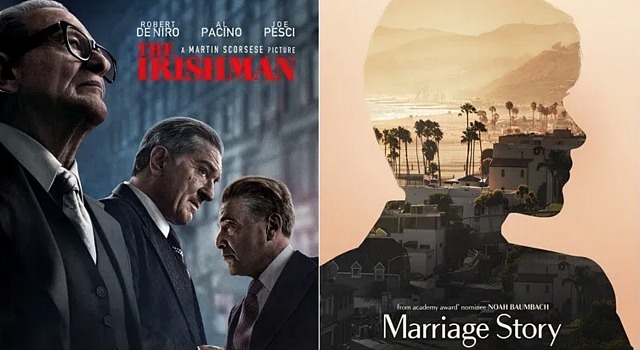
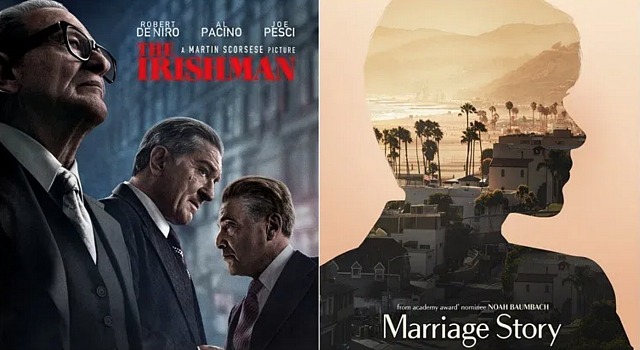
For some shadowy reason The Ankler‘s Richard Rushfield is flirting with a cynical, pissy mood about Martin Scorsese‘s The Irishman. Or, you know, trying it on for size. What follows are portions of the riff (“Luck of The Irishman“) intercut with HE commentary:

Rushfield #1: “This fall, The App That Ate Hollywood will release what in any other company could be either its greatest triumph or the catastrophe that pushes them off the edge. In the storied history of the Netflix’s Drunken Sailor Era (NDSE), the company hasn’t stepped to the table with a bet like this before, the most expensive production in its history. For all we know, it could be the most expensive production in Hollywood history.”

HE response #1: The Irishman is believed to have cost in the vicinity of $159 million. Other films have cost more, but The Irishman‘s tab is arguably the highest ever for a moralistic, character-driven, dialogue-heavy film aimed at the 35-plus, inside-the-beltway “subset of a subset,” as Rushfield puts it.

And yet if there’s any seasoned director in the film realm who has repeatedly proved beyond a whisper of a shadow of a doubt that he’s craftily, creatively, spiritually and physiologically incapable of making a “catastrophe”, it’s Martin Scorsese. Has Rushfield heard something or what? If he had wouldn’t he be obliged to post a (blind) item to that effect?

Rushfield #2: “After the near-miss of the Roma Oscar campaign, the Scorsese bet represents a go-for-broke, everything-for-the-gold, desperate lunge for the trophy hunters…perhaps its last chance in the NDSE. So you would think with [all this] on the line, it would be some sort of major cliffhanger to see how this turns out? But we know exactly how this will go.”

HE response #2: I realize that many people believe that the Best Picture Oscar is Once Upon A Time in Hollywood‘s to lose, but all kinds of tectonic opinion-shiftings are about to kick in. The next three months will be quite the show.

Rushfield #3: “The Irishman will be released on its handful of screens in two cities, where the crowds will flock and sitting through three-plus hours will become a momentary happening for a certain subset of a subset. We’ll have no clue of box office or what that adds up to. The critics will give Marty his de rigueur 98% RT score. Two weeks later, it will play on The App and the following Monday, the App will duly announce it has smashed every record in existence. The parade will march on down to nightly q & a’s at the Egyptian, while neither shareholders nor the Academy nor the entertainment community will have any clue whether this is a ‘success’ by anything recognizable in the catalog of earthbound benchmarks.”

HE response #3 (and originally posted on 8.25.19): “The Irishman will be processed as some kind of ultimate statement about the criminal ethos or community by the undisputed king of gangster flicks…a world-renowned maestro who’s made four great ones (Mean Streets, Goodfellas, The Departed, The Wolf of Wall Street) and will soon deliver what I have reason to suspect** could be (and perhaps will be…who knows?) his crowning, crashing, balls-to-the-wall crescendo, albeit in a somewhat sadder or more forlorn emotional key.”

** having read an early draft of Steve Zallian‘s screenplay.

Magic Plastic

I forget when I posted this photo last (maybe three or four years ago), but a fast-acting photographer for The Commercial Appeal took it on 6.30.72 while standing at the corner of South Parkway and the recently re-christened Elvis Presley Blvd.

It’s not Presley-on-the-white-Harley as much as the young black kid (maybe nine or ten years old, and presumably in his mid to late 50s today) and his dad in the car, eyeballing Presley and Peggy Selph Cannon like hawks. A Memphis Mafia pally allegedly spotted Selph at the Whirlaway Club, where she was working as a dancer, and facilitated an introduction. The guy correctly presumed Elvis would be interested because of her resemblance to Priscilla Presley, from whom Presley had become estranged.

Throw all this together with that modest billboard ad for Magic Plastic sheet covers…perfect.

Three weeks after this shot was taken, or on 7.18.72, the 20-year-old Selph was killed in a traffic accident — horrible.

Presley was 37 and seemingly cool and settled this day. He might have even been happy. He had recorded the last half-decent single of his career (“Burning Love“) almost exactly three months earlier (3.28.72), although it wouldn’t be released until 8.1.72. It must have seemed to him like a good in-between moment. Happiness is about believing in good things to come, about trusting in the likelihood of fair weather.

I know exactly what Presley was feeling at that moment…exactly. Chugging along some urban, vaguely ratty boulevard on a well-tuned hog can do wonderful things for the human spirit. Life is so short, and fortunes can turn so quickly on a dime. Three or four years later Presley began to look flabby and dessicated; five years and two months later he was dead.

Once again, a recollection of a brief Memphis visit in February ’09, about ten and a half years ago:

“Yesterday I rented a fairly inexpensive car from National/Alamo around 1:45 pm after landing at Memphis Airport, and soon after began my quickie tour of the four tourist attractions. I loathed Graceland, felt awed and saddened by the Lorraine Motel, didn’t much care for the Disneyland/Universal City Walk vibe of Beale Street, and loved the little shrine that is Sun Records, the small-scale, modest-vibe recording studio that was begun by the great Sam Phillips in 1950, and is now a down-homey, old-time funky studio and and souvenir shop.

Graceland, the former home of Elvis Presley and an ongoing shrine to the money that his music and movies continue to earn, is just southwest of Memphis airport and located on an ugly straightaway called Elvis Presley Blvd., littered with tacky blue-collar chain stores and fast-food franchises and unsightly warehouses and car washeries. The area is flat and character-less with amber-brown grass and very few trees, except for a relatively small forested area near Graceland.

Read more

Honor, Character, Cojones

The Maple Street Monsters are raking poor Scarlett Johansson over the hot coals of wokedom for saying she believes Woody Allen‘s longstanding claim of innocence regarding Dylan Farrow’s molestation allegation, and adding that she’d “work with him anytime.”

Actually Johansson could have expressed her views about Allen with more conviction if she’d added that she not only believes Woody but his son Moses Farrow, a 41 year-old therapist who was at the Farrow home in Bridgewater on the day in question — 8.4.92 — at age 14.

Anyone who reads Moses’ 5.23.18 essay (“A Son Speaks Out“) and still maintains an absolute belief in Allen’s alleged guilt is an idiot, plain and simple.

Before her comments appeared in a Rebecca Keegan interview in The Hollywood Reporter, Johansson’s open and unaffected Marriage Story performance was a top-ranked contender for a Best Actress Oscar nomination. Now she double deserves that honor for exhibiting political courage on top of her acting achievement.

L.A. Times writer Christi Carras posted a lament this morning that began with these words: “And now a moment of silence for Scarlett Johansson’s publicist.”

Allow me to suggest a moment of silence for the zealots who insist, despite mountains of non-damning evidence and abundant indications to the contrary, that Woody, Moses, Robert Weide and Woody’s daughter Bechet Dumaine Allen, who has stated a belief in his innocence, are lying or deluded.

Posted on 2.7.19: “If after reading Moses Farrow’s 5.23.18 essay as well as Robert Weide’s “Q & A with Dylan Farrow” (12.13.17) and Daphne Merkin’s 9.16.18 Soon-Yi Previn interview…if after reading these personal testimonies along with the Wikipedia summary of the case you’re still an unmitigated Dylan ally…if you haven’t at least concluded there’s a highly significant amount of ambiguity and uncertainty in this whole mishegoss, then I don’t know what to say to you. There’s probably nothing that can be said to you.”

“I see Woody whenever I can, and I have had a lot of conversations with him about it,” Johansson told Keegan. “I have been very direct with him, and he’s very direct with me. He maintains his innocence, and I believe him.”

Read more

We Can Work It Out

When I spoke last Friday to Renee Zellweger at the annual Telluride brunch, she looked exactly (and very fetchingly) like a somewhat older but entirely vibrant and relaxed version of Dorothy Boyd, the lover and wife of Tom Cruise in Jerry Maguire. She looked like herself, I mean, and well-tended at that.

Zellweger was 26 or thereabouts when she costarred in that landmark Cameron Crowe film. Now she’s 50, and has some kind of serene, settled, casually glowing thing going on. If I didn’t know her and someone told me she was 45, I wouldn’t have blinked an eye.

Why did I just write two paragraphs about Zellweger’s appearance instead of her exceptional, affecting performance as Judy Garland in Rupert Goold‘s Judy (Roadside, 10.4)? It’s water under the bridge but five years ago everyone was saying Zellweger looked like someone else. Which, to be honest, she did for a certain period.

And now, in a new Vulture profile, Jonathan Van Meter has touched on “the subject” and shared the same view. Renee looks like Renee, all is well, etc.

Read more

“Just To Be Safe…”

I wanted to catch today’s 4 pm showing of Edward Norton‘s Motherless Brooklyn, but I couldn’t do that and catch my 7pm flight out of Durango. So I left Telluride around 1 pm. Around 2 pm I began feeling little tugs of sleep, but I resisted them. A couple of times I actually slapped myself to stay awake. Just outside of Mancos my eyes wouldn’t stop closing so fuck it, I pulled over. I crawled into the back seat and slept for an hour. I’m glad I did this. It was the intelligent thing to do.

Read more

Best Telluride Film After “Marriage Story”

One measure of a gripping Telluride film, for me, is catching a 10:30 pm showing (and they always start late) and maintaining an absolute drill-bit focus on each and every aspect for 135 minutes, and then muttering to myself “yeah, that was something else” as I walked back to the pad in near total darkness (using an iPhone flashlight app to see where I was walking) around 1 am.

This is what happened last night between myself and Trey Edward ShultsWaves (A24, 11.1).

Set in an affluent ‘burb south of Miami, Waves is a meditative, deep-focus tragedy about an African-American family coping with the effects of high-pressure expectations and toxic masculinity.

The bringer of these plague motivators is dad Ronald (Sterling K. Brown), the owner of a construction business and one tough, clenched, hard-ass dude. He injects all of this and more into 18 year-old son Tyler (Kelvin Harrison, Jr.), a somewhat cocky high-school wrestling team star who’s looking at a top-notch college and a go-getter future.

Watching on the sidelines is Tyler’s kid sister Emily (Taylor Russell), a quiet, keep-to- herself type. Their stepmom Catherine (Renee Elise Goldsberry) is a gentle smoother-over, and a counterweight to Ronald’s aggressive approach to parenting.

Tyler’s situation is aggravated when he tears a shoulder muscle and is told by a doctor that he has to stop wrestling. Tyler naturally decides to hide this from Ronald. But the real flash point occurs when Tyler’s spunky-hot girlfriend Alexis (Alexa Demie) finds herself pregnant, and announces that she wants to “keep it.” It?

Tyler freaks (sudden fatherhood at 18 being more or less synonymous with economic enslavement and close to a death sentence in terms of college and opportunity), Alexis freaks right back and blocks him, he responds by snorting and drinking and driving off, and then things come to a horrific climax at a party.

And so ends Part One of Waves, which is a cleanly organized two-parter. And then begins Part Two, which is mostly about Emily quietly coping with the aftermath of Tyler’s tragedy, and Ronald and Catherine all but shut down and incapacitated by it.

The bulk of this section is about Emily meeting and then going out with Luke (Manchester By The Sea‘s Lucas Hedges, somewhat heavier and wearing the same tennisball haircut he had in Mid90s and Ben Is Back). They gradually start going on missions together (including a visit to Weeki Wachee, which I haven’t been to since I was 14) and talking about their buried backstories, in particular Luke’s dying ex-druggie dad.

And then finally Ronald and Emily have “the talk” in which Ronald more or less admits that he pushed the wrong buttons with Tyler and that he’s trying to forgive himself, etc.

Read more

First Time For Everything

“Many have asked, and with good reason: Do we need another Joker movie? Yet what we do need — badly — are comic-book films that have a verité gravitas, that unfold in the real world, so that there’s something more dramatic at stake than whether the film in question is going to rack up a billion-and-a-half dollars worldwide.

Joker manages the nimble feat of telling the Joker’s origin story as if it were unprecedented. We feel a tingle when Bruce Wayne comes into the picture; he’s there less as a force than an omen. And we feel a deeply deranged thrill when Arthur, having come out the other side of his rage, emerges wearing smeary make-up, green hair, an orange vest and a rust-colored suit.

“When he dances on the long concrete stairway near his home, like a demonic Michael Jackson, it’s a moment of transcendent insanity, because he’s not trying to be ‘the Joker.’ He’s just improvising, going with the flow of his madness.

“And when he gets his fluky big shot to go on TV, we think we know what’s going to happen (that he’s destined to be humiliated), but what we see, instead, is a monster reborn with a smile. And lo and behold, we’re on his side. Because the movie does something that flirts with danger == it gives evil a clown-mask makeover, turning it into the sickest possible form of cool.” — from Owen Gleiberman‘s 8.31.19 Variety review.

Two Kinds of Movie Mavens

There are two kinds of movie devotees, and they can be neatly divided by their reactions to the news that Martin Scorsese‘s The Irishman runs three hours and 29 minutes. The first group of supposed movie lovers is aghast at this news (“My God, my aching ass! And the bathroom breaks!”), but at the same time they’re totally down for an eight-hour couch marathon watching David Fincher‘s Mindhunter 2. The second group is utterly delighted by the news that a genius-level filmmaker, a half-century veteran whose vision and knockout chops have been hailed time and again, has made a nice, long, super banquet-sized film…”I can’t wait!”

Second group to first group: No good movie is too long, ond no bad movie is too short. Period. End of story. Shut up.