Because She Wimped

A little less than five years ago, or on 7.29.14, Jeffrey Cavanaugh posted an essay that fanned the flames of nascent Elizabeth Warren enthusiasm. Titled “Elizabeth Warren’s 11 Commandments,” the subhead was “Everybody’s eyes are on Hillary Clinton, but Elizabeth Warren might be the one Democrats should be watching if a golden calf is what they hope to avoid.”

In Cavanaugh’s prophetic calculus Clinton was the golden calf — “the abandonment of the true faith and the elevation of materialist safety” — and indeed she proved to be the terrible dead weight that sank the Democratic ticket and took us all straight to hell.

Posted on 6.13.18: “Every day I wake up shattered by the spreading Trump miasma, but I also curse Hillary’s name — every damn day. She did this to us. She and her centrist, Democratic-establishment cronies.”

But Warren did this to us also. In a way. Because in late ’14 and early ’15 she listened to the Democratic elders who told her not to challenge Hillary. If she’d announced anyway Bernie Sanders wouldn’t have run (he plainly stated that he got into the 2016 presidential race to carry the progressive banner because Warren had opted out) and with the excited women’s vote there was at least a decent possibility that Warren might have won the nomination. Maybe.

If Warren had run against Trump…who knows? I’m telling myself that everyone who voted for Hillary would’ve also voted for Warren, except Warren wouldn’t have had Hillary’s negatives — no secret email server issues, no fainting at any 9/11 ceremonies.

I would have been delighted to vote for Warren three years ago, without the slightest misgivings. Passion, smarts, gutsy, wonky.

I realize that African American voters probably would’ve clung to Clinton like they’re clinging right now to Joe Biden, but Warren had the heat in late ’14, ’15 and ’16…she really did. Read Cavanaugh’s piece — it’s fascinating.

Consider this chart showing Democratic candidate support among South Carolina’s African-American voters. Right now Warren is polling a weak fourth, and poor Pete Buttigieg is doing even worse. Face it — because of tepid black support Warren almost certainly won’t make it. Am I wrong?

Thanks, older voters of color, for your resistance to Warren because…what, because she’s white and position-papery and bespectacled and professorial? Thanks also for your ingrained resistance to candidates who aren’t straight. Because you’re saddling us all with a candidate who gaffes and drools. Thanks so very much.

Six Reasons For “Irishman” Win

In the eyes of Forbes‘ Scott Mendelson, Quentin Tarantino‘s Once Upon A Time in Hollywood is the frontrunner to win the Best Picture Oscar next February.

Partly because it’s a better than pretty good film in many respects, partly because it raises a glass to the “old” Hollywood of a half-century ago, partly because it delivers one of the kindest and most welcome happy endings in a dog’s age, and partly because in this era of dominating Disney-owned tentpoles it’s a stand-alone, non-franchise flick that has made a very decent pile of change so far ($123 domestic, $239M worldwide).

Maybe, but I’m of the vague suspicion that at the end of the day Martin Scorsese‘s The Irishman (and I recognize, of course, that it’s the height of recklessness to spitball about a film that I’ve only “seen” in terms of having read an early draft of the script) will out-point the Tarantino.

I have six reasons for thinking so.

One, because, given the skills and vision of a director who’s been at this racket since the late ’60s, it’ll probably be “better” and classier than the Tarantino (i.e., more upmarket, more assured, less Van Nuys drive-in-ish) in terms of your basic award-friendly attributes — texture, focus, story tension, dynamic performances, great scenes, technical prowess, color and pizazz.

Two, because it’s a gangster film that isn’t necessarily out to be a visceral funhouse thing a la Scarface or Goodfellas, and is instead a kind of meditative morality play. And is therefore “serious.”

Three, because the three-hour length automatically qualifies it as epic- or Godfather-scaled — i.e., the standard calling card of an “important”, weighty-ass film. On top of the fact that it took years to assemble and cost a tankload of money to produce.

Four, because it’ll be processed by every digital Tom, Dick and Harry as some kind of ultimate statement about the criminal ethos or community by the undisputed king of gangster flicks…a world-renowned maestro who’s made four great ones (Mean Streets, Goodfellas, The Departed, The Wolf of Wall Street) and will soon deliver what I have reason to suspect could be (and perhaps will be…who knows?) his crowning, crashing, balls-to-the-wall crescendo, albeit in a somewhat sadder or more forlorn emotional key.

Five, because it’ll set new standards for the invisible blending of unvarnished realism and CG wizardry as well as deliver the most visually convincing rendering of the fountain of youth in the history of motion pictures (and tell me that isn’t going to hit every SAG member where they live).

And six…well, this is a bit complicated but I’ll try to explain. The sixth reason is that even the stubborn old Academy farts are starting to realize that there’s no stopping the streaming way of things, and that save for a sprinkling of award-season films released between October and December the theatrical realm has pretty much been overrun by the mongrel hordes, and that other big streamers besides Netflix and Amazon are about to jump into the arena (Apple, Disney) and thereby make things even more exotic and challenging, and that despite whatever perceived threat element Netflix may psychologically present it deserves at this point a Movie Godz gimmee owesie because it’s the only big player (as of right now) that is standing belly to the bar and funding ars gratia artis films for their own merits (like Roma), and because long, ambitious movies Like The Irishman are at a premium right now.

There’s also a seventh factor, and a crucial one at that: Netflix has to cut some kind of deal with major exhibitors (AMC, Cineplex, Arclight, Landmark) in order to book The Irishman into theatres for at least…well, that’s the issue, isn’t it? Potential engagements of 42, 56 or 70 days (or six, eight or ten-week runs)….who knows?

AMC wants something close to a 90-day exclusive theatrical window, even though it was recently asserted by a distribution veteran that “95% of movies stop earning their keep after the 42-day mark.”

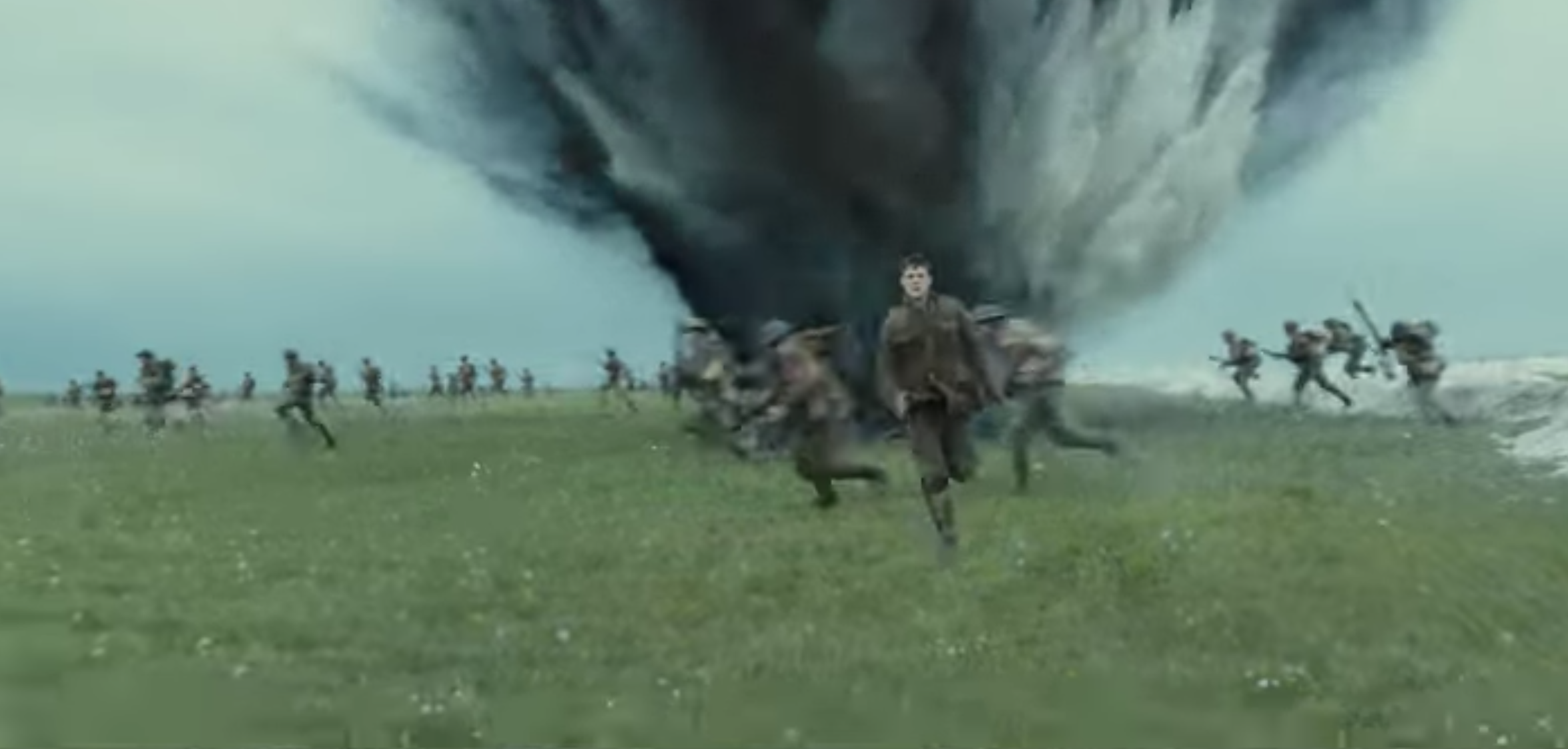
The other four Best Picture contenders of note, probably, will be Sam Mendes1917, Noah Baumbach‘s Marriage Story, Marielle Heller‘s A Beautiful Day in the Neighborhood and Greta Gerwig‘s Little Women. And maybe Clint Eastwood‘s Richard Jewell. But The Irishman will take it. That’s how I see it right now.

Never Had Issue With Bluray Version

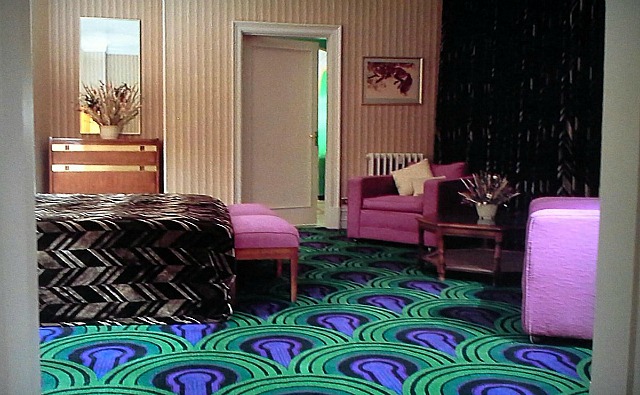
I didn’t attend the Cannes Film Festival midnight screening of the 4K remaster of Stanley Kubrick‘s The Shining. I heard something about it possibly containing that deleted hospital room scene between Shelley Duvall and Barry Nelson (which I saw 39 years ago at the Warner Bros. screening room in Manhattan), but I guess not. It was drawn from a new 4K scan of the original 35mm camera negative. The mastering was done at Warner Bros. Motion Picture Imaging. The color grading was done by Janet Wilson with supervision from Kubrick’s former personal assistant Leon Vitali. The 4K disc pops on 10.1. I wouldn’t mind owning it, but the Bluray has always looked fine. I’d like to believe the 4K will deliver a bump, but I don’t think it will.

Barbera With A Target On His Back

“Maybe we should all be like Venice — just ignore everything you journalists and the PC media say with regard to gender equality and Netflix and do whatever we want, and then sit back and hear how we are the best festival in the world.” — the honcho of a major, big-deal festival, speaking to The Hollywood Reporter.

Most engaged, here-and-now, top-tier film festivals are playing ball with p.c. progressive agendas these days. This means “going Sundance” however and whenever possible, which is to say (a) programming as many reasonably good films as possible that have been directed by women, POCs and gays, or otherwise programming with an eye towards p.c. quotas, (b) selecting as many “instructive” films with diverse subject matter as possible, and (c) not exactly frowning upon films directed by straight white males but being careful to limit their inclusion, depending upon the quality of their relationships with well-positioned progressives in the filmmaking and film-festival community.

It goes without saying that films directed by men with checkered or otherwise troubling pasts (Roman Polanski and Nate Parker being two) need to face the strongest possible scrutiny if not out-and-out prohibition.


Venice Film Festival topper Alberto Barbera

It also goes without saying, and certainly in the wake of an 8.23 Hollywood Reporter article titled “‘Completely Tone Deaf’: How Venice Became the Fuck-You Film Festival” by Scott Roxborough and Tatiana Siegel, that Alberto Barbera‘s Venice Film Festival has mostly been ignoring these rules, certainly in terms of quotas and flagrantly by inviting Polanski’s An Officer and a Spy to screen in competition, and by slating Parker’s American Skin in the (noncompetitive) Sconfini section.

The thrust of Roxborough and Siegel’s article is that industry progressives regard Barbera as an obstinate, convention-defying dinosaur and that in a perfect world he would be cancelled and then banished to Kathmandu for the rest of his life.

The basic impulse of many p.c. types is to silence if not exterminate all agnostics or aetheists in the conversation. Roxborough and Siegel certainly have their ears to the train tracks in this regard.

However, there’s one small consideration that Roxborough and Siegel seem to be ignoring, and that’s the remote possibility that Polanski’s An Officer and a Spy or even Parker’s American Skin might be — am I going to get in trouble for saying this? — good. As in worth seeing and discussing, at the very least. Hell, one or the other might even be very good. Or even, God forbid, excellent. That’s certainly a possibility as far as the Polanski film is concerned. Or even, to be liberal about it, in Parker’s case.

The underlying point of the Roxborough-Siegel piece is that the people they’ve interviewed — Women and Hollywood founder Melissa Silverstein, Swiss Women’s Audiovisual Network co-president Laura Kaehr, Toni Erdmann producer Janine Jackowiski plus an unnamed female filmmaker — and perhaps even Roxborough and Siegel themselves are not rigorously concerned with matters of cinematic quality.

What concerns them is progressive tokenist statements by way of festival representation, and how inviting Polanski and Parker to Venice represents a slap in the face to #MeToo and #TimesUp. Which it arguably does in a certain sense.

If I were calling the shots I would bend over backwards to include as many worthy films from women, POC or gay directors as possible, within the limits of good taste. But I would insist on not programming any film on the basis of quotas alone.

Excerpt: “In an era when Hollywood has little tolerance for talent swept up in a #MeToo scandal — as when Amazon dropped Woody Allen‘s A Rainy Day in New York amid resurfaced allegations from his daughter Dylan Farrow that he molested her when she was 7 — and even notoriously macho Cannes has made strides with female award winners, Venice stands alone as the last major un-woke film festival.”

HE response to above paragraph: Woody Allen has contended in his lawsuit that Dylan’s accusation is “baseless,” as the facts overwhelmingly indicate. Alas, Amazon execs didn’t care about the facts and history or the holes in Dylan’s account or Moses Farrow’s May 2018 essay or anything else.

Great Jackowiski quote: “You can see how in America, if you don’t play by the rules, you’re out. Here in Europe, there’s still the idea of the ‘genius’ who is allowed to do anything and should be celebrated for it.”

Transpose this quote to the early to late 1950s, and imagine a conservative-minded European producer saying it: “You can see how in America, if you had associations with communism in the 1930s, you’re out. [But] here in Europe, there’s still the idea of the ‘genius’ who is allowed to do anything and should be celebrated for it. Jules Dassin, for example, is allowed to make films in Europe despite his commie-agitator background.”

Jackowiski explains that “she isn’t calling for a ban on films from ‘problematic’ men but says ‘the issues surrounding them should be discussed, and their films should be seen in that context.'” Fair enough.

The Venice Film Festival begins on Wednesday, 8.28 — four days hence. Telluride kicks off two days later.

No Way To See A Movie

As recently as 1973 there was a drive-in theatre at the corner of Olympic and Bundy. Really. It was called (wait for it) the Olympic Drive-In. The street-facing side of the screen featured a mural of a 20something couple riding a wave. It opened on 4.4.45 and closed on 10.14.73.

The last time I even contemplated the memory of drive-in theatres was when I was watching that abandoned drive-in shoot-out scene in Michael Mann‘s Heat, which was 24 years ago.

The last time I saw a film at a drive-in was sometime in the early to mid ’80s. I think it was a Bob Zemeckis film (Used Cars or Romancing The Stone). Somewhere in the northern Burbank area, or in North Hollywood. My first drive-in experience was with my parents, somewhere in the vicinity of Long Beach Island on the Jersey Shore.

I’m kind of surprised to learn that 330 domestic drive-in theatres were in business as of two years ago. But only in podunk backwaters that nobody’s heard of, much less visited. Carthage, Missouri. Middle River, Maryland. Newville, Pennsylvania. Honor, Michigan. Russellville, Alabama. Sterling, Illinois. Driggs, Idaho. Lakeland, Florida.

Earlier today: I respect the affectionate feelings that some have shared about the drive-in experience, and I love the Americana aspect of drive-ins (those iconic images of ‘50s and ‘60s films playing to an army of classic Chevys, Impalas, Ford Fairlanes and T-Birds), and let’s not forget the most common aspect, which was the sexual stuff (mostly second-base and third-base action).

But if you cared even a little bit about Movie Catholic viewing standards (as in decent sound and tolerable light levels, and no headlights hitting the screen every five minutes) ) you avoided drive-ins like the plague. You went to drive-ins for the car sex, and you brought your own beer.

Wise guy to HE: “‘And let’s not forget the most common aspect, which was the sexual stuff (mostly second-base and third-base action).’ I guess this explains the affection for Elton John ballads. You really are from Connecticut, aren’t you?”

HE to Wise Guy: “What are you saying, that people actually got laid at the drive-in? Some did, I guess. But they sure kept it a secret.”

Read more

Another Eastwood Slider

At the tail end of an 8.21 “Notes on the Season” piece about the Emmy and Oscar races, Deadline‘s Pete Hammond mentions that The Report costar Jon Hamm “mentioned” the other night that “he believes Clint Eastwood‘s Richard Jewell — so far not officially dated by Warner Bros — will be released in December.”

I’m hearing that it’s more than a case of Hamm believing this will happen, but that it’s pretty much locked and loaded. Warner Bros. will of course deny or sidestep until they announce down the road.

During filming pic was called The Ballad of Richard Jewell, which was also the title of Marie Brenner’s 1997 Vanity Fair article. The IMDB still refers to it as The Ballad of Richard Jewell but Wikipedia is calling it plain old Richard Jewell (which doesn’t sound good, by the way — the title needs “The Ballad of”).

From “They Done Him Wrong“, posted on 6.18.19: “The conservative-minded Eastwood is doing The Ballad of Richard Jewell, of course, because of the anti-news media narrative.

“In Jewel’s case the narrative (which unfolded over 88 days from late July to late October of ’96) was earned and then some. Several reporters and commentators (including the Atlanta Constitution‘s Kathy Scruggs and NBC’s Tom Brokaw) fingered Jewell as the likely Atlanta bomber without having all the facts.

“Jewell’s tragedy nonetheless feeds into Trump’s fake news mythology, and Eastwood’s film, you bet, will almost certainly strike a chord in America’s heartland or, you know, with the same ticket-buyers who flocked to Clint’s American Sniper and chortled along with Grant Torino‘s Walt Kowalski.”

Hammond: “Will this be another sneak attack on Oscar season from four-time winner Eastwood, a producer-director fond of quickly delivering his movies. Just last year he did that with The Mule, and in the past has had great success with such films as American Sniper and Million Dollar Baby in December. Warner Bros has an unusually strong slate of possible awards contenders already this year, but what’s one more when it comes from Eastwood? We shall see.”

“Wild Angels” Stinks

A day or two after the passing of Peter Fonda author and film scholar Joe McBride posted a Facebook comment about Roger Corman‘s The Wild Angels (’66), in which Fonda played the first significant role as a motorcycle-riding guy. McBride called it a much better film than Dennis Hopper‘s Easy Rider (’69), in which Fonda played his second significant role astride a Harley.

[Click through to full story on HE-plus]

How Many Theatrical Days For “The Irishman”?

According to an 8.21 N.Y. Times report by Nicole Sperling, the ongoing dispute between Netflix and two major exhibition chains, AMC Theatres and Cineplex, about the theatrical release of Martin Scorsese‘s The Irishman boils down to an unrealistic expectation on the exhibition side.

The chains want Netflix to delay streaming The Irishman for “close to three months” after its theatrical opening day while Netflix, following their Roma model, wants to begin streaming 21 days after the theatrical debut.

This despite a claim by former 20th Century Fox distribution exec Chris Aronson that “more than 95 percent of movies stop earning their keep in theaters at the 42-day mark,” according to Sperling’s article.

Exhibitors nonetheless fear that the proposed 21-day window will persuade ticket-buyers to bypass The Irishman in theatres, as they would only have to wait three weeks to see it at home.

90% of The Irishman‘s theatrical revenue will come from educated, review-reading, 35-and-over types who will want to immerse themselves in Scorsese’s wiseguy epic (it allegedly runs around three hours) and be part of the conversation, and most of these transactions will happen during the first three weeks, four at the outside. A portion of the under-35 megaplex mongrels may attend out of curiosity, but the bulk of the business will come from Scorsese loyalists and cultivated cineastes.

So if Netflix wanted to be accommodating, they would agree to wait 45 days to stream — half of the window that exhibitors want. My hunch is that the deal with AMC and Cineplex will result in a 30-day delay. Somewhere between 30 and 45 — that’s where the peace lies.

Netflix will want The Irishman to be in theatres during the heat of award season, or from mid-October to early December. Open it in theatres on Friday, 10.18 and keep it in plexes for seven weeks, or until Thursday, 12.5. We all understand that peak Irishman business will happen between the weekends of 10.18 and 11.15, max. And more likely between 10.18 and 11.7 — be honest. Especially considering the allegedly somber, meditative tone (“It’s not Goodfellas“) and three-hour length.

In the exhibitor fantasy realm The Irishman, given the theoretical 10.18 theatrical debut, wouldn’t begin streaming until mid-January. Unlikely. Especially with the currently abbreviated Academy voting window.

Read more

Touch of “Bombshell” In An Elevator

Kayla Pospisil (Margot Robbie), a fictional Fox News producer, is apparently dreading an imminent meeting with ogre-ish Fox honcho Roger Ailes (John Lithgow). Also unsettled, it seems, are fellow elevator riders Megyn Kelly (Charlize Theron) and Gretchen Carlson (Nicole Kidman). They’re so rattled by what may be in the offing (or what’s in the air) that they don’t even small-talk each other. Then Carlson says it’s “hot in here.”

Pospisil (weird last name, a mashing of “possum” and “possible”) and Carlson get out, but the coolly observant Kelly doesn’t.

After the oddly muted response to Showtime’s The Loudest Voice, the Bombshell challenge will be to prove itself as the bigger, better, more pointed Ailes drama, above and beyond the marquee-name aspect.

Directed by Jay Roach and scripted by Charles Randolph, Bombshell will pop theatrically on 11.20. If it’s any kind of award-calibre thing…well, we’ll see.

Bombshell costars Kate McKinnon, Connie Britton, Mark Duplass, Rob Delaney, Malcolm McDowell and Allison Janney.

Politically Correct Scales

Three days ago Guy Trebay posted a N.Y Times “Critics Notebook” piece called “Naked Came the Strangers.” Without delving too much into the ins and outs of the article (which is subtitled “How our nudes have changed in the last 50 years”), please consider a portion of the seventh paragraph.

“In 1969, Americans were, it would appear, much thinner — men and women equally,” Trebay writes. “As it happens, this superficial impression is borne out by the available data, since in 1971 the average 19-year-old man weighed just 159.7 pounds, according to figures compiled by the National Center for Health Statistics, and the average woman 131.”

Given the “Americans were much thinner” line, you’d think Trebay would follow this up with statistics about how much heavier the average 19 or 20-year-old is today. But he avoids such comparisons.

The reason, I’m guessing, is that N.Y. Times editors wouldn’t want to offer an impression that the paper is taking any sort of dim view of the average weight of today’s young Americans, as that might constitute an oblique form of fat-shaming.

And so Trebay runs for cover by stating an obvious, uncontested fact — that older people are heavier than their younger selves. “A hippie now at Woodstock 50 — if such existed and if a planned anniversary concert had not fallen apart — would have added an additional 14 pounds to his frame and a woman another 20,” he states. (When Trebay says “a hippie at Woodstock 50”, he obviously means an old hippie as young hippies don’t exist outside of Deadheads.)

My reading of that meter tells me that many older guys (55-plus) are a lot more than 14 or 15 pounds heavier than their 19 year-old selves. Try 25 or 30 pounds heavier, and I’ve seen a lot worse.

By Trebay’s statistics (currently 14 pounds heavier than 159 pounds) the average 69 year-old guy is 173 pounds.

Last December a National Health Statistics Reports PDF stated that “the average American man between 20 and 39 years [of age] weighs 197.9 pounds, and that the average waist circumference is 40.2 inches, and the average height is just over 5 feet 9 inches (about 69.1 inches) tall.”

In other words the average younger to middle-aged guy of 2019 is 38 pounds heavier than 20-year-olds were in 1971, or 48 years ago.

Read more

Four Words I’ve Never Said

And those words are “we need to talk.” Not once in my life! Because they’re a code phrase, for openers. They don’t mean “we need to talk.” They mean “I’ve had it up to here with your selfishness and evasions and procrastinating bullshit, and so we need to figure something out because I don’t know how much more of this I can take.” That’s what “we need to talk” means.

It means “I’m losing patience with your lack of progress…you’re not improving according to my plan.” It means “are you gonna shape up? ‘Cause if you don’t I’m thinking of shipping out.” It means “you, sir, have been fucking up, and so ch-ch-ch-ch-ch-changes or else…incoming!”

Like anyone else I have my issues, but in the matter of relationships rule #1 has always been “whatevs, turn the other cheek, let it go, don’t pick fights, no ultimatums.” Which essentially means arguments are over-rated, fly under the radar, do your best, keep the gas tank filled, clean up, buy a good vacuum cleaner and take the garbage out before going to bed.

Reactions? To the trailer, I mean.