Svetlana’s “Show Me” Takes Top Taormina Prize

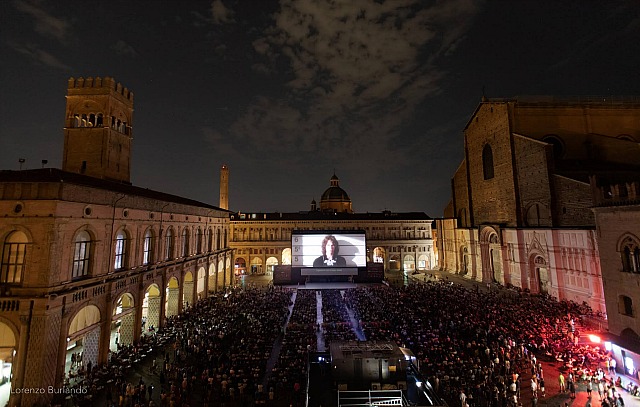
Last night Svetlana Cvetko‘s Show Me What You Got won the Taormina Film Festival‘s Cariddi D’Oro Award for Best Film, which sounds like some kind of “whoa”-level, top-tier honor. The Italian name of the award is “Premio Cariddi d’Oro per il Miglior Film.”

The black-and-white, Jules et Jim-like, menage a trois relationship film costars Cristina Rambaldi, Mattia Minasi and Neyssan Falahi.

Directed and co-written (with producer David Scott Smith) by Cvetko, Show Me What You Got runs 100 minutes. It premiered at the respected, decades-old film festival last Tuesday. HE’s own Phillip Noyce (The Quiet American, Rabbit Proof Fence, Clear and Present Danger) is the exec producer.


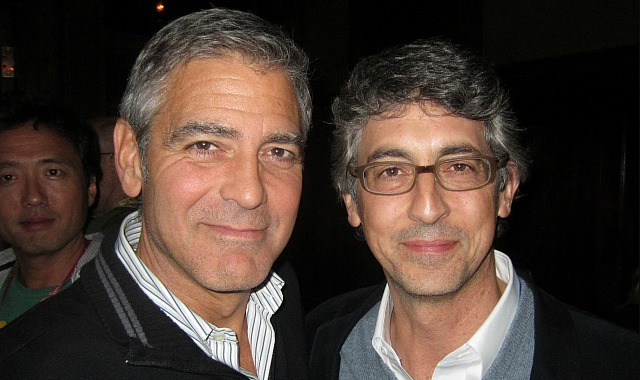
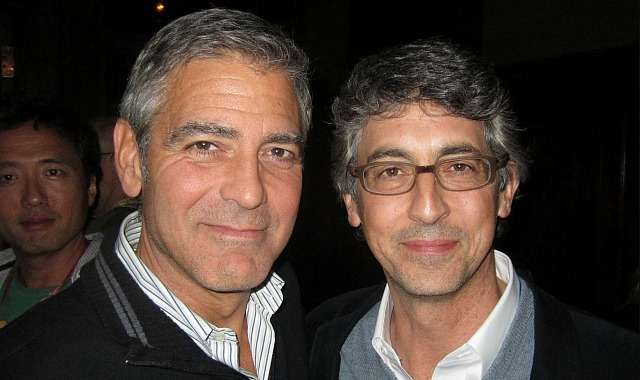
(l.) Revealing Ukraine director Oliver Stone, (r.) Show Me What You Got director-cowriter Svetlana Cvetko during Saturday’s Taormina Film Festival award ceremony.

Oliver Stone‘s Revealing Ukraine, a doc about the history of Ukraine since the Soviet Union collapse, won the festival’s Grand Prix award.

Christina Rambaldi is a niece of the late Italian special-effects maestro Carlo Rambaldi (Close Encounters of the Third Kind, E.T., the Extra-Terrestrial).

It’s significant that I didn’t hear about Svet’s moment of triumph until 20 hours had passed (it’s now just after 8pm on Sunday) but we’ll let that go.

It’s also significant, I feel, that Minasi and Falahi are ginger-haired. You can say “and what of it?” and I would say “nothing — it’s just worth noting.” You could say “it’s in black and white so who the hell cares what color their hair is?” and I would say “none, nobody, it’s fine…congratulations to all ginger-haired romantic leads the world over!”

Honestly? If I had my druthers I would prefer romantic leads who look like…oh, the young Alain Delon, say, or the young William Holden. But that’s me. And who cares what I think about this topic? No one.

Read more

Satirical Monthly That Held On For Decades

I didn’t mention the death of Mad magazine because in my mind it stopped being a truly influential cultural satire publication 40something years ago. Seriously — Mad stopped being a necessary thing sometime in the early to mid ’70s. (The vital era was really the mid ’50s to mid ’60s.) I respect the fact that they kept publishing well past peak cultural potency — who doesn’t admire drive and tenacity? — but every publication has its day, and Mad‘s was during the Eisenhower and Kennedy administrations.

Somehow or some way Mad, Steve Allen, Lawrence Ferlinghetti, Tuli Kupferberg and Lenny Bruce were part of the same ’50s comic-hipster mindset; they all seemed to be sipping from the same attitude well. Mad and Bruce both ascended around 1955, when Mad dropped the comic book format and became a magazine. Bruce died in ’66; the Mad vitality began to ebb or dilute around that same time. More and more people getting stoned changed the game — in the ’50s and early ’60s Mad delivered its own kind of pot high in a way. Yes, it hung on for decades after that (and hats off to those who kept the brand burning), but now it’s really over and done with.

Read more

Reactions to “Midsommar”?

On 6.25 I said the following about Ari Aster‘s Midsommar (A24, now playing): “No matter how you feel about elevated horror, chilling Swedish pagan rituals, shitty boyfriends or Florence Pugh, this is a 100% essential summer freakout flick.”

In other words, it’s a film you have to see no matter what your particular interest levels may be. Because it’s currently understood by everyone to be culturally unmissable right now.

So a fair number of people went to see it yesterday, and…?

Excerpt #2: “Yes, Midsommar is a breakup film — David Edelstein called it ‘a woman’s fantasy of revenge against a man who didn’t meet her emotional needs’ as well as ‘a male director’s masochistic fantasy of emasculation at the hands of a matriarchal cult.’ That’s about as concise and on-target as a capsule description could be.”

From Owen Gleiberman’s 7.4 Variety column, posted at 2 pm:

“What we mean when we say ‘the ’60s’ may be ancient history, but the hidden legacy of the ’60s is that we’re increasingly a nation of sects, tribes, people obsessively seeking out those of like-minded desire. There’s a case to be made that we’re now evolving, in our thinking, into a nation of cults, which is why, when it comes to politics, rationality seems, more and more, to have vacated the building — not only on the right (though primarily there), but on the left as well. Debate, more and more, seems over. It has been replaced by the fundamentalism of belief.

“The horror of Midsommar is that innocent people die, in gruesome ways. But the real horror of Midsommar is that Florence Pugh’s Dani, drawn to the center of her own shattered identity, replaces it by becoming the self-actualized queen of her surroundings. Dani, in this movie, is really all of us. She loses herself, only to find her new self. She sheds her skepticism and joins the group. She fixes her broken relationship with her lover by reducing him to a piece of timber. She heals her trauma by giving her benediction to flowers of evil. And she does it, in the end, with a smile.”

Embraced By Regressives

Eric Kohn doesn’t have to try and convince me that Forrest Gump blows — I’ve been pissing on the legacy of this Robert Zemeckis-Tom Hanks film from the get-go.

Best passage: “There’s a reason Forrest Gump became a beacon to an antiquated Republican Party when it came out in the run-up to the 1994 midterm elections: it preaches conservatism in its bones, whether its creators intended it that way or not.

“Through the lens of Hanks’ lovable naif, who somehow stumbles through every monumental moment in American history and emerges unscathed, Forrest Gump reads as a repudiation to any nuanced assessment of the country. It celebrates family values and obedience to the system over anyone who clashes with it. Every whiff of rebellion is suspect.

“This no-nothing white man becomes a war hero and a wealthy man simply by chugging along, participating in a country that dictates his every move. He never comprehends racism or the complexities of Vietnam; the movie portrays political activism and hippy culture as a giant cartoon beyond Forrest’s understanding, while presenting his apolitical stance as the height of all virtue.

“Viewed in retrospect, Forrest Gump whitewashes and dumbs down American history at every turn.”

From “How Do Those Chocolates Taste Now?“, posted on 7.10.14:

Yesterday afternoon N.Y. Post film critic Lou Lumenick posted a tribute piece about Robert Zemeckis‘s Forrest Gump, which opened 20 years and four days ago (i.e., 7.6.94). Millions of moviegoers fell in love with this delusional film about a kindly, aw-shucks simpleton who leads a charmed life. We all know it wound up with six Oscars and made a mountain of money, etc.

But in my mind Gump‘s most noteworthy achievement is that it showed how myopic Americans (particularly American males) were about themselves. They really love (or loved) the idea of half-sweethearting and half-dipshitting their way through life. Gump is also one of the most lying, full-of-shit films ever made when it came to portraying the tempests of the 1960s.

Here’s how I put it way back in October 2008, although I was drawing at the time from an L.A. Times Syndicate piece about the Gump backlash that I wrote just after it opened:

“I have a still-lingering resentment of Forrest Gump which I and many others disliked from the get-go for the way it kept saying ‘keep your head down’, for its celebration of clueless serendipity and simpleton-ism, and particularly for the propagandistic way it portrayed ’60s-era counter-culture types and in fact that whole convulsive period.

Read more

Ample Cash On Hand

In North by Northwest Cary Grant‘s Roger Thornhill drops a lot of cash on a lot of random expenses — cabs, beverages, tips, bus tickets, dry cleaning. I’ve calculated that he spends a minimum of $275, which comes to roughly $2390 in the 2019 economy. That’s a lot to be carrying around. The film was shot in the summer of ’58, when the only credit card was Diner’s Club and no one had ever heard of debit cards. Thornhill, on the run for murder and unable to just stroll into his local bank for a withdrawal, had to pay for everything with pocket cash.

[Click through to full story on HE-plus]

Regrettable, Probably Unavoidable

We all understand what will most likely happen next year with Pete Buttigieg. Unless, that is, he somehow flips African-American opinions over his handling of the Eric Logan shooting. What are the odds of that?

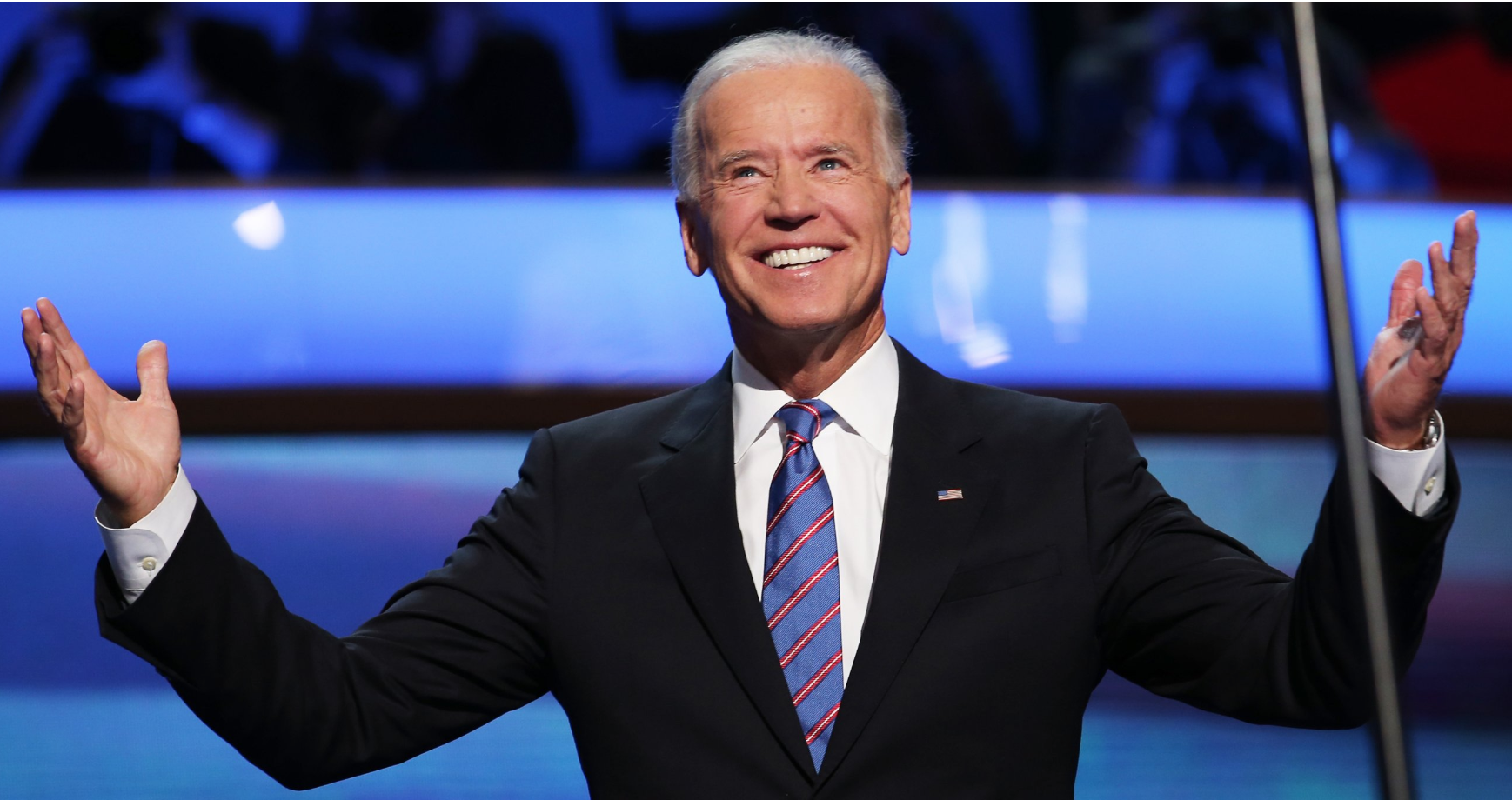
Pete may or may not do well in Iowa (2.3.20) and New Hampshire (2.11), but African-American voters are most likely going to shut him down in the South Carolina primary (2.29). They’ll go with either Joe Biden for his Obama administration cred (just like they went for Hillary Clinton in ’16) and general currents of trust and familiarity, or they’ll support Kamala Harris (works for me) or Elizabeth Warren.

A bit more than three weeks after the South Carolina primary, the 14-state Super Tuesday primary (Alabama, Arkansas, California, Colorado, Maine, Massachusetts, Minnesota, North Carolina, Oklahoma, Tennessee, Texas, Utah, Vermont, Virginia) happens on 3.3.20.

If it can’t be Pete and has to be either Biden, Harris or Warren, I’m split between the latter two. A friend insisted yesterday that Harris can’t make it with hinterland voters. I don’t believe that. I think Harris’s no-nonsense, tough-prosecutor handle might catch on but who knows?

What if Harris or Warren can’t assemble sufficient delegates to top Biden? Then we’re stuck with him. I’ll vote for Joe, of course. We all will. But what a drag if it comes down to this.

The more I think about what’s coming, the more scared I get.

Mayor Pete’s African-American problem stems from what happened in March 2012, of course. The 29-year-old Buttigieg, no doubt facing all kinds of internal pressure from upper-echelon allies of South Bend’s white police ranks, fired South Bend police chief Darryl Boykins over an illegal phone recording incident. This plus Pete’s not demanding the badge of Sgt. Ryan O’Neill over the veteran police offer’s failure to turn on his bodycam prior to the Logan shooting.

Read more

Kamala Will Destroy Trump In A Debate

Hollywood Elsewhere would love to see Sen. Kamala Harris land the nomination and thereafter bruise and bloody Donald Trump in the general campaign. She is tough-tough-tough-tough-tough-tough-tough-tuhfff! (“Rats on the westside, bed bugs…uptown!”) Kamala simultaneously bitch-slapped Joe Biden tonight over being chummy with racist legislators and over not supporting busing (Joe: “What I opposed was busing by the Department of Education!”) and proved she’ll be merciless with Trump on a debate stage. Kamala was definitely the stand-out contender during tonight’s debate, and she killed any possibility of a Biden-Harris ticket down the road! Pete Buttigieg came in second (his remark about Republican values, his joke about Trump’s ability to rupture diplomatic relationships, his candor over failing to quell racist currents in South Bend). Bernie Sanders and Kirsten Gillibrand did okay but Biden looked a little old, a little weak. Eric Swallwell got him on the age thing; so did Kamala. You’re yesterday’s news, Joe!

Read more

Why Would Cooper Abandon Juicy Sundance Gig?

The two hottest U.S. film festivals happen within six weeks of each year — the Sundance Film Festival in mid-to-late January and South by Southwest in mid March.

Sundance appeals to your basic wokester SJW #MeToo LBGTQ crowd (along with your garden-variety Lefty Snowflake Stalinist Sensitives) who are committed to overthrowing old norms and ensuring that independent cinema is generally more progressive and “representative” with fewer white guys of whatever age.

SXSW attracts hipster genre geeks who’ve been fortified by woke attitudes but whose attitudes and tastes are still a little more whoo-whooish and popcorn-consumptive than your card-carrying Sundance followers. And that’s pretty much the whole enchilada.

It was announced today that John Cooper, director of the Sundance Film Festival since ’09, will move into a newly-created “emeritus director” role after the 2020 Sundance Film Festival. What does it actually mean to be an “emeritus director”? I wouldn’t know but I’m presuming it means you’re consulting from time to time but basically out of the driver’s seat in terms of selections, political ramifications, dealing with talent, putting out fires and whatnot.

One thing you can always count on in these situations is that the reason[s] why a well-connected person has decided to leave a powerful, well-paid gig will never be disclosed at first, but will usually leak out several weeks or months after the fact, or certainly within a year or two.

Cooper isn’t that old (what is he, late 50s or early 60s?) and has only had the director gig for 11 years. The El Sundance Supremo job has to be one of the coolest, most enjoyable and exciting gigs in the film realm so why leave? Why surrender that responsibility? What else is he going to do with his life?

Is Cooper leaving because of some kind of political power move by his rivals within the Sundance organization?

Journo friend: “I’ve been asking those very same questions myself. One would just assume that being the Sundance chief for 11 years and operating near that top slot for many years before that has taken its toll, but who knows. I’ve been a staunch supporter of the lineups, even the 2016, 2017, and 2018 editions, which you partially disregarded as “socialist summer camp” festivals, but I found much to admire with those editions and could come up with 15 or so high-caliber films/docs every one of those years.

“2019, however, was different. It was as if they had shot themselves in the foot with their mass virtue-signaling and overtly p.c./woke decision-making. I could barely come up with ten noteworthy films. There was The Farewell, Luce, Hala, Blinded by the Light, David Crosby: Remember My Name and then what? Maybe Cooper is seeing which direction the festival is heading and wants nothing to do with it. The docs were good, as usual, but there was something missing, I felt — a relevance that was badly needed but couldn’t be found.

It’s been a dirty little secret for most journos I’ve spoken to felt that Sundance 2019 was a horrible edition, but they wouldn’t dare utter that on print.”

HE to Journo Friend: “But if things were swerving into a certain woke/virtue-signalling direction and Cooper wanted to steer things back in a direction he felt more comfortable with or respectful of, WHY LEAVE? Why not stay and fight it out? Why not lobby for this or that kind of film that he may feel is underrepresented?

“Either Cooper decided he wanted to chill and lead a less stressful life — slip into cruise mode, live longer and healthier, laugh and enjoy life more, grow a vegetable garden, etc. Or he was politically pushed out and decided to take the emeritus job as a face saver.”

Journo friend: “Maybe he was outgunned? Outnumbered? It’s no secret that most ‘critics’ want an SJW-landscape as the future of movies. Just look at the results of Jordan Ruimy‘s poll yesterday. Even TIFF seems to be heading in that direction, albeit in more conservative baby steps. Also don’t forget Robert Redford‘s strange but brief appearance at the opening day press conference, when he all but admitted to stepping down from the festival. Something is happening. There’s an elephant in the room which no media whatsoever is going to have the balls to acknowledge.”

What’s “Fair” Got To Do With it?

This political cartoon, posted yesterday by Michael de Adder, is an instant stone classic. On Facebook Rod Lurie asked if it was “fair”. Political cartoons are rarely “fair”, but the best (like this one) convey core truths — i.e., how things actually are or what we believe them to be. We all understand that Trump’s southern-border immigration policy is to keep out or otherwise strongly discourage, partly through the imposing of harsh and heartless measures upon children of would-be immigrants. There’s no ambiguity about that. De Adder’s illustration doesn’t lie.

Boilerplate: “Like many, Canadian artist Michael de Adder was saddened and appalled by the images of El Salvadoran migrants Oscar Alberto Martínez and his 23-month-old daughter, Angie Valeria, drowned on the bank of the Rio Grande river. So de Adder created a political cartoon to capture the way he felt about the tragedy and the reaction from President Donald Trump and his administration to the plight of migrants seeking a better life.

“Martínez arrived along with his wife, daughter and a brother at a migrant camp, hoping for an appointment to petition for political asylum in the United States. The family spent two months waiting in temperatures that reached 113 degrees before they decided to try to cross the border. They first tried to enter at the international bridge, but were told the office was closed and to come back another day so they turned to the river.

“Martínez and his daughter made it to the Texas side of the border, but when he returned to the river to help his wife cross, the little girl jumped into the water after her father. The current overwhelmed the two and they drowned clinging to each other while Martínez’s wife and Angie mother watched, unable to help.”

Read more

Give It A Pass?

We all know what a 65% Rotten Tomatoes rating means. It means that the film in question has problems. It means that if Yesterday was a kid in science class who’s just taken a pop quiz, he’d be looking at a failing grade. Not horribly failing but a notch or two below the minimum passing grade of 70.

Regional film critic friend: “Yesterday is more of a Richard Curtis than a Danny Boyle thing. The premise is so offbeat that it actually works. The totally arbitrary nature of other things that don’t exist in human memory after a worldwide blackout — Coke, cigarettes, Harry Potter — is kind of fun.

Himesh Patel is a very sympathetic lead, and Lily James is a real cutie. Patel’s singing isn’t great, but good enough for the purposes of the film.

“The first hour is a lot of fun but Yesterday sags in the middle, and you get the feeling that screenwriter Richard Curtis has boxed himself into a corner with his premise. The ending is a typical feel-good Curtis production, which will probably turn a certain amount of people off, and the (spoiler here) confessional scene in front of a Wembley audience is one of those ‘no one would ever in a million years do this in front of a group of total strangers’ kind of sequence that is used all too often in films these days.

Yesterday is finally a reminder, as if we needed to be reminded, of how truly great the Beatles catalogue is.”

Friend who moderates a film series for 40-plus types: “I held a preview screening of Yesterday last night at the usual venue. Not only did it sell out — but the audience was probably half-kids, from about 10 into their teens. Most there with their parents. This sold out strictly on word-of-mouth and an email blast to the membership — in other words, a lot of people have seen this trailer and apparently want to see this movie.

“As an unabashed Richard Curtis fan, I was disappointed in this movie when I went to a press screening a couple of weeks ago. I felt the film had serious third-act problems, that he didn’t know how to finish it. I also felt he seriously underwrote Kate McKinnon‘s role, as well as the role of the sidekick/roadie. The latter should have had the inspiredly random humor of the Rhys Ifans character in Notting Hill but doesn’t.

“Watching it again last night, the latter two criticisms still held — but they didn’t bother as much. And the rest of it played really well for me. Better yet, it was a big, big hit with the audience, which ranged in age from 10 to 80. And there’s that surprising scene near the end that, at a minimum, will take your breath away and bring a lump to your throat. A lot of people last night walked out smiling, while wiping away tears.

“Plus, as noted, the music, which remains incredibly vital. This, the Crosby doc and Rolling Thunder make this a boomer’s musical wet dream of a summer.”

The Sure Thing Who Won’t Stand Up

Maher: “Who do the Democrats have that we know can beat Trump? There really is only one answer to that.

“And it’s not Joe Biden. I like Joe, but if we give him the keys there’s at least a 50% chance that he gets in the car and mows down a Farmer’s Market. Also young people look at him as if a typewriter is running for President.

“Bernie Sanders is an American hero in my book, but he’s another candidate who has his cardiologist on speed dial.

“I like Mayor Pete, but we must ask the question ‘is America ready to be led by a gay teenager?’ He’s 37 but looks 27…he’s the only veteran who came back from Afghanistan looking refreshed.”

HE to Maher: Yes, I am ready and eager to be led by this particular gay teenager…please.

Maher: “Never underestimate the power of being in people’s living rooms for decades. It’s not the way it’s supposed to be. It’s not the way I’d like it to be. But we live in a post-literate, post-truth, starfucker society, and this is going to be the dirtiest campaign in history.

“No one worries about Oprah being a socialist. I have Nate Silver‘ed the shit out of this, and [Oprah] is the only sure thing winner for the Democrats…no pressure.”

Anhedonia vs. Profound Joy

During the final episode of season #2 of The Sopranos, Tony (James Gandolfini) tells his sister Janice (Aida Turturro) that they were both emotionally scarred by their mother Livia (Nancy Marchand). One of her most malignant traits, Tony says, was her inability to experience joy. The psychoanalytic term is anhedonia, which of course was the original title of Woody Allen‘s Annie Hall.

The other day somebody called me a Livia-like grump, and that I’m always scowling and complaining and whatnot.

My stock response is to remind people of a riff I wrote five years ago, and reposted in ’17. It was called “Like, Want, Need.”

“I’ll tell you what I want,” I began. “I want to walk around New York City at a fairly vigorous clip. I want to love and support my wife Tatyana and my sons every way I can. I want to sail into the mystic. I want to stay in touch with everyone and offer as much offer affection, trust, intellectual engagement and friendship as I reasonably can. I want to live forever. I want good health, and to me that also means good spiritual health. I want to keep most of my hair and never grow breasts or a pot belly. I want Japanese or South Korean-level wifi wherever I go. I want to read and know everything. I want to bask in love, family, friendship and the purring of my cats until the end of time.

“I also want several pairs of slim ass-hugging jeans, and I want to be clean shaven. I want well-made shoes, preferably Italian suede or Bruno Magli or John Varvatos. I want to keep all my Blurays forever. I want color, aromas, travel. I want challenging hiking trails in high Swiss places. I know it’s not possible, but I’d prefer to always be in the company of slender people. I want to zoom around on my Majesty and use the Mini Cooper only when it rains or when I need to buy a lot of groceries. I want mobility and adaptability and the smell of great humming, rumbling cities. I want European-style subways, buses, trains, rental cars. I want a long Norman Lloyd-type life, and I insist that my mental faculties stay electric and crackling forever.” And so on and so forth.

You can say these are the words of a hopeless sourpuss, but they’re not. You can say I’m being dishonest or otherwise covering up, but I’m not. I’m no Livia and no Woody. Life is nothing without joy, and joy is nothing unless you embrace it…unless you jump into the pool with your clothes on.

Read more