Fox Legacy Flashbacks — Zanuck, Laddie, Mechanic

Like many others I’ve been thinking about a seismic event happening tomorrow, which is basically the end of 20th Century Fox as we’ve known it for so many decades. It’s officially being absorbed (i.e., swallowed whole if being strategically maintained as a separate unit) by Disney on 3.20.19. By any measure a sad end of an era.

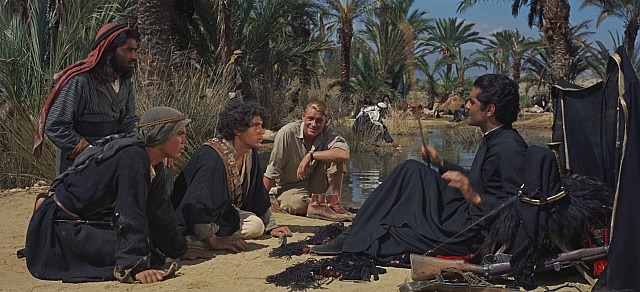
But of course, the 20th Century Fox brand had been eroding and diminishing for a long time. Which regime presided over the most bountiful or influential Fox heyday? The Daryl F. Zanuck era (20 years from the mid ’30s to mid ’50s)? The Alan Ladd, Jr. era of the early to late ‘70s? Or Bill Mechanic‘s reign (’94 to ’00)? The standard answer is to point to Zanuck’s as the greatest, but I have a special respect and affection for the Mechanic reign, perhaps because I personally lived through it as a covering journalist.

Mechanic-wise, most people would point to the following highlights: Titanic, Bulworth, Fight Club, Independence Day, Die Hard with a Vengeance, Mrs. Doubtfire, Speed, True Lies, Braveheart (co-production with Paramount), Cast Away, Boys Don’t Cry, There’s Something About Mary, Ice Age, X-Men, The Full Monty, Boys Don’t Cry and Moulin Rouge. Most of these were high concept, yes, but many were masterfully written, high-craft efforts about actual people and real-life capturings, which happened from time to time in those balmy days before the superhero plague.

Laddie highlights include Star Wars (’77) , The Empire Strikes Back (’80), Alien (’79), Julia (’77), The Towering Inferno (’74), The Omen (’76), Young Frankenstein (’74), Breaking Away (’79), Norma Rae, The Boys from Brazil (’78), The Turning Point (’77), An Unmarried Woman (’78), All That Jazz (’79), Silver Streak (’76), The Rose (’79), 9 to 5 (’80) and The Rocky Horror Picture Show (’75).

The Zanuck films were primarily regarded as serious, socially reflective takes on the states of American being. Sone of the highlights included The Grapes of Wrath (’40), Song Of Bernadette (’43), The Ox-Bow Incident (’43), Laura (’44), A Tree Grows in Brooklyn (’45), Gentleman’s Agreement (’47), A Letter to Three Wives (’49), Twelve O’Clock High (’49), Pinky (’49), All About Eve (’50), Twelve O’Clock High (’49), Viva Zapata (’52), The Robe (’53), Demetrius and the Gladiators (’54). Which others?

The TCM Classic Film Festival is hosting a special tribute to Fox’s fabled history on Saturday, 4.13. The copy doesn’t even allude to the fact that Fox has been eaten by Disney.

Mechanic remarks: “As with any studio, there were peaks and valleys. The Zanuck films were obviously distinctive within their realm. I thought Laddy left behind a good legacy, and felt that we restored some of the luster.

Not sure I have much more to say than what I already have. [Rupert] Murdoch never liked movies, and never cared to build the studio into anything other than a supply line for TV/cable (much like the streamers are doing), and thus dumped all the history unceremoniously and without a tinge of regret.”

Will You Look At This Fatass?

The below frame capture is from a new trailer for Godzilla: King of the Monsters (Warner Bros., 5.3). I’ve posted two or three times previously about the fat Godzilla factor (the last one, “Reptilian Sumo Wrestler“, appeared on 12.10.18) but this is the first time I’ve seen a profile shot of the titular character in which you can literally spot a huge beer gut on the guy.

In the long history of monster movies, reaching all the way back to Harry Hoyt and Willis O’Brien‘s The Lost World, there’s never been a monster with a massive pot belly…never.

So I have to spell it out? On some level Godzilla: King of the Monsters is self-portraiture. Somebody on the team is projecting about contemporary American culture and how a significant portion of Millennials have become huge over the last 10, 15 years. Look at the original 1954 Godzilla — a monster who ate right and worked out.

Bellowing Irish Beast

John Ford‘s The Informer was my first wake-up film — the first adult drama that showed me movies could reach right inside and get you where it hurts or haunts, and could be about more, a lot more, than just laughs, excitement, color and spectacle.

It was my first heavy-duty, moral-undertow drama, all about grimness and guilt and poverty and downish atmospheres — the very first that presented a pathetic main character (Victor McLaglen‘s Gypo Nolan) and said, “Yes, obviously this guy’s a child, a drunk, a blunderer, not in the least bit clever…but can you find it in your heart to forgive him? Or are you the hard, judgmental type?”

I was nine or ten when I first saw The Informer, and my response was pretty much “well, yeah, I feel sorry for Gypo, I guess…but forgiveness is a bridge too far. How do you forgive a guy for betraying Frankie McPhillip, a friend, in exchange for a lousy 20 pounds?”

Even then I was having trouble with Gypo or more precisely drunks, and I barely knew anything. Well, my paternal grandfather had a mild drinking problem, but it wasn’t that noticable until his wife died.

I saw The Informer again sometime in the early aughts, and this time I felt even more annoyed by Gypo’s behavior. He doesn’t even have the discipline to hide his shame. Instead he goes straight into a pub and starts buying drinks for everyone, which immediately ignites the suspicions of the Irish Republican Army guys (Joe Sawyer, Preston Foster).

Eventually he’s found out, tried and marked for execution, and I’m telling you I agreed with the IRA. There’s no room for a big dumb oaf in an urban warfare situation. Gypo’s too much of a stumbling-around lush to be trusted. Kill him and be done with it.

But that final scene after he’s been shot in the gut, bleeding to death…that scene still gets me. When Gypo stumbles into a church and finds Frankie’s mother and says with that pleading, wounded-ox voice, “Twas I who informed on your son, Mrs. McPhillip…forgive me.” And the poor woman does for some reason, and then comforts him with “you didn’t know what you were doin’.” Gypo clutches his side, calls out to the dead Frankie, drops to the church floor and dies.

If I’d been Mrs. McPhillip I would have said, “You’ll get no forgiveness from me, Gypo. And from the looks of you, you won’t be needing any soon. Just let go…just let go. There’s nothin’ more for it, Gypo. Just go to sleep.”

HE Falls For Buttigieg

I’m totally serious about Beto O’Rourke having to Pete Buttigieg up and totally shape-shift into that mentality and attitude within 30 to 60 days, and preferably 30.

I love Buttigieg — I just decided this morning that he’s my second favorite candidate after Beto, with Kamala Harris running a close third. But you know that while PB has everyone’s respect and admiration, he’ll never pass muster with the hinterland bumblefuck pudgeballs. I hate even touching this, but I fear that the combination of his sexual orientation plus the first syllable in his unspellable, unpronounceable last name…I’m sorry but this is how older, beer-gutty straight males think. That plus a lack of a commanding alpha-male vibe — Buttigieg is 37 but looks 30, and hasn’t a gray hair on his head, and looks school-kiddy. Plus his head is too small. Plus he’s not quite tall enough — only around 5′ 9″, if that. And don’t get me started on the last-name pronunciation.

PB would clearly be an excellent vice-presidential running mate. In fact, the prospect of his debating the staunchly Christian and notoriously homophobic Mike Pence is too delicious for words. But if Beto or Biden land the nomination you know they’ll have to choose Kamala as vp. Not much choice in the matter.

Read more

Lyrical Title of “Sopranos” Prequel Junked

35 years ago Taylor Hackford‘s remake of Jacques Tourneur‘s Out of the Past was retitled Against All Odds — a classic Hollywood dumb-down move. The thinking was “why confuse audiences with a spooky-sounding title about dark, enveloping fate when you can sell an alternate that might refer to a tough football game or some kind of mission impossible?”

Yesterday David Chase‘s Sopranos prequel, The Many Saints of Newark, was retitled as just plain, dumb-as-a-rock, stick-your-thumb-up-your-ass Newark.

What was so bad about the Many Saints title? It had a ring. Newark sounds like it’s another Detroit, right?

The Warner Bros. execs behind the title change probably tested The Many Saints of Newark with a focus group, and the group probably expressed confusion or irritation. “What kind of saints?” “I don’t get it.” “Is this about a football team?” “Whoever heard of saints residing in Newark?”

Let’s revise some titles of some famous Sopranos episodes with the same reductionist approach. I Dream of Jeannie Cusamano is now Jeannie. The Knight in White Satin Armor is now called Armor. Pine Barrens will henceforth be known as Fucking Freezin’ Out Here. Long Term Parking will hereafter be called She Dies.

Best Teen Party Flick Since “Superbad”? Seems So.

I can just tell this is good…I can sense it, smell it, feel it.

From Eric Kohn’s 3.11 SXSW review: “The teen party movie has been done and redone so many times it may as well be an algorithm, so every new movie that rises to the challenge faces heavier expectations. Booksmart, yet another buddy movie about one wild night at the end of high school, confronts these odds with a savage wit that never slows down.”

[Click through to full story on HE-plus]

Eccentric, Small-Realm, Cave-Dwelling Wizard

Last weekend David Fincher visited South by Southwest to talk about Love, Death and Robots (Netflix, 3.15), an “anthology animated short series made by different artists from around the world” blah blah.

I’m a stone worshipper of Mindhunter, the 2017 series that Fincher produced and partly directed (and which will re-launch with a second season later this year), and I definitely enjoyed the Fincher-produced House of Cards for the first couple of seasons. But I wouldn’t watch Love, Death and Robots with a knife at my back. Because in my mind an “anthology animation short” series is Otto Ludwig Piffle…take-it-or-leave-it esoterica for animation oddballs and navel gazers and guys who avoid sunlight and regular pedicures, and who look and behave like Pete Davidson and wear skeleton-feet sneakers.

Remember the old David Fincher? The guy who was one of the most dynamic, innovative, forward-reaching directors of narrative features (on the level of Soderbergh, Cuaron, Inarritu and Kubrick) and who was slugging it out in the boxing ring and at least trying to make stuff that really mattered? That Fincher has now retreated into a kind of Netflix cave. He hasn’t made a theatrical feature in over four years, close to five. The good but vaguely underwhelming Gone Girl (’14) was his last theatrical effort.

If you ignore Alien 3 (which I advise everyone to do), Fincher was on the feature-film stick for 19 years, and made four world-class knockoutsSeven (’95), Fight Club (’99), Zodiac (’07) and The Social Network (’10). He also made four above-average, stylistically-striking popcorn films — The Game, Panic Room, The Girl With The Dragon Tattoo and Gone Girl. I’m not calling The Curious Case of Benjamin Button a stinker, but I’ll never, ever watch it again.

Why is Fincher more or less hiding in his little Netflix cave? He’s following his heart and his muse, and I’m sure that’s a satisfying place to be, but what about the devout fan base (i.e., persons like myself?) It’s like Fincher has decided he can’t be “David Fincher” any more…like that was a phase and now he’s past it.

He obviously no longer believes in theatrical narratives. Because Hollywood itself no longer believes in same, and because the zombie executives won’t greenlight anything even remotely original, and because Fincher won’t make formulaic crap. And so he’s operating out of his own little creative bunker. He’s not even doing a Soderbergh — making modest but original features, working with Netflix but exploring new distribution schemes, shooting on iPhones, etc. He’s working and living in a realm that allows for creative freedom, but the absence of the old Fincher breaks my heart.

If Fincher is trying to get anything made in the realm of narrative features, I haven’t heard of it. Has he totally bailed or is there something he’s developing that might actually become something? I’m asking.

Read more

No Way In Hell

The slogan on those Long Shot posters reads “unlikely but not impossible.” Obviously the marketers behind this political-minded Seth Rogen-Charlize Theron romantic comedy (Lionsgate, 5.3) know they have a tough sell on their hands.

Theron plays Charlotte Field, a 40ish Secretary of State planning a run for the White House, and Rogen plays Fred Flarsky, a political journalist whom Theron hires to be her speechwriter, in part because she babysat for him “20 years earlier,” according to one review.

You think? In real life Rogen is 37 going on 55. He didn’t need a babysitter when he was 17 — Theron more likely babysat him 25 or 30 years ago, when he was 12 or 7. A quarter century ago Theron was 18 — a perfect babysitting age.

Long Shot screened last night at South by Southwest. Sight unseen, Hollywood Elsewhere agrees with Peter Debruge’s skepticism about this bizarre romantic pairing.

Debruge: “There are two high-concept male fantasies operating here: There’s the one in which a man-child finally gets to seduce the sexy babysitter, interwoven with another about the chances that the country’s most gorgeous/powerful woman — ‘I dreamed I was president in my Maidenform bra’ — might risk it all to be with someone like Flarsky.

“The odds? The movie’s new title says it all.

More creepy than romantic, more chauvinist than empowered — and in all fairness, funnier and more entertaining than any comedy in months — Long Shot serves up the far-fetched wish-fulfillment fantasy of how, for one lucky underdog, pursuing your first love could wind up making you first man.

“Granted, society’s notion of what kind of romances are deemed acceptable is shifting awfully fast, so I could be wrong about this.. [But] there’s an alarming disconnect [in] whatever unconventional sex appeal Field sees in [Flarsky].

“If the sexes were reversed, Rogen would be the dumpy girl with curly hair and glasses waiting for his mid-movie makeover. But because Flarsky’s a dude, he doesn’t have to change at all; it’s Field who has to make all the concessions to be with him — which would surely be a point of contention in a properly engaged satire.”

Read more

If I Was Tsujihara’s Ghostwriter…

Early Friday morning “embattled” Warner Bros. CEO Kevin Tsujihara sent a letter of apology to WB staffers about the Charlotte Kirk thing, which has prompted everyone in town to yawn and shrug their shoulders.

The Hollywood Reporter‘s Kim Masters and Tatiana Siegel reported this tale of sexual intrigue and resentment on 3.6.

If I was Tsujihara’s speechwriter and he’d asked me to rough out a statement that explains this mess, here’s how I’d put it:


Warner Bros, CEO Kevin Tsujihara.

Warner Bros. friends and colleagues,

By now, you’ve read that irksome Hollywood Reporter hit piece. You’re therefore aware that I’ve behaved in a somewhat embarassing manner, albeit not unlike each and every studio head and hotshot producer who has ever worked in this town, going back to the days of Jesse L. Lasky and Samuel Goldfish.

Please understand that I’m not proud of this — the applicable terms are actually “furious” and “mortified”. But you also presumably know, being adults, that hotshot executives like myself enjoy succumbing to certain behaviors during our all-too-brief periods of privacy. Because we have the money to throw around, because it’s easy to get away with stuff, because guys like myself are generally insulated from touchy consequences.

As long as we’re not being cruel or committing felonies or dancing naked before bonfires while wearing animal-head masks or, God forbid, being shadowed by our significant others, most Hollywood executives like to do what they like to do in the company of trusted friends and colleagues. Right? We’re all familiar with this syndrome or attitude. It’s called “kicking loose”, “letting our hair down”, “setting free the libertine.”

Presumably other Warner Bros. employees besides myself have sampled said behaviors.

The concept of privacy used to have some currency in our culture. Once upon a time journalists actually believed that persons like myself were entitled to sample forbidden fruit in their off hours — to behave in technically “sinful” but harmless ways, to cavort like less-than-perfect human beings, to play around like JFK did in the early ’60s, or like Roy Scheider‘s “Joe Gideon” did in All That Jazz. Those were the days!

I deeply regret having brought pain and embarrassment to the people I love the most, yes, but mostly I regret having been busted and publicly shamed by Kim Masters and Tatiana Siegel. What did I do, really, that was so terrible? I catted around with a pretty English actress, knowing full well I’d probably have to reciprocate with some casting favors. And so what? This kind of thing happens all the time.

Read more

Where “Rednecks” Came From

Mentioning Randy Newman‘s “Rednecks” is pretty much verboten these days because the lyrics repeatedly use the “n” word. But it’s worth recalling that the song, released on a 1974 Newman album called “Good Old Boys,” was inspired by an incident that happened on the Dick Cavett Show on 12.18.70.

A 12.19.70 N.Y. Times story reported that Gov. Lester Maddox of Georgia “walked out of a taping of the Dick Cavett Show in a huff last night after demanding that the host of the program apologize for a remark about Mr. Maddox’s white supporters.

“Mr. Cavett was paraphrasing a question asked during a break in the show by Jim Brown, the black actor, who wanted to know if Governor Maddox had ‘any trouble with the white bigots because of all the things you did for blacks.’ On the air, Mr. Cavett substituted ‘admirers’ for ‘bigots.’ The Governor, saying the implication was that his supporters were bigots, demanded an apology.

“’If I called any of your admirers bigots who are not bigots, I apologize,’ Mr. Cavett said.

“Mr. Maddox rose and, after another exchange, left the stage with 10 minutes of the program remaining.”

Newman’s lyrics changed things around somewhat:

“Last night I saw Lester Maddox on a TV show” — check.
“With some smart-ass New York Jew” — Cavett is a witty Midwestern gentile with a dry sense of humor.
“And the Jew laughed at Lester Maddox” — Cavett never explicitly laughed at Maddox.
“And the audience laughed at Lester Maddox too” — true.

Read more