BFCA Noms Indicate Oscar “Favourite”-ism

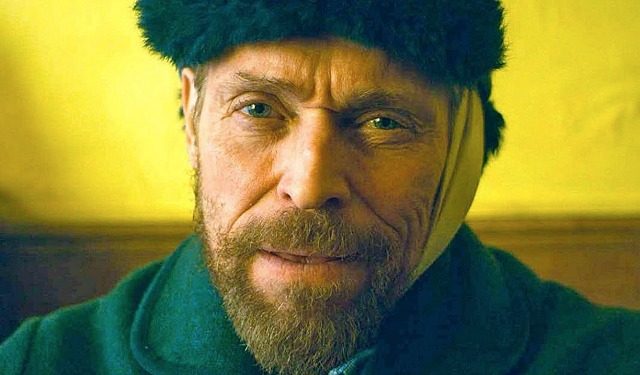
Wait…The Favourite is suddenly the most likely winner of the Best Picture Oscar?

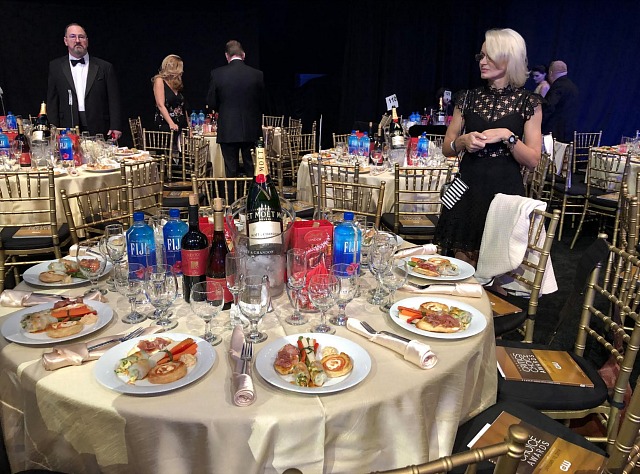
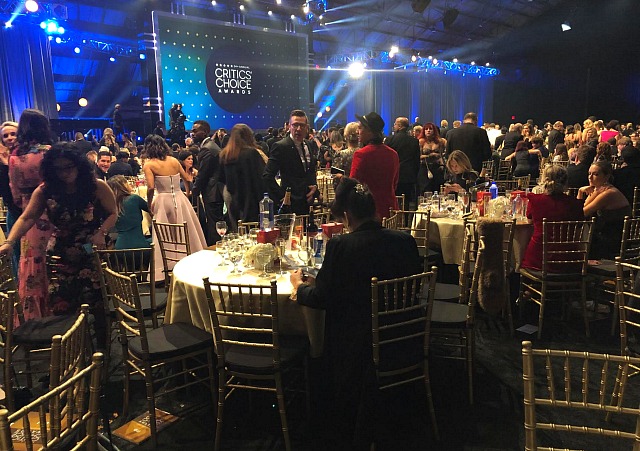
The Critics’ Choice Awards, which in the movie realm are voted upon by the Broadcast Film Critics Association, have been the most accurate predictor of Academy Award nominations. There’s something about the non-elitist, emotional-pocket-drop BFCA mindset that seems to synch with the Academy. Remember when Spotlight was apparently losing steam in the 2015-2016 Best Picture race, and then to everyone’s surprise it won the BFCA’s Best Picture trophy? Spotlight won the Best Picture Oscar a few weeks later. I’m not saying that the Critics Choice and Oscar awards have always reflected each other, but BFCA and Academy members do seem to park their cars in the same garage.

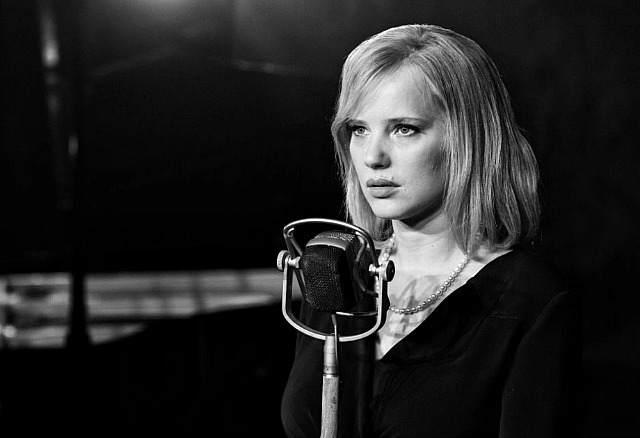
If you go by the legend that the most nominated films tend to win the Best Picture Oscar, the fact that Fox Searchlight’s The Favourite corralled 14 Critics Choice nominations this morning — Best Picture, Best Comedy, Best Director (Yorgos Lanthimos), Olivia Colman for Best Actress and Best Actress in a Comedy, Emma Stone and Rachel Weisz for Best Supporting Actress, Best Acting Ensemble, Best Editing, Best Original Screenplay (Deborah Davis and Tony McNamara), Best Cinematography (Robbie Ryan), Best Production Design, Best Costume Design and Best Hair and Makeup — suggests that The Favourite might also turn out to be the most Oscar-nominated feature, and therefore (if you go by odds and tradition) the Best Picture Oscar winner.

All I can tell you is that this hit me in the stomach when I read the Critics Choice tally last night. Because as much as I admire The Favourite and as impressed as I am by Olivia Colman‘s brilliant performance as Queen Anne (not to mention the “supporting” performances by Rachel Weisz and Emma Stone), I don’t think The Favourite is slam-dunk Best Picture material, largely because the third-act doesn’t pivot or deepen the stakes of the story, let alone maintain the tension of the first two acts.

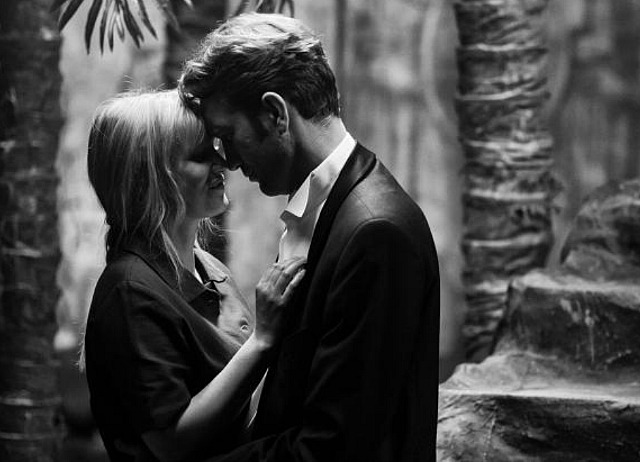
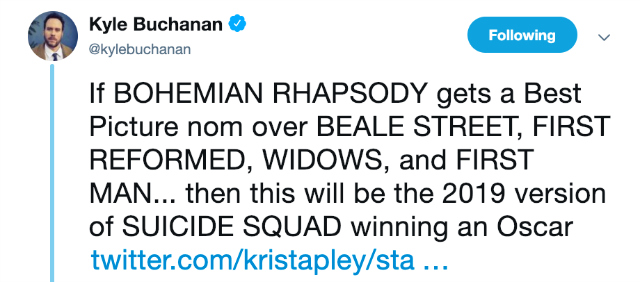
And because I’m more of a Roma, Green Book, Can You Ever Forgive Me?, First Man and First Reformed type of guy.

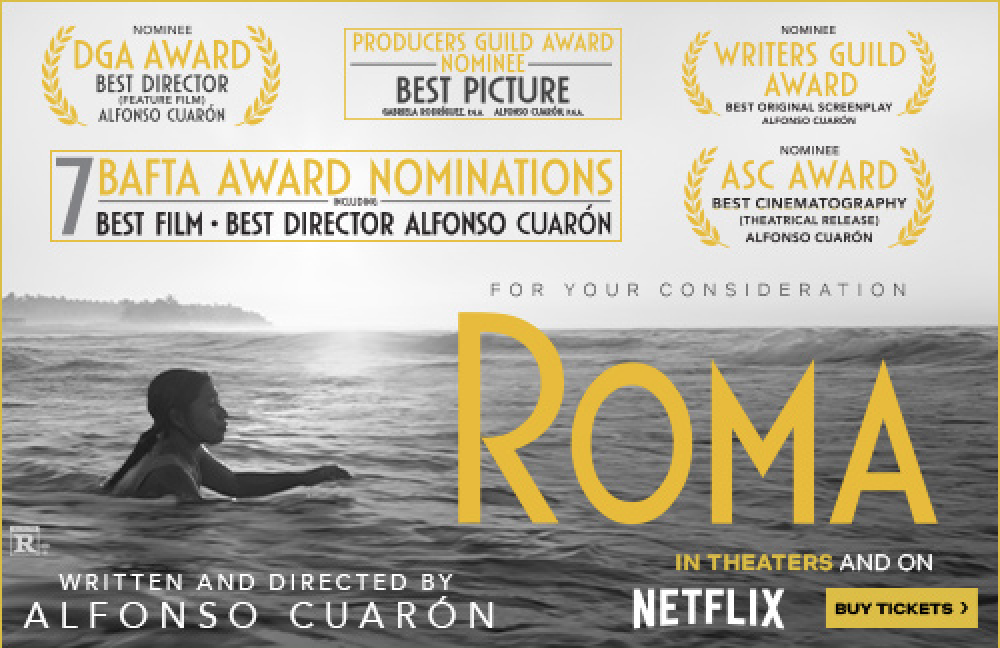
Ryan Coogler’s Black Panther was the second most nominated film with 12 Critics Choice nominations. Damien Chazelle’s First Man accumulated ten nominations. Adam McKay‘s Vice, Bradley Cooper‘s A Star Is Born and Rob Marshall‘s Mary Poppins Returns tallied nine nominations each while Alfonso Cuaron‘s Roma — which has seemed to many like the most esteemed and most arthouse-credentialed Best Picture contender — managed to assemble only eight nominations.

Slightly more dispiriting is the fact that Peter Farrelly‘s Green Book, seemingly the most beloved Best Picture contender (if you step outside of lefty fascist p.c.-scold circles) and easily one of the best acted and most finely crafted mainstream features of the year, ended up with only seven nominations.

Green Book is one of the year-end hotties, for sure, but a little man in my chest is saying “what’s going on here? Why are the films and performances that we know are the best of the year…why are they not faring as well as they should?”

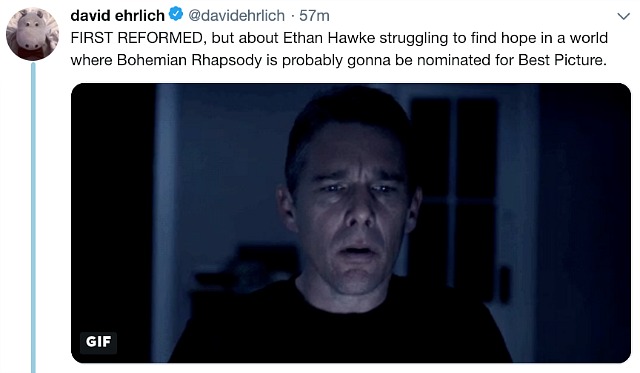
HE approves of Ethan Hawke landing a Best Actor nomination for his First Reformed performance; ditto Paul Schrader for his Best Original Screenplay nomination. But the film itself should have been Best Picture nominated; ditto Alexander Dynan‘s 1.37:1 cinematography.

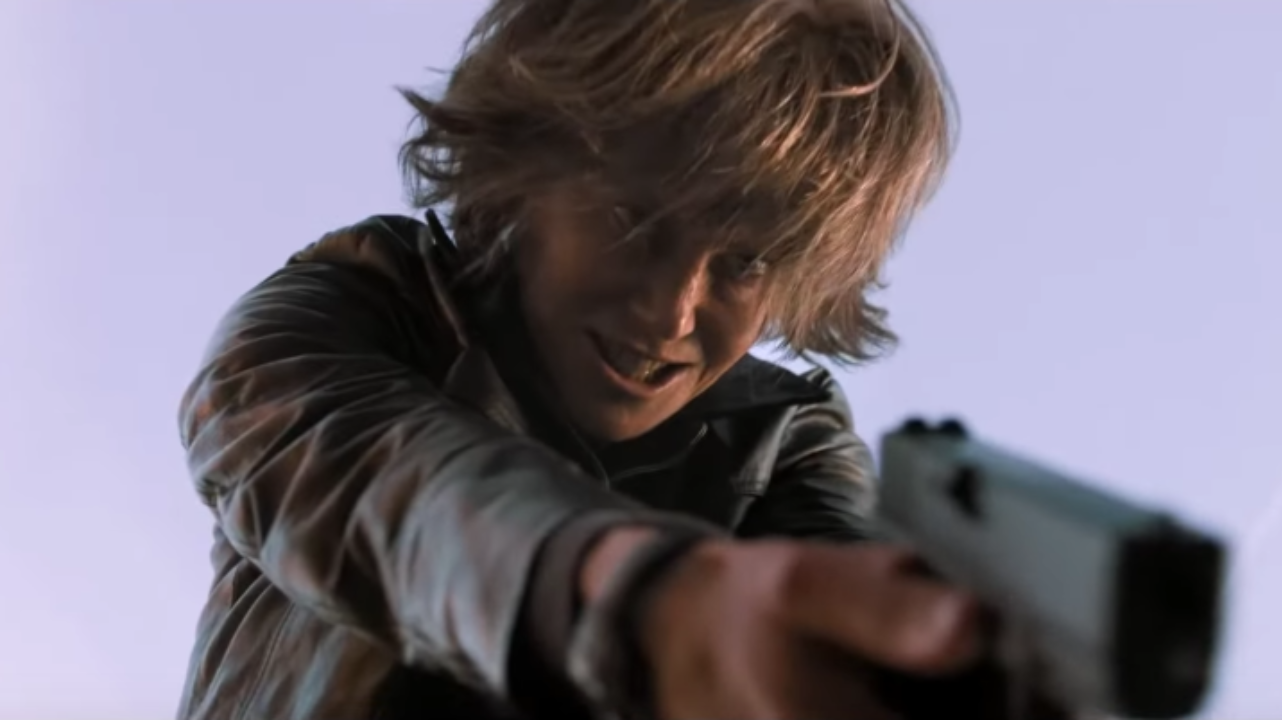
I’m seriously offended by the BFCA not having nominated Marielle Heller‘s Can You Ever Forgive Me? as Best Picture, or Heller for Best Director. At least they nominated Melissa McCarthy for Best Actress and Richard E. Grant for Best Supporting Actor, as they should have.

Viola Davis should have definitely been nominated for her lead performance in Steve McQueen’s Widows, but she wasn’t.

Read more

Gillis Was Too Hung Up on Morality

The thing about Sunset Boulevard that doesn’t quite play in today’s terms is Joe Gillis‘s refusal to confide to Betty Schaefer what he’s up to — that he’s become a kind of screenwriting gigolo, living high on the hog with a 50 year-old silent movie star. Gillis cares for Schaefer and vice versa — audiences can tell they’d be a good match — but he’s too consumed with self-loathing to let her know what’s up. That doesn’t figure. He was broke and ready to skip town when he met Norma Desmond. Now he’s hustling a rich meal-ticket while he plots his next move. What’s so shameful about that?

The first 30 minutes of Sunset Boulevard are sharp and catchy, and the last 15 are grand-slammy. But the middle 65 of this 110-minute film are a little slow and frustrating.

And why hasn’t Gillis insisted to Desmond that he has to be paid an actual weekly salary? If he got one he could save up enough to buy a new car and move back into his apartment and get his career going again, especially with Schaefer as his new writing partner.

Cameron Crowe: “There is a famous story from the first Hollywood screening of Sunset Boulevard [in 1950]. Louis B. Mayer [head of MGM] was standing on a stairway, railing about ‘How dare this young man, Wilder, bite the hand that feeds him?’ What did you say to him when you overheard all this?”

Billy Wilder: “I am Mr. Wilder, and go fuck yourself.”

Crowe: “What did he say to that?

Wilder: “He was astonished. He was standing with the great MGM bosses who were below him, there at the studio, Mr. [Eddie] Mannix and Mr. [Joe] Cohen. And that so astonished them, that somebody had the guts to say, “Why don’t you go and fuck yourself?” [And that’s when] I knew that I had a good picture there. — from October 1999 Vanity Fair piece, “Conversations With Billy.”

Robert Towne Christmas Cheer

Christmas was great when I was a New Jersey kid of seven, eight and nine. Almost everything felt magical or tingly or transporting on some level. Mostly the aromas — the pine needles, oven-fresh turkey, hot gravy over mashed potatoes, warm pumpkin pie — but also the tree decorations, the store lights at night, the wrapped gifts, the chilly air, listening to Dylan Thomas‘s recording of “A Child’s Christmas in Wales” and watching Alistair SimsA Christmas Carol, and those occasional visits to Manhattan with my mom (department stores, Rockefeller Center, Radio City Music Hall).

But the warmest flow-through Christmas vibes I’ve ever felt, topping even those of my impressionable years, happened at a post-Thanksgiving holiday party at Robert Towne‘s large Pacific Palisades home in late November of 1997. Yeah, I know — I mentioned this in a piece I ran after Curtis Hanson passed a couple of years ago. But what a night, what a fine English Tudor vibe on a grand holiday evening in which all the elements were in place.

The gathering was just the right size and full of people who mattered a great deal at that moment (Hanson, Jerry Bruckheimer, Phillip Noyce) and the aromas…my God! The place smelled like cinnamon and mistletoe and cigar smoke and turkey gravy and egg nog, and Towne and his wife Luisa had hired three professional singers to roam around and sing Christmas carols and I mean in perfect harmony, all dressed in top hats, shawls, bonnets, gloves and hoop skirts…classic Dickensian garb.

It was glorious. I remember coming down the big staircase and looking at this choice industry crowd having such a great time and saying to myself “everyone should experience this kind of perfect Christmas gathering at least once in their lifetimes.”

Because even the most poignant Christmas get-togethers with my own family weren’t this heartwarming, this extra-perfect. It was even better than a holiday feeling that filled my heart when I was in London in early December of ’80, when I was walking around and sensing how lucky I was to be in the Stockwell section at that particular moment. It was hardly a flush area of town but it felt exactly right as I settled into a quiet neighborhood pub and ordered a lager as I listened to “Don’t Stand So Close To Me” on the juke box.

Un-Sundanced by Wokesters

Two years ago the Sundance Film Festival withdrew my beloved Express Pass, which I was honored to carry for five straight festivals (’12 thru ’16) and by which I had easy access to screenings and therefore some extra, extremely valuable writing time. I was initially devastated but I gradually adjusted to grunt status during the ’17 and ’18 festivals. But now the Sundancers have really lowered the boom. Two days ago they told me they’ll be “unable to accommodate your request for press credentials at [the 2019] festival.”

Seriously — they actually said that.

I’ve been “going out” with Sundance for 25 years, and suddenly we’re done? I’ve been attending Sundance festivals each and every year since ’93, and if memory serves I filed a New York Post story about Robert Redford‘s launching of the Sundance Institute way back in ’80. A quarter century’s worth of round-trip plane tickets and condo rentals and hobnobbing and working my tail off to see and review everything…two and a half decades of wearing that cowboy hat and working and wailing and watching the history of independent film unfold in the snowy Wasatch mountains.

Has any other longterm Sundance veteran been told to take a hike after 25 years of devotion? I doubt it. Can anyone imagine the Cannes Film Festival guys doing this? I think this is fairly historic on some level. It’s been nice, Jeff, but that’ll do…we don’t like you any more.

I’ve been advised by journalist friends to let this go and just attend next month’s festival without a pass, and basically mooch tickets from publicist pals. Which I may do. But this is an instructive moment that tells us a little something about the punitive mindset of the cabal that’s running Sundance these days.

For this is clearly a censorious and illiberal response to my having written critical riffs about the matters near and dear to wokeness. I’ve lamented the off-with-their-heads Robespierre mentality within the #MeToo movement. I’ve stood by Woody Allen and particularly Moses Farrow. There exists, I gather, a suspicion that I’m not sufficiently supportive of woman filmmakers, which I’m sure will come as a surprise to Kathy Bigelow, Marielle Heller, Jennifer Kent (nobody worshipped The Babadook more than myself), Andrea Arnold, Sarah Polley, Lynne Ramsay, Sofia Coppola (whose direction of Somewhere reminded me of classic-era Michelangelo Antonioni), Ava DuVernay (whose Middle of Nowhere I flipped over six years ago) and Olivia Colman (whose performance in Tyrannosaur I found so devastating that I raised money to pay for press screenings that Strand Releasing wouldn’t spring for).

And it’s possible, I suppose, that my having called last year’s festival a “socialist summer camp in the snow” rubbed them the wrong way.

In a 1.21.18 piece titled “Sundance ’18 Feels Sluggish, Listless, Agenda-Driven,” I wrote that “this festival seems to be largely about woke-ness and women’s agenda films — healings, buried pain, social ills, #MeToo awareness, identity politics, etc.”

I’m not going to offer any sweeping judgments about the recently announced 2019 Sundance Film Festival slate, except to suggest that with a competition slate that is 53% female (i.e., nine of the 17 directors eligible for the festival’s top prize are women) it would appear that 2019 Sundance is going to be just as progressive-minded as last year’s festival, if not more so.

But even with the currents of p.c. instruction every Sundance delivers at least four or five knockouts, and the 2019 crop seems like it might be a little better than normal.

I’ve naturally written an appeal to the Sundance press office, and have been told they may change their minds.

Read more

I May Have Avoided “Cabin Boy”

Or I may have watched a half-hour’s worth before discreetly slipping out of the screening room. Or I may have seen the whole thing and then discharged it from my memory. This morning I watched a couple of clips (I love the David Letterman scene). The fact that I can’t recall says something in itself. Ditto the fact that the cover of Kino Lorber Bluray describes Cabin Boy as “the contentious classic that angered a nation.”

I was, however, somewhat taken by Michael Tedder’s 12.5 Ringer piece, “The Beautiful, Inspirational Disaster of Cabin Boy, 25 Years Later.” Here’s the best portion:

“Though flawed, Cabin Boy is a cinematic experience like nothing else, and one that has been extremely important to the development of American comedy.

“It’s often said that Mick Jagger failed to become a soul singer, and in the process became one of the greatest voices of rock music. Adam Resnick and Chris Elliott failed to make a big-budget Hollywood comedy, and in the process made a surreal, anarchist experience.

“It looks and feels wrong in a great way, in a way that a more technically accomplished director could never hope to achieve, much as no conventionally ‘great’ singer could ever hope to match the raw emotion of Daniel Johnston’s ‘Some Things Last a Long Time.’

“The film holds a mesmerizing power, from the contrast to the surrealistically fake ocean and old-timey garb of Elliott’s shipmates, played by character actors like Brian Doyle-Murray, and anachronistic elements like a limo and a microwave that are never commented on. The special effects are so delightfully chintzy, especially whenever the cuckold giant shoe salesman shows up. The jokes always arrive at the wrong time and never do what you expect them to do, such as when a giant cupcake spits tobacco on Elliott, and then disappears without explanation.

“[And} Elliott gives a fully committed performance, nailing the stunted man-child archetype years before Will Ferrell would popularize it, and using his posture and awkward gait to fully sell Mayweather’s metamorphosis into a Cabin Man.

Read more

“Mule” Share

A director-writer pally has seen Clint Eastwood‘s The Mule, and shared the following:

“I can confide this is B-level Eastwood in the tradition of Gran Torino — a star vehicle for the aging actor and compelling because of his iconic presence and star lineage.

“It’s also in the tradition of Space Cowboys in that it’s a well-made programmer with a certain emotional resonance based on longtime feelings about a star whose career is probably near the end.

“Seeing Eastwood play an actual old man is somewhat jarring to see — to his credit. Think of The Shootist in John Wayne‘s canon.

The Mule isn’t as elegiac as Unforgiven, but is much more compelling than, say, Trouble With The Curve.

Bradley Cooper adds some contemporary resonance as it’s compelling to see a current triple threat pursuing an older auteur, lending a unique subtext.

“And yes, there’s a song — ‘Don’t Let The Old Man In’ by Toby Keith.”

Until The Embargo Gently Lifts…

Mary Poppins Returns (Disney, 12.19) is going to be a very popular film with the light-hearted family trade, at home and abroad. 95% of it teems with euphoric, child-friendly alpha vibes. It’s so happy and swirly it gives you a headache. I can’t fathom why Gold Derby‘s Tom O’Neill, Joyce Eng, Chris Rosen, Susan Wloszczyna, Scott Mantz, Wilson Morales, Andrea Mandell and Matthew Jacobs have put it on their Best Picture spitball lists — you’d have to ask them. [Note: Yes, I erred when I mentioned “It’s A Good Life” — the kid’s name was Anthony, not Billy.]

Poppy

Due respect for George H.W. Bush, whose long journey has ended at age 94. I realize he was far from evil personified and was, in fact, a semi-tolerable Republican president, especially when you compare him to Donald Trump.

But I was against Bush 41 in ’88. In fact, my ex-wife Maggie and I did some wild-posting with Robbie Conal‘s “It Can’t Happen Here” poster; we also rang doorbells for Michael Dukakis. Needless to add I was overjoyed when Bill Clinton beat him in ’92.

But climate-change obstructions aside, George Sr. wasn’t utterly horrible; he had some approvable qualities, laughed at Dana Carvey, etc.

I seem to recall his expressing uncertain reactions when the Berlin Wall fell and the Soviet Union broke apart. He didn’t seem to know what to say — wasn’t all that comfortable with the idea of governments being overthrown. Anyway, rest in peace and condolences to those who were close.

When Wilder Dialed It Down

Snapped sometime prior to the 6.1.55 premiere of Billy Wilder‘s The Seven Year Itch. I tried watching this 20th Century Fox sex comedy a couple of years ago, and I couldn’t stay with it — it’s tedious, labored, constipated. I smirked a few times but I didn’t laugh once — not once. Tom Ewell wants to ravage Marilyn Monroe but he’s too chicken. On top of which I think his off-screen orientation came through on some level. I didn’t believe him.

Itch was the second of five ’50s films directed by Wilder during his “house director” phase, so-called because these films represented a creative hibernation for the director of Double Indemnity and Sunset Boulevard. The usual Wilder traits — cynicism, opportunistic characters, smartass dialogue, ironic turnarounds — weren’t entirely absent in Sabrina (’54), The Seven-Year Itch, The Spirit of St. Louis (’57), Love in the Afternoon (’57) and Witness for the Prosecution (’57), but they were in relatively short supply. Wilder finally returned to form in ’59 with Some Like It Hot.

The house phase began in the wake of the success of Wilder’s Stalag 17 (’53), although the primary factor, I’ve always believed, was the failure of Wilder’s caustic and ultra-cynical Ace in the Hole (’51). After that film bombed critically and commercially, the word went around that Wilder needed to retreat from his hard-edged material and ease up for a while. He did.

Summaries Can Be Cruel

Imagine all the magical feeling, insight, intuition and imagination that surely flowed through the nimble mind of screenwriter Gloria Katz, who passed four days ago from ovarian cancer. There’s always so much more to a person’s life than their so-called career highlights, obviously, but this, fairly or unfairly, is what obituaries always come down to.

And the hard fact is that Katz and her creative collaborator husband Willard Huyck are best known for their fruitful association with George Lucas and more precisely two major hits (one uncredited) during the early to mid ’70s, and for one huge stinker that happened in the mid ’80s.

Huyck and Katz’s greatest credited success was American Graffiti (’73), Lucas’s semi-autobiographical, night-on-the-town adventure film set in 1962 Modesto, California. Graffiti‘s success led to a long association between the couple and Lucas, which peaked (in a financial sense at least) when Katz and Huyck worked as uncredited script doctors on Star Wars (’77). They also co-wrote Steven Spielberg‘s Indiana Jones and the Temple of Doom (’84). They also teamed on the duddish Best Defense (co-writing screenplay, Huyck directing, Katz producing).

And then disaster struck.

Howard the Duck (’86), shadow-produced by Lucas, directed by Huyck, produced by Katz and based on their co-written script, not only failed commercially but became known as one of the biggest stink-bombs in Hollywood history. Huyck and Katz’s reps never really recovered. Katz wrote a 1989 TV film, Mothers, Daughters and Lovers, and then she and her husband co-wrote one more feature film, the Lucas-produced Radioland Murders (’94). And that was it. Smothered by tainted duck feathers. But at least they had that glorious ’70s streak to look back upon.

Read more

Something Stupid

In response to the 11.26 death of Bernardo Bertolucci, New York critic David Edelstein shared a coarse and unwise sentiment — a flip joke, if you will — on Facebook. Along with a still of the Marlon Brando-Maria Schneider anal sex scene from Last Tango in Paris, he wrote that “even grief is better with butter.”

In a matter of hours Edelstein, who had quickly deleted and apologized for the post, became Satan’s spawn. Which was no surprise in our ongoing Salem-witch-trials-on-twitter climate. He was going for a tone of casual, hipper-than-thou impudence, I suppose, but in a social-media sense what he wrote was actually quite bone-headed. You don’t spit into the wind.

Actress Martha Plympton tweeted that she’d been avoiding Bertolucci’s passing “precisely because of this moment in which a sexual assault of an actress was intentionally captured on film.” (A dead wrong observation, by the way.) “And this asshole” — Edelstein — “makes it into this joke. Fire him. Immediately.”

Guardian contributor and Women in Hollywood founder Melissa Silverstein wrote that Edelstein “has been a sexist asshole for many years. Why is he still employed?”

Edelstein was soon after fired from his commentator gig on NPR’s “Fresh Air,” and yesterday afternoon, I’m told, he was disinvited from moderating a discussion with Private Life director Tamara Jenkins during a mid-day press luncheon at The East Pole on East 65th Street. (Edelstein didn’t reply when I double-checked with him last night.)

The stupidity factor aside, Edelstein was basically saying that the infamous Tango scene had left the strongest impression as he considered Bertolucci’s career-long imprint, just as when Steven Spielberg passes someone will tweet something about the primal impact of Jaws. But of course, Edelstein was also conveying a cavalier attitude about Schneider’s 2007 claim that the shooting of this scene was traumatic because she hadn’t been consulted by Bertolucci and Brando beforehand, and that she felt “a little bit raped.”

A couple of years ago hair-trigger types (Jessica Chastain among them) took this to mean that Bertolucci and Brando had sprung the rape scene upon Schneider and perhaps had even subjected her to an actual on-camera violation, but Schneider was clear in her ’97 interview that the sex was simulated. She maintained, however, that the anal-sex aspect “wasn’t in the original script,” and that “it was Marlon who came up with the idea,” and that “they only told me about it before we had to film the scene and I was so angry.”

This was strongly denied by Bertolucci two years ago. “I specified…that I decided with Marlon Brando not to inform Maria that we would [be using] butter,” he wrote. “We wanted her spontaneous reaction to that improper use [of the butter]. That is where the misunderstanding lies. Somebody thought, and thinks, that Maria had not been informed about the violence on her. That is false!

“Maria knew everything because she had read the script, where it was all described. The only novelty was the idea of the butter. And that, as I learned many years later, offended Maria. Not the violence that she is subjected to in the scene, which was written in the screenplay.”

In his apology Edelstein claimed he “was not aware of” Schneider’s experience on the film. But how could he have possibly missed that December ’16 twitter brouhaha? It got a lot of play and lasted a good two or three days.

The Edelstein thing is yet another illustration of the present-day fact that if you’re stupid enough to say the wrong thing, the mob will turn on you like that, and even your “friends” will run in fear of your evil aura. This is the ’50s blacklist scare all over again.

I’ve written before that everyone in the public spotlight should be entitled to at least a couple of “get out of jail” cards in the event of a haphazard tweeting of something idiotic. We should acknowledge that the ability to say something wrong and hurtful (as Plympton did when she tweeted that the Tango anal-sex scene was an “intentional capturing” of “a sexual assault of an actress” when in fact the scripted scene was about Brando and Schneider performing simulated sex) is in all of us.

I for one feel that Edelstein, a wise, seasoned and brilliant critic who has paid his dues and proved his critical mettle over decades, should not be seized by guards and taken out behind the building and shot in the head. He should be caned, okay, but also given a chance to speak and atone some more and perhaps share some related truths. But tell that to the twitter mob.

Bertolucci In The Lap of God

The passing of Bernardo Bertolucci…good God. The dying of such a man must be shouted, screamed…Bertolucci is dead! Bernardo Bertolucci of Rome lives no more!

There were five distinct Bertolucci eras or episodes — early, earthy, scruffy (The Grim Reaper, Before The Revolution), Glowing, Sensual, Perverse Perfection (The Conformist, The Spider’s Stratagem, Last Tango in Paris, 1900), The First Stumblings (La Luna, Tragedy of a Ridiculous Man), Return to Glorious Form (The Last Emperor, The Sheltering Sky) and the Long, Gradual, Modestly Respectable Downfall (Little Buddha, Stealing Beauty, Besieged, The Dreamers, Me and You).

For 90% of his followers, Bertolucci’s lasting glory stems from episodes #2 and #4 — the other three don’t count. If he had only made The Conformist, Last Tango in Paris, The Last Emperor and The Sheltering Sky, his world-class reputation would be assured.

Bertolucci talked like a Communist in the ’60s and ’70s but from the early ’70s on he loved going first class. He was a delirious sensualist, a colorist, a composer, a wearer of the finest clothing, a pageantist, and always a maestro of tracking shots. He and Vittorio Storaro, hand in hand, joined at the hip…brothers of the softest light and the most magical of colors (particularly amber).

If there’s one term or phrase that sums up Bertolucci’s spiritual or directorial signature, it would be “exquisitely composed decadent luxury.”

Remember that elegant party in 1900 when a huge white horse is led into a living room full of rich swells sipping champagne, and the owner tells everyone that the horse is named Cocaine? That was Bertolucci. He was every element in that scene…the guests, the horse, the cocaine, and certainly the audacity of leading a magnificent four-legged animal into a beautifully decorated living room and saying quite calmly “say hello to my gentle friend…for he is you and you are he and we are all together.”

Bertolucci was an absolute God between the releases of The Conformist, which opened stateside on 10.22.70, and Last Tango in Paris, which opened on 2.7.73. Two and a half years of being the absolute Zeus of filmmakers, and everyone on the planet was bowing down, including the lordly-at-the-time Norman Mailer.

If you want to taste a bit of what was going on after Tango opened, read this Mailer essay — “A Transit to Narcissus” — which appeared in the New York Review of Books.

Hugs and condolences to family, fans, friends, colleagues…this is a big one. And no, the ridiculous twitter outburst of 2016 over misinformation about shooting the Last Tango butter scene isn’t worth reviewing.

Read more