The Hollywood Reporter‘s Scott Feinberg is reporting that Olivia Colman, who plays the role of Queen Anne in Yorgos Lanthimos‘ The Favourite, is officially campaigning for Best Actress. Despite fair assessments to the contrary.
Any straight-shooting, non-agenda-driven assessment of this admired period drama would conclude that Colman’s character is roughly analogous to Robert Shaw‘s Doyle Lonnegan in The Sting. For Queen Anne is a mark, which is to say a character being played or duped or exploited in order to serve the interests of others, which in this case are Rachel Weisz‘s Sarah Churchill and Emma Stone‘s Abigail Masham.
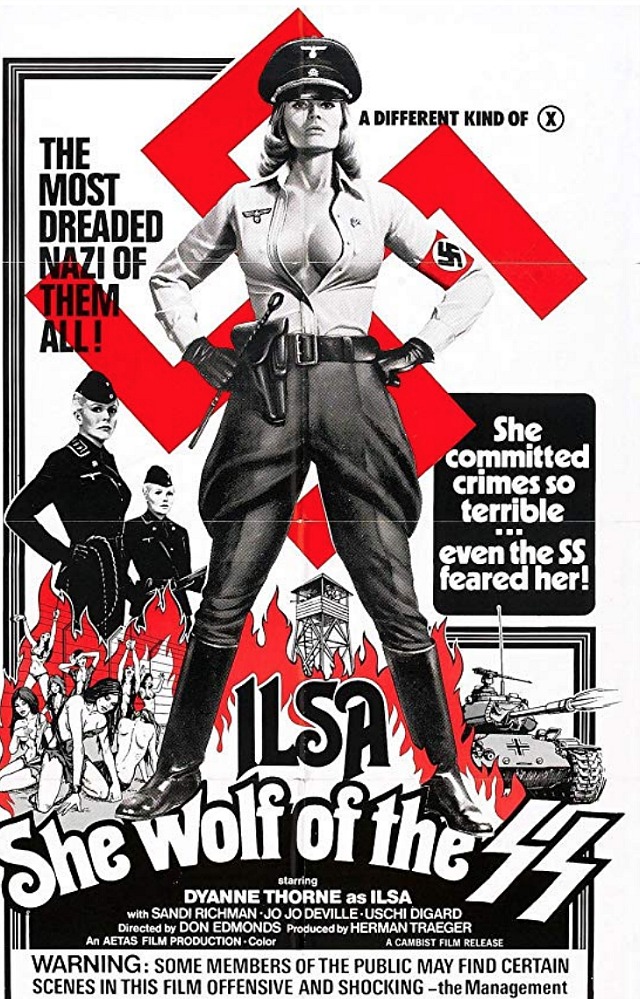
The Wrecking Crew, The Killing of Sister George, Krakatoa, East of Java…really? To go by the 1969 marquees and posters in Quentin Tarantino‘s currently filming Upon Upon A Time in Hollywood, you could get the idea that ’69 was a moderately shitty year in movies.
But of course, Tarantino is deliberately emphasizing the dicey titles and avoiding the good stuff. For ’69 also saw the release of George Roy Hill‘s Butch Cassidy and the Sundance Kid, John Schlesinger‘s Midnight Cowboy, Dennis Hopper‘s Easy Rider, Paul Mazursky‘s Bob & Carol & Ted & Alice, Henry Hathaway‘s True Grit, Larry Peerce‘s Goodbye, Columbus, Peter Hunt‘s On Her Majesty’s Secret Service, Vilgot Sjöman‘s I Am Curious (Yellow), Costa-Gavras‘ Z, Alan Pakula‘s The Sterile Cuckoo, Sydney Pollack‘s They Shoot Horses, Don’t They? and Sam Peckinpah‘s The Wild Bunch.
Actually Robert Aldrich‘s Sister George wasn’t too bad. One of the first mainstream lesbian films, unless I’m misremembering. Somber. Ground-breaking sex scene between Susannah York and Coral Browne.
I’m not sure if the following notion is worth exploring, but I’m wondering which noteworthy 21st Century films would be enhanced if you watched them while tripping on LSD. I say this not having come within miles of the stuff since the pre-Watergate Nixon administration, but there used to be this notion that certain films would take on a quality of dimensional extra-ness (more poignant, hilarious, emotional, profound, meaningful) if you watched them after dropping a tab of Orange Wedge or Blue Cheer.
Curious as this might sound, Sydney Pollack‘s Castle Keep, which is kind of a trippy film to begin with, plays really well under this condition. So do Peter Bogdanovich‘s The Last Picture Show and What’s Up, Doc?. But not Targets.
I’m not saying all high-school girls are fickle and flighty, but a lot of them are. Or were, at least, when I was an awkward, insecure schlemiel.
In my senior year I had it bad for a great Irish blonde named SallyJoQuinn. Or so she seemed at the time. Short, slender, magnificent blue eyes, straight blonde hair, smallish feet, slender hands with chewed nails. No dad at home; just her single mom who worked as an administrative something-or-other at the high school. I can’t recall if the parents had divorced or if the father had died or what.
All I could do was dream about putting the moves on Sally. She wasn’t entirely averse to my attentions as a couple of hot and heavy episodes did happen. Once in my car (i.e., my father’s train-station car) and once while lying on a bed of brown pine needles in a woodsy area near the town reservoir.
Hollywood Elsewhere will catch today’s 3 pm New York Film Festival press screening of Julian Schnabel‘s At Eternity’s Gate. The CBS Films release (opening on 11.16) is a Vincent Van Gogh-in-Arles film that allegedly contains Willem Dafoe‘s greatest performance since The Last Temptation of Christ. The costars are Rupert Friend, Oscar Isaac, Mads Mikkelsen, Mathieu Amalric, Emmanuelle Seigner and Niels Arestrup.
I know the territory to some extent. I’ve been to Arles. I’ve stood inches away from some of Van Gogh’s paintings at the Musee D’Orsay. I’m very familiar with the Montmartre apartment building that Vincent and Theo shared in 1886 or thereabouts. I’ve seen Vincente Minnelli‘s Lust for Life a couple of times. All of it, the whole Van Gogh ride, all my life.
To hear it from The Limey‘s Terry Valentine (i.e., Peter Fonda), 1966 was the only year in which “the ’60s” were fully in flower. There were countless manifestations — spiritual, creative — and hints of coming disturbances. April ’66 saw the famous Time magazine cover that asked “Is God dead?”, which was used by Roman Polanski during the filming of Rosemary’s Baby a year later. The following month saw the release of Bob Dylan‘s Blonde On Blonde (and the coughing heat pipes in “Visions of Johanna”) and Brian Wilson‘s Pet Sounds, and three months later Revolver, the Beatles’ “acid album” which turned out to be their nerviest and most leap-forwardy, was released. All kinds of mildly trippy, tingly, unnerving things were popping all over.
But you’d never guess what was happening to go by the mood, tone and between-the-lines repartee during the 39th Oscar Awards, which honored the best films of 1966 but aired in April ’67, or roughly seven weeks before the release of Sgt. Pepper. Bob Hope‘s opening monologue is punishing, almost physically painful to endure. And look…there’s Ginger Rogers!
Fred Zinneman‘s A Man For All Seasons won six Oscars that night — Picture, Director (Fred Zinneman), Actor (Paul Scofield), Adapted Screenplay, Cinematography, Art Direction — and there’s no question that it still “plays”. Well acted, beautifully written by Robert Bolt. But it also feels a bit smug by today’s standards, a little too starchy and theatrical.
What 1966 films play best by 2018 aesthetic standards? Certainly The Sand Pebbles, which should have won Best Picture, and which contained Steve McQueen‘s most open-hearted, career-best performance. The second best ’66 film by my yardstick was and is Michelangelo Antonioni‘s Blowup (that London-based film completely absorbed and reflected what was going in in late ’65 and ’66). The third finest was Richard Brooks‘ The Professionals, a crafty, ace-level western actioner that plays beautifully by today’s measure and which contains Lee Marvin‘s second-best performance (after “Walker” in ’67’s Point Blank).
Other ’66 hotties: Mike Nichols‘ Who’s Afraid of Virginia Woolf?, Lewis Gilbert‘s Alfie, John Frankenheimer‘s Seconds and GrandPrix, Milos Forman‘s Loves of a Blonde, Billy Wilder‘s The Fortune Cookie, Norman Jewison‘s The Russians Are Coming, the Russians Are Coming, ClaudeLelouch‘s AMan and a Woman, Gille Pontecorvo‘s The Battle of Algiers, Richard Lester‘s A Funny Thing Happened on the Way to the Forum, Pier Paolo Woody Allen’s What’sUp, TigerLily?, Pier Paolo Pasolini‘s The Gospel According to St. Matthew, Karel Reisz‘s Morgan!, or a Suitable Case for Derangement.
Yesterday the Daily Mailran a story about Tom Cruise’s Top Gun: Maverick (Paramount, 6.26.20), which is currently lensing in the San Diego area.
The article claims that Cruise barely looks older than he did in the original Top Gun, which was shot when he was 24. But he does look a bit more creased, of course. There was no missing that fact in last summer’s Mission: Impossible — Fallout. Every 56 year-old looks older than they did in their mid 20s.
Two weeks away from starting principal photography, Annapurna bailed yesterday on Fair and Balanced, a Roger Ailes biopic to directed by Jay Roach based on a script by Charles Randolph, and costar John Lithgow as Ailes, Nicole Kidman as Gretchen Carlson, Charlize Theron as Megyn Kelly, Malcolm McDowell as Rupert Murdoch and Margot Robbie as a fictional Fox News-employed character.
Who abruptly pulls the plug on a big-name, fact-based docudrama only 14 days before the start of shooting? Answer: No one unless something else is going on. Something unusual, head-turning, perhaps turbulent.
I could smell Venom from a long way off, and so could Tom Hardy when he said his favorite parts of the film didn’t make the final cut. So (and who could blame me?) I blew off last week’s all-media screening. Most of us understand the concept of “so bad it’s good” (which I have a place in my head for) but the critical consensus was mostly “it isn’t ludicrous enough to be enjoyable…it’s just garden-variety shitty….later.”
The Metacritic and Rotten Tomatoes ratings are 35% and 30%, respectively. Seattle Times‘ critic Soren Andersen called it “perhaps the worst Marvel-derived origin story ever.” The Globe and Mail‘s Sarah-Tai Black said Venom “made me laugh so hard I started crying…a horribly scripted film so bad as to be enjoyable, but not bad enough to be good.” And so on.
It was apparently written in a state of seething frustration by director and screenplay co-author Frank Pierson. Pierson, who passed in 2012, was arguably a better screenwriter (Cool Hand Luke, Dog Day Afternoon, Haywire, Presumed Innocent, Mad Men) than a director, but he certainly knew the realm.
I found Pierson’s piece on the Barbara [Streisand] Archives website. Launched in ’03, it’s been written, designed, created and maintained all along by Matt Howe of Washington, D.C.
Howe’s intro: “This is the infamous article, written by the director of A Star is Born and published shortly before the film had its premiere. Streisand and Jon Peters begged Pierson not to hurt their film by publishing it. The article was a betrayal to Streisand — a public airing of behind-the-scenes battles that, traditionally, were always kept private between director and star. It is included here so readers can understand why Streisand is so private and wary of the press.
“A different edit of the piece also ran in the November 15, 1976 issue of New York magazine. I’ve incorporated several of the excised sentences here, as well as scans of some of the photos that appeared in that magazine.
“In 1983, Barbra told journalist Geraldo Rivera: “Pierson’s article was so immoral, so unethical, so unprofessional, so undignified, with no integrity, totally dishonest, injurious. If anyone believes it, without examining who that person is, to try to put a black cloud over a piece of work before it’s even released: that’s the most important indication of who that person was.”
Arnold Kopelson, a smart, scrappy film producer who knew the ropes and worked them hard, has passed at age 83. Condolences to all concerned but especially Arnold’s family (particularly Anne, his wife and producing partner) and friends.
The Brooklyn-born Kopelson produced 29 movies, and hit the jackpot three times within a nine-year period (’86 to ’95). His first grand slam was Platoon, directed and written by Oliver Stone and winner of the 1987 Best Picture Oscar. Six and a half years later came The Fugitive (’93) with Harrison Ford — cost $44 million to shoot, made $368 million domestic. Kopelson’s third biggie was David Fincher‘s Se7en (’95), which rewrote the serial killer genre and delivered one of the most stunning endings in motion-picture history.
I caught Platoon on opening night (12.19.86) at a theatre on La Brea just south of Melrose. I came out of the 7 pm show and spotted Kopelson standing under the marquee, alone. I went over, introduced myself and told him it’s an absolute hit and a near-certain Oscar nominee, etc. He presumably knew that but I wanted to tell him anyway. That film made me feel so great, so connected to everyone and everything. Historic.