
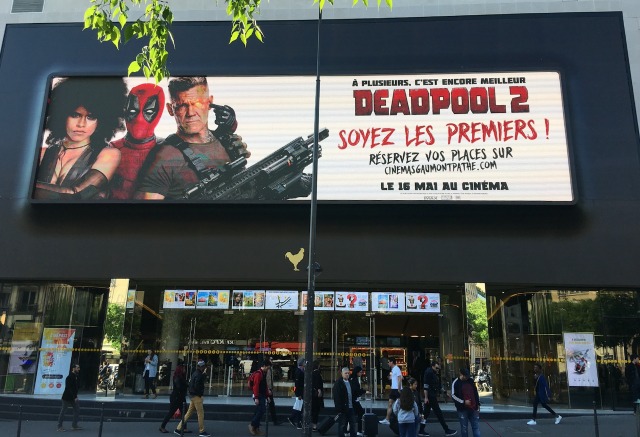
Who sticks out in this wall poster? Obviously Brolin. Deadpool himself is presented as a secondary character.

Right outside Hollywood Elsewhere’s 2nd floor pad at 35 rue Andre Antoine.
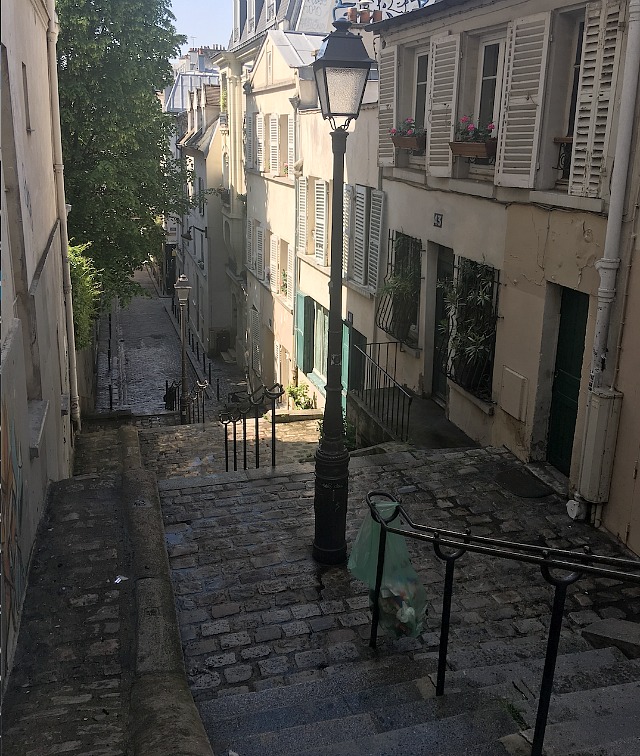


Worst gelato flavors I’ve ever considered in my life.



For 40-plus years the Millennium Falcon was a souped-up “bucket of bolts” — a Kessel Run equivalent of a slightly grimy, seen-better-days 1965 Mustang that nonetheless had a powerful engine and could always jump into light speed if things got hairy.
No longer. In Ron Howard‘s forthcoming Solo (Disney, 5.25) the Falcon is new, spiffy and packed with luxury perks. It even has a special Lando Calrissian “cape room”…arrghh! Like it’s been refurbished for Kanye West, Kim Kardashian and the kids.
On top of which Donald Glover pronounces the first syllable of Falcon like Hal Ashby or HAL 9000. Jesus Christ, Howard can’t even get his actors to say it correctly? Harrison Ford, Billy Dee Williams, Carrie Fisher, Mark Hamill and James Earl Jones pronounced that syllable the way Humphrey Bogart, Mary Astor, Peter Lorre and Sydney Greenstreet pronounced it — like the season, rhymes with “all.”
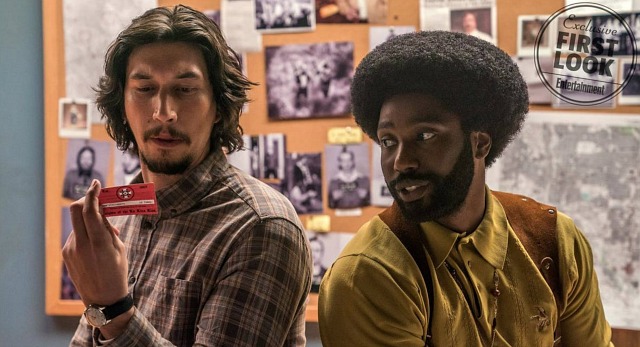
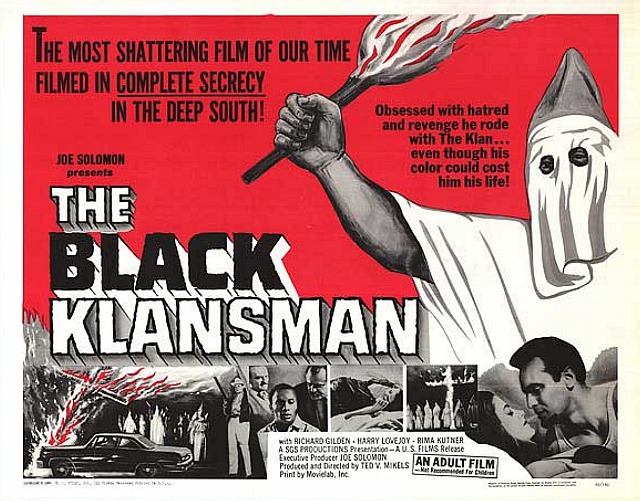
Within the last 52 years, there have been two films called Black Klansman that don’t precisely deliver on what the title implies. First and foremost is Spike Lee‘s BlacKkKlansman (inserting the third “k” is arguably the most irritating film-marketing strategy of the 21st Century), which will debut at the soon-to-launch Cannes Film Festival. Second is a 1966 blaxploitation film called The Black Klansman, shot in the Bakersfield area during the 1965 Watts riots and directed by Ted V. Mikels.
As noted a month ago, Lee’s ’70s drama isn’t literally about a black guy joining the Klan but an undercover investigation of the Klan by the real-life Ron Stallworth (John David Washington) when he was the first black detective in the history of the Colorado Springs Police Department.
After initial correspondence with the Klan, Stallworth received a call in which he was asked if he wants to “join our cause.” According to an Amazon summary, “Ron answers the caller’s question that night with a yes, launching what is surely one of the most audacious, and incredible undercover investigations in history. Ron recruits his partner Chuck to play the ‘white’ Ron Stallworth. The “Chuck” character is apparently called “Flip,” and is played by Adam Driver.
This morning I found a reasonable-sounding review of the ’66 Black Klansman on a blog called Scared Shiftless in Shasta.
Key passage: “My expectation was that [The Black Klansman] would be something campy, poorly constructed and/or preachy. To my surprise, it was none of those things, but an earnest, serious treatment of what was clearly exploitation subject matter, but which never elicits any unintended humor. Even with the Victor/Victoria-like mind-melting idea of a white actor playing a black man who pretends to be white, it doesn’t offend or condescend.”
Wiki boilerplate: “Set during the Civil Rights Movement, the film tells the story of an African-American man, Jerry Ellworth (Richard Gilden, a white actor), who is an LA jazz musician with a white girlfriend. Meanwhile, in an Alabama diner, a young black man attempts to exercise his civil rights by sitting at a local diner. When the Ku Klux Klan learn of this, they firebomb a church, killing Jerry’s daughter. When he learns of this, Jerry moves to Alabama to infiltrate the group responsible for his daughter’s death. Jerry dons his disguise and becomes a member of the inner circle, befriending the local leader and his daughter, and soon exacts his revenge.”
The original title of The Black Klansman was I Crossed The Color Line.
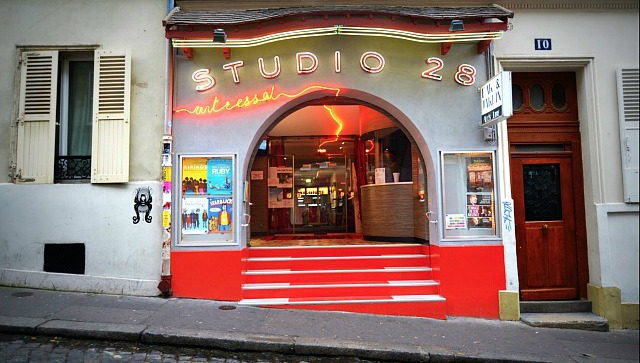
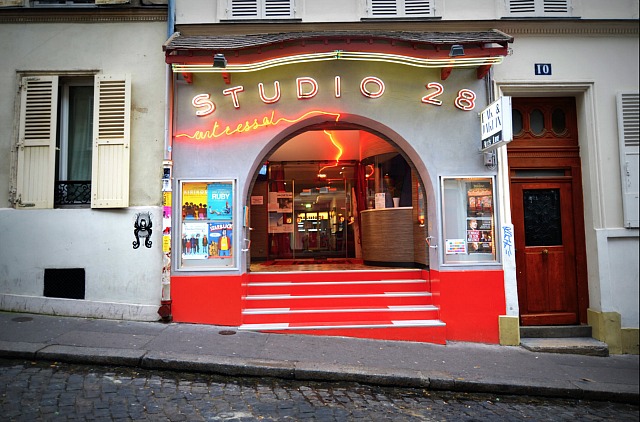
These days the 3rd arrondisement (northern Marais, intersection of rue Bretagne and rue Saintonge) is Hollywood Elsewhere’s favorite Parisian hang zone, but 15 years ago Montmartre (excepting the ghastly tourist section adjacent to Sacre Coeur) was my ground zero. One of the cultural lures of that neighborhood was and still is Studio 28, the nearly century-old repertory cinema on rue Tholoze. George W. Bush was in office the last time I caught a film there, but I’m very glad it’s still viable and thriving and using digital projection, etc. Those eccentric wall lamps designed by Jean Cocteau, the covered courtyard cafe, the literal aroma, the history…it’s Montmartre’s Film Forum. Honestly? I wrote this because I love the below photo, and I didn’t want to post without editorial comment.

European culture and gourmet cuisine often go hand-in-hand. 11 years ago I happened upon a small family-owned osteria in Rome’s Trastevere district. I can still taste a smallish pasta dish I ordered, served at just the right temperature and bursting with the flavor of fresh tomatoes and odd spices. I also recall wandering around Portofino, a seaside Italian village not far from Cinque Terre, a few years earlier. A bit touristy, but with the usual historical aromas and architectural charms and a warm, wonderful sense of “so glad I’m here…life doesn’t get much better than this.”
I’m mentioning these experiences because last night a friend and I visited Portofino, a respected Italian restaurant in Wilton, Connecticut — the woodsy, whitebread, not-overwhelmingly-liberal town where I went to high school for a couple of years.
It looked inviting from the outside, but I was hit with a big fat “uh-oh” the instant I walked in — three large flatscreens in the bar area showing ESPN. A sports-bar vibe (a general Hollywood Elsewhere no-no) always means “watch it…this may be an okay restaurant, but it’s catering to Ordinary Joes so grim up for some agreeable but unexceptional food.” That’s what we got. Acceptable meh. But with a nice candlelit atmosphere (if you were facing away from the bar area).
This is what upper Fairfield County dining is often about — cushy comfort vibes but minus the sublime flavors, seasonings and sauces. For people willing to settle. Not unpleasant but you’re also thinking “this is not what great servings can and should be — inoffensive but substitute-level.”
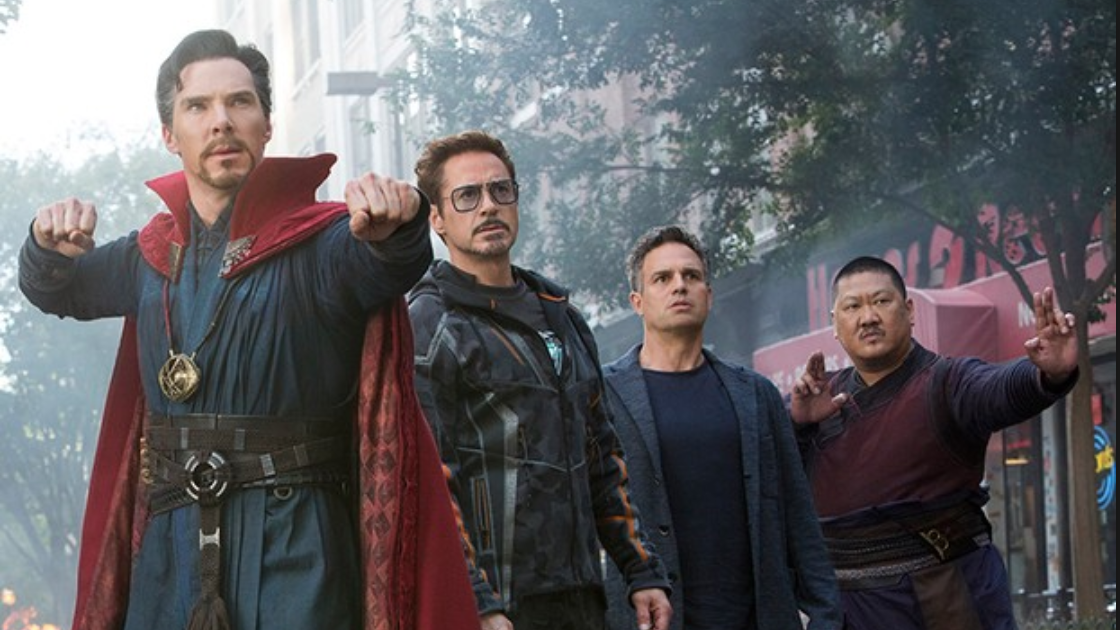
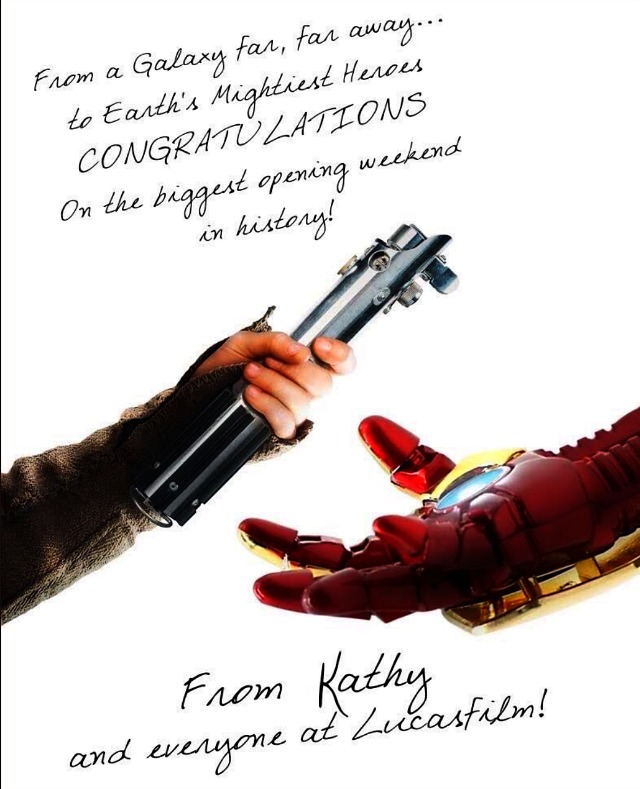
Does it really matter in the greater scheme, much less to the Movie Godz sitting in the shadow of Mount Olympus, if a larger mass of lemmings jumped off the Avengers: Infinity War cliff, and thereby overshadowed the blindly devotional swan dive made by millions of said critters two and a half years ago on behalf of Star Wars: The Force Awakens? Obviously it does to certain parties who will profit in various ways, but somebody needs to say “okay, fine, enjoy the champagne, but what are you actually celebrating?” It was reported this morning that Infinity War‘s $258.2 million opening weekend topped Force Awakens‘ $247.9 million set in December 2015.
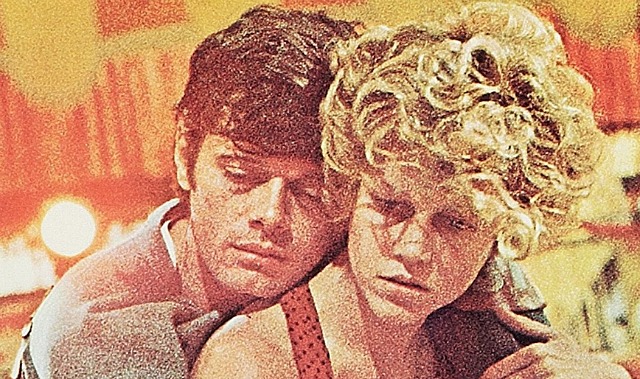
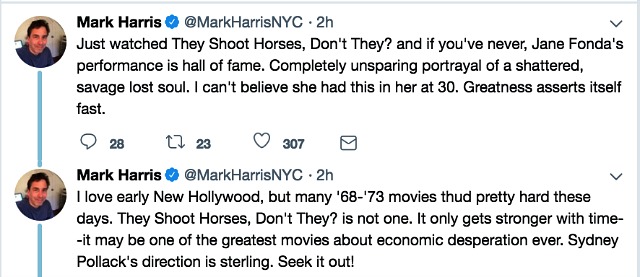
“Graphic Sexuality Landmark in Mainstream Hollywood Drama,” posted on 6.6.16: They Shoot Horses, Don’t They? (’69) is certainly Sydney Pollack‘s darkest film, but also his finest and flintiest, one could argue. Released a year after his almost-as-interesting Castle Keep, Horses was Pollack’s first and last truly ballsy ‘take it or leave it…life sucks’ drama. It was also the first big dramatic breakout film for Jane Fonda.
“Three years later Pollack began his swoony Robert Redford partnership with Jeremiah Johnson (’72), The Way We Were (’73) and Three Days of the Condor (’75). These set the tone for the undeniably well-crafted Hollywood mainstream films that followed — The Yakuza, Bobby Deerfield, The Electric Horseman, Absence of Malice, Tootsie, Out of Africa.”
I lamented back then that Horses wasn’t streaming or on Bluray — there was only a 2004 MGM/UA DVD. Still no streaming as we speak, but a handsome Bluray popped last September. [Note: Apologies for missing the Bluray’s availability a few hours ago.)
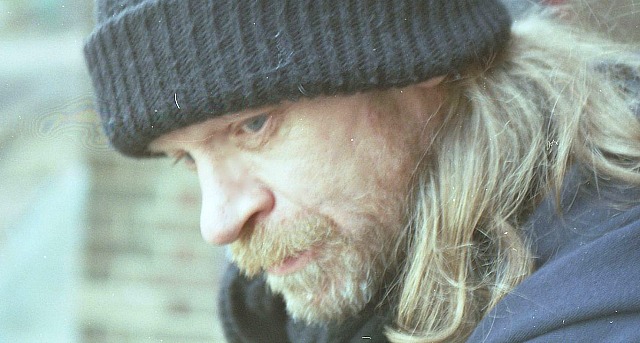
Two weeks hence Tony Zierra‘s Filmworker, a brilliant tale of the life and times of Leon Vitali, will open at Manhattan’s Metrograph, and then a week later at West L.A.’s Nuart. I’ve been insisting for months that this is an absolutely world-class doc, not to mention the best inside-the-beltway, what-it-was-really-like Stanley Kubrick doc ever made.
Yesterday I sat down with Vitali at a Starbucks in Culver City. We shot the shit for 40 minutes or so, the only problem being that we sat outside on a patio, and that meant contending with the rumble of L.A. traffic — cars, trucks, ambulances, fire engines — not to mention a Starbucks cleaning person who kept generating that awful “aaahhhggg!” sound when you drag metal tables and chairs across concrete. So it might be a bit of a struggle to listen to our chat, but by all means have a go.
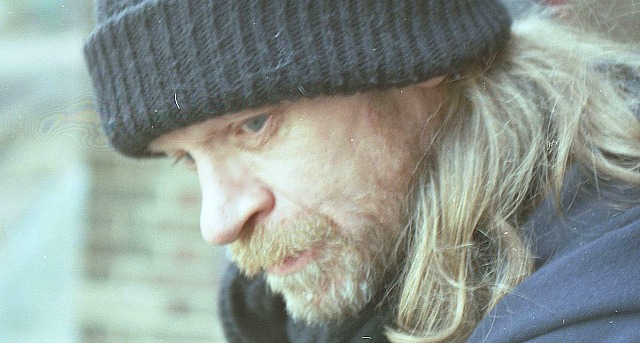 Leon Vitali, former actor (Barry Lyndon, Eyes Wide Shut), longtime Stanley Kubrick assistant, Warner Bros. visual consultant and star of Filmworker (Kino Lorber, 5.11).
Given the traffic noise and the difficulty in hearing each and every syllable, I asked Leon whatever came into my head, chatting more than interviewing really.
Vitali: “I did the color timing on the 2001: A Space Odyssey 4K Bluray, and 4K is so beautiful…the details, the shadows…looking at it on these very high resolution monitors. It looks great, everybody loves it, and I’m not blowing my own trumpet. HE: “What would you say is the difference between the forthcoming unrestored Chris Nolan version and the spiffed-up 4K Bluray?” Vitali: “The difference is that the 4K has more clarity and sharpness and detail.” HE: “So people seeing the Nolan version in Cannes will say, ‘This is wonderful…not as sharp or as clear as the 4K but it looks very good.'”
Sidenote: For some reason I developed an idea years ago, perhaps after speaking with Dan Richter, the guy who played the bone-tossing “Moonwtacher” in 2001, that the “Dawn of Man” sequence was shot early in the schedule. Vitali told me yesterday that it was actually the last thing to be shot.
HE: “Your voice has a softer quality right now, but there are passages in Filmworker in which it has that deep, resonant, gravelly sound…the kind of great-sounding voice that can only result from years and years of cigarette smoking. Are you smoking now?” Vitali: “Not as much. I’ve cut down. At my height with Stanley I was smoking three packs a day. Stanley [himself] would have one every now and then.”
HE: “I always loved the sound of Stanley’s voice. The timbre and the accent. The voice of a cultured, well-educated New York cab driver. A guy who grew up in the Bronx and knew all the angles.” Vitali: “He never lost that.”
HE: “The special groove of Filmworker for me, is that when you’ve found something that really matters to you…that for all practical and aesthetic purposes has become a source of profound satisfaction, as your work with Stanley became…for me it makes Filmworker such a sublime film, because it understands and conveys that special devotion.” Vitali: “I went to drama school [when young] and I met this guy who taught me how to harness a certain inner energy…it made me realize, once you really get into something, something that really seeps in and opens you up…you’re in there and it’s no contest…you know?”
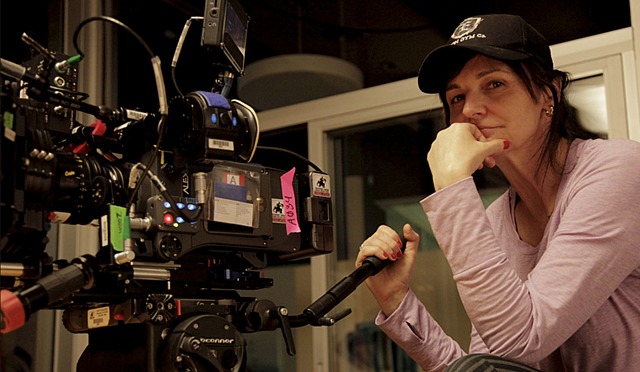
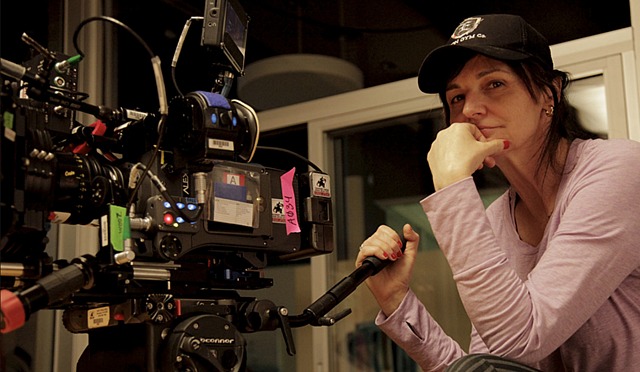
Cinematographer Svetlana Cvetko, whom I’ve been referring to as “HE’s own” for several years, has become a bona fide hyphenate — a director-dp. After making the festival rounds last year with her doc short, Yours Sincerely, Lois Weber, she began directing a self-penned feature. Produced by Nick Sarkisov and shot in black-and-white widescreen (2.39:1), it’s called My Crazy Nature.
It’s about a menage a trois relationship between two guys and a girl. The portions I’ve seen (and the silky monochrome capturings are truly magnificent) reminded me at times of Francois Truffaut‘s Jules and Jim (’62) with a dash of Coline Serreau‘s Pourquois Pas? (’77).
Alas, Svetlana has had to recently interrupt this passion project (which has been filming locally as well as in Europe) to direct an indie-financed drama called Foreign Exchange, costarring Meet The Parents‘ Teri Polo and Niptuck‘s Dylan Walsh.
Svet’s dp credits, working backwards: Stuntwomen: The Untold Hollywood Story (post-production), Jonathan Parker‘s The Architect and several docs (including partial cinematography) — Silicon Cowboys, Brand: A Second Coming, Red Army, Inequality for All, Miss Representation and Inside Job.

Three months ago Hollywood Elsewhere saw the same sadistic Suspiria scene that director Luca Guadagnino screened earlier today at Cinemacon. The general reaction so far has been “whoa, that was intense.” Set in a rainy, chilly Berlin sometime in the ’70s, the scene happens inside a prestigious dance academy. Some kind of brutal hex decimates a middle-aged woman, apparently because she’s seen as an enemy of a witch’s coven that operates out of the dance school, and which is run by Tilda Swinton.
As a young American ballerina (Dakota Johnson) dances and twirls, the victim is slapped and pounded and walloped by some invisible voodoo-doll force.
I felt dazzled and jarred by this sequence. First rate, very well cut, etc. I was especially taken by a shadowy extreme close-up of a smiling witch face. I didn’t quite know what to do with the rainy Berlin atmosphere and especially all the sunlight that floods into the dance studio. Like everyone else on the planet, I associate horror with a dark, shadowy vibe — weird mood lighting, impressionistic designs, hints of blood and organs, a generally creepy feeling. This didn’t look like horror — it looked like matter-of-fact realism.

What I love about Guadagnino’s I Am Love, A Bigger Splash and Call Me By Your Name is that they’re all “Luca” — they all convey that lulling, sensual, sun-dappled northern Italian atmosphere — a way of being, living, tasting, feeling, etc.
Suspiria is obviously a departure from this — primarily about Luca adapting and expanding upon his reactions to Argento’s 1977 classic, and then blending this with his own instincts and dreamscapes.
Before I saw the Suspiria clip I had somehow imagined that Luca might integrate his “signature” style into the Argento realm and produce a chilling but sensual northern Italian horror film. Scary but with that special Luca attitude and chemistry. Something along those lines.
What I saw and felt lacked that familiar elegance, that warmth, that “this is who I am and how I live my life” feeling. Which obviously makes sense, given the witches-and-bitches subject matter.
As I didn’t know the victim character but presumed she was in a position to threaten the coven, I could only watch her agony as she was thrown around and contorted and began vomiting yellow liquid.
I’m not saying it’s unwelcome to see Guadagnino operating in a horror realm and igniting his imagination with fresh impressions, but it didn’t feel familiar in that sensual “welcome to my world” way that I’ve come to associate with his manner/vision/style.
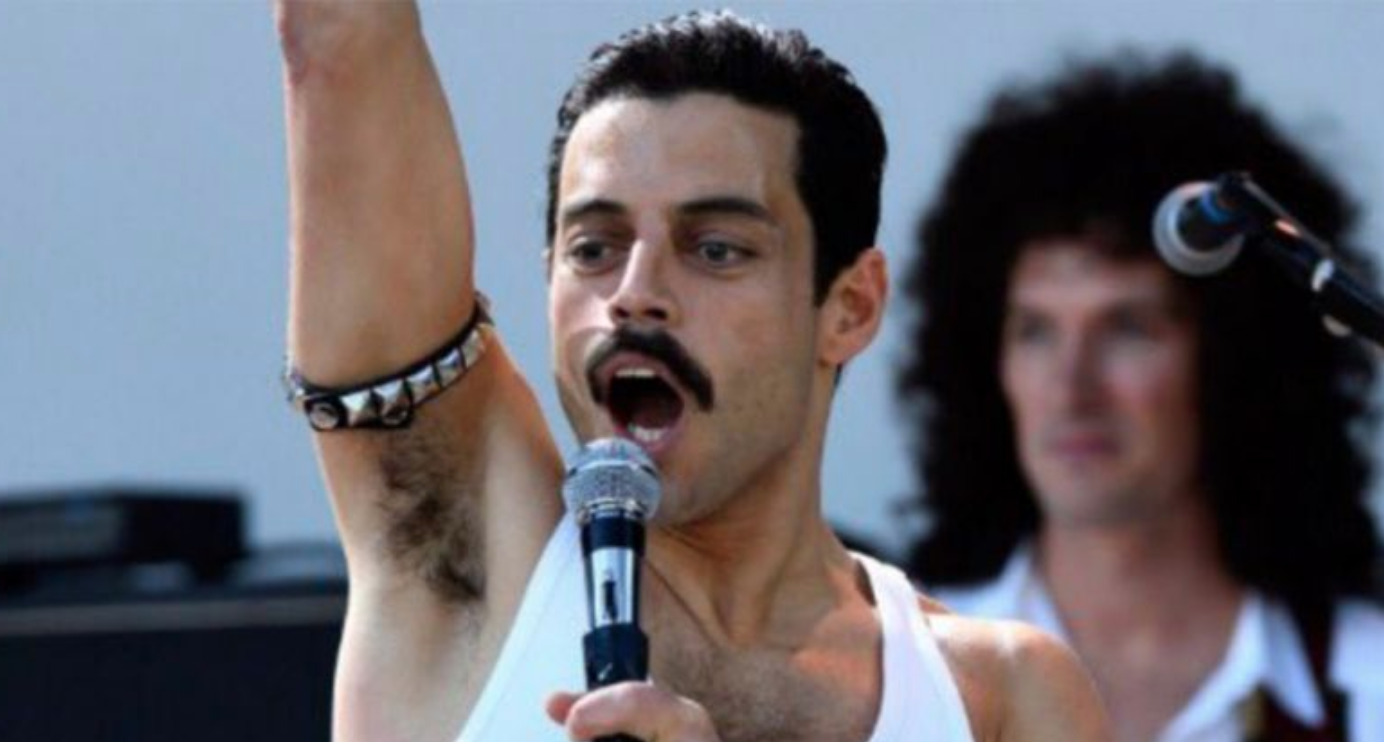
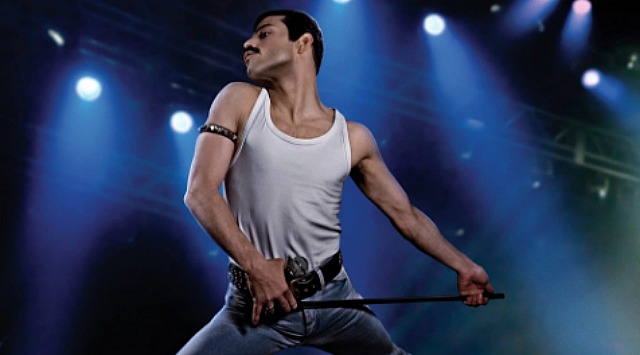
Live-wire concert footage from Bryan Singer and Dexter Fletcher‘s Bohemian Rhapsody (20th Century Fox, 11.2) was screened a while ago at Cinemacon. Rami Malek (who really doesn’t look much like the Parsi-descended, Zanzibar-born Freddie Mercury) was shown performing the title tune plus “We Are The Champions,” etc.
Neither Singer nor Fletcher made an appearance, which is weird. Tell me how Singer doesn’t end up with the lion’s share of credit. He directed…what, 85% if not 90% of the film before Fletcher took over?
No one’s ever doubted that Malek wouldn’t channel Mercury to everyone’s delight, particularly Queen fans. A Best Actor Oscar nomination seems achievable if not likely. The question, as I mentioned in a 4.17 thumbnail appraisal of an early draft of the Bohemian Rhapsody script, is whether or not the finished film will seem a little too “family friendly” and/or lacking a certain adult edge.
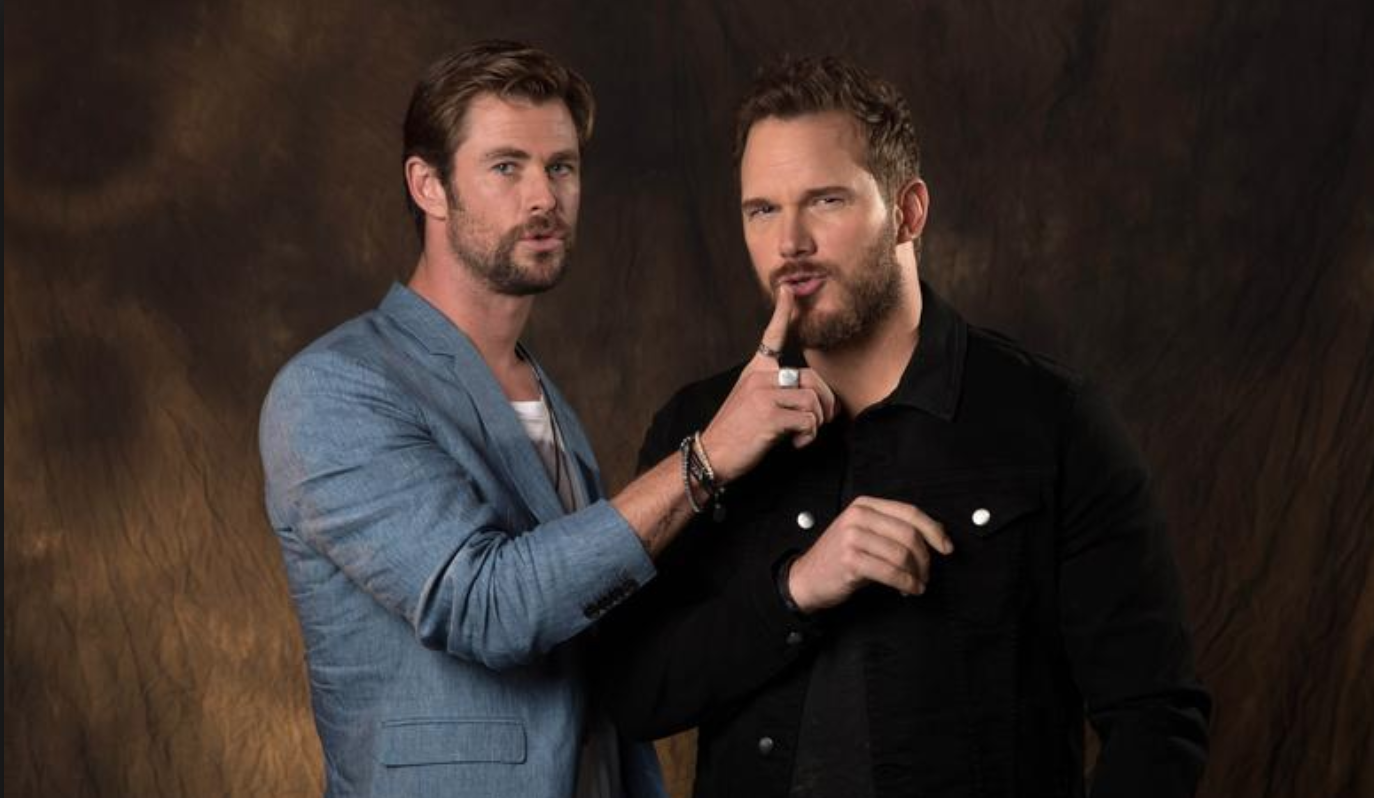
HE approves of any and all musical tributes to classic American TV culture. Remember the sing-along bus-ride sequence in Planes, Trains and Automobiles? That aside, the first thing that pops is that “Peter Quill” looks like Alex Karras (i.e., “Mongo”) in Blazing Saddles, Aldo Ray‘s “Sgt. Muldoon” in The Green Berets or post-2012 Gerard Butler. And what’s the reaction to Chris Evans‘ late ’70s/early ’80s gay-clone look (flattop, moustache)?