Little Miss Sunshine Guys In ’70s Mode

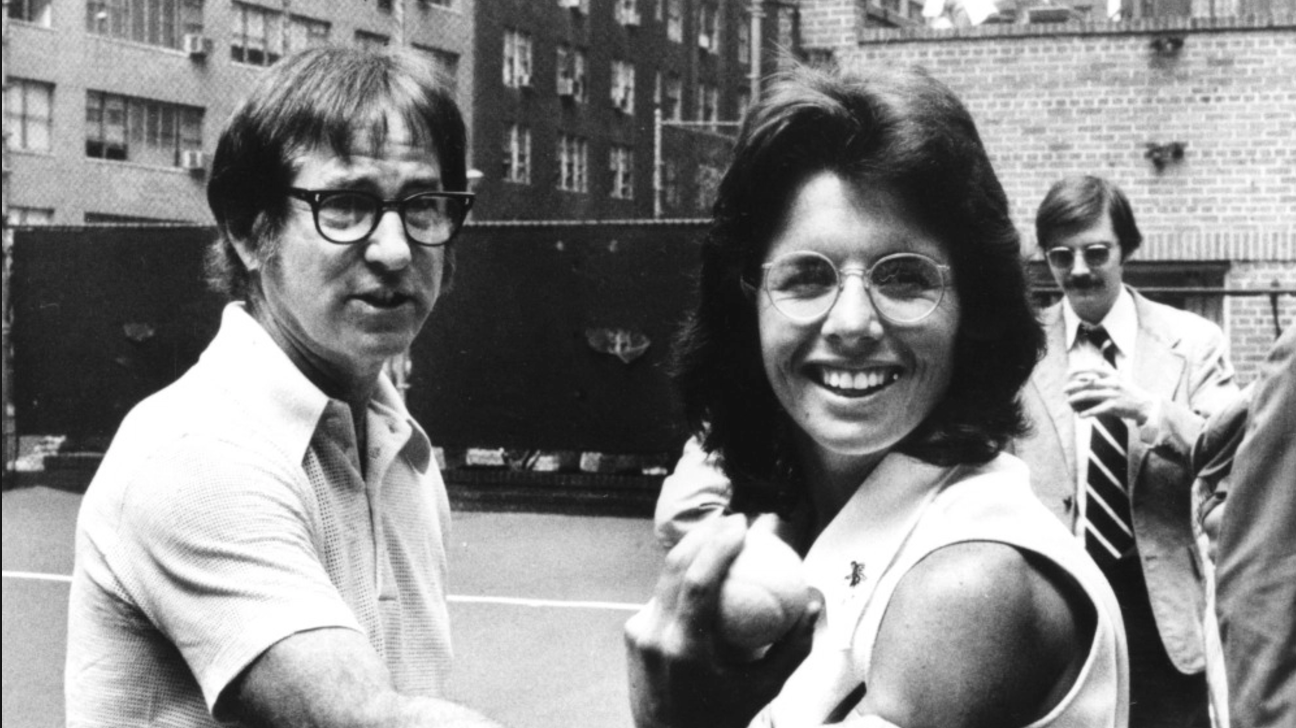
Five weeks ago I raved about the first trailer for Jonathan Dayton and Valerie Faris‘s Battle of the Sexes (Fox Searchlight, 9.22), and particularly a hunch that Steve Carrell‘s performance as tennis blowhard Bobby Riggs “is going to get most of the award-season action” with Emma Stone having won a Best Actress Oscar earlier this year. This was met with instant derision by the comment thread know-it-alls. (“No Oscar nom…Carrell in Anchorman mode…better in The Big Short,” etc.) This new trailer highlights another strong contributor — screenwriter Simon Beaufoy. If you can’t sense from the trailer that Battle of the Sexes is well written, you can at least presume that the top-notch quality of Beaufoy’s previous screenplays will manifest again — The Full Monty, Slumdog Millionaire, 127 Hours, Salmon Fishing in the Yemen, Everest, etc.

Spike Lee Says What Even I Haven’t Dared To Say

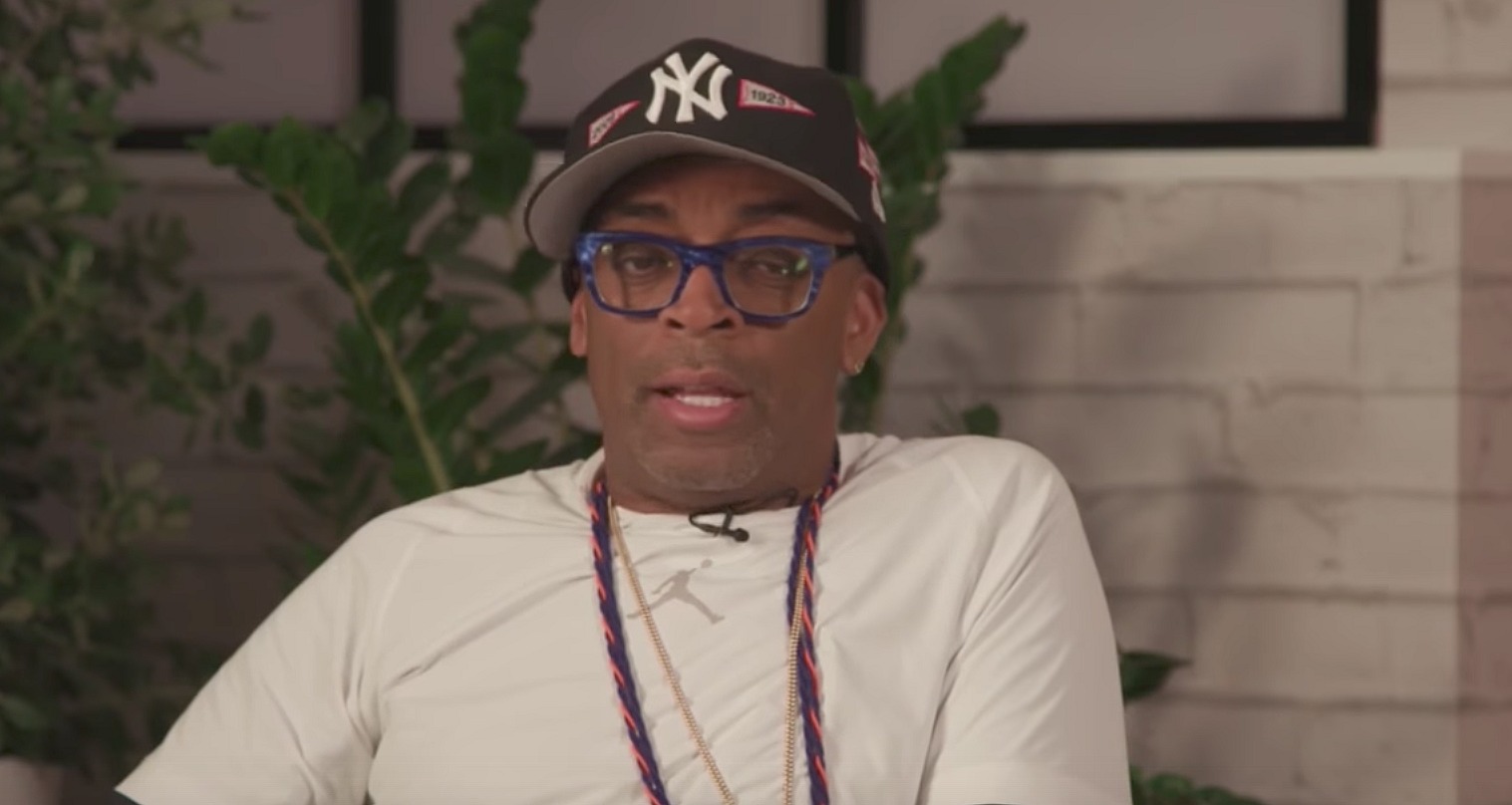
Spike Lee to Variety: “Every 10 years, black people win a lot of Oscars. And then we read articles in Variety magazine and others, the black audience has been discovered. It’s a renaissance. Then there’s another nine year drought. It should be constant. I will put my money on this. The reason why what happened at the Oscars this year” — Barry JenkinsMoonlight winning for Best Picture — “was because the year before was #OscarsSoWhite. That was a bad look for the Academy. And they had to switch up, get more inclusion, get more people, try to get more diversity among the voting members. But what happened this past Oscars, you think that’s going to happen [next] year?”

By the same token, when mainstream Academy fuddyduds start seeing Call Me By Your Name this fall, they’re going to say “wait, whoa…we already gave the Best Picture Oscar to a gay film last year….we ain’t goin’ there again…not two years in a row!” And that would be a bullshit attitude to embrace. If for no other reason than the simple fact that Call Me By Your Name, which isn’t a gay film (although it is) as much as a northern Italian film about sensuality, family and community, is 16 times better than Moonlight.

Five Knockout ’17 Flicks So Far, and That’s All

Variety‘s Owen Gleiberman and Peter Debruge have posted their best-of-2017 picks thus far. Tediously, they’ve restricted themselves to films that have opened commercially. Jordan Peele‘s absurdly over-praised Get Out, the kind of film that John Carpenter might have made in the ’70s or ’80s without a single critic creaming in his or her pants, tops the roster. They’re also fans of Miguel Arteta‘s audaciously conceived, reasonably decent Beatriz at Dinner, Michael Showalter‘s The Big Sick (one of my faves) and Edgar Wright‘s Baby Driver. I won’t repeat the others but they all fall under one of two headings — “not bad” and “huh?”


(/) Call Me By Your Name director Luca Guadagnino, star Timothee Chalumet during 2016 filming in Crema, Italy.

The real list (i.e., my own) is composed of the Best 2017 Films, period — i.e., not yet opened theatrically but which have (a) made big splashes at this or that festival or (b) have simply screened for press. They are, in this order, (1) Luca Guadagnino‘s Call Me By Your Name (Sony Classics, 11.24 — a Sundance ’17 wowser that should have opened in Cannes), (2) The Big Sick (Lionsgate/Amazon, 6.23 — Sundance ’17), (3) Matt ReevesWar For The Planet of the Apes (20th Century Fox, 7.14), (4) Andrey Zvyagintsev‘s Loveless (Sony Pictures Classics, late 2017) and (5) Ruben Ostlund‘s The Square (Magnolia, late 2017). Okay, I’ll include Get Out but strictly in terms of it being a smart, noteworthy, socially reflective genre film — it deserves an upvote but calm down.

I haven’t seen Sean Baker‘s The Florida Project and I won’t see Baby Driver until tomorrow night.

Daniel Day Lewis Going Back To Shoe-Making?

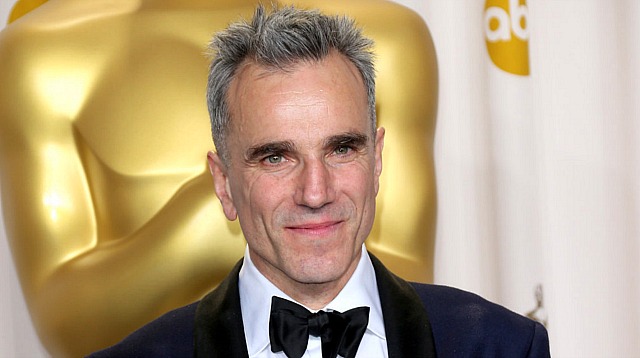
If you’re really good at something, which maybe 2% or 3% of the population has been lucky enough to discover and nurture, why would you want to quit doing it? Daniel Day Lewis has announced he’s finished with acting for good this time, but why? Not because the pay sucks, I’m sure. Because he’s bored? Get un-bored, get shut of it. Because at age 60 he’s found something more noble or nourishing to devote his life to? Great — but what is that? Is it because he finds acting too taxing or draining? Because he can’t stand the unreality of being paid to pretend to be someone else? If DDL can’t abide his life or his work, fine. But he can’t just plotz and lie in a hammock or walk the earth like Kane in Kung Fu, getting into adventures and shit.

If DDL has run out of gas an an actor, he has to man up and do that thing in some other chosen realm. He has to do that thing that we all have to do because we have no choice because God and life demand it, and because those who wimp out or run away from that struggle are, no offense, ignoble and cowardly.

Is this a Steven Soderbergh– or Frank Sinatra-style retirement? I understand burnout — it happens — but I don’t respect people who’ve been lucky enough to find a calling — to connect with the universe with a rare and beautiful gift that they’ve found within and made into something that has touched people worldwide — and then just walk away from it. 

Private Robert E. Lee Prewitt: “A man should be what he can do.” Wells to DDL: You have a duty to go, to be, to strive, to create, to become, to dig in and reach for something better or even wondrous within. Abandoning the struggle is a sin. We’re here only a limited time and then we’re dead, for God’s sake.

Lewis will make the Oscar season rounds one last time in late November and December to discuss what may be his final role, as 1950s fashion designer Charles James in Paul Thomas Anderson‘s Phantom Thread (Focus Features, 12.25).

What caused Lewis to snap and say “fuck it”? Was it the extraordinary task of making Charles James come exactingly alive under the demanding PTA? Was it a sense of existential engulfment? Did he suddenly buckle at the thought of sitting for a Santa Barbara Film Festival tribute at the Arlington?

Very Costly Film About An Evacuation

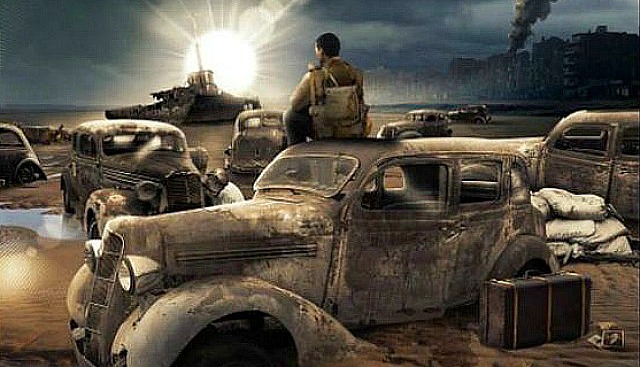
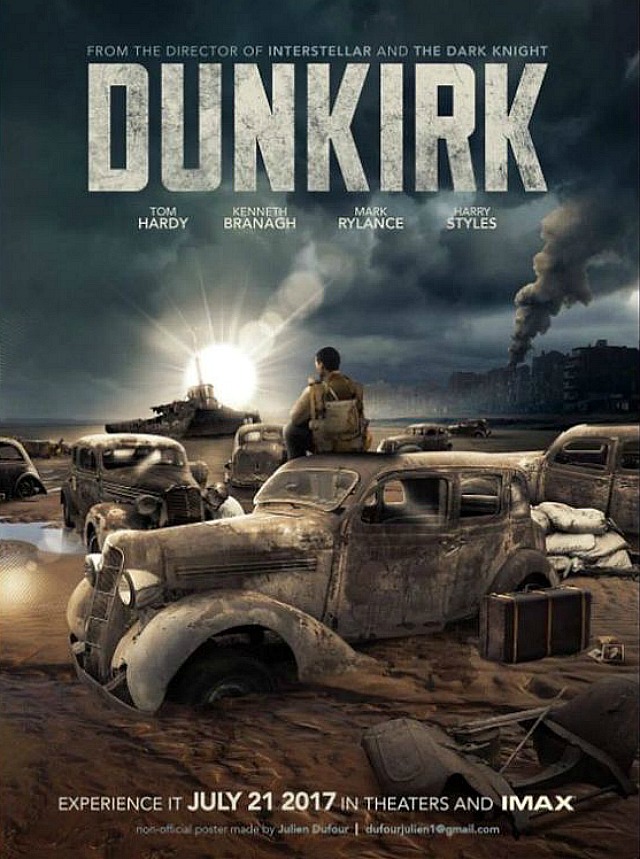
I’m not expecting to be stirred and swept aloft by the Dunkirk narrative. I am, however, expecting to be swept along by Hoyte van Hoytema‘s immaculate IMAX cinematography and what I presume will be an embarassment of fine historical detail. In a word, versimilitude. Either you’ll respect and appreciate what Dunkirk is or you won’t. A mass ensemble piece about a country getting its ass kicked, but its citizens responding in ways that will arouse deep-seated feelings.

What it doesn’t seem to be, if history and the Dunkirk trailers are any guide, is a riveting three-act story about fate and character that builds into something that pays off in a way that most people would call “dramatically satisfying” — i.e., a story with some kind of “stick-it-hard” ending that brings it all home and rings some kind of grand emotional bell.

Dunkirk doesn’t appear to be about nail-bitten tension or a frenzied battle or a triumph or some profound individual reckoning, but about British blood and compassion — familial duty, loyalty, togetherness. A huge civilian community of 700 boats coming together to help 400,000 British troops survive a crushing defeat. That’s the sea part. There’s also the air (Tom Hardy buzzing the Germans in a single-seat Spitfire) and the land (all those helpless British troops huddled on the vast Dunkirk beaches), and of course the blending of these scenarios.

If you can process family devotion as heroic, Dunkirk will probably work for you. At the very least it seems unlikely to be cliche-ridden. It seems to be its own bird. And I admire the running-time discipline — 110 minutes, seven or eight minutes of which will be taken up by closing credits. At least Nolan, whose tendencies as a director of big-concept mindblowers and Batman films has been to go two-hours plus, has restrained himself this one time. Dunkirk is three minutes shorter than Memento, and eight minutes shorter than Insomnia!

Update: The Hollywood Reporter‘s Pamela McClintock is stating that Dunkirk’s running time is actually 107 minutes — one hour, 47 minutes.

Read more

“As Good As A 1985 Print Gets”

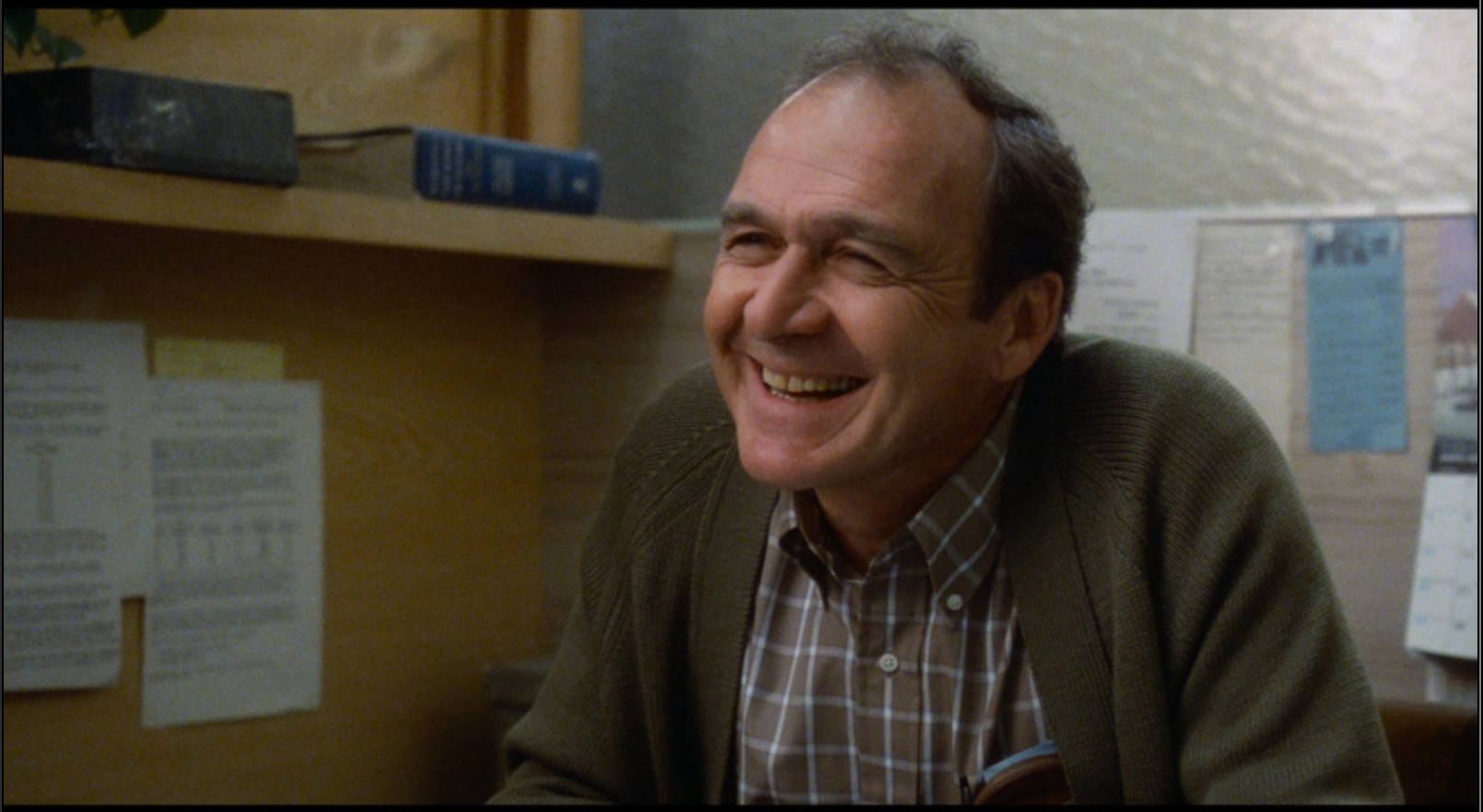
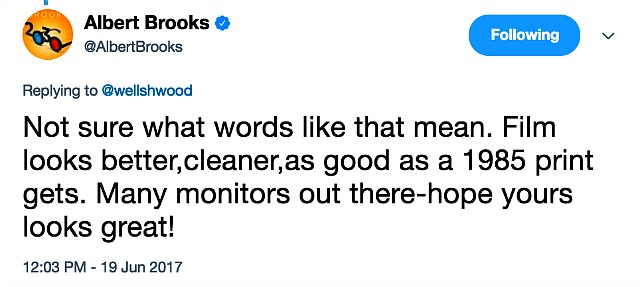
In his review of Criterion’s Lost in America Bluray, Gary W. Tooze said it looks “thick” and “heavy.” I haven’t received my complimentary copy yet (the disc doesn’t pop until 7.25) but I’m assuming that Tooze is referring to the Bluray not delivering a proper “bump” — an enhanced visual palette (sharper, richer, more information) that tells the viewer “yes, this is definitely better looking than the DVD or the last time you saw a streaming version.” This was an issue with Criterion’s Rosemary’s Baby Bluray — looked perfectly fine but no upgrade aura. I’m a fan of Brooks’ legendary 1985 film either way, but when I buy a Bluray I want that bump, dammit. I want to bathe in an “extra” quality that I never knew before. In a tweet this morning Brooks said the disc looks “better, cleaner, as good as a 1985 print gets.” I’ll be savoring the extras if nothing else — a 30-minute chat between Brooks and Robert Weide (recorded in 2017), interviews with Julie Hagerty, exec producer Herb Nanas and James L. Brooks. Plus a booklet essay by Scott Tobias.

Read more

General Unfairness of Things

I was rumbling around the WeHo Pavilions parking lot on the two-wheeler, looking for a spot. Five or six car lengths ahead I saw a little red Mercedes pull out so I gunned it, drove around an idling SUV and pulled in. I was stowing away the helmet when I heard this wailing sound coming from behind me. It was some 40ish guy going “haaayyy!” He was frowning from behind the wheel of his white four-door something or other and whining, “I was waiting for that spot…Jesus! I was waiting for it!” As if to say, “S’matter with you? Have you ever heard of parking lot manners?”

Law of the jungle, pal. Okay, if I’d seen you “waiting” for the spot I might not have taken it. I would actually rather not occupy any parking spot as I don’t really need one. But I didn’t see you so I took the spot and that’s that. You chose to go bigger and slower with four wheels and I chose smaller with two wheels, and look who has the spot, asshole!

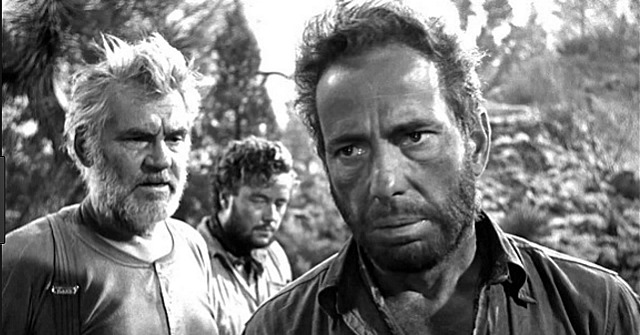
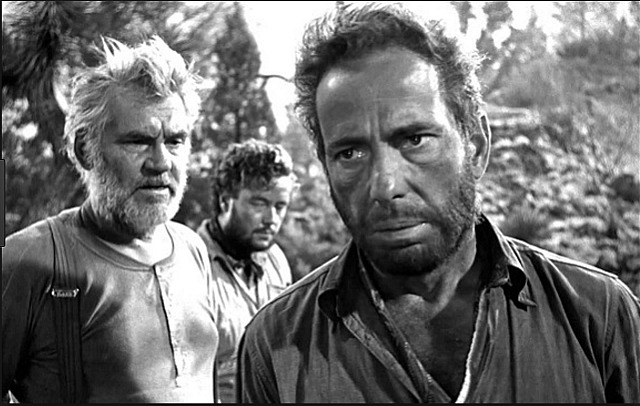
There’s a scene in The Treasure of the Sierra Madre that applies. Bearded Humphrey Bogart is dead broke and on the bum in Tampico. He’s walking down a cobblestoned street when he sees a smoking, half-gone cigarillo that’s been tossed into the gutter. Bogart wants to grab it but he hesitates out of pride. Fred C. Dobbs doesn’t drop to his knees for a few puffs of tobacco…too late! A little Mexican kid grabs the cigarillo and saunters down the street, puffing away, cock of the walk. Bogart is seething. I wanted that damn cigarillo and…okay, I hesitated but then I decided, and now some kid is enjoying it instead of me! Life sucks.

The pissed-off Pavilions parking-lot guy in the white four-door was Humphrey Bogart, and I was the little kid with the lightning reflexes. Life is like that from time to time. Unfair, I mean, but I didn’t rig it.

Read more

Glinty, Mild-Mannered Chess Player

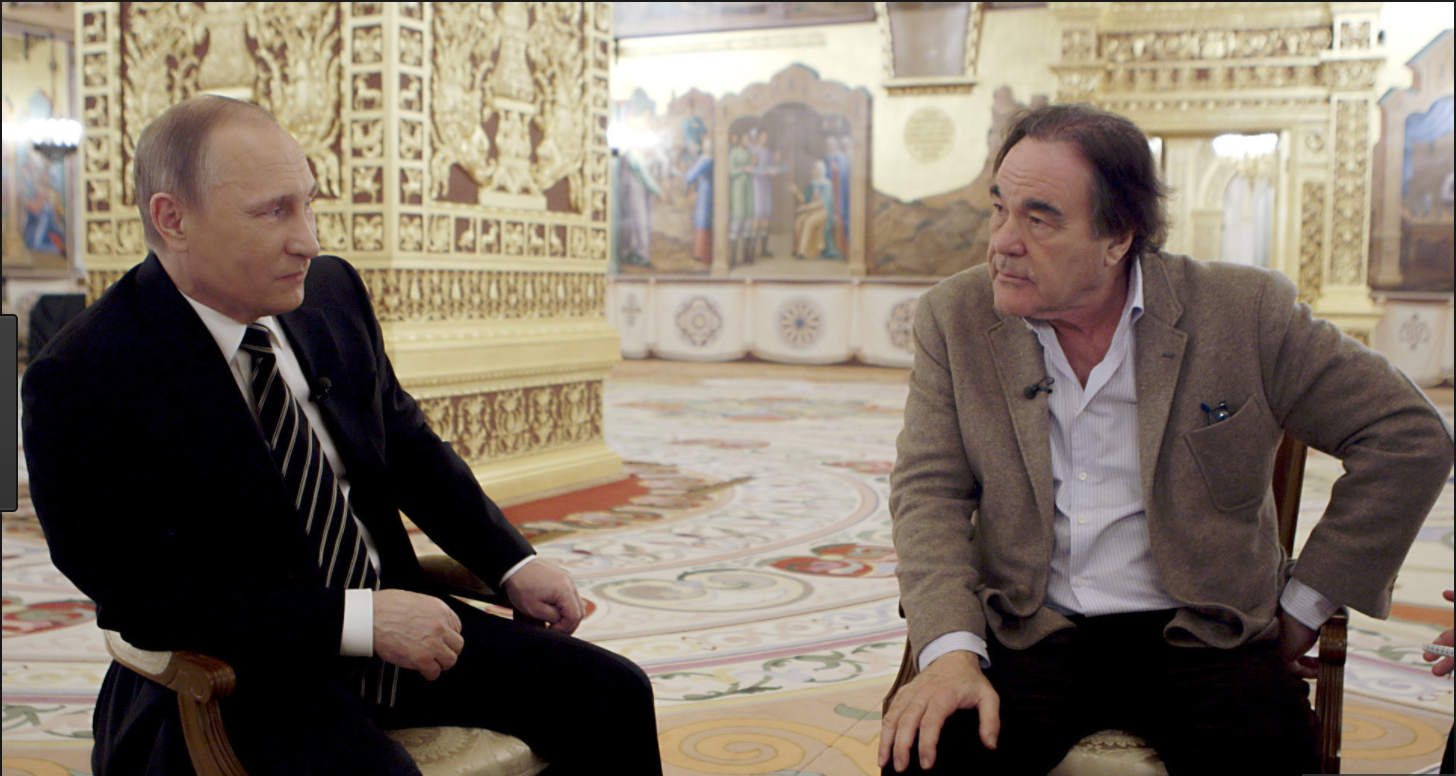
Last night I watched the fourth and final segment in Oliver Stone‘s interviews with Russian president Vladmir Putin. Stone asked and asked about Russian hackings of the 2016 U.S. election, which of course Putin denied any involvement with. Like any gifted politician, the 64 year-old ruler is very good at deflection and evasion. And yet two weeks ago he acknowledged that Russian “patriotic hackers” may have cyber-meddled on some level. So there’s that.

Did I expect Putin to admit that he’s an iron-fisted authoritarian whose hand is obviously strengthened with other like-minded strongmen (like Orange Orangutan) in power around the globe? That he didn’t want Hillary Clinton to beat Donald Trump? That he has a copy of the pee-pee tape in his private safe? Of course not.

Stone’s questioning of Putin struck me as direct but collegial — i.e., not overly friendly but respectful, appropriately non-aggressive. I’ll tell you one thing. Say what you will about Putin but he’s a much smarter, wiser, better educated fellow than Trump. And certainly more emotionally mature. Putin may be a brutalist and a murderer of his enemies, but he’s no dummy. Putin is a player who knows how to behave; Trump is an animal.

Read more

Mild Takedown, No Blood, A Couple of Bruises

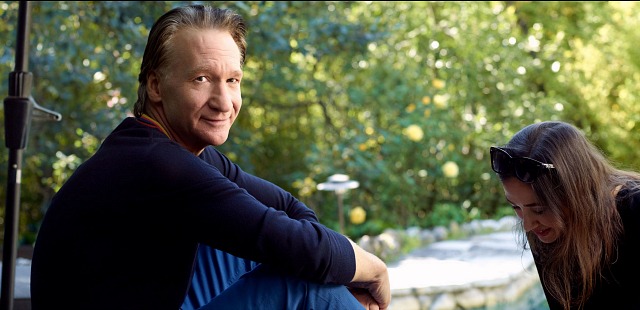
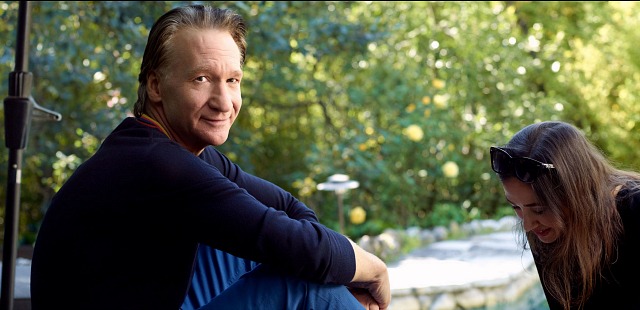
Stephen Rodrick‘s Esquire profile of Bill Maher (“Bill Maher Knows Exactly What He’s Doing“) does a fairly standard job of looking for chinks in the armor. Rodrick hung with the HBO talk-show host and comedian several weeks ago and discovered two things: (1) Once a nocturnal party animal who drank and toked with the best of them, Maher now lives a semi-solitary, somewhat lonely life (“only three chairs at his dining-room table”), in part because he has no apparent interest in getting married or even investing in a semi-serious partnership. And (2) Maher isn’t as knowledgable about certain political topics (like French presidential candidate Marine Le Pen) as he could be, or is at least less knowledgable than John Oliver.

Rodrick excerpt #1: “Maher spoke dreamily about hosting dinner parties, but I noticed that there were only three chairs at his dining-room table. He’s never been married, and his predilection for dating young women is well known. His last serious girlfriend was a Guyanese-Canadian musician a quarter century his junior. But while Maher readily admits that he’s spent much of his adult life making up for his crummy adolescence, he thinks he’s taken way too much shit for the age of his companions over the years. ‘You know the definition of sleazy, don’t you?,’ Maher says. ‘Anyone who’s having more sex than you are.'”

Rodrick excerpt #2: “It was at this point that I realized Maher’s Doubting Thomas ideology is, in its way, as rigid as any dogma, a reflexive contrarianism that works spectacularly well for him right up until it convinces him that it’s okay for a white person to call himself a ‘house nigger.’ He can be just as dependent on slogans and talking points as the politicians he skewers on his show. And here, perhaps, was another important difference between him and his peers. Unlike John Oliver, who did seventeen minutes on the French election, Maher clearly had not done his homework about the most important European election of this century so far.”

Read more

Admitted Reevesian Ape-aholic

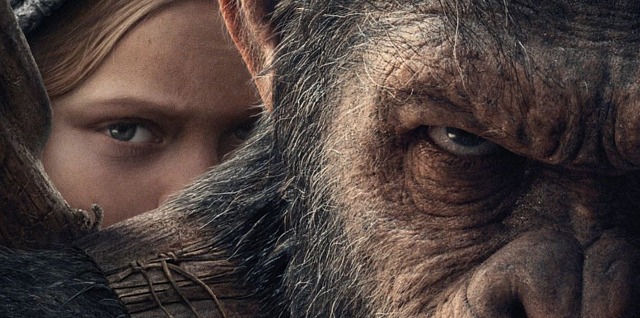
The first peek-out screening of the completed War For The Planet of the Apes (20th Century Fox, 7.14) happened last night on the Fox lot. Mainly for elite first-wave journos. Director Matt Reeves and producer Dylan Clark were the only team members at the after-party. Everyone else is in London, where the junket will happen because costar Woody Harrelson is shooting the Han Solo film there.


Reeves regales: War for the Planet of the Apes director Matt Reeves during after-party that followed last night’s Fox lot screening. (l. to r.) Vox.com’s Greg Ellwood, Indiewire‘s Anne Thompson, War For The Planet of the Apes producer Dylan Clark, Reeves.
 

Kamala Harris Could Whip Ass in 2020

From Susan Chira‘s 6.14 N.Y. Times piece, “The Universal Problem of Men Interrupting Women“:

“The spectacle [of] Senator Kamala Harris, Democrat of California, being interrupted for the second time in a week by her male colleagues, triggered an outpouring of recognition and what has become almost ritual social-media outrage.

“’I think every woman who has any degree of power and those who don’t knows how it feels to experience what Kamala Harris experienced yesterday,’ said Laura R. Walker, the president and chief executive of New York Public Radio. ‘To be in a situation where you’re trying to do your job and you’re either cut off or ignored.’

Keep Fucking With Kamala Harris, Boys — You’re Making Her Stronger” — a 6.14 Wonkette piece by Evan Hurst.

“Senator Harris, a former prosecutor, assertively questioned Attorney General Jeff Sessions during his testimony before the Senate Intelligence Committee. Senator John McCain, Republican of Arizona, interrupted and chided her to let Mr. Sessions answer her questions. Soon after that, Senator Richard Burr, Republican of North Carolina and the committee chairman, cut her off, saying her time had elapsed.

“Academic studies and countless anecdotes make it clear that being interrupted, talked over, shut down or penalized for speaking out is nearly a universal experience for women when they are outnumbered by men.

Read more

Admired But Reluctant To Revisit

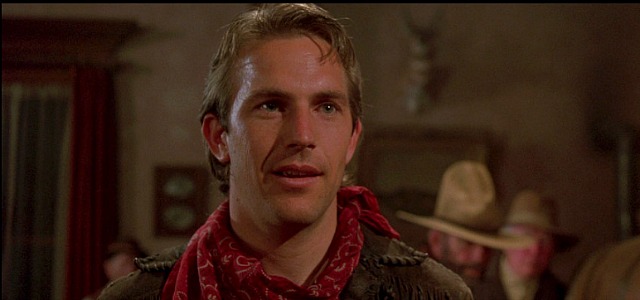
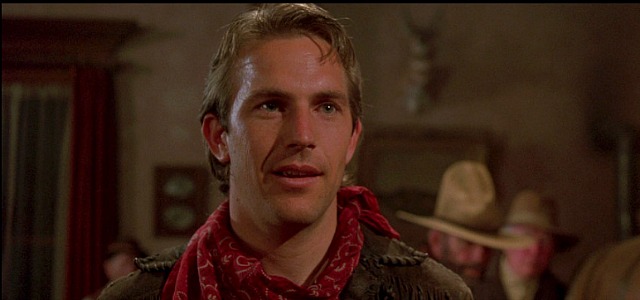
Lawrence Kasdan‘s Silverado (’85) has been easily viewable through Bluray and high-def streaming for a while now. I loved it when I first saw it…Jesus God, 32 years ago. Everyone did. It wasn’t just a handsome, well-told, character-driven story but serious popcorn fun. And it launched Kevin Costner, of course. I don’t think it’s a stretch to call Silverado one of the most impressively crafted, highly entertaining films of the mid ’80s or even the ’80s as a whole.

Why, then, have I re-watched Kasdan’s Body Heat (’81) at least nine or ten times and The Big Chill three or four times and even Kasdan’s extra-long version of Wyatt Earp on Bluray, but for whatever curious reason I’ve never re-watched Silverado? Actually, I take that back. I tried to re-watch it a few years ago but I felt bored on some level and turned it off.

Nobody called Silverado boring when it opened…no one. It was hailed as the first genuine, non-revisionist, real-deal western in a dog’s age. I need to attempt another re-watch and stick with it this time.

Today’s homework assignment: Name five films that you’ve always admired and certainly enjoyed at first blush, but for whatever reason you’ve never re-watched them.