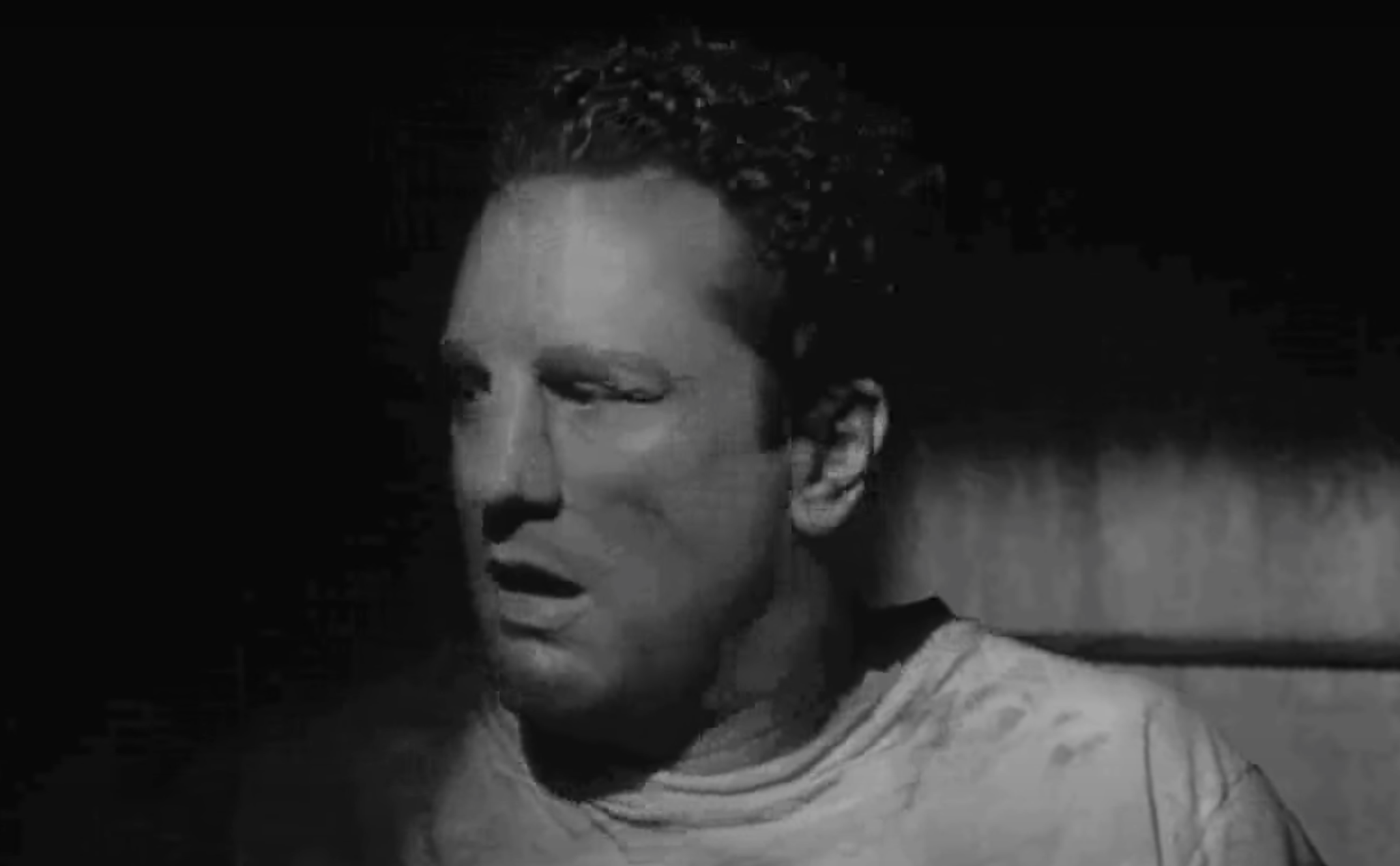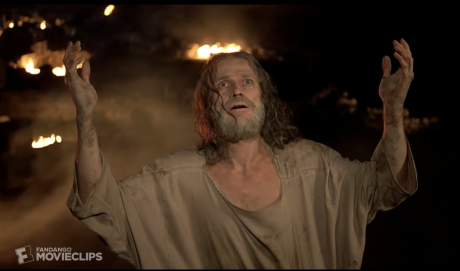


And 100% proud of having crafted this identity or calling card or however you want to describe it.


Will RFK, Jr.’s reported independent presidential candidacy siphon away more votes from Trump or Biden? That is the question. Let there be no doubt that RFK’s alleged plan to become the new Ralph Nader or Ross Perot is a total dick move. Odious, self-aggrandizing, shameful.


I don’t regard most of moviedom’s stand-out female villains as odious or reprehensible. Because most of those that come to mind are cartoonish — broadly drawn, lacking any semblance of realism or subtlety…fiendish stereotypes, outlandish behavior, etc.
Glenn Close‘s Cruella DeVille, Margaret Hamilton‘s Wicked With of the West, Angelina Jolie‘s Maleficent are histrionic, flamboyantly written comic-book figures…satirical cliches, basically created for children.
In Get Out, I didn’t believe Alison Williams‘ evil racist girlfriend for one single millisecond. Kathy Bates‘ “Annie Wilkes” from Misery (’90) is another over-the-top fanatic. Even Louise Fletcher‘s Nurse Ratched isn’t “real” — she’s more of a personification of a drab and repressive system that stifles the human spirit.
If you eliminate the third-act murder of Neil Patrick Harris, Rosamund Pike‘s “Amy Dune” from Gone Girl is slightly more real-worldish; ditto Close’s Alex Forrest from Fatal Attraction, although Alex isn’t demonic as much as tragically demented.
Honestly? When you tabulate all the thousands of films I’ve seen, the female character I’ve despised the most in terms of actual life-resembling behavior is Diane Venora‘s “Liane” Wigand, the spineless wife of Russell Crowe‘s Jeffrey Wigand in Michael Mann‘s The Insider.
The 1999 drama depicts Liane as a shallow, insulated security queen who leaves the embattled Wigand, taking their kids with her, when the going gets too tough.
Sidenote: Liane is a fictional creation — 23 years ago the ex-wife of the actual whistleblower, named Lucretia Nimocks, told N.Y. Post journalist Jeane MacIntosh “that’s not the way it happened at all.”
Liane is at the top of my list because I regard cowardice and disloyalty as the most abhorrent human qualities on the planet earth.

Bradley Cooper‘s Maestro (Netflix, 11.22) is an even-steven two-hander about the occasionally turbulent marriage between conductor-composer Leonard Bernstein (Cooper) and Felicia Montealegre (Carey Mulligan). Both are obviously playing leads.
I still haven’t seen it, but performance-wise the buzz since Venice has been that Mulligan decisively outpoints Cooper.
Netflix’s Maestro one-sheet clearly states that Mulligan owns the spotlight.
It sounds as if IndieWire‘s Ryan Lattanzio has seen the film, given that he’s written that “the show is stolen from Cooper by Mulligan.”
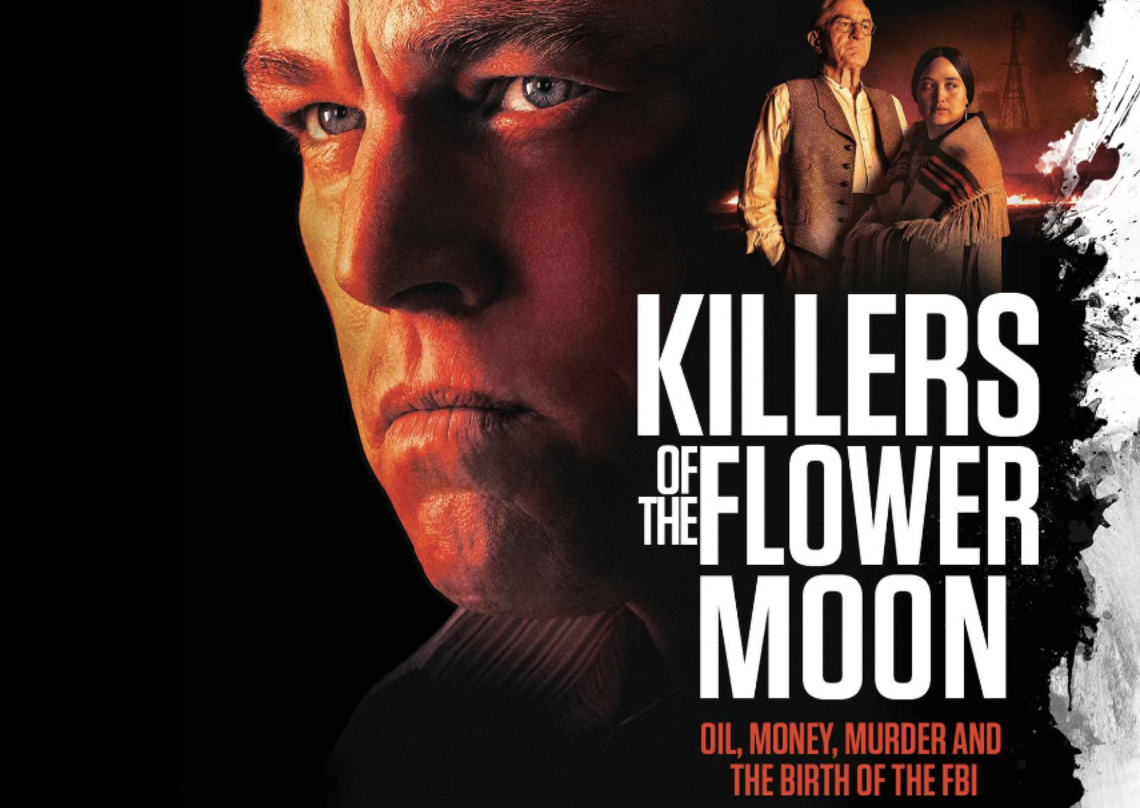
And yet two days ago Variety‘s Clayton Davis sugggested that Mulligan should go for Best Supporting Actress. This is advisable, he feels, because the competition from Killers of the Flower Moon‘s Lily Gladstone is too formidable.
Davis doesn’t mention, of course, that Gladstone’s campaign is pretty much about the woke identity militia, and that her actual performance is no more than sufficient. She certainly has no “big” moments. I could even call it an underwhelming performance (i.e., she mainly just seethes and glowers and lies in bed during the film’s second half) but the woke mob would resort to their usual inferences.


This, thank God, is the beginning of the nascent “Stop Barbie!” movement. Enough with the Oscar talk, in other words. Nominations are fine but no above-the-line wins. It’s great that Barbie and Oppenheimer performed so well commercially, and in so doing revived the relative fortunes of exhibition. But c’mon, seriously…calm down on the Oscar front.

“There were two actors who managed to perform in The Ten Commandments without disgracing themselves — Yul Brynner and Edward G. Robinson. He realized the perverse comedy in the part of Dathan. DeMille was completely baffled by what Robinson was doing, and wanted to fire him. if it hadn’t been location shooting I suspect he would have.” — John Ellis on Facebook, recently.
HE comment #1: Every Robinson scene was shot on the Paramount lot — zero location work. HE comment #2: Charlton Heston didn’t embarass hiumself — he obviously knew a lot of what he was called upon to perform was swill, but he got through it with dignity. HE comment #3: Sir Cedric Hardwicke and Vincent Price also played their lines with perverse humor.

I don’t know when I’ll be able to stream Woody Allen‘s Coup de Chance. A streaming bootleg will probably be available before too long, but I’d love to catch it in a nice theatre somewhere. Alas, the #MeToo Stalinists won’t permit it.
How does it feel to suppress art, guys? To still the beating of a pulse? I’ll bet it burns your ass that Woody is alive and thriving.
The new #WoodyAllen film #CoupDeChance opens in France Sept. 27th. Great poster. pic.twitter.com/r43o5gjrDt
— Whit Stillman (@WhitStillman) September 24, 2023
Phillip Noyce‘s Fast Charlie will have its big debut at the Mill Valley Film Festival debut on Saturday, 10.7. Screening invites and links have been received.
I became a fan after catching it at a buyer’s screening during last May’s Cannes Film Festival.
It’s half of a laid-back, settled-down relationship drama between Pierce Brosnan‘s Charlie, a civilized, soft-drawl hitman who loves fine cooking, and Morena Baccarin‘s Marcie, a taxidermist with a world-weary, Thelma Ritter-ish attitude about things. And half of a blam-blam action thriller.
There’s a suspense scene involving a hotel laundry chute that I’m especially taken with.
A trailer will hit in a month, or just after the MVFF debut.
Fleetly performed by Brosnan, Baccarin, Gbenga Akinnagbe and the late James Caan in his final performance, Fast Charlie is….ready?…a mature, unpretentious, character-driven, action-punctuated story of cunning and desire (not just romantic but epicurean) on the Mississippi bayou. Four adjectives plus gourmet servings.
The Brosnan-Baccarin thing reminds me of Robert Forster and Pam Grier in Jackie Brown. Sprinkled with a little Elmore Leonard dressing. One of those smooth older guy + middle-aged woman ease-and-compatibility deals.
Richard Wenk‘s screenplay, adapted from Victor Gischler‘s “Gun Monkeys,” is complemented by cinematography by Australian lenser Warwick Thornton (director of The New Boy).


I’m sorry but every time I listen to the brief conversation between James Cagney‘s “C.R. MacNamara” (inspired by then-Defense Secretary Robert McNamara?) and the painter guy, I bust out chuckling. It happens between 2:12 and 2:19.
“We had to go with Cagney because Cagney was the whole picture. He really had the rhythm, and that was very good. It was not funny, but the speed was funny…the general idea was, let’s make the fastest picture in the world…and yeah, we did not wait, for once, for the big laughs. — One Two Three director-writer Billy Wilder talking to Cameron Crowe.
I feel sorry for any guys out there who’ve never known the deep pleasure of walking around with a serious, old-fashioned, heavy-leather gun belt, holster and Shane-style six-shooter.
I’m not talking about some cheap-ass, nickel-and-dime, half-plastic gun belt and six shooter cap pistol that you might’ve worn as a kid in the ’50s, ’60s or ’70s. (I don’t know when seven-year-old kids stopped pretending to be cowboys, but it was probably in the mid ’70s when Star Wars came along.) I’m talking about the kind of hand-crafted, real-deal rigs worn by Alan Ladd in Shane, Gregory Peck in The Gunfighter, John Wayne in Stagecoach and Red River, Burt Lancaster in Vera Cruz, Ricky Nelson in Rio Bravo, Gary Cooper in High Noon, Marlon Brando in One-Eyed Jacks, etc.
I strapped on a serious western leather rig on a movie set back in the late ’70s or early ’80s (I forget the details) and I’ve never forgotten the glorious manly feeling…the smell of well-oiled leather, the weight of those iron guns, those thigh straps, those bullets tucked into the bullet holders…all of it.


“Red River D,” posted on 12.28.22:
There’s something hugely joyful about reuniting with my mail-order John Wayne Red River brass belt buckle. The fact that I’m happy to once again have it in my possession means, of course, that I’m just as much of a racist swine as Wayne was during his lifespan, and has nothing to do with my loving the 1948 Howard Hawks western (which, as the buckle points out, was actually shot in ‘46).