Deep Blue

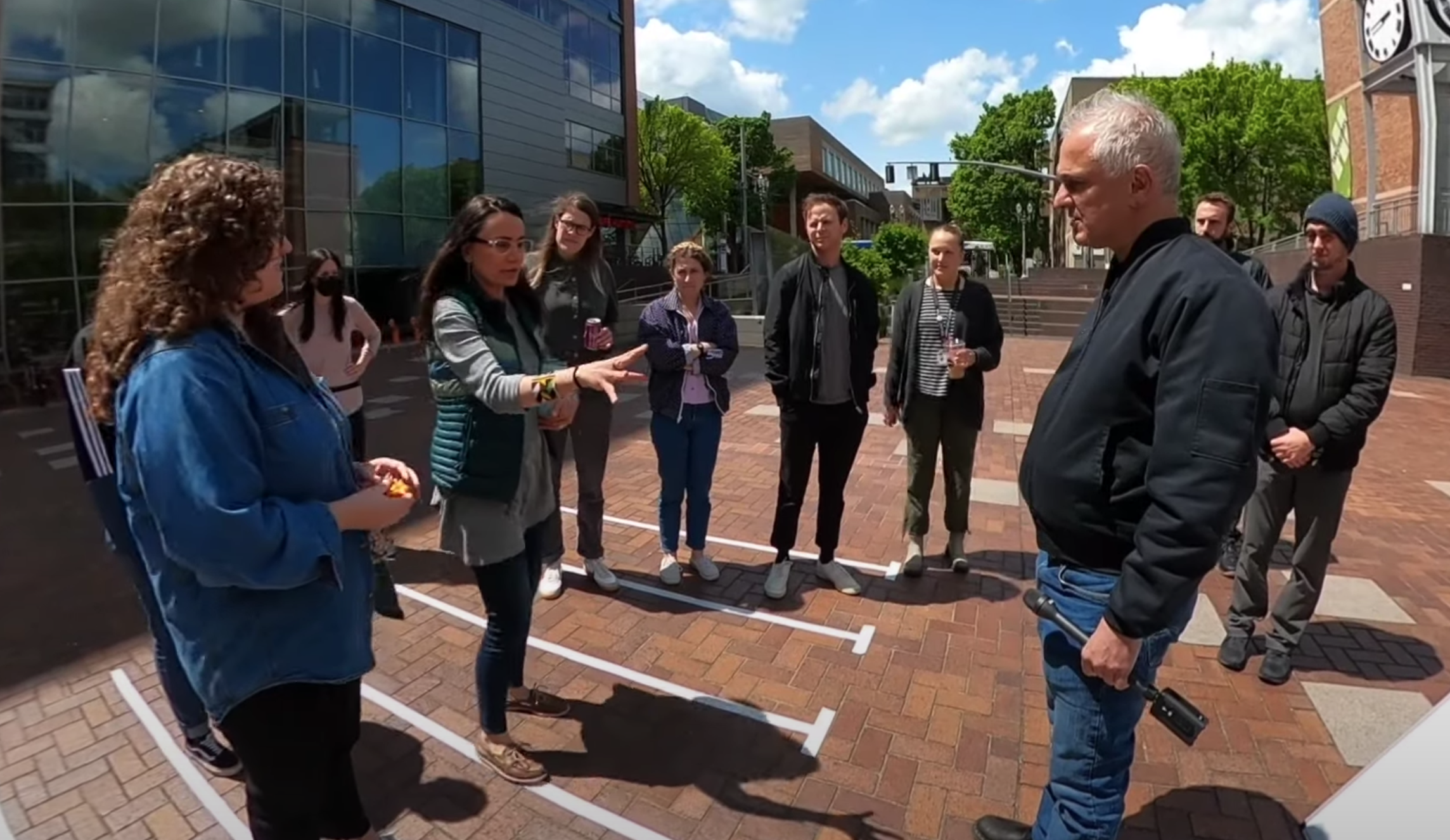
I’ve been struggling in this town for nearly 40 years, and perfect days are rare. Climate-wise, I mean. Flooded with sunshine, warm but not too warm, deep blue skies, magnificent white clouds, a gentle breeze in the air. Today is a perfect day, and about an hour ago I did something very unusual. I stood on a street corner and stared up at the sky and went “wow,” and then took a couple of snaps.

If Los Angeles were like this half or even one-third of the time, people would feel differently about it. I would honestly say that this kind of day happens maybe two or three times per month in the mid-to-late spring, but no more than that.

Read more

Depp Lays It Down

I was a tad irked by Johnny Depp‘s testimony today. Not by what he said but that he spoke so slowly, at times haltingly. He certainly wasn’t loquacious. He seemed to struggle to remember stuff or to find the right words, although he eventually pulled it together.

Depp on the arc of his relationship with Amber Heard: “From what I recall, what I remember, she was too good to be true. She was attentive, she was loving, she was smart, she was kind, she was funny, she was understanding. We had many things in common”, and for the first 12 to 18 months Heard was”wonderful…it was amazing. And then things just started to change — or things started to reveal themselves, is a better way to put it. She became another person, almost.”

When you fall in love and move in with someone, you always put on your best face at first. But within the first year or so, the real inner person always comes out. Sometimes it emerges within three or four months; it depends. But sooner or later, the “act” falls away.

We All Live In A Geodesic Dome

This is a nice Cannes Film Festival poster, but Peter Weir‘s The Truman Show (’98) is no masterpiece. I disliked it from the get-go. Jim Carrey‘s “Truman Burbank” is unaware that he’s living inside a corporate-funded, hermetically-sealed reality TV dome. This is what modern life feels like to tens of millions of actual Americans, of course, so we all get the metaphor. But I found the premise impossible. Complete disengagement.

I’ve posted the following two or three times over the last decade, but here goes again: Despite the impossible-to-swallow premise, The Truman Show could have saved itself if it had gone with a darkly ironic ending.

Weir’s film ends with Truman escaping from the dome and finally about to experience the blessings and pitfalls of real life…hallelujah! A far more satisfying ending would have been for Truman to escape into the real world and then, after a few difficult weeks or months, returning to the dome because he can’t hack the difficulty of real life — too much anxiety, trauma and heartbreak.

The final scene would show Truman embracing Ed Harris‘s “Cristof” and Laura Linney‘s “Hannah Gill” and shedding tears of joy at being able to return to the shelter of Fake World — a realm that tens of millions of actual Americans live in today.

Beatty’s Sound-Mix Story

I’ve been looking for this hilarious story on YouTube for ages. It’s from George Stevens A Filmmakers’ Journey (’85), and nobody’s ever posted it. It’s funny because it reminds us that no matter how divine the inspiration and how arduous and exacting the effort to make the movie turn out right, the last guy on the delivery food chain can still screw it up. From Shane to Bonnie and Clyde to a projectionist’s booth inside London’s Warner cinema.

Read more

“Talk of the Town” Given Bum’s Rush…Again

George Stevens: A Filmmaker’s Journey (’84), an illuminating study of the legendary director of Gunga Din, A Place in The Sun, Shane, Giant and The Diary of Anne Frank, is one of my all-time favorite biographical documentaries.

Directed by Stevens’ illustrious son George Stevens Jr., a long-time pillar of the Hollywood community who recently celebrated his 90th birthday, the 110-minute doc teems with familial warmth, first-hand recollections and classic Hollywood bon ami.

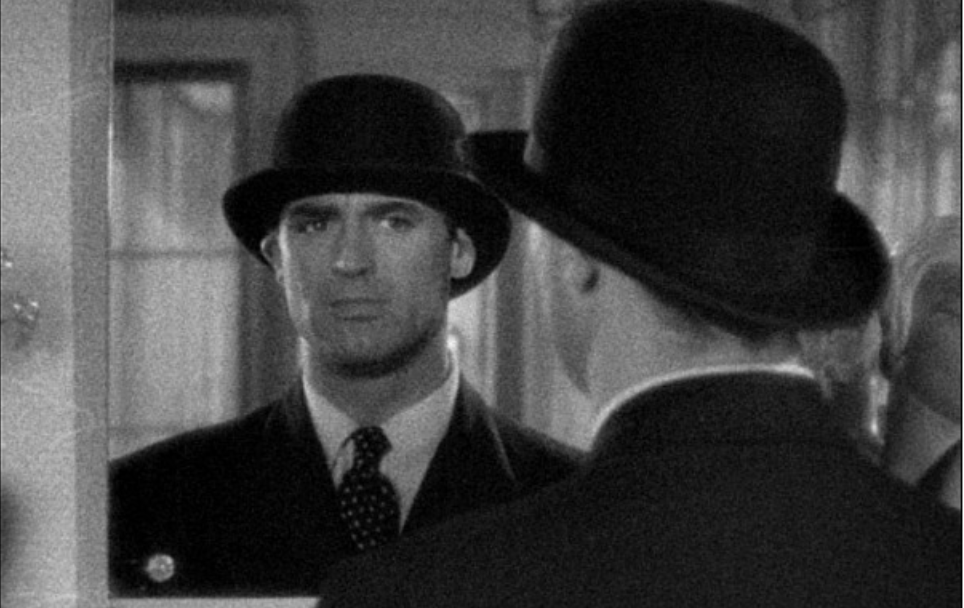
I first saw it at an Academy screening in March of ’85. (Or so I recall.) It was a huge moment for me personally in that I was able to shake hands with Cary Grant during the after-party. Grant had starred in three Stevens filmsPenny Serenade (’39), Gunga Din (’39) and The Talk of the Town (’42). And yet, oddly, the doc had skipped over the latter effort, a pro-labor, anti-ownership political comedy that costarred Jean Arthur and Ronald Colman.

During my 25 or 30 seconds of Grant time I started to mention my disappointment and slight puzzlement about The Talk of the Town‘s absence in the doc, but them someone else butted in and I lost the moment.

Flash forward 37 years to last night, when I read a little less than half of Stevens, Jr.’s “My Place In The Sun” (University Press of Kentucky, 5.17.22), a memoir and TV a first-hand witnessing of so many fascinating and legendary Hollywood moments.

I had hoped that, being a book and all, it would provide the kind of microscopic observational detail that George Stevens: A Filmmakers Journey had been obliged to leave out.

As a longtime fan of The Talk of the Town, I was especially hoping to read something fresh or novel about the dynamic between his dad, Grant, Colman and Arthur. Any intimate details about the making of this Oscar-nominated Columbia release would have sufficed. But George barely mentions it.

Here’s what he says:

It’s fair to say that between omitting any mention of The Talk of the Town in his 1984 documentary and giving it a lousy 48 words in his new memoir, George Stevens, Jr. is not a huge fan.

I would say, in fact, that “My Place In The Sun” is not what anyone would call an exacting, deep-drill, no-holds-barred memoir. It’s very well written and heartfelt at just the right pitch, but also tidy and proper — it’s the story George wants to tell but perhaps not (all of) the story that actually went down, warts and all. But it’s fine.

It seemed obvious from the style and tone of the book that Stevens would never in a million years mention The Great Shane Aspect Ratio Bluray Skirmish of 2013 — a conflict that happened between March and April of that year, and which the honorable Joseph McBride lent his support to and which Woody Allen probably decided when he allowed me to post his views on the matter.

A friend who’s read the entire book says that the Shane aspect-ratio episode isn’t mentioned. Which makes sense. Leave well enough alone.

By any measure it was a bizarre chapter in which Stevens, Jr. advocated (or at least defended) the issuing of Warner Home Video’s Shane Bluray with a 1.66:1 aspect ratio, which the film was not shot in during the late summer and fall of 1951.

Many of us were appalled by the 1.66 thing — a cleavering that would have unmistakably compromised Loyal Griggs‘ original compositions. As we all recall, Warner Home Video ultimately folded and decided to issue the Shane Bluray in the original 1.37:1 aspect ratio. All’s well that ends well.

25 Years Later, Same “Edge” Problem

The Edge (’97) is a rugged Alaskan wilderness survival drama, and more precisely about three two men vs. one badass Kodiak bear who wants to maul and eat them.

Initially it’s about three guys who’ve crash-landed in a remote Alaskan lake — aloof billionaire Charles (Anthony Hopkins), smart-ass photographer Bob (Alec Baldwin) who’s been secretly schtupping Charles’ wife Mickey (Elle MacPherson), and Bob’s assistant Steve (Harold Perrineau).

But Steve gets killed by the bear early on (25 years ago non-white supporting players always died first in action films), and then it’s down to Hopkins vs. Baldwin and the jealousy-cuckold-greed dynamic.

The film is therefore propelled by two major conflicts — (a) the bear vs. Charles and Bob, and (b) Charles vs. Bob over Mickey, and more particularly Bob in Act Three wanting to kill Charles so he can marry Mickey and live like a rich guy.

But here’s the thing: Charles and Bob may dislike or even hate each other during a good part of the film, but they also go through a series of what you might call “survivalist epiphanies.”

What transpires between them in terms of trust, selflessness and fighting the bear together is far more profound, they realize at the end, than Baldwin wanting to continue fucking MacPherson and perhaps living off Charles’ money if and when he dies.

The Edge, in short, should have been about Baldwin’s abrasive, greedy asshole photographer learning that there are greater and more transformative things than great MacPherson sex and loads of dough. Bob and Charles should have ended the film as brothers who are much closer to each other than either one has ever been to MacPherson.

There should have been a scene in which Baldwin admits to Hopkins that he’s boning MacPherson, but adding “are you gonna stay with her after all this? I wouldn’t. I mean, I didn’t betray you, Charles…she did. You and I are fine. She’s the problem.”

The Edge premiered at the 1997 Toronto Film Festival. Director Lee Tamahori, screenwriter David Mamet and producer Art Linson all gave interviews. I can’t recall if I interviewed Mamet then or at some later point, but I definitely recall explaining my alternate Edge ending.

The best part in the whole film is when Hopkins mentions how some people who’ve become accidentally stranded in the wilderness wind up “dying of shame.”

If The Edge was made today, Perrineau’s character would be the strapping boyfriend of MacPherson as well as the one who survives to threaten Hopkins life at the end. Baldwin, a disposable white guy with an alcohol problem, would be killed by the bear early on.

IMDB: “In his memoirs, Alec Baldwin put much of the blame of the movie underwhelming performance at the feet of director Lee Tamahori, who he believes watered down David Mamet’s script and was more interested in action than character.”

Caan’s “Godfather” Air-Punch Repaired!

This morning I mentioned The Godfather‘s second-act beating scene in which Sonny Corleone (James Caan) laughably air-punches Carlo (Gianni Russo). There’s no missing the mistake (between 2:05 and 2:10) because the shot is perfectly positioned to catch it — a nice clean side-angle. And it’s so distinct that it takes you right out of the film.

Not long after HE regular DTHXC_1138 fixed it, and he did so within a minute or two. An hour ago he uploaded it to YouTube. Excellent job! Now it looks right — Sonny is actually punching Carlo now.

The original air-punch is in the second YouTube clip, of course — the one that runs for 3:11. DTHXC_1138’s digital correction (four seconds) is clickable on top.

Gottfried The Magnificent

The monumental Gilbert Gottfried, a comic surrealist of the highest order and a onetime Hollywood Elsewhere follower (back in ’05, that is, when I was writing with great fervor about Gilbert’s astounding telling of the Aristocrats joke) has passed after a long illness.

The poor guy, whose stock in trade was elevating manic-bawdy tastelessness into a Picasso-level art form, was only 67.

The wokesters will never admit it, but they’re almost certainly delighted that Gottfried’s voice has been stilled. Gottfried in his heyday represented the kind of rude, ridiculous, no-holds-barred and totally brilliant humor that wokesters live to despise and suppress.

Posted on 9.14.17: The idea in this Gilbert Gottfried doc is that you can present an agreeable, relatively mellow front with your friends, pets, neighbors and family members, and then become (i.e., revert to) a somewhat more pointed and aggressive personality when you’re “on” — performing, writing, acting or what-have-you. To some extent all writers and/or performers understand this dynamic.

Read more

“Did You Not Hear Me?”

Respect for the late Kathy Lamkin, the No Country for Old Men trailer park manager who took no shit from Javier Bardem’s Anton Chigurh. Joel and Ethan Coen wrote and directed this classic scene, of course, but Lamkin’s tough steely demeanor made it work. The 74 year old actress, a resident of Pearland, Texas, passed on April 4th.

Side note: Autocorrect just suggested that the last name of Bardem’s character should be changed from Chigurh to Chihuahua — Anton Chihuahua.

More Sunset Strip Corporatism

A year or two from now a large, rectangular, 12-storied, glass-walled building (business + residential) will arise on the south side of the Sunset Strip — 8850 Sunset Blvd.. Right across from Panini, an Italian pizza take-out place that I’ve been going to for decades, and bordered by Larabee on the eastern side and San Vicente Blvd. on the west.

No, they’re not destroying the Viper Room…well, they are but they’re re-launching or reconstituting it as a kind of corporate lounge rock-music club, or so it seems. The VR’s glowing shamrock green color (a trademark thing) will frame the entrance.

This morning a couple of older guys with a notepad and printed reading materials dropped by to solicit opinions about the forthcoming structure. I shared a few thoughts, using the words “soul-less” and “rancid” and “corporate-feeling”, etc.

After they left I posted the following on the 8850 website:

“The proposed (and almost certainly forthcoming) 8850 Sunset Blvd. structure will be, to go by your illustrations, another moderately ugly and soul-less office building that will (what else?) degrade the aesthetic atmosphere of the Strip. All of that glass looks so synthetic, so humdrum, so similar to tens of thousands of other office + residential buildings all over the world.

“Imagine if, say, Frank Gehry had been hired to design it. Or a disciple of Gehry’s. I have no ideas myself, but a less conventional Gehry-ish design would probably feel a bit more fitting, given the uptown vibe and all.

“It’s L.A. buildings like these that make visiting the historical sections of London, Paris, Rome, Florence and Prague such transporting experiences. Over there they respect history and classic architecture and keeping in touch with the past. Then again this part of the Strip hasn’t been anything to architecturally shout about for decades.

“The upside is that the building will offer affordable housing to a certain number of low-income citizens (less than $40K or $45K annually), and that’s a good thing. Plus they’re going to include a space for the Viper Room, which unfortunately will lose the coal-black exterior and a ton of other atmospheric touches, but at least will still ‘exist’, so to speak.”

Follow-up: If I were calling the shots I’d insert a kind of Hollywood Walk of Fame marble sidewalk square that commemorates River Pheonix, who died in front of the Viper Room on 10.31.93.

For the usual expedient reasons the people behind this project are pretending to be interested in what average WeHo residents think about it. I don’t know why I just wrote this. The fix is in. What’s next, the destruction of Book Soup?

Read more

Oddly Touching

Variety‘s Clayton Davis has never been to Europe much less to the Cannes Film Festival, but that’s about to change next month. Congrats and safe travels.

HE to Davis: Your tickets are already purchased, you’ve said, but I’m hoping that you’ve arranged to schedule a brief stop-over in Paris (which you’ve also never visited) on the way back. After every Cannes Film Festival I’ve attended (my first was in ’92) I’ve always downshifted in Paris, Rome, Prague, Berlin, Barcelona, Lauterbrunnen, London, Ireland, etc. It would be almost sinful, I feel, to ignore this post-Cannes opportunity. But that’s me.