
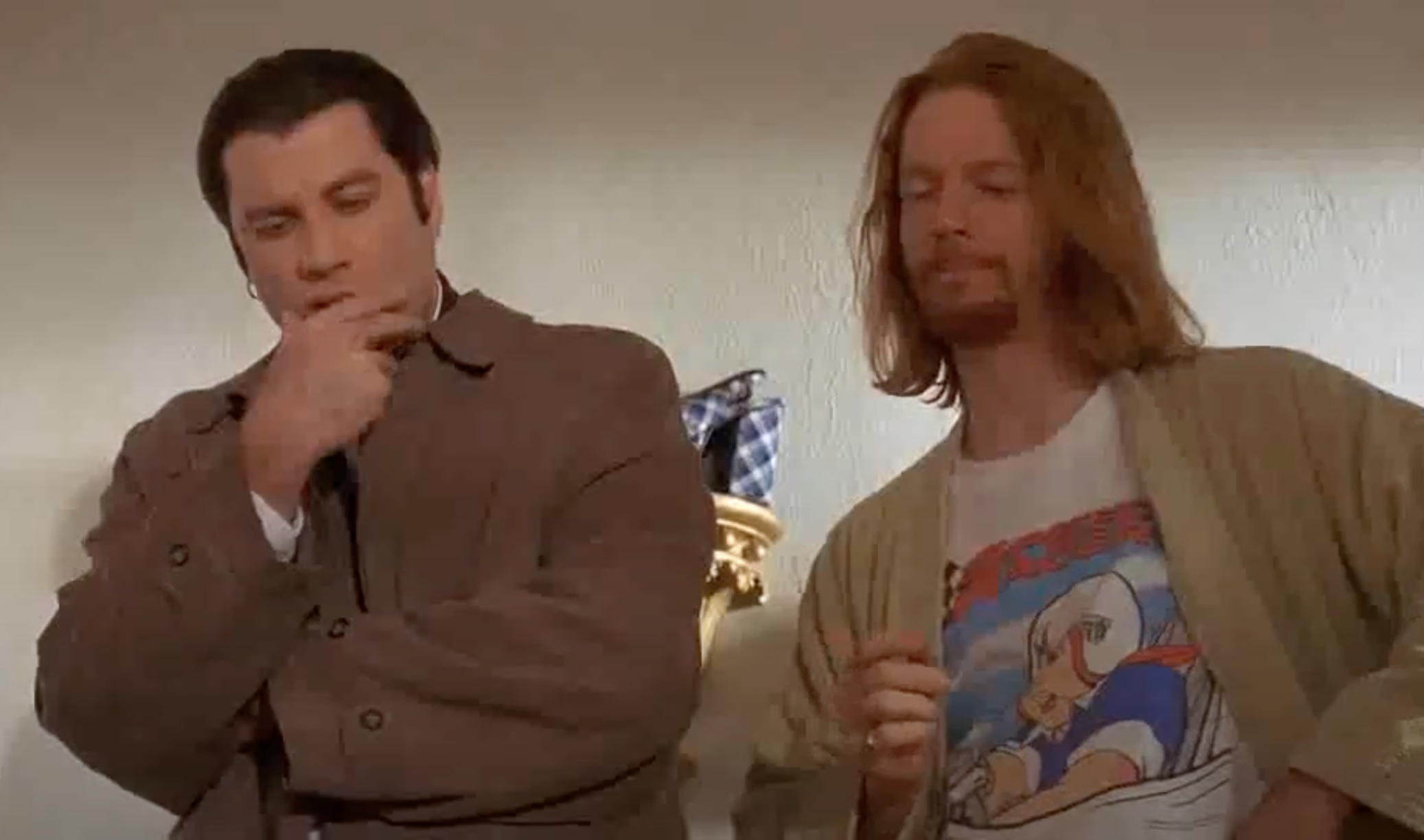
An excellent dealing scene (John Travolta and Eric Stoltz are a great team) but the dialogue between 2:45 and 2:56 is, like, way out of bounds according to 2021 standards. Even by Quentin Tarantino standards. Flirting with the realm of Joe Rogan’s Planet of the Apes story. The early ’90s were the early ’90s.
slider
The Awkwafina “Blaccent” Thing
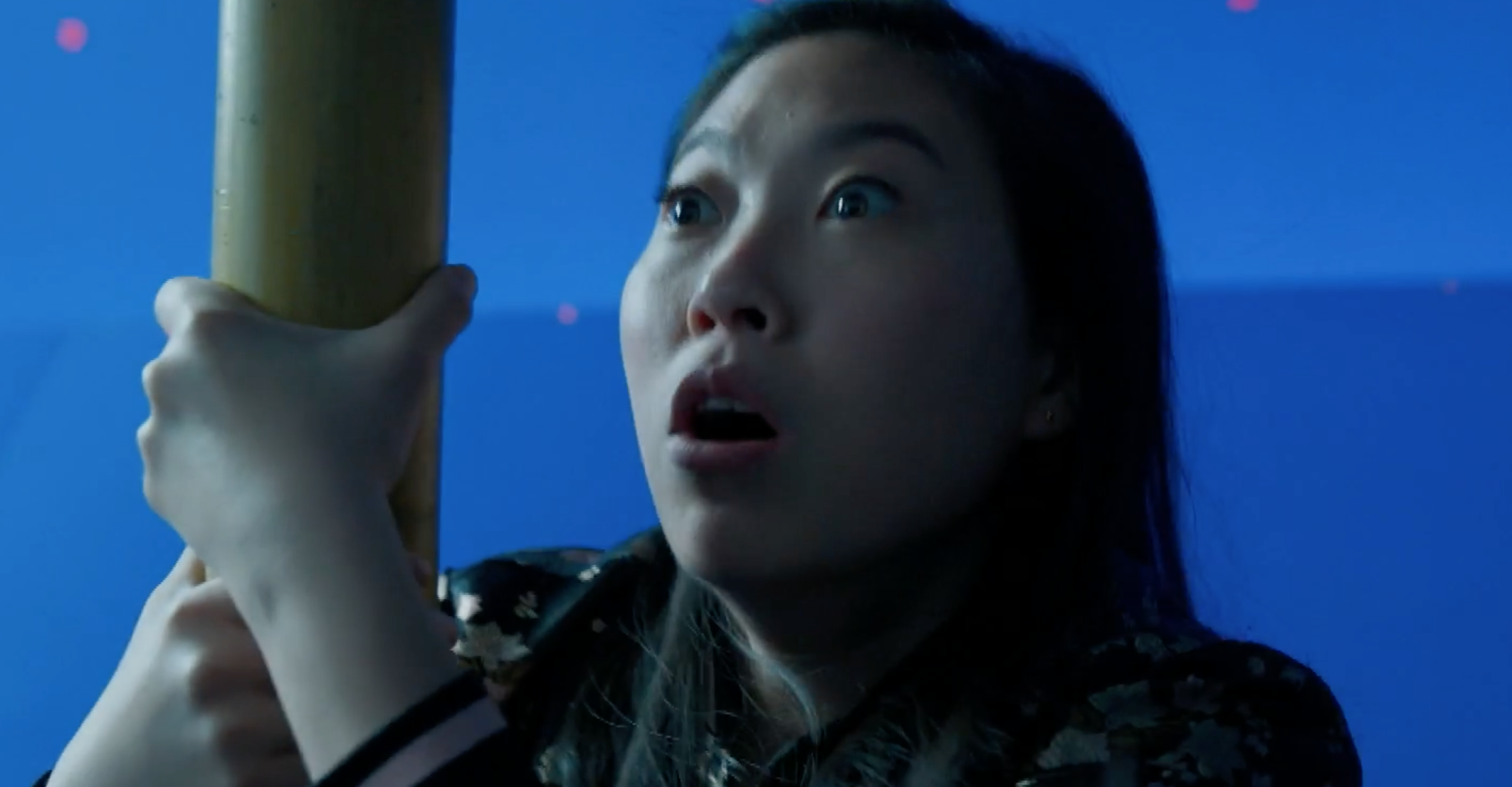
Not too long ago the NAACP Image Award guys nominated Awkwafina for an “Outstanding Character Voice-Over Performance,” partly for her doing a Black-speak thing. In formal professorial terms, Awkwafina’s crime is/was appropriating or making fun of African American Vernacular English, or AAVE**.
After being slapped around by humorless wokester scolds (particular Women of Color Unite founder Cheryl Bedford) for using a Blaccent for comic effect, Awkwafine has basically said ‘y’all can go fuck yourselves, and Twitter can blow me.”
Awkwafina: “Well, I’ll see you in a few years, Twitter — per my therapist. To my fans, thank you for continuing to love and support someone who wishes they could be a better person for you. I apologize if I ever fell short, in anything I did. You’re in my heart always.
“[But] I am retiring from the ingrown toenail that is Twitter. Not retiring from anything else, even if I wanted to, and I didn’t drunkenly hit someone with a shoehorn and now escaping as a fugitive. Also am available on all other socials that don’t tell you to kill yourself!”
Twitter is a sewer.
** formerly known as Ebonics
“Where’s The Horizon Line?”
“No, dumbass, it’s not in the center. It’s NEVER in the center. I thought you said you knew a thing or two about framing landscape shots. God, are you some kind of fucking Arizona dumbass?”
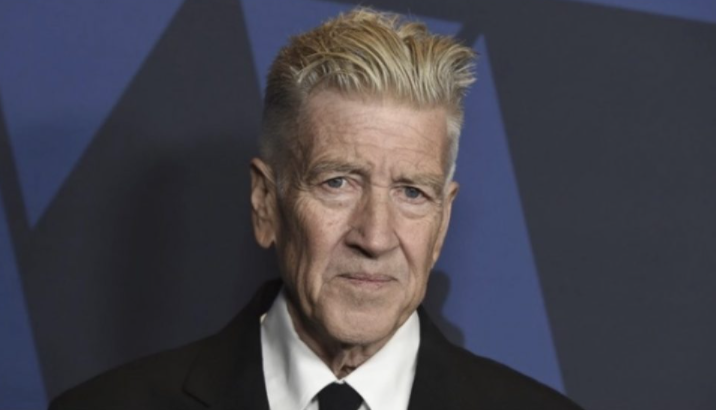
David Lynch is supposedly playing the snarly, blustery John Ford in Steven Spielberg’s The Fablemans, according to Rodrigo Perez.

A “thirtysomething” for Millennials
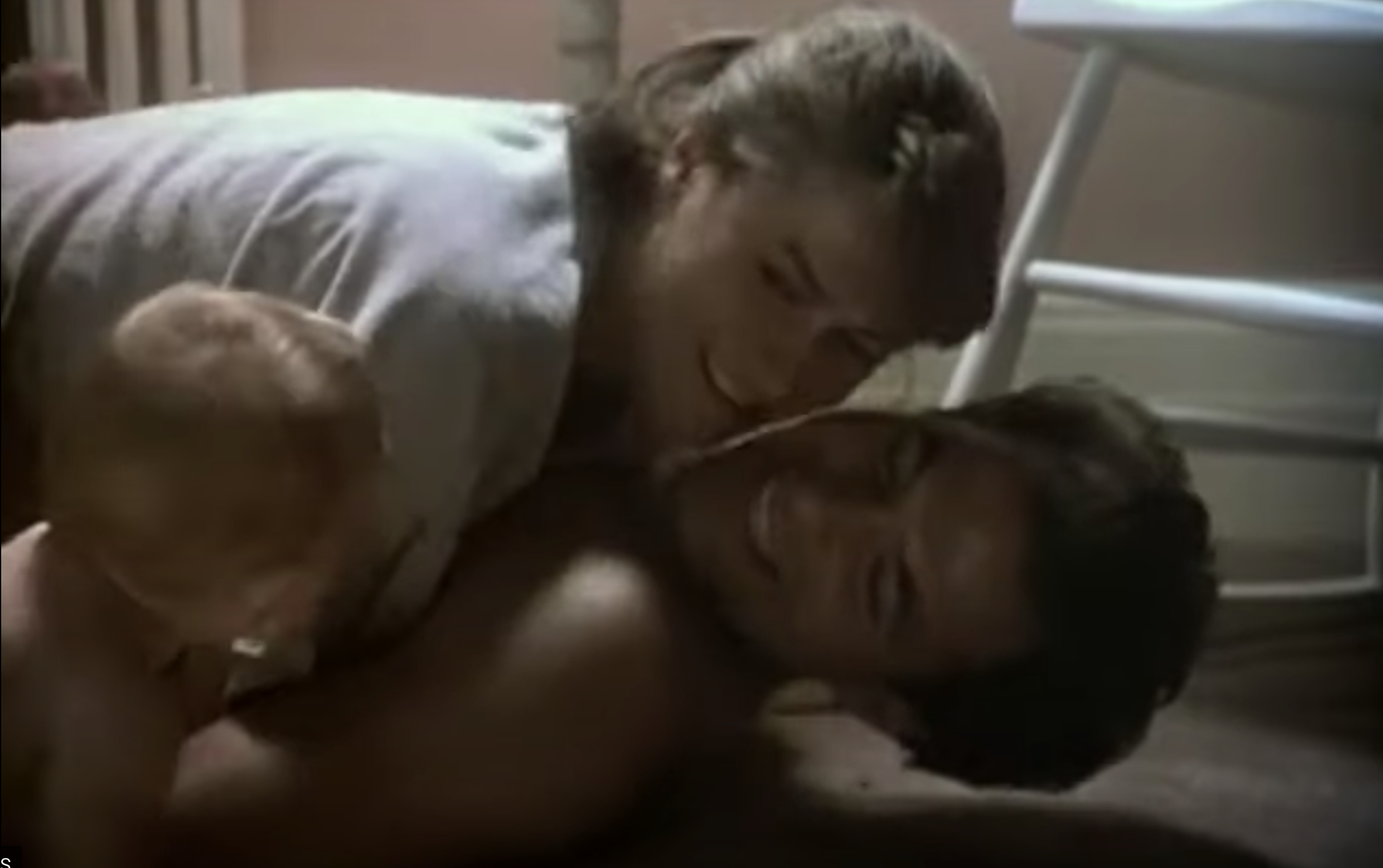
What about a relaunching of thirtysomething, only focusing on child-rearing, home-owning Millennials and to some extent Zoomers? If the producers could keep it real and really drill down on the particulars and undercurrents of life among professional-class people attempting to live more or less conventional lives in the early 2020s (like Jett and Cait are doing right now), it might work. The cast would have to be at least 50% non-white, of course, but we’re all accustomed to that enlightened system and embracing of the here-and-now. What does the HE community think? Yes, it should be called thirtysomething…straight, no apologies, un-ironically.
“Late ’80s Yuppie Blues,” posted on 8.22.09:
I always felt that thirtysomething, the zeitgest-reflecting, essential-viewing yuppie series that ran from 9.87 through 5.91, was too sensitive-wimpy.
As honestly written and impressively acted as it often was, the show suffered from an almost oppressive self-examination syndrome — a constant exercise in fault-finding and angst exploration — among its boomer characters and their difficulties in managing and/or growing into adulthood and parenthood. To varying degrees everyone on the show wore a hair shirt, suffered or caused suffering, and was afflicted (if not wracked) with self doubt.
I forget who said “an unexamined life is not worth living” but thirtysomething sure as hell put the wisdom of that statement to the test. The women (Mel Harris, Melanie Mayron, Patricia Wettig, Polly Draper) were constantly fretting and kvetching over some crisis of the spirit, the bedroom, the bankbook or whatever. Always something darkening, taunting or haunting their brow.
And the guys especially (Ken Olin, Timothy Busfield, Peter Horton) — those poor Hebrew rock-pounders, bent and sweating under Pharoah’s lash! — were always being busted, picked apart and de-balled for this and that profound failing.
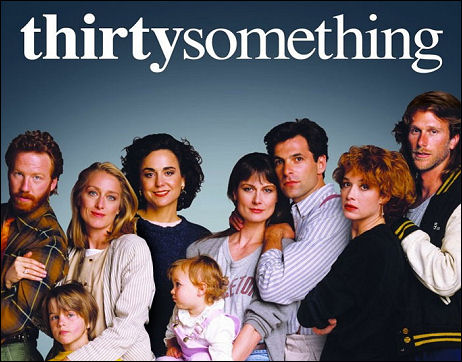
(l. to r.) Timothy Busfield, Patricia Wettig, Polly Draper, Mel Harris, Ken Olin, Melanie Mayron, Peter Horton.
I hated Harris’s character, Hope (who played Olin’s wife), most of all. I remember being told by a cast member in ’88 that Hope was referred to by others on the show as “mope.” Everyone hated her. I’m certain she brought tens of thousands of watchers down every week. For all I know she may have inspired real-life fights, separations, divorces. (Or maybe people saw her personality as a cautionary tale and tried to be unlike her as much as possible.) Either way she was a huge drag to be around.
I related to what the show was, of course. I began watching just before getting married to my ex-wife Maggie in October 1987. and we both both became fairly devout fans (Maggie wore a gray “thirtysomething” t-shirt that I bought her) until the end of the run, during which time Jett came along in June 1988 and then Dylan in November 1989. It wasn’t a portrait of our marriage in every last respect, but there were certainly echoes.
And it happened during the bulk of our time together (we split up in the fall of ’91) so it became — in my head, at least — a kind-of running commentary on not just our life but all yuppie life in the late Ronald Reagan and George H.W. Bush years and yaddah-yaddah.
And that’s what we were, all right — 30ish yuppies with kids and two cars living a nice Los Angeles life. We lived in the top half of a house in the West Hollywood hills (with a great view) and then in a nice Spanish home in Venice. We did volunteer work for Michael Dukakis. We took our kids to Gymboree. We threw parties about twice a year, and often flew east to see the parents (or we hosted them in LA). In Venice we had a backyard jacuzzi, a brick patio and an ivy-covered privacy wall.
Greatest Supporting Actor Soliloquy of All Time?
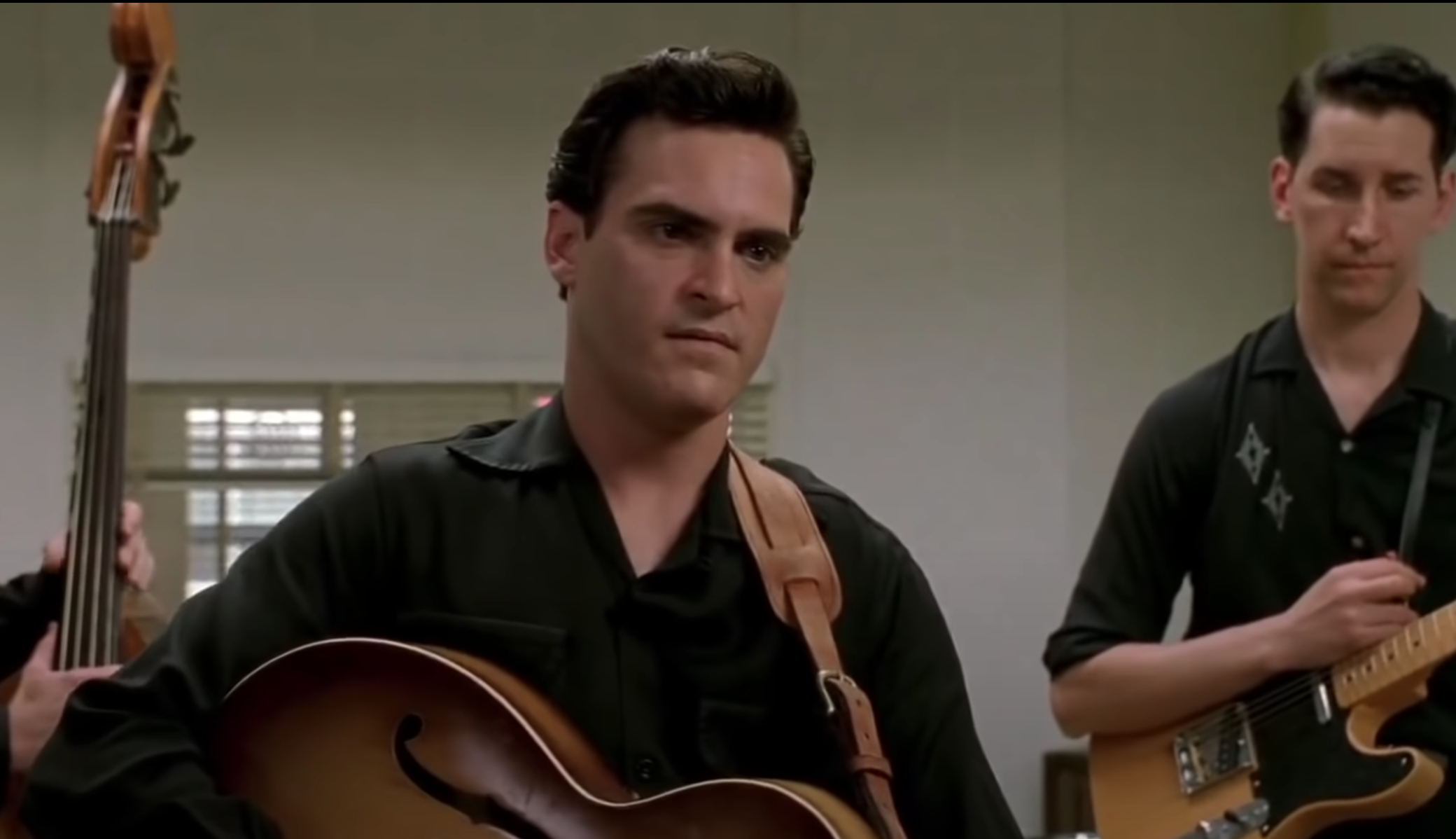
The clip below contains one of the greatest statements about artists and performers needing to tell it straight and true, and how this and this alone is what saves people. The actor is Dallas Roberts, and the speech lasts between 1:20 and 2:40 — one minute and 20 seconds — and I could watch it each and every day from now until the day I die. And upon these few words hang all the law and the prophecies. The only thing that doesn’t work is Joaquin Phoenix‘s mournful moaning voice, which doesn’t sound at all like Johnny Cash. But other than that…
Never Stop Dumping on “Gump”
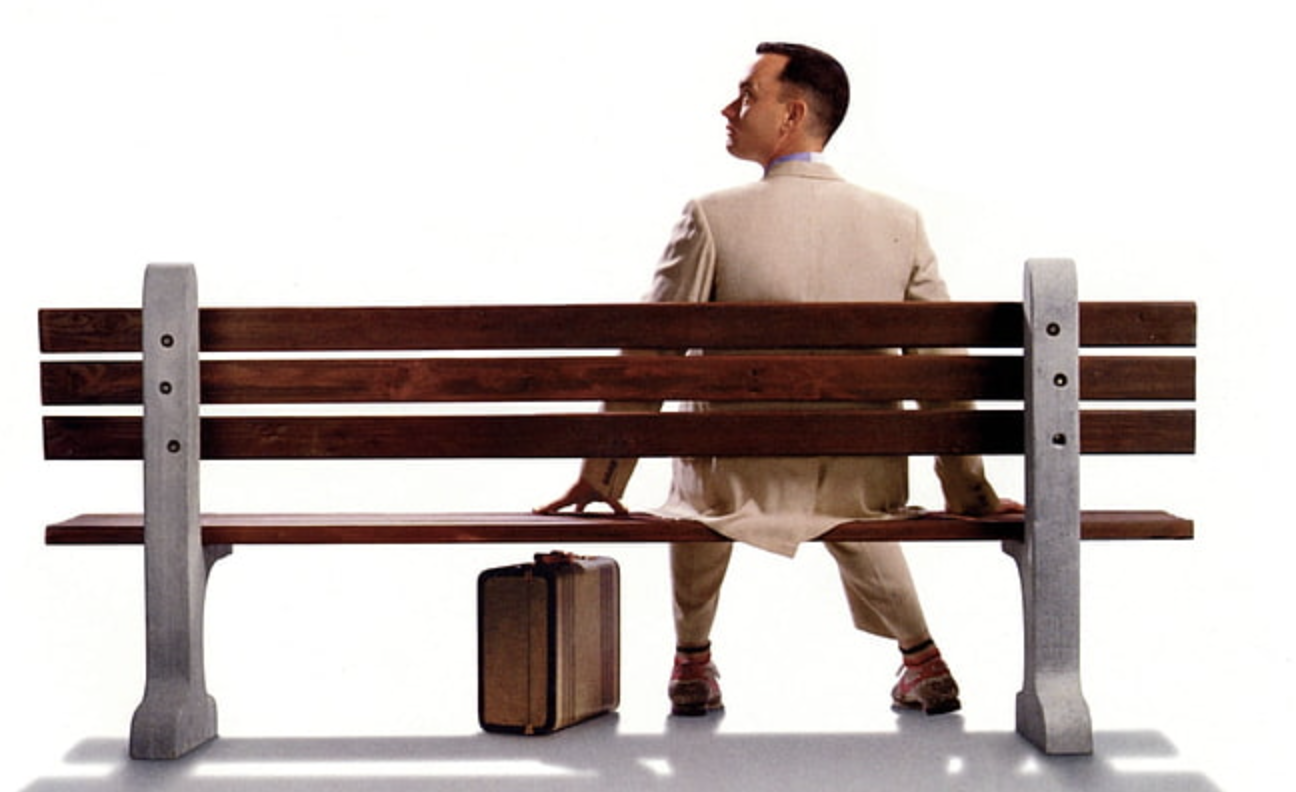
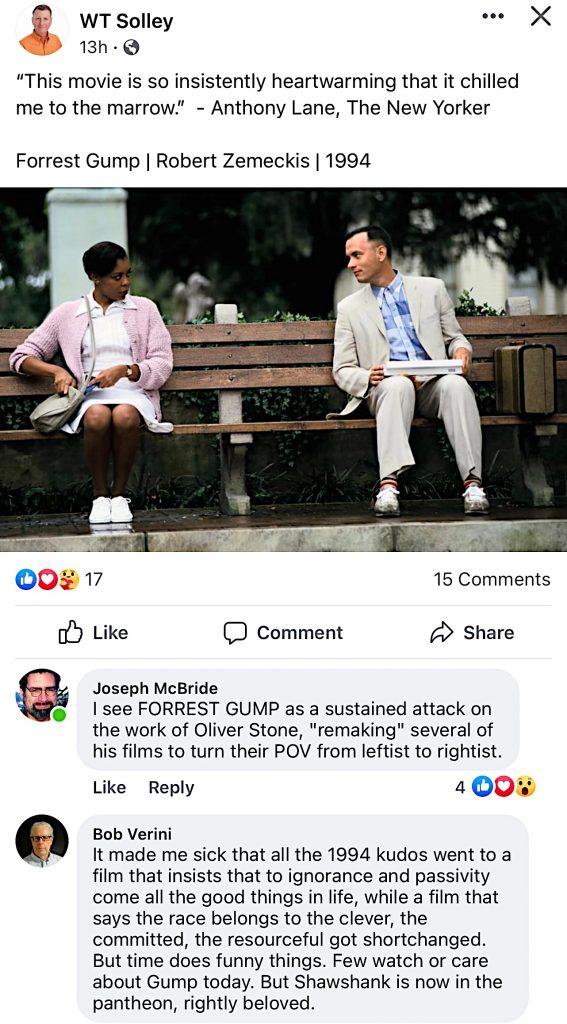
I’ve been expressing contempt for and disapproval of Forrest Gump for over 27 years. My first hit piece, “Gump vs. Grumps,” was written for the L.A. Times Syndicate in late ‘94. The first HE post that deplored this homespun Robert Zemeckis-Tom Hanks fantasy appeared in ‘08. WT Solley’s anti-Gump Facebook rant appeared last night, and that got me going again.
Monica Vitti Sails Away
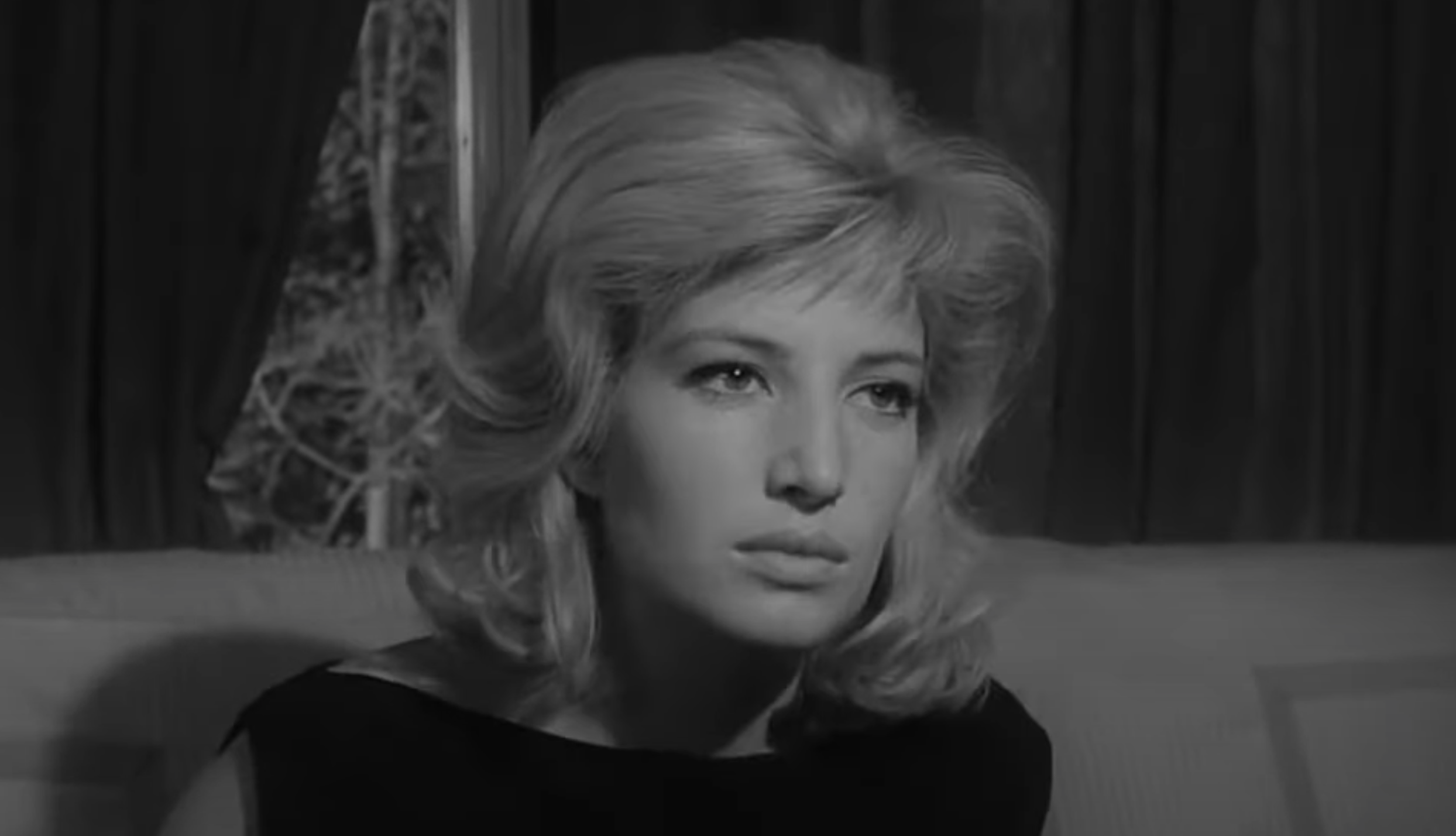
Six or seven years ago I began to assemble a list of the greatest lead performances in feature films, and Monica Vitti in L’Avventura was one of them, you bet.
The names that that came to mind off the top of my head were James Gandolfini in The Sopranos, Geza Rohrig in Son of Saul, Marlon Brando in On The Waterfront and The Godfather, Amy Schumer in Trainwreck (I’m dead serious), George Clooney in Michael Clayton, Gary Cooper in High Noon, George C. Scott in Dr. Strangelove, Mia Farrow in Broadway Danny Rose, Lee Marvin in Point Blank, Alan Ladd in Shane, Brad Pitt in Moneyball, Marilyn Monroe in Some like It Hot, Ben Kingsley in Sexy Beast and Betrayal, Jean Arthur in Only Angels Have Wings, Tilda Swinton in Michael Clayton, Phillip Seymour Hoffman in Capote and, last but not least, Vitti in…aww, hell, her entire Michelangelo Antonioni travelogue.
After 90 years and 2 months on the planet earth, Vitti has left for realms beyond. I’m very sorry but then again she really lived a life, particularly during her ultimate star-power and mesmerizing collaboration years with the great Antonioni — a five-year exploration comprised of L’Avventura (’60), La Notte (’61), L’Eclisse (62) and Red Desert (’64).
Were it not for this five-year chapter, we wouldn’t this day be praising Vitti to the heavens. She “lives” today because of Antonioni, and a significant reason for his own exalted early-to-mid-’60s rep is due to — owned by — Vitti’s allure.
In her Antonioni films Vitti always seemed to be thinking “is this all there is?” Or “my God, there’s so little nutrition…I’m sinking into quicksand, withering away…so little in the way or sparkle and joy…nearly every waking minute I’m consumed by the glammy blues.”
Yes, she laughed and loved in L’Ecclisse, but only briefly and anxiously and in a sense ironically. The African tribal dance sequence was the exception — a spoof, of course, but lively and sexy.
Born in 1931, Vitti was 28 or 29 at the beginning of her Antonioni period and 33 when their collaboration ended — no spring chicken even at the start.
From Adam Bernstein’s Washington Post obit: “Her willowy physique, husky voice, full lips and mane of sun–kissed blond hair gave her a raw sensual appeal. But Antonioni cast her against type in a cycle of acclaimed films about emotional detachment and spiritual barrenness. He made her the personification of glamorous malaise.”
Take L’Avventura, for one example. It’s about wealthy Italians wandering about in a state of gloomy drifting, anxious and vaguely bothered and frowning a good deal of the time.
The movie is about the absence of whole-hearted feeling, and it never diverts from this. If there’s a moment in which Vitti conveys even a hint of serenity in her intimate scenes with Gabriele Ferzetti, it barely registers. I don’t remember a single shot in which Ferzetti smiles with even a hint of contentment.
From “Red Desert Return“: “I saw Red Desert for the first time in 2015. I know the Antonioni milieu, of course, and had read a good deal about it over the years, so I was hardly surprised to discover that it has almost no plot. It has a basic situation, and Antonioni is wonderfully at peace with the idea of just settling into that without regard to story.
“And for that it seemed at least ten times more engrossing than 80% or 90% of conventional narrative films I see these days, and 87 times better than the majority of bullshit superhero films.
“Vitti plays a twitchy and obviously unstable wife and mother who’s been nudged into a kind of madness by the industrial toxicity around her, and Richard Harris is an even-mannered German businessman visiting smelly, stinky Ravenna. The film is about industrial sprawl and poisoned landscapes and a lot of standing around and Vitti’s neurotic gibberish and a certain caught-in-the-mud mood that holds you like a drug, specifically like good opium.
“Each and every shot in Red Desert (the dp is Carlo di Palma, whom Vitti later fell in love with) is quietly breathtaking. It’s one of the most immaculate and mesmerizing ugly-beautiful films I’ve ever seen. The fog, the toxins, the afflictions, the compositions.”
Tatiana in Moscow

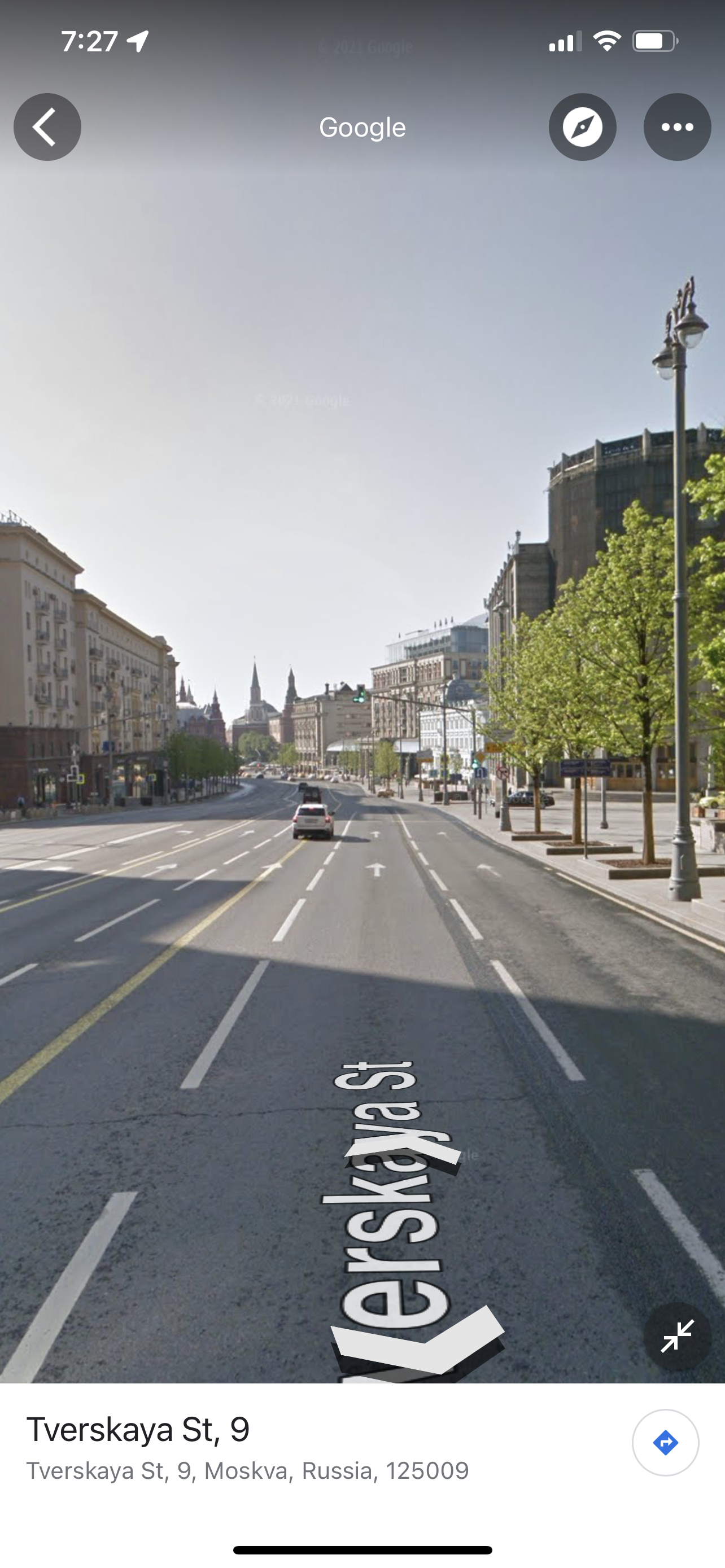
For the next couple of weeks Tatiana is visiting family (mother, son, sister) and old friends in Russia. She’s currently staying at 9 Tverskaya Street, just down the road from Red Square. By my humble HE standards, the place is a little too Kardashian. I like Moscow rentals that are more historical and old-school-ish — a residence that reeks of early 20th or late 19th Century, a pad that Vladimir Lenin or Sergei Eisenstein or Peter Tchaikovsky or Anton Chekhov might’ve lived in back in the day. But that’s me.


Unquenchable Lust
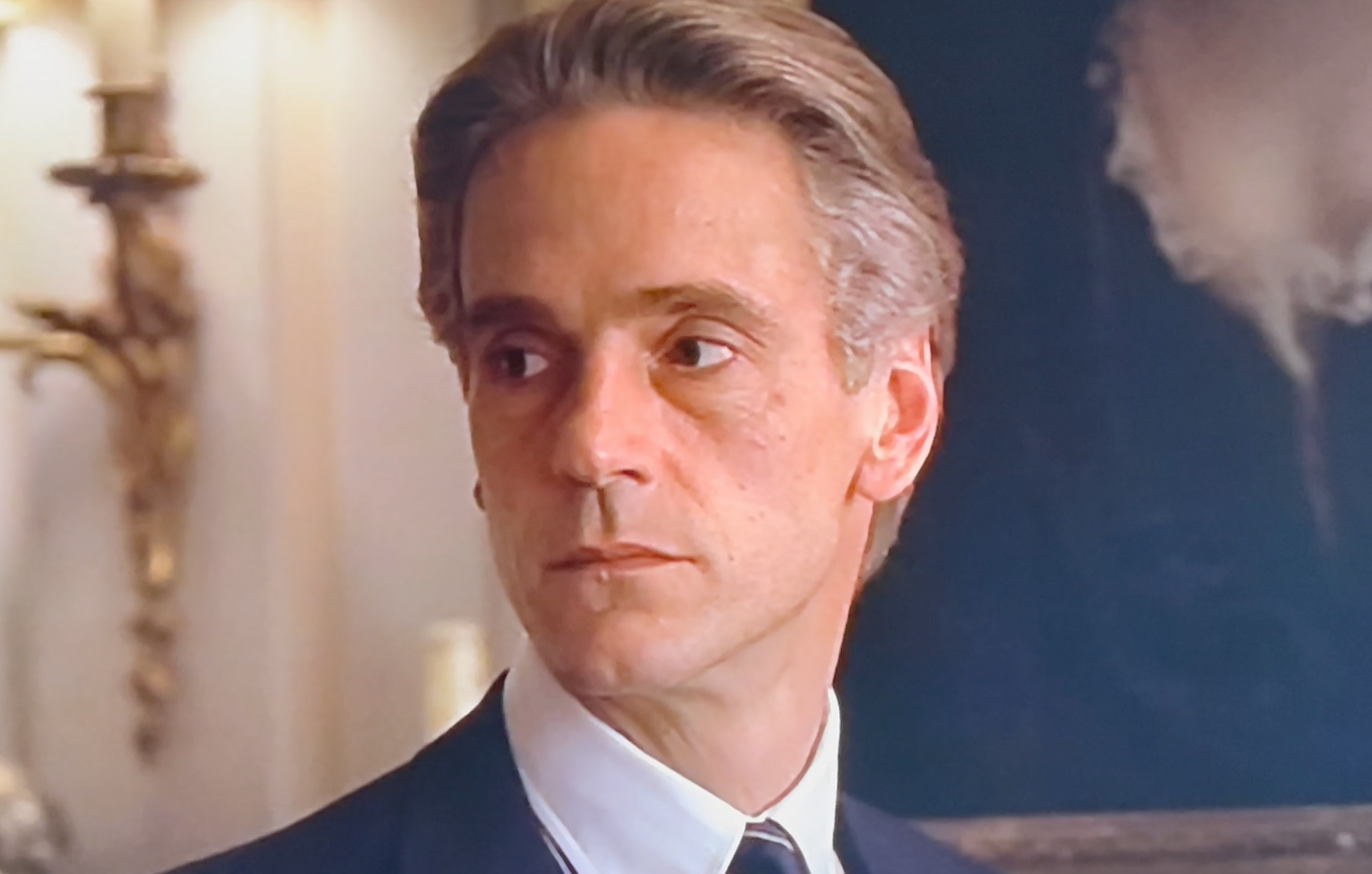
At the end of this year Louis Malle‘s Damage will celebrate its 30th anniversary. I saw it when it opened, of course, but I’ve had a thing for this film since buying the Warner Archive DVD 11 years ago. I’ve probably seen it nine or ten times, and I really wish that an HD streaming version would be made available. as the DVD’s 480p resolution is unsatisfying.
Boilerplate synopsis: “Adapted by David Hare from the short, same-titled novel by Josephine Hart, this is a gripping tale of a desperate sexual obsession and scandalous love affair in upper-crust British social circles. Stephen Fleming (Jeremy Irons) has wealth, a beautiful, well-bred wife (Miranda Richardson), two younger children, an adult journalist son (Rupert Graves), and a prestigious political career in Parliament.
“But Fleming’s life lacks a certain spark of passion, and this emptiness drives him to an all-consuming, and ultimately catastrophic, relationship with his son’s fiancée, Anna (Juliette Binoche).”
No, I don’t personally relate to the idea of surrendering to obsessive sexual madness and self-destruction, and yes, the movie defies basic logic in terms of normal human behavior and priorities. But it’s one of the best cinematic explorations of that famous Woody Allen-ism, “The heart wants what it wants, or at least the loins do.” (Alternately: “You don’t choose who to fall into obsessive love with — obsessive love chooses you.”)
Another first-rate film that understands crazy doomed love affairs is Francois Truffaut‘s The Woman Next Door (’81).
Damage ends in death, devastation, downerism and ruin, but the first two-thirds are quite tantalizing in a crazy, well-behaved sort of way.
There’s a brief moment near the very beginning when Malle conveys the “lack of passion” aspect; he does this by having Irons gaze at his well-tended living room with a look of utter boredom. Please accept my apology for failing to properly frame the footage, but here it is:
A scene or two later Fleming meets Anna at a party, and the way they look at each other tells you it’s a done deal. It’s obvious they’ll be slamming ham within hours if not sooner.
Never Had This Reaction
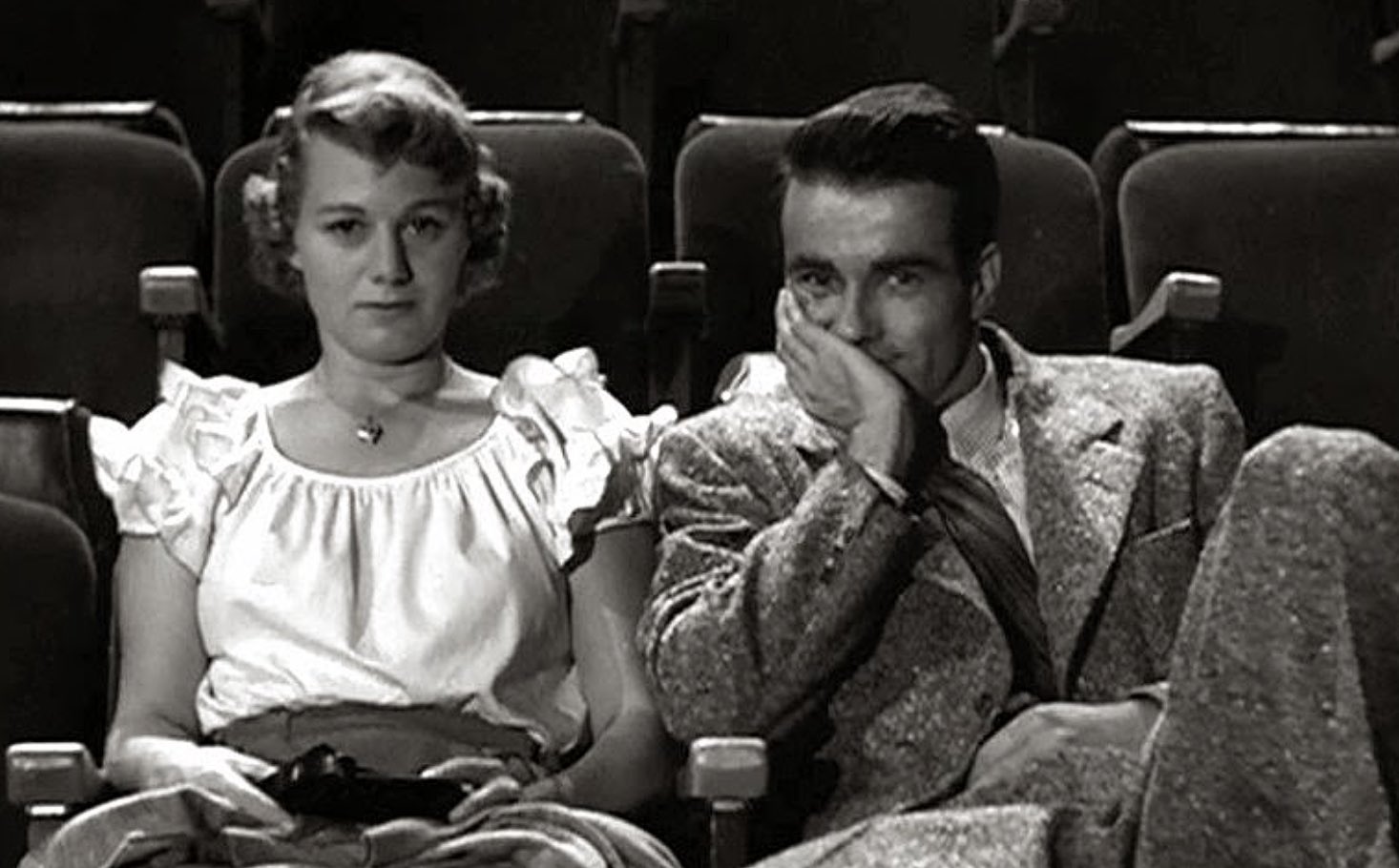
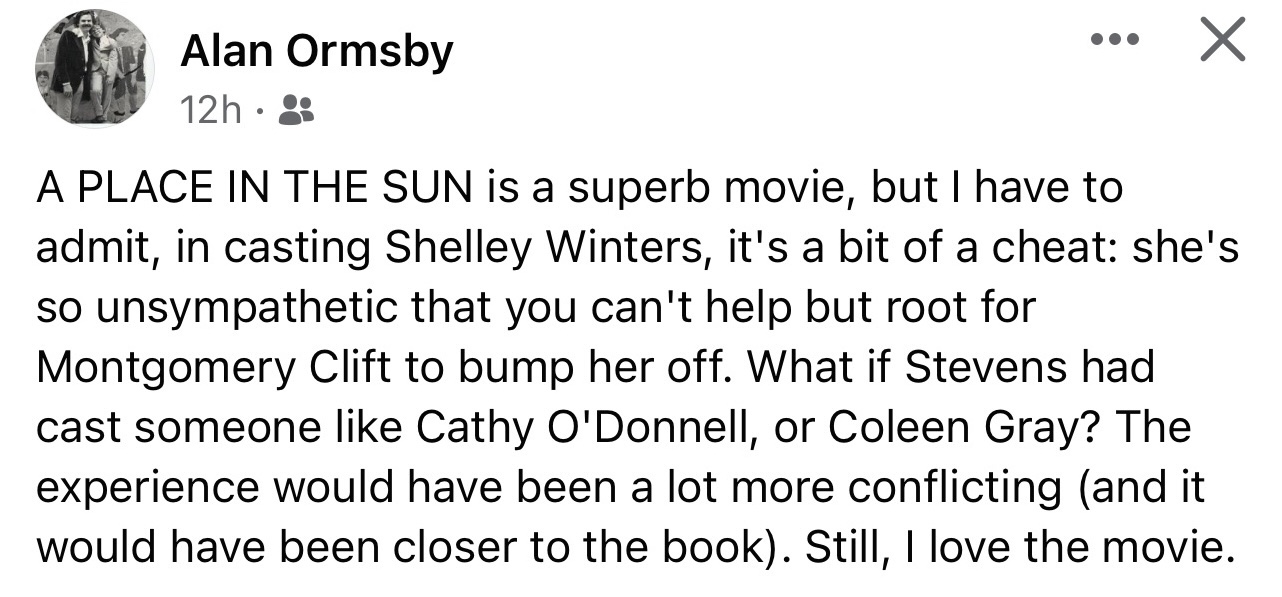
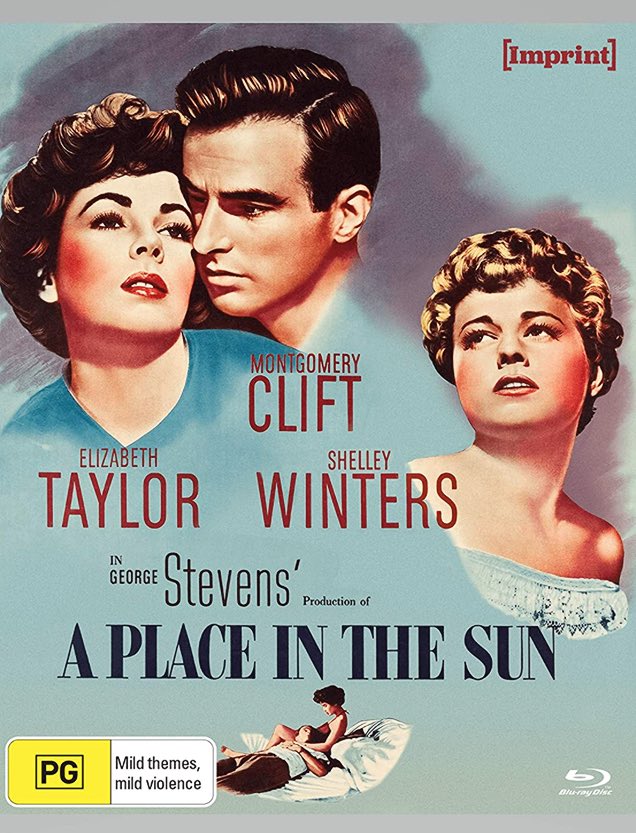
The basic idea here (and it’s not mine!) is that Shelley Winters‘ more-or-less innocent victim character in A Place In The Sun (’51) is irksome if not profoundly irritating, and that…well, read Mr. Ormsby‘s reaction.
Question to HE community: What other significant characters whose death or removal have you found yourself wishing for?
Uber Mussolini
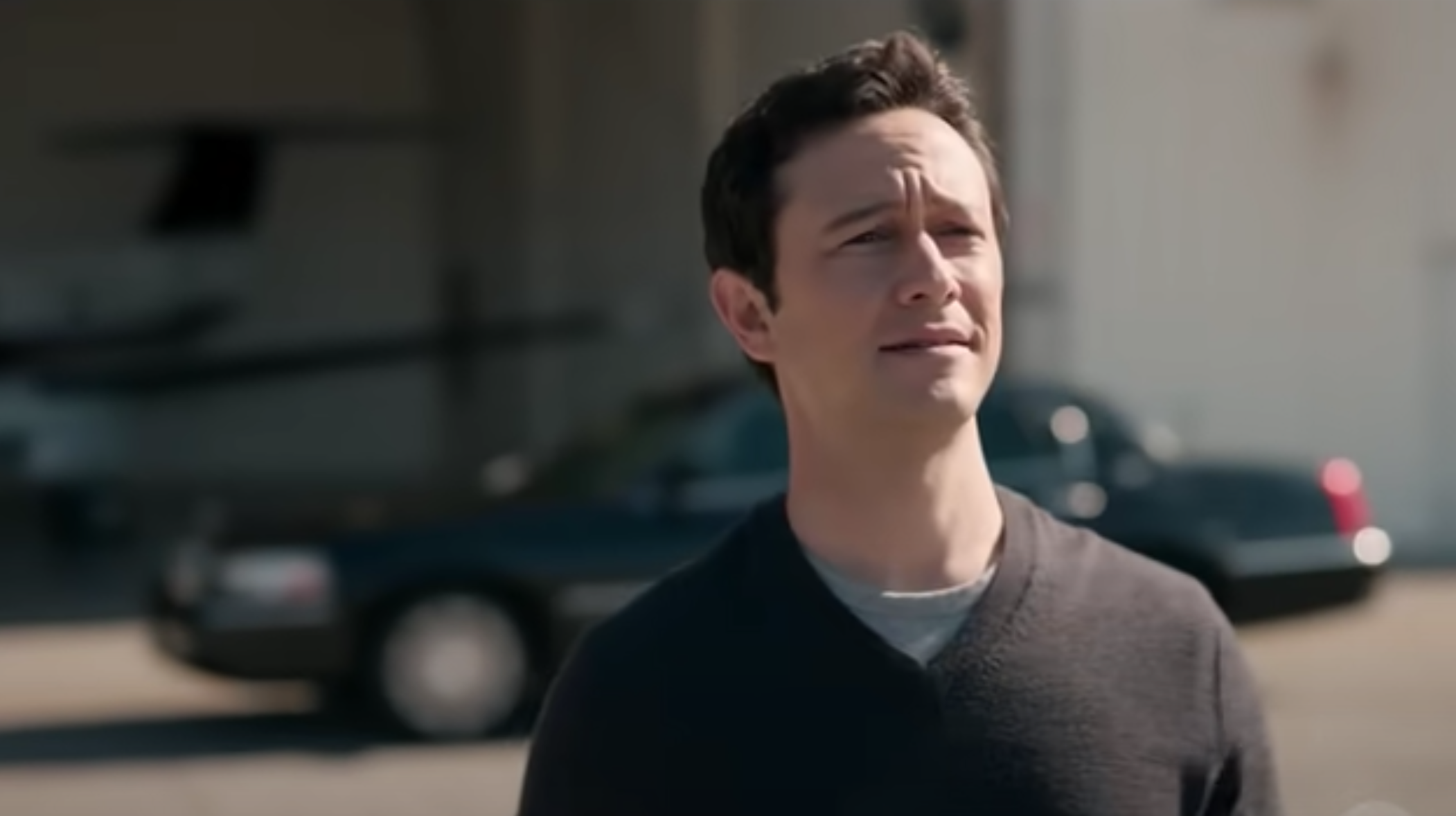
Official Showtime copy: “Super-Pumped is about “the roller-coaster ride of Uber, one of Silicon Valley’s most successful and most destructive companies, told from the perspective of the company’s CEO Travis Kalanick, who is ultimately ousted in a boardroom coup after tense internal and external battles that ripple with unpredictable consequences.”
If this was a one-off, Super-Pumped might be analogous to The Social Network — another story of a smart but obnoxious mover-and-shaker who launches an enormously successful company with a new idea. But no — it’s an anthology series from Brian Koppelman and David Levien, based on the same-titled 2019 book by Mike Isaac.
The strong cast includes Joseph Gordon-Levitt, Kyle Chandler, Kerry Bishé, Babak Tafti, Mousa Hussein Kraish, Hank Azaria, Elisabeth Shue and Uma Thurman.
Sinead O’Connor’s Beautiful Scream

During her ascendant, hot-rocket period (’85 to ’92), Sinead O’Connor was one of the greatest rockers ever — a ballsy poet, provocateur, wailer, screecher, torch carrier…a woman with a voice that mixed exquisite style and control with primal pain. She was / is magnificent. I still listen to The Lion and the Cobra and I Do Not Want What I Haven’t Got, and I still love “Madinka”, “Jerusalem”, “Troy” and “Nothing Compares 2 U”…all of it, the primal energy, the shifting pitch of her voice, the Irish punk banshee thing…wow.
It doesn’t matter that this happened 30 to 35 years ago, and that O’Connor has lived a convulsive, ebb-and-flow life ever since…one torrential spew or tussle or throw-down after another…or that she now performs in Muslim robes (having converted two or three years ago)…what matters is that from age 19 through 26, or for roughly eight years, O’Connor was a blazing art-rocker of the first order and an unstoppable historic force…like Bob Dylan was between ’61 and the motorcycle accident + Blonde on Blonde crescendo of ’66.
Kathryn Ferguson’s Nothing Compares, a 96-minute doc that I saw late yesterday afternoon, is mainly about O’Connor’s rise, peak and fall over that eight-year period. (The last 30 years are acknowledged but mainly in the credit crawl.) Sinead’s climactic crisis, of course, was that infamous mass rejection that followed her defiant “tearing up the Pope photo” performance on a 10.3.92 airing of Saturday Night Live, which then was followed by the booing she received at a Dylan 30th Anniversary tribute concert in Madison Square Garden about two weeks later.
She never recovered the magic mojo.
Ferguson’s doc says three important things. One, Sinead’s fiery temperament came from a horribly abusive childhood, principally due to her monstrous mother (who died in a car crash in ’86), and as a musician she radiated such a bruised, scarred and beat-to-hell psychology that…well, blame her awful mom and her shitty dad also. Two, her peak period was magnificent, and if nothing else the doc will remind you of this. Three, Sinead was right about the Pope, or rather the institutional abuse of children at the hands of pedophile priests, and so she was way ahead of her time. (The Boston Globe‘s Spotlight team made a huge splash with their ’02 report about the Catholic church hiding the criminal misdeeds of priests abusing Boston-area children, and of course Tom McCarthy‘s Spotlight came along in ’15.)
O’Connor has soldiered on and kept plugging for the last 30 years, and obviously there’s an intrepid aspect and bravery in that, and yet Ferguson ignores the blow-by-blow — the lurching, shifting, sporadic turbulence that has marked O’Connor’s life ever since (not including the devastating suicide of her son Shane earlier this month, which happened well after the film had wrapped).
Side observation #1: The 55-year-old O’Connor doesn’t appear in the doc as an on-camera talking head, although she narrates a good portion of it. I have to say that the deep, guttural sound of her present-day voice — honestly? — sounds like a dude’s. Booze, cigarettes, whatever…the speaking voice she had in interviews from the late ’80s and early ’90s is gone.
Side observation #2: The Prince estate refused to allow Ferguson to use “Nothing Compares 2 U”, as the song was authored by Prince and owned by the estate. What a dick move! A low-budget doc that pays devotional tribute to O’Connor and the Prince estate refuses to allow her most famous recording to be heard? Jesus…this has to be one of the lowest scumbag moves in rock-music history.
Side observation #3: Who were those assholes who booed O’Connor at a Dylan concert, of all things? Her manner of conveyance was overly blunt, agreed, and she probably should have toned it down, but c’mon, her Pope protest was about protecting children from abuse and pain and thousands of Dylan fans fucking booed her?