I had never seen either version of Angels in the Outfield. Mainly because Field of Dreams aside, I’m not much for sports fantasies. I’d certainly never considered watching the 1994 version, which earned a 33% Rotten Tomatoes rating with a 49% audience rating.
The other night, bored and listless, I decided to watch the black-and-white 1951 version. To my surprise it won me over within 15 or 20 minutes.
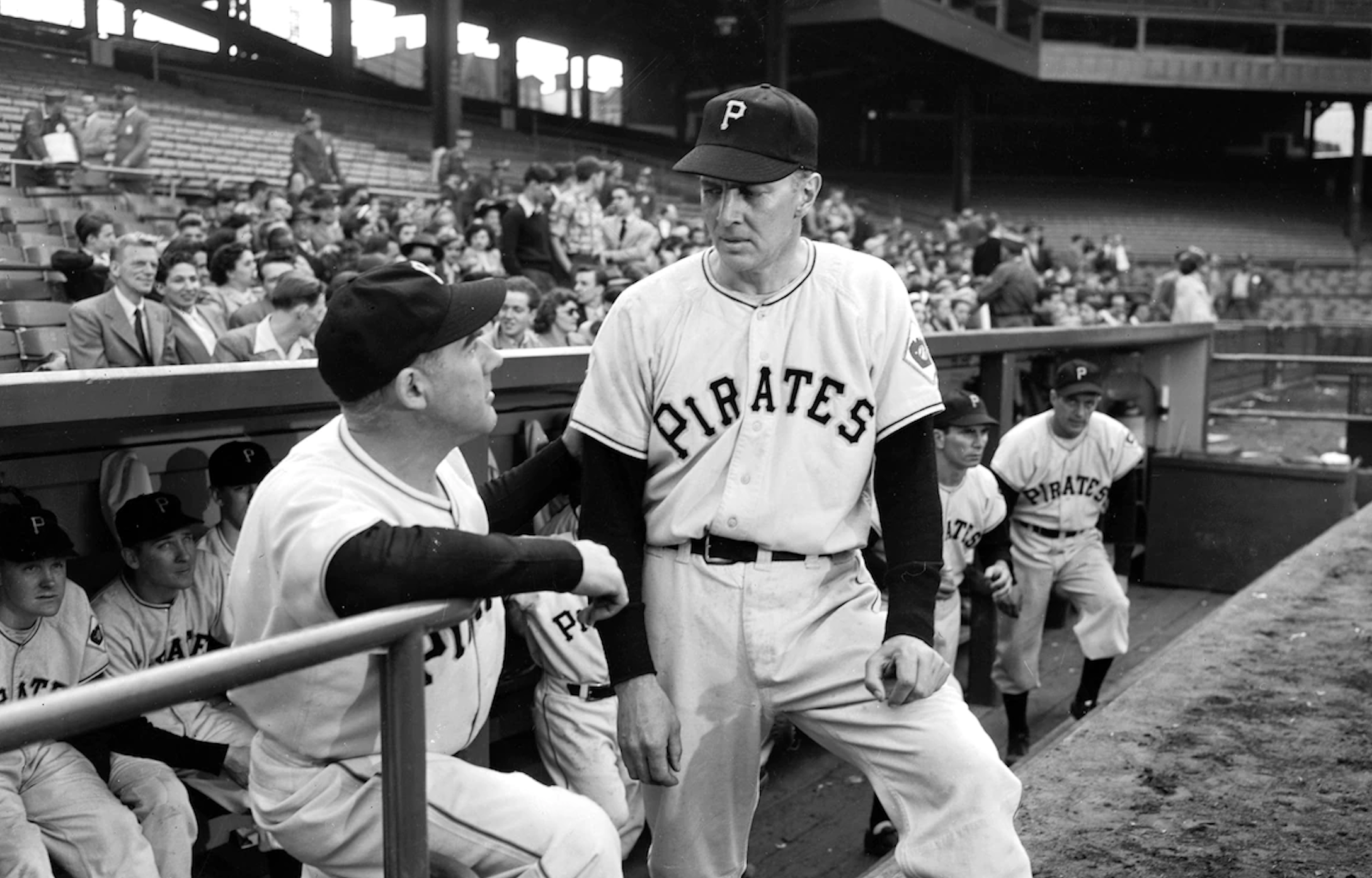
It’s basically a redemption story — A Christmas Carol set in Pittsburgh. Paul Douglas is Guffy McGovern, a coarse, foul-mouthed brute of a Pittsburgh Pirates manager, loathed by just about everyone. One evening he’s visited by an invisible, craggy-voiced angel who tells him “become a better person and I’ll fix it so the Pirates start winning some games.” Douglas goes along, and before you know it everything has turned around — his life, the fortunes of the Pirates, even his non-existent love life (i.e., local reporter Janet Leigh takes an interest).
Complications ensue, of course, but that’s pretty much it — an abusive asshole becomes a better person with some heavenly assistance. It’s a minor effort but it works.
Based on a story by Richard Conlin, Angels in the Outfield was written by Dorothy Kingsley and George Wells, and directed by Clarence Brown, king of the “house” helmers.
…who are deeply alarmed about Licorice Pizza, and particularly the non-sexual, one-sided ’70s relationship between Gary (Cooper Hoffman), a 15 year-old actor and waterbed salesman, and Alana (Alana Haim), a 25 year-old whom Gary has a huge thing for but never scores with.
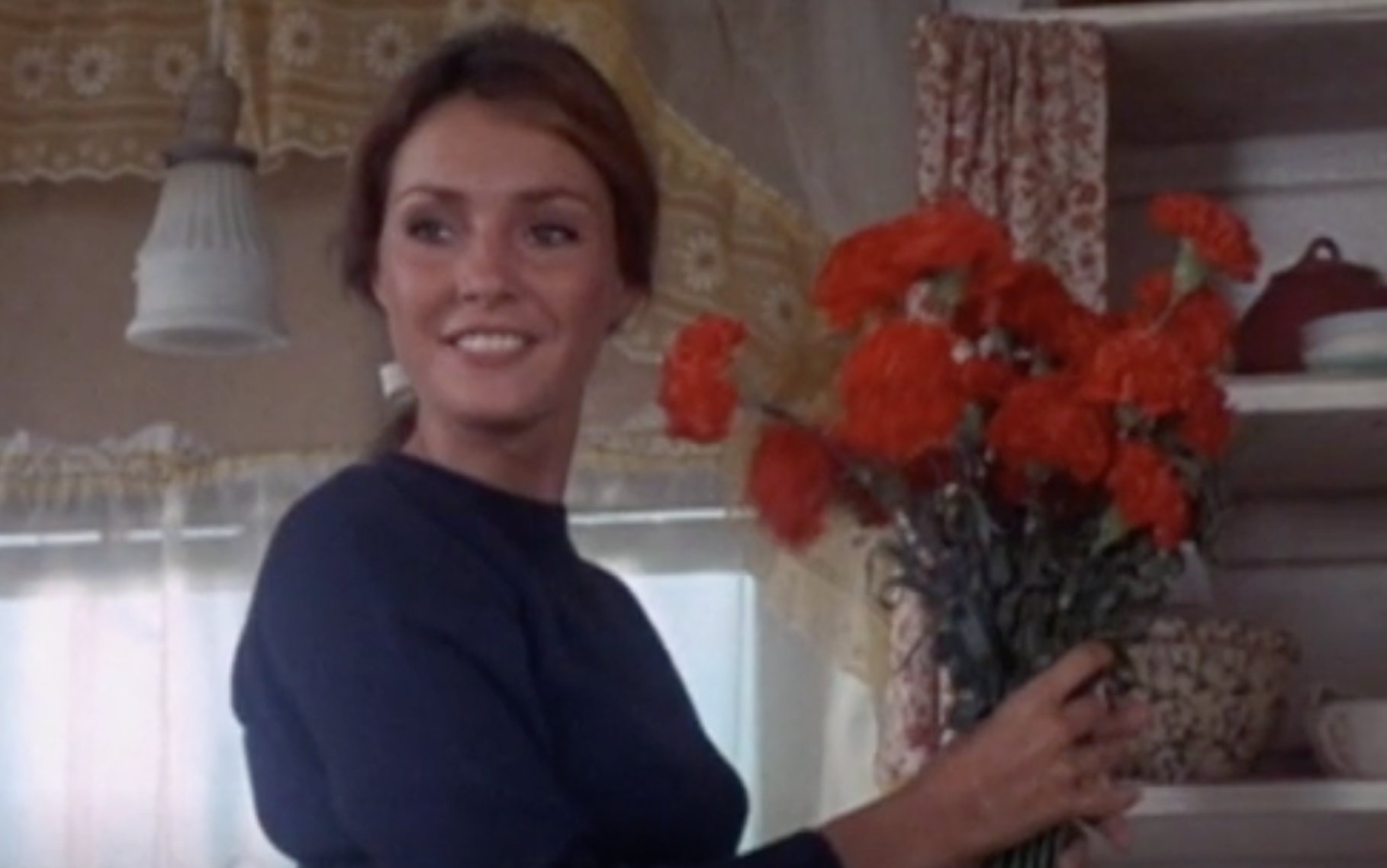
A similar kind of relationship was depicted a half-century ago in Robert Mulligan‘s Summer of ’42, except back then the younger lad (Gary Grimes as an anxious 14 year-old named “Hermie”) and the 20something woman (Jennifer O’Neill‘s “Dorothy”) did the actual deed…once.
Dorothy is heartsick over her young Air Force pilot husband having been shot down over France, and so, half-drunk, she invites Hermie to bed. Hermie is not only aroused but transformed by this episode, but the next morning Dorothy disappears, never to be seen or heard from again.
Herman Raucher‘s screenplay is based on his own actual experience. At age 14 he really did get lucky with a heartsick 20something he called “Dorothy.” If only some wokester scolds from the 21st Century could have somehow been time-tripped back to 1942 Nantucket and saved poor Herman from the terrible trauma of making love with a beautiful woman at age 14.
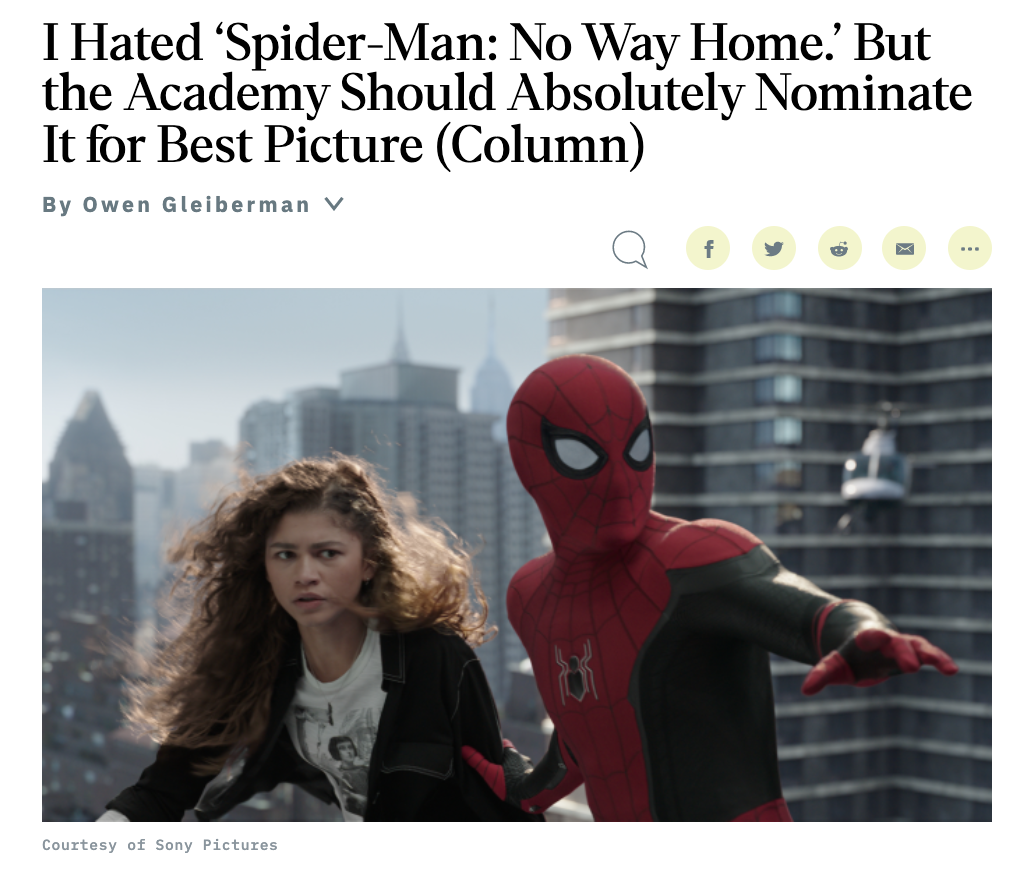
Variety‘s Owen Gleiberman: “The biggest hurdle the Oscars face, especially in the time of a pandemic accompanied by a streaming revolution, is that the films that tend to be nominated are winning a smaller and smaller slice of the audience.
“[If] the nominees include Belfast, The Power of the Dog, Licorice Pizza, The Lost Daughter and The Tragedy of Macbeth, that will read as a roster straight out of the too-smart-for-school megaplex.
“I’m not saying don’t nominate those films. I’m saying that if those are the only films nominated, it’s going to be another year of the Oscars’ slow-motion implosion. Would it really be such an unspeakable vulgarity this year for the Oscar slate to include Spider-Man: No Way Home? Not as a token mainstream gesture but because it’s a film that honestly meant something to the larger public. Why has this become such an insane idea?
“What’s actually insane is leaving a movie like that one out of the mix. If the Oscars want a future, it would be a shrewd strategy for them to not inflict the death of a thousand cuts on themselves by using the dagger of elitism.”
HE to Gleiberman #1: Which Twitter elitists have insisted that handing a Best Picture nomination to Spider-Man: No Way Home would be “an insane idea”? I’m presuming we’re talking about the same dweebs who believe that Drive My Car is the film of the year, but…
HE to Gleiberman #2: If one of the nominees is King Richard, no one will think this is “straight out of the too-smart-for-school megaplex.” There are two family movies in Best Picture contention this year — one is excellent, the other less so. King Richard is the excellent one.
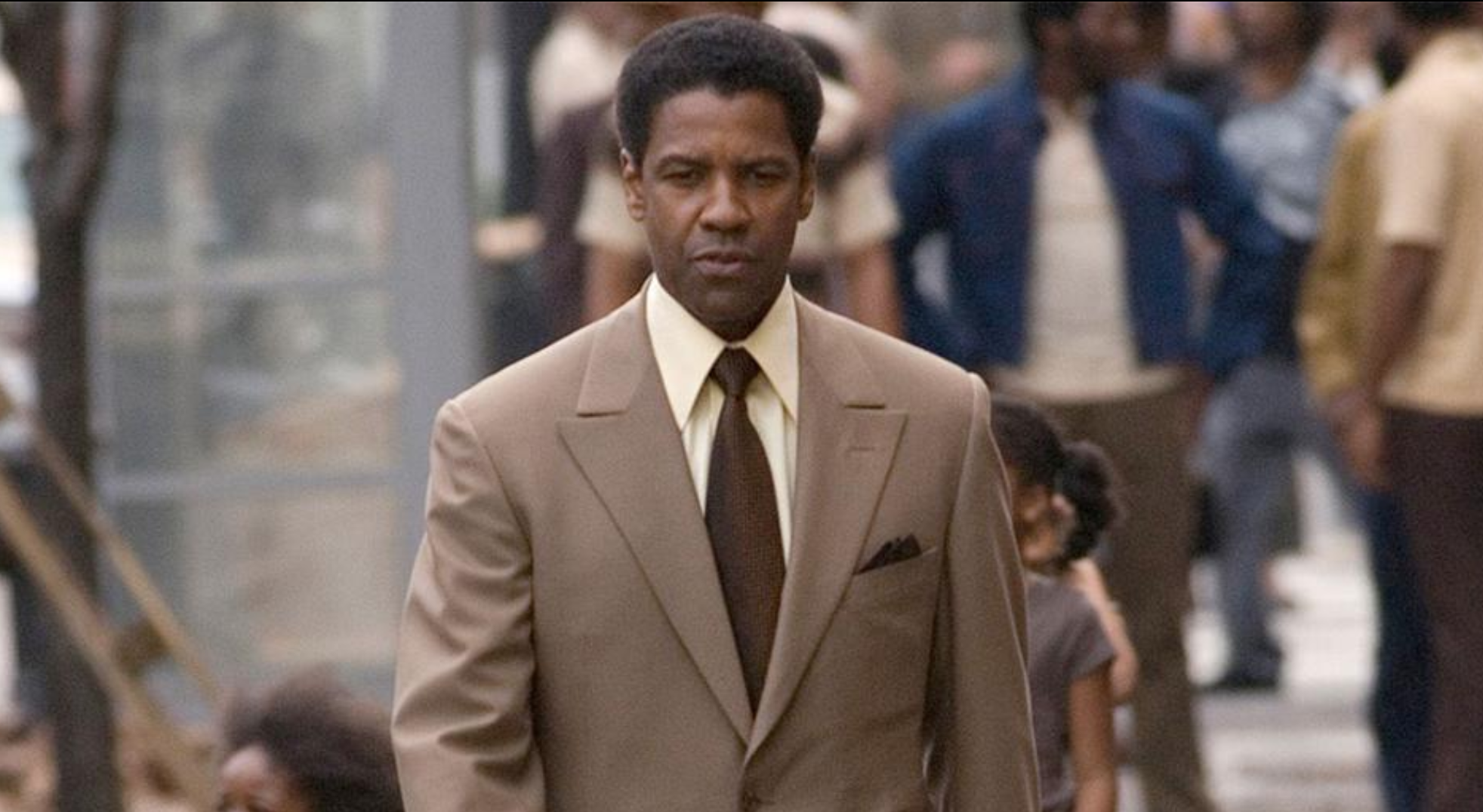
Last night, feeling jazzed about rediscovering Taylor Hackford‘s Proof of Life and realizing it’s a lot better than I’d recalled, I rewatched another violent, crime-related Russell Crowe film from the aughts — Ridley Scott‘s American Gangster (’07).
It remains a sturdy, absorbing, culturally fascinating, Sidney Lumet-like depiction of the rise and fall of heroin importer Frank Lucas (Denzel Washington) and the scrappy, scrupulously honest detective, Richie Roberts (Crowe), who eventually busted and prosecuted Lucas in ’75 and ’76.
AG opened 14 years ago, and plays just as grippingly as ever — no diminishment, constantly engaging, stepped in the lore of Harlem and North Jersey. And my God, Denzel (52 during filming, now 67) looks so young! Younger, in fact, than he did in Spike Lee‘s Inside Man (’06). And what a murderer’s row of African American (or African British) players — Chiwetel Ejiofor, RZA, Cuba Gooding Jr., Joe Morton, Idris Elba, Common, the late Clarence Williams III, Ruby Dee, Roger Guenveur Smith, Malcolm Goodwin.
I was struck again by how satisfyingly well made this film is, as good in its own New York City way (the clutter and crap of the streets, high on those uptown fumes) as Lumet’s Prince of the City (’81).
One reason it plays so well, I was telling myself last night, is that big-studio movies, free from the influence of the superhero plague that was just around the corner in ’06, were generally a lot better in the aughts than they are now. 2007, remember, was one of the great all-time years.
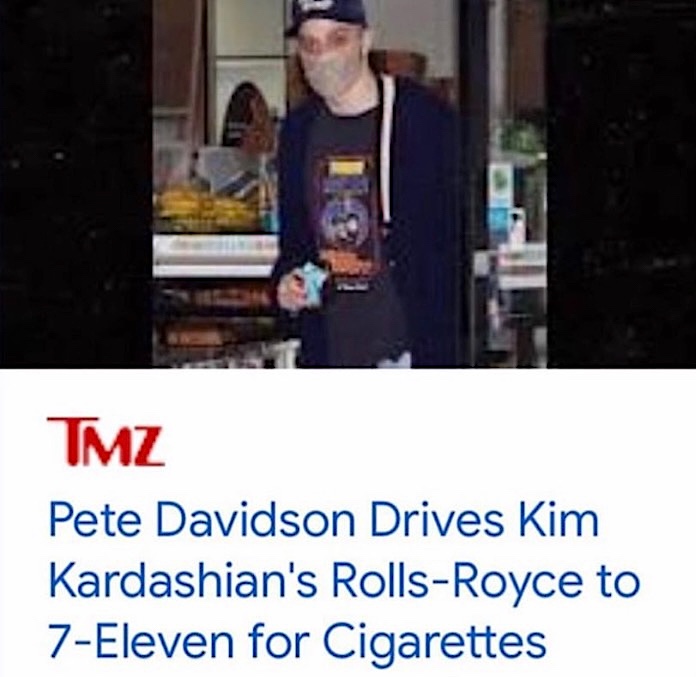
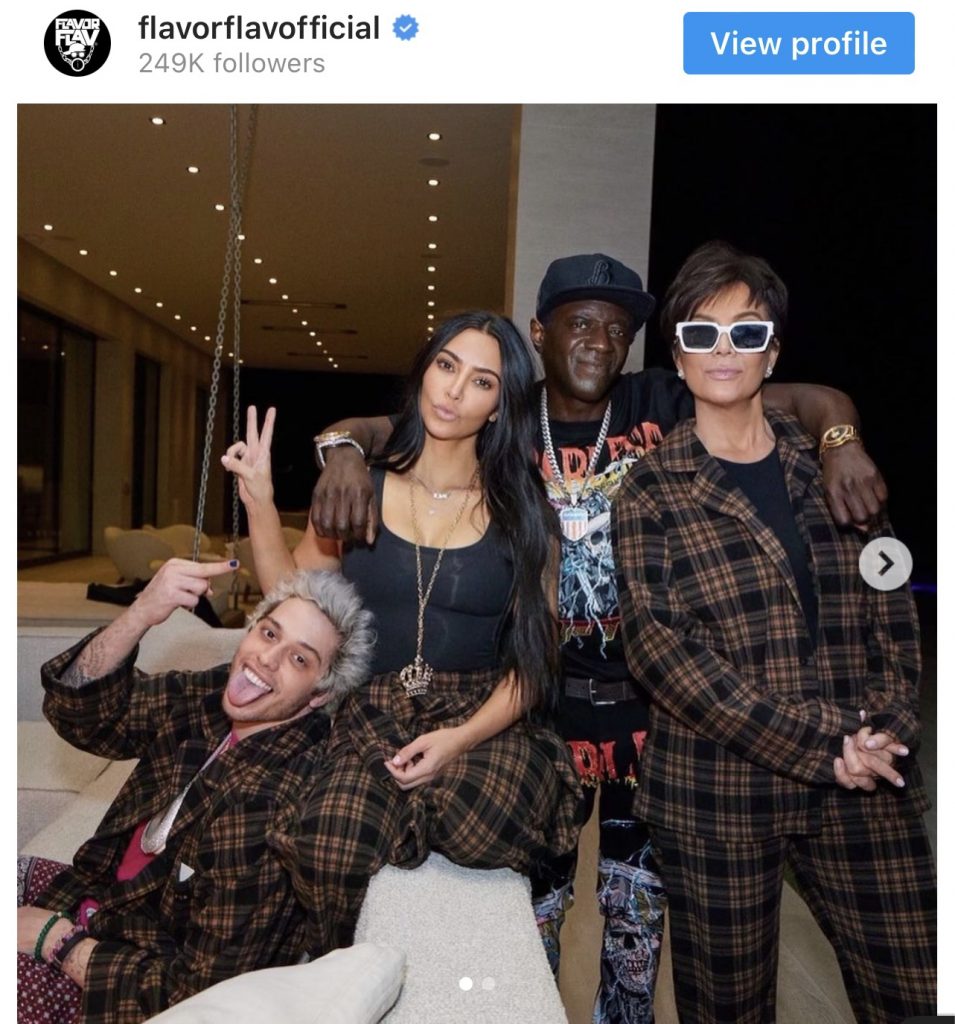
…and if he still cared about creating silk screens at age93, he would have instantly recognized a couple of days ago that THIS (i.e.., the TMZ headline) is a 21st Century Andy Warhol silk screen classic if anyone ever saw one. Right up there with “Elvis Presley in FlamingStar.”
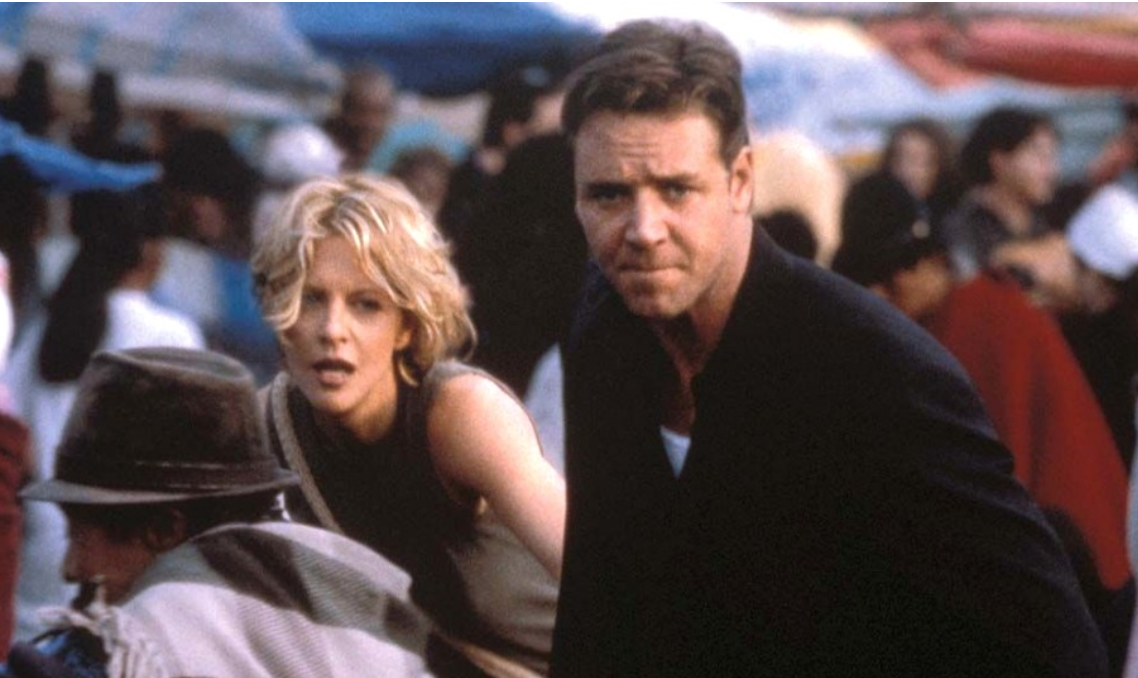
Last night and for the first time in 21 years, I re-watched Taylor Hackford and Tony Gilroy‘s Proof of Life. My vague recollection was that it had missed the mark, having lost money and gotten mixed reviews. I was wrong.
A believable, propulsive, well-textured kidnap, ransom & rescue drama set in South America (and largely based on a Vanity Fair article by William Prochnau called “Adventures in the Ransom Trade“), Proof of Life is good stuff — sturdy, smartly written and genuinely thrilling from time to time.
I found it very charismatically performed by Russell Crowe (relatively trim and quite handsome back then) and David Caruso. Alas, Meg Ryan is the opposite of that — as the anguished but argumentative wife of a kidnap victim (David Morse), almost everything she says and does is twitchy and annoying — she never seems to get hold of herself and get past her suspicions and resentments. Much better is Pamela Reed, as Crowe’s sister who flies down to assist.
I think the reception to Proof of Life got lost in the fog of the Crowe-Ryan affair. Hackford said this in so many words, that the film lost money because in the public mind the affair had overwhelmed the make-believe. Crowe was quoted as calling Hackford “an idiot” for saying this, but Hackford was right.
All I know is that after watching Proof of Life without the Crowe-Ryan mucky-muck, it came off better than expected — a strong, complex, grown-up thriller that ends with a great battle sequence.
Hollywood Elsewhere was a thriving business and a happy workplace for roughly 13 or 14 years. After launching in August ’04 ad income …well, it was touch-and-go for a while but found its footing sometime in early ’06. And then it grew and grew…offering stability, adventure, intrigue, annual European travel and a thriving lifestyle.
The worm began to turn with the horrific election of Donald Trump in November ’16. From that point on and certainly by the end of ’17 and into early ’18, you could feel the first tremors of wokesterism, triggered by perceptions of obstinate patriarchal whiteness as represented by the various bad guys of the moment (the Trumpster mob, Harvey, Woody, Roman and all the other alleged ogres who were being called out, many deservedly so).
Before I knew it the furies were swirling all over the place…anything that smelled even vaguely of older-white-guy attitudes or viewpoints became a form of evil. HE’s ad income began to drop in ’17 and ’18. It’s been a hellish four years.
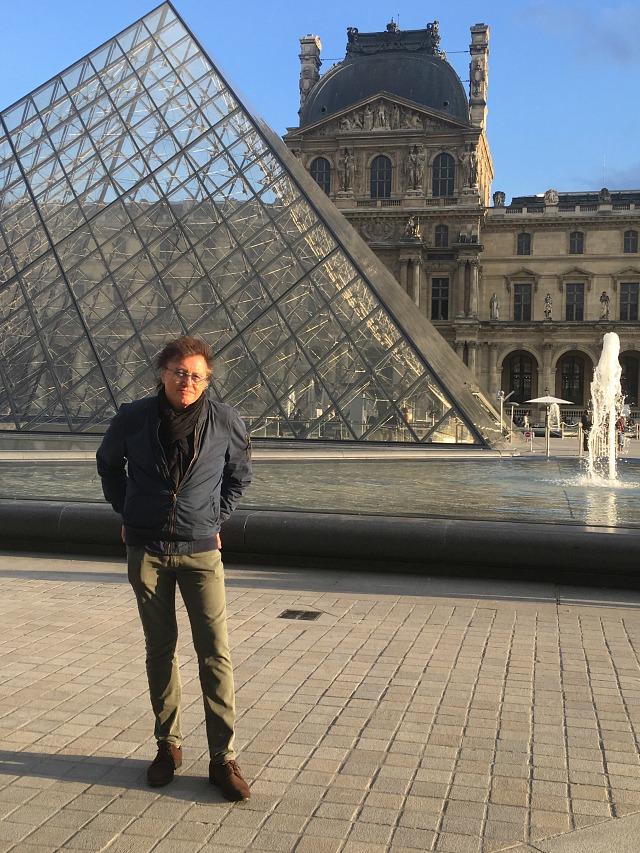
HE’s own Svetlana Cvetko and David Scott Smith invited me to join them early Saturday evening at the Louvre. A connected friend of Svet’s escorted us inside to a restricted–accesstour of the Egyptian exhibit. I had never before wandered through this world-renowned museum as an invitation-only cool cat. No crowds or lines to cope with. The Egyptian statues, sarcophagi, relics and artifacts were nothing to sneeze at either. The highlight was the 4000 year-old chapel of the tomb (or “mastaba”) of Akhethotep, a bigwig in the Old Kingdom who was close to the king. (Egyptian rulers weren’t called pharaohs until the New Kingdom.)
Svetlana Cvetko, David Scott Smith at Louvre cafe — Saturday, 5.13.17, 7:50 pm.
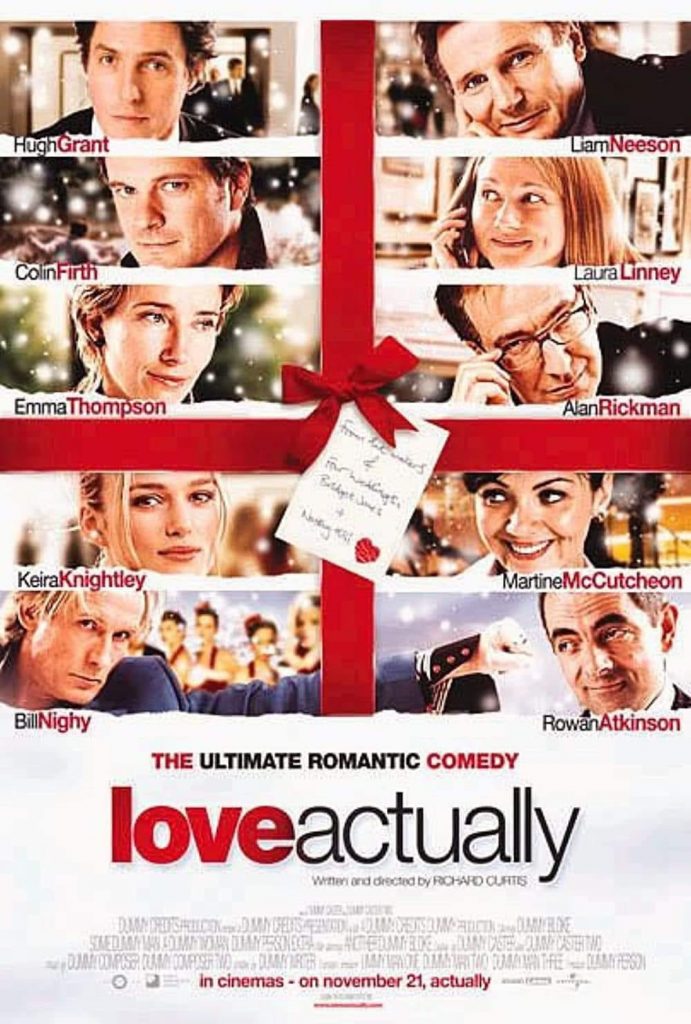
I’m obviously fine with sharing judgmental or negative impressions of films, but I don’t like to dwell on them. One post is enough. But a few minutes ago I happened to glance at a poster for LoveActually, and it all came flooding back…
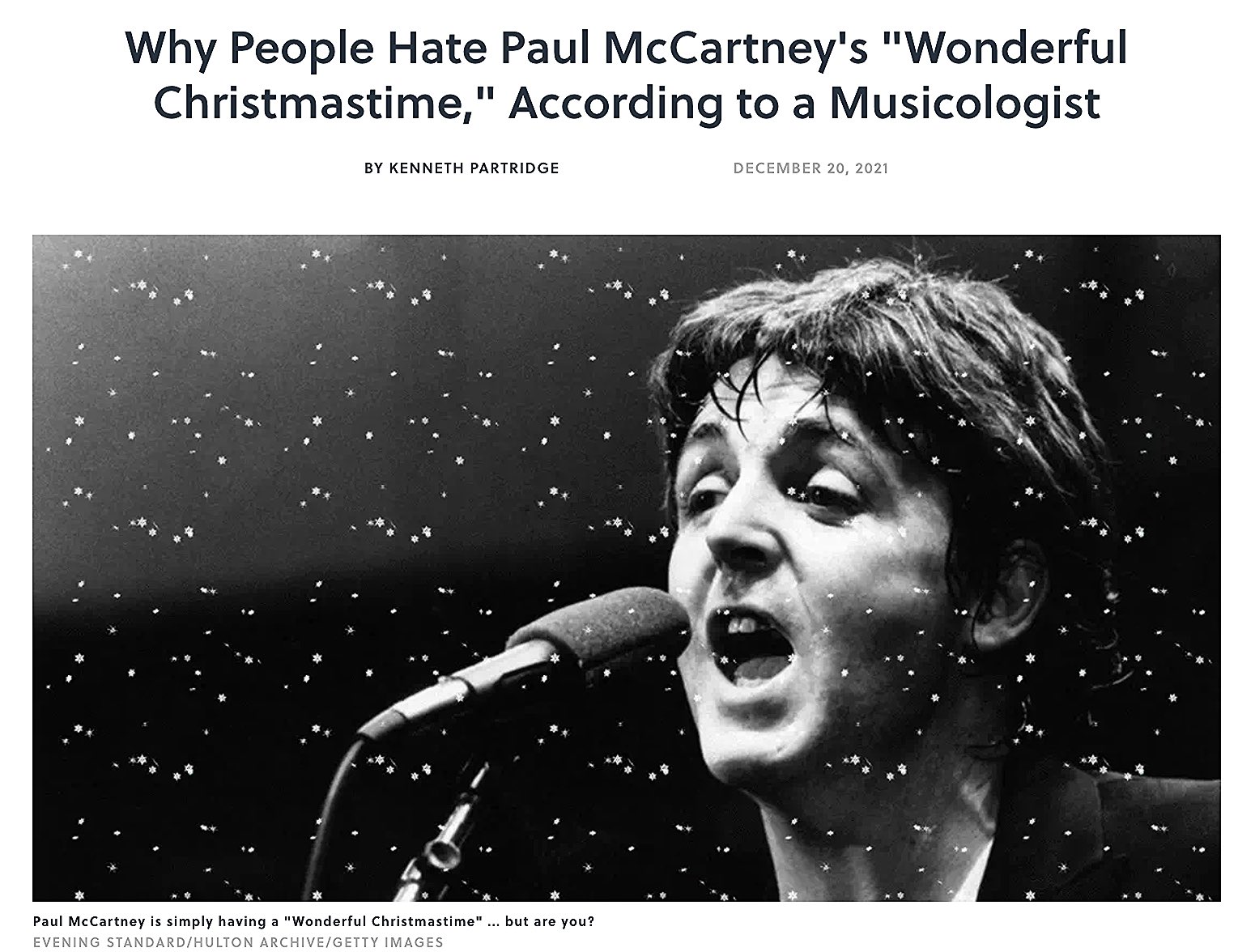
According to a 12.20 article by Kenneth Partridge, the disdain for Paul McCartney‘s “Wonderful Christmas Time” (’79) has never ebbed. Anyone whose musical tastes are the least bit refined is probably a hater. I don’t blame them, but you can’t visit any Bloomies or Nordstrom or a department store of any kind during the holidays and not hear it played repeatedly.
Yes, of course — John Lennon‘s “And So This Is Christmas” is a much better tune, by any criteria you’d care to mention. But I’ll bet Macca’s is the most popular among the hoi polloi.
Of the three songs below, my guilty-pleasure favorite is “Christmas Time Is Here Again.” I’m sorry but it’s infectious.
I’ve taken my temperature three or four times today, and right now it’s 97.9. I don’t quite feel at peak strength, but I’m past the worst of the Omicron seige. This is the first day since last Tuesday that I haven’t wanted to sleep like a corpse. In fact I’ve been standing at my desk for eight hours.
I thought I might start to climb out of it yesterday (Thursday) but Omiconrallied and refused to back down. But it’s mostly gone today, or is certainly receding. It was a bear for about twoandahalfdays. I couldn’t do anything but sleep, night or day. I managed to tap some stuff out on the phone, okay, but sitting up was out of the question.
I’ve been told, by the way, that my grandfather name is “papa” — the same name that my father embraced when Jett and Dylan were young. I guess I’m okay with it, but can’t Sutton just call me Jeff? How any grandfather could accept being called “gramps” or “grandpappy” or “boompah”…Jesus!
After last week’s euphoric reaction to the second half of Spider–Man: NoWayHome, I fell into an unusual state of mind. Almost beatific. I began to consider that maybe, just maybe, I’d allowed myself to judge too harshly when it came to big CG-driven tentpole films. Perhaps I was evolving on some level, I told myself.
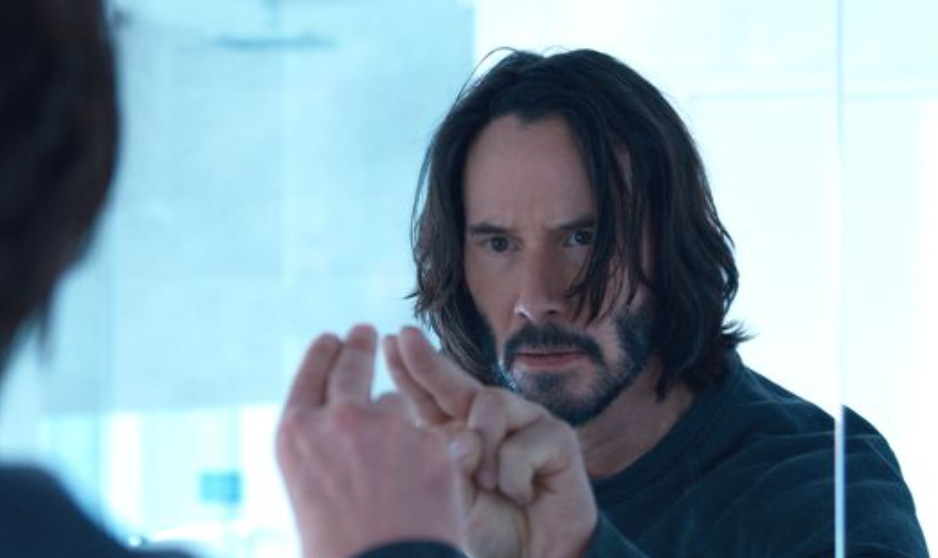
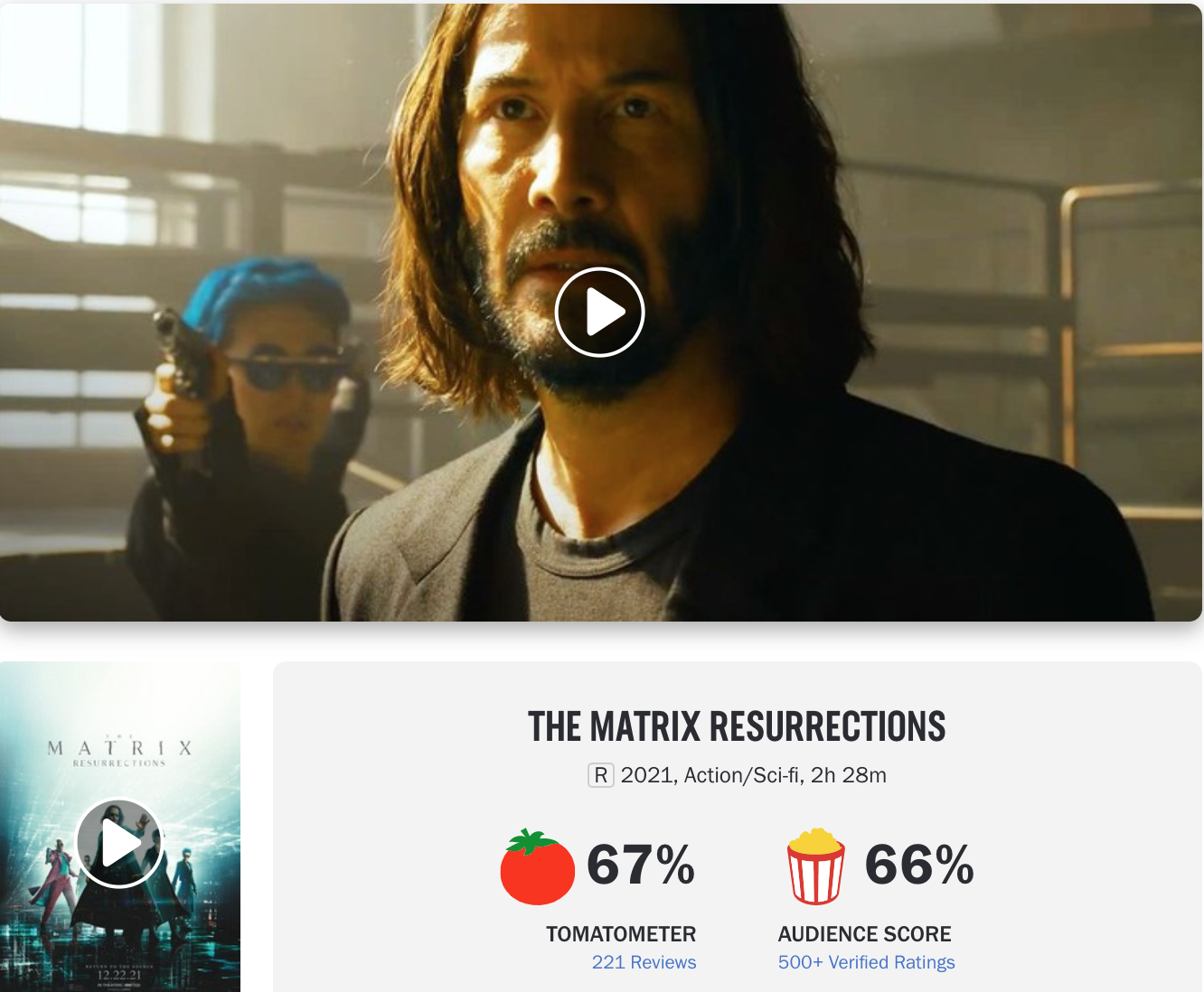
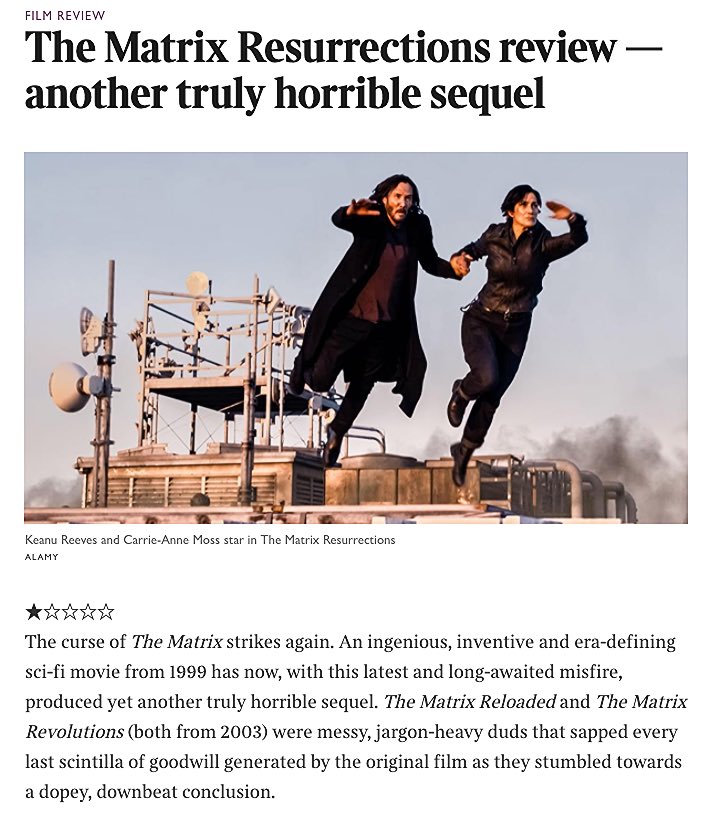
That shit is now over and done with. For last night I sat through Lana Wachowski’s TheMatrix: Resurrections, and I’m back to hatingagain. BIG hate. Which is where I belong — where God wants me to be. I’m talking “throwing up on the Persian rug” hate.
Death to putrid corporate cash-grab sequels like this one…death to all absurdly complex, dingle-dangle mind-fuck movies that bury the viewer in awful dialogue and hopelessly complex lotting and feelings of frustration that very quickly lead to “man, I really don’t give a fuck about any of this” and then to prolonged screaming. Death to endless martial-arts fight scenes in which the combatants get punched or kicked 67 or 78 times and don’t weaken or slow down in the slightest.
Fuck this movie for further tarnishing the memory of the original 1999 TheMatrix, which I’ll always love. Everything I hated about TheMatrix: Reloaded and TheMatrix: Revolutions — the horrible sense that a good idea is being mangled and twisted and then lost in the shuffle…those awful 2003 vibes are delivered in industrial-strength doses in Resurrections. It starts out badly or clumsily or ever-emphatically (less than ten minutes I sat up the couch and said out loud “this is bad”), and then it gets worse and worse and still worse. I was dying by the end. It’s a horrible film.
There’s one good moment in The Matrix: Reloaded…one in which Neo is trying to escape from a subway tunnel. He takes off like a bullet but two seconds later ends up exactly where he started. No elaborate FX, just a simple camera trick that Buster rKeaton could have dreamt up…and it’s the coolest moment in the film.
There’s a similar small pleasure in Resurrections — a line of dialogue spoken by Jonathan Groff‘s “Smith” character, the head of a booming San Francisco video-game company due to a wildly popular Matrix game created by Keanu Reeves‘ Thomas Anderson (aka Neo). In a one-on-one with Anderson, Smith explains that Warner Bros., the parent company, “has decided to make a sequel to the trilogy, with or without us” — presumably the same conditions that led to Wachowski’s involvement in Resurrections. This, at least, was mildly amusing — the only moment in the entire film that worked.
Otherwise I sensed trouble almost immediately. As soon as I glimpsed Yahya Abdul-Mateen II and listened to his half-solemn, half full-of-shit metaphysical patter after he decides that he doesn’t want to kill “Bugs” (Jessica Henwick) and her pallies after all, I muttered “but of course, the new Morpheus…Larry Fishburne’s son or whatever because Fishburne is 60 and probably overweight and unable to handle the martial-arts moves that he performed 20-plus-years ago.”
It turns out that Morpheus II is the same Fishburne and the same old Morpheus — he’s just 25 years younger and looks and sounds like the guy who played Bobby Seale in Aaron Sorkin’s TheTrial of theChicago7. But right away — during the obligatory opening action sequence, which films of this sort have to begin with because default Matrix knuckle-draggers are looking for as many bullet-time sequences as possible…bullettime! bullettime!… where was I?…










 Svetlana Cvetko, David Scott Smith at Louvre cafe — Saturday, 5.13.17, 7:50 pm.