Friendo to HE: So have you watched Questlove‘s Summer of Soul (Searchlight, 7.2) yet?
HE to Friendo: This evening, I guess. Otherwise soon. Performances by major late ‘60s soul acts in Marcus Garvey Park, until the heading of the Harlem Cultural Festival. Cool — everyone loves a top-notch concert film. But what’s so wowser about it? Why all the heat and the awards during last January’s Sundance? Other than the fact that chummy indie guy David Dinerstein is one of the producers?
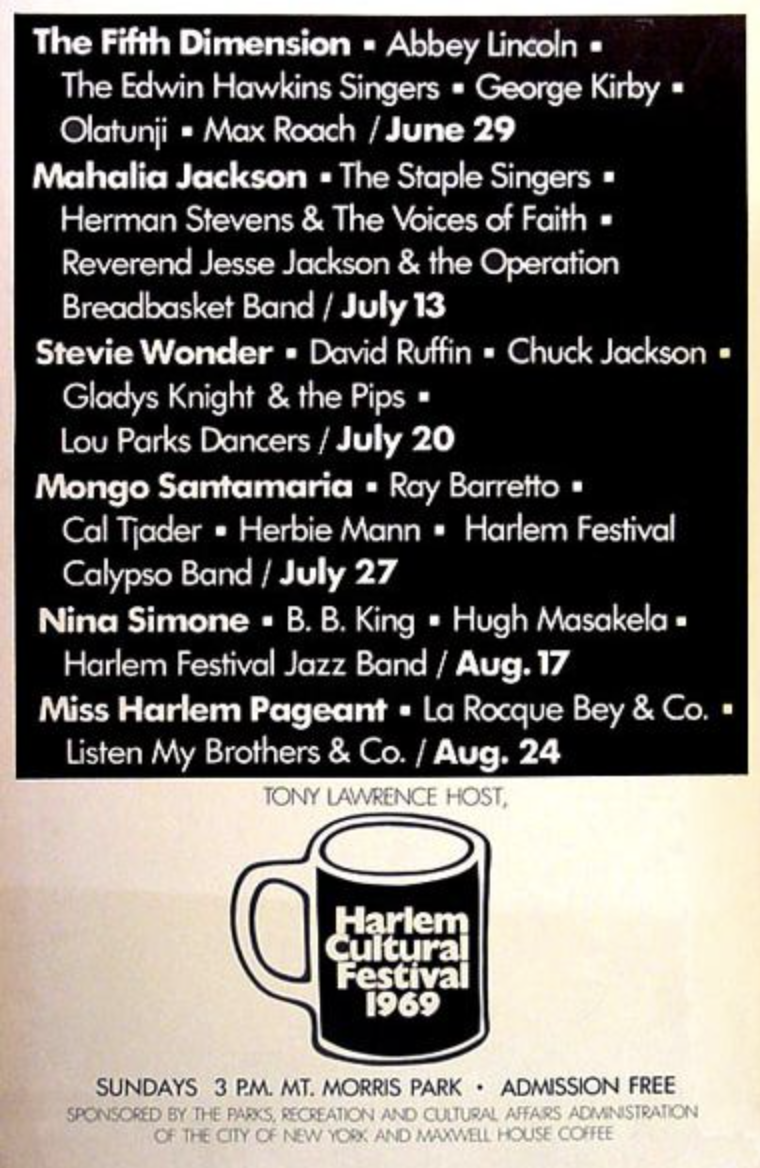
Friendo to HE: Mostly for the archival footage. The tagline is “this was the black Woodstock.” Same summer, same chapter in history. 300,000 people showed up in a span of six weekly free concerts, Sundays between 6.29 and 8.24.
HE to Friendo: Okay, but what’s the big deal? Other than the virtue signaling aspect?
Friendo to HE: Mostly it’s just about the great music and community aspect of the concerts, and how major media ignored this in favor of the Woodstock festival at Max Yasgur‘s farm. And how cans and cans of footage of the ’69 Harlem Cultural Festival was shot and then placed in a basement, where it sat for a half-century. And how we have a spiffed-up capturing of an historic music festival. Obviously it didn’t have the influence or impact of Woodstock. You can’t just rewrite history and say that these Harlem shows changed the course of history because…well, they didn’t. Nobody really knew about the ’69 Harlem Cultural Festival until recently.
HE to Friendo: Great music, community celebration, surging emotions…terrific. But the Woodstock analogy isn’t analogous.
Friendo to HE: It’s such a 2021 thing. Reframing history according to present-day terms, otherwise known as “presentism.”
The complete title, by the way, is Summer of Soul (…Or, When_ the Revolution Could Not Be Televised). Except hour-long specials of the concert were broadcast by WNEW Metromedia (Channel 5) on Saturday evenings throughout June, July and August — 10:30 to 11:30 pm.