When Genius Visits, It’s Up To You

Here’s one of the most insightful HE pieces I’ve written within the last five years….seriously…but because it included a certain kind of counsel for the beloved non-genius Ringo Starr, the commentariat shat all over me. This was posted two years ago:

2001 costar Keir Dullea, speaking in 2001 video essay (1:58): “Working with Stanley Kubrick blew my mind. You just were aware that you were in the presence of genius.”

I’ve always felt that genius is an overused and certainly an imprecise term, because it’s not any kind of fixed or constant condition within this or that individual.

What genius is, basically, is profound receptivity…an open door or window through which genius-level stuff flashes from time to time. Sometimes it blows hot and stormy, sometimes it’s just a whisper or a tap on the shoulder, and sometimes it’s both. It’s mainly just something that certain people channel or become a conduit of, and no more than that. It’s mostly a kind of fearless electric current… a crackling quality in the mind and spirit.

I felt it when I had lunch at The Grill with Leonardo DiCaprio in the summer of ’93. He was 18 and 1/2, and I knew right away that he had that snap-crackle-pop going on inside. But you know who doesn’t have it? Anyone who says that this or that person is flat-out imbued with eternal genius. I’m sorry but no.

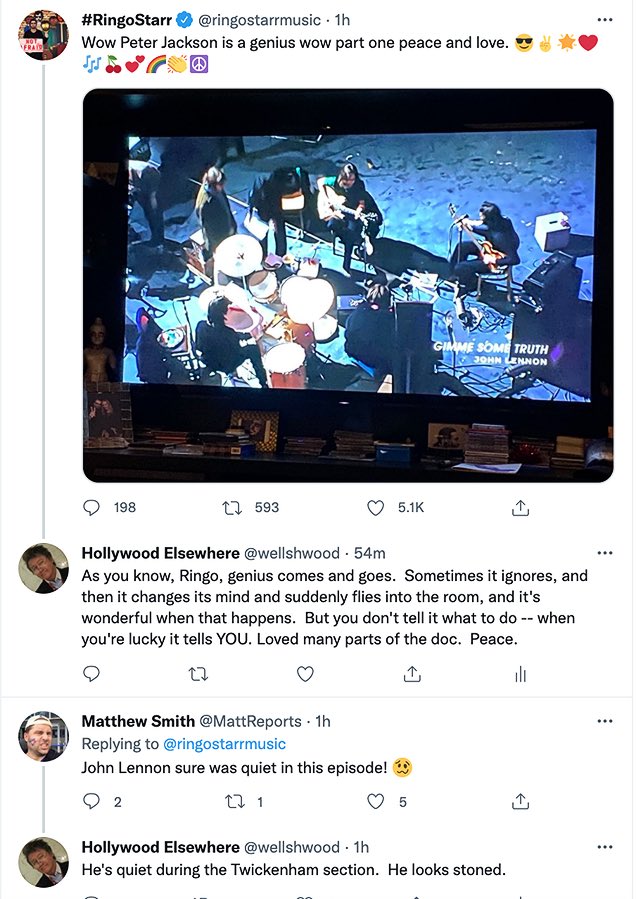
In a riff called “Genius Visits When it Wants To,” I attempted to explain the same thing to Ringo Starr. His statement that Peter Jackson was a “genius” irritated me as much as Dullea did in the 2001 video.

Some HE commenters were appalled and irate that I had the temerity to offer this knowledge in a tweet. “Hold moley…How dare you discuss the limits of genius with a famous ex-Beatle!” they seemed to be saying. “You’re just a journalist…it’s not your place! You need to be obsequious!”

What I said: “As you know, Ringo, genius comes and goes. Sometimes it ignores, and then it changes its mind and suddenly flies into the room, and it’s wonderful when that happens. But you don’t tell it what to do — when you’re lucky it tells you.”

Anyone who uses the word “genius” should be regarded askance. It’s in the same league as “awesome”, “amazing”, “totally” and “absolutely.”
Read more

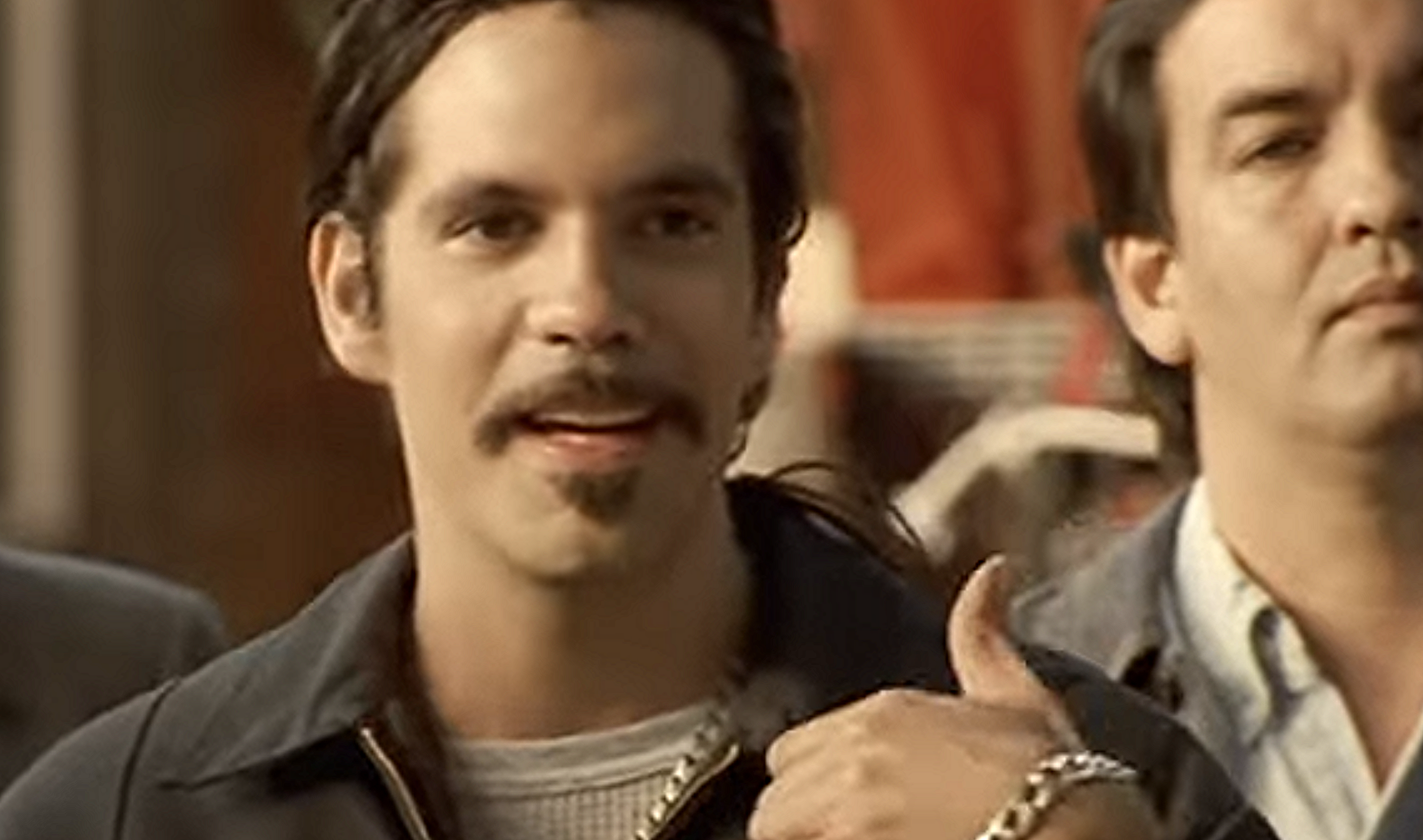
Nicky Katt’s “Limey” Guy — One of Greatest Quirky Sociopaths in Movie History

HE deeply mourns the death of actor Nicky Katt, who only made it to age 54 so some ill wind or unlucky incident took him down. No cause of death has been reported. I’m very sorry.

Rest assured that Katt’s acclaimed performance as “Stacy the low-rent hitman” in Steven Soderbergh;’s The Limey (’99) will live forever in the annals of cinema.

I know nothing but my wild guess is that Katt’s unfortunate failure to match, must less top, this one great performance over the last 26 years might have been a factor in his demise. I’m guessing that the poor guy died of a broken heart. He was 28 or 29 when The Limey was filmed.

All screen villains are perverse or flamboyant in one way or another, but it’s fairly rare to run into one with with a truly twisted or offbeat attitude. In an off-handed, no-big-deal, between-the-lines sort of way, I mean. Not a “comedic” figure, but a dour, compromised soul whose bizarre manner, obsessions and quirks makes him/her a bit laughable or at least amusing to some extent.

Stacy was one such figure. Fairly sullen and hostile and always ready to clip someone if the money is right, but there was something about his smart-ass manner that suggested a less-than-fully-malicious fellow. Something vaguely nihilistic in a laid-back way.

About halfway through The Limey Katt delivered an improvised bad-attitude riff while he and Joe Dallesandro watched a TV show being shot. “Why don’t they make shows about people’s daily lives?,” Katt/Stacy said. “That you’d be interested in watching, y’know? Sick Old Man or Skinny Little Weakling. Big Fat Guy…wouldn’t you watch a show called Big Fat Guy? I’d watch that fucking show.”

Katt was lucky that The Limey was shot in ’98 or ’99 because today you’re not allowed to say “big fat guy” in a movie as this would constitute fat-shaming, and anyone deemed guilty of writing or saying this would be eternally banished from the film industry and forced to move to somewhere in the hinterland to work in fast food.

Gordon Scott’s Tarzan Was Handsome and Urbane

Wouldn’t you imagine that Tarzan’s hair would be less finely cut and carefully styled? I know it was the conservative ’50s and all…

Gordon Scott died in 2007, at age 80. He was married to Vera Miles (she costarred in Tarzan’s Hidden Jungle) from 1956 to 1960.

A 1959 Tarzan movie shot in Kenya and at London’s Shepperton Studios, Tarzan’s Greatest Adventure costarred Anthony Quayle and Sean Connery, and was directed by John Guillerman,the journeyman helmer of The Blue Max, The Bridge at Remagen, The Towering Inferno, Dino’s King Kong and Death on the Nile.

Go to the 1:00 mark for a surprise.

In Order To Live Well

Jonathan Tropper‘s Your Friends and Neighbors is, first and foremost, darkly comedic in a dry, deadpan sort of way…a sardonic, amoral, noir-inflected, upper-middle-class, nine-episode Apple series about…well, thievery and nihilism and living on the existential edge of self-destruction, or something like that.

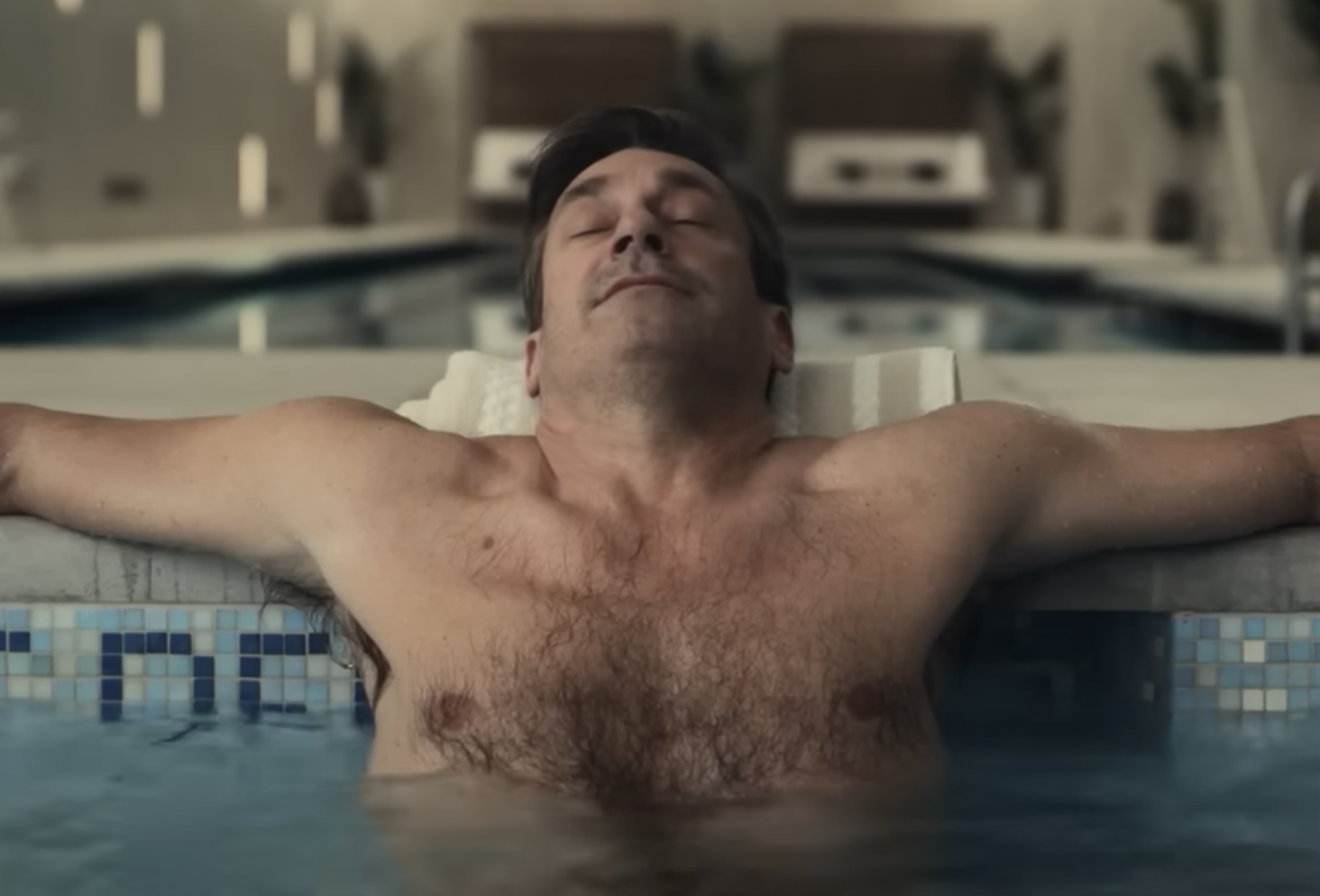
The flush life of a hedge-fund guy (Jon Hamm‘s “Coop”) swiftly falls apart after being canned by his shithead boss (Corbin Bernsen), and then it gets a bit gloomier. And then worse once Coop decides to become John Robie as a way to maintain financial stability.

And Tropper’s dialgoue is really, really delicious. During the first significant conversation scene (Coop and Olivia Munn‘s “Sam” at a bar) I sat up in my chair and went “wow…the repartee is as good in a wise-but-fatigued 2025 way as Fred MacMurray and Barbara Stanwyck‘s initial ping-pong seduction scene in Billy Wilder‘s Double Indemnity.

You just have to figure a way to not judge Coop because he doesn’t feel all that badly about becoming a jewel thief. His attitude is basically “they won’t miss it…they’re filthy rich as well as, no offense, assholes, and I should know because I’m an asshole too, or at least I was before losing my job.”

The entire first episode sits below.

Emanuel, Buttigeig, Newsom Forsaking Woke At Every Turn

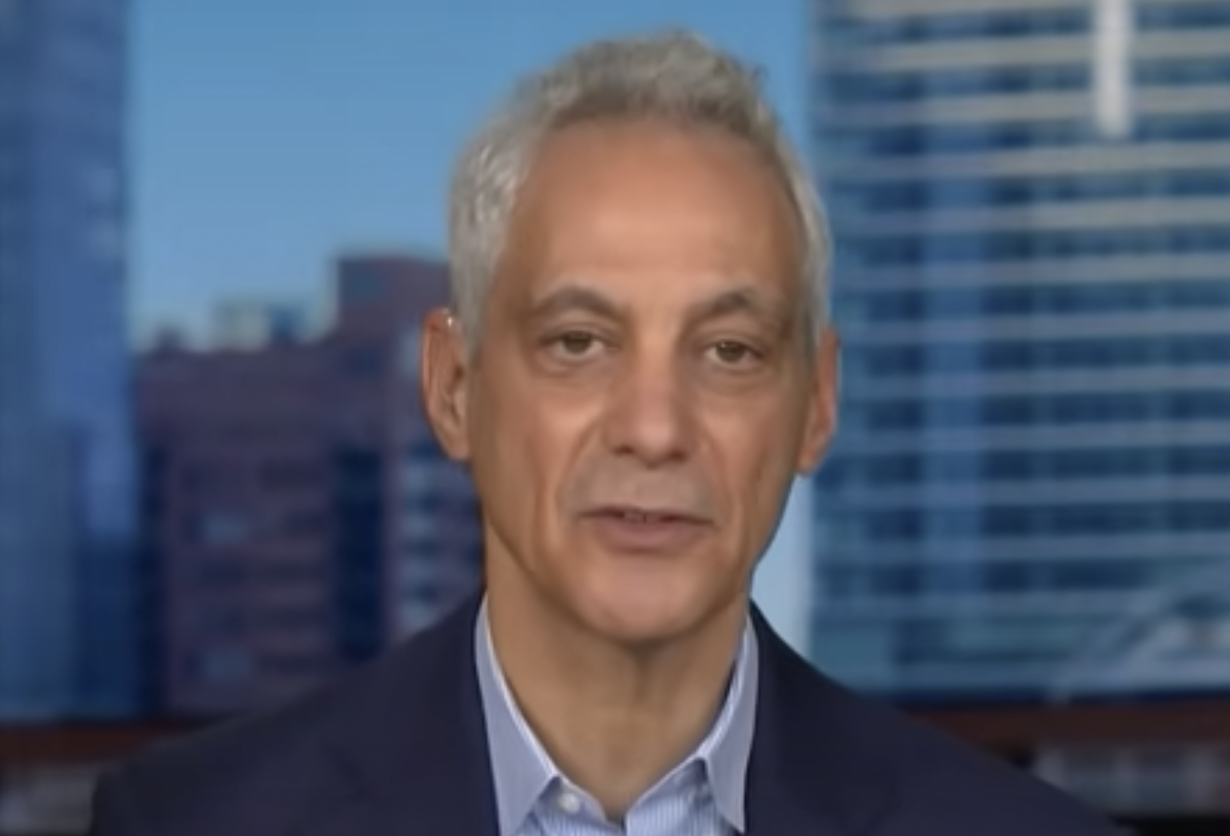
My current preferences for the ’28 Democratic race are Rahm Emanuel (tough, brilliant, street-fighter), Gavin Newsom (tap-dancing former wokey) and Pete Buttigeig (smartest and most compassionate of them all).

Amanpour and Company‘s Walter Isaacson: “A lot of people, including a lot of Democrats, have said that the Democratic brand has become somewhat toxic. Is there some truth to that, and if so, why?”

Rahm Emanuel: “I would take the word ‘somewhat’ out. [The brand] is toxic. No caveats or disclaimers. There are two words that define the Democratic party for the public — ‘weak‘ and ‘woke.’ And neither one is favorable, and that’s been a process of the Democrats being seen as weak in a time in which people prefer strength, and woke being not just woke on the cultural left issues but focused almost entirely [on that] and drowning out everything else you want to say.”

As Recently As 30 Years Ago

Friendo: I was watching Quiz Show last night and thinking there will never be movies like this ever again.
HE: Probably not. Not with hefty budgets and top-tier talent. Middle-class movies have been dead for a while now.
Friendo: A whole generational shift. Zoomers, not to mention Alphas…no recollection of movies like this, and they’ll never look for them as a result.
HE: Probably true. Tragic.
Friendo: Minecraft is a movie to them. But even the best ones coming out later this year….none of them are going to be Quiz Show, which wasn’t even the best of the best. It was just a standard good movie in 1994, but it stands out now. Ask anyone outside this racket if they watch movies, and they’ll usually say “ehhh, now and then.” Or more often “no.” The reason is that the last eight to ten years of movies have been instructional…movies with social agendas.
HE: Have you seen Warfare?
Friendo: No — it’s in theatres now, right? The only movie I will pay to see right now is Sinners.
HE: Sinners is allegedly very instructional, I’ve heard. Owen Gleiberman wrote that the vampires “are presented as extensions of racist white culture.” Richard Lawson said it’s about “black entrepreneurs, artists, and revelers versus predacious white fiends.” That’s not instructional?

Love Some Caribbean Weather Right Now

Because I’m sick to death of current April weather in the NYC area…overly cool bordering on cold, damp…fecking 34 degrees now with light rain expected…warm up, will ya?…Jesus.

I’m trying to imagine myself all stubbly-faced, overweight and tattoed, and wearing an oversized and half-unbuttoned shirt, blousy shorts and a backwards baseball cap.

Why was the location kept under wraps? The Bahamas, Key West, Turks and Caicos?

“Make Of It What You Will”

A person who doesn’t love dogs or cats has, I’m certain, something missing inside. An absence of compassion, warmth, empathy. And that’s an Orange Plague thing.

During last night’s “book report” about his 150-minute dinner and White House tour with Donald Trump on Monday, 3.31, Bill Maher quoted the 47th president as saying that “a lot of the presidents had dogs for political purposes.” Maher said, a tiny bit testily, “No, people love dogs…that’s what that is.” And Donald Trump replied, “Yeah, okay, that’s true.”

The real Donald Trump, who is undoubtedly a sociopath and a morbid narcissist, is the guy who’s never had a dog (or, as far as I know, a cat) and suspects that certain dog-owning presidents were putting on a show.

The sociopathic Trump, the one who performs at the drop of a hat and plays people for his own gain (a trait shared by 97% of film industry types and even, truth be told, myself from time to time) was the “yeah, okay, that’s true” guy.

Maher’s book report was plain and straight as far as it went, but deep down this half-Irish, half-Jewish dude from a middle-class upbringing in northern New Jersey had to feel flattered and turned on by being respectfully received and treated obligingly by a White House occupant.

And yet he surely understands that Trump was playing him that night (just as Maher himself, a pothead charmer and a sharp, moderate-mannered politician in his own way, was surely playing Trump for his own gain), and that Trump wanted Maher to pass along the “hey, he plays a MAGA tyrant on camera and during contentious press interviews, but he was a decent, occasionally chuckling guy and a gracious host with me” thing. And he got that last night.

We’re all adults on this forum, and are generally well educated so I don’t need to post boilerplate definitions of sociopathic behavior, especially as it concerns high achieving types.

Read more

Man Up and Apologize…Simple

I think we can all agree that callous or physically abusive behavior on a movie set is a bad thing, no matter who’s dishing it out or taking it. Simply acting like a dick….that doesn’t fly either.

Earlier today Bella Thorne accused Mickey Rourke of giving her a hard time during the making of Girl. If her accusations are valid Rourke owes her an apology and a general pledge not to behave this way again with anyone.

Thorne’s apparent goal in making a stink about this is presumably to obtain said apology…right? She hasn’t filed a lawsuit so the idea is apparently to make him sweat or pay on some social or professional level.

Why didn’t she forcefully confront him after the film wrapped in late 2019 or or during the pre-release promotion in the late summer or 2020? Why did she wait almost five years to lower the boom?

Ted Kotcheff Enjoyed Two Career Peaks, Both in ’80s

I’m sorry about the passing of director Ted Kotcheff, whom I first met in the early fall of ’82 when he was promoting First Blood. I liked Ted — my idea of an excellent fellow — smart, friendly, engaging in a laid-back way. And he knew how to direct efficiently, and by my sights he wasn’t just a rote get-it-done guy. He had balls, character. His better films had a certain gravitas.

Kotcheff was fortunate enough to enjoy a 15-year peak period from the mid ’70s to late ’80sThe Apprenticeship of Duddy Kravitz (’74), Fun with Dick and Jane (’77), Who Is Killing the Great Chefs of Europe? (’78), North Dallas Forty (’79), Split Image (’82), First Blood (’82), Uncommon Valor (’83), Joshua Then and Now (’85), Switching Channels (1988) and Weekend at Bernie’s (’89).

Of these ten films, the best were North Dallas Forty (Nick Nolte as an aging football player, dependant on painkillers), First Blood (still the best Rambo film ever, and a huge financial success) and Uncommon Valor (former Marine Gene Hackman leading a crack team of commandos to rescue his son from a Vietnamese P.O.W. camp).

Weekend at Bernies was also a sizable hit, of course (it gradually became a cult film), but I personally hated it — coarse and crude, made for the animals.

During the First Blood promotion Kotcheff was kind enough to feed me a lot of good info on the troubled making of Tootsie. I wrote a big labored piece about this for The Film Journal, which I was managing editor of. I met Kotcheff and screenwriter Robert Kaufman at Joe Allen one night in early October, and I was given me a big rundown on the convoluted pre-production and production experience…excellent stuff.

The gist was the then-astounding notion that a present-day New York comedy about an actor who can’t get a job could cost $21 million, which at the time was way above the norm.

Kaufman was one of the uncredited Tootsie writers (along with Don McGuire, Murray Schisgal, Elaine May, director Dick Richards) and the stories were fairly wild, or certainly seemed that way at the time.

Kotcheff had 94 mostly good years — we should all be so fortunate.

Delta Blues, White Vampires, Cunnilingus, “Comic-Book Brashness,” 2.76:1

In Richard Lawson‘s 4.10 Vanity Fair review, he calls Ryan Coogler‘s Sinners “a vampire movie, one that has tense fun with all the old rules — garlic, wooden stakes, needing an invitation to enter a building — but uses them in service of a sad, harrowing evocation of history.”

A second Lawson quote reads, “One could look at the two sides of Sinners — Black entrepreneurs, artists, and revelers versus predacious white fiends — and see an obvious intent. That is certainly a foundational tenet of the film’s thinking.”

Lawson is describing some kind of wicked, anguished social situation in the Mississippi Delta of the early 1930s, but seems reluctant to just spit it out. I guess “the film’s thinking” will be clear enough when I catch Sinners next week.

Variety‘s Owen Gleiberman: “Vampire metaphors are almost always erotic, but despite the rather steamy atmosphere of Sinners (at the juke joint, there’s a whole lotta hookin’ up goin’ on), that’s not what it means here. The vampires are presented as extensions of the racist white culture that wants to stop the party.”

From Peter Bradshaw‘s 4.10 Guardian review:

And “in its forthright way, Sinners is a riff on the idea of blues as a kind of music that is avidly consumed by its producers’ enemies. As Delroy Lindo’s character says: ‘White folks like the blues just fine…just not the people who make it.'”

Lawson again:

There’s no discernible difference between digital and celluloid these days. Not to my eyes, at least. But Coogler sure knows his varying film formats and aspect ratios! And he’s a big believer in 2.76:1.

Early Awakening

Over the last few days I’ve been on a Brooke Hayward jag. Okay, a Brooke Hayward-and-Dennis Hopper thing…quite a pairing + the lore of ‘60s Hollywood and Joan Didion-ville…the counter-cultural turnovers, upheavals and whatnot.

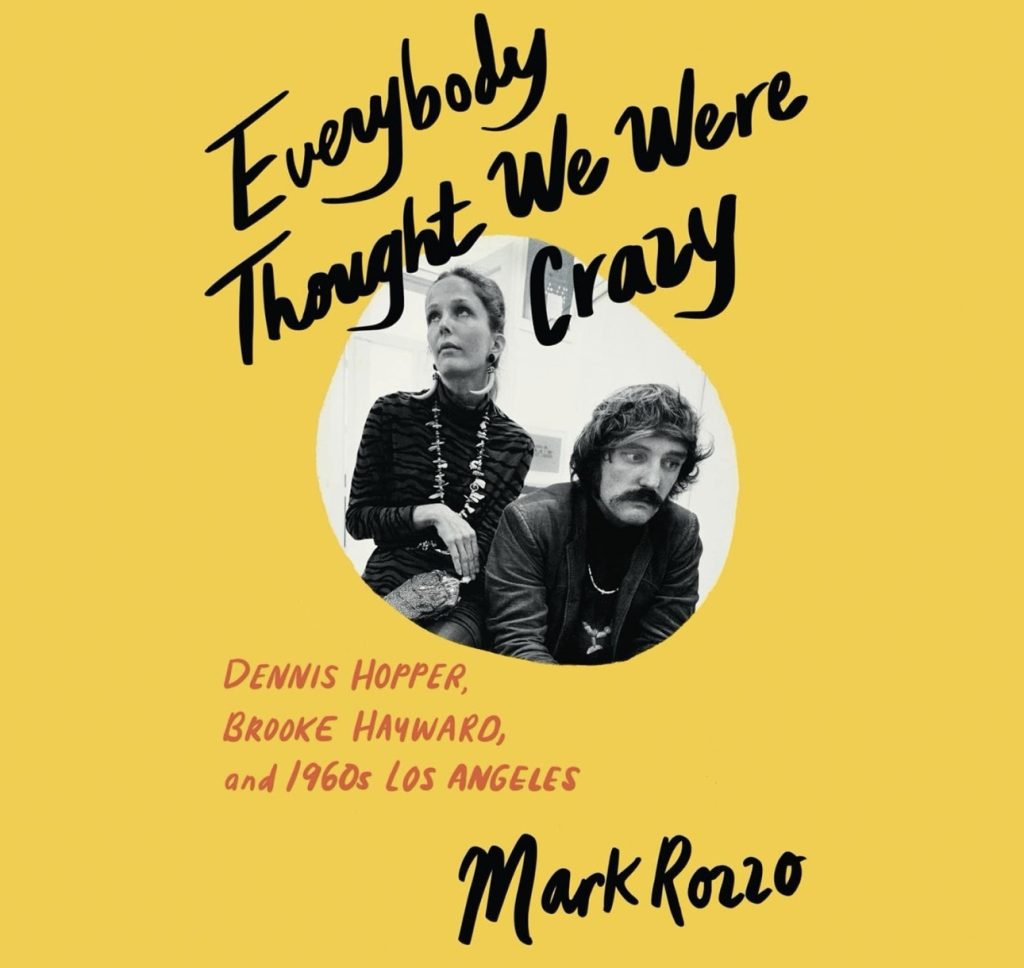
This led yesterday to Mike Rozzo’s “Everybody Thought We Were Crazy”, a 2022 book about the fraught but exciting eight-year marriage (‘61 to ‘69) between Hayward, author of 1977’s “Haywire”, one of the better torn-and-frayed Hollywood memoirs, and the eccentric Hopper.

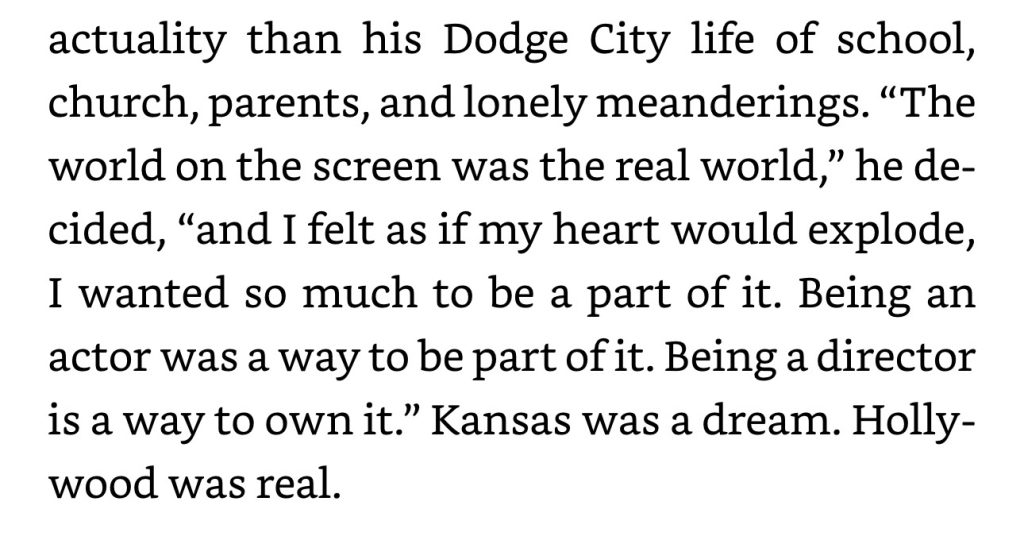
I initially wrote “nutso” to describe the late Easy Rider director and Blue Velvet costar. This might sound unkind but it takes one to know one. Not the druggy stuff, mind, as I never went down that hole. I meant it as a like-minded compliment, actually, because a paragraph in Rozzo’s book about a seminal moment in Hopper’s Kansas childhood reminded me of my own.

I didn’t feel that my childhood was less “real” than the realms I sank into when I began to catch films as a kid, but it was far less attractive. If anything it was too real.

All I wanted in my tweens and teens was to obtain parole from the repressive suburban gulag I’d been raised under and thereafter blend into (taste, know more intimately, in some way contribute to, anything) the extra-level pizazz of movies.

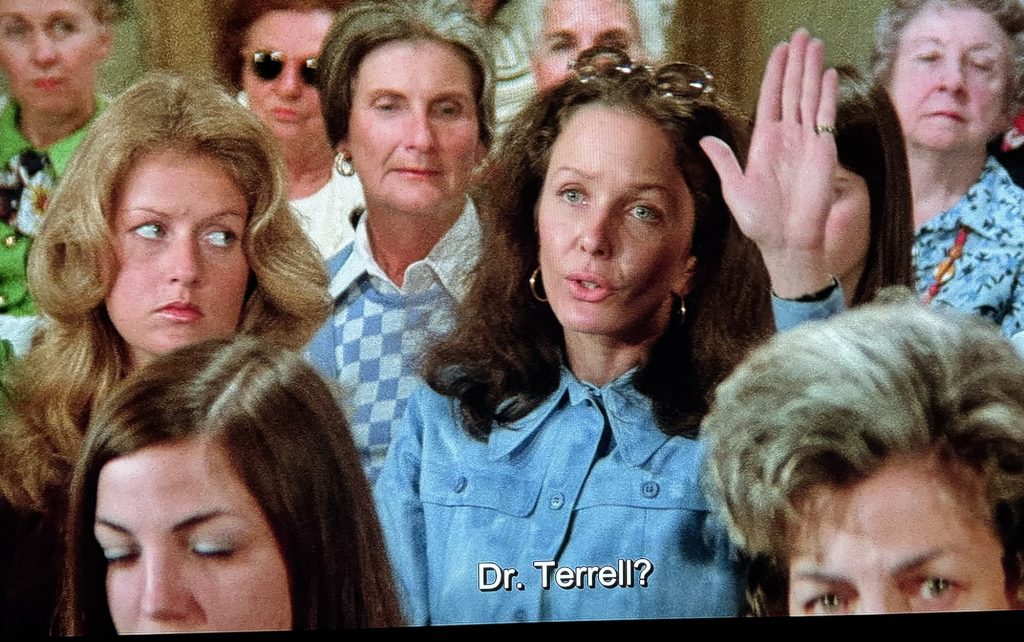
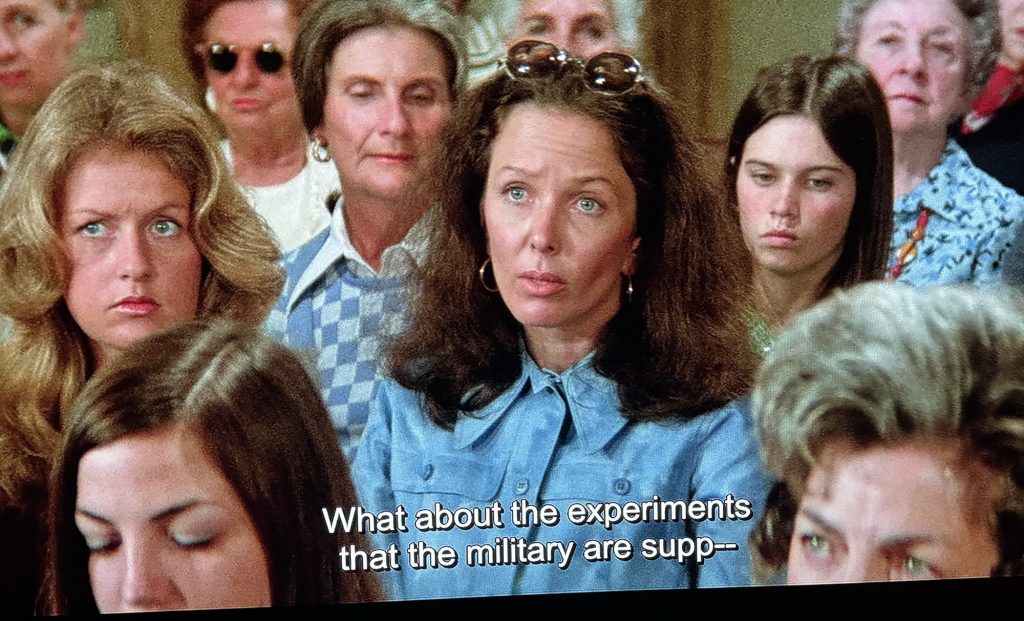
My Hayward dive began with an opening lecture scene in Mike Nichols’ The Day of the Dolphin (‘73), in which the mid-30ish Hayward, whose ‘60s acting career never took off, asks George C. Scott about governmental dolphin research.

Hayward is one of three female questioners in this scene, but she seems like the most knowledgable and grounded on some level…there’s a whiff of character and conviction in her WASPy features and confident tone of voice…you can feel it. On top of which she’s quite beautiful.

I’ve also been flipping through the almost half-century-old “Haywire”, which digs into Brooke’s Hollywood vs. northeast corridor upbringing and her turbulent young adulthood.

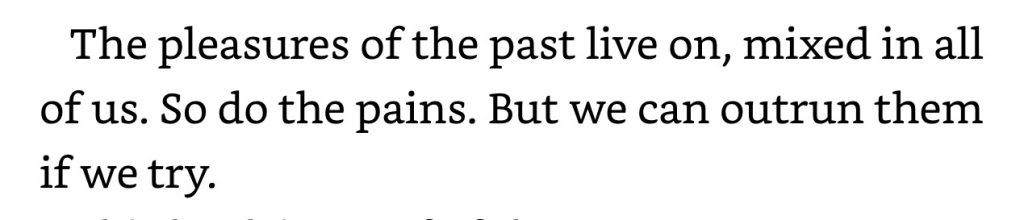
The late Buck Henry, an old friend who wrote the screenplay for The Day of the Dolphin and was probably instrumental in getting Brooke that cameo, wrote a forward intro for a 2010 re-issue of “Haywire”. It ends with this line:

—————————————————-