Burned

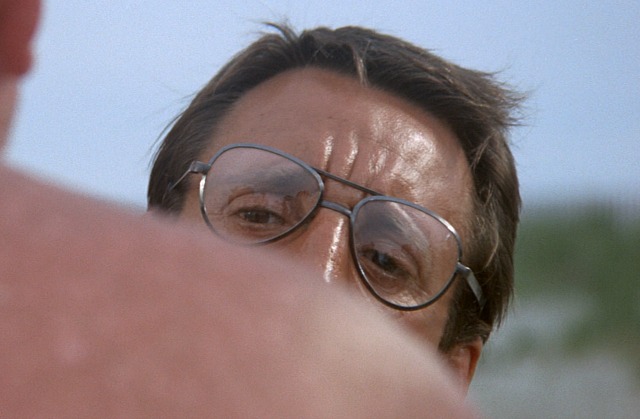
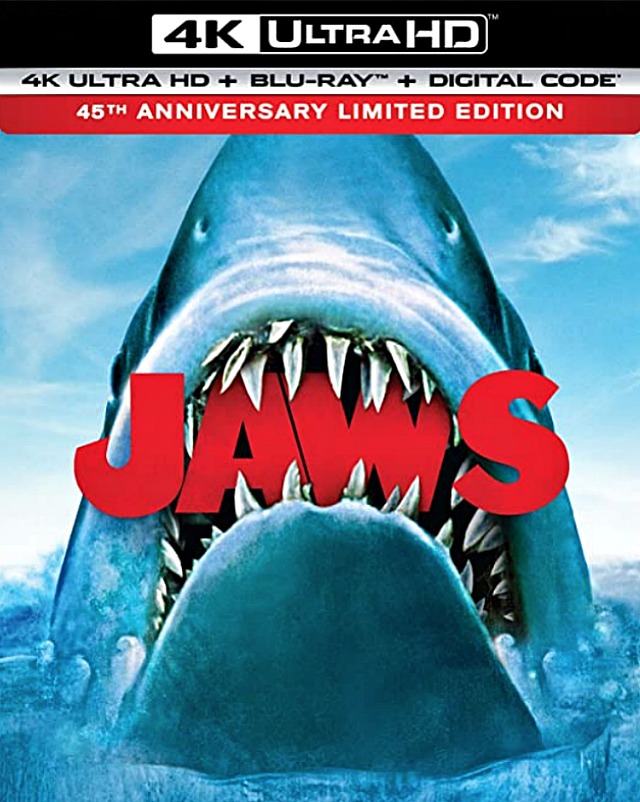
My recently ordered Jaws 4K Bluray was on the doorstep when we returned last evening (7:45ish) from Mexico. I popped it into my Samsung 4K Bluray player around 9:30 pm, and almost immediately I was going “wait…what? This is it?”

Because I wasn’t seeing my #1 basic requirement when it comes to 4K discs, which is a moderately exciting bump or an agreeable change for the better compared to the most recently released 1080p version. Official HE verdict: The 4K upgrade of Steven Spielberg‘s sea-change classic is approvable but underwhelming.

Here’s how I explained it last night to a tech-savvy industry friend: “I watched the 4K Jaws tonight, and while it certainly looks crisp and clean and handsome enough, there’s no detectable enhancement compared to the eight-year-old 1080p Bluray version. Not to these eyes, at least.
“And please don’t start with your old ‘have your 4K player and TV been properly calibrated?’ question, which you throw at me every time there’s an issue. My set-up is close to dead perfect. Everything always looks great on it. I’ve never been happier with a TV in my life.

“But the 4K Jaws disappoints. We tend to forget that Bill Butler‘s cinematography was never intended to be eye candy. It’s a utilitarian small-town drama mixed with a monster flick. Butler delivered pro-level work, but the idea was never to get people to drop to their knees. Obviously shot with efficiency, but never an attempt to show off. Butler was unpretentiously serving the story while delivering natural atmospheric elements.

“We tend to forget that color-wise Jaws is just this side of slightly desaturated, and many of the exterior shots have a kind of hazy seaside humidity appearance. It’s almost a little soft-focusy, and it certainly looks misty in some daytime scenes. Which is fine in itself. I’m just saying that it looks and feels like the 2012 Bluray. Not a bad looking presentation, but it hardly ever jumps out at you. It never makes you say ‘wow, I’ve never seen it look this good.’

“The bottom line is that I feel burned. My feeling is that Universal Home Video hustled me. They sold me a bill of goods. They tied a tin can to my tail. They led me down a garden path. They flim-flammed me.”

Tech guy has also seen the 4K Jaws, and his assessment was more generous. “It’s very different from the 2012 Bluray,” he said. “A far more cohesive image. Solid colors. Nice HDR that actually works. Dolby Atmos, which you can play with a sound bar. And perfect grain levels.”

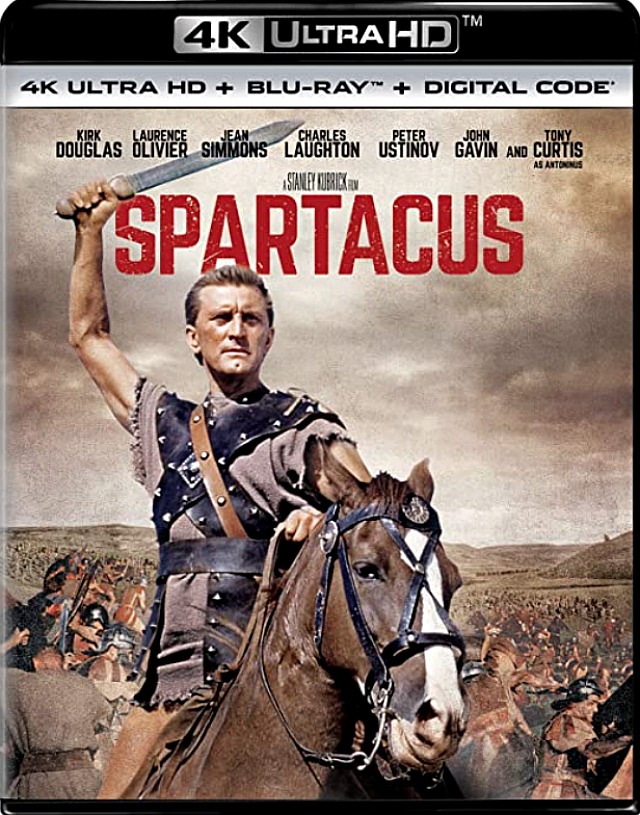
HE reply: “What about the forthcoming Spartacus 4K disc (7.21)? Have you heard if it delivers any kind of bump? I’m not sure I want to shell out for this. I’m feeling a bit swindled here.

“Remember that I’m a Bluray peon — I look and see and judge in peon terms. Your technical perspective and insight are reflected in what you wrote and are much appreciated, but it doesn’t look substantially different than the 2012 Bluray. Not really.

No bump, no buy. That’s how peons see things when it comes to a potential 4K purchase.”

However, the 4K Jaws also contains that legendary two-hour “Making of Jaws” doc that stretches back to the laser-disc days. If you’ve never watched it, please do.

Rally Round

Another beauty from the Lincoln Project. Yes, agreed — the opening line is perfect. Trump has called these guys and their political ilk “killers’, and in terms of fanning and capturing the surge of wholly justifiable outrage that’s still happening, he’s not wrong.

While Speaking Of “Billy Budd”…

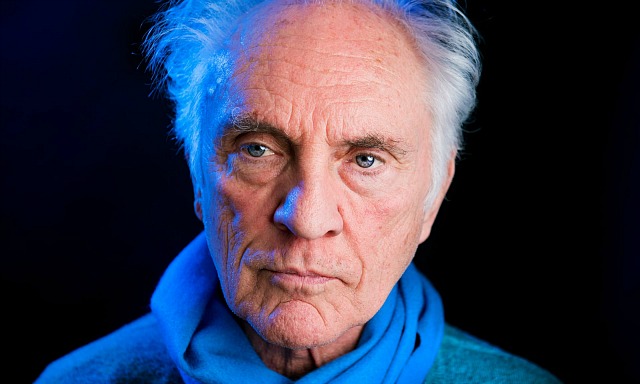
In a discussion with Steven Soderbergh on the beautiful, relatively recent Billy Budd Bluray, Terence Stamp is asked about his blonde angel appearance in this 1962 film, which was shot when he was 23 or thereabouts.

Stamp replies that “getting older is like being steadily, increasingly punished for a crime I didn’t commit.”

I’m not calling this any kind of profound universal truth, but it’s certainly a biological one. After a couple of drinks most once-beautiful lads and lassies with any inclination toward candor will admit to feeling this way deep down. Optimistic people claim that aging is not a “massacre”, as some have called it, but generally a good thing because sensible 45-plus lifestyles will usually nudge you into greater kindnesses, a mellower mindset and a deeper, richer spiritual awareness of the cosmic altogether.

Which is all true, but at the same aging thins your hair out or flat-out destroys it unless you seek a Prague remedy. It also makes your nose and ears look bigger, and your teeth smaller and less white.

On the other hand it’s nice to know that the Prague option is always there. I for one am glad I took care of some business in that fine, fair city. Plus it’s a great foodie town and one of the greatest places on the planet to just roam around endlessly minus any particular destination or game plan.

Under Yoke of Wokester Khmer Rouge?

“We should worry about the [wokester] hive mind policing content at the New York Times. We should worry when any story is suppressed to tell a more idealized one, a safer one, or one that won’t offend. You can’t even find legit criticism of the forced resignation of op-ed editor James Bennet beyond rightwing outlets because the only outlet that would cover it would have been the Times under Bennett, who attempted to deliver an opposing viewpoint. They aren’t going to police themselves but they should.

“The truth is that the New York Times must learn how to stand up to Twitter. While every respectable outlet should carefully read every potentially incendiary piece before publication ten times over, they should never not publish something for fear of offending. And if they do make that decision not to publish out of a responsibility to keep the peace, that is their call.

“But trial by mob can’t ever be an option. Then you become no better than the Nazis or hardcore Christians advocating for book-burning because material in it might be ‘dangerous’ to young minds.” — from Sasha Stone‘s “The New York Times and Others Must Stand up to Twitter for the Sake of Journalism and Freedom of Speech,” posted on Medium on 7.9.

From African American Perspective…

No defunding or disbanding but…? Significant portions of police departments are regarded as unrestrained brutalists who represent a kind of governmentally-funded Trumpian militia. So if you, the Hollywood Elsewhere administrator, were in charge of getting rid of “the bad apples,” how would you do it? Obviously the uniformed goons need to go, but how do we decide which goons are the worst? I’m asking.

Read more

The Staten Island Funnies

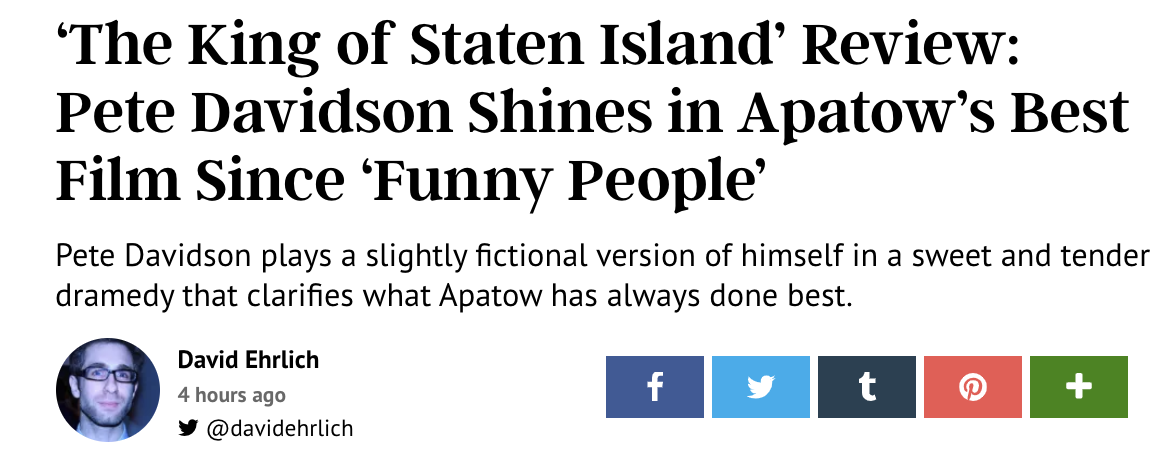
How about spending two hours and 16 minutes with a smart-assed, perpetually stoned flatliner from arguably the most low-rent culture on the Eastern seaboard and certainly the scuzziest borough of New York City, a place so low on the cultural totem pole than even New Jerseyans look down upon it? And at the same time a well-crafted film with heart and honesty and a relatable personality? And which ends…well, hopefully?

You can give the side-eye to Judd Apatow and Pete Davidson‘s The King of Staten Island all you want. You can say it’s too oddball fringe-y, too lower-depths, too submerged on its own weed planet and too caught up in nihilism and arrested development to connect with Joe and Jane Popcorn.

Which I strongly disagree with. Because it’s funny and plain-spoken (if a bit dismaying at times) and it doesn’t back off from an unusual milieu and mentality, and certainly from Pete Davidson‘s “Scott”, a layabout for the ages.

KOSI made me smile and guffaw and even laugh out loud several times (highly unusual for an LQTM-er). And I believed every word of it…every line, emotion, situation, character. It’s peddling sardonic humor that doesn’t feel schticky, although I guess it is. The tone is low-key raw, kinda nervy, certainly unpretentious and 90% bullshit-free.

Okay, it softens up during the final passage, but I welcomed this with open arms. Because a film about wall-to-wall, start-to-finish nihilism would be too much. And the length (136 minutes) doesn’t feel longish but completely necessary and natural.

And it fills out Davidson’s comic persona to the extent that he’s suddenly a completely compelling big-screen presence and (am I allowed to say this?) a movie star. And I loved the supporting turns by Bel Powley (whom I’d never really warmed to before), Bill Burr (whom I admire but have never found screamingly funny as a stand-op), Marisa Tomei and the always authentic Steve Buscemi.

It’s a shame this Universal release is going straight-to-streaming this Friday (6.12), as I’d love to watch it a third time at the Arclight with a couple of hundred know-it-alls and generally, you know, groove with the room.

The script (co-penned by Apatow, Davidson and Dave Sirus) is….what, 75% inspired by Davidson’s own life? Same Staten Island upbringing, same deceased fireman dad (killed in a local apartment fire rather than inside the World Trade Center on 9/11, which actually happened when Pete was 7), same living-with-mom (Marisa Tomei) and getting-ripped-with-loser-friends lifestyle. Quippy and weird and oddly endearing.

The difference is that it imagines how things might have turned out if Davidson hadn’t begun to try stand-up comedy in his mid teens and had stayed in an aimless funk into his mid 20s.

Aside from an unlikely dream of becoming a tattoo artist and an idiotic plan to open a combination tattoo parlor and restaurant, Scott is living a kind of “whatever” lifestyle, smoking weed and poking at this or that pretention, generally hanging back as time flies by and even flirting with stupid suicide, as dramatized in the opening scene.

KOSI reminded me at times of the Last Exit to Brooklyn milieu and the boozy despairing blokes in the British “kitchen sink” dramas of the late ’50s and early ’60s.

Scott is in a friends-with-benefits relationship with longtime friend Kelsey (Powley). His disapproving sister Claire (Maude Apatow) is about to leave for college. And his three bonged-out friends are on the verge of becoming petty felons.

And then mom begins dating a divorced, bald-headed fireman with a rangy moustache (Burr) and Scott is like “what?” And the film becomes a story about an emotionally stalled quipster-stoner trying to break up their relationship. But eventually (and thank God) there’s a way out of that.

Read more

“The Smell of Excuses”

I’m still of the view that ex-N.Y. Times op-ed editor James Bennet‘s statement about not having read the Tom Cotton “send in the troops” piece is suspicious, at the very least.

I was kicked around last night for saying this, but it just doesn’t smell right. The mob can pretend that Bennet is gone because he was simply a careless editor in this instance, but my gut says no. And I certainly don’t believe the piece wasn’t checked and assessed by deputy editor James Dao and probably others.

Here’s how Bennet explained things on June 4th. And here’s that 6.2 Morning Consult poll saying that 58% of the American public supported Cotton’s view about stopping looters. The Khmer Rouge didn’t want to acknowledge this viewpoint, much less see it supported in a Times op-ed.

The bottom line, I suspect, is Times wokester outrage over the Cotton piece was such that someone had to lose their job, someone had to take the hit.

From The Guardian‘s Kenan Malik, posted on 6.7 (yesterday), in a piece titled “Publish and Debate, NYT, But Don’t Be In Denial“: “The claims that op-ed editor James Bennet had not read the piece before publication, or that there was insufficient fact-checking, have the smell of excuses for a climbdown after the fact.

“Like many liberal newspapers, the NYT has responded to the rise of a more polarized politics by hiring conservative columnists, such as Bret Stephens. The problem, though, is not a lack of conservative voices. It’s the failure to create a wider culture of debate and engagement and an entrenchment of the ‘you can’t say that’ ethos. That’s an issue not just in liberal circles. And not just at the New York Times.”

Journo pally: “There is no way Cotton’s piece wasn’t read. Carefully. They knew what they had.

“And if Bennet didn’t read it before publication then who did? There is no way Cotton’s piece wasn’t read. Carefully. The Times calls everyone. They fact-check everything as a rule. I’ve been in stories in the Times [and] I get calls from fact checkers.

“The revised explanation is an excuse to quell the angry mob. Some are happy with this excuse but it isn’t why Bennet resigned.

“The Times-Bennet-Cotton thing is also part of a recent [wokester] pattern — Hachette/Woody Allen, Chris Matthews, Philadelphia Inquirer fallout (“Buildings Matter”), etc.

“Bennet’s statement that he didn’t read the piece suggests that if he had he would have made a different decision. But no matter how you slice this episode it comes back bullshit. From the official, recently revised Times perspective. Either they are not publishing it because they think it puts black lives at risk or they are being pressured because others think same.

“The fact is, no one told the story of those 58% of Americans who were scared and wanted to be protected by the military if need be. No one on the left wanted that to be true. But it was true.”