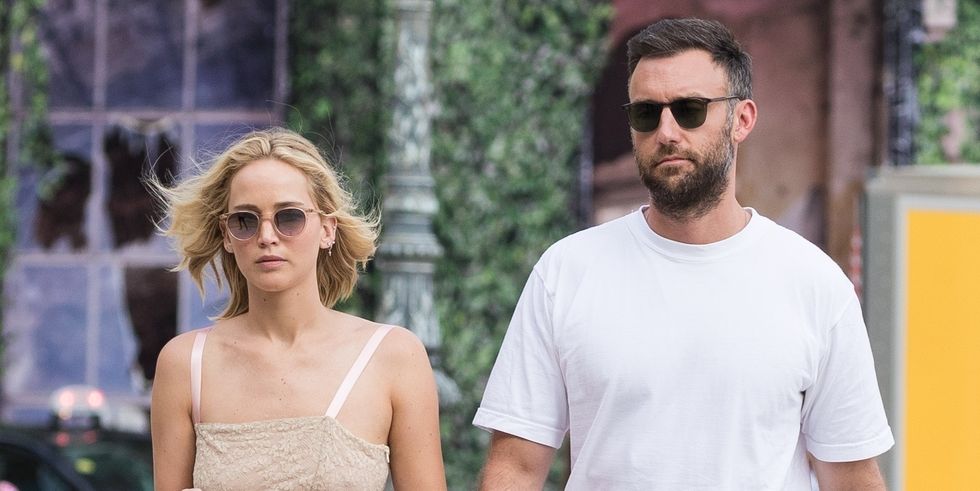
The fact that Jennifer Lawrence and art dealer Cooke Maroney got married last month is not really my business. Obviously my mentioning it in the column makes it a matter of marginal interest…why am I writing this? The focus is Maroney’s neck beard. Failing to trim or shave neck-beard growth has always struck me, no offense, as an uncouth, swarthy, dock-worker thing. I guess not. Now it’s a sign of a free and untrammeled spirit. But if I was in a hiring position an undisciplined neck beard would give me pause, at the very least.
“Justice and decency are carried in the heart of the captain or they be not aboard. It is for this reason that the Admiralty has always sought to appoint its officers from the ranks of gentlemen. The court regrets to note that the appointment of Captain William Bligh was, in that respect, a failure.”
— spoken by the great Henry Daniell, whose most widely appreciated performance was that of Mr. Mayhew, an instructing solicitor to Charles Laughton‘s leading counsel barrister, Sir Wilfrid Robarts, in Witness for the Prosecution (’57).
The inside word about Benh Zeitlin‘s Wendy (Fox Searchlight, 2.28.20) has been so subdued and frankly somber that I forgot to post the trailer when it surfaced yesterday. I didn’t mean to ignore it — it just slipped my mind. It’s a re-imagining of Peter Pan, but it doesn’t appear to involve flying. Principal photography began two and a half years ago. Costarring Devin France, Tommie Lynn Milazzo and Shay Walker.
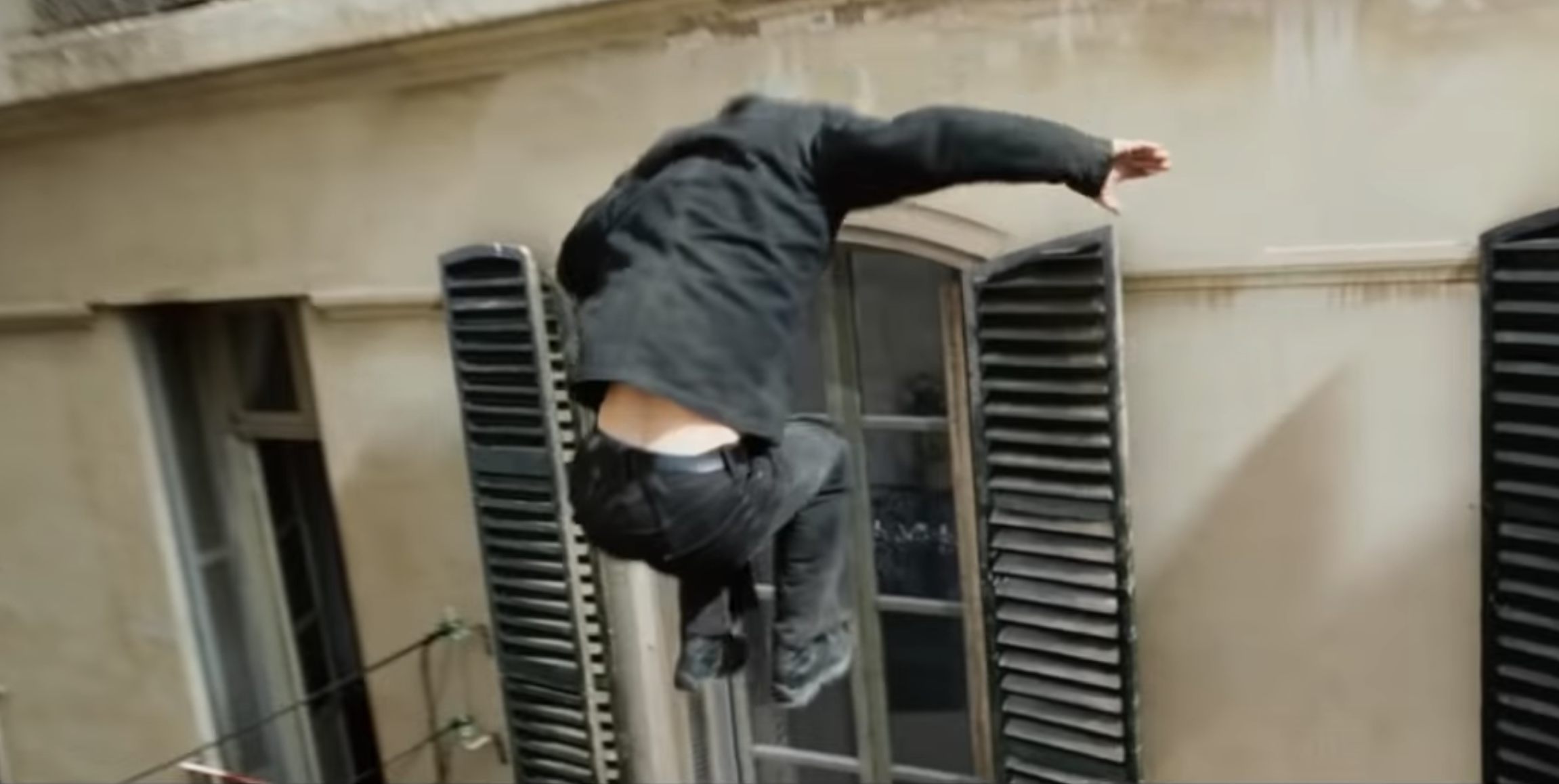
Action heroes making great, gravity-defying leaps across alleyways and narrow streets has become a bullshit cliche. It worked the best in The Bourne Ultimatum (’07), when Matt Damon leapt through the window of a Tangier apartment building, across a narrow alley and then crashed through a window of a neighboring building.
Nominations for the 2020 Cinema Eye Honors Awards were announced this afternoon, and all but three of the films are concerned with progressive social portraiture.
American Factory and Apollo 11 (a history doc which HE greatly enjoyed and strongly endorses) lead with 5 nominations. Aquarela, The Cave, For Sama, Beyoncé’s Homecoming, Honeyland and Midnight Family have 3 noms each. Not to mention 17 Blocks, The Amazing Johnathan Documentary, Ask Dr. Ruth, The Biggest Little Farm, Knock Down the House and Maiden.
The only nominee that delivers something a little different is Madds Brugger‘s Cold Case Hammarskjöld, a curious and sometimes perverse dig into a quietly horrifying South African saga about racism.
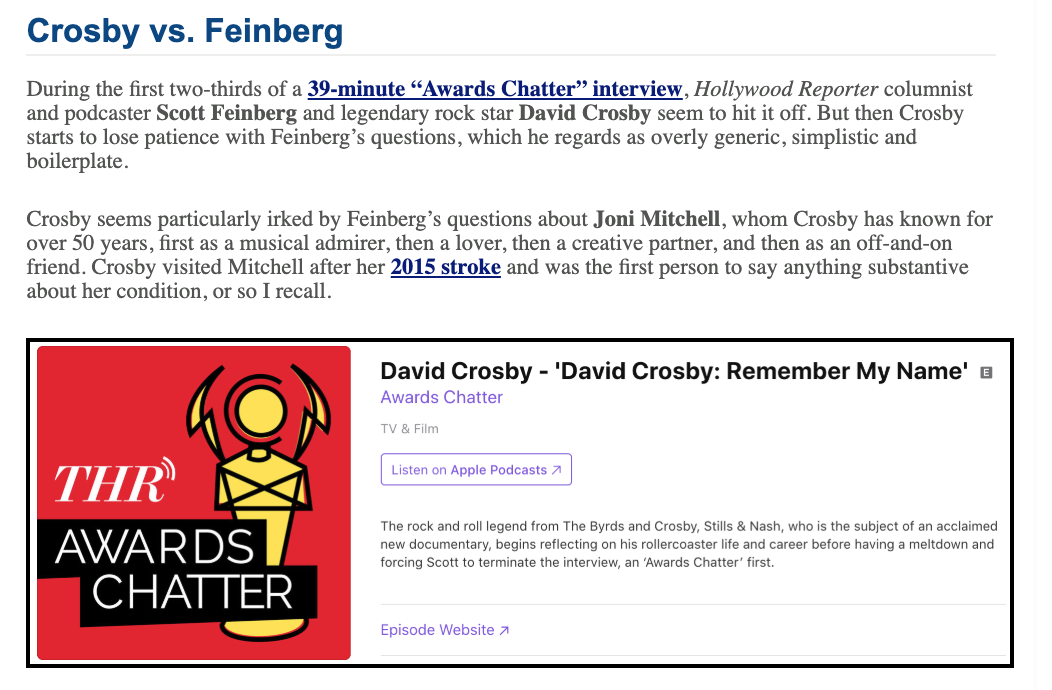
“There’s no question that Eaton and Crowe’s doc was heads and shoulders above many if not most other 2019 contenders, but Crosby’s show of temper and obstinacy gave people a reason not to vote for it. Obviously Crosby should have held himself in check, but it’s really a shame. Talk about a conversational calamity. Tell me I’m wrong.”
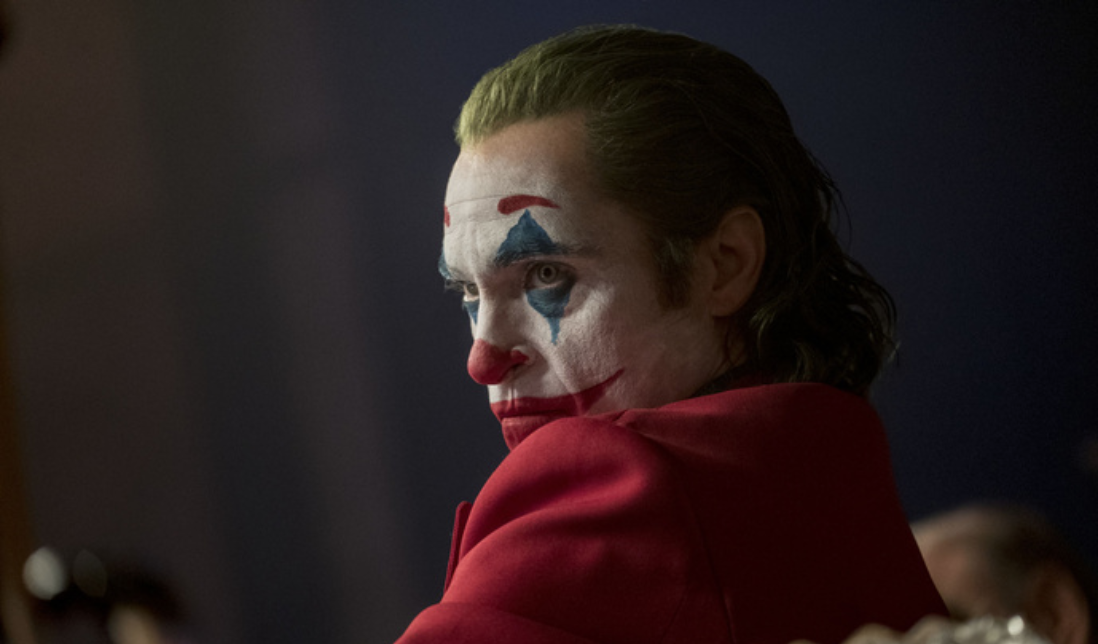
“Joker represents, depending on who’s making the argument, one or more of the following: (a) the belligerence of an entitled, largely male fan base demanding that its preferred genre be rewarded; (b) the most stentorian case yet that comic-book-based movies can be grim, dystopian, R-rated, spandex-free CINEMAAAHH; (c) an example of the kind of high-grossing smash the Oscars must nominate in order to stay relevant; (d) exactly the kind of movie Martin Scorsese is complaining about; (e) exactly the kind of movie Martin Scorsese would be making if he were 40 years younger; (f) a shallow, cosmetic appropriation of 1970s New Hollywood style; (g) a reactionary sneer at anti-capitalist protests; (h) an embodiment of the Trump era in its vague, loud, constantly shifting rage; (i) the kind of risk that too few studios are willing to take with their precious intellectual property; or (j) being the victim of people reading too much into something. (I believe about half of these.)”
Trust me — (c) is what will matter to most Academy and guild voters, and sway their votes accordingly.
Whenever I’m near a youngish couple (in a Starbucks or Coffee Bean, inside a gas station convenience store, passing them on a sidewalk), nine times out of ten the guy is apparently saying something really hilarious because the woman is throwing her head back and laughing her ass off. She’s not just giggling or chortling — she’s howling and busting a gut.
I hardly ever hear couples having patient but intense conversations about whatever. They never seem to say to each other “I know, I know, but there’s another side to this” or “please just listen to me…I’m not saying that, I’m saying this.”
This is how some conversations between Tatyana and myself tend to go (not all of them but now and then). How many times do I say something that makes Tatyana shriek with laughter? It happens from time to time, but infrequently.
The best I can figure is that the couples I’m observing are either on first dates or just getting to know each other, and so the women are “performing” or, you know, projecting exuberant responses to whatever the guy is saying. They’re turning on the gush as a way of saying “you’re cool, I like you, you’re a brilliant alpha guy, keep it up.” But it feels so phony. Committed couples rarely howl with laughter at each other’s remarks. When you really get to know someone there aren’t that many secrets or surprises.
All I can say is that the fun couples are a real drag to be around or overhear. More often than not I look at them with expressions of slight disdain, and sometimes…I was going to say that I sometimes convey feelings of flat-out loathing, but I don’t actually do that. I feel the negativity, I mean, but I hide it. Just stop fucking laughing already.
If there’s one thing I want from the next James Bond film, it’s an instructional narrative about how #MeToo and #Timesup have re-shaped our culture and forced sexist dinosaur types like Daniel Craig‘s British agent to man up and face the music.
I want a Bond film in which 007 is told to shape up or ship out, baby! The old sexist behaviors don’t fly any more, Mr. Bond, so sit your ass down, stuff your junk into your pants and get with the program.
Yes, I’m kidding. Well, partly.
No, I don’t want to revisit the old classic Bond cliches, the studly old-school seducer from the ’50s and early ’60s, slinking around and dipping his wick with aplomb. The Bond character has been an openly acknowledged sexist joke for decades.
Nor do I want to meet any more Bond girls or female MI6 colleagues in the vein of Honey Rider (Ursula Andress‘s child-like character in Dr. No) or Pussy Galore (i.e., Honor Blackman‘s tough lesbian who was converted to heterosexuality by a single roll in the jay with Sir James). But at the same time I’m not all that interested in Bond being bitchslapped into #MeToo submission.
According to an 11.6 Hollywood Reporter piece by Rebecca Ford, the forthcoming No Time To Die (MGM/UA, 4.8.20) is “about bringing James Bond into the #MeToo age” and coming to terms with “an evolution” in the basic thinking behind the character and the franchise.
The fact that Bond #25 director Cary Fukanaga has hired screenwriter Phoebe Waller-Bridge (Fleabag, Crashing) to co-write No Time To Die is being touted as a cultural sea-change thing. Injections of wit and fresh cultural pizazz. Okay, fine. But at the same time you don’t want James Bond to be overly obedient…right? He’s nothing without a certain lone-wolf irreverence. Too many progressive agendas will sap the spirit of the poor fellow, not to mention the franchise as a whole.
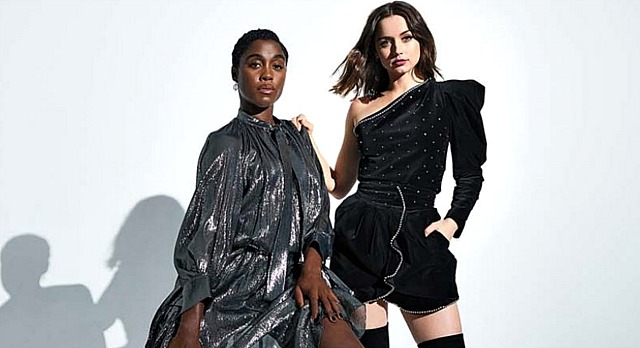
Lashana Lynch is going to stride on-screen as the new 007 after Bond briefly retires to Jamaica. Cool. But I’ve also read a rumor that Lynch may possibly become Bond’s love interest.
If Barbara Broccoli and Michael Wilson want to launch a new 007 franchise starring a feisty and fearless woman agent who has the strength and agility to fight Oddjob and other baddies, great. But if you’re going to make a James Bond film, it should be a James Bond film. Forget the Bond babe aspect, fine. But don’t cut the guy’s balls off.
In a 11.6 N.Y. Times op-ed piece, Ali Drucker risked cancellation by writing that Keanu Reeves‘ girlfriend Alexandra Grant “looks” like she could be “close” to Reeves’ age of 56.
All I said the other day was that alongside a 50something movie star, Grant’s appearance at a LACMA event last weekend defied the Hollywood red-carpet norm. “And,” I added, “there’s nothing the least bit wrong with that.” I was all but told to go sit in a corner on my high-chair and face the wall.
Grant “is not [Keanu’s] age,” Drucker writes. “But if I’m being honest in a way that perhaps verges on impolite, she looks like she could be close to it.
“And that matters. A few years ago, you’d never catch me writing about a woman’s ability to ‘pass’ for her age, but now as I’ve entered my 30s and have a few lines of my own that even fillers can’t reach, I’d love to stop thinking of the discussion around women and getting older as a transgression. After all, don’t all adults walk around this earth looking plus or minus a few years of our actual age?
“I desperately want to see wrinkles and gray hair as an objectively good thing (look at these lovely markings of your full life on this planet!), or at least as a neutral thing, but the truth is I don’t yet. I’m getting married next year, and much as many brides search around for a hair stylist or makeup artist they like, I’ve been comparison-shopping for plastic surgeons who can do my Botox just right.
“I’m not afraid of getting older. I’m afraid of looking older. And to deny that, as embarrassing as it is, would be counterproductive to the many other women my age who feel the same way.”
In “Triggered: How the Left Thrives on Hate and Wants to Silence Us“, the eldest son of President Trump blasts a high-pitched rant against American liberals who he accuses of turning the country into a socialist monument to political correctness. But a more accurate description of the book might be that it reveals its author to be every bit as devoted to partisan trolling, childish insults and grudge-holding as his father in the Oval Office.” — from 10.30 Guardian review.
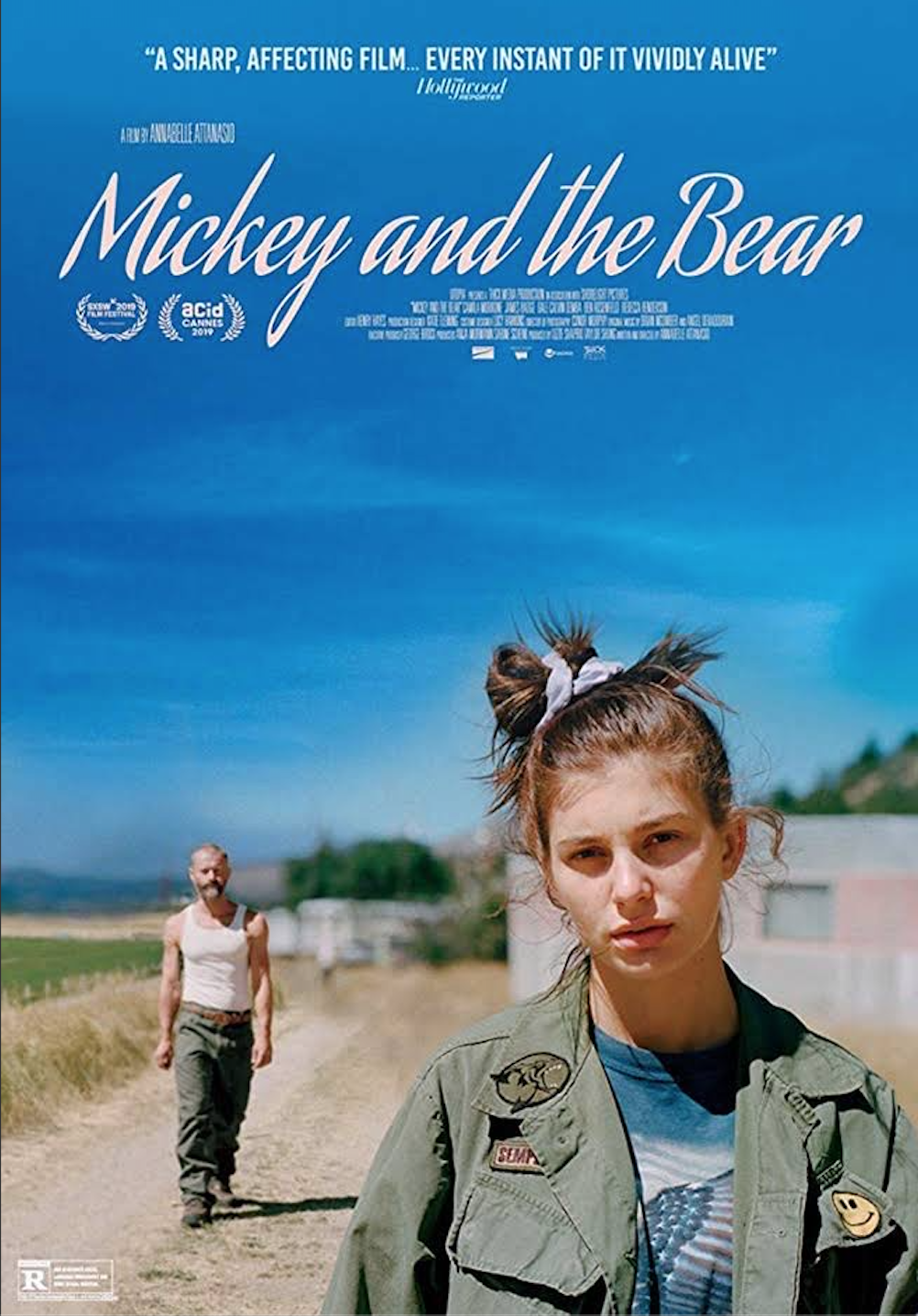
Last night I finally saw Annabelle Attanasio‘s Mickey and the Bear (Utopia, 11.13), a stand-up domestic drama which has shown at noteworthy festivals over the past several months (SXSW, Montclair, Cannes “Acid”, Hamptons Film Festival). It’s a modest but solid film, steady and pared-down and fortified by on-target performances and a constant tone of restraint and unforced assurance. You can trust this film and pretty much everything in it — you can tell that right away.
Set in the Montana town of Anaconda, pic focuses on Mickey (Camila Morrone), the young but already world-weary daughter of Hank (James Badge Dale), an opioid-addicted Iraq War vet with a hair-trigger temper and the attitude of a 13 year-old delinquent.
The basic question is “when is Mickey, a 19 year-old who’s vaguely terrified by the idea of living a modest, no-account life in Anaconda for the next 60 or 70 years, going to finally realize that her dad is a nihilistic, combat-traumatized asshole who’s a master of nothing but chaos and incapable of getting his act together, and that the only thing to do is to get the hell out of Dodge and let this dickhead stew in his own juices?”
Mickey is a realist and mature for her age, but she nonetheless believes she has no choice but to take care of her poor, pissed-off, born-to-lose dad. And this unfortunate mindset is what holds things together for the duration.
There’s an insensitive asshole boyfriend (Ben Rosenfield) to deal with, and a promising new guy — a British-accented, mocha-tint boyfriend named Wyatt (Calvin Demba) who, of course, is instantly resented and antagonized by racist Hank. The right way to go is so obvious, but Mickey…well, she’s transitioning.
Hank-wise I understood what Mickey had to do within the first 10 or 15 minutes, but she keeps thinking that her dad might somehow wake up, grow up and pull his head out of his ass. Not happening, girl! The reality finally sinks in around the 96-minute mark, or just before the end credits.
For me Mickey and the Bear is a major break-out for Morrone, who clearly has “it” in the way that Jennifer Lawrence was obviously similarly possessed when Winter’s Bone was first seen nine and a half years ago. The 22 year-old former model and current girlfriend of Leonardo DiCaprio has only been in a couple of previous films, Eli Roth‘s Death Wish and Augustine Frizzell‘s Never Goin’ Back.
But this…this performance is a knockdown. Morrone doesn’t reinvent the wheel of acting but every line, gesture and expression feels honestly arrived at and dispensed. She’s dishy, of course, but plays every scene without makeup or regard for her appearance other than no-frills, bares-bones grooming. And she never resorts to defensive posturing or calculated “look at my acting skills” behavior.
The screening happened at San Vicente Bungalows. There was a nice, not-too-crowded after-party. DiCaprio held court, and Indiewire‘s Eric Kohn and I spoke to him about several topics (the forthcoming lKillers of the Flower Moon for director Martin Scorsese, the Democratic Presidential contenders, climate change) for a good…oh, 15 or even 20 minutes. Nobody was trying to muscle in, which was unexpected.
Morrone was there also, of course — very giftedandgracious. DittoscreenwriterEric Roth, director Phillip Noyce, Tobey Maguire, director Eli Roth, event maestro Colleen Camp, etc.
I left around 9:30 pm for the Netflix Marriage Story party at the Sunset Tower hotel, which was well-catered and packed to the gills.
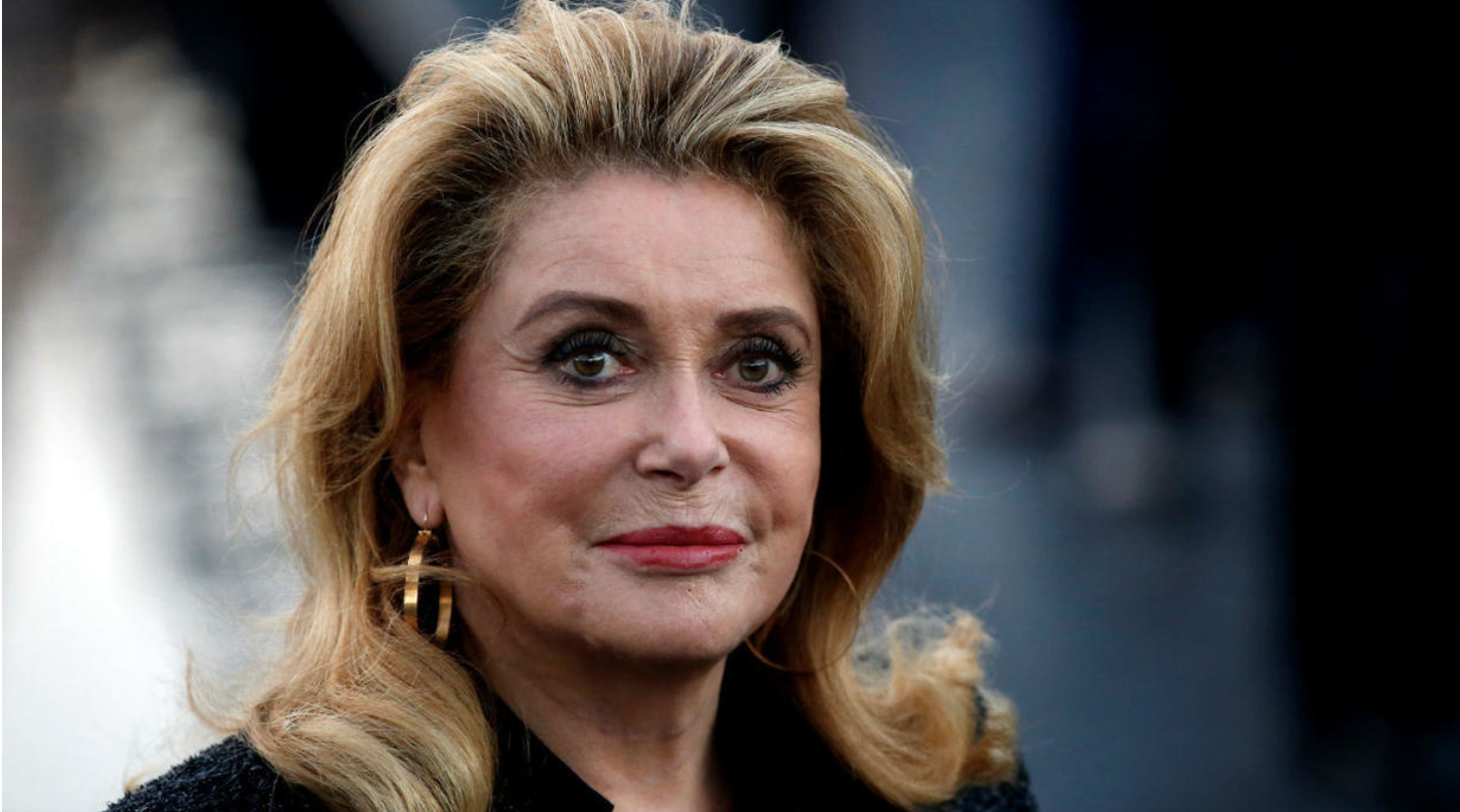
Six and a half years ago I was strolling along the rue de Rivoli, and just as I approached the main entrance of a large, swanky, gold-trimmed hotel (probably Le Meurice) Catherine Deneuve, flanked by a couple of security guards, walked out and got into a waiting limo.
The legendary actress was 69 at the time, and smoking a cigarette as she walked under the rue de Rivoli colonnade and onto the boulevard. I distinctly recall muttering to myself, “Wow…a woman of her age shouldn’t be smoking….she should’ve quit a long time ago.”
Because sooner or later cigarettes will catch up and take you down, if not with lung cancer then with a stroke. Lifelong smoker Joni Mitchell (who was born only a couple of weeks after Deneuve in the fall of ’43) was felled by a fairly serious stroke in ’15, and has yet to fully recover.
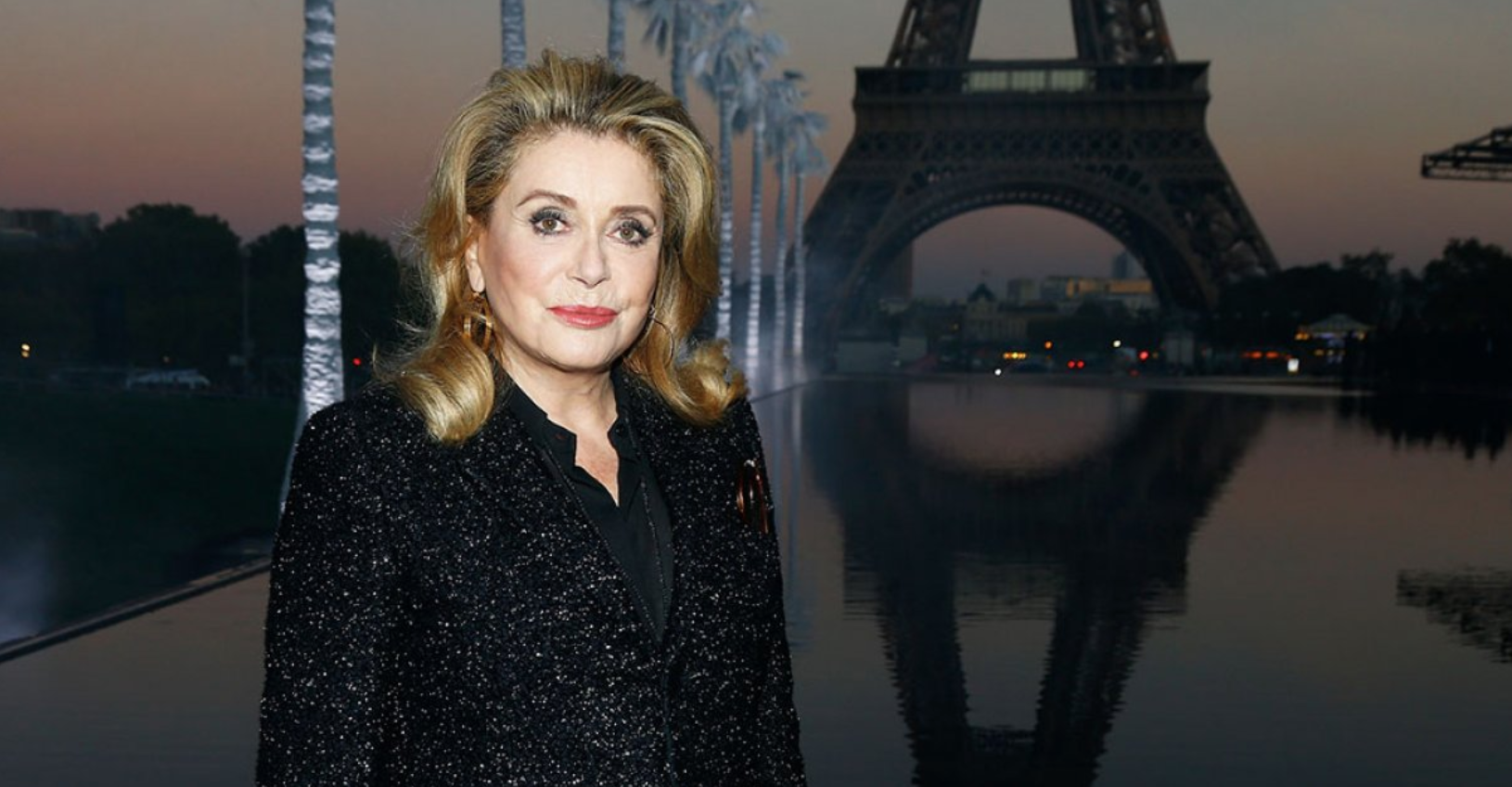
Earlier today it was reported that Deneuve is in a Paris hospital after suffering a “very limited” ischemic stroke. Such strokes are caused by reduced blood flow to the brain.
Variety‘s Nick Vivarelli and Elsa Keslassy report that Deneuve succumbed to the stroke “while filming a scene in a hospital in Gonesse, near Paris, for the movie De Son Vivant, which is being directed by Emmanuelle Bercot. Deneuve is now at the Salpetriere hospital, which specializes in treating strokes.”