A Little Voice Told Me

Claire DenisHigh Life (A24) reportedly had an underwhelming showing at Roy Thomson Hall during the Toronto Film Festival. I was told by a journalist friend that half the audience had bolted by the time it ended, partly because it had begun late but mainly, he said, because the science-fiction drama had injected a certain lethargy. From that moment on I had no interest. I can smell trouble, and you can’t trust the big-name critics as they’re mostly in the tank for Denis.

[Click through to full story on HE-plus]

BFCA Documentary Nominee Head-Scratchers

The big five nominees for the third annual Critics’ Choice Documentary Awards were announced this morning, and Jimmy Chin and Elizabeth Chai Vasarhelyi’s Free Solo led the pack with six nominations. The other five hotties are Minding the Gap and Wild Wild Country (five nominations each) and Dark Money, Hitler’s Hollywood and Won’t You Be My Neighbor? (for noms each).

Hollywood Elsewhere couldn’t stand to watch Free Solo because the no-safety-line, life-and-death dynamic freaks me out. That’s obviously not a putdown but a simple, no-big-deal admission that I couldn’t bear to watch the damn thing.

[Click through to full story on HE-plus]

Re-Assessing 1992 Oscar Winners

A decade or two will sometimes offer a clarifying, cut-through-the-bullshit perspective, especially when it comes to Oscar winners. It’s been 25 and 1/2 years since the 1992 Oscars were handed out on 3.29.93, so I figured I’d run through the top-ranked winners and decide if any mistakes or oversights were made.

Best Picture: Giving it to Clint Eastwood‘s Unforgiven was the right call. It’s a rugged, scrappy western full of irony and lament and all kinds of tortured guilt and self-loathing on the part of Eastwood’s Bill Munny character, and it simultaneously takes a hard look at Hollywood’s whole violent tradition of glorifying frontier justice. And yet Martin Brest‘s Scent of a Woman, manipulative and pandering as it sometimes was, offers a richer emotional catharsis. It has three or four big-payoff scenes compared to Unforgiven‘s two — “we all got it comin'” plus the violent barroom finale.

[Click through to full story on HE-plus]

Singer’s Preemptive Pushback

A forthcoming Esquire article will allegedly rehash Bryan Singer‘s whole checkered history with twinks, some of which hasn’t held up or has been called into question, and so Singer has posted a preemptive pushback piece on Instagram.

The Esquire article will probably appear later this week, or certainly a week or two before the 11.2 opening of Singer’s Bohemian Rhapsody, which plays it right down the middle but is nonetheless quite engaging at times, especially during the Live Aid finale. Besides reporting what I presume will be factual information, the idea is to sell magazines on the back of 20th Century Fox’s promotion of the film.

Singer has written that the Esquire article will “rehash false accusations and bogus lawsuits” about the sexual assault allegations that have been thrown upon his doorstep. “I have known for some time that Esquire magazine may publish a negative article about me,” Singer says. “They have contacted my friends, colleagues, and people I don’t even know.

“In today’s’ climate where people’s careers are being harmed by mere accusations, what Esquire is attempting to do is a reckless disregard for the truth, making assumptions that are fictional and irresponsible.”

“[The article] will attempt to establish guilt by association simply because of people I’ve either known or met in the past,” Singer has written. “They will be attempting to tarnish a career I’ve spent 25 years to build.”

Leaving aside the various allegations and suggestions of misbehavior, it seems to me that Singer’s having abandoned the Bohemian Rhapsody shoot before the film was completed could harm his career much, much more. Who builds a directing career over a quarter-century and then walks off a set or otherwise “goes missing”? That’s not eccentric or intemperate behavior — that’s 100% insane.

Lucas Empire Killed “First Man” Fascination

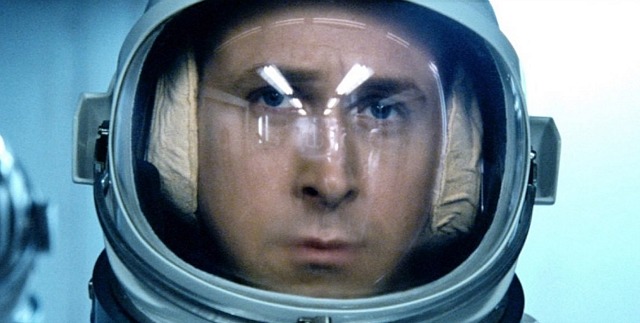
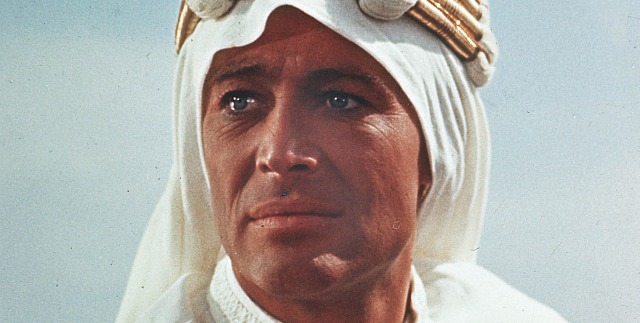
I for one know for an absolute fact that Damien Chazelle‘s First Man is a major achievement in the realm of personal, epic-scaled cinema — a film about a huge, earth-shaking event that was nonetheless “seen” and painted with deft little psychological brushstrokes, which in a way makes it a kind of galactic companion piece to Lawrence of Arabia.

David Lean‘s 1962 Oscar-winner told us that T.E. Lawrence was a poet warrior-dreamer who accomplished great things militarily against the German-allied Turks during World War I, but who the hell was he? Why was he so not-of-this-earth? Why was he so clenched and blocked and deluded in certain ways?

Similarly, Chazelle and screenwriter Josh Singer are reminding us that Neil Armstrong, by any measure a repressed and inexpressive fellow, tapped into a certain greatness and fulfilled his fate in part by burying his emotions. And at the same time these filmmakers are asking “okay, but why couldn’t Neil be more like the rest of us? What was his problem?”

Or maybe, they’re also asking or saying, it wasn’t a problem. Maybe all great-destiny types have to be hardcore like Neil? Maybe they all have to embrace steel and severity? Maybe, as Robert De Niro’s Neil Macauley said to Al Pacino’s Vincent Hanna 23 years ago, ‘That’s the discipline’?”

Nonetheless, First Man fell short over the weekend, and Variety‘s Owen Gleiberman‘s analysis isn’t that Chazelle’s film was wounded by charges of being “too cold, too impersonal” or because of that idiotic flag-planting complaint, but that the last 40 years of George Lucas-inspired space fantasies have killed interest in actual, real-deal space travel.

Gleiberman: “I think the explanation for why First Man has met with a ho-hum response at the box office — and a ho-hum response in the culture — comes down to something basic. The film is about the moon landing, and frankly, in 2018, no one gives a damn. Not really. Because they’ve seen it before. And they’ve been seeing it for most of the last 50 years.

Gleiberman is basically saying that popular culture and reality started to merge — “fusing in our imaginations” — after the Star Wars explosion of 1977. “Part of what it did was to co-opt the imagery of space and elevate it into a video-game religion,” he notes. “That may have been one of the reasons the space program faded; it began to seem prosaic by comparison. Star Wars was colorful and energized, but the moon, after we’d conquered it, remained barren and gray. What were we going to do, grow vegetables there?

“Once we’d been to the moon a couple of times, and Star Wars had turned outer space into our new home away from home, who needed to go back? The moon had become a blank slate. It was Star Wars without the gizmos. And Star Wars was the space drama that a generation now lived inside.

Read more

Tolerance Levels

I didn’t want to watch Donald Trump jousting with Lesley Stahl last night on 60 Minutes, so I didn’t. I looked at a couple of clips on YouTube late last night but that’s all. Just like with Bob Woodward’s book and Michael Wolff’s before it, both of which I stopping reading at the halfway mark. The man is a foul, sociopathic, shoot-from-the-hip junkyard dog liar, and I don’t need to immerse and re-immerse myself in his bluster and bullshit to absorb that fact. I know it going in. And the rural bumblefucks don’t care. They love him as one of their own.

Read more

21st Century Acid Movies

I’m not sure if the following notion is worth exploring, but I’m wondering which noteworthy 21st Century films would be enhanced if you watched them while tripping on LSD. I say this not having come within miles of the stuff since the pre-Watergate Nixon administration, but there used to be this notion that certain films would take on a quality of dimensional extra-ness (more poignant, hilarious, emotional, profound, meaningful) if you watched them after dropping a tab of Orange Wedge or Blue Cheer.

Curious as this might sound, Sydney Pollack‘s Castle Keep, which is kind of a trippy film to begin with, plays really well under this condition. So do Peter Bogdanovich‘s The Last Picture Show and What’s Up, Doc?. But not Targets.

[Click through to full story on HE-plus]

Forget That Award-Season Filter

Dispensing with any notions of awards or nominations, here are HE’s favorite 2018 films (i.e., a combination of the most artful and emotionally satisfying) as we speak, and in this order:

(1) Peter Farrelly‘s Green Book, (2) tie between Alfonso Cuaron‘s Roma and Pawel Pawlikowski‘s Cold War, (3) Paul Schrader‘s First Reformed, (4) Stefano Sollima‘s Sicario — Day of the Soldado, (5) Marielle Heller‘s Can You Ever Forgive Me?, (6) Matt Tyrnauer‘s double-header of Studio 54 and Scotty and the Secret History of Hollywood, (7) Jason Reitman‘s The Front Runner, (8) Chris McQuarrie and Tom Cruise‘s Mission : Impossible — Fallout, (9) Bradley Cooper‘s A Star Is Born, (10) Damien Chazelle‘s First Man.

Followed by (11) Antoine Fuqua‘s The Equalizer 2, (12) Susan Lacy‘s Jane Fonda in Five Acts, (13) Eugene Jarecki‘s The King, (14) Ari Aster‘s Hereditary, (15) Morgan Neville‘s double-header of They’ll Love Me When I’m Dead and Won’t You Be My Neighbor?, (16) Lynne Ramsay‘s You Were Never Really Here, (17) Tony Zierra‘s Filmworker, (18) Bo Burnham‘s Eighth Grade and (19) Bryan Singer‘s Bohemian Rhapsody (for the Live Aid finale). (20) Nadine Labaki’s Capernaum.

Jello in Jail

At one point Seth Meyers‘ jailbird character says to Kenan Thompson‘s “Bill Cosby”, “This is gonna sound mean but have you ever considered just dying?” Cosby is an animal, I know, but that’s not funny.

Suffocation of the Soul

An earlier incarnation of this post appeared on 9.15.14: My childhood was a gulag experience. So were my teens. Things started to get a little better when I began as a film journalist but my life didn’t really pick up until ’80 or thereabouts. And even then it was constant struggle, struggle, toil and trouble. Aleksandr Solzhenitsyn may have lived a tough life but so did I.

I started to feel really badly about life’s possibilities when I seven or eight. The misery seemed to intensify when I turned 11 and 12, but the onset of puberty seemed to make things worse in so many ways. I used to argue with myself about which parent I despised more, as they were awful in their own specific ways. My only encounters with happiness, however brief, came from hanging with certain friends and catching new films at my local theatre (the Westfield Rialto) and on WOR’s Million Dollar Movie or the CBS Late Show when I visited my grandmother, who would always let me stay up as late as I wanted.

My home town of Westfield, New Jersey, was a pleasant enough place, but the social aggression and general bullshit in junior high school meant there was always a taunt and a challenge and some kind of shit going on behind your back. A fairly rancid atmosphere. Everything was awkward or tortured or tedious.

My basic response was to say “fuck this concentration camp and the fucking rules you have to live by or live up to,” and to start living in my own realm, which for me meant the universe of cinema. At age 13 or 14 I got into the habit of taking the bus into Manhattan (a secret mission as my parents wouldn’t let me go alone) and just roaming around Times Square and looking at the various marquees and just soaking it all up. I’d take the bus in the late morning, visit Mecca for three or four hours and get back for dinner by 5 or 6 pm. I paid for these trips with my modest weekly allowance plus a little extra lawn-mowing money.

I used to love the smell of bus exhaust inside those Port Authority parking areas. To me those fumes were the city itself — they smelled like oxygen.

Read more