At Long Last “Schlock”

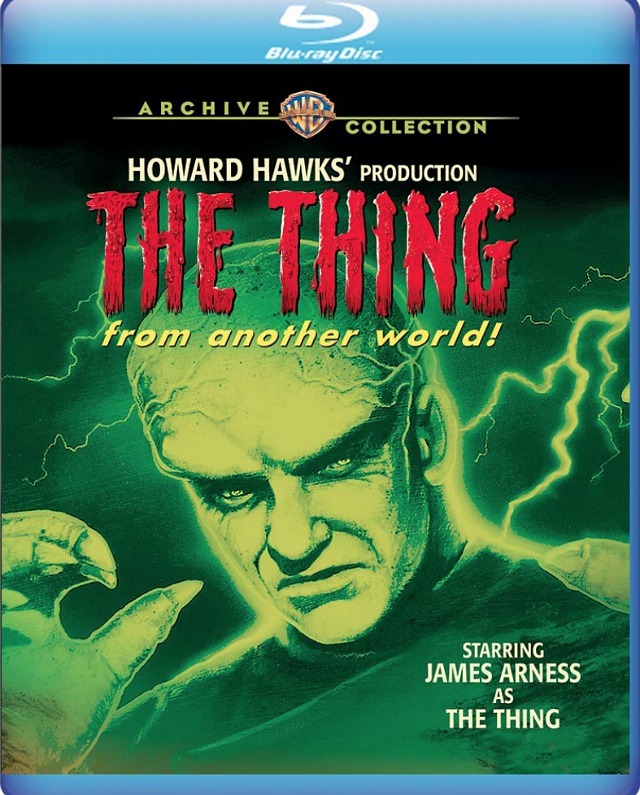
As a longtime admirer of John Landis‘s Schlock (or at least of certain inspired portions), it’s comforting to announce that Arrow is releasing a 4K restoration Bluray of this low-budget 1973 monster comedy, on 10.16.18.

I’ve never understood why Landis, who directed, wrote and played the lead role, continues to refer to Schlock as “bad and appropriately named.” It was cheaply made — shot in only 12 days for $60K — but three or four scenes in this dopey little film are a lot funnier than The Blues Brothers and only slightly less funny than National Lampoon’s Animal House. If you’re stoned.

Schlock is more than a genre spoof — it’s a combination of stoner humor and social satire in the vein of the old, occasionally surrealist Ernie Kovacs show of the late ’50s and early ’60s. The below video clip (go to 3:11) contains a scene in which Schlock tears apart an orange beater in a parking lot, and it’s pure Laurel & Hardy.

The form-fitting ape suit, obviously inspired by the “Dawn of Man” apes in 2001: A Space Odyssey, was designed by Rick Baker. Baker had almost no money to work with, and yet he did a pretty good job. And Landis’s performance is a lot of fun.

I don’t know why it took so long for a Bluray to appear, but I wonder if the March 2017 death of original rights holder Jack Harris had something to do with it.

The above clip was shot at The Old Place, a storied restaurant in the hills above Malibu. It begins slowly but hang in there. The blind virtuoso with a Zen attitude is played by Ian Kranitz.

Read more

Fogelman Is Partly Correct

Over the last few years I’ve learned to be wary of anything Dan Fogelman has had a hand in. I didn’t mind Last Vegas, which Fogelman wrote, but I pretty much hated Danny Collins, which he directed and wrote. I’ve therefore ducked screenings of Fogelman’s Life Itself (Amazon, 9.21), and apparently with good reason.

Fogelman’s latest has gotten creamed on Rotten Tomatoes and Metacritic, earning respective ratings of 12% and 19%. As you might expect, Fogelman has called out the white-guy critical establishment for the usual usual.

“White male critics don’t like anything that has any emotion,” he recently told TooFab. “It’s concerning because it is important. It tells people what to go see. I think that the people with the widest reach are getting increasingly cynical and vitriolic. Something is inherently a little bit broken in our film criticism right now.”

Life Itself may or may not be a problematic film, but Fogelman isn’t wrong about critics disliking films with strong emotional currents. Or at least those saddled with a sense of taste. Being one of them, I can say they definitely prefer the use of suggestion, understatement and deft, darting brush strokes. They definitely tend to push back if the emotional gush is turned on too heavily. This is how anyone with cultivated taste buds would respond.

It’s also true about film critics being made up of mostly older white guys. And yet, as World of Reel’s Jordan Ruimy has pointed out, many of the negative reviews were from female critics. Of the 19 female film critics who’ve reviewed Life Itself on Rotten Tomatoes, 17 wrote pans.

Being There: Crowe & McCarthy

At the end of yesterday’s Other Side of the Wind review I wrote that “it must have been a whole lot of fun to have been part of the shoot back in ’70, ’71 and ’72…hugely enjoyable for those who were there and sharing a magic moment.” I noticed in the closing credits that director Cameron Crowe (Almost Famous, Jerry Maguire) and Hollywood Reporter critic Todd McCarthy played partygoers. I wrote them and asked for recollections — they both responded.

McCarthy: “When I watched it I saw myself for about two seconds in a party scene shot with Cameron Mitchell and another actor I couldn’t identify. Joe McBride, who’s seen the film multiple times, said he saw me in two shots. Maybe when I get a DVD I can freeze-frame to be able to say with certainty how many times I’m onscreen and for how long. But the main thing was just being there.

“I was working as Elaine May‘s assistant on Mikey and Nicky during the day, then in the evenings — on and off for about a month — I would head to Bogdanovich’s house (212 Copa de Oro Road) to be part of Orson’s filmed ‘parties’ while Peter was away shooting Daisy Miller in Italy.

“I was even there for Orson’s 60th birthday” — 5.6.75 — “when he exploded in a rage when everyone paused late in the evening to sing ‘Happy Birthday’ and present him with a cake. He was demanding that they continue working. Sometime after midnight, when there were maybe a dozen people left, he opened the freezer, pulled out a tub of ice cream and proceeded to eat the whole thing.

“But my favorite memory is of something that happened once a week. At 8 pm or 8:30 or whatever time it was, Orson would have a fit, yell at everyone in a fit of dissatisfaction and storm into his bedroom and slam the door behind him. A half-hour or an hour later, he’d come out in a fine humor and resume filming at once. My friend Gary Graver, the cinematographer, later told me what was really going on: Orson’s favorite TV series was Shaft (which aired from late ’73 to early ’74) and throwing this tantrum was his way of getting away to watch it.

“Working with Elaine and Orson, the two biggest mavericks in town, was my introduction to Hollywood.”

Crowe: “I think it was [during] my first trip to Los Angeles when my friend Phil Savenick said, ‘Let’s go be extras in an Orson Welles movie.’ It all felt very mysterious. We weren’t given the name of the film. We hung out all night in the backyard and big living room of a house in Bel-Air — Stone Canyon, I believe — and every thirty minutes or so, Welles would move through the set, look at us, and continue bantering with Peter Bogdanovich. We weren’t sure what was being planned or filmed. At a certain point cameras appeared. Welles appeared with Bogdanovich and shot a scene that took place in the backyard. There were long delays between takes.

“There were about thirty of us, and the best conversation among the extras was ‘If Orson Welles was a musician, who would he be?’ One of the extras argued strongly that he was like Stephen Stills, who wrote ‘For What It’s Worth’ and other classics at a young age. The other extras argued this theory down with relish. We finally decided the closest comparison was Brian Wilson. And right about that time, an assistant director came out and said, ‘Orson is going to bed. Anybody want to come back tomorrow?'”

Never Show Mercy

In yesterday’s review of Orson WellesThe Other Side of the Wind I wrote that “I can’t honestly call it a good film.” This morning a critic friend called me out for sounding namby-pamby. “You can’t honestly call it a good film?,” he wrote. “How about honestly calling it a shitty one?”

HE reply: “Because it’s hard to dismiss Welles’ final film after so much delay and difficulty on the part of his friends and colleagues to finally assemble and release it.”

Critic friend: “There’s no percentage in patting idiots on the head, as an old mentor used to say. The road to hell is paved with the best intentions.”

HE reply: “The Other Side of the Wind wasn’t made by an idiot. It was made by a man who had lost his compass.”

Critic friend: “I’m talking about the idiots who tried to salvage this film and give it meaning. He was absolutely a man who lost his compass, so what is the point of putting a spotlight on the product of that degraded talent? It’s like trying to revive late-era Tennessee Williams in an effort to find quality where there really is only confusion.”

Suitably chastised, I changed the opening of paragraph #2 to read as follows: “It’s not a good film. Any film that makes you say ‘wait…what’s happening?’ or “’what was that line?’ over and over is doing something wrong.”

Beyond That Which Is Known to Jordan Peele

What was Rod Serling‘s The Twilight Zone, boiled down to basics? During its 1959-to-1962 heyday it was a half-hour series about the fears, anxieties, neuroses and psychological maladies that flooded the anti-social undercurrents of the late Eisenhower and early Kennedy eras. That or the issues that made Serling himself feel antsy and unsettled. It was not a show about “boo!” — it was about “what is this strange feeling I have in my gut?” or “why can’t I shake this memory from my childhood?” or “why do I feel trapped?” or “what if I just ran away from my high-paying job and moved to a small bucolic town called Willoughby…wouldn’t I be happier?”

Does anyone think that the latest Twilight Zone reboot, which will be hosted by Jordan Peele because Get Out was a racially-stamped reboot of Ira Levin‘s The Stepford Wives, which of course has nothing to do with the Serling aesthetic…does anyone think that this new streaming Twilight Zone will come within 100 miles of the deep-down fears, anxieties, neuroses and psychological maladies of the Trump era?

My presumption, in fact, is that Peel’s Zone will deliver cheap horror wanks because that’s what 90% of the viewing audience likes. They don’t want to know from their deep-down fears, anxieties, neuroses and maladies, and would probably run in the opposite direction of any streaming series that delivers anything resembling this.

Variety story: CBS announced Thursday that Peele will serve as host and narrator of “The Twilight Zone,” the revival of the classic science-fiction anthology that he is producing with CBS Television Studios and Simon Kinberg for CBS All Access. Peele and Kinberg are set to serve as executive producers alongside Win Rosenfeld, Audrey Chon, Carol Serling, Rick Berg and Greg Yaitanes.

Read more

Approving Fukunaga

The gifted Cary Fukunaga has been hired to direct the 25th James Bond film, which is untitled as we speak. A smart move for the Bond producers — a critic friend calls the Japanese-American director “a real chameleon who always rises to every occasion” — and, be honest, a paycheck gig for Fukanaga.

There’s a term for any name-brand director helming a Bond film — slumming. The pay is great but you’re still submitting to the factory-level requirements of a well-worn, whore-level franchise.

It’s no small footnote that Fukunaga will be the first American-born director to helm a Bond film; all the others have been British, New Zealanders (Martin Campbell, Lee Tamahori) or German-Swiss (Marc Forster).

What is the worst, most banal aspect of the Bond franchise that Fukunaga could theoretically turn away from? The Travel & Leisure luxury settings. Almost every exotic location that Daniel Craig‘s 007 visits is pornographically luscious — the perfect spot for your next damn-the-expense getaway with your wife or girlfriend. Agreed, the ambitious Mexico City tracking shot that Spectre began with avoided this trap but otherwise my head is flooded with memories of Mr. Bond revelling in drop-your-pants, Kardashian-level splendor. Which I hate because with minor variations flush travel-destination settings are exactly the same the world over. They spread the corporate poison.

It’s been nearly three years since I reviewed Spectre (“All Bond Films Are Vaguely Numbing…What?“), and I recall it like yesterday:

The virulent pan of Spectre (MGM/Columbia, 11.6) by ForbesScott Mendelson is almost…touching? Mendelson is really, really disappointed in this thing — “the worst 007 film in 30 years,” he claims, or since, like, A View to a Kill or whatever.

This indicates, obviously, that Mendelson doesn’t go to Bond films for a nice wank-off, like most of us probably do. He apparently believes that Bond films have the potential to redeem and cleanse and change our lives…okay, his life for the better. Skyfall came a lot closer to this, he contends, and…uhm, Casino Royale and Quantum of Solace were relatively decent? Something like that.

Read more

Inspiring JFK Trailer

Come to think of it, the reason I choose to write Hollywood Elsewhere every day is…well, it’s complicated. But I certainly don’t do it because it’s easy. I do it because it’s hard.

Sorry But Welles’ “Wind” Isn’t Much

I saw Orson WellesThe Other Side of the Wind yesterday. It’s a bitter, cynical, sometimes darkly funny hodgepodge, an inside-new-Hollywood movie that was filmed on the fly between 1970 and ’75 in various formats, and a film that has a lot on its mind but has crawled so far up its own ass that the viewer can’t hope to enjoy much access.

It’s not a good film. Any film that makes you say “wait…what’s happening?” or “what was that line?” over and over is doing something wrong. It’s so damn spotty and splotchy. So scatter-gun, so haphazardly chop-chop and cut-cut. It never achieves a rhythm or a sense of flow-through or harmony of any kind. Within 10 or 15 minutes I was feeling exhausted.

It’s about an old craggy director named Jake Hannafort (John Huston) who sees himself as cut from the Ernest Hemingway cloth, and who’s just back from Europe and trying to find money to finish a film or start a new one or something along these lines. And so he throws a party in the desert and dozens attend — rivals, colleagues, managers, film critics, sycophants, students with cameras, wannabes, old friends.

Nobody ever seems to actually converse in an engaging, back-and-forth way. Nobody seems to listen to anyone else. It’s all bitter talk, fuck talk, belch…bitter talk, fuck talk, belch…bitter talk, fuck talk, belch…bitter talk, fuck talk, belch…bitter talk, fuck talk, belch, etc.

It would be one thing if everyone was improvising and Welles was gradually threading their material into some kind of half-assed narrative that delivered some kind of attitude or metaphorical mood, but everyone (and I mean especially the name-brand actors) is (a) “acting” and (b) obviously “speaking lines,” and it just doesn’t work.

Withered, craggy-faced Huston keeps puffing away on that cigar and regarding everyone with suspicion or disdain or a combination of both. Lili Palmer (a replacement for Marlene Dietrich) just sits around and says her lines in a deadpan way. Chubby-faced Peter Bogdanovich (playing a hot young director named Brooks Otterlake) says his lines with a tone of wry self-amusement. Susan Strasberg (a Pauline Kael stand-in) says her lines in a kind of needly, challenging way. Cameron Mitchell just hangs around and says his lines; ditto puffy-faced Edmond O’Brien. Paul Stewart says his lines in the usual Stewart way…seen it all, heard it all. Joe McBride says his lines with a certain sardonic edge. But I couldn’t latch onto anything or anyone. The film refuses to sink in.

Where is this going? What is there to learn or care about? Where is the soul of this film? Who wants to wade through this fucking mess of a movie? This is so inside-baseball I’m getting a headache.

Nothing really happens except that (a) everyone on the studio lot is invited to Jake’s party in the desert, (b) everyone arrives at the desert-house party and starts making sage, cutting remarks about this, that or another thing…yap-yappity-yap-yappity-yap-yap, (c) everyone becomes more and more drunk and cynical and despairing, (d) everyone heads for an outdoor drive-in to watch Jake’s movie, and then (e) Jake drives off in a Porsche and dies. (Except he does this at the very beginning, or before the beginning)

Robert Altman used to be so much better at this kind of thing — he would capture little snips and quips and cut away to this or that and somehow it would all fit together, but Orson’s film is so fucking “written out” and everyone is so determined to “act” (i.e., sell the moment, charm the audience) as well as radiate cynical or bitter or burnt-out or testy or pissed-off attitudes or feelings.

Does anyone in this film care about anything or anyone? I didn’t give a fuck about anyone or anything. At all. It really, really doesn’t work.

Read more

Condemning But Also Mythologizing

Errol Morris is no admirer of former Trump administration svengali Steve Bannon, and so American Dharma, which I saw yesterday afternoon, casts significant doubt upon Bannon’s overthrow-the-deep-state, hooray-for-the-red-hats bullshit. But at the same time it does a curious thing — it presents Bannon as a half-mythical figure, a man of steel and conviction, tough-minded but thoughtful.

If you have a semi-developed brain and at least some analytical abilities, you’re going to recoil in quiet horror at what Bannon is advocating here, but at the same time you’re going to be half-impressed by the way he comes off as a cinematic figure, as a fellow who’s part of a fraternity of strong, square-jawed honey badgers (including Gregory Peck in Twelve O’Clock High, Alec Guinness in The Bridge on the River Kwai) who don’t give a shit but are determined to get the job done. Right-wingers may feel conflicted about American Dharma (as I do) but they’re not going to flat-out hate it. Because there’s something faintly attractive about the way Bannon is portrayed.

I agree almost entirely with Michael Moore‘s Fahrenheit 11/9, but American Dharma, troubling as it is, is a more transporting film, certainly in a visual sense.

“To call Donald Trump a man of the people…I don’t quite see it. Forgive me. I see something quite different. [American Dharma] is a horror movie. I’m not sure I know what evil is. I don’t really believe in evil-evil. Even ‘evil incarnate’ troubles me. I certainly believe in evil acts, which are all around us, constantly. I don’t know if you’ve seen my other films, but I’m endlessly fascinated by self-deception [and] cluelessness.

“[American Dharma] is certainly a story about a man who lives in a strange fantasy world. Early Christianity, John Ford movies, nationalist ideologies…an incoherent mess, in my opinion. It’s not clear to me that if you surround yourself with this shell of belief you don’t see the world any more. What [Bannon] talks about, what he believes is incoherent…it doesn’t really make sense. Bannon seems the most ridiculous, most absurd when he couples his claims, his populist claims, national populist claims with his defense of the Trump administration. [In my view] Trump does violence to the whole of idea of what populism might be.” — Errol Morris, director of American Dharma, an exploration of the mind and ideology of Steve Bannon, during a Toronto Film Festival q & a.

Read more

Re-Saluting Reitman’s “Front Runner”

Less than ten minutes into my first viewing of Jason Reitman‘s The Front Runner, I knew it was at least a B-plus. By the time it ended I was convinced it was a solid A. It’s not a typical Reitman film — it doesn’t deliver emotionally moving moments a la Juno and Up In The Air. It is, however, a sharp and lucid account of a real-life political tragedy — the destruction of former Colorado Senator Gary Hart‘s presidential campaign due to press reports of extra-marital womanizing with campaign volunteer Donna Rice.

The Front Runner is an exacting, brilliantly captured account of a sea-change in press coverage of presidential campaigns — about a moment when everything in the media landscape suddenly turned tabloid. Plus it feels recognizable as shit. I immediately compared The Front Runner to Michael Ritchie’s The Candidate, Mike NicholsPrimary Colors and James Vanderbilt‘s Truth. It is absolutely on the same wavelength and of the same calibre. Hugh Jackman delivers a steady, measured, well-honed portrayal of Hart, but the whole cast is pretty close to perfect — every detail, every note, every wisecrack is spot-on.

Why, then, are some critics giving Reitman’s film, which is absolutely his best since Up In The Air, the back of their hands? The Front Runner easily warrants scores in the high 80s or low 90s, and yet Rotten Tomatoes and Metacritic aggregate tallies are currently in the high 60s — over 20 points lower than they should be.

I’ll tell you what’s going on. Critics can be cool to films that portray journalists in a less than admirable light, which is what The Front Runner certainly does. The Miami Herald reporters who followed Hart around and broke the Rice story are depicted as sleazy fellows, and the relationship between the Miami Herald and Hart is depicted as deeply antagonistic, especially on the Herald’s part. Hart screwed himself with his own carelessness, but the Herald is depicted as being more or less on the same level as the National Enquirer.

You can bet that on some level this analogy is not going down well with certain critics. Remember how Vanderbilt’s Truth (’15), a whipsmart journalism drama, was tarnished in the press for portraying the collapse of Mary Mapes‘ faulty 60 Minutes investigation into George Bush‘s National Guard history and alleged cocaine use? A somewhat similar dynamic is happening right how.

Read more

Brando vs. South African Apartheid

On 12.11, Criterion will release a 4K-scanned Bluray of Euzhan Palcy‘s A Dry White Season (’89), an anti-apartheid drama. I remember Marlon Brando‘s brief but lively performance as South African barrister Ian McKenzie (which resulted in a Best Supporting Actor Oscar nomination), but that’s all. Donald Sutherland played the lead, and the costars were Janet Suzman, Susan Sarandon, Jurgen Prochnow and Michael Gambon. The film was generally well-reviewed, but I honestly don’t recall anything about the plot.

Wikipage excerpt: “Brando was so moved by Palcy’s commitment to social change that he came out of a self-imposed retirement to play the role of the human rights lawyer; he also agreed to work for union scale ($4,000), far below his usual fee. The salaries of Sutherland and Sarandon were also reduced. The film was budgeted at only $9 million.”

Tell Your Life Story in 7 Words

If you consider “a” to be a word, my seven-word summary is “Took a while, but I got there.” If “a” doesn’t count, I prefer “It took a while, but I got there.”

1st HE alternate: “If you trust yourself when others don’t.” 2nd HE alternate (14-word cheating version): “Long and hard is the way that out of hell leads up to light.”

Sidenote: I’ve never liked the idea of “a” being a word. It’s just a letter — it’s not, you know, an actual word. Conflicted, measured, loquacious, randy, uncertain, impudent…those are words that you can really shake hands with. What is “a” really? A neutral, non-judgmental single-digit thingie that you put before a noun. You can call it a word if you want, but I’ve had doubts for decades. If you ask me the jury is still out.