Considering Superhero Mythology as Authoritarian

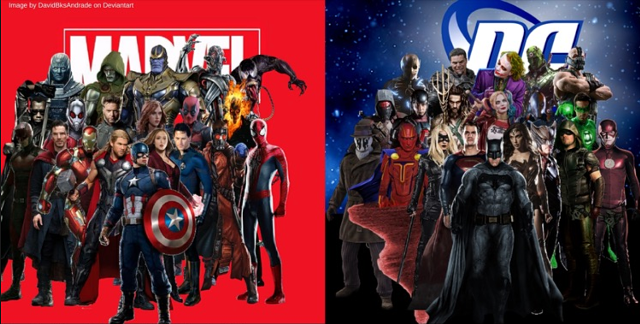
The MCU and D.C. superheroes are always presented as smirky, mild-mannered individualists — unpretentious, anti-corporate, egalitarian types with extraordinary powers, rock-hard bods and dry senses of humor. In a phrase, friends of the common man. I’m not saying they aren’t that or that the general superhero mythology is a mountain of bullshit, but just for the sake of argument or conjecture imagine that the superhero thing is all about authority, and that fans of superhero films are, in a sense, sheep or cattle. As in (a) “they love to eat that grass” and (b) “nothing makes them feel better than to obey by buying tickets.”

What’s the first requirement of any authoritarian figure? Obviously a widely accepted belief in his or her power and omnipotence. But the authoritarianism I’m speaking of isn’t a matter of this or that costumed brand monkey…Captain America, Batman, Mystique, Black Widow, Black Panther, etc. I’m speaking of the corporate authority wielded by the Marvel (Disney/Fox) and D.C. (Warner Bros.) guys. They’re only in it for the money, of course, but imagine if they also loved the power and control and had begun to get used to that extra-special warm feeling in their blood…that feeling of having built a super-empire and having convinced tens of millions worldwide to follow with a high degree of worship and obedience that would be the envy of any strongman dictator.

I’m not saying this is the case today, but imagine if it were. Because once you let this scenario into your head, everything becomes clear.

Distressed Bohemian

For decades my default definition of “taste” was one attributed to Francois Truffaut — “Taste is a result of a thousand distastes.” Which feels right as rain and a comfortable concept in this corner. If Hollywood Elsewhere is about anything, it’s about distastes. (And therefore about loving and worshipping things that don’t inspire pique or revulsion all the more.)

This morning I decided to add a supplement. It comes (or came rather) from London designer Christopher Gibbs, a renowned interior designer, antiques dealer and fashion maven who died two or three days ago at age 80.

Taste, Gibbs said, “is something you catch, like measles or religion.”

18 years ago Christopher Mason explained that Gibbs “is a leading proponent of that elusive brand of anti-decoration, high-bohemian taste favored by self-confident Englishmen, a look based on well-worn grandeur, disarming charm and unexpected contrasts.

“The magic is in the mix of masterpieces and oddities — like an assemblage of refined and wild-card house guests who mysteriously combine to create the ideal convivial country-house weekend. The allergy here is to the banal, not to dust.”

This aesthetic, which I’ve sworn by (or tried to swear by) for decades, is all but dead in this country, certainly among the flamboyantly wealthy. It’s been killed for the most part by the wannabe-Kardashian mentality that says everything has to look obnoxiously expensive and McMansiony, which is to say grand and over-sized and generally lacking in aroma and historic texure, which is to say clueless for the most part.

Gibbs: “I like things in their natural state — people especially. As life goes by, that’s what I admire: objects and people that are unmonkeyed with, that are themselves, not trying to be something else.”

The Times obit, written by Sam Roberts, reminds that Gibbs’ Cheyne Walk home in London “was borrowed by Michelangelo Antonioni for the party scene in his movie Blow-up (1966) and by Kenneth Anger to shoot the occult film Lucifer Rising (’72).

Gibbs also designed what he called the “earthly paradise” inhabited by the has-been rock star played by Mick Jagger in Donald Cammell and Nicolas Roeg’s film Performance (’70). A similar aesthetic was used for the spacious vampire home occupied by Tilda Swinton and Tom Hiddleston in Jim Jarmusch‘s Only Lovers Left Alive.

Read more

Eyes Have It

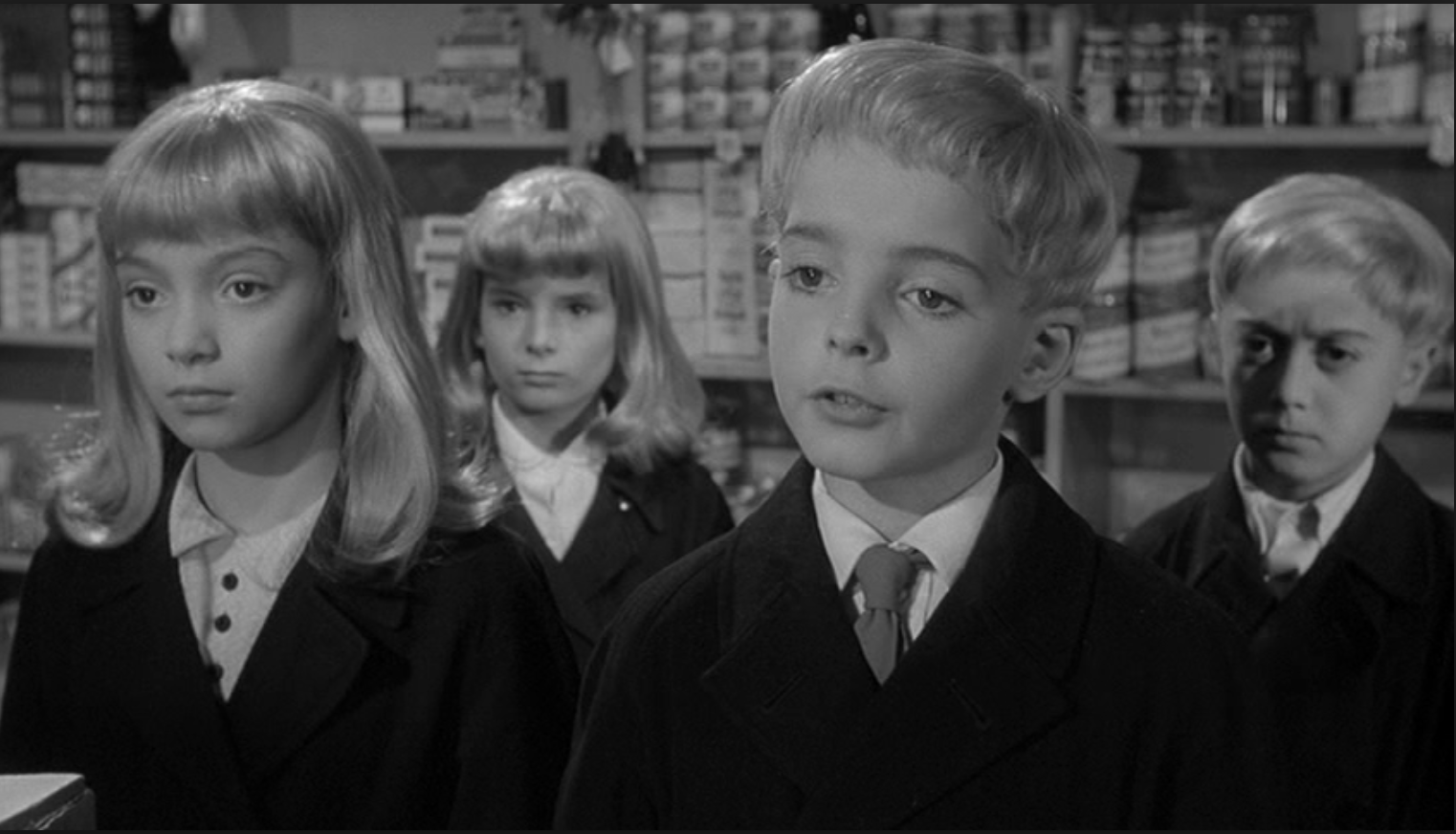
There have been three Children of the Damned films — Wolf Rilla’s 1960 British-produced feature, a 1964 sequel called Children of the Damned and John Carpenter‘s 1995 remake of Rilla’s original, which was based upon John Wyndham‘s “The Midwich Cuckoos,” a 1957 novel.

The Rilla isn’t anyone’s idea of a knockout, but it’s still the best, I think. Those glowing eyes and white-blonde hairdos, and those wonderfully crisp, steady-as-she-goes black-and-white compositions from dp Geoffrey Faithfull. The film serves as a metaphor, of course, for how older establishment types sometimes regard younger generations with disdain and repulsion, and sometimes even fear or panic. These aren’t our children — they look and behave like aliens.

Socrates and others of his generation felt this way about teenagers, of course, and this is definitely how the WWII generation saw stoned, shaggy-haired ’60s counterculture types in the late ’60s and early ’70s. I don’t see Millennials or GenZ-ers as especially odd or alarming because I’m an enlightened X-factor fellow with a background in authority-defying and psychedelic mysticism, but I do regard the brah culture uniform with absolute horror.

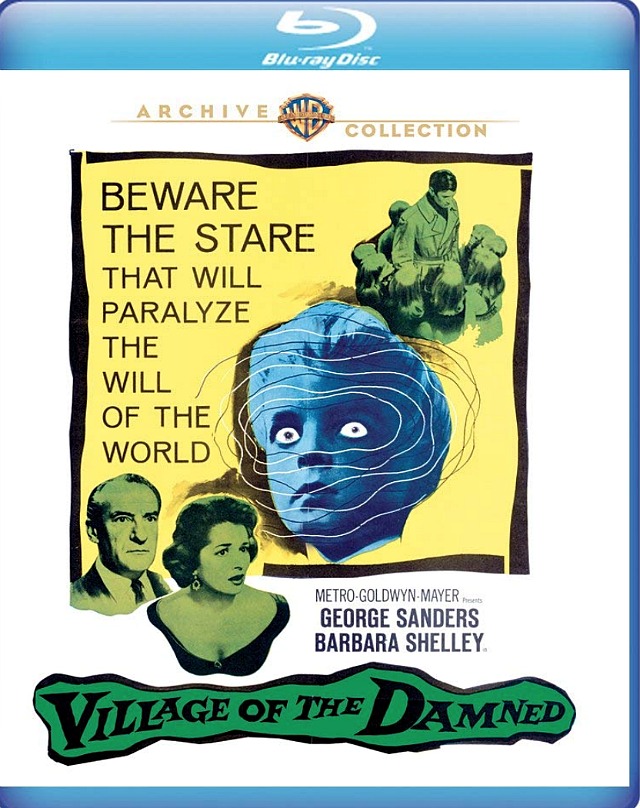
A respected Village of the Damned Bluray popped a week ago, and is available to stream.

Read more

Son of “You Can’t Say Excited”

In an 8.4 N.Y. Times profile of legendary talk-show host Dick Cavett, Alex Williams includes the following passage: “In a landscape rebuilt for clickable clips, unscripted moments seem increasingly rare. ‘If I were doing a show today,’ Mr. Cavett said, ‘it would not include a nice actress who’s so ‘excited’ about her new movie, and so ‘excited’ about her director, and so ‘excited’ about the costumes. ‘Excited’ is a word that could easily be stricken from the show business vocabulary.”

HE-posted on 1.9.14: “In the realm of press releases no word is more phony sounding than ‘excited.’ Whenever someone is hired by a company of any size they’re always, always ‘excited’ about a great opportunity; ditto their employers; ditto any creative or business person or senior management type embarking on any entrepreneurial, cooperative or corporate venture.

“‘Excited‘ is so ubiquitous it’s almost scary. Because people in the business world refuse, bizarrely, to use any other word. Like it’s some kind of code. It’s so commonly used you can pretty much count on the person using it being…I don’t want to say they’re a political zombie but they’re certainly looking to blend in. I’m serious — anyone who says ‘I am very excited about this opportunity’ in a press release can and should automatically be perceived as a joiner, a go-alonger, a Zelig, a drone.

“If you’ve seen the John Carpenter film They Live, you know what kind of person I’m talking about.”

Fishing Line Squibs

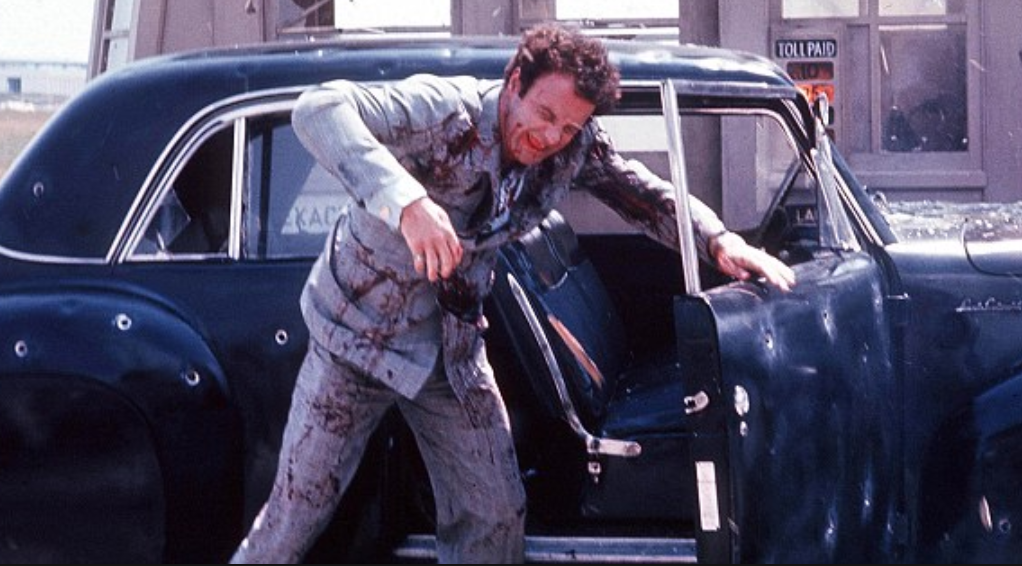
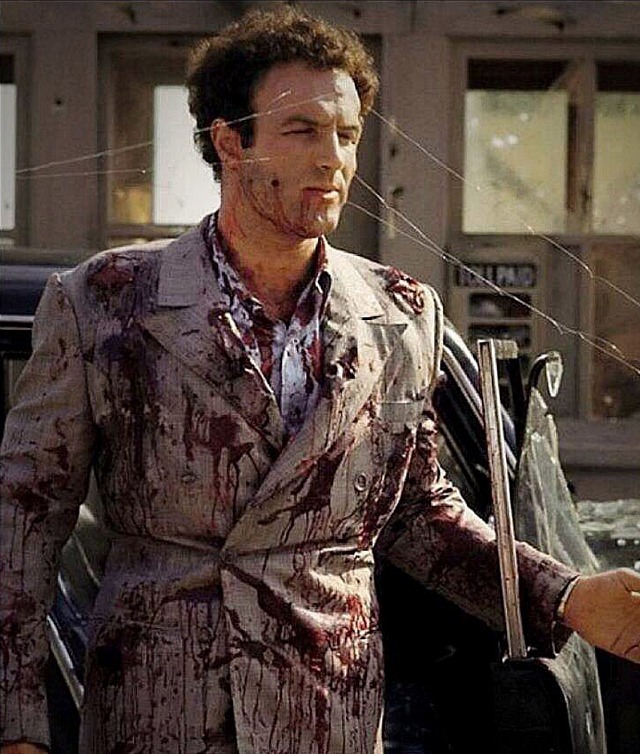
Gunshot squibs are little micro-explosive devices that leak or spray dark-red glop to indicate that a character has been shot. They’re been used by filmmakers for the last half-century or so. The first time I noticed them was during the machine-gun slaughter scene at the end of Bonnie and Clyde. Since the early ’80s I’ve been on dozens of film sets and talked to two or three guys who knew all about squibbing, but I never once heard about squibs being activated by crew guys pulling on fly-fishing lines. These were apparently used in the gangland massacre of Sonny Corleone scene in The Godfather. It seems kind of silly to yank on two or three fishing lines in order to make a bullet hole or two appear. With the sound of rattling gunfire and the screaming and abundant bleeding and the fast cutting who’s going to notice if a little black hole or two suddenly appears on James Caan‘s face? Nobody.

Read more

Early Detection of Death Knell Tremors

14 years ago I was talking to a gifted, highly respected, somewhat bitter guy who was well acquainted with how big-studio Hollywood worked. The subject was John Moore‘s Flight of the Phoenix, a commercially unsuccesful, not-so-hot remake of Robert Aldrich’s same-titled 1965 original with Dennis Quaid in the James Stewart role.

What may have seemed like an overly angry assessment from “bitter guy” 14 years ago is now par for the course. The production wings of major film studios are largely staffed by soul-less zombies who instinctively flinch at the idea of adult-friendly drama. Marketing films to the empty-Coke-bottle crowd is all. Now we say “of course!” but back then (three and a half years before Iron Man and the eventual MCU/D.C. takeover) it was different. Back then paying $100 million for a movie of this calibre ($65 million to shoot it, $35 million to sell it) seemed exorbitant and wasteful. Back then there was still a belief in some corners about mainstream movies occasionally serving adults.

Here’s how “bitter guy” described the Flight of the Phoenix back-story:

“It was going to be Deliverance in the Gobi desert. The script was about character with everyone slowly going insane as the days went on, and when the new plane was built the pilot [Quaid’s role] is reluctant to fly it because the desert crash was his fault and his confidence is shot.

“And he couldn’t be Mel Gibson. If it was Gibson you’d want to see him do it. You’d be waiting for that.

“Then the studio said they wanted the Bedouins to come back and attack the plane at the last minute, just as they were trying to lift off. But hold on. If the baddy Bedouins are close enough to regroup and gather their forces they must be within shouting distance of some kind of half-civilized outpost, so why don’t the survivors just walk to wherever that is? That didn’t get through. The studio didn’t care about that.

“It was the first movie I ever worked on in which notes on the script were sent along by the head of marketing. Mainly because suddenly the movie was costing $60 to $65 million dollars. The average movie costs $65 million, and then it’s $35 million to open it.

“This business has become so wag-the-dog, so marketing driven. And with $65 million being spent no one can look like they’re really hurt or dying, no one can lose their minds, there can’t be any swearing, and no heavy character stuff.

“There was another stranded-in-the-desert thing called The King is Alive. It was a Dogma movie, didn’t cost anything, same basic deal, people stranded in the wilderness. But on a stripped-down budgetary level. Hollywood doesn’t know how to make a film like that. They don’t want to know, I mean.

Read more

Ships vs. Planes

Posted on 12.28.04: There’s a scene in Titanic when Leonardo DiCaprio’s Jack Dawson — an independent-minded, self-starting, vaguely bumpkinish guy who lives by his own rules — sits down with a bunch of white-tie swells in the first-class dining room. Jack’s a little intimidated at first, but he stands his ground by being himself and explaining a personal philosophy that’s hard to disagree with, which is to always “make it count.”

It’s not a great scene, but a moderately satisfying one. It instills respect for Jack, and at the same time lends a certain warmth by saying that even the blue-bloods can relax and laugh at themselves and show respect for a guy who can look them in the eye.

There’s a scene in The Aviator when DiCaprio’s Howard Hughes — vaguely bumpkinish, independent-minded, self-starting, living by his own rules — sits down with a bunch of Connecticut swells, or more preicsely the family of his girlfriend, actress Katharine Hepburn.

Howard’s a little intimidated at first, but the Hepburns are absurdly rude and snooty to him, which leads to his getting testy and then a bit rude himself.

“We don’t care about money here, Mr. Hughes,” says Mrs. Hepburn.

“That’s because you have it,” Howard answers.

“Would you repeat that?”

“You don’t care about money because you have it,” he says again. “And you’ve always had it. My father was dirt poor when I was born…”

“Back in torrid Houston, this would be?” asks Mrs. Hepburn.

“Oh, shut up,” snaps Howard.

“Howard!” Kate exclaims.

Read more

Da Whiteness

Supporting HE excerpt #1: “Here is reason #1 why hinterland bubbas are squarely behind Donald Trump. Here are reason #2 and reason #3. They’re behind this megalomaniac because he’s leading the last-gasp charge in defense of a white heirarchy that ran the show as recently as 15 or 20 years ago. That era is over and the flannel-shirters who don’t have the right kind of skills for the 21st Century economy know it, but they’re nonetheless determined to go down swinging like Bill Holden, Ernest Borgnine, Ben Johnson and Warren Oates at the end of The Wild Bunch.” — from “Bubba’s Hurtin’ Too Much To Care,” posted on 5.31.16.

Supporting HE excerpt #2: “Ever since the fall of 2016, when Republican Senate Majority Leader Mitch McConnell privately turned down an Obama-administration proposal for a bipartisan warning to Russia not to interfere in the election, the underlying dynamic has been set: Most Republicans would rather win an election with Putin’s help than lose one without it.” — from Jonathan Chait’s 7.8.18 New York article, “Will Trump Be Meeting With His Counterpart Or His Handler?”

Supporting HE excerpt #3: “Roy Moore: “The hand of God…providence…put Trump into the White House.” [Few seconds later] “You could say that America is the focus of evil in the world.’ Guardian: “For example?” Moore: “Same-sex marriage.” Guardian: “That’s what Putin would say.” Moore: “Maybe Putin is right.” — from “Alabama Recalcitrance,” posted on 12.10.17.

Serious Journalistic Cojones

Thank God we have TMZ and Indiewire to slap Seth Rogen and Evan Goldberg around when they step out of line on blackface matters and whatnot.

Last night Rogen apologized for the use of blackface on the set of the upcoming comedy Good Boys, which Rogen and Goldberg are producing. The brouhaha started after set photos showed a stand-in for 11-year-old Keith L. Williams wearing makeup to darken his skin color.

“I should start by saying this shouldn’t have happened, and I’m terribly sorry it did,” Rogen said. “I won’t give excuses for why it happened. I’ll just say that as soon I was made aware of it, I ensured we put an end to it — and I give my word that on any project my team and I are involved in, we will take every precaution to make sure something similar does not take place again.”

Both the stand-in and Williams are African-American.

Good Universe, the production company behind Good Boys, told TMZ that the makeup was used to match the stand-in’s lighter skin tone, and that it’s “not uncommon for lighting purposes to match actors’ skin tones.” They used make-up on a stand-in, in other words, to make his skin color match the lead actor’s. It was nothing that would be filmed or used in the film — it was just for reference.

Indiewire‘s Zack Sharf asked three cinematographers about the incident, and were told that the practice of blackface for the sake of darkening shadow was “unorthodox.” How glad are we that Indiewire stepped in before this thing got out of hand…right? Indiewire has a sworn duty, after all, to police filmmakers and how they make their films. We should thank this intrepid news site for having the moxie to step into this situation and straighten these bitches out.

“A Piece of Work”

James Caan‘s facial expression between the 17- and 21-second mark tells you a lot about who John Wayne was. “Gimme that look you give me,” etc. Twelve-year-old kids, seeing who could screw up who, etc.

I tried to watch El Dorado once and I couldn’t stay with it. Feels lazy, phony. Everyone looks and behaves like actors saying lines, and all the supporting players and extras are dressed like they just came out of Nudie’s. Hawks phoned this one in. One of two remakes of his own Rio Bravo, the other being Rio Lobo. I respect Rio Bravo but have never believed it. No one ever has. Jean-Luc Godard gave carte blanche praise to Rio Bravo way back when, and he’s never answered for that. I’m more of a High Noon type of guy.

David Lynch Feels Flattered

The trailer for Forever, an original Amazon series from Parks and Recreation collaborators Alan Yang and Matt Hubbard, is obviously inspired by David Lynch‘s Blue Velvet — i.e., suggestions of soul-stifling boredom and perversity lying beneath the banality. Eight half-hour episodes or something close to three and half hours all told. Maya Rudolph and Fred Armisen‘s marriage encounters darkness and depravity on a ski trip. Costarring Catherine Keener (Get Out), Noah Robbins (Unbreakable Kimmy Schmidt), and Kym Whitley (Master of None). Premiering on Friday, 9.14.