Dreamland

Greg Berlanti‘s Love, Simon (20th Century Fox, 3.16) is definitely half-decent — an antiseptic, intensely suburban gay teen romance that’s also about coming out. It’s the first big-screen adaptation of a YA novel (Becky Albertalli‘s “Simon vs. the Homo Sapiens Agenda”) that I’ve actually half-liked, and it is kind of a big cultural deal that Fox is releasing a gentle, emotionally pliant, same-sex love story in 2400 theatres.**

Love, Simon is smartly written (the screenplay authors are This Is Us showrunners Isaac Aptaker and Elizabeth Berger) and straight-friendly, but — here come the caveats — it feels like a professional sell-job. Like an advertisement for the way things ought to be in Young Gay Utopia. It feels too tidy, too TV-realm, too “produced” and not, you know, laid-back enough. (Like Call Me By Your Name, say — a totally settled, unforced vibe flick from start to finish.)

But Simon‘s heart and head are in the right places, and it’s a whole lot better than Kelly Craig‘s The Edge of Seventeen, which struck me as vaguely similar and which I hated with a passion when I saw it a couple of years ago.

Amiable, mild-mannered Simon (Nick Robinson) is a closeted high school senior living with his parents (Josh Duhamel, Jennifer Garner) and younger sister (Talitha Bateman) in a well-tended Atlanta suburb. But the realm is essentially a blend of Disney World and a 21st Century update of John Hughes Land — an affluent, multi-cultural, progressive-minded hamlet where almost everyone (except for one appalling sociopath, played by Logan Miller, who causes all the trouble) is cool about everything.

Although his parents and friends are fair-minded and accepting of whatever, Simon has decided to wait until college to announce that he’s gay. But then he falls into this anonymous online chat with another gay guy — a local kid who calls himself Blue. The movie is partly about guessing who Blue might be. It’s also about Miller’s batshit-insane character, Martin, who discovers Simon’s flirtation with Blue and uses this knowledge to blackmail him into helping him get together with one of Simon’s close friends (i.e., a girl). I was saying to myself “if this was Goodfellas Martin would get an ice pick in the back of the neck.”

Simon suspects (and we are led to presume) that Blue might be one of three guys — all good looking, one of a POC persuasion and the other two Caucasian, one dark-haired and one semi-blonde. They all seem like good candidates, but I was a bit disappointed when the real Blue was revealed. (Not my choice.) Simon, however, is ready to roll with all of these guys.

Want a better, less conventional ending? Simon is really attracted to A, vaguely attracted to B and not that attracted to C, and then Blue turns out to be C. And Simon says, “Aaah…okay…life is unfair. But it’s nice to know ya, brah. I like what you have to say.” And they become good friends.
Read more

Three Faces Have I

I’m sorry but I’m two…actually make that three guys.

One, the cautious, considerate, even-steven, take-it-as-it-comes guy that I mostly am (or try to be) in a socially mixed context. Two, the guy I am at home when I’m not wearing my public mask, dealing with fatigue, frustrations, traffic, scrambled eggs, cats, fears, dry cleaning, the shoe guy, anxieties and plants as well as occasional moments of calm, comfort and serenity. And three, the guy who emerges when I’m writing the column.

The first and third guys rarely overlap, although sometimes they do. The second guy is on speaking terms with the first and third but he feels more kinship with the first. But the third guy…well, there wouldn’t be any Hollywood Elsewhere without him, so I need to let him do the dance, so to speak, as well as show a certain amount of deference and respect.

Pimply Hyperbole

The dialogue in this scene is extremely dry and referenced. Deftly written, not a single lowball moment, and aimed at a sophisticated audience that will presumably pick up on the flicking pop-culture references. Lasting three minutes and 49 seconds, it delivers all kinds of concurrent moods and attitudes — sexual, hostile, aloof, indifferent, observant, dismissive — right on the money. “Give him whatever it is they drink…is a Coke around?…you don’t have to do all the old adenoidal glottal stuff and carry on for our benefit.”

Deutch Uptick, Winkler Sag

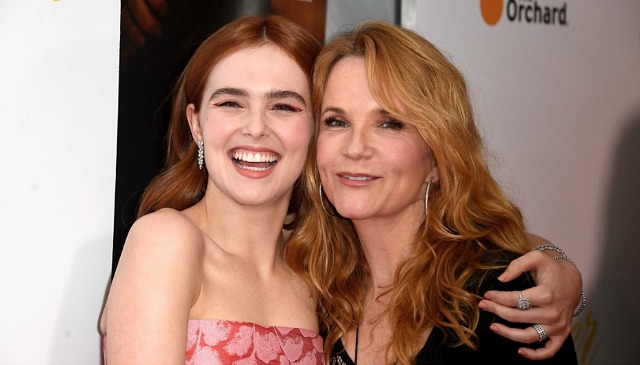
I ducked out of last night’s Tomb Raider press screening around 7:55 pm or thereabouts. On my way out I noticed a lively crowd congregated in the Arclight lobby. I quickly learned it was a premiere screening for Max Winkler‘s Flower (The Orchard, 3.16). I never got invited to a screening, but it’s not like Flower was hotly buzzed about when it played the 2017 Tribeca Film Festival or, you know, is currently setting Twitter ablaze.

Given the reviews it got last spring from The Hollywood Reporter‘s Frank Scheck, Slant‘s Chuck Bowen and TheWrap‘s Dan Callahan, the publicists appear to be relying on the old hide-the-ball strategy.

“There’s nary a believable moment in Winkler’s edgy dark comedy about a rebellious teen girl (Zoey Deutch) who’s clearly meant to be amusingly crass but instead comes across as emotionally disturbed,” Scheck wrote. “Uneasily combining its determinedly edgy plotline with failed sentimentality, Flower is redeemed only by Zoey Deutch’s magnetic performance, which would be star-making if in the service of a better vehicle. The film also squanders the talents of such reliable comic pros as Kathryn Hahn and Adam Scott.”

The “edgy” plot is basically about Deutch’s Erica giving blowjobs to older guys in order to blackmail them for inappropriate sexual contact, and then deciding to nail an older guy named Will (Scott) for having allegedly molested Luke (Joey Morgan), the overweight, oxy-addicted son of her mom’s boyfriend.

Two thoughts about the trailer: (a) Deutch, who delivered a likable, easy-vibe lead performance in Richard Linklater‘s Everybody Wants Some!! (’16), has, as Erica, a brashly assertive Millenial screwball quality — you can tell right away that she’s “got it” as far as that term applies; and (b) why is Morgan, the red-haired, whale-sized guy whose sexual victimhood is the whole reason for the revenge plot…why doesn’t the trailer show Morgan saying a line or two?

Read more

I Came, I Saw, I Grappled

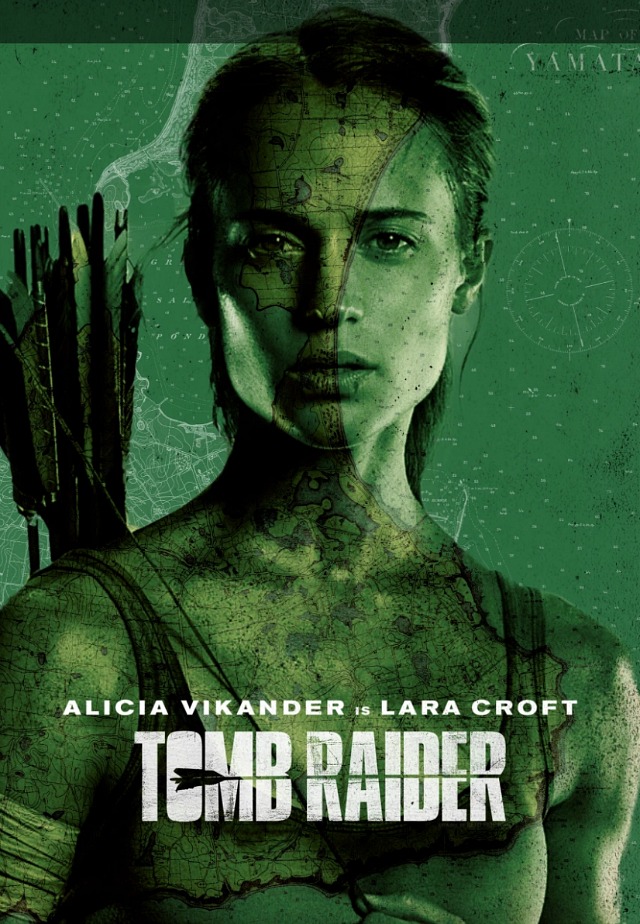
Tomb Raider (Warner Bros., 3.16) is a third-rate, totally-by-the-numbers, CG-propelled exercise in female adventurer myth-building.

With the exception of Alicia Vikander‘s defiantly emotional performance as Lara Croft, which is surprisingly decent considering the circumstances, this cinematic effort by the great Roar Uthaug (pronounce his last name over and over until you can say it backwards in your sleep) struck me as a mostly boring, time-wasting programmer — a 21st century equivalent of Allan Quatermain and the Lost City of Gold.

Don’t let this and the other cruddy reviews stop you this weekend. You wanna see how Vikander measures up, right?

The truth is that this Swedish-born Oscar winner, all of 29, isn’t half bad as the video-game adventurer with the bow-and-arrow and the buff bod. She’s too small (5’5″) to be a convincing whup-asser and I could have done with fewer cries of pain, but she gives this gamer character everything she has inside, trying like hell to make Croft’s situation feel as earnest and real-deal as possible. Vikander certainly gives a more full-hearted performance than Angelina Jolie did in those two Lara Croft flicks (’01 and ’03) that came and went without stirring a single bowl of soup. And comparing VK’s boobs to Jolie’s is a non-issue.

The first 35 minutes of Tomb Raider are the most plausible and therefore tolerable, as they happen in a semblance of real-world London (Croft’s home) and Hong Kong, and then aboard a small ship bound for a remote location in the South China Sea.

Croft is a reluctant heiress. Yeah, I know — what kind of idiot says “nahh, I don’t want an inheritance — I’d rather be in debt as I deliver pizza on a bicycle”? She’s torn up about her disappeared and presumably dead tycoon dad (Dominic West) who vanished in ’09 while researching Himiko, the legendary shaman queen who was buried alive on the island of Yamatai, somewhere southeast of Japan.

A clue found in one of her dad’s effects results in Lara travelling to Hong Kong and then paying a ship owner (Daniel Wu as the good-looking, physically agile Asian guy who has to appear in all international-appeal action films) to take her to this place of rocky foreboding.

Read more

Deplorables? Never Heard Of ‘Em.

I paid no attention yesterday to a video clip of Hillary Clinton delivering her latest gaffe — i.e., a statement that is true but politically unpopular. While attending some kind of conference in India last weekend, Clinton explained that she carried the more economically advanced (which always goes hand in hand with “better educated” and “politically progressive”) states in the 2016 election, and that Donald Trump carried the none-too-bright bumblefucks — rural, despairing, Fox News-watching, racially resentful, angry, mostly overweight, appalling dress sense, in some cases opioid-addicted, etc. Which — hello? — is 100% accurate and then some.

And totally beside the point. Machine Democrats want Clinton to keep her yap shut about the ’16 election permanently, or better yet go away and stay away for the rest of her life. We all understand that bumblefuck resentment (“Don’t put us down because we put a malicious sociopath-tyrant into the White House…that would hurt our feelings and inspire us to re-elect him!”) could hurt their chances of winning big in the 2018 midterms, and Dems now have reason to be optimistic after last night’s narrow win by 33-year-old Democrat Connor Lamb in a special House election in southwestern Pennsylvania.

Read more

How Would Female-Driven Classics Fare Today?

It’s understood that middle-class, middle-budget reality dramas have been consigned to cable and the indie realm. (Speaking of which you can’t do much better on that score than Collateral, the recently popped Netflix series with Carey Mulligan as a police inspector). This means, I presume, that sturdy, well-written dramas about women, even in this revolutionary era, are still having a tough time being funded above the Spirit Award level (i.e., $20 million tops).

I’m not saying it’s impossible to score backing for a mildly expensive, character-driven drama about a woman character played by a mid-range star, but the usual resistance doesn’t seem to have changed, at least in the realm of theatrical make-or-break.

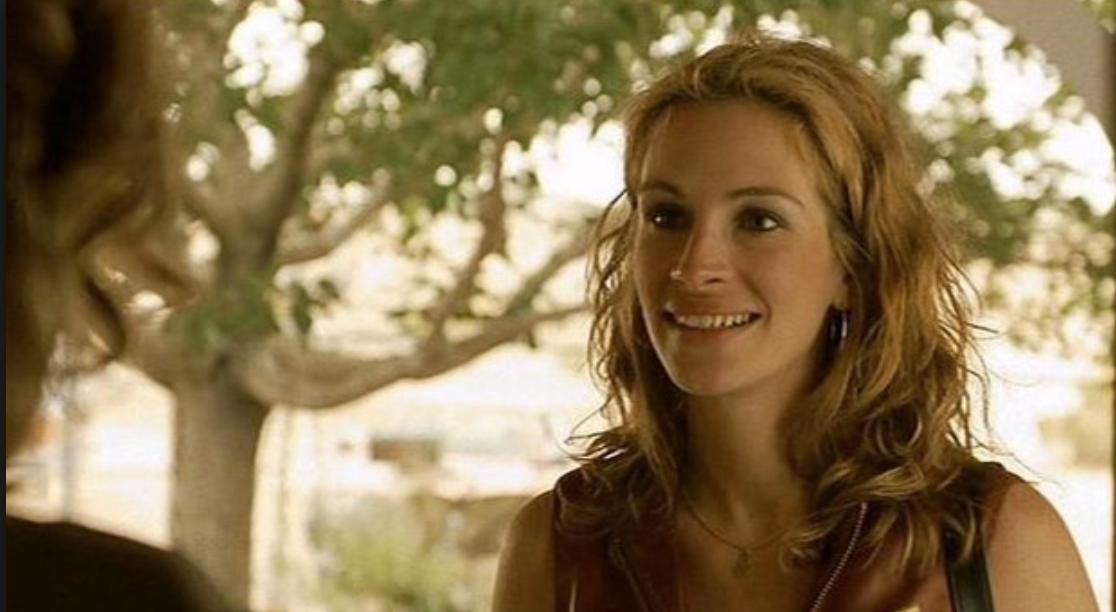
Erin Brockovich, which was made 19 years ago for $52 million (or roughly $75 million in 2018 dollars), probably wouldn’t be made today as a theatrical film — it would be produced by Netflix or Amazon. The Steven Soderbergh-directed film, which opened in March 2000, earned $125.5M domestic and $256.2M worldwide.

And Alan Parker‘s well-respected Shoot The Moon, which cost $12 million to make in ’81 or nearly $31 million by the 2018 economy, would probably have to go Netflix or Amazon also, and even then who knows? Theatrically the Diane Keaton-Albert Finney marital drama was a bust — it only made $9.2 million domestic.

On the other hand a version of Paul Mazursky‘s An Unmarried Woman, which cost $2,515,000 (roughly $10 million in 2018 dollars) to shoot in 1977 and went on to earn $24 million in ’78 or just under $100 million by the ’18 economy, would probably be funded today.

Ditto a version of Alan Pakula‘s Klute, which was made in 1970 for $2.5 million or $16 million by the measure of 2018, would probably be funded today. Maybe. The urban thriller wound up earning $12,512,637, which translates into $80 million today. (The 1970 to 2018 multiple is 6.42.)

Action Flicks Have Gone To CG Hell

I feel obliged to attend a 6 pm screening this evening of Roar Uthaug‘s Lara Croft (Warner Bros., 3.16) at the Arclight. God help me. Imagine the feeling of going to see a movie directed by a guy named “Roar.” I’m not going to joke about a sister named “Meow” or a brother named “Rowlf”, but what kind of sadistic couple, really, would name their kid “Roar”? That’s like naming him “Sue” or “Cyclops.”

I would love to enjoy a gripping, well-made actioner in the vein of Steven Spielberg‘s Raiders of the Lost Ark (which didn’t defy physics as much as the next three films in the series), but of course the big-budget, whoo-hoo action film aesthetic went over the CG cliff years ago. Nobody except for a relative handful of directors (Kathryn Bigelow, George Miller, Steven Soderbergh, Michael Mann, J.C, Chandor, Doug Liman and a few others) care about real thrills. The fantasy-superhero-bullshit aesthetic has murdered the concept of great reality-based physical action. Killed it dead.

Posted two months ago: Nobody leaps off a sinking ship in the middle of a raging typhoon and lives. Nobody grabs hold of an overhanging tree limb at the last second and thereby escapes going over a super-tall jungle waterfall. What kind of fingernail-chewing moron would pay money to watch this shite? CG stunts of this sort aren’t worth spit in the realm of real-deal physics. Yes, I realize that’s a dirty concept these days.

A little more than six years ago I posted a piece called “To Hell With Physics“:

In 1987 Lethal Weapon used a funny jumping-off-a-building gag. Ragged-edge cop Mel Gibson is sent to the top of a four-story building to talk an unstable guy out of making a suicide leap. Gibson winds up cuffing himself to the guy and jumping off the building, and they’re both falling to their deaths…not. They land on one of those huge inflated tent-sized bags…whomp!…that cops and firemen use to save people. All is well.

Flash forward to another jumping-off-a-building scene in Brad Bird and Tom Cruise‘s Mission: impossible 4 — Ghost Protocol. An American operative is being chased over a rooftop by baddies in Budapest. He fires some rounds, kills a couple of guys, and then escapes by leaping off the building, continuing to shoot as he falls four or five stories to the pavement below. He’s saved, however, when he lands on a modest air mattress that’s about one-tenth the size of Lethal Weapon‘s tent-sized bag.

Read more

Understandable Political Gesture

Yesterday came an announcement that Pearl Street Films, the production company headed by Ben Affleck and Matt Damon, will be totally supporting “inclusion riders” (i.e., a diversity-hiring provision) on their forthcoming projects.

A friend writes: “I have friends who work with Ben and Matt, and I know Matt is trying to get a new movie off the ground as we speak, going around this week pitching it. (He’s over at Fox today.) So on the eve of trying to get this movie set up, they announce this inclusion-rider thing. The strategy seems kinda transparent.”

Translation: We get what’s happening — include us in — fund us — onward!

A producer pal: “Two guys who have skirted by on the #metoo block” — i.e., have narrowly dodged the Robespierre guillotine — “are now going to embrace the #metoo theology a la Frances McDormand‘s suggestion? No surprise.” He added, however, a fun fact: “No idea how such a rider would be enforceable!”

Red Irishman Ink?

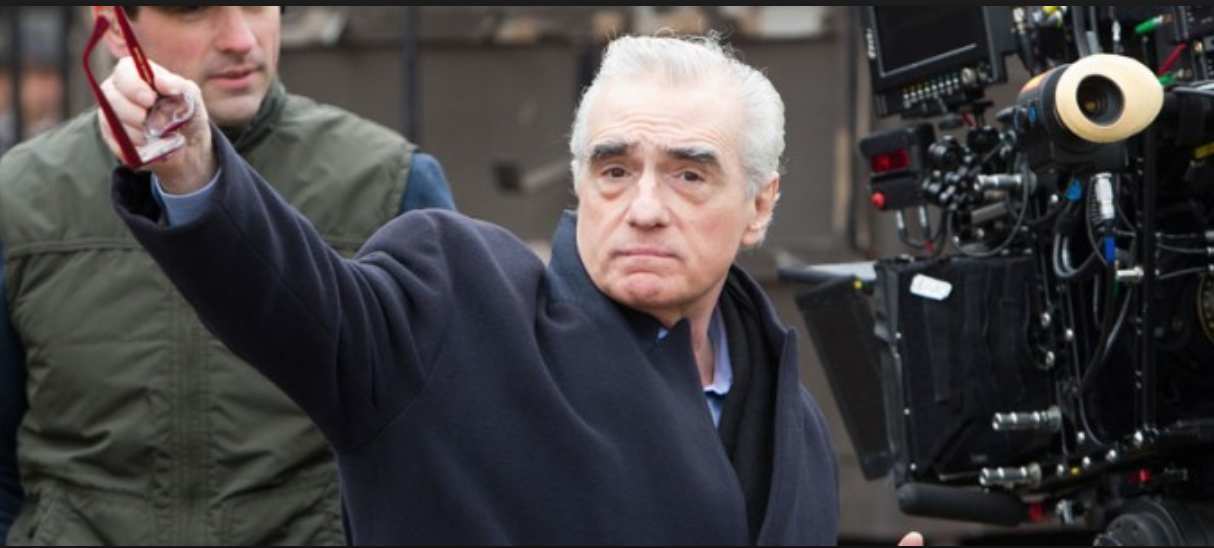
Yesterday “Page Six”‘s Richard Johnson reported in the N.Y. Post that a “source” is claiming that Martin Scorsese‘s The Irishman, the likely swan song of Scorsese’s career as far as mafia wise guys are concerned, may cost $175 million, and that’s without marketing.

On 2.9.18 Deadline‘s Anita Busch reported that “we are now hearing from multiple sources that the film’s budget is well over $125M and more in the $140M range (and climbing).” In late February ForbesScott Mendelson echoed Busch’s report that the Irishman is costing $140 million or thereabouts.


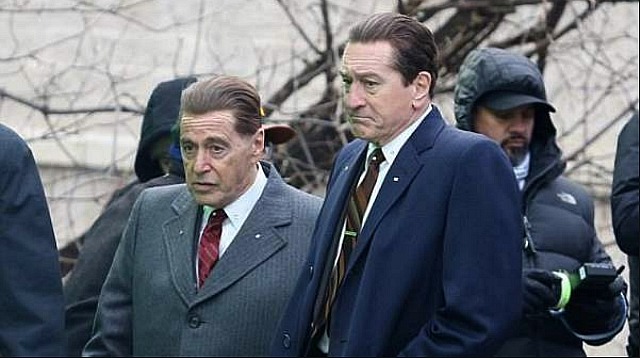
Al Pacino, Robert De Niro during filming.

Add the standard marketing costs (usually $85 to $100 million for a major feature) to Johnson’s $175 million figure and the total Irishman tab is in the vicinity of $250M. Add the same to Busch/Mendelson’s $140M and you’ve got $225M or thereabouts.

Being a Netflix release that almost certainly won’t have an extensive theatrical run, The Irishman isn’t subject to the usual financial arithmetic of a typical feature from a mainstream distributor, but $175M or $225M or $250M tabs are certainly stand-outs in the realm of a non-fantasy, straight-goombah period drama.

Robert De Niro, Al Pacino, Joe Pesci, Bobby Cannavale, Harvey Keitel and Ray Romano are the Irishman costars. Anna Paquin is apparently the only actress of any note in the film.

Netflix is flush enough to handle the Irishman tab without breaking too much of a sweat. It’s interesting nonetheless to consider that Cleopatra‘s $31 million budget, which broke 20th Century Fox in ’63, inflates into roughly $248M in 2018 dollars. ($100 in 1963 = $800 in 2018.)

Read more

Sack The Whole Lot of ‘Em

Last July former Secretary of State Rex Tillerson allegedly called President Trump “a moron” in private, and when the remark was reported over four months later Tillerson didn’t directly address or deny it, saying only, “I’m not going to deal with petty stuff like that.”

I concluded then and there that Tillerson was toast — it would just be a matter of how much distance Trump wanted to put between the “moron” quote and Tillerson’s dismissal. If I’d been in Trump’s shoes I would probably have said to myself, “Gee, maybe Rex is right…hell, he probably is right…I am kind of a moron asshole narcissist sociopath. Maybe for the good of the country I should resign?” But that’s me. Okay, that’s not me but whatever.

Nonetheless the white-haired Tillerson, whose deep, Texas-accented voice and Raymond Burr-like girth always suggested a lifelong Big & Tall patronage despite the fact that he’s only 5’10”, lasted until today.

I’m glad he’s gone — now what about the rest of the cabinet? And Trump’s long-overdue resignation for that matter? Throw Mike Pence into a pit filled with starving wolves, but let him die with a sword in his hand like Ernest Borgnine in The Vikings.

Read more

Melancholy Horse Tale

After suffering a crushed skull during a rodeo, Brady Blackburn’s riding days are over as one more fall could kill him. He can still train horses (or so I recall — I saw it more than six months ago) but he’s mainly looking at dull, retail-store work for the rest of his life, and you feel really badly as the poor guy sulks and laments because he can’t do what he loves. And that’s pretty much it. I should be upfront and admit I wasn’t giving Chloé Zhao‘s film my undivided attention. I wasn’t dozing but I wasn’t riveted. It had my respect — it has an honest, real-deal vibe — but at the same time I was muttering “is this story gonna go anywhere? The guy’s in a bad spot — I get that — but is he going to find a way out of this predicament or off himself in the manner of Mickey Rourke in Darren Aronofsky‘s The Wrestler or what?” The Rider has an 85% Metacritic score.