At Long Last Leon

During last year’s pre-Cannes Manhattan stopover I caught a screening of Tony Zierra’s Filmworker, a doc about Leon Vitali, the one-time actor who served a Stanley Kubrick’s right-hand-man for roughly 20 years. Several days later it screened at the 2017 Cannes Film Festival, under the Cannes Classics subsection. And then I sat down with Vitali and Zierra at the Grand Hotel. Now, ten months later, it’s been announced that Kino Lorber will open Filmworker at the Metrograph on 5.11, and at West L.A.’s Nuart on 5.18, “followed by a national rollout.”

And yet for some reason there’s no online trailer. Why? Where is it? Don’t tell me one hasn’t been cut.

My HE review was posted on 5.23.17: Tony Zierra‘s Filmworker, a 94-minute doc about the legendary Stanley Kubrick assistant and confidante Leon Vitali, is the juiciest and dishiest capturing of Stanley Kubrick‘s backstage life and career ever assembled. It’s about Vitali’s life, but by way of Kubrick’s.  (Or is it the other way around?)  21 or 22 years of deep focus, late hours, nose to the grindstone, passion, obsession, total commitment and almost no days off, ever.

Vitali began working for The Great Stanley K. in various capacities a year before The Shining began shooting, and then stayed with him to the end (i.e., 3.7.99). Researcher, gopher, go-between, driver, casting assistant, print cataloguer and (after Kubrick’s death) restoration consultant. The film is a completely satisfying record and assessment of that servitude, that era, that history, that ongoing task.

The photos and behind-the-scenes film clips alone are worth the price, I can tell you. Great stuff. On top of which I was reminded that Vitali played not one but two roles in Kubrick films — Lord Bullington in Barry Lyndon (’75) and “Red Cloak” in Eyes Wide Shut (’99).

Vitali said to himself early on that he’d like to work for Kubrick. What he didn’t expect was that once that work began Kubrick would want Vitali at all hours, all the time…focus and submission without end. If the early sentiment was “I’d give my right arm to work for Stanley Kubrick.” Kubrick’s reply would be “why are you lowballing me? I want both arms, both legs, your trunk, your lungs, your spleen, your ass and of course your head, which includes your brain.”
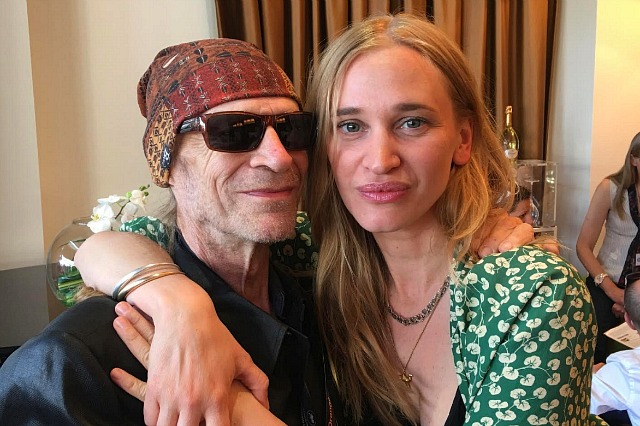

Leon Vitali — star of Filmworker, Stanley Kubrick confidante and right-hand-man for 21 or 22 years, former actor and controversial aspect-ratio debater — and Vera Vitali, the Stockholm-residing actress, at Cannes Grand hotel last weekend.
Read more

OG on RPO: Virtual Whoo-Whoo Competes With Banality

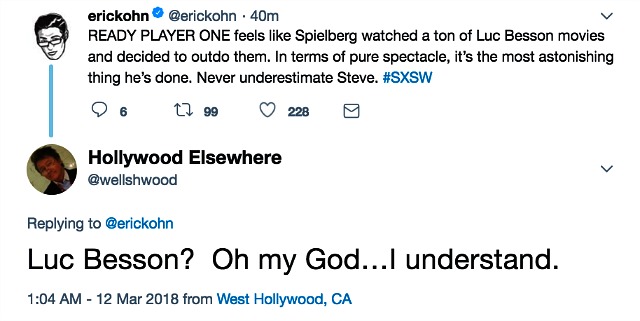
It is axiomatic that trade critics will be as hospitable as honesty allows when it comes to major studio releases, especially those aimed at fantasy geekboys and especially when directed by a legend like Steven Spielberg. And so Variety‘s Owen Gleiberman is most likely fulfilling expectations in his review of Ready Player One, which premiered last night at SXSW.

But even under these conditions OG offers terms like “banal” and “slippery mutating synthetic digital imagery” and — this is probably key — “more occupied than invested.” OG was gripped by RPO, but his review also indicates that the general SXSW reaction (“We’ve found God! The entire crowd was levitating…shrieking with pleasure!”) was over-the-top.

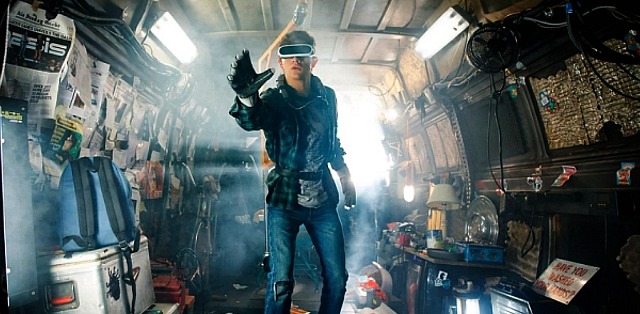
And yet I love hearing that there’s a sequence in which Tye Sheridan‘s Parzival, Olivia Cooke‘s Art3mis and a Shrek-like avatar named Aech visit Stanley Kubrick‘s Overlook hotel.

“In Ready Player One, everything you could call virtual is clever and spellbinding,” he writes, “[and] everything you might call reality is rather banal.” Spielberg’s “dizzyingly propulsive virtual-reality fanboy geek-out” is “an accomplished and intermittently hypnotic movie [but],” he qualifies, “you may feel like you’re occupied more than you are invested.”

Ready Player One tells a breathless and relatively coherent story — essentially, the future of civilization is riding on the outcome of a video game — but the movie, first and foremost, is a coruscating explosion of pop-culture eye candy. Never is that more spectacularly true than in the irresistible sequence in which [three virtual leads] enter the Overlook Hotel from The Shining.

Read more

Grain of Salt

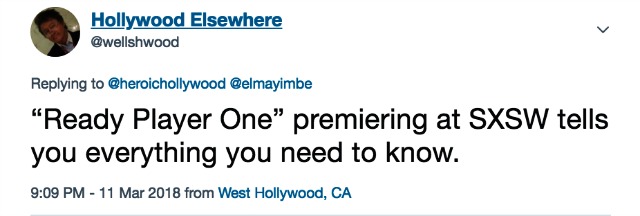
Never accept ecstatic reactions from a South by Southwest crowd about any kind of geeky, sci-fi, gamer or comic-book movie at face value. SXSW devotees are whores for fanboy stuff. Take their expressions of wondrous delight and slice them in half if not by two-thirds, and that’ll be the likely reality of things when the film opens commercially.

Read more

Barney Sheean Lives!

Robert Aldrich‘s The Legend of Lylah Clare (’68) is one of the worst inside-Hollywood movies of all time. And yet it has Ernest Borgnine‘s flamboyant Barney Sheean, a vulgar studio boss who despises the idea of making “films.” In Act One he yells at his studio executive son (Michael Murphy), “I don’t want to make films — I want to make movies. What do you think we’re making here, art?”

Tonight at Austin’s South by Southwest Festival, Steven Spielberg made an audience cheer by proudly trumpeting the Barney Sheean ethos. As he introduced his latest film, Ready Player One (Warner Bros., 3.29), Spielberg proclaimed, “This is not a film we’ve made — this is a movie!

Read more

Don’t Flatter Yourself, Maurice

Michael Caine is the latest coward to throw Woody Allen under the bus. The 84-year-old actor won an Academy Award for his role in Allen’s Hannah and Her Sisters and the facts are the facts, but that’s water under the bridge, Caine feels.

“I can’t come to terms with [the allegation],” Caine has told The Guardian‘s Michael Hogan “because I loved Woody and had a wonderful time with him. I even introduced him to Mia [Farrow]. I don’t regret working with him, which I did in complete innocence. But I wouldn’t work with him again, no.”

Caine worked for Allen in “in complete innocence” in 1985, or seven years before the alleged incident with Dylan Farrow happened? The nature of which Allen had never been accused of before and has never been accused of since?

The main subject of the Hogan interview is My Generation, about Caine’s journey through 1960s London. Caine is the narrator, co-producer and “star” as it were. Variety‘s Jay Weissberg gave it a mostly positive review during last September’s Venice Film Festival.

Read more

Brian Wilson’s Warmth of the Sun

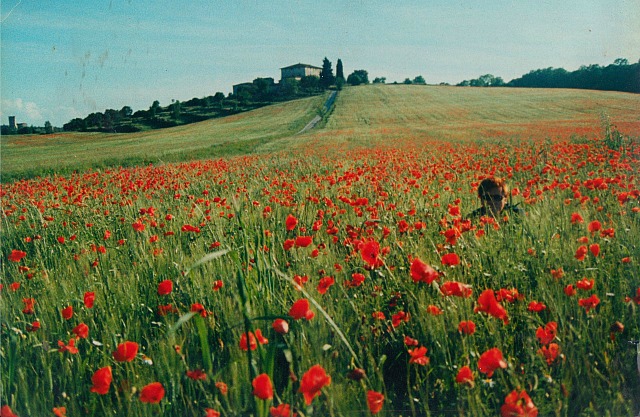
I’ve posted this photo twice since the birth of Hollywood Elsewhere in August ’04. It was taken on a great blue-sky day in Italy nearly 18 years ago, somewhere south of Siena during a leisurely drive to Rome. I can recall the aroma and the summery air and the pastoral vibe like it happened yesterday. To this day I’m not sure what kind of flowers are dotting the landscape but I always refer to them as poppies (which I’m sure they’re not) when I show this to friends. I’ve tried to find this estate a couple of times since, but no dice. If this image rings a bell for anyone and they know the address or can provide a Google capture, please get in touch.

Infinite Hitler Reverberations

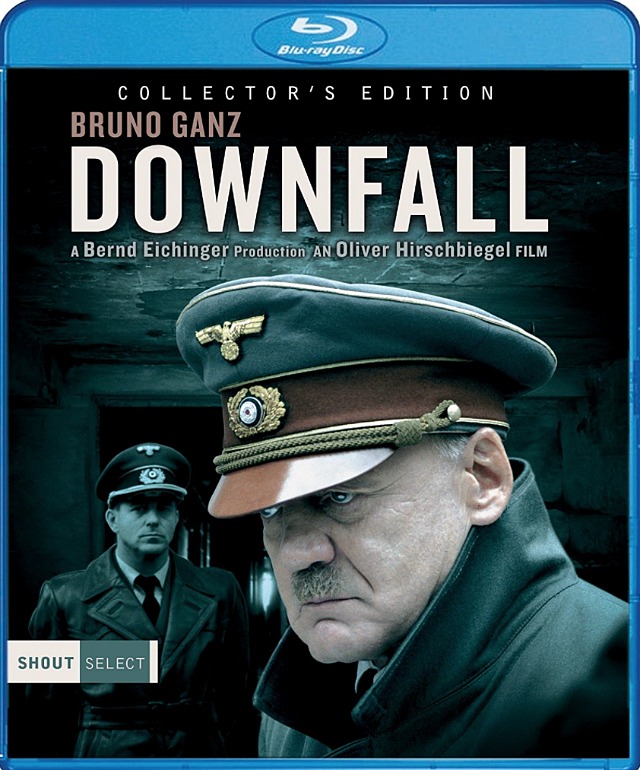
There’s a new Bluray of Oliver Hirschbiegel‘s Downfall (’04) out this month. The last Bluray version was released ten years ago, by the Momentum guys in England.

I’ve been a devout Downfall fan since catching it in Toronto 13 and 1/2 years ago; I interviewed producer Bernd Eichinger and the great Bruno Ganz in Los Angeles when they came to town several weeks later. It’s a legendary war film — tense, well-written, highly charged in all respects.

Of course, the reason Downfall is regarded as the biggest film of Hirschbiegel, Ganz and Eichinger’s career is not because of the dedication and artistry that went into its making, but the Hitler YouTube parody-rant phenomenon that was inspired by a single conference-room scene. Hitler parodies began…what, in ’06 or ’07 and now number over 1500 and perhaps over 2000 or even higher.

Given the fact that Downfall would be remembered only by cineastes today if the parodies had never taken off, wouldn’t you think that the producers of the two Blurays would have acknowledged this by including a short, good-natured essay on the influence of the parodies? To simply acknowledge the basic, irrefutable facts? Nope — neither Bluray even alludes to them. Which strikes me, no offense, as insane.

Read more

Bowls of Disappointing Cherries

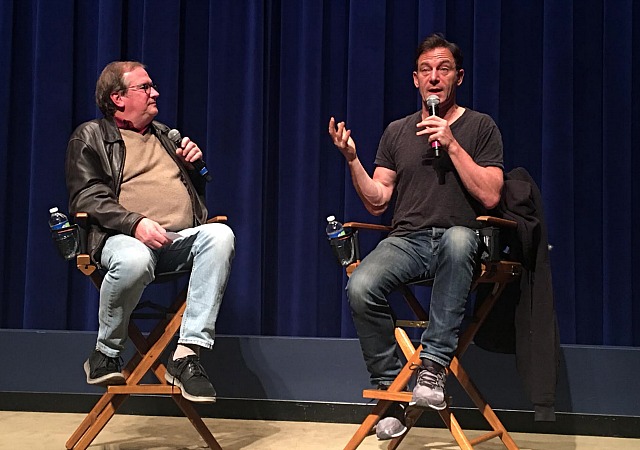
Death of Stalin costar Jason Isaacs, quoted by The Guardian‘s Rachel Cooke in a 3.11 interview: “I’m just a dude who forgets to take out the rubbish. I’ve had a good year or two, but there have been other times [that weren’t so hot]. I’ve been to Sundance with eight films, and only one of them came out.


Death of Stalin costar Jason Isaccs (r.) and Deadline‘s Pete Hammond (l.) following a Stalin screening at the WGA theatre a few days ago.

“When I was in Peter Pan [he played Mr. Darling and Captain Hook in PJ Hogan’s 2003 film], it was going to be gigantic. I was told it would change my life. Be careful, they said — make sure you’ve got the right people in place. Then it came out, and it was a catastrophic flop. It killed my film career stone dead for a while.

“It was a great lesson — just have a great time and do the best you can. Sometimes I wish I was more famous; you have more choices as an actor when you are. But I tend to ask: how can I be grateful for the things I’ve got, rather than for the things I haven’t got? Moaning is a waste of life.”

Read more

Twitter Torquemadas

In my book N.Y. Times columnist Bari Weiss attained sainthood the night before last by ripping into militant offense-taking by the p.c. authoritarian left. She laid it all down on Real Time With Bill Maher, which I didn’t see until last night.

“It’s [partly] the narcissism of small differences,” she began. “Anyone who departs from woke orthodoxy gets a lot more heat than people on the actual right. I also think that offense-taking is being weaponized. It is a route now to political power…a way of smearing [a person’s] reputation and making them a liability…it’s a way of taking [people] down a peg.

We’re living through an era of what Weiss calls “the Digital Stain…what people are trying to do is take even the most well-intentioned and anodyne comment and intentionally torque it and then throw it out through the echo chamber of social media in order to ruin people’s reputations.”

Weiss won my initial respect with a 1.16 piece called “Aziz Ansari Is Guilty. Of Not Being a Mind Reader.” What’s up with Aziz, by the way? Is he still hiding out or…?

Read more

Attention Is Paid

I saw and reviewed Rebecca Miller’s Arthur Miller, Writer (HBO 3.19) last November. The HBO premiere happens on 3.19. In recognition of a just-posted trailer, my reactions once again:

“This is a highly personal project by respected director Rebecca Miller, the playwright’s daughter by his third wife. I’ve admired Miller and his plays all my life, but the doc acquainted me with a semi-intimate, unguarded version of him, which was new. Miller was a crusty, somewhat brusque fellow when it came to being interviewed — you could use the words ‘blunt’ or ‘craggy’ — but he never seemed less than wise or perceptive.

“Born in 1915, Arthur Miller led an interesting life as a fledgling writer from the mid ’30s to mid ’40s, but led a ferociously fascinating life when he began to produce important, critically respected plays. His big creative period began in ’47 (All My Sons), peaked in ’49 (Death of a Salesman), rumbled into the ’50s (The Crucible, A View From The Bridge) and concluded with his last two big-league plays (’64’s After The Fall and ’68’s The Price) — a little more than 20 years.

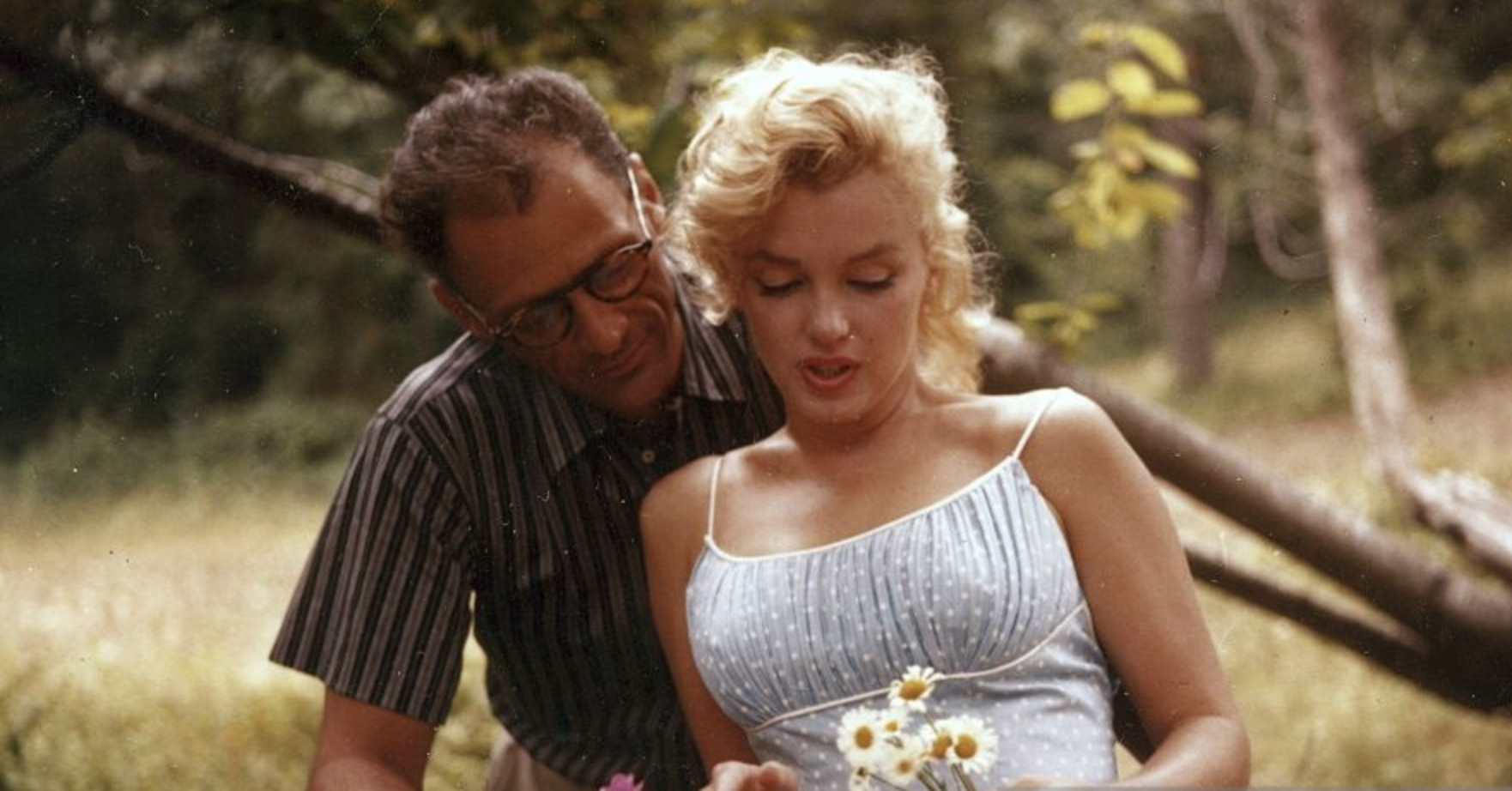
“Miller’s Marilyn Monroe period (’56 to ’61) made him into a paparazzi figure, and also seemed to bring on the beginning of his creative decline. Miller and Monroe divorced in ’61, and of course she died in August ’62, an apparent suicide. Miller still “had it” for a few years after this period. After The Fall, a thinly disguised drama about his turbulent relationship with Monroe, opened in ’64. Then came the less ambitious, more emotionally engaging The Price in ’68.

“It sounds unkind to note this, but from ’68 until his death in ’05 Miller was more or less treading water (trying but never getting there, working on his Roxbury farm, the great man who once was, writing less-than-great plays, writing travel books with his wife) and never managing the comeback that we all wanted to see.

Read more

Lightly Stoned vs. Zonked

With Joel and Ethan Coen‘s The Big Lebowski having opened 20 years ago (3.6.98), everyone’s celebrating the anniversary. I was an instant fan but I might be Lebowski-ed out, having seen it at least 14 or 15 times. I could still have fun with another viewing or two, I guess, but I know the dialogue and the performances too well. It’s kinda fun to watch it Rocky Horror-style, mouthing the dialogue in synch with the film, but everyone does that, right?

I first heard about the Monica Lewinsky scandal during the same Sundance Film Festival (January ’98) that Lebowski had its big sneak preview at. I felt awful about missing that screening; didn’t see it for another three or four weeks.

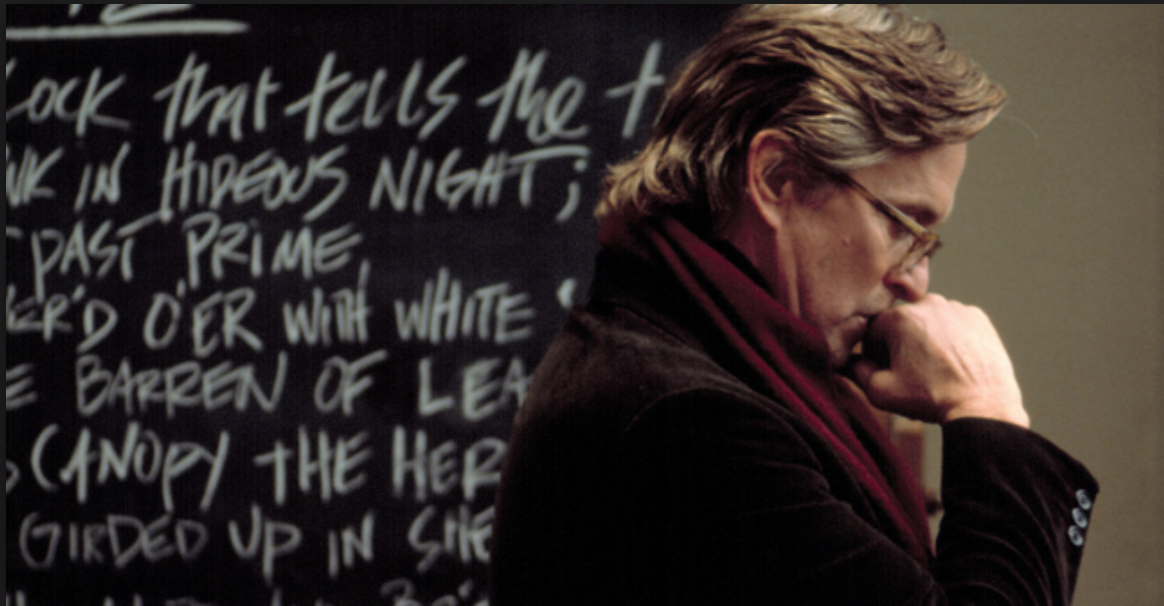
I’m starting to think that my favorite stoner comedy might be Curtis Hanson‘s Wonder Boys (’00). Back in my pot-smoking days I used to prefer what I called a nice “light stone” as opposed to being totally ripped. This is what Wonder Boys is — a subtle pot high laced with middle-aged whimsy and meditation. It’s goofy and trippy but embroidered with an aura of accomplishment or at least ambition, and therefore a whole different bird than Lebowski.

And it sure has its own atmosphere. Each and every Wonder Boys shot, it seems, is covered in fog and murk and Pittsburgh dampness, and it contains my favorite Michael Douglas performance to boot.

Alas, Wonder Boys was a financial bust — cost $55 million to make, earned $19 million domestic and $33.5 million worldwide.

Some of the critics who didn’t quite get Lebowski‘s lost-in-the-haze, stoned-humor, where-is-this-movie-going? spirit (including senior L.A. Times know-it-all Kenneth Turan, Variety‘s Todd McCarthy, the San Francisco Chronicle‘s Edward Guthmann, The New Yorker‘s Daphne Merkin, Palo Alto Weekly‘s Susan Tavernetti, Chicago Reader‘s Jonathan Rosenbaum, Deseret NewsJeff Vice (“This uneven screwball comedy — a disjointed and half-hearted attempt by the Coen brothers to return to the Raising Arizona style — is bound to underwhelm even their most fervent admirers”) and the S.F. Examiner‘s Barbara Shulgasser) have recanted. But Turan isn’t one of them. He’s told the Washington Post‘s Eli Rosenberg that he hasn’t rewatched it and is sticking with his initial reaction.

Read more