“If Ahh Can Dream…:

If a genie were to offer me one wish (instead of the usual three), I would ask for the collapse of the superhero comic-book scourge. For these films have transformed the movie-theatre experience, a once-hallowed shrine, into something brutishly primitive and whorishly repetitive. Excellent stuff is obviously being made and seen, but mostly on my 65″ Sony 4K. Dipshit superhero flicks, cheap horror, dumb comedies, family fantasies, romcoms and girl-power fables are tumorous metaphors for the quarter-of-an-inch-deep spiritual vistas and fast-food taste buds of millions of GenX, Millennial and GenZ moviegoers.

And I’m speaking as someone who refused to see Girls Trip but truly enjoyed the last hour of Black Panther, and definitely looking forward to Ant Man and the Sassy Bitch Wasp.

When will it all end? In a May 2016 essay that offered “a nuanced explanation of where the industry’s at, how it got there, and what it means for the future of movies,” TimStarz04 predicted a collapse sometime in the early ’20s. The then-current system (slambang superfantasy flicks costing an arm and a leg, and only a small portion of them returning substantial profits) is “unsustainable,” he said, echoing the views of many in the industry (including Steven Spielberg). He specifically theorized that 2016 “will be the first year of the collapse of the Hollywood [comic-book idiot] studio system that will probably take hold by the beginning of the 2020s.”

What has changed over the last 21 months, if anything? The answer is “nothing,” of course, but I’m asking all the same.

Trainwreck Would’ve Worked As Drama

“People should look at comedies as dramas when they’re writing [them]. They should be a story that would work just as well without any jokes.” — Judd Apatow in just-popped (3.1.18) Masterclass trailer.

I’ve been saying this all along. A good comedy is just as story-savvy, character-rich and well-motivated as a good drama. Good comedies and dramas both need strong third-act payoffs. Take away the jokes, the broad business and the giggly schtick, and a successful comedy will still hold water in dramatic terms. But most comedic writers, it seems, start with an amusing premise, then add the laugh material, and then, almost as an afterthought, weave in a semblance of a story along with some motivation and a third-act crescendo that feels a little half-assed.

Remember Amy Schumer‘s eulogy at her dad’s funeral in Trainwreck? Exactly.

Read more

DiCaprio and Pitt Are Too Old To Play “Struggling” Guys

Official Sony Pictures Announcement: “Quentin Tarantino’s ninth film will be titled Once Upon A Time In Hollywood, and will star Brad Pitt and Leonardo DiCaprio. The film will be released worldwide on August 9, 2019.” Previous reports have said the film will shoot in Los Angeles sometime this summer.

Back to statement: “Tarantino describes it as ‘a story that takes place in Los Angeles in 1969, at the height of hippy Hollywood. The two lead characters are Rick Dalton (DiCaprio), former star of a western TV series, and his longtime stunt double Cliff Booth (Pitt). Both are struggling to make it in a Hollywood they don’t recognize anymore. But Rick has a very famous next-door neighbor…Sharon Tate.”


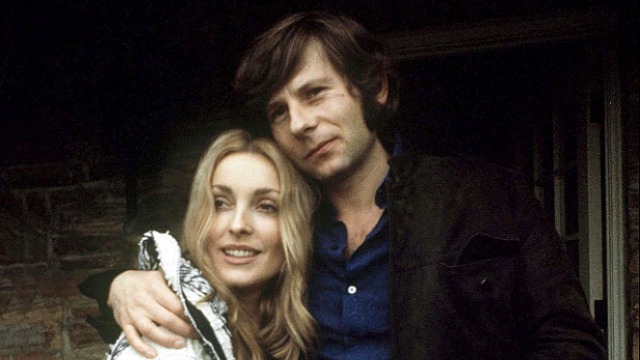
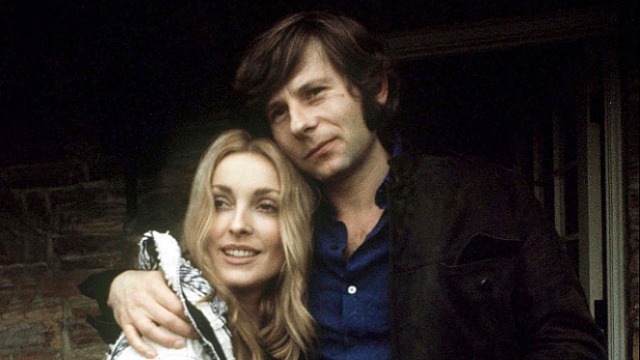
Sharon Tate, Roman Polanski at their Benedict Canyon home at 10050 Cielo Drive, sometime in ’68 or ’69.

First of all, it’s spelled “hippie.” (If you’re spelling it “hippy,” you’re referencing the 1963 Swingin’ Blue Jeans version of “The Hippy Hippy Shake.”) Second, Rick’s next door neighbors were big-cheese director Roman Polanski and actress-wife Sharon Tate, not Tate alone. (They weren’t separated or divorced.) Third, DiCaprio is 43 and looks it, and if a TV actor hasn’t hit it big or found a second career wind by his late ’30s, he’s probably fucked unless he’s a character actor. And fourth, Pitt is 54 and could maybe pass for 47 or 48, at best. You can’t play a struggling, trying-to-make-it guy when you’re 47…c’mon!

Pitt and DiCaprio could’ve played struggling guys a decade ago, when they were 44 and 33, respectively. That I would’ve believed.

Last November The Hollywood Reporter‘s Borys Kit reported that the film would cost in the vicinity of $95 million, which, when you add the usual absurd marketing costs, means it would have to gross $375 million worldwide to break even, according to “one source” Kit spoke to.

Read more

Chappaquiddick Approaching

Appropriately Damning Chappaquiddick,” posted on 9.11.17: “John Curran‘s Chappaquiddick (Entertainment Studios, 4.6) is a tough, well-shaped, no-holds-barred account of the infamous July 1969 auto accident that caused the death of Kennedy family loyalist and campaign worker Mary Jo Kopechne, and which nearly destroyed Sen. Edward Kennedy‘s political career save for some high-powered finagling and string-pulling that allowed the younger brother of JFK and RFK to more or less skate.

“Just about every scene exudes the stench of an odious situation being suppressed and re-narrated by big-time fixers, many of whom are appalled at Ted’s behavior and character but who do what’s necessary regardless.

“There’s no question that Curran, screenwriters Taylor Allen and Andrew Logan, dp Maryse Alberti and editor Keith Fraase are dealing straight, compelling cards, and that the film has stuck to the ugly facts as most of us recall and understand them, and that by doing so it paints the late Massachusetts legislator and younger brother of JFK and RFK (Jason Clarke) in a morally repugnant light, to put it mildly.

“Curran has crafted an intelligent, mid-tempo melodrama about a weak man who commits a careless, horrible act, and then manages to weasel out of any serious consequences.

Chappaquiddick is a frank account of how power works (or worked in 1969, at least) when certain people want something done and are not averse to calling in favors. EMK evaded justice by way of ingrained subservience to the Kennedy mystique, a fair amount of ethical side-stepping and several relatively decent folks being persuaded to look the other way.

Read more

Looking For Tall Grass

I’m really hating the MSM’s refusal to discuss a plausible reason for White House Communications Director Hope Hicks having announced her resignation from the Trump White House earlier today. The only sensible-sounding theory was tweeted a while ago by Seth Abramson, which was taken from something he heard on MSNBC: “This is a classic ‘friends and family say get out now or go down with the ship‘ scenario.”

I would have theorized that on my own. Hicks is almost certainly leaving out of concern for what may happen down the road and to avoid any prosecutorial intrigues, or something in that vein.

A 29 year-old former model from Greenwich, Hicks is said to be a steady, reliable pro — very measured and low-key in her dealings with President Trump (she’s reportedly his longest serving aide, and is allegedly closer to him than daughter Ivanka) as well as fellow White House staffers, not to mention reporters, whom she apparently never talks to.

Is it horribly sexist to note that right-wingers like to hire hotties as staffers, and that Hicks fits that profile? She strikes me as being cut from the same cloth as Fawn Hall, the Oliver North secretary who testified from the Iran-Contra scandal. Are you telling me Hicks’ Barbie doll appearance wasn’t a factor in becoming a close Trump confidante, and that her having posed for bikini shots had nothing to do with anything?

Hicks had a sexual relationship with Trump’s campaign manager Corey Lewandowski during 2015 and ’16, despite his having been married to his wife, Alison Hardy, at the time. After that Hicks began an intimate relationship with former White House Staff Secretary Rob Porter, who had to leave his post after spousal abuse charges surfaced in the press.

Read more

Collusion Rundown

Last night the vigilant and knowledgable Seth Abramson (‪@SethAbramson‬) tweeted a thread that listed 20-plus instances of collusion between Donald Trump and Russia. His concluding tweet: “Everything I’ve written is taken from the public record, and is only a fraction of what Bob Mueller knows. So let’s stop reading or sharing ‘no collusion’ think-pieces.” Reposting for the record:

1. Steele Dossier intel says Sergei Lavrov ran a blackmail/money laundering scheme in which Trump got money, blackmail forbearance, and — later — election assistance in exchange for a pro-Russia policy and other perks. Trump then leaked classified intel to Lavrov in the Oval Office.

2. Trump aided his son in covering up a clandestine meeting with Kremlin agents — designed to transmit stolen Clinton material from Russia to Trump — by drafting a false statement and forcing Don to sign it under his own name. Trump knew Don would be called to testify on the meeting.

3. According to both Emin Agalarov and his father Aras, Trump signed a letter-of-intent to build Trump Tower Moscow using Putin’s real estate developer, banker, and permits man in November 2013 — a deal that was active until February 2017. Trump has lied about this deal from Day 1.

4. Trump held a secret meeting with Putin at an international conference, during which he discussed sanctions with the Russian strongman. His administration had no intention of acknowledging or admitting the meeting until a journalist happened to find out about it accidentally.

5. Trump admitted discussing U.S.-Russia relations with Putin in Moscow in 2013, and then, after announcing a run, retracted the claim, saying he “spoke to top officials” but “couldn’t say more.” His fixer, Cohen, sent a witness to the call to Stormy Daniels’ lawyer to kill the story.

6. An eyewitness to the judging process of the 2002 Miss Universe pageant in Puerto Rico has told Special Counsel Bob Mueller that Trump directly and unambiguously attempted to rig the pageant so that Miss Russia would win. Miss Russia was Putin’s mistress at the time. She won.

7. Through clandestine negotiations conducted by Sessions — lied about before Congress, under oath, by Sessions — Trump agreed to unilaterally drop Russia sanctions while he knew from briefings Russia was attacking America. His secret plan was discovered by the DoS post-inauguration.

Read more

Toasting Used To Matter

I smoked cigarettes from the time I was 14 or 15 until 26 or thereabouts. Then I more or less “quit”, which means I would quit and feel great and then return to the fucking things and then quit again, etc. This went on for another decade or so with the relapse periods lasting a couple of weeks to a couple of months. I would always lapse in Europe because it’s different over there. I used to be into Davidoffs or Galouises when I was on French soil. I would love smoking the first two or three, and then hate myself as I finished off the pack.

I used to smoke all kinds of brands when I was in high school — Camels, Chesterfields, Lucky Strike, Parliament, Benson & Hedges.

Some Italian guy whose last name ended in a vowel (and who wore pegged pants, pointed shoes and a Brylcream pompadour) taught me to toast them when I was in junior high, and I totally bought into the idea that this improved their taste. It made sense — I was baking or double-browning the shredded tobacco leaves, and so they would naturally deliver more flavor in the same way that marshmallows taste better when you hold them over a campfire or Pepperidge Farm sandwich bread tastes better when you pop it into a toaster.

He’s Just Not That Into You

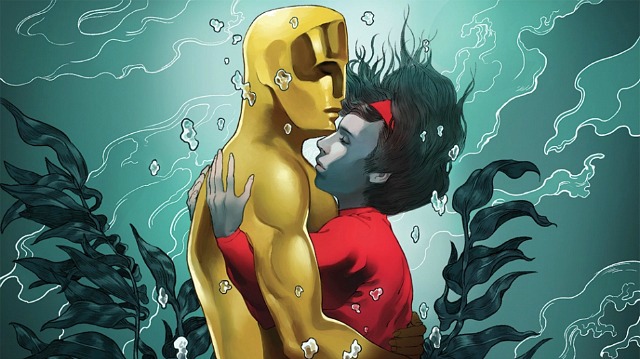
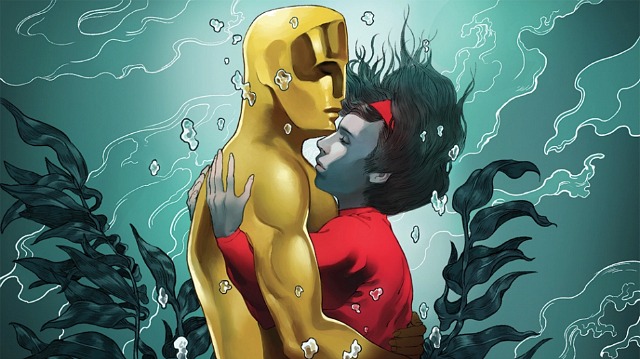
I feel kinda “meh” about the latest (final?) Oscar handicap piece by Variety‘s Kris Tapley, but the illustration art by “Naki” (aka Ha Gyung Lee) is fascinating.

Sally Hawkins is obviously ready for a little aquatic hunka-chunka with the Oscar statuette, but look at his stiff posture. He’s clearly feeling conflicted. His eyes are closed but he’s apparently saying to himself, “What have I gotten myself into?” Why isn’t he embracing Hawkins wholeheartedly? His left hand is weakly touching her back, but otherwise his body posture screams standoffishness. The position of his arms say “maybe she’ll stop if I just stand here and I don’t express anything that could be seen as warm or erotic?”

We all know that Oscar’s arms are traditionally folded as he clasps an upside-down sword, but Naki could have gone anywhere with this. She could have shown Oscar giving Hawkins a sexy bear hug or kissing her on the lips, or caressing her hair with his left hand while his right hand strokes her neck. Instead she portrayed him as respectful but passive — a good friend or a son, but not a lover.

My pet theory is that Naki isn’t that much of a fan of The Shape of Water, and that she held back on the romantic frisson as a result. Good artists always reveal themselves in their work.

No Gloating

Five and a half months ago MCN’s David Poland assessed what appeared to be the Best Picture contenders of the moment. And then I assessed Poland’s assessment (“Poland’s Rightos & Wrongos”).

We both saw Three Billboards as a likely nominee (although I mainly saw it as an acting vehicle) but we were both wrong on the Best Picture chances of Get Out. And neither of us foresaw that The Post would be shut down by the Academy’s newer, younger voting bloc (representation, identity-politics, “let’s give somebody else a chance”) because it seemed too boomerish and traditionally Oscar-baity.

Poland asserted that Aaron Sorkin‘s Molly’s Game had a “legit” Best Picture shot, but I said no way. He also said that Guillermo del Toro‘s The Shape of Water had a “good chance” of being Best Picture-nominated. I said I loved the Sally Hawkins Johnny Belinda factor (i.e., giving a silent performance) but noted that others have called it under-written with too many plot holes. And I was much more enthusiastic about Lady Bird.

Just re-read this (Poland’s spitball picks vs. my reactions) and consider the perception gaps:

Poland claims that “only two movies came out of North American premieres at TIFF with legit Best Picture hopes” — Aaron Sorkin‘s Molly’s Game and Martin McDonagh‘s Three Billboards Outside Ebbing, Missouri. HE response: It would be great if Three Billboards makes the grade but Poland knows it’s primarily an acting nomination platform for Frances McDormand (Best Actress) and Sam Rockwell (Best Supporting Actor). The chilly, hyper-aggressive Molly’s Game has its moments (i.e., Idris Elba‘s climactic rebuttal to prosecutors, Jessica Chastain and Kevin Costner on the park bench) but it hasn’t a prayer of being BP nominated…forget it.

Poland’s biggest wrongo is declaring that Luca Guadagnino‘s Call Me By Your Name has a “punching chance” of being a Best Picture contender. This rapturously received, Eric Rohmer-esque love story has a good to excellent chance — trust me. Everyone I talked to in Toronto called it a triple or a home run. Okay, it might fall short if the guilds and the Academy membership decide to vote against that sun-dappled, lullingly sensual, Rohmer-ish aesthetic or if they don’t want to go gay two years in a row or if it’s regarded as too Italian or some other chickenshit beef.

Two Poland-approved locks: Darkest Hour, Dunkirk. HE response: Dunkirk, absolutely. Darkest Hour is a stirring historical drama and nicely composed as far it goes (HE is a longtime Joe Wright fan), but it could have been released in 1987. It’s a Best Picture contender for 50-and-over squares and sentimentalists. Which doesn’t mean it won’t be nominated — it’s just a mezzo-mezzo contender.

Read more

Bernardin Is Mostly Right

For his debut Hollywood Reporter column (2.27), Marc Bernadin (Fatman on Batman) explains that a key reason for the huge successes of Black Panther, Wonder Woman, Get Out and Girls’ Trip is that their respective directors — Ryan Coogler, Patti Jenkins, Jordan Peele and Malcolm Leeknew the subjects and themes like the backs of their hands, and therefore delivered currents that audiences recognized as real-deal.

In other words, diversity, identification and representation were dominant factors. When will white-ass studio chiefs recognize that these films have connected for this reason? And when will they stop calling these successes “anomalies”? That’s the question, says Bernardin.

The final paragraph delivers a nice summary: “What audiences are responding to, in every movie that’s popped in the past year, is a sense of truth. Just as we can tell, somehow, when CG is spackled on a little too heavily, we can sense when something feels inauthentic. We can tell the difference between 12 Years a Slave and Amistad, between The Joy Luck Club and The Last Samurai, between Selma and Mississippi Burning. One of them feels true — and truth, ultimately, is what makes something universal.”

Whoa, hold on, nope…Bernardin is wrong about Ava DuVernay‘s Selma (’14) vs. Alan Parker‘s Mississippi Burning (’88). Sorry, brah.

Is DuVernay’s film a more accurate history lesson? Is it more organically truthful? Did it deliver an identity current that translated into a better-than-decent domestic haul of $52,076,908? Yes to all, but Mississippi Burning is a better film despite all the bullshit it sold. (And let’s not forget that Selma sold some bullshit of its own.)

The key thing is that Mississippi Burning delivered an emotionally satisfying payoff that audiences bought into, and which resulted in earnings of $86 million if you adjust for inflation.

Here’s how I put it on 11.29.14: “Alan Parker‘s Mississippi Burning gets an awful lot wrong about the way things really were in Mississippi in 1964. African Americans did a lot more than sing hymns and watch their churches burn, and we all know that Parker and screenwriter Chris Gerolmo mangled the history of the FBI’s hunt for the killers of three Civil Rights workers (Michael Schwerner, James Chaney and Andrew Goodman).

“Their coup de grace was having a pair of FBI agents, played by Gene Hackman and Willem Dafoe, turn into Dirty Harry-style vigilantes in Act Three, bringing the guilty yokels to justice by playing rough games and faking them out. Pauline Kael called it ‘a Charles Bronson movie.’

“And I’ve never cared that much. Very few have, I suspect. I’ve always had a soft spot for Mississippi Burning for various reasons — the polish of it, Hackman’s performance (particularly his scenes with Frances McDormand), Peter Biziou‘s cinematography, Gerry Hambling‘s editing, the percussive rumble of Trevor Jones‘ music, da coolness. But especially Parker and Gerolmo’s bullshit plot. Because the lies they came up with are emotionally comfortable, and that’s always the bottom line.

“I agree with Gore Vidal‘s old line that ‘the ends never justify the means because there are no ends, only means’, and yet it feels very fulfilling to see vigilante tactics used against racist murderers. Especially after watching Hackman and Dafoe go through weeks of fruitless investigating while the guilty crackers smirk and drink cream soda and chew tobacco.

“If audiences feel that a film is delivering real emotional justice, they’ll always tolerate mistakes and oversights. Even lies. That’s what happened here.

“The above clip of Hackman and McDormand exchanging silent words or more precisely of McDormand passing along important new information is one of the best scenes Parker ever shot. There’s nothing in Selma that even begins to approach the brilliance of this scene.”

Oh, Sparrows!

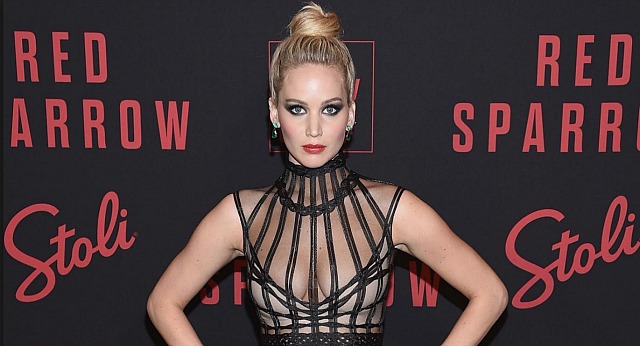
I’m told there were “lots of walk outs” during Monday night’s Red Sparrow premiere at Manhattan’s Lincoln Center. Alice Tully Hall was packed when the film started, less so when the lights came up. One patron overheard while exiting: “Disgusting.” The guy who tipped me says “maybe Russia should have hacked the screenplay.”

All this means, of course, is that older, wealthier folks (younger, poorer types don’t attend posh movie premieres as a rule) are finding Red Sparrow a bit harsh, which was pretty much my reaction.


Jennifer Lawrence before Monday night’s Lincoln Center premiere of Red Sparrow.

From 2.16 HE review: “This is not, to put it mildly, a double-agent film with the finesse and subtlety of, say, Martin Ritt‘s The Spy Who Came In From The Cold (’65), which was regarded as a rather cold-hearted piece when it opened a half-century ago.

“The focus on cruelty in Red Sparrow makes that John Le Carre adaptation seem rather mild in this regard. At every turn Sparrow says ‘try a little heartlessness.’

Red Sparrow is more in the realm of Atomic Blonde, the period (late ’80s) spy film with Charlize Theron, minus the gymnastics. It’s an aggressively sexual thing, I mean, but is mainly about all kinds of physical brutality, including a pair of attempted rapes and two especially savage beating-and-torture scenes that would, in the real world, result in God-knows-how-many-weeks in a hospital.”