…the first being Get Out, which arrived a month or so ago.

The best talking-head comment in Alexandre Philippe‘s 78/52, a detailed examination and celebration of the slasher shower scene in Alfred Hitchcock‘s Psycho, comes from director Peter Bogdanovich. Psycho opened at the DeMille theatre (B’way and 47th) on 6.16.60, and the fledgling journalist and soon-to-be MOMA film programmer was there for the first show. Bodganovich was 20 years old. After it ended he staggered out into the Times Square sunlight: “I felt as if I’d been raped.”
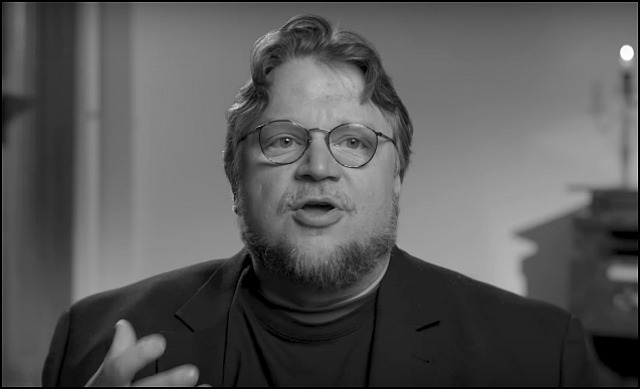
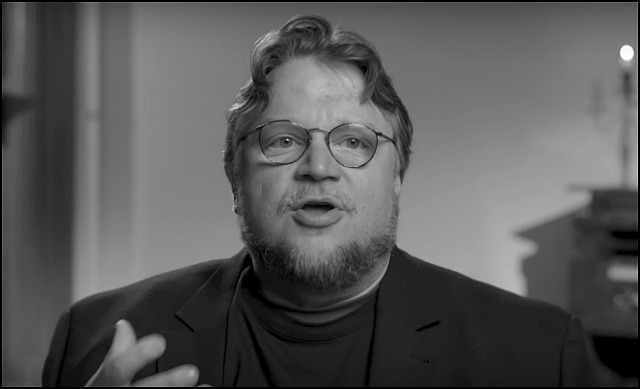
I was intrigued and diverted by 78/52 as far as it went. If you’re any kind of Hitchcock buff it’ll feel like mother’s milk. But the aspect that really got me was Robert Muratore’s black-and-white cinematography. The 91 minute doc was captured digitally so that classic, faintly grainy celluloid atmosphere is missing, but God, the silvery bath quality is magnificent.
HE to GDT (sent this morning): “Your thoughts about Hitchcock and Psycho deliver the usual insight and erudition, but that aside you look really great in this thing. The crisp, silvery black & white cinematography and the exquisite, just-so key lighting and the way it makes your eyes and hair glisten are major stand-outs.
“By the way, 78/52 was shot on some kind of ‘50s-era Bates Motel set, but where? At some out-of-the-way, non-pro location or one of the sound stages?”
The 78/52 interviewees include Bret Easton Ellis, Neil Marshall, Elijah Wood, Danny Elfman, Karyn Kusama, Apocalypse Now editor Walter Murch, Jamie Lee Curtis and Osgood Perkins (son of Anthony).
If you prick up your ears you can hear Norman Bates‘ knife plunging into Janet Leigh (i.e., cantaloupes) during the Psycho shower-murder scene. Then again Bernard Herrmann‘s screaming violins so overwhelm the soundtrack I’ll bet the majority of viewers never noticed. (Isn’t there an extra on the Psycho Bluray that plays this scene without Herrmann’s music?) Incidentally: I’d love to post about Alexander O. Phillippe‘s film, but nobody from IFC Films’ Midnight has ever mentioned a screening or sent a link. Eff it — I just paid $4 and change to watch it on Amazon.
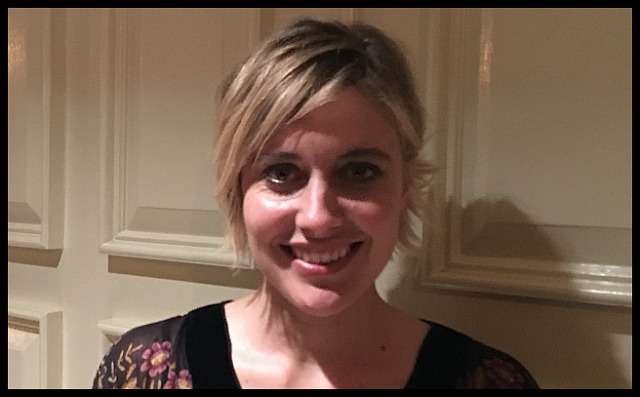
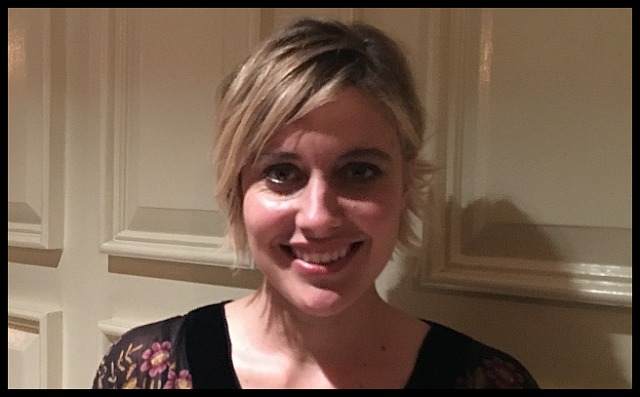
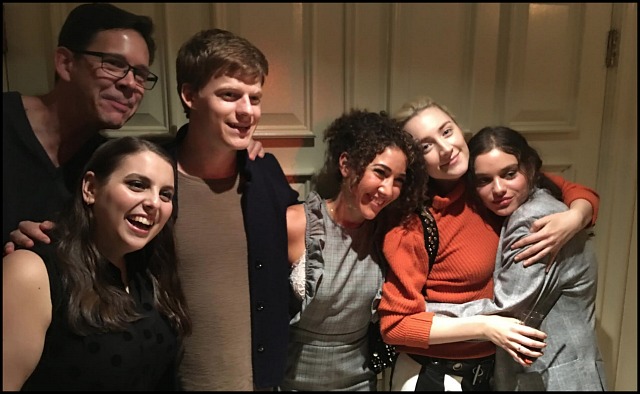
Last night Tatyana and I attended an A24 Lady Bird after-party at the London West Hollywood. In-and-out chats with director-writer Greta Gerwig and the great Beanie Feldstein, who plays the best friend of Saoirse Ronan‘s titular main character. Ronan and Lucas Hedges were also there. Thanks to Lisa Taback and Team A24 for the invite and good company. Variety reports, by the way, that Lady Bird has launched with $375K on four screens (2 in NYC, 2 in LA) for a $93,903 per screen average — “the best limited opening of the year.” A24 will expand into more markets next weekend in preparation for a nationwide break over Thanksgiving weekend. Once again, my Telluride rave.
Sidenote: Early on director Rod Lurie tossed me a friendly, good-natured insult — “How is it, Jeff, that you’re married to such a beautiful woman?” I replied nonchalantly that birds of a feather tend to flock together, etc. But whaddaya whaddaya?
There’s been some pushback against a portion of Larry David‘s SNL monologue last night in which he imagined trying to chat up a pretty woman in, say, Auschwitz-Birkenau. (It starts around the 5:30 mark.) Obviously a risque premise in any context. You can feel the reticent vibe among audience members. David obviously knew he was walking on thin ice, but I respect his bravery, his willingness to test the bounds of comic propriety. He’s being yelled at now, but if you play it too safe you’ll pay another kind of price.
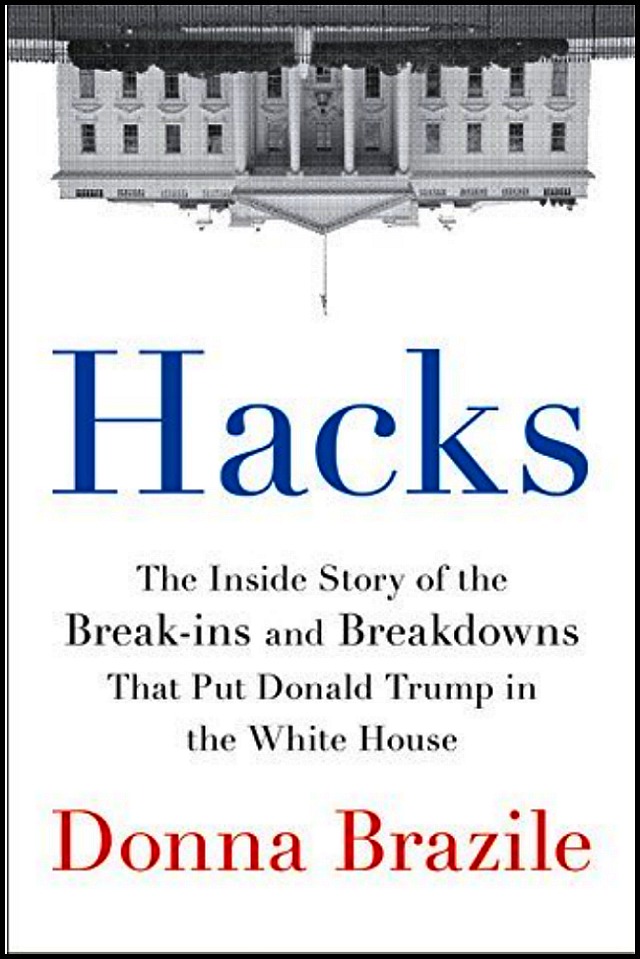
Hooray for Donna Brazile and her Hillary Clinton-trashing tell-all “Hacks: The Inside Story of the Break-ins and Breakdowns That Put Donald Trump in the White House.” I’d been under an impression that the veteran political strategist and former Democratic National Committee chairperson was some kind of moderate Clintonista after it was revealed that she’d fed Clinton a question or two prior to a March 2016 town hall forum, but her book reverses that notion. Brazile is a firebrand.
This 11.2 Politico piece (“Inside Hillary Clinton’s Secret Takeover of the DNC”) provides a well-honed summary of the book, or so I gather.
Hillary and her team didn’t plot, scheme and connive in order to hand Donald Trump the Presidency and thereby bring about the worst executive-branch nightmare in the nation’s history, but that’s what they wound up doing. Thank you, Clinton machine! Bernie Sanders probably would have beaten Trump by a nosehair; ditto Joe Biden and Corey Booker, whom Brazile wanted to try and shoehorn in after Hillary collapsed like a sack of potatoes during the 9.11.16 memorial.
I voted for HRC because she was obviously the better, smarter, more stable candidate, but I never liked her and the bumblefucks hated her with a passion. Deep down, nobody wanted to vote for a testy, braying ex-wife with eye bags. Or, you know, a candidate who reminded you of a substitute teacher who whacked the back of your hand with a ruler for throwing spitballs. It really wasn’t a gender thing at all. I would have voted joyfully and wholeheartedly for Elizabeth Warren or Kamala Harris. It was a vibe thing. I just didn’t feel the rapport.
I don’t know what it is about nicely styled male hairpieces worn in top-tier films, but they always look like nicely styled hairpieces. This is not a problem of any kind. It’s a petty thing to bring up, but the first thing I noticed. Sorry.

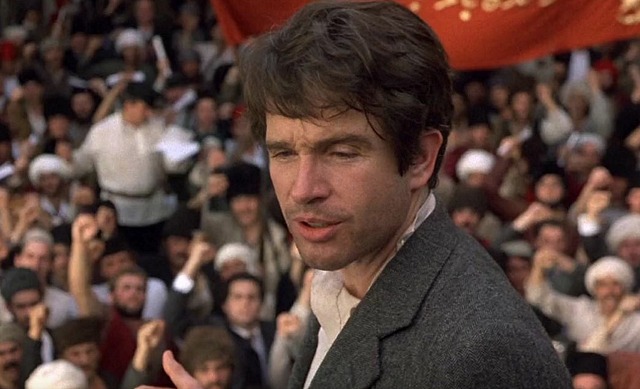
“One day during the making of Reds editor Dede Allen (who had edited Beatty previously in Bonnie and Clyde) congratulated the auteur on the script (which was co-written by Trevor Griffiths, in his master’s voice). “The dialogue, the cadences, sounds very contemporary, very modern,” Allen said. Beatty drily replied, “Dede, this is not Warren Beatty as John Reed — this is John Reed as Warren Beatty. That’s what being a movie star is.” — from a Cinephilia & Beyond piece by Tim Pelan called “Warren Beatty’s Reds: ‘A Long, Long Movie About a Communist Who Died.’”

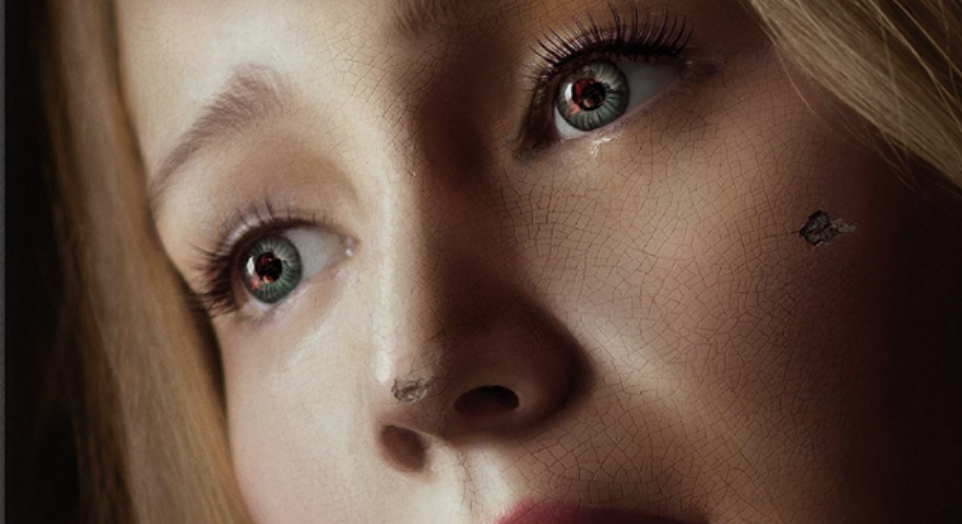
Who knows if there will even be serious film historians 50 years hence? The culture might be so degraded by then…I don’t want to think about it. But if they’re still around one or two will probably look back upon our troubled epoch and ask “which 2017 films really conveyed what the world was like back then? Which tried to express what people were hoping for or afraid of? Which tell us the most in terms of cultural self-portraiture or self-reflection?”
I can guarantee you right now that Darren Aronofsky‘s mother! will definitely be among the few films that scholars of 2067 will study when they ponder U.S. culture during the first year of Donald Trump’s administration.
I can also assure you that no one will pay the slightest historical attention to Thor: Ragnarok or Logan or even Blade Runner 2049. These three films have earned serious box-office coin, of course, while mother! topped out at a measly $17,800,004 domestic and $25,850,098 foreign. But they won’t matter when all has been said and done and the deciders have completed their assessments. Art lasts; all diversions melt.
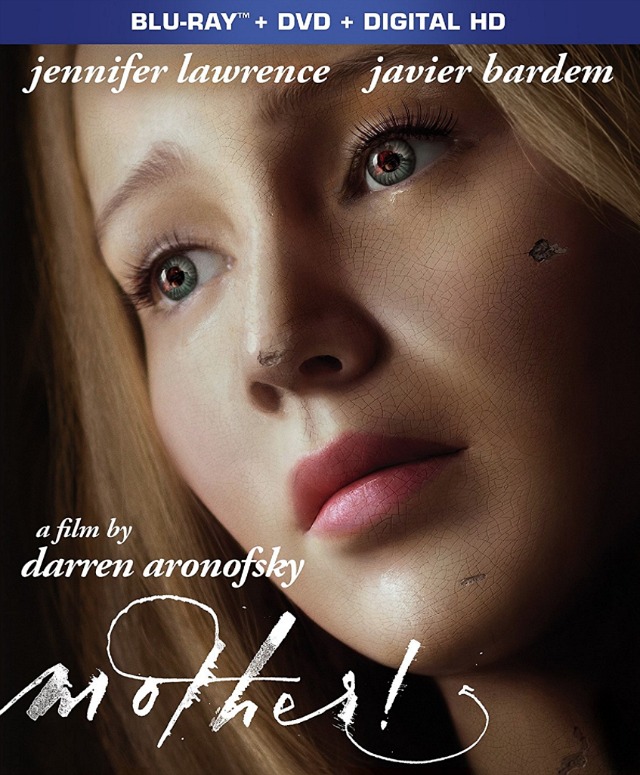
In the same way that the mid ‘1950s were clearly reflected by Kiss Me Deadly, Patterns, No Down Payment and Invasion of the Body Snatchers and the currents of the mid to late’60s were mirrored by Bonnie and Clyde, Rosemary’s Baby, The President’s Analyst and The Graduate, Aronofsky’s allegorical horror film burrows right into the dirt and muck of the here-and-now.
In my book mother! is either the fourth- or fifth-best film of the year, in part because it’s probably the most courageous. How did Aronofsky get Paramount to finance and release a film that Joe and Jane Popcorn reportedly hated with a passion? Whatever the back-story, the release of mother! is a proud event in the annals of American cinema because it went for something and nailed it, because it reaches right into the nightmares and agitations and self-loathings of a convulsive era and says “do you smell it…do you sense the disease and disruption? Not the chaos that you’re watching on-screen, but the real-deal horrors that are defining the world outside?”
If there are any film critics organizations out there with any balls, they’ll give Aronofsky a special artistic courage award or two next month.
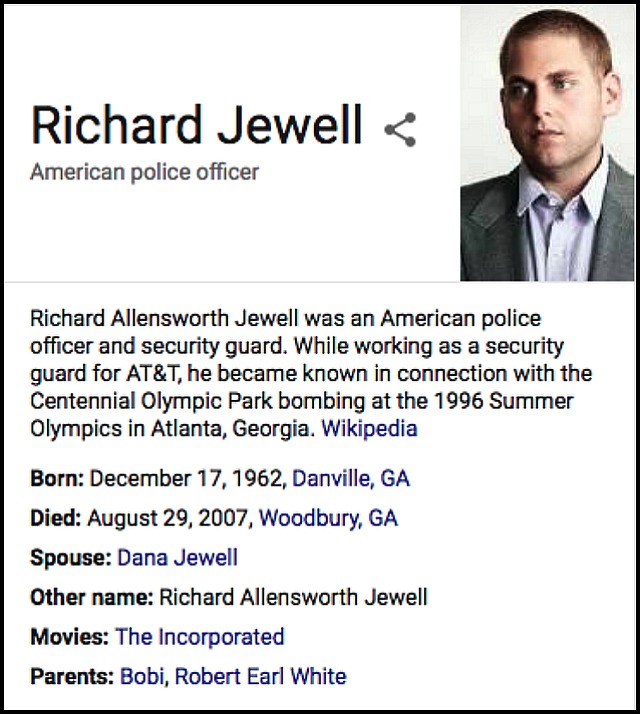
I haven’t heard anything recently about The Ballad of Richard Jewell, a long-gestating Jonah Hill project about the portly security guard who was falsely fingered by the FBI for the 1996 Atlanta Olympics bombing, only to be exonerated upon further investigation. (The actual culprit was Eric Rudolph.) Almost exactly a year ago Ezra Edelman (O.J.: Made in America) was announced as the director of the film, in which Hill would portray Jewell. But the project seems (emphasis on that word) to be in some kind of limbo or holding pattern.
In any event I googled Richard Jewell this morning, and here’s what came up:
Hill’s latest role is in Gus Van Sant‘s Don’t Worry, He Won’t Get Far on Foot (Amazon, 2018); he’s also in post-production on Mid ’90s, a coming-of-age drama that he directed and wrote. 11-year-old Sunny Suljic (who costarred with Hill in the Van Sant film) plays the lead; it costars Katherine Waterston and Lucas Hedges.
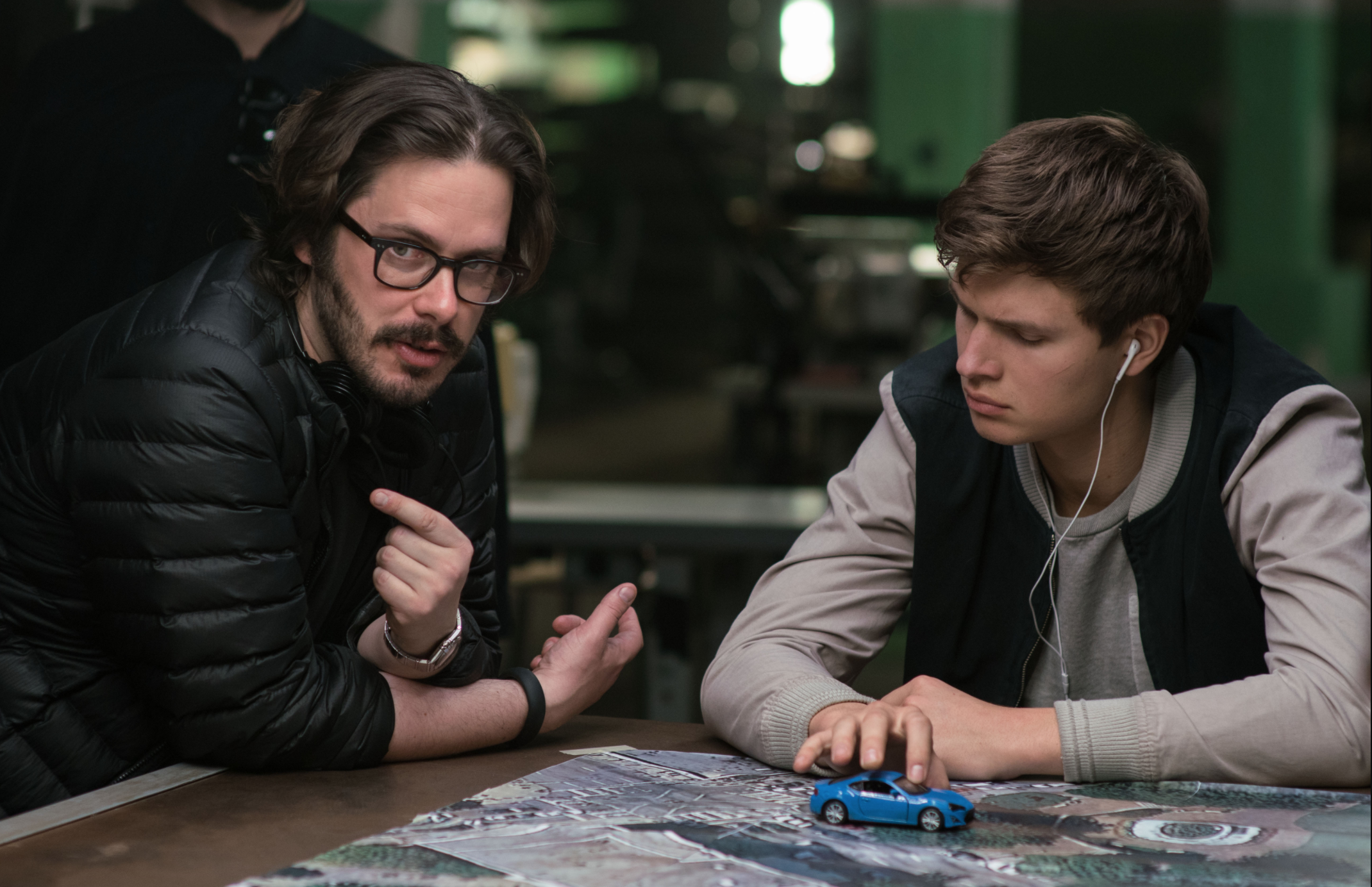
Edgar Wright‘s Baby Driver deserves a salute for creating something that felt semi-original — a violent, fast-driving action musical of sorts. The presumed goal behind Wright’s recent campaign appearances has been to land a Best Original Screenplay nomination. In a fair and thoughtful world, that notion would still be in play. And maybe it still is. But I have a feeling that Kevin Spacey‘s radioactive dust might get in the way. Distractions should never matter, but this one might. I also suspect that if Wright hadn’t decided to inject Baby Driver with insanity serum during the last 15 or 20 minutes he would be in a stronger position now.
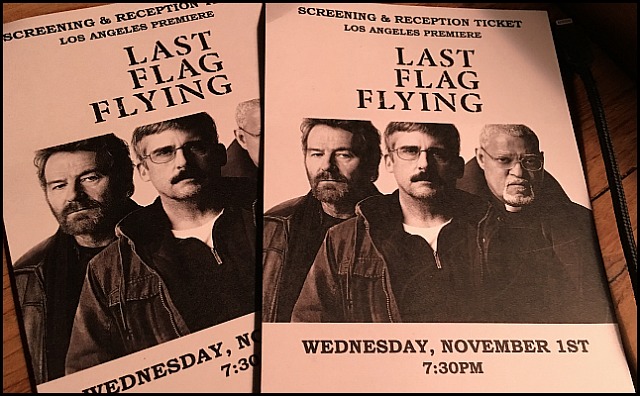
From “Seen Better Days,” posted on 9.28.17: Directed and co-written by Richard Linklater, Last Flag Flying (Amazon / Lionsgate, 11.3) is a moderately passable older-guy road movie — a doleful, episode-by-episode thing about three ex-servicemen and former buddies — Larry “Doc” Shepherd (Steve Carell), Sal Nealon (Bryan Cranston) and Richard Mueller (Laurence Fishburne) — assessing their lives and the world around them as they escort the casket of Shepherd’s soldier son, recently killed in Iraq, from some city in Virginia to some other city in New Hampshire.
This is roughly the same path, of course, that the original film followed when Badass Buddusky (Jack Nicholson) and Richard “Mule” Mulhall (Otis Young) escorted Larry Meadows (Randy Quaid) to the Portsmouth brig for the crime of having stolen $40 from a polio donation box.
For whatever tangled reasons Linklater and original novel author and screenplay co-writer Daryl Ponicsan chose to re-name Buddusky as Nealon, Mulhall as Mueller and Meadows as Shepherd. This led to ignoring the Last Detail origin story and making the trio into Vietnam vets with a shared history.
The difference is that (a) Nealon-Buddusky, as played by Cranston, is now an intemperate, pot-bellied drunk, (b) Fishburne’s Mueller-Mulhall has become a testy, sanctimonious prig with white hair, and (c) Carell’s Shepherd-Meadows has gotten shorter with age and become a quiet, bespectacled grief monkey (and who can blame the poor guy?)
The film mopes along in a resigned, overcast-skies sort of way, and after about 30 or 40 minutes you start saying to yourself, ‘Jesus, this thing is going to stay on this level all the way through to the end, and I’m stuck with it.’
There are two performances that merit special praise — J. Quinton Johnson‘s as a young Marine escort, disciplined but observant, who travels with the trio to Portsmouth, and Deanna-Reed Foster‘s as Mueller’s compassionate wife.
The Last Detail was based on Ponicsan’s 1970 novel. Last Flag Flying is based on Ponicsan’s same-titled 2005 novel, the main difference being that the book used the names and history of the original characters.