Icarus Arriving

Posted from Park City on 1.26.17: Hollywood Elsewhere loves Icarus, the Russian doping doc that Netflix picked up two or three days ago. I’ve no striking observations or insights to add to the general chorus, but I can at least say that after a slow start Icarus turns into a highly gripping account of real-life skullduggery and paranoia in the sense of the classic William S. Burroughs definition of the term — i.e., “knowing all the facts.”

As noted, Bryan Fogel‘s two-hour film starts off as a doping variation of Morgan Spurlock‘s Super Size Me, and then suddenly veers into the realm of Laura PoitrasCitizenfour.

It doesn’t tell you anything you didn’t already know or suspect. The prime takeaways are (a) the use of performance-enhancing drugs is very common in sports (everyone does it, Lance Armstrong was the tip of the iceberg) and (b) there isn’t a dime’s worth of difference between Vladmir Putin and his top henchmen and the Al Capone mob of 1920s Chicago.

I was a little worried during the Super Size Me portion, in which bicyclist Fogel and Russian scientist Grigory Rodchenkov embark on a project with the goal of outsmarting athletic doping tests. It’s interesting at first, but it goes on too long. After a while I was muttering “so when does the Russian doping stuff kick in?”

Suddenly it does. Rodchenkov gradually admits to Fogel that he orchestrated a Putin-sanctioned doping program that gave the Russian athletes an advantage at the 2014 Sochi Olympic Games, which led to the winning of 13 gold medals. But in November ’15 Rodchenkov’s laboratory was suspended by the World Anti-Doping Agency (WADA) following a report alleging state-sponsored doping in Russia, and soon after Putin and the bad guys were looking to lay the blame on Rodchenkov. (Or possibly kill him.)


Read more

Awards Daily Calling!

Sasha Stone‘s Awards Daily is conducting a Best of 2017 poll. Critics, columnists, industry people, etc. I was asked to submit my top five or ten within a fenced-off area — i.e., a cutoff release date of July 1st, and no festival favorites that haven’t been released yet. The results will be posted sometime on Monday.

So I ignored the rules about no festival films and the 7.1 cutoff and submitted the same films I posted a couple of weeks ago — (1) Luca Guadagnino‘s Call Me By Your Name, (2) Michael Showalter’s The Big Sick, (3) Matt ReevesWar For The Planet of the Apes, (4) Andrey Zvyagintsev‘s Loveless, (5) Cristian Mungiu‘s Graduation, (6) Ruben Ostlund‘s The Square, (7) David Lowery’s A Ghost Story, (8) Olivier AssayasPersonal Shopper (even though I fundamentally regard this Paris-based ghost story as last year’s news as it premiered nearly 14 months ago at the ’16 Cannes Film Festival) and (9) Jordan Peele‘s Get Out.

Explanation/retort: The Guadagnino has been praised extensively. Everyone who knows or reads anything is aware that it’s a major film, so why exclude it because the megaplex knuckle-draggers haven’t seen it yet? What in blazes have they got to do with anything? Why confine your eligible films to those seen by the lowly, popcorn-munching ticket buyer?

“Hah…can I quote part of your response in the article?” the poller guy said. “By the way, I agree with you. 47 of the 48 lists thus far have had Get Out. It doesn’t look like that movie is going away come awards season.”

“It’s a good but overpraised John Carpenter film in the vein of They Live,” I answered, repeating myself ad infinitum. “Thumbs up, yes, but calm down. The Get Out praise is largely about 45-and-over white critics (and, down the road, white Academy members) wanting to seem socially attuned and benevolent. If a white guy had directed it, I doubt it would even be in the awards conversation, much less the finals.”

Back to Central Park Nightmare of ’89

It was announced today that Ava DuVernay will write and direct a five-episode Netflix series about the Central Park jogger case of ’89. I don’t know, man. Ken and Sarah BurnsThe Central Park Five, a 2012 documentary, was one thing (i.e., not without problems but compelling). But a dramatic miniseries will be a whole ‘nother challenge.

The case was about the assault and rape of Trisha Meili, a female stockbroker, in Manhattan’s Central Park on 4.19.89. Five young black dudes — Anton McCray, Kevin Richardson, Raymond Santana, Kharey Wise and Yusef Salaam — were wrongly prosecuted and falsely imprisoned, only to be exonerated and freed several years later. A flat-out expression of racist hysteria and institutional corruption.

Duvernay is facing two significant problems in terms of her main characters — the five alleged assailants and Meili. If DuVernay fudges, sidesteps or fabricates (as she did with her depiction of Lyndon B. Johnson in Selma), she’s going to run into trouble.

Problem #1: The teenagers who were unjustly prosecuted and imprisoned put their necks in a noose when they stupidly confessed to the crime during police interrogation. They were coerced, yes, but with the assent of parents and/or guardians. Their apparent motive in confessing was that they were tired and wanted to go home.

How do you dramatize this without the audience saying “what the fuck is wrong with these guys…have they ever heard of ‘you can hassle me all you want but I didn’t do it’ or, better yet, ‘I’m not saying anything until I talk to an attorney’?”

Problem #2: The victim’s decision to jog in the vicinity of 102nd street on a dark road inside the park around 10:30 pm was almost as stupid. I lived in New York City in the early ’80s so don’t tell me — what Meili did was flat-out insane. Nobody of any gender or size with a vestige of common sense should’ve jogged in Central Park after dusk back then (and especially in the late ’80s when racial relations were volatile and Manhattan ‘was a completely schizophrenic and divided city’), much less above 96th street and much less above friggin’ 100th street. Everybody knows you don’t tempt fate like that. Any kid who’s read Grimm Fairy Tales knows that wolves lurk in the forest at night.

How do you dramatize Meili’s late-night jogging without the audience thinking “wait…is she an idiot?

Read more

Spectral Bedsheet Guy

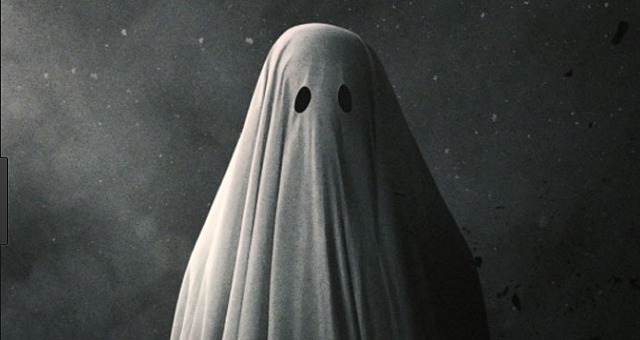
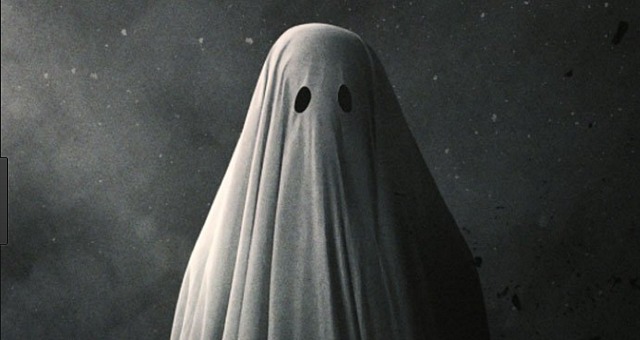
Either you’re intrigued and excited by the idea of a spooky but essentially non-scary ghost movie, or you’re not. Or you’re able to embrace the idea of a silent and passive ghost under a bedsheet, or not. 90% if not 95% of ticket-buyers prefer the dead-obvious kind of ghost flick (i.e. anything in the vein of the Conjuring series) and maybe 5% or 10% (if that) have a place in their heads for smarter, subtler variations. Which is one way of acknowledging that David Lowery‘s A Ghost Story, which opens tonight, probably won’t be setting any box-office records. But man, it sure rang my bell at Sundance last January.

Please…if you’re smarter than a fencepost and can think outside the box, give it a looksee this weekend.

I’m not the first one to say this, but it could be argued that the scariest thing about A Ghost Story is Lowery himself.

From Madison + Vine’s Jake Coyle: “A Ghost Story is what it says it is, and it may well haunt you. It won’t scare you; it doesn’t even say ‘boo.’ But glowing light and ghostly soulfulness linger on like a quiet, scratching presence that won’t leave you.”

Posted last month: Apologies to David Lowery and A24 for forgetting to include A Ghost Story in my recent rundown of the best 2017 flicks thus far. It belongs and then some. I’m putting A Ghost Story just below The Square but above Get Out, which was in sixth place until a few minutes ago but is now in seventh.

The new ranking: (1) Luca Guadagnino‘s Call Me By Your Name, (2) Michael Showalter’s The Big Sick (Lionsgate/Amazon, 6.23), (3) Matt ReevesWar For The Planet of the Apes, (4) Andrey Zvyagintsev‘s Loveless, (5) Ruben Ostlund‘s The Square, (6) Lowery’s A Ghost Story and (7) Jordan Peele‘s Get Out.

Read more

Or A 300-Pound Guy In A Basement Apartment

Here’s a guy who knows how to apply smarts, logic and reliable information from the best intelligence sources to determine a likely scenario. What a moron. If Trump wanted to sidestep the Putin government’s confirmed involvement in trying to sway the ’16 election, he could have alluded to Putin’s recent comment about Russian “patriots” being behind the hacking. But that would have required a certain brain-cell count and recall capability.

Read more

Tinkerbell Wants Your Support

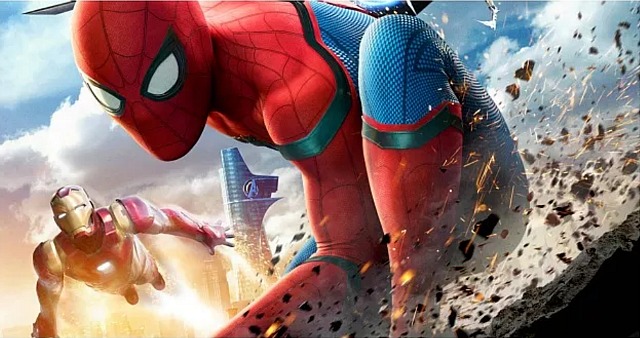
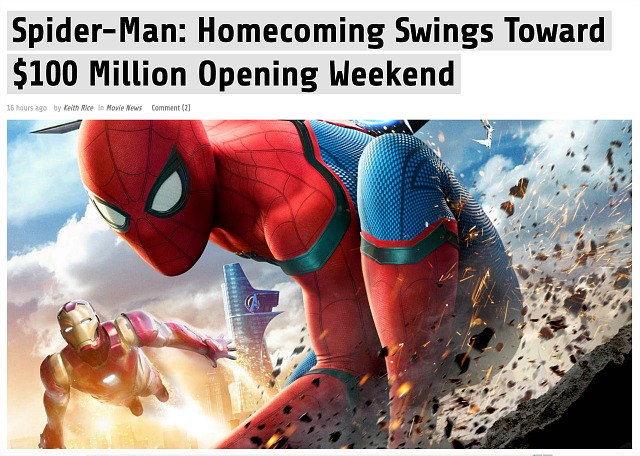
My heart went pitty-pat this morning when I read the following comment from HE reader GoToSleep: “I’m not sure what the tracking is for Spider-Man: Homecoming and of course this is anecdotal as fuck, but it was way too easy to get tickets at my Brooklyn Alamo theater. The 3D screenings, as of 11AM Thursday, are wide open for seats, and you can still get tickets for most of the 2D screenings.”

I’m presuming that the jaded-Brooklyn-hipster mentality is behind the “too easy” availability of Alamo ducats. Variety is forecasting $85 to $100 million this weekend. I for one would feel a slight surge of satisfaction or even comfort if the about-to-pop Sony release would under-perform to some extent. This would indicate a higher degree of franchise fatigue than the trades are currently detecting…please!

If you and your friends believe in fairies, you have to communicate to the dark empire that (a) you’re sick of the endless MCU and D.C. sequels, revisitings and reboots, and (b) you want more semi-original, Baby Driver-type fare (even if the wheels fall off Edgar Wright‘s action-musical during the final 15 minutes). Yes, I’m dreaming. Yes, I’m nursing a dead fantasy that the corporate-think poisoning of megaplex fare could perhaps be diluted or even turn a corner.

Law of Corpulent Representation

In any 21st Century ensemble comedy involving four or five characters, there’s always somebody with a weight problem or worse. I haven’t invested hours of research, but can you imagine the shock waves rippling through Hollywood and the moviegoing culture if a Melissa McCarthy-type character wasn’t cast in an ensemble comedy? Fat chance given that 40% of American woman are now obese, and so filmmakers are naturally looking to appeal to all persuasions and sizes. Plus they’re afraid of being accused of diminishing or under-appreciating the calorically challenged by appearing to exclude them. That would set off a firestorm.

Obviously American comedies have used overweight talent for decades, but it’s only this century (and more particularly during this decade) when it became de rigeur. I don’t recall the one-out-of-four-or-five rule being in effect back in the ’90s, much less the ’80s. This is a 21st Century thing. A year ago Time‘s Alexandra Sifferlin, passing along data from a JAMA Network survey, wrote that “when looking at trends over time, [JAMA] researchers found that from the year 2005 to 2014 there were significant and steady increases in the number of American women who were very obese.”

At Least There’s This In October

Magnolia will open Ruben Ostlund‘s The Square, Palme d’Or winner of the 2017 Cannes Film Festival, on 10.27.17.

On 5.19 I called it “an exquisitely dry Swedish satire, mostly set among the wealthy, museum-supporting class in Stockholm. It’s basically a serving of deft, just-right comic absurdity, the high points being two scenes in which refined p.c. swells are confronted with unruly social behaviors. It works because of unforced, low-key performances and restrained, well-honed dialogue.

“Ostlund’s precise and meticulous handling is exactly the kind of tonal delivery that I want from comedies. There isn’t a low moment (i.e., aimed at the animals) in all of The Square, whereas many if not most American comedies are almost all low moments.”

Incidentally: Why do people post clips that you can’t hear very well unless you’re wearing earphones, and even then it’s not quite enough?

Read more

Milking Same Old Cow, Over and Over

“The franchise pile-up that summer has become is a real problem. There are only so many weekends, and only so many times in one season that the world can get totally psyched about the new installment of some series that ran out of creative steam a few episodes ago. There are only so many new character posters and Snapchat filters an ADD-addled public can absorb from April through August. Hollywood could use some new ideas, [but] that’s only been true since the mid-1930’s or so. And putting lots of eggs in a basket is a big risk, as Universal may well find out somewhere down the Dark Universe road. When you make massive 20 year bets on untested ground, lots of ways that can go.” — from today’s edition of Richard Rushfield‘s The Ankler.

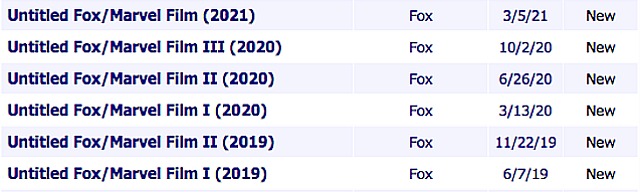
From Box-Office Mojo’s just-posted release date announcements:

Wind Saga Goes West

It was announced last March that Netflix has acquired global rights to Orson Welles’ unfinished The Other Side of the Wind, and that it will finance the completion of this allegedly out-there film, which was shot in pieces (and on different film formats) between 1970 and ’76.

30-plus years ago director and longtime Welles collaborator Peter Bogdanovich promised Welles he would finish TOSOTW if the latter wasn’t able to. Welles died in ’85 at age 70. I ran into Bogdanovich yesterday at a party and asked how things are going.

The editing is finally beginning this month, he said. All the elements are in Los Angeles, and “1000 reels” are now being scanned and digitized. Peter and a couple of other guys will naturally have to look at everything and then begin this bear of a task. They have that 40-minute assemblage that Orson cut together plus, Bogdanovich said, plus some notes he left behind. “Any chance you’ll make the 2018 Cannes Film festival?,” I asked. Peter shrugged, said something inconclusive.

I talked this morning to a guy who’s heard a couple of things: “It’s a big job. Nineteen hours of footage. They’re aiming for Cannes.”

Cracks and Pops, Glow of Candles

All the fireworks I saw last night happened at a really nice party we attended. Oh, and Tatyana was very impressed with the Chardonnay. That’s all I’m going to say except that the host has a beautiful large pool and everyone sat near it over the last couple of hours. The last 12 or 15 guests congregated around a patio table under a large cloth umbrella, sipping and chatting in the cool night air. It was probably the most relaxing get-together I’ve attended in many months. Thanks for having us.


We’re Living In Digital or HFR Realm Today — 70mm Is Over

A 7.5 Brent Lang Variety piece reports that Chris Nolan‘s Dunkirk (Warner Bros., 7.21) will open in 70mm celluloid in 125 locations. “The widest 70mm release in 25 years,” Lang’s headline proclaims.

Okay but calm down because (a) Joe and Jane Popcorn don’t give that much of a toss, (b) the 70mm Dunkirk roll-out is only 25 theatres larger than the one for Quentin Tarantino‘s The Hateful Eight, and (c) no one except hardcore cinefiles give a damn about this either. I respect Nolan and Tarantino’s devotional belief in the visual power of 70mm, but time has given this once-supreme shooting and projection format the go-by.

IMAX is still terrific (the size alone rules) but Nolan’s thing for 70mm is, I feel, essentially sentimental. Championing 70mm projection as the ultimate cinematic rush experience just doesn’t pass the 2017 smell test. Not in my world, it doesn’t. Ask any honest, forward-thinking cinematographer about the latest 8K cameras or the Arri Alexa 65, which is what War For The Planet of the Apes and portions of The Revenant were shot with. Hell, ask me or anyone who’s seen Matt Reeves’ simian masterpiece — the images are immaculate, stunning, to die for.

See War For The Planet of the Apes in a theatre with state-of-the-art digital projection, and you won’t hear a single soul saying “oh, Lordy, why couldn’t they have shot it in good old IMAX and 70mm instead?” That viewpoint is over.

I’m not suggesting that Dunkirk won’t be luscious to simply gaze at (from a purely visual standpoint it could probably be sold to the American Cinematographer techno-geeks as FUNkirk) but we’ve reached a point in which the difference between IMAX and 70mm celluloid and the latest high-end digital capturings are apples and oranges.

The difference this time, I’m presuming, is that Hoyte van Hoytema‘s large-format cinematography (a combination of 70mm and IMAX) will capture images that are much richer, sharper and more robustly lighted than Robert Richardson‘s 70mm cinematography for The Hateful Eight.  30% of Tarantino’s western used white wintry conditions with the other 70% shot inside a darkly lighted cabin.

Read more