

I’m mildly fascinated by the hints of character and temperament — the undervibe — in Damian Chazelle‘s actress-director-writer girlfriend, Olivia Hamilton. For one thing the usual implications of the term “girlfriend of a hotshot director” don’t seem to apply. She doesn’t look like someone given to going along or accommodating or alpha-vibing for their own sakes. You can detect in her red-carpet smile (or half smile) a less-than-approving scrutiny of the charade. She appears to be centered and fair-minded but is almost certainly (and I say this with respect as it takes one to know one) no day at the beach. The kind of doesn’t-miss-a-trick partner that a smart, cutting-edge director would naturally end up with. She reminds me of the young Patricia Wettig (of thirtysomething) and Raising Arizona-era Holly Hunter. She played “Bree (Gluten Free Girl)” in La La land, but I can’t find any stills of her scenes[s]. She’s directed, written and starred in a short called Surrogate and written-acted in Facetiming With Mommy.
Schickel Slips Beneath The Waves
Longtime film critic, documentarian and cinematic scholar Richard Schickel died today at age 84. A series of strokes got him — solemn condolences to friends, colleagues and fans.
Schickel was one of the heavyweight lions of film criticism amid the second half of the 20th Century, rougly at par in terms of eloquence, insight and importance with Andrew Sarris, Pauline Kael, Richard Corliss, Joe Morgenstern, Molly Haskell, Stanley Kauffman, Judith Crist, et. al. He was one of the lordly big boys, a prodigious professional, and certainly a fellow I’ve looked up to with considerable respect (if not affection) for my entire professional life.
Schickel’s principal berth was as Time‘s film critic from 1965 to 2010 — oh, what a time that was for movie scholars, fanatics and devotees, especially from the late ’60s to the downturn period of the ’80s/’90s/you tell me. Schickel’s gradual deflation began when the online thing began to eat into the rule of snooty, harumphy, Moses-speaking-to-the-Hebrews movie critics starting around 15 years ago.
Schickel also wrote for Life (’65 to ’72) and the Los Angeles Times Book Review. His last regular reviewing gig was for Truthdig. He wrote something close to 35 books about film industry trends and movie stars (James Cagney, Clint Eastwood, Cary Grant, Elia Kazan, Walt Disney, Myrna Loy, Barbara Stanwyck, Charlie Chaplin) and directed, wrote or significantly contributed to over 20 documentaries about this realm.
An Invaluable Arm of the Presidency
“It’s a terrific disadvantage not having the abrasive arm of the press applied to you daily…as a check to what is going on in [any] administration…it’s never pleasant to be reading less than agreeable news…even though we may never like it, even though we may wish they’d never write it.”
HE Redesign’s A’Comin
At Jett’s urging, Hollywood Elsewhere is forking over serious coin (or at least what feels like a major expenditure from my end) for a big fat re-design. The font and the basic Hollywood sign logo will stay the same but beyond that…who knows? I’m ready for the next chapter, but I’d like to see something cooler than just ACRES OF WHITE SPACE! and REALLY BIG BLACK TYPE! No, I’m not getting my knickers in a twist sight unseen. I’ll just have to wait and see.
The changeover should be in place by sometime in mid to late March, certainly by early April.
This is Jett’s action. He insists (and I have no argument) that the site has to load faster and offer more features and be more reflective of the 2017 sensibility, and that we’re doing ourselves no favors by reflecting a late ’90s/early aughts design mindset. Get with the program! The bottom line is that Jett is the boss. I’m just the guy who catches screenings, goes to festivals, churns out the copy and gets into occasional Twitter fights with SJWs.
“Stop Talkin’…Okay, Slick?”
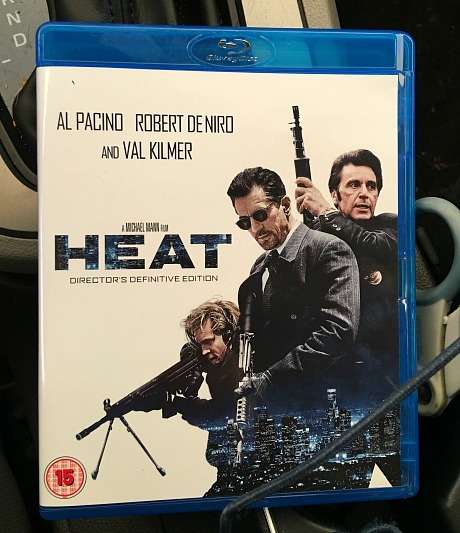
The micro-detail and the natural colors on the new British Heat Bluray, which arrived today and which I’m watching right now, are world class, historic. A movie lover’s ice-cream sundae. Plus it has a lot of great-sounding extras, some of them brand-new.

New wheels — made the decision today — took me all of 45 minutes. You always want a clean body, a well-tuned engine, not too many miles, new tires, etc. The main L.A. thing is that you don’t want to be embarassed when the valet guy drives up with your ride and you’re standing there with whomever.
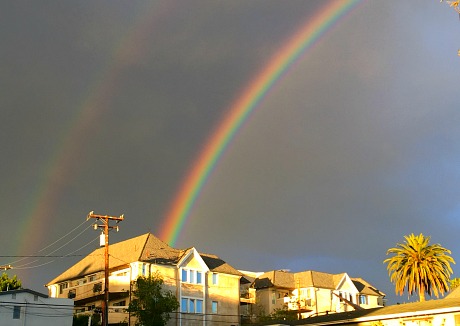
Taken this afternoon from corner of Norton and Laurel in West Hollywood.

Mom and Dad Are Clods, For The Most Part
How many comedies have been made with this same basic formula? Dad’s a dipshit, mom isn’t much smarter, but they’ve got a problem and they have to step outside the law to solve it. Incidentally: Will Ferrell is way too tall (i.e., not a physical/sexual match) for Amy Poehler.
Nearly A Month Old, But Then Again It’s Saturday
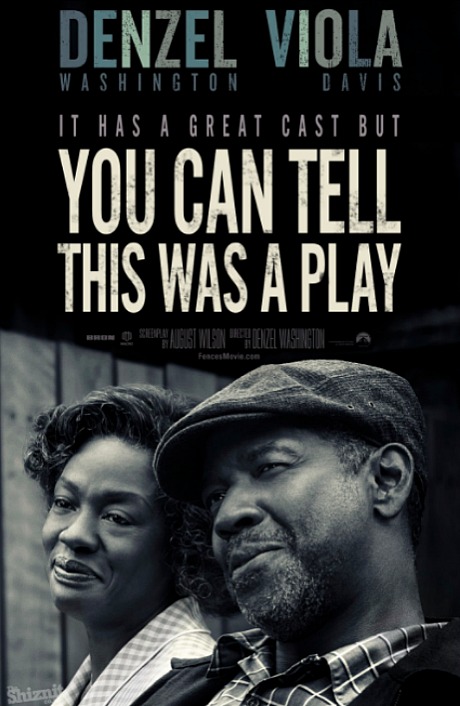
From a 1.24 Shiznit.uk post titled “If 2017’s Oscar-Nominated Movie Posters Told The Truth,” the only one I felt was any good:
Values Over Chops
Yesterday Variety‘s Tim Gray posted his choices for the 10 worst Best Picture Oscar winners of all time. The all-time worst, he feels, is Cecil B. Demille‘s The Greatest Show on Earth (’52). I understand where he’s coming from and sympathize to some extent, but HE’s all-time worst is a four-way tie between The King’s Speech, Driving Miss Daisy, Around the World in 80 Days (fifth on Gray’s list) and The Artist (which Gray ranks 10th).
Gray’s list, top to bottom: 1. The Greatest Show on Earth; 2. The Broadway Melody (’29 — never seen it, don’t want to); 3. Vincent Minnelli‘s Gigi (’58) 4. William Wyler‘s Ben-Hur (’59); 5. Mike Todd‘s Around the World in 80 Days (’56), 6. Cimarron (’31), 7. Cavalcade (’33), 8. The Great Ziegfeld (’36) 9. American Beauty (’99), and 10. The Artist (’11).
Wells dispute #1: American Beauty. Explanation: Every year I trot out the old saw about values and lessons being the main determining factor in the choosing of Best Picture winners by Academy voters. People recognize strong stories, first-rate artsy elements and high-level craft, but more often than not the tipping factor is a film “saying” something that the Academy recognizes as fundamentally true and close-to-home — a movie that reflects their lives and values in a way that feels solemn and agreeable.
Ordinary People beat Raging Bull because the values espoused by the former (suppressing trauma is bad, letting it out is good, wicked-witch moms are bad) touched people more deeply than the ones in Raging Bull. What values did Martin Scorsese‘s film espouse? Art-film values. Great goombah acting values. Black-and-white cinematography values. The only value that resulted in a big Oscar was Robert De Niro‘s commitment to realistic performing values — i.e. putting on 50 or 60 pounds to play fat Jake LaMotta. But there were no values in the film at all. What, it’s a bad thing to beat up your brother in front of his wife and kids?
American Beauty won the Best Picture Oscar because it said something that everyone (particularly workaholic careerists) believes to be true, which is that we spend so much time and energy running around in circles that we fail to appreciate the simple beauty of things. On top of which it’s a pungent, occasionally hilarious satire of American middle-class values and lifestyles.
Stone Assurance
Rolling Stone‘s Peter Travers, Variety‘s Tim Gray and Fandango‘s Erik Davis are currently predicting Elle‘s Isabelle Huppert to win Best Actress. On the strength of this, Gold Derby editor Tom O’Neil has posted a “could Isabelle take it?” riff.
Everyone else, naturally, is predicting La La Land‘s Emma Stone.
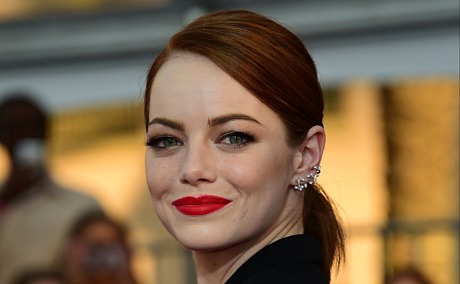
Academy members “usually vote for the pretty ingenue just as she emerges as the hot new chick on the block,” O’Neil reminds. “This year that would be Stone. She fits the profile perfectly. She’s a past nominee (Birdman) in the supporting category and now stars as the heart and soul of the film that’s about to sweep the Oscars.” On top of which strong Best Picture contenders “usually win an acting award,” he adds.
“All of this puts Stone out front,” he allows, “but she is vulnerable to an upset because her role is so deliciously frothy as she waltzes through the starry heavens with Ryan Gosling. Her role isn’t pretentious; it doesn’t have brooding gravitas.”
O’Neil said roughly the same thing last December when he called Stone’s La La performance a partial “problem” given that she’s playing “a deliberately two-dimensional role…perky and happy and dancing around…you don’t get a lot of gravitas and soulful reflection.”
I Left The Leftovers Two Years Ago
The third and final season of HBO’s The Leftovers debuts on 4.16.17, but I bailed on it soon after the start of season #2 (10.4.15 thru 12.6.15). I half-hated The Leftovers when it began in the summer of ’14. I sensed a certain modest intrigue at first, but the only element I truly enjoyed as the series wore on was the performance of Carrie Coon. In a way The Leftovers was Westworld before Westworld came along — an HBO series that had no real arc or scheme except to keep going and attract watchers. If nothing else it clarified my loathing for all things Damon Lindelof. Needless to add I have absolutely zero interest in season #3, which is set in Australia.
Barrage of complaints from two and a half years ago: “There’s something very, very wrong with the idea of people in a small leafy community acting strange and surly and curiously off-balance because a sudden cataclysmic event has proven beyond a doubt that an absolute cosmic authority rules over all creation.
“After living with uncertainty all their lives about whether or not there might be some kind of scheme or purpose to existence, here is a group of people that suddenly know there’s absolutely a plan or a design of some kind, like something out of the Old Testament only scarier and creepier, and that there’s some kind of all-knowing, all-seeing judgment system that resulted in 2% of the world’s population rising up and into the white light…and this is how they respond?