Reason Enough

Criterion’s Bluray of Mike NicholsThe Graduate popped yesterday. I’ve seen it a thousand times and I already own the MGM Bluray that came out in 2011, but I bought the damn Criterion anyway because of the Howard Suber commentary track, which is one of the best I’ve ever heard on any Bluray or DVD of any film. Seriously — it’s really worth watching this film with Suber on the couch, chatting away. Just do it and you’ll thank me.
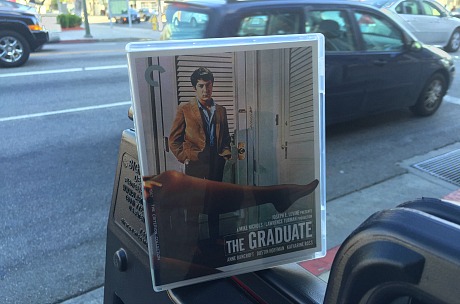

Taken today at northwest corner of Sunset and Cahuenga, just after buying the Criterion Graduate Bluray at Amoeba across the street.

“Yes, Suber’s commentary is an academic analysis, a bit dry and professorial, a formal instruction,” I wrote two or three years ago, “but it’s very wise and knowledgable, and ripe with all kinds of allusions, insights, asides and connections. Suber gently explains how there’s a lot more to this 1967 classic than just story, dialogue and performances. It’s really quite the integrated audio-visual tour de force.”

From Frank Rich’s essay in the Criterion liner notes: “The major studios all turned down The Graduate. The film was financed instead by an independent producer, Joseph Levine, who grew impatient as the shooting ran over schedule, into a fourth month. Levine exhibited scant optimism about the movie’s prospects, and some of the most influential critics, including Pauline Kael and John Simon, dismissed it, as later would a writer at the New Yorker, Jacob Brackman, whose screed went on for some twenty pages.
Read more

Workin’ Man Takes Rebel Stand

Before I got going in journalism I worked as a tree surgeon, in both Los Angeles and Fairfield County, Connecticut. Ropes, saddles, spikes, pole clippers, pole saws, chain saws, cables, etc. I was in my early-mid 20s and in the best shape of my life. I wasn’t a party animal but I smoked off and on, threw down a fair amount of Heineken or Coors every night and occasionally with chaser shots of Jack Daniels. And I felt great the whole time. My spiritual state was another matter.

In Los Angeles I worked for Bob, the owner of a small tree outfit. He spent most of his time meeting prospective clients and selling the work, and I was a kind of informal foreman of a three-man crew. Bob would calculate the cost of a job by estimating how much time it would take. Sometimes the job would take less time than he figured and sometimes a little more. Either way he knew we’d get the job done within a reasonable time frame.

Not long after I was hired Bob showed us a job that he figured would take a full eight hours and maybe closer to nine. “You’ve got all day,” he told me as we arrived in the early morning. “I’ll be gone until the late afternoon but if you can finish by 5 or 6 pm we’ll be in good shape.”

As soon as he left I told the other two guys, “Let’s finish this sucker as fast as we can — five or six hours — and then we’ll have a couple of hours of lying around time in the late afternoon.” We did that — busted ass, had a short lunch, managed to finish by 3 pm. We were raking up, folding the tarps and putting away the equipment around 3:15 pm when Bob returned. “Whoa…you’ve finished! Good work!” He was so pleased with our professional dispatch that he decided to take us over to another job.

“Whoa, wait…you told us this was it for the day,” I said. “Well, yeah but we can make it an even better day if we finish this other job,” Bob answered with a grin and a comradely poke. “It’ll only take an hour, 90 minutes at most…won’t be that hard.”

Read more

Rebecca Miller Is Where Lynn Shelton Was Before She Made Laggies

Rebecca Miller’s consistently interesting films have always mixed sharp observation with a resistance to narrative formula that can sometimes feel like quirky mannerism, and that element is present in Maggie’s Plan (Sony Classics, 5.20). After moving toward romantic comedy with The Private Lives of Pippa Lee (’09). Maggie’s Plan inhabits that terrain even more assertively, albeit retaining enough offbeat qualities to avoid genre conventionality. This pleasing triangle embroils Greta Gerwig, Ethan Hawke and Julianne Moore in two overlapping relationships involving three children over three-plus years. The general lightness [of tone] lets it get away with content more clever and ingratiating than fully depthed.” — from Dennis Harvey‘s 9.12.15 Variety review, filed during the Toronto Film Festival.

Oliver SCOTUS

The only weak aspect of Oliver’s rant is that precedents and history have nothing, repeat, nothing to do with the refusal of the Republican loons to consider any forthcoming Supreme Court nominee from President Obama. It also strikes me as wimpish that Obama is reportedly vetting Nevada’s allegedly “centrist” Republican governor Brian Sandoval as a possible nominee, presumably because it would be difficult for Republicans to dismiss him. I thought Obama was in a “fuck it, this is who I am and what I believe” mode. If it were my call I’d nominate a tough, flaming, fuck-you liberal — a Bernie Sanders or William O. Douglas type. Judiciary committee Republicans aren’t going to approve anyone he submits anyway so why try to placate them?

Can’t Wait To Be Smothered By This

Disney’s decision to open Derek Cianfrance‘s The Light Between Oceans on September 2nd, or on the opening day of the 2016 Telluride Film Festival, speaks volumes. Cianfrance is a gifted and ambitious director, and it may be that Oceans will be seen down the road as a review-driven, adult-must-see — but if Disney had any faith in its award-season potential they would open it after Telluride/Toronto.

On top of which the motivation behind Alicia Vikander‘s Isabel character seems a bit daffy, as I explained in 1 12.21.15 riff.

Pic is an adaptation of M.L. Stedman‘s “The Light Between Oceans,” a 1920s period drama about Tom (Michael Fassbender), a World War I veteran and lighthouse keeper, and his wife Isabel who live on an isolated island off the west coast of Australia.

The inciting incident is the discovery of a dead man and a live baby in a boat that’s washed onto shore. Having suffered through two miscarriages and a stillbirth, Isabel decides that the baby is a “gift from God” (baby Moses found in the Nile reeds) and ignores her husband’s natural impulse to report the discovery. Reality eventually intrudes.

Read more

Eddie Redmayne Must Be Proud To Have This Guy On His Team

Scott Feinberg‘s Brutally Honest Oscar Ballot series began today in the Hollywood Reporter. I had a vague recollection that last year’s brutal ballots were posted during balloting instead of after — but I was wrong. But they should be posted during balloting as they would reflect prevailing attitudes and potentially influence voting patterns.

Here’s the assessment of the Best Actor race by today’s moron (probably a geezer, apparently a writer, cranky, short attention span, Jewish, couldn’t be bothered to see Mad Max: Fury Road):

“I rule out Leonardo [DiCaprio] immediately because it’s a ridiculous performance. What was that saliva-drool thing he was doing when his son was being killed by Tom Hardy? They are running his campaign based on how hard it was to make the movie, right? I’m tired of hearing about it — that’s what he gets paid for! I mean, this was not Nanook of the North [a 1922 docudrama shot in the Arctic], for Christ’s sake. Give me a break. He’s got tens of millions of dollars and I would assume they had heaters. The fact that he’s never won before? He’s a young man, he still has time. Plus he’s always with some supermodel…no offense but to hell with a guy who’s got everything but also wants to be awarded for being mauled by a bear and freezing in the cold and eating a buffalo liver.

Read more

Deadline’s Pete Hammond Sticks His Neck Out By Predicting Best Picture Win For The Big Short…Kidding!

Hammond’s reasons for his risky prediction that The Revenant will take the Best Picture Oscar: “Spotlight and The Big Short fight to the finish for the social issue vote, cancelling themselves out and winning only screenplay awards right up to presentation of Best Picture. They are kind of the Rubio/Cruz tandem trying to kill each other off in order to ascend to the top. No movie since The Greatest Show On Earth (’52) has managed to win Best Picture with only one other Oscar (it was for the now-defunct Motion Picture Story category). The Revenant (aka Trump) sneaks in between them on the wings of sheer awesomeness taking a more Oscar-friendly total of five overall wins and into the history books with a third consecutive Best Picture win for New Regency and its partners on the Fox lot. Or not. This remains a race too close to call, but I just did.”

35mm Celluloid Purity Aesthetic (Cont’d)

From John DeFore’s 6.15.15 Hollywood Reporter review: “The closing credits of Too Late promise that ‘no hidden cuts were used in the making of this movie’ — no small feat given the technical challenge that writer-director Dennis Hauck set for himself, his cast and crew. A contemporary detective drama that draws heavily on the idiom of hard-boiled noir, the feature unfolds in five long scenes, or acts, each one a continuous take of about 20 minutes, and all of it shot on film.

John Hawkes grounds the experiment with his droll, soulful lead turn as Mel Sampson, an emotionally wounded, world-weary but honorable private investigator (is there any other kind?). But with its overt nods to movies, nonlinear structure and purple-tinged dialogue, the self-conscious artifice of Hauck’s first feature can be suffocating. This narrative puzzle should be more fun than it is.”

Observation #1: Hawkes isn’t studly or swaggering enough to be a commanding lead. With something like this I want to see somebody with the cat-like coolness of Paul Newman in Harper. Observation #2: Pic features a fair number of shots of pretty women in their underwear. Leering horndog-ism, yes, but better them than Hawkes.

Read more

La-La Land, CinemaScope 55, Too Many Emails & Phone Calls, Waste of Time

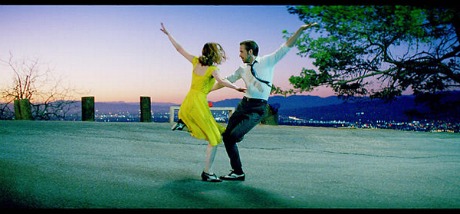
Last night there was a Pasadena Arclight research screening of Damien Chazelle‘s La-La Land (Summit, 7.15). A contemporary musical love story starring Ryan Gosling and Emma Stone, pic seems to have gone down pretty well with the viewers. Not at all on the level of Whiplash, one guy remarked, but that wasn’t the intent. In a 10.7.14 interview with Collider‘s Steve “Frosty” Weintruab Chazelle called La-La Land “an old fashioned musical in the vein of Singin’ in the Rain, A Star Is Born and The Umbrellas of Cherbourg but set in contemporary L.A.”

Chazelle’s money quote was that he wanted it to be “a big, CinemaScope, Technicolor love letter to Los Angeles.”

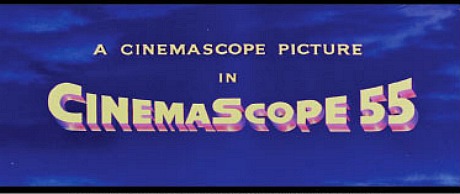
What interested me this morning was a report that prior to the opening credit sequence, which one guy descibed as “very old-fashioned and 1950s-styled”, the film begins with a CinemaScope 55 logo (not in color but in black and white). I thought this might signal another revival of an old widescreen technology a la Quentin Tarantino‘s filming of The Hateful Eight in Ultra Panavision 70.

It makes no sense that anyone would want to shoot in CinemaScope 55, which (a) was the first large-format widescreen system, (b) delivered an aspect ratio of 2.55:1 and (c) was used on only two mid ’50s 20th Century Fox musicals, The King and I and Carousel. But I figured it was worth investigating.

Well, it wasn’t. The more I searched and called around the more specious or even silly the idea of shooting with CinemaScope 55 seemed. The logo at the front of La-La Land seems to have been a sentimental nod to the above-named musicals more than anything else. I knew I wouldn’t be told anything substantive so I tried to merely discover whether CinemaScope 55’s aspect ratio (2.55:1) was used in the shooting of La-La Land. But even that piece of rinky-dink information was too much to share.

Read more

Tear-Assing Down To Rome Under A Night of a Thousand Stars

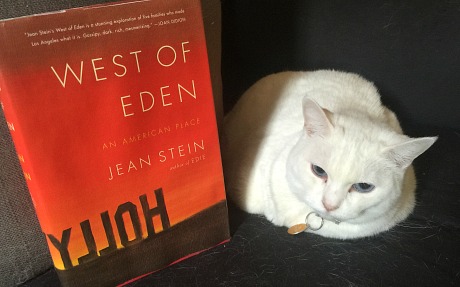
Jean Stein‘s “West of Eden: An American Place” is a great literary time trip about four Hollywood legends and an also-ran– Edward Doheny, Jack L. Warner, Jane Garland, Jennifer Jones and Jules Stein (i.e., Jean’s dad) — told through a series of oral-history passages. It’s a saga of the spirited, bent-out-of-shape Hollywood royals of the ’40s, ’50s and ’60s — intimate tales of eccentricity, flamboyance and (putting it very mildly) curious, compulsive behavior.

I bought a copy during the Santa Barbara Film Festival but I’m only just getting around to reading it now. I’m passing along two excerpts from the Jennifer Jones chapter — both from the memory of Robert Walker, Jr., the son of Jones and actor Robert Walker (i.e., Bruno Antony in Strangers on a Train). Walker, Jr. (Stein refers to him as “Bob Walker) was the guy who said grace (a kind of prayer) during the hippie commune passage in Easy Rider.

Excerpt #1, about the 13-year-old Walker’s experience during the 1953 filming of John Huston‘s Beat The Devil, portions of which happened in Ravello, Italy, on the Amalfi Coast: “Roberto Rossellini and Ingrid Bergman were also down there to do a movie [i.e., Journey to Italy/Viaggio in Italia], not that many miles from us. At the time I was madly in love with Ingrid Bergman. At some point during a break in the filming, we all went to Capri for a few days, and she was with us. I remember her lying above the blue grotto in this beautiful, light blue bathing suit, and her blonde Swedish hair blowing in the wind. I thought she was a vision of loveliness.

“Then we were all in Naples and heading to Rome, probably to do some more work for the film. I remember Mother got into a limo, but [my younger brother] Michael and I ended up piling into Rossellini’s big Ferrari convertible. We all little goggles on, and those little cloth helmets that they used to wear to keep their hair in place. The Ferrari looked very racy and sporty and had a number on the side, I think. Rossellini was driving. He took off and must have been going 120 miles an hour to Rome. I must have been in some kind of hog heaven, little kid heaven.

Read more

Sorry But This Is Funny

How did I miss this earlier? (It posted three weeks ago.) I’m a heh-heh LQTM guy but two or three of these bits (“Bring in the Martian”) provoked an audible “hah-hah”. Hat tip to co-creators Jeff Ayars, the guy who plays Leo, and Dan Rosen, whose Inarritu imitation is fairly on the money. I’m recalling a parody-of-Oscar-moments reel that was shown on the ’97 Oscar telecast (Jerry Maguire was one of the lampooned films), created/instigated by then-host Billy Crystal. The tone of the Ayars-Rosen piece is a little meaner than the Crystal parodies, but it’s not that different.