

Paul Dano, arguably the most deserving Best Supporting Actor contender of 2015 for his Love & Mercy performance as Brian Wilson, has been telling me for months about a BBC-produced War and Peace miniseries he shot in Europe last winter and spring. He portrayed Pierre Bezukhov, the role that Henry Fonda had in the 1956 King Vidor verison of Leo Tolstoy‘s novel. The six-part miniseries, which costars Lily James, Jim Broadbent, James Norton, Gillian Anderson, Tuppence Middleton, Brian Cox and Stephen Rea, will debut in the U.K. on BBC One later this year. It will simultaneously air on three U.S. networks — Lifetime, History, A&E Network — sometime early next year.
Durable Material, Solid Craftsmanship
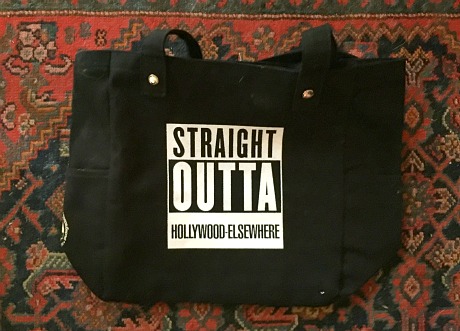
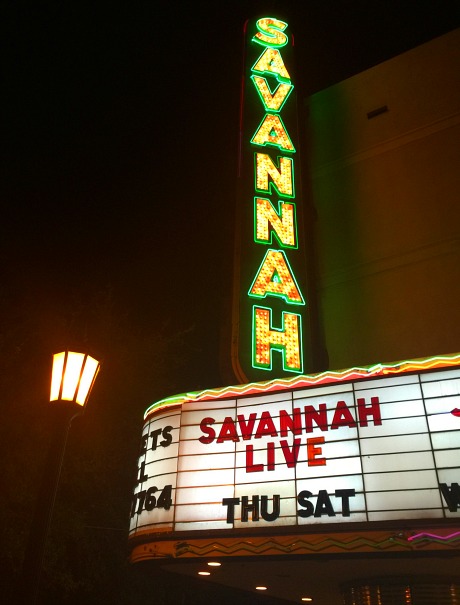
Delivered sometime last week while I was away in Savannah/D.C./Middleburg. “Straight Outta Hollywood Elsewhere” or “Straight Outta Variety” sounds cool but “Straight Outta Movie City News”? Not so much.
My Soul To Keep
The melancholy gloom that permeates every frame of Charlie Kaufman and Duke Johnson‘s Anomalisa (Paramount Vantage, 12.30) is not, to be honest, conveyed by this trailer. The voice-over narration by Michael Stone (the lead character voiced by David Thewlis) is from a speech he gives to a group interested in his philosophy of customer service. Within the narrative Stone is a decent if self-centered and occasionally dickish fellow — a little peevish, a lonely married-with-kids guy who feels stranded, a cigarette smoker. The film takes place at a soulless Midwestern hotel, and focuses on a 24 hour period in which Michael ardently woos Lisa (Jennifer Jason Leigh) and then…uhm, well, more or less brushes her off. But as I discovered after my second viewing if you can get past the Kaufmanesque weltschmerz Anomalisa is a compassionate mood trip thing — a rich and somewhat complex adult animated film — and a very striking application of stop-motion animation. At 48 frames per day the film took three full years to shoot.
Know Your Bond Minutia
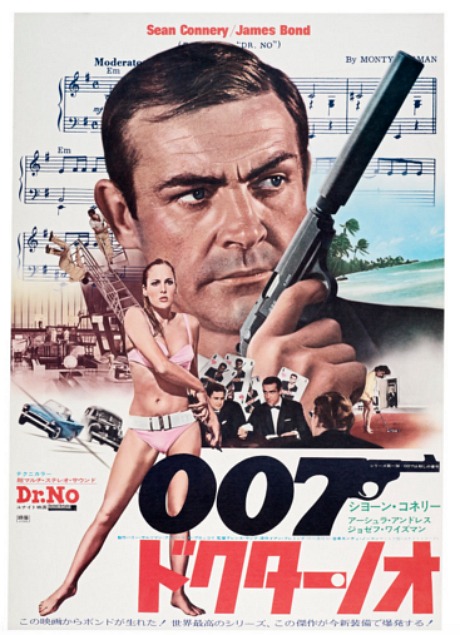
An 11.2 Wired piece by Charley Locke is called “The Coolest James Bond Posters You’ve Never Seen.” It’s taken from a recently published coffee-table book that profiles international posters for James Bond films going back 50-plus years. But the front-page poster for Dr. No (’62), used for a Japanese re-release of that film that happened a decade later, is completely uncool for two reasons. The image of Sean Connery is obviously from Goldfinger (made two years after Dr. No, by which point Connery had begun to put on a little weight and wear a rug that really looked like a rug), and the music sheet should be for Monty Norman‘s “Underneath The Mango Tree.” It looks like a fan poster made by someone who isn’t very hip. One could logically conclude that Locke and his Wired editors didn’t even spot these two wrongos.
Incidentally: As I was in Washington when the first Los Angeles Spectre all-media screening happened last Monday I’ll be seeing it this evening at the Grove. A guy I spoke to called it (a) good but not great, (b) a bit morose — lacks that rib-tickly, contact-high quality (HE response: Sam Mendes doesn’t do rib-tickly), and (c) Christoph Waltz‘s jaded villain thing is played out.
Do It Right Or Not At All
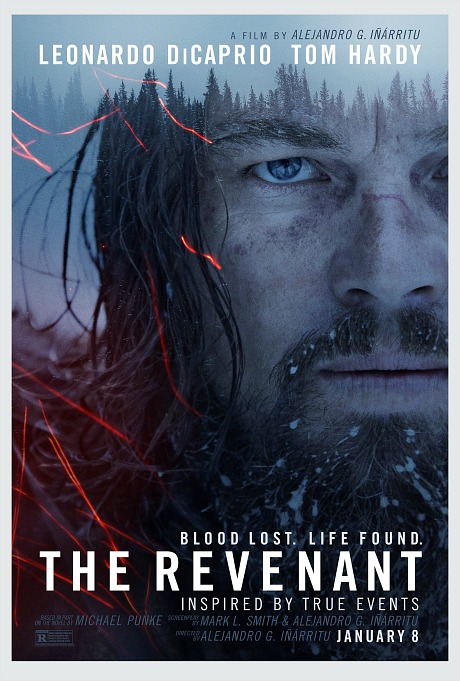
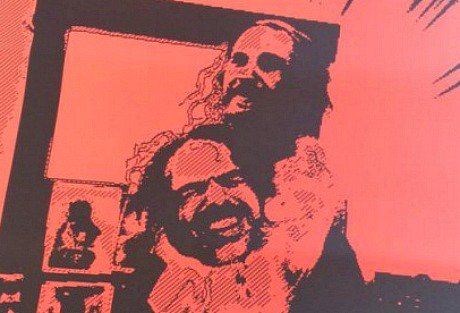
From the very start the basic drill has been that Emmanuel “Chivo” Lubezki was capturing The Revenant with entirely natural light via the Alexa 65, and now here are posters that don’t reflect that aesthetic, that contain digital tweaking. I understand the ad agency wanting to throw in a few strands of red to give a little accent to the grayness — it looks nice — but it violates Chivo’s aesthetic. No, it doesn’t look like campfire light — it looks like digitally simulated campfire light. These are just movie-star portrait posters looking to appeal to the none-too-hips who are still saying “oh, what’s this about? And who’s in it again?” If 20th Century Fox wanted to be reach out to serious hipsters (which of course they don’t), they would create a Phase Two chokehold poster. That image of Tom Hardy headlocking Alejandro G. Inarritu has something.

Savannah Poker
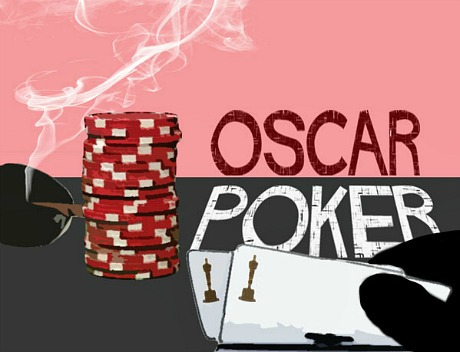
I’m not so sure about yesterday’s Oscar Poker chat, which Sasha Stone and I recorded in suite #330 at Savannah’s Brice Hotel. We talked about Room a little bit but neither the energy or the inspiration were there. Then we asked ourselves why Hollywood Reporter award-season analyst Scott Feinberg had chosen Blythe Danner (See You In My Dreams) as his fifth Best Actress pick in a recent forecast piece. Danner delivers as far as the movie allows, but it’s not enough. Again, the mp3.
Always Liked Fred Thompson’s Vibe, Admired His Acting From Time To Time
I never agreed with Fred Thompson‘s political views and I never would have voted for him if he’d been on the ballot in California or New York, but I always liked him. He exuded a kind of been-around, no-bullshit integrity. Especially when he was on the Watergate committee in ’73 and during that brief but respectable performance he gave in Roger Donaldson‘s Marie: A True Story (’87). I guess it was basically a feeling of trust and comfort for a steadfast dad or uncle figure. “Does [Fred Thompson] have sex appeal? Gene, do you think there’s a sex appeal for this guy, this sort of mature, older man, you know? Can you smell the English leather on this guy, the Aqua Velva, the sort of mature man’s shaving cream, or whatever, you know, after he shaved? Do you smell that sort of…a little bit of cigar smoke? A little, you know, whatever.” — MSNBC’s Chris Matthews speaking about Fred Thompson on or about 6.13.07. From Joe Leydon: “Can’t you just imagine Thompson in one of the debates with Trump or Carson? ‘Excuse me, but just what in the hell are you talking about? I mean, just how stupid do you think voters are?'”
Unsung, Unheralded
Two days ago Variety‘s Ramin Setoodeh posted about 11 under-the-radar performances “that haven’t been buzzed about enough, but deserve Oscar consideration. To my surprise I agree with six of his assessments. I’ll start with these and conclude with my four disagreements. No comment on Helen Mirren‘s Woman in Gold performance as I haven’t seen the film.
AGREEMENT:
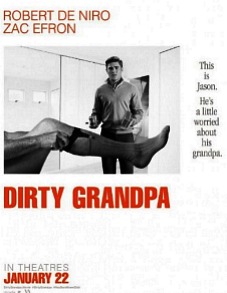
(1) Robert De Niro, The Intern. As a retired windower who becomes a chauffeur and trusted confidante for online-fashion tycoon Anne Hathaway, DeNiro “injects this comedy with so much soul he’s almost as impressive as Diane Keaton in Something’s Gotta Give,” Setoodeh writes. HE comment: Definitely a winning supporting performance. It’s odd to think of Jake LaMotta or Neil McCauley playing a correct and well-mannered Mr. Belvedere, but that’s what this performance essentially is. But two things may happen. One, DeNiro’s performance as Jennifer Lawrence‘s dad in Joy may outshine his Intern-ist. And two, a Norbit-like effect from Dirty Grandpa, a throwaway horndog comedy in which DeNiro costars with Zac Efron, may spoil the soup.
(2) Kristen Stewart, Clouds of Sils Maria. HE comment: Yes, 2014 was a banner year for Stewart with three striking performances in Clouds, Camp X-Ray and Still Alice. She definitely upped her game. But nobody paid the slightest attention to Olivier Assayas’s film, which I found glum and meandering when I saw it in Cannes 17 months ago. Stewart’s Best Actress Cesar award for her performance as Juliette Binoche‘s personal assistant will have to do.
(3) Robert Redford, Truth. HE comment: Redford is one of those actors who can’t change his appearance or accent, but he captures Dan Rather with that particular, very familiar cadence that the former CBS Evening News anchor used on the air for so many decades. Plus he conveys a affecting sense of dignity. Truth has been killed by the liberal media and is currently buried in a 20-foot-deep pit so Redford hasn’t a prayer, but this is one of his best post-1990 performances.
Social Experiment
Thomas Vinterberg‘s The Commune feels like a return to the emotional intimacy and painful revelations of The Celebration (’98) minus the Dogme 95 aesthetic. Vinterberg’s Far From The Madding Crowd was/is a first-rate creation, but this is the kind of material that seems to constitute his natural wheelhouse. Thematically the trailer tells you everything. Sexual liberation and experimentation in the ’70s didn’t work for most couples as a rule. The only culture that seems to be have embraced this kind of lifestyle in a semi-workable way are swingers, who in this country seem to be more common (or at least more noticable) in the Midwest. The Commune has no U.S. release date but will open in Denmark next January. Perhaps it’ll be screened under the World Cinema banner at Sundance ’16?