

Melissa McCarthy is a brilliant major-league comedian, but for me the metaphor of morbid obesity gets in the way of her comic delivery. I’ve been laughing at chubby or overweight types my whole life, but how do you laugh at a person who will obviously be coping with a shortened lifespan due to unhealthy eating habits? Slow caloric suicide isn’t funny. Much of McCarthy’s humor is all about making fun of herself for being in awful shape (unable to leap a counter in Tammy, huffing and puffing in Identity Thief) but if a person like me says “she’s so out of shape she’s not funny” it’s a hate crime and I get labelled as a bigot. I’m not being cruel like Rex Reed was when he called her a “hippo”. I’m just saying I can laugh at Oliver Hardy or John Candy but not McCarthy. I’ve always been on the fence about Fatty Arbuckle.
Joseph Conrad’s Youth
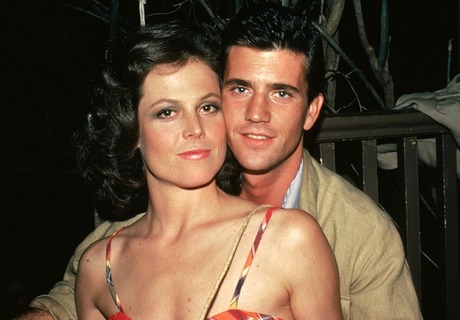
It’s probably hard for Millenials to imagine Mel Gibson, who has morphed into a notorious espouser of odd conservative values over the last decade or so, as a beautiful hunk who exuded a kind of serenity. But he was and did back in the day. I myself had forgotten what his face looked like, that vibe he had. He was 25 or 26 when he starred in Peter Weir‘s The Year of Living Dangerously, and Gibson’s costar Sigourney Weaver was 32 or thereabouts. I was devoted to this film when I first saw it in late ’82. The erotic current is ripe and throbbing. (I was going with someone at the time, and I remember what it did to us, mood-wise, when we saw it together.) There’s no Living Dangerously Bluray but a high-def version is on Vudu.com. As soon as I return. (The Vangelis-composed theme from this film was originally done for a documentary called Opera Sauvage. The track is called “L’Enfant.”)
Under The Ice
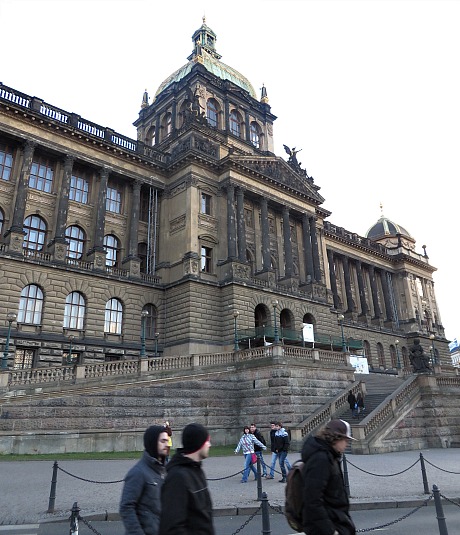
Yesterday I submitted to anesthesia and the ministrations of a professionally distinguished group of people in a Prague clinic. They all wore lab jackets and spoke softly and were gentle with me, and they had soothing music (including the greatest hits of Edith Piaf) playing all the while. In Berlin I was crashing around 2:30 am or 3 am but in Prague I’ve been waking up between 1:30 am and 3 am, so I was fairly whipped and actually dozed off during the procedure. I don’t think I’m alone in having a problem with pain. I was feeling a tiny bit woozy when I got back to the apartment (Liliova 946/14) around 4:30 or 5 pm, and so I took a half-hour nap which lasted until 1:30 am. And then I woke up. It’s now Thursday, 1.13, at 7 am.
Once He Held Mountains In The Palm of His Hands
Apologies to the ghost of the great Sid Caesar for not posting sooner about his passing, which happened earlier today. (Or yesterday if you’re in Prague, where it’s currently 5:10 am on Thursday.) A comic genius of live television who peaked between ’50 and ’57 (or from the ages of 28 to 35), Ceasar was a mountain, a creative collossus and a reflector and definer of the Eisenhower zeitgeist. “In the’50s Caesar was to comedy what Marlon Brando was to drama,” it says on a blurb of Ceasar’s 2004 autobiography. Ceasar was “the ultimate…the very best sketch artist and comedian that ever existed,” said Carl Reiner. Mel Brooks, who worked as one of Caesar’s sketch writers, called him “a giant…maybe the best comedian who ever practiced the trade.”



Kenny Has Posted His Last
Glenn “Toxic Waste Dump” Kenny has been deep-sixed from Hollywood Elsewhere. His spray-piss attitude is beyond rancid. I will not tolerate his bile. I told him we’re done and he said “go ahead…I was done with you three weeks ago anyway. And forget the bet that you’re going to lose. I won’t even take money from you.” Oooh, Glenn forfeits $50 so he can make a point about his integrity! All he had to do was rein himself in and not behave like a belligerent, supercilious dry-drunk. Alas, too tough a task.
Calculatingly Cute Little Girl Who Knew How To Turn It On
Here’s a tip of the hat to the late Shirley Temple for her acting in Victor McLaglen‘s deathbed scene in John Ford‘s Wee Willie Winkie (’37). Let’s just hang on to this and…I guess we could mention her lightly amusing performance in The Bachelor and the Bobby-Soxer (although Cary Grant, Myrna Loy and Ray Collins were the standouts). In the same way it’s better to remember Elvis Presley from ’54 to ’58 and forget the rest, it’s better to remember Temple as a cute little kid and forget that she became a Republican sometime in the ’60s.
Heat In The Kitchen
Mark Harris‘s latest Grantland piece is titled “Oscar Season Turns Ugly.” Many Oscar seasons have been ugly to some extent. Some years back David Poland wrote that “every Oscar-bait film is its own little war” or words to that effect. Oscar campaigns are an extension of this mindset, and it follows that they, like any political campaign or debate, are colored by combativeness and certain forms of cruelty. Oscar campaigns don’t exist in a Marquess of Queensberry realm and they never will. Besides last year’s torpedoing of Zero Dark Thirty by a gang of leftist Stalinists over accusations that Kathryn Bigelow and Mark Boal‘s film was allegedly endorsing torture was much, much uglier than anything going on this year. I still feel nauseous about that episode when I think back on it.
Counselor’s Fighting Weight
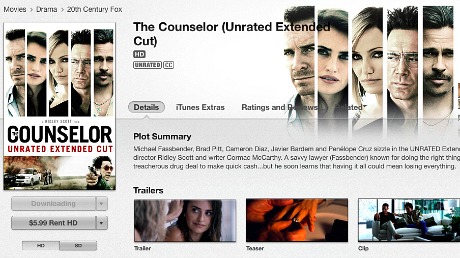
The extended-cut Bluray of Ridley Scott‘s The Counselor (138 minutes vs. the 118-minute theatrical version) streets today. I’ve rented it on iTunes for viewing this evening. In the view of Forbes.com’s Mark Hughes, the theatrical version was over-abbreviated but the long version allows the characters to breathe easier and and stretch their legs and fill things out. If this view turns out to be widely shared, people will call it a repeat of the extended Bluray cut of Scott’s Kingdom of Heaven — a significantly better version than what was shown in theatres.
Dismissed
In the view of Indiewire‘s Jessica Kiang, Hossein Amini‘s The Two Faces of January, based on a 1964 novel by Patricia Highsmith and screening at the Berlinale, is a letdown. “Something is lost in the translation,” leading to “little more than a competent disappointment, and a strangely old-fashioned one at that,” she writes. “The problems are script-deep, because as a director, Amini shows himself capable if uninspired, but here as screenwriter, he’d appear to be back on the same kind of form that led to the reverent but rather mechanical literary adaptations Jude and The Four Feathers.”