Five Must-Haves

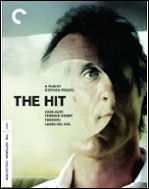
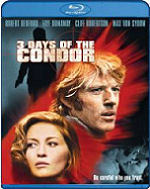
My most wanted buys over the next two months are Criterion’s Bluray of Henri-Georges Clouzot‘s The Wages of Fear (and they’d better not Third Man me this time!), due 4.21; Criterion’s DVD of Stephen FrearsThe Hit, due on 4.28; and Paramount Home Video Three Days of the Condor Bluray, due 5.19.


The Wages of Fear, The Hit, Three Days of the Condor.

That’s on top of Criterion’s The Friends of Eddie Coyle DVD and Redemption Films’ Girl on a Motorcycle DVD, which are also out on 5.19.

What Up?

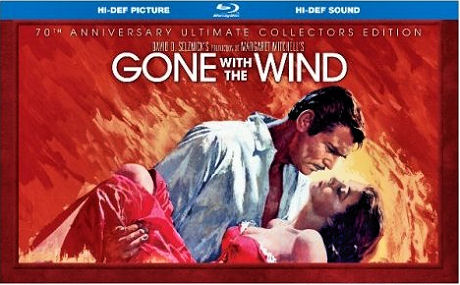
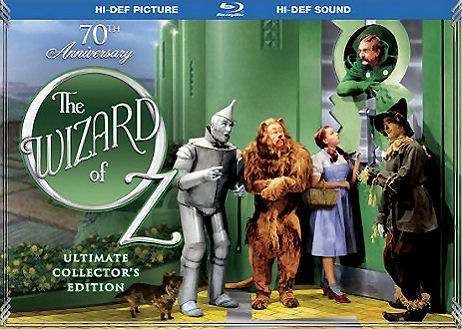
In a 2.17.09 interview with High-Def Digest’s David Krauss, Warner Home Video’s George Feltenstein said that a “murderer’s row” of WHV classics — Gone With the Wind, North by Northwest, The Wizard of Oz — will be out on Bluray later this year. Since that article the GWTW and Wizard of Oz Blurays have been announced (but without a specific date) and the North by Northwest Bluray hasn’t been announced. Is it being bumped into ’10?

Aftermath

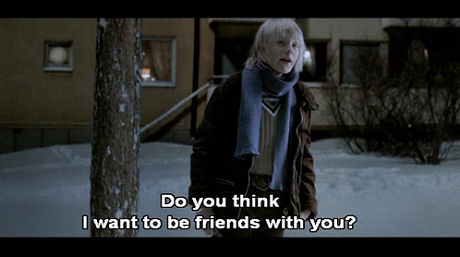
The first official response regarding the outrage about alternate subtitles on the Let The Right One In DVD and Bluray, which Icons of Fright wrote about two days ago and which I reported yesterday morning, came from a senior Magnolia guy. “Apparently we were supplied with two different translations by the producers,” he explained, “and for some reason the DVD division used the alternate subtitles for the DVD.

Yeah, but what reason? I never got a clearly worded reply on this.

The Magnolia guy emphasized, however, that “there was no conscious decision to ‘dumb the film down’, which is absurd because the theatrical titles were perfectly understandable and accessible.”

And yet a piece of reporting that was posted yesterday on The Digital Bits revealed that the person who changed the subtitles works for Magnet, the Magnolia distribution arm for oddball films. One presumes that the decision was a conscious (as opposed to unconscious or subconscious) one on someone’s part. As the general consensus is that the alternate subtitles represent a kind of dumbing down of the film’s dialogue, it is therefore fair to say that the subtitles were consciously dumbed down.

The bottom line is that some Magnet person felt that subtitles that were simpler, less wordy, and more American-ized sounding would play better with the DVD market, which is thought to be a little more downscale that the folks who pay to see films of this type in art theatres,.

A Magnet spoksperson said the following to the Digital Bits: “We’ve been made aware that there are several fans that don’t like the version of the subtitles on the DVD/BR. We had an alternate translation that we went with. Obviously a lot of fans thought we should have stuck with the original theatrical version. We are listening to the fans feedback, and going forward we will be manufacturing the discs with the subtitles from the theatrical version.”

Digital Bits asked Magnet how people will be able to identify the new discs, when they’ll be available in stores and if there will be an exchange program for those who have the existing version.

“There are no exchanges,” Magnet replied. “We are going to make an alternate version available however. For those that wish to purchase a version with the theatrical subtitles, it will be called out in the tech specs box at the back/bottom of the package where it will list SUBTITLES: ENGLISH (Theatrical), SPANISH.”

All the fans want is for Magnolia to put this person on a downtown Manhattan street at a designated time and location any time over the next couple of weekends. This person will be the fox. The hounds — i.e., the fans who were so outraged by this decision and will now have to purchase an extra DVD or Bluray of LTROI when the corrected version appears — will agree to give the fox a two-block lead. The fox agrees not to take a subway or a cab. He/she will have to stay on foot during the entire chase. The hounds agree not to physically harm the fox when he/she is caught, although the throwing of fruit and vegetables will be allowed.

Enough With The Kids

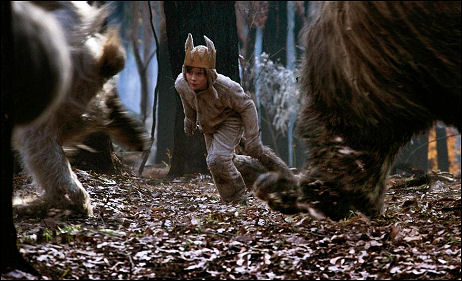
Reading Suzie Woz‘s USA Today article about Max Records, the 11 year-old star of Spike Jonze‘s Where The Wild Things Are (Warner Bros., 10.16) brought a wonderfully cleansing thought into my head.

I don’t want to see Where The Wild Things Are because I don’t like movies about kids. Not any more. Exceptions will always occur (and thank god for that), but I pretty much don’t give a damn about coming-of-age movies or learning-a-tough-lesson movies or movies about young kids going through an adventure that changes their life and/or has a profound impact. Really, throw all that shit out the window.

I’ll tell you one reason why I’m not the only one thinking this. The Great Recession has been scaring the hell out of people, and with everyone getting down to brass tacks and doing what they can to survive parents are realizing that they haven’t done their kids any favors by funding a cut-off, over-indulged fantasy realm for them to live in. That’s what the Wall Street pirates have been doing in a sense since Bush came in and look what happened.

Kids need to grow up and grim up and learn the skills and disciplines that will allow them to survive. So enough with the Spielberg-aping films that portray a child’s world as a magical-fantastical kingdom in and of itself that adults might be able to learn something from.

I loved E.T. when I first saw it 27 years ago, but the last time I watched (i.e., when the last loaded-with-extras bullshit DVD came out) I had a moderately hard time. There’s no filmmaker who’s more sentimental, manipulative and emotionally cloying than Steven Spielberg when it comes to under-age characters. His films are like McDonald’s french fries; they tend to age very badly.

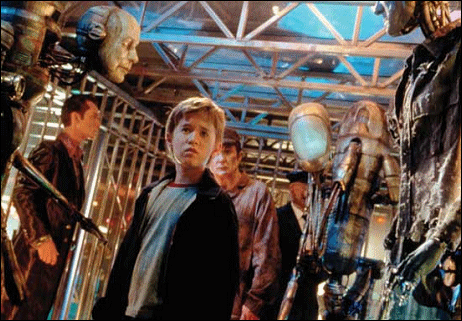
It’s taken years to realize this, but I think my profound dislike of kid films initially came from the one-two punch of Spielberg’s Hook (’91) and George Lucas‘s The Phantom Menace (’99). (Jake Lloyd‘s performance as Anakin Skywalker was surely one of the most agonizing ever delivered in motion picture history.) Those two left me doubled-over, and then along came Spielberg’s A.I. and I was really done with kids playing lead roles. A ten-year process, that.

I don’t think I’ve been able to really go with a film about a kid (or kids) since. I’m sure I’m forgetting a good kid-in-the-lead film that’s been out over the last seven or eight years.

The Hook-Phantom Menace-A.I. whammy was a bit like my getting sick from eating too much corn bread at my grandmother’s home when I was ten. I wasn’t able to even smell corn bread for two or three decades after that.

This prejudice is partly about my pretty much having had it with kids in real life. Unless they’re your own children or your girlfriend’s or they’re natural-born geniuses (I would have loved to have known Pablo Picasso when he was 6 or 7), kids are not people you want to hang with for the most part. Ideally, I mean. They tend to be dull (i.e., obsessive), anarchic, shallow, uninteresting, overly self-regarding and for the most part unengaged in anything other than their own insipid, corporate-created distractions.

This sounds like a joke but we need to go back to the Victorian tradition of kids being seen but not heard and sometimes being taken out to the woodshed when they act up. They need to talk and share about their own lives, of course, but they really do need to ask more questions about the experiences of adults in the real world. They also need to be made to eat on their own on a card table in the den on Thanksgiving and Christmas Day and Easter.

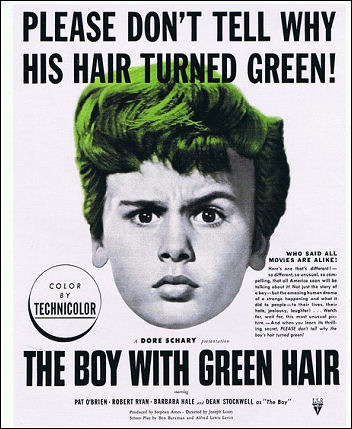
We also need to return to the standards of most early to mid 20th Century movies in which kids were not the primary focus. There were some excellent studio-era films made with kids in the lead, of course. Standouts off the top of my head are The Boy With the Green Hair, The Red Pony, Old Yeller, Night of the Hunter, My Life as a Dog, The Silence, The Sixth Sense , etc. But by and large pre-1980s films stayed away from films in which kids played the lead(s), and we need to get back to that.
And that includes teenagers. I hate teenager movies unless they have characters who remind me of myself when I was 16 or 17, which is to say a kid with at least a semblance of a brain and a semi-developed vocabulary and actual curiosity about the world outside his/her immediate realm. Twilight met that test for me — I believed in that film almost all the way through. Another exception is Risky Business, which I’ll be able to enjoy when I’m 95. Heathers is another. But serious quality-level teenage films are very few and far between.

And I don’t want to hear any crap about how I’m getting colorfully cantankerous and channeling Andy Rooney. The ones out there who believe that American culture should celebrate and nurture adolescence as an end in itself are the loonies, not me. The wake-up call of the Great Recession means — or certainly should mean — that the age of the “infantilization of movies” (a term coined by Pauline Kael, as I recall, in an attempt to describe the influence that Spielberg and Lucas began to exert in the mid ’70s) is coming to an end.

Woz reports that audiences will get a chance to check out a trailer for Where The Wild Things Are on Friday if they happen to see Monsters vs. Aliens. Otherwise, I’m sure it’ll turn up online a few days after that.

Solved

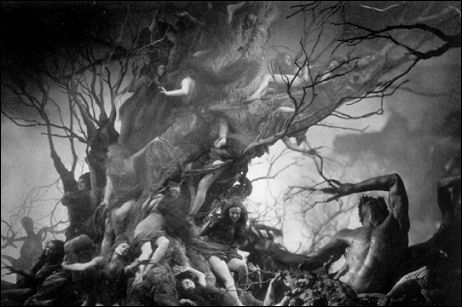
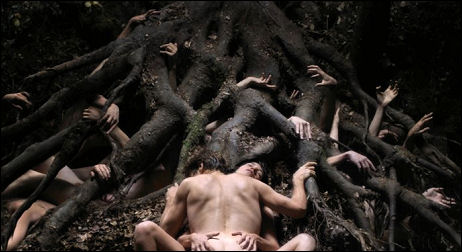
I guess this pretty much settles the inspiration question raised by that writhing, tree-root shot from Lars von Trier‘s Antichrist, which I posted yesterday. I’m told the below still is from Henry Otto‘s silent Dante’s Inferno (1924), but it looks a little too artful and well designed for a reportedly mediocre, low-budget affair that ran only 60 minutes. I’m wondering if it might be from Harry Lachman‘s Dante’s Inferno (1935), which starred Spencer Tracy and Claire Trevor.

Tough Guy

I didn’t see David Poland‘s very rough, blunt, hellfire-and-damnation piece about Deadline Hollywood Daily‘s Nikki Finke until today….sorry. He makes some good points; the writing is very clean and straight because he’s not hemming and hawing in the least. (He also throws in a belitting comment about yours truly in the process.) He’s not afraid of being Finke’s enemy, and I admire the ballsiness in that.

Then again he’s always been heavily into wearing robes and passing judgment. I know that when Rabbi Dave decides to unload on an enemy, deep down he’s mainly looking for one thing to happen (and I know because I’ve tasted it first-hand). He wants you to throw yourself on the temple steps and beg for forgiveness. If you can’t or won’t do that, or if you feel that life isn’t entirely a black-or-white, good-or-bad proposition, he wants you to quit journalism. I don’t think he wants his enemies to hang themselves, but he wouldn’t entirely mind it if they did.

That’s more or less the deal here . He wants his enemies fired, taken down, ruined, destitute, weeping. He’s an extremely bright guy and a very tough hombre, but he’s a fuming, finger-pointing purist. His is the hand that smiteth.

Reaching Out

I’m convinced that the primary inspiration for this Dante-esque writhing-in-the-forest scene, which is the first-anywhere-image from Lars von Trier‘s Antichrist, is the menacing-arms-protruding-from-the-wall scene in Roman Polanski‘s Repulsion. That plus any number of paintings inspired by Dante Alighieri ‘s The Divine Comedy, I mean. That’s Willem Dafoe and Charlotte Gainsbourg front and bottom-center in this still.

Antichrist, which will presumably premiere at the ’09 Cannes Film Festival, begins with a married couple (Dafoe, Gainsbourg) grieving over the death of their son. Dafoe’s character is a therapist; I don’t know what Gainsbourg’s character is defined by other than her feelings of woe about their lost child. They retreat to a cabin in the woods and eventually run into all sorts of horrific manifestations, which are at least partly based in their psychologies. Because Lars von Trier doesn’t do horror-for-horror’s-sake.

Triple Dipping

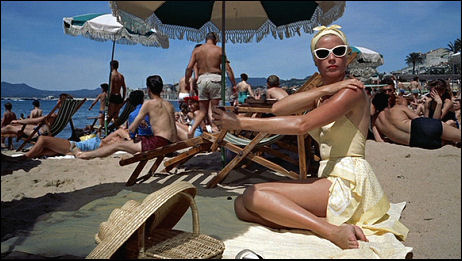
I’ve never been more than mildly attracted to Alfred Hitchcock‘s To Catch a Thief, but I’ve been in love with Robert Burks‘ VistaVision photography, which won the 1956 Best Cinematography Oscar, since I was in my mid teens. No film delivers the splendor of the Cote d’Azur with more erotic punctuation, or is better at capturing that hazy-sunlight effect at midday and even the hillside and seaside aromas, which you can easily recollect and almost smell during a viewing.


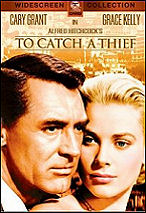
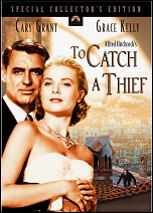
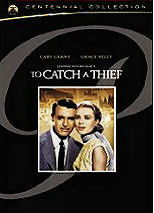
(l. to r.) The initial ’02 To Catch a Thief release; the ’07 Special Collectors editon, and the ’09 Special Centennial edition.

Which is why I’m about to buy my third DVD of the damn thing today. The latest upgrade is out and I have no choice.

The visual quality of the current Special Centennial edition is said by DVD Beaver’s GaryTooze to offer “a significant improvement over the 2007 edition with a higher bitrate and the rendering of colors is far superior with no hint of boosting as we saw in the [2007] SE.”

The first To Catch a Thief DVD, which came out on 11.5.02, was thought even back then to be somewhere between nothing special and somewhat crappy. It made Burks’ large-format photography look like it was captured on regular 35mm.

Nearly five years later, on 5.8.07, came the To Catch a Thief Special Collectors Edition, which added (or restored) a strong greenish tint to the nighttime rooftop scenes, and looked truly exceptional when played on a Bluray player and shown on a decent-sized high-def screen. I was blown away when I looked at this version on my just-purchased Bluray player and 42″ plasma screen last November. It almost flirts with Bluray quality in certain scenes.

And now — today — comes the To Catch a Thief Centennial Collection version, which reportedly delivers an improvement over the ’07 release and therefore an even more choice experience for guys like myself. The stills I’ve seen indicate color that is slightly less (the greenish rooftop efect is toned down) and more natural looking.

“By placing the film on one disc without any extra the compression has improved and even detail has advanced a notch,” Tooze has written. “The softer palette suits the film very well and it has a warmth that was devoid in the previous editions. Aside from seeing this in Blu-ray, this is fabulous news.”

This is perhaps the most significant divider between serious film lovers and people who just like movies. The former will always buy (not rent) the latest upgrade of this or that movie in order to have the finest rendering in order to simply look at the fucker — i.e., to sink into the visual bath of it and go “aahhh.” And the latter will rent this or that film on Netflix in order to watch the story and savor the emotional-aesthetic ride. They have no upgrade hunger and satisfied with “good enough” in the bitrate department.

In fact, I know a major Manhattan-based film critic who watches films at home on a plain old small-screen TV and a regular-scale DVD player, and doesn’t feel a particular need to upgrade. Imagine!

Eisenberg Eisenberg

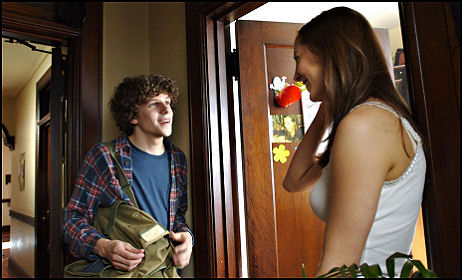
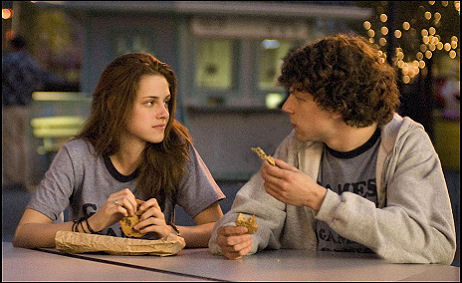
It’s no secret that two smallish films about a young, highly intelligent curly-haired guy trying find his footing in life — The Education of Charlie Banks and Adventureland — are opening within a week of each other, and soon. March 27th and April 3rd respectively. And that both have the earnest, curly-haired Jesse Eisenberg in the lead role.


Jesse Eisenberg and Eva Amurri in The Education of Charlie Banks.

Kristen Stewart and Eisenberg in Adventureland.

And that both Eisenberg characters — — I’m sure they share many similarities but this one I’m dead certain of — experience erotic-emotional longings for a attractive classy-soulful 20something girl — Kristen Stewart in Adventureland and Eva Amurri (the daughter of Susan Sarandon) in Charlie Banks.

I missed Adventureland at Sundance (where it received a positive if unspectacular response) but I’ll be catching it tomorrow. It’s obviously the more broadly accessible audience film between the two, and the hand of director Greg Mottola (Superbad) tells you it’s not submental.

I haven’t seen Banks but it’s said to be a character-driven period piece, set on the Vassar campus in the early ’80s, about a bright dweeb (Eisenberg) having to deal again with an old high-school rival (Jason Ritter). The was directed by Limp Bizkit’s Fred Durst.

I have a slight problem with the title of Durst’s film. The Education of Charlie Banks suggests that it’s about some kind of primal, life-changing lesson that shapes the character of young Mr. Banks. Not “an” education but “the” — big difference. Except daily life is a constant education. School is never out in this sense, and who’s to say which life lesson you absorb is the big one that really matters?

That’s why I love the title of Nick Hornsby and Lone Scherfig‘s An Education so much. It doesn’t imply that what Carey Mulligan‘s character learns over the course of it is a major game-changer; it simply says that she picks up a thing or two.

Bloody Subtitles Scandal

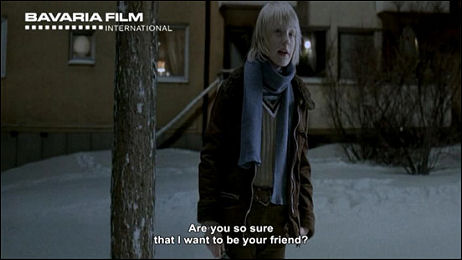
Last night Icon of Fright’s Rob G. posted a carefully assembled rant piece about a dumbed-down subtitle problem on the recently released DVD and Bluray of Tomas Alfredson‘s Let The Right One In, the Swedish vampire film that was praised to the heavens when it came out last fall.

Magnolia Home Entertainment issued the DVD and Bluray on Tuesday, March 10th. The film was theatrically released in the U.S. via Magnet, a Magnolia division geared to releasing the “wild, unquantifiable and uncompromised,” according to a 9.11.07 press release. Well, somewhat less wild when it comes to home video.

In a series of screen-grab comparisons between the original DVD screener and the DVD, Mr. G. persuades that the subtitles “have been drastically changed since the last time I saw it, and completely dumbed down.”

Except he really means “subtly” rather than “drastically.” The “basic gist” of what the characters are saying remains, he says, but “the dark humor, subtleties and character nuances which made the movie so powerful” are “completely missing.” And pretty much “every single line of dialogue is completely off” in this respect, which more or less ruins Alfredson’s film for anyone who saw it theatrically and remembers it with any particularity.

The original screener says that the subtitles were done by Ingrid Eng. Rob G. has theorized that “in order to re-use the subtitles for the American version of the DVD, Magnolia probably had to pay Ingrid again for her services. Rather than do that, perhaps they hired someone else to do the translations on the cheap.”

I tried to post this last night but I was too fagged and shagged. I wrote a highly-placed Magnolia friend this morning to see what the explanation might be.

It’s been alleged but nor proven that the Canadian edition from Mongrel Media has Eng’s original English subtitles.