A Testament To The Power of Beard Stubble

Am I a non-compliant suppressive person in the realm of gay cinema?

In my 9.1.23 review of Andrew Haigh‘s All Of Us Strangers, I praised it for being “a classy, meditative, top-tier capturing of an intimate gay relationship” while admitting that the beard-stubble sex footage made me squirm a bit. Which resulted in attacks, of course. For in today’s realm, if you don’t sing arias about bare-backed slurpy kissing scenes you’re a homophobe.

“Story-wise it’s kind of a gay Midnight in Paris,” I wrote, “except instead of hanging with F. Scott Fitzgerald and Ernest Hemingway the time traveller in question (a screenwriter named Adam, played by the mid-40ish Andrew Scott) spends a lot of time with his late parents, who are miraculously alive and their old glorious selves, and played by Jamie Bell and Claire Foy.

“Their get-togethers allow Adam, of course, a chance to explain to them both (well, his mom) that he’s been gay for decades but that being so inclined is no longer the socially uncertain, vaguely uncomfortable thing it was when mum and dad died in a car crash, back in the ’80s.

No-Neck Celebrities

How many famous people could be described as “no neck” types? We all have necks, of course, but some celebrities don’t (or didn’t when they were alive) have the kind you would notice. I don’t literally mean no necks — I mean necks that are barely there.

I’m thinking particularly of Mickey Spillane and Claudette Colbert, and of Randy Newman‘s “no-beck oilmen from Texas” (a lyric from his 1971 tune “Rednecks“).

I got started on this when I noticed a Facebook posting by Harlan Jacobson that described Maestro‘s prosthetics manager Kazu Hiru as an “Ears, Nose, and No Throat guy“….what does this mean? Is there a featured player in Maestro who has no visible throat to speak of?

I’m having trouble thinking of other no-neckers besides Spillane and Colbert. They have to be out there. Assistance?

When Seattle “Boys” Beat Aryan Krauts

George Clooney speaking in Boys in the Boat featurette: “These guys at the University of Washington are taking on the seniors, and then taking on the fraternity [something], and then taking on the Nazis.”

Clooney is using the usual shorthand, of course, but does he really mean that the young athletes who belonged to Germany’s 1936 Olympic rowing team were devout “seig heil” guys? Yes, Adolf Hitler saw the Berlin ’36 Olympics as a a potential proof of Aryan supremacy (Jesse Owens screwed that pooch), but how many German citizens were ardent supporters of the Nazi party that year, and how many were playing along to get along? A third or less?

How many blue-state liberals today pretend to be wokester sympathizers but are just keeping their heads down in order to stay out of trouble?

Let’s imagine, God forbid, that The Beast might win the ’24 election. He would therefore be president during the 2028 Olympics in Los Angeles. Would it then be fair or accurate to describe the U.S. Olympic team as “the MAGAS”?

Freudian Slip

[3:10 mark] “…and the party of a great man who should have been president and would’ve been one of the greatest presidents in history….Hubert Horatio Hornblower! Humphrey!”

Talks Like A Cowgirl

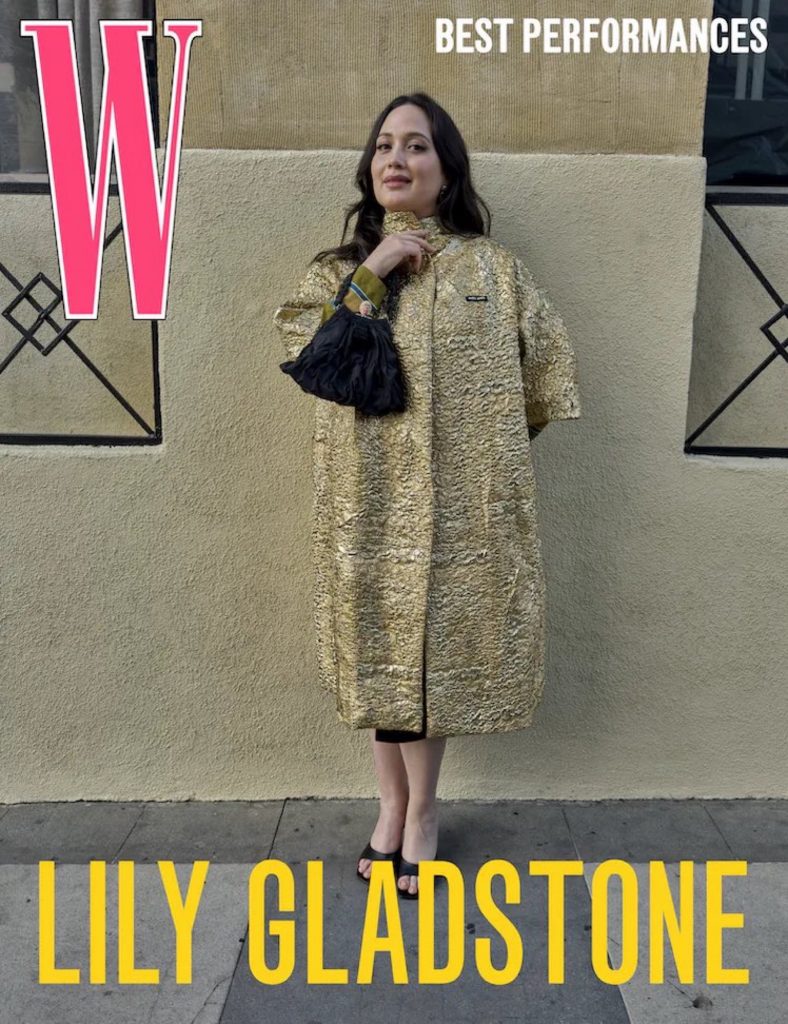
I love Lily Gladstone’s Montana shitkicker accent, and especially the way she pronounces the last name of her Osage Nation character (“BURRKhahrt”) and the word “murders” (“merrduhhrrrs“). Born in ’86 and raised on the Blackfeet Nation reservation in Browning, Montana, Gladstone is an authentic country gal…talks it, owns it…forget the coasts.

Late Eulogy for Robert Wilke

Robert Wilke almost always played foul-tempered, sandpaper-voiced bad guys. He just had one of those faces. He’s probably best known as the High Noon “gunnie” whom Grace Kelly shot in the back during the final ten minutes. He also stood out as the loudmouth whom James Coburn killed with a fast flying knife in The Magnificent Seven.

In a career that spanned almost 50 years only once was Wilke called upon to show emotional vulnerability and anguish, and that was when he portrayed the conflicted farm foreman in Terrence Malick‘s Days of Heaven (’78). Only Malick saw a bit of depth in the man…only Malick asked him to step beyond the usual conventional shithead realms.

Wilke to Richard Gere (speaking about wealthy wheat farmer Sam Shepard): “I know what you’re doin'”…beat, beat…”that boy’s like a son to me.”

Wilke was a great amateur golfer.

Incidentally: Criterion’s 2010 Bluray of Days of Heaven has looked glorious from the get-go, and you’ll never convince me that the new 4K UHD version is going to look that much better on the 65″ Sony OLED. Maybe in subtle little ways but nothing that will lift me out of my seat. All the same there’s a little part of me that wants the damn thing anyway.

Read more

Just A Reminder

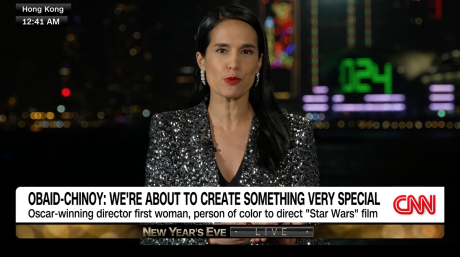
Donald Trump‘s ongoing trial over financial fraud is happening inside the New York County Supreme Court, 60 Centre Street, lower Manhattan. And yes, right behind that red-jacketed CNN reporter are the very same concrete steps that Henry Fonda, Lee J. Cobb and the other jurors walked down at the ending of 12 Angry Men.

Not Yet Feeling The “Napoleon” Juice

As we speak my primary impressions are the ones I was considering last summer — the technically too-old Phoenix will be great, Vanessa Kirby will probably be commanding, their acting behaviors seem too 21st Century (i.e., not Barry Lyndon-ish enough), the battle scenes will be tremendous. I’m sure that the presence of a major film in the wings will manifest before long, but right now I’m not feeling it. All things in their time.

Saga of Thumbelina and Paul Bunyan

I still say that a towering Elvis Presley (Jacob Elordi) and a teeny-weeny Priscilla Presley (Cailee Spaeny) is visually jarring. They just look weird together. Director Sofia Coppola should have cast to minimize height disparity — a shorter Elvis or a taller Priscilla.

The real-life Elvis and Priscilla were separated by eight inches of height — Elvis was 6’0″ and Priscilla was (and presumably still is) 5’4″. But in the film, the former Priscilla Beaulieu (later Presley) is played by the 59-inch-tall Spaeny (roughly the size of an eight-year-old) and Elvis is played by the 77-inch-tall Elordi.

Read more

Woke Casting for WWII French Drama

Shawn Levy and Steven Knight‘s All the Light We Cannot See (Netflix limited series, 11.2) is a danger-fraught World War II saga. Set in Paris and Saint-Malo, it’s mainly about four characters — Marie-Laure Le Blanc (Aria Mia Loberti), a blind French teenager; her father Daniel Le Blanc (Mark Ruffalo); a teenaged German lad named Werner Pfennig (Louis Hofmann); and Marie-Laure’s great uncle Etienne (Hugh Laurie).

Levy and Knight adhered to woke casting requirements by not choosing the best skilled actress to play Marie-Laure (wokesters feel that traditional acting or “pretending” is ungenuine), but Loberti because of her real-life “legal” blindness.

Wiki page: “Loberti landed the part after a global search for a blind and low-vision actor. A fan of the book, she auditioned after learning about the search from a childhood orientation and mobility teacher. Despite no acting training, Loberti beat out thousands of submission to secure the role; it is her first ever acting role and was her first audition.”

The critics are hating it.