The N.Y. Times‘ David Carr — a.k.a. “the Bagger” — is back in action and making the claim that Oscar heat is somehow hotter in Manhattan than Los Angeles, and that Gotham Oscar campaign publicists cater more egregiously to movie journalists than L.A. flacks, some of whom say “no” or “later” or “let me get into it” or take an awful long time to return calls.
Snyder & Cruise again
Washington Redskins owner Dan Snyder, who stepped in and made Tom Cruise look alive and well by offering an overhead and development cost deal just a few days after Cruise was booted off the Paramount lot by Sumner Redstone, looks like he may be interested in funding movies for the new United Artists stakeholder,” blah, blah.
“Casino Royale” reaction
Casino Royale (Columbia, 11.17) screened in London last night (Saturday, 11.4) and the Telegraph has run some reactions. “It’s terrific,” said one critic. “This is going to be the prequel to all other Bonds. There are a lot of fans who prefer either Moore or Connery but Daniel Craig could be better. This is the story of how Bond got started, before he became 007. Craig is such a good actor…he plays Bond as strong but emotionally vulnerable. For the first time you see his sensitive side.”
“The flm begins in black-and-white, but then goes to color. There is no sexual innuendo in this film; Craig’s Bond is more sophisticated than that. And the filmmakers have been sure to show the consequences of violence — he bleeds. Craig depicts a character who is tough and gritty and while the plot of good versus evil is the same, there is no Miss Moneypenny. If Bond has been a role-model for playboys across the generations, Craig’s 007 is not only interested in seduction. He falls deeply in love with his Vesper Lynd (Eva Green).”
Eat Me
Yesterday I lucked into a screening of Jonathan Hensleigh‘s Welcome to the Jungle, a hand-held, Blair Witch-y, spookily atmospheric horror film about four kids looking for the remains of Michael Rockefeller in New Guinea (which they hope will lead to paydirt) and running into cannibals.
And I don’t mean nameless actors who’ve been wardrobe-fitted with animal-bone necklaces and loincloths and had the right kind of movie-set makeup applied so they’ll “look” like cannibals. I mean genuinely spooky feral types with muddy-milky skin and carrying hand-made weapons. We never see them all that clearly, but they’re glimpsed now and then, crouched and stalking through jungle flora and looking like the real deal. Yeah, I know…but I believed it. It creeped me out in a way that I’m not likely to forget.
Will Smith love sonnets
As noted earlier, friends who’ve seen The Pursuit of Happyness (Columbia, 12.15) have told me that Will Smith‘s performance as Chris Gardner, a onetime homeless guy who worked hard and became a successful businessman, is seriously touching and Oscar-worthy, and that the Best Actor race will most likely come down to Smith vs. Peter O’Toole in Venus. They’re probably right.
But I can’t help but feel a certain amusement over David Poland and N.Y. Times reporter Sharon Waxman having seen Gabriele Muccino‘s The Pursuit of Happyness (Columbia, 12.15), and gone right back to their desks and written almost the same massage-y love-sonnet piece.
They’re about how making Pursuit led Smith to experience an emotional-creative blooming. Now, we’re being told, Smith doesn’t need people to love him as much as he did before, and that he’s found a new resolve — the strength of character to just be himself and get into the truth of things and come what may. (This may be true as far as his Happyness performance is concerned, but it’s almost certainly sprinkled with bullshit also. 38 year-old leopards obviously have the potential to mellow and grow, but they don’t change their spots.)
Smith’s partner James Lassiter tells Waxman that “Will has always been the guy who wanted people to love him, and he works hard at that. I think he’s starting to understand he doesn’t have to work as hard at that. That happens naturally.” Lassiter adds that making Happyness is part of the new deal, or vice versa. “In the past, ‘safe’ made more sense for us. But Will is now comfortable enough to say: `I relate to this [Chris Gardner’s] passion. I want to go with that.'”
Poland and Waxman are basically telling us that Smith has seemingly morphed into a deeper kind of cat. (Poland: “Something has happened to Will Smith.” Waxman: “For the last several years Mr. Smith, having achieved every other goal he had set in his life, has been, as he put it, ‘struggling to hit my stride as an artist.'”) He’s pushing 40, after all, and starting to settle into himself in a way that he couldn’t manage when he was younger.
This means in effect (or by implication), that he’s no longer the same smiling, charming, fun-attitude guy who made The Wild Wild West, Bad Boys II, Indepen- dence Day, Hitch, I, Robot and The Legend of Bagger Vance (i.e., “bag of gas”), and is now shooting the sci-fi actioner I Am Legend.
Why does this Smith-has-changed rap sound like the kind of thing a guy tells a girl on a first date so he can maybe get laid?
Indications are that Happyness, a true-life uplift story about how Gardner and his son were forced to sleep in public bathrooms and offices while he was working as a a trainee for a San Francisco office of Dean-Witter, is in fact a departure for Smith. But I think this is due more to Muccino’s directing influence and less to any presumed deepening of Smith’s creative soul.
Two lines have sold me on this: (a) Muccino’s pitch to Smith when they met in Paris (passed along by Poland) that even if he didn’t get to make it, the movie “had to be made by a non-American because ‘Americans have forgotten how to appreciate the American Dream”; and (b) Muccino calling Smith’s bluff during shooting (passed along by Waxman) when he complained at one point that “you’re posing…don’t you pose for my camera. You can’t trick me. You’re making faces as if you’re hurt. I need you to take some time. And come back. And be hurt.'”
Obviously if people buy this transformation story they might be more inclined to nominate Smith for a Best Actor Oscar. Columbia marketers obviously don’t want him to get passed for a Best Actor nomination or, if he makes it, lose the trophy to someone else, which is what happened when Smith’s superb performance in Ali lost to Denzel Washgton‘s in Training Day. We’re lookiing at a serious, big-push, do-or-die effort here.
The expected success of the Smith campaign means that Columbia will at least have something in Oscar play by the end of December now that three of their big fall-holiday guns — Marie Antoinette, Running With Scissors, All The King’s Men — have pretty much tanked and are way, way off the Oscar hopeful list. There’s also an emerging consensus that Stranger Than Fiction hasn’t a prayer of Oscar candi- dacy either, and it will probably also sink beneath the waves once audiences realize what a messy and unsatisfying concoction it is.
Poland and Waxman have obviously given Columbia publicists what they want in exchange for the privelege of being shown The Pursuit of Happyness early. No one’s saying it isn’t a touching little film and I’m not hearing that Smith’s Gardner portrayal isn’t as good as everyone’s saying. But the similarities between Poland and Waxman’s pieces are, if nothing else, striking.
The “sell” is sincere and truthful, but it’s a carefully strategized, well-coordinated effort nonetheless.
“Borat” tally upticks
A studio estimate regarding Borat‘s phenomenal weekend tally has gone up. Yesterday morning the projection was for $22,486,000 by Sunday night — a mere 837 theatres, 26,000 per print. That figure was based on an expected slight dip in Saturday’s business, but instead the numbers — it took in about $10,002,000 yesterday — went up. The expected final weekend figure is now $25,516,000.
L.A. Times incorrect
The Sunday 11.5 issue of the L.A. Times Calendar section is mainly about “Dream Women”, and the photo editors have managed to illustrate two articles just a little bit incorrectly. In Irene Lacher’s Cate Blanchett profile (link to come), there are three photos — a sexy portrait shot of Blanchett and two smaller stills showing her in scenes from Babel and Notes on a Scandal, and yet they don’t run a shot of Blanchett in Steven Soderbergh‘s The Good German, in which she gives her fullest and most commanding performance of the year…odd. And in Carina Chocano‘s piece about several rich, well-written women’s roles on view between now and 12.31.06, it’s primarily the unseen performances that are illustrated — Judi Dench‘s in Notes on a Scandal, Kate Winslet‘s in The Holiday, Naomi Watts‘ in The Painted Veil, etc. — while Penelope Cruz‘s performance in Volver — by any fair-minded estimation one of the two or three top contenders for the Best Actress Oscar — receives no particular emphasis and isn’t illustrated at all… strange.
AFI pix

Penelope Cruz about to do an on-camera interview with the same “Extra” celebrity chit-chat guy whom I snapped using breath spray at the Bobby premiere, at a Sony Classics Volver/AFI party last Thursday evening; El Capitan; Borders at Sunset and Vine; Arclight lobby
Full Grown Men
The inability of guys in their 30s to grow up and live adult lives is far and away the most persistent GenX theme in movies today. David Munro‘s Full Grown Men, which played Friday night and Saturday afternoon at the AFI Film Festival, is another in this vein. A guy named Alby (Matt McGrath ) decides he can’t hack being a husband and a father and decides to hook up with his his best friend from childhood and a few others in the same boat, etc.

Sarah Rafferty, Francesca Faridany, Matt McGrath at the Full Grown Men after-party — Friday, 11.4.06, 12:15 am
I’ve never been much for extended adolesence, but I can say without qualification that I loved the Full Grown Men after-party that began late Friday night. Free drinks and food, good people to talk to. If you insist upon hearing an opinion of the film, consider the words of the great F.X. Feeney: “It’s a very funny, very tough-minded film about the need to grow up…as entertaining as the wine tour in Sideways and lyrical throughout, with a strong ‘sense of place’, particularly about the American dreamland that is Florida.”
I ran into McGrath early on and took his picture. He’s been making films since he was in his late teens — Ironweed, Bob Roberts, The Impostors, Boys Don’t Cry, The Broken Hearts Club, The Anniversary Party, The Notorious Bettie Page. His New York stage work has brought a lot of good attention also — Cabaret, Distant Fires (for which he won an LA Weekly Award) and Hedwig and the Angry Inch.
The latter performance inspired the New York Times wrote that Matt brought “a slow hand to his delivery with droll, molasses-paced double takes to match. And even more than [the role’s originator], he finds a startling individuality in the different voices within Hedwig.”
I don’t know what I’m doing or saying, but McGrath is a good actor with a likable personality. Not that we talked for very long. The highlight of the evening came when I ordered a skirt steak. I spoke mainly with the film’s publicist Mickey Cottrell; the dominant topic was his new Blackberry Pearl.
Doubt over suicide
Adrienne Shelly‘s widow Andy Ostroy has told ABC’s Eyewitness News that “my wife…did not kill herself.” He said that “so much remains a mystery, like the money missing from her wallet and the uniden- tified shoe print in the bathtub.” He says these are highly suspicious circumstances and worth looking into before his wife’s death is ruled a suicide. On late Wednesday afternoon Ostroy “found his wife of five years face up on the bathroom floor of the apartment. Investigators say she had a bed sheet tied around her neck, the sheet was hanging from a shower rod.”
Atkinson meets Brando
Talk about some critics not getting it, about how some barely see a performance when it’s exploding right in front of them. I just this morning read Brooks Atkinson‘s complete N.Y. Times review of A Streetcar Named Desire (dated 12.4.48) — a play that gave viewers the first full-on encounter with a style of acting from a particular 24 year-old actor that would change the landscape forever. Talk about historic, and yet Atkinson only briefly mentions the actor in question, and only in the second-to-last paragraph. Amazing.
“Babel” vs. piss-heads
Clearly a small but persistent percentage of the film critic elite are gunning for Babel. This Mark Caro piece from his Chicago Tribune/Pop Machine blog (which has been nicely re-designed, by the way) is an example.
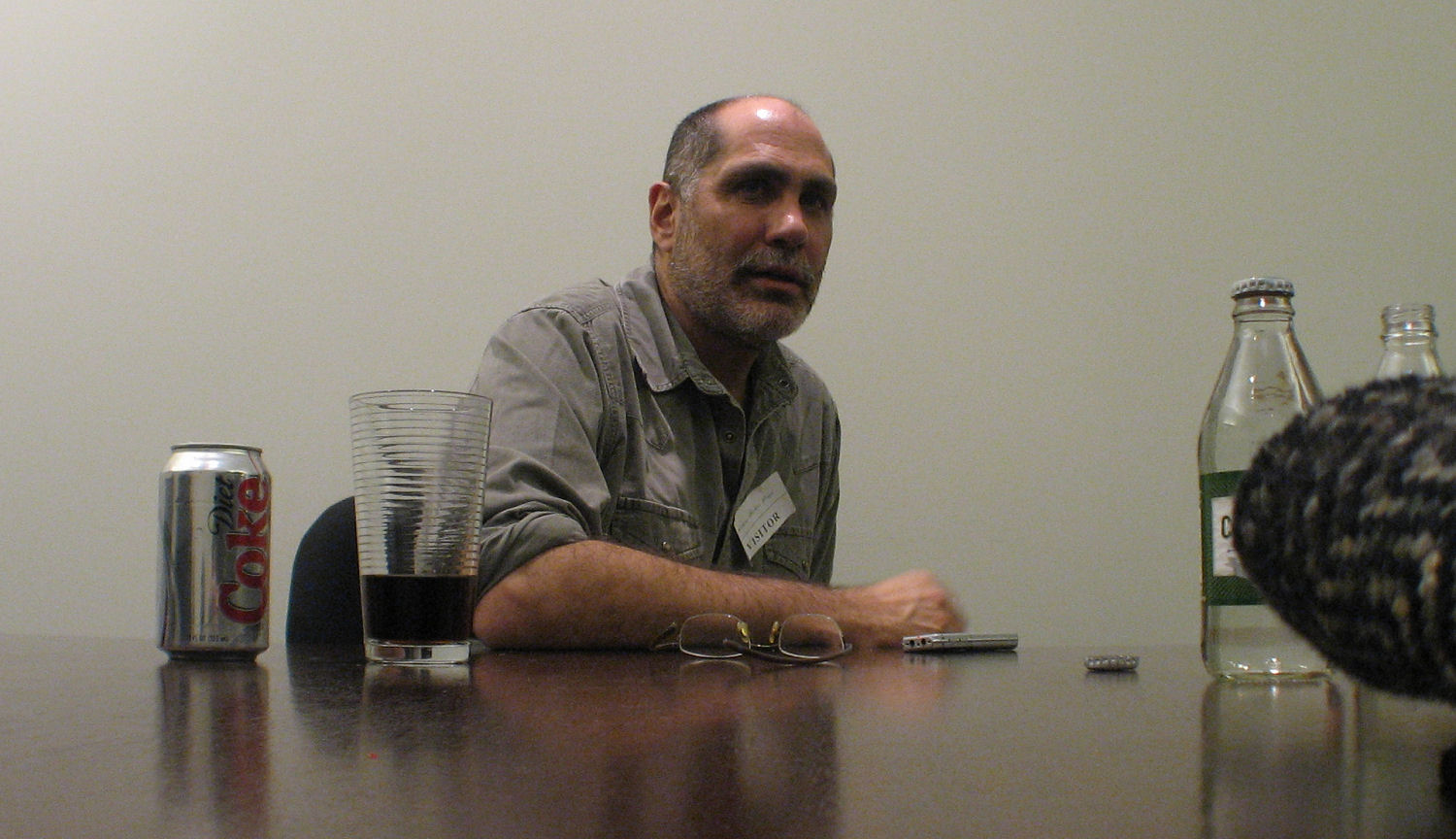
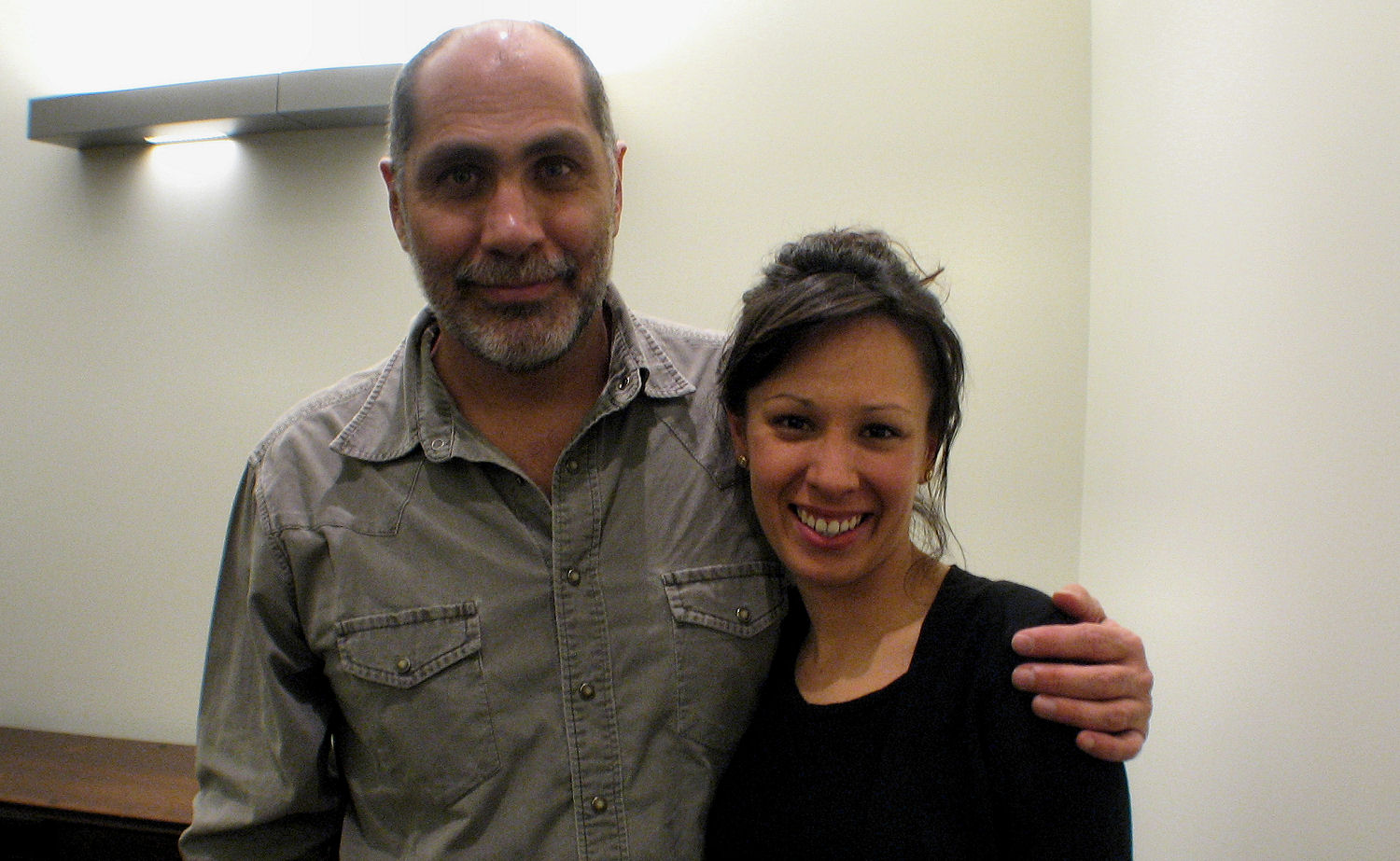
Caro thinks Babel is Alejandro Gonzalez Innaritu‘s (and Guillermo Arriaga‘s) least impressive film, and yet I’ve spoken to many bright and perceptive viewers (including Pan’s Labyrinth director-writer Guillermo del Toro) who think it’s truly their best. I feel this way myself because it’s the most poem-like. Who’s right? Obviously no one, but I know this: Caro & Co. are being overly harsh on a film that they know full well is, at the very least, quality merchandise.
Caro and his brethren know that Babel is spare, honest and carefully rendered in a raw, unfiltered fashion on a scene-by-scene basis. They know it’s well written (okay, except for the first scene between Brad Pitt and Cate Blanchett), and that the acting is first-rate top to bottom.
And they know that Babel is expressing an eternal truism — a not-very-original one perhaps, but unquestionably the cosmic law of the jungle — about how we’re all reacting to each other’s hurt and that we’re all imprisoned in an endless action- reaction cycle that we can’t hope to control or fully comprehend in all its particu- larity, but which we can at least try to accept and perhaps consider our actions and reactions more fully in light of it.
And yet the elites are leading a charge against this excellent film because they want something else after seeing two similar interconected fate-thread movies from Inarritu-Arriaga before, and because they don’t think that the perfectly delivered Japanese section has enough of a strong story-line connection to the Pitt-Blan- chett tale in Morocco and the Adriana Barraza-Gael Garcia Bernal tale in Mexico.
Talk to any one of these elites in a bar and sooner or later they’ll admit that Babel is quality stuff all the way and that it’s operating on a plane that’s well, well above the level of Crash (Samuel L. Jackson‘s remark that Babel is “Crash Benetton” is facile and lazy) and still they’re dumping on it as a Crash-like slog. And it seems to me that a critic should always strive to be as honest with his/her readers as he/she is with a friend after a glass and a half of wine. Very few are.
Caro has written that he “assume[s] many moviegoers will disagree with me (as Tribune critic Michael Wilmington does), but I also think a lot of people will see Babel out of some sense of obligation only to feel guilty when they find themselves longing for actual entertainment.”
The best kind of entertainment for me (for most people, I suspect) is to be enthral- led by the “all” of a movie…to be caught up by every twist and turn, by the look and pacing and texture of a film…the clock stops ticking and you go into the film and emerge two hours later. Babel, trust me (and you really, really don’t want to trust Caro on this one), is, in this sense, a hugely entertaining film.
“If Academy voters truly believe that Babel is the best that the movie world has to offer — Newsweek‘s Sean Smith already is predicting that it’ll win best picture — I’ll be stunned as well as convinced that I’m even more out of sync with Hollywood’s sensibility than I thought,” Caro concludes.
Who knows which film will win in the end (hint: it won’t be The Pursuit of Happy- ness or Flags of Our Fathers ), but if Babel doesn’t win (and if it doesn’t it won’t be the end of the world — it is what it is and that’s a fulfillment and a completion in itself), the piss-head cabal can all meet at a bar in Cannes next May and buy themselves drinks and go yaw-haw-haw.